Month: April 2024

  • Qarmet оцифрует работу всех шахт в 2024 году

    Qarmet оцифрует работу всех шахт в 2024 году

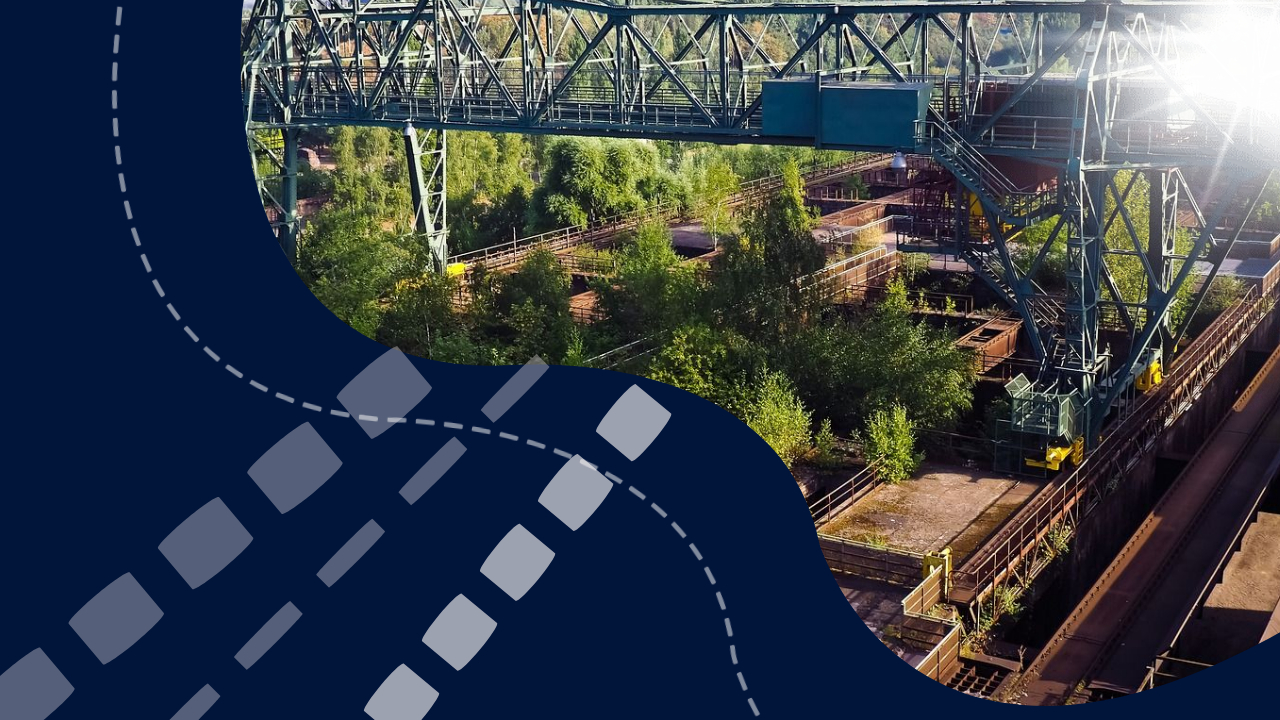
    На угольных шахтах Qarmet установят цифровую платформу DMMS, которая позволит в режиме реального времени контролировать производственные процессы, сообщает корреспондент центра деловой информации Kapital.kz со ссылкой на пресс-службу компании. «Исполняя взятые на себя инвестиционные обязательства по организации промышленной безопасности, Qarmet разработал комплекс мер модернизации, где одним из приоритетов стала масштабная цифровизация Угольного департамента компании. На встрече с казахстанским поставщиком инновационного программного и технического обеспечения AG TECH была представлена платформа DMMS, как современное решение контроля всех процессов производства: мониторинг перемещения персонала и техники в шахтах, нахождения шахтеров в опасных зонах, выявление случаев падения или отсутствия движения людей, возможность связи с диспетчером, датчики газового контроля, сейсмомониторинг и центральная диспетчерская для всех шахт», – указывается в сообщении.

    Система уже представлена в 800 шахтах по всему миру, в Казахстане используется на 30 рудниках. Отмечается, что DMMS включена в Концепцию промышленной безопасности Казахстана и одобрена МЧС РК.

    В Qarmet напомнили, что на сегодня система установлена только на двух из восьми шахт Угольного департамента, что усложняет работу по обеспечению промышленной безопасности.

    «По итогам изучения предложения принято решение о внедрении системы на всех шахтах компании и не имеющей аналогов центральной диспетчерской в Угольном департаменте. Данная работа начнется 15 апреля и планируется к завершению уже в текущем году», – сообщили в компании.

    Напомним, ранее сообщалось, что государственный Банк развития Казахстана (БРК) открыл две кредитные линии для АО «Qarmet», до того известное как ArcelorMittal Temirtau. В декабре прошлого года Лакшми Миттал продал предприятие государственному фонду Qazaqstan Investment Corporation (QIC). Через несколько дней QIC реализовал металлургическое предприятие Андрею Лаврентьеву, акционеру автосборочной компании «Аллюр».

  • Qarmet Unveils Digital Mine Management System (DMMS) for Enhanced Safety and Efficiency in Coal Mines

    Qarmet Unveils Digital Mine Management System (DMMS) for Enhanced Safety and Efficiency in Coal Mines

    In a major advancement for the coal mining industry, Qarmet has announced the launch of its Digital Mine Management System (DMMS), a groundbreaking digital platform designed to enhance safety and efficiency through real-time monitoring. This technological marvel offers unprecedented control over production processes, promising to revolutionize coal mining operations. At the heart of DMMS lies advanced software and hardware components that enable seamless monitoring of various aspects of mining activities. Key features include real-time process control, enhanced safety measures, gas monitoring, seismic detection, and a centralized dispatch centre. Developed in partnership with AG TECH, DMMS has undergone rigorous testing across 800 mines globally, including 30 in Kazakhstan, demonstrating its effectiveness in improving industrial safety. Following successful trials, Qarmet plans to implement DMMS across all its coal mines starting April 15, reflecting its dedication to fostering a culture of innovation and safety. By adopting DMMS, Qarmet aims to establish new benchmarks in industrial safety and productivity, setting the stage for a transformed coal mining landscape. Stakeholders can look forward to improved operational efficiency and risk mitigation as DMMS becomes an integral part of the industry.

  • Austria’s RHI Magnesita to buy US-based alumina producer Resco

    Austria’s RHI Magnesita to buy US-based alumina producer Resco

    RHI Magnesita, a Vienna-based manufacturer of fireproof materials, intends to acquire Resco Group, a US-based company specializing in alumina and refractories, for an enterprise value of up to $430 million, as announced by both companies. This acquisition, according to RHI Magnesita, aligns with their strategy of localized production, enhancing their range of products for US customers while streamlining supply chains and improving responsiveness. The cash consideration for the acquisition is anticipated to be approximately $324 million, with a potential upper limit of about $342 million if the completion extends beyond 18 months post-signing. The funding for this acquisition will come from RHI Magnesita’s existing liquidity and a new committed facility of 200 million euros ($216 million). Resco reported unaudited revenues of $252 million in 2023 with a profit before tax of $20 million. Following the acquisition, synergies will be realized through the restructuring of the combined supply chain, a process expected to take about two years with one-time costs estimated at 60 million euros, including restructuring activities at non-US plants. The acquisition is contingent upon customary closing conditions, including approval from merger control authorities, and is projected to be finalized in the latter half of this year. Once completed, the combined entity will encompass 15 production sites spanning the United States, Canada, and Mexico. Resco Group, currently owned by Balmoral Funds, a California-based private equity firm managing approximately $1.5 billion in assets, issued a statement confirming these details.

  • Northvolt AB initiates €5 billion battery plant construction in Northern Germany

    Northvolt AB initiates €5 billion battery plant construction in Northern Germany

    Northvolt AB has embarked on the construction of a €5 billion ($5.4 billion) battery plant in northern Germany, marking a significant milestone in its endeavor to supply electric cars. This project marks the culmination of an intensive lobbying effort, facilitated by the newly relaxed European Union state aid rules.

    The construction of the plant, located near the town of Heide, is bolstered by just over €900 million in subsidies and guarantees from Germany. This support played a crucial role in preventing the project from being relocated to the United States. Chancellor Olaf Scholz emphasized that the factory will contribute to securing the country’s future as a manufacturing hub.

    “The production of quality cars beyond the combustion engine remains the cornerstone of our industrial sector,” stated Chancellor Scholz during an opening ceremony on Monday. “For this, we require battery cells made in Germany, made in Europe.”

    In a strategic move to enhance competitiveness against the US, the European Union relaxed its rules on state subsidies last year. This move aimed to attract investments by offering similar incentives to those in the US, where generous tax relief and aid for climate technologies are driving significant investments. Northvolt, Europe’s sole major home-grown EV battery manufacturer, counts Volkswagen AG and BMW AG among its clientele and is also advancing its presence with a site in Canada.

    Northvolt’s Heide plant, powered by wind energy, is expected to employ approximately 3,000 individuals and commence operations in 2026. With an annual capacity target of 60 gigawatt-hours, making it Germany’s largest, the plant is poised to supply batteries for approximately 1 million electric vehicles. Initial construction estimates for the Heide facility were projected at €4.5 billion.

  • Central Asia emerges as key player in global contest for critical resources

    Central Asia emerges as key player in global contest for critical resources

    The geopolitical landscape is evolving in Central Asia, with major global players such as Western countries and China increasingly vying for access to critical resources. This competition has intensified following recent events in Ukraine and the resulting shift in the global order, prompting Western nations to seek alternative suppliers of rare earth metals to reduce dependence on Russia and China.

    Central Asian countries are emerging as crucial players in this dynamic, given their abundant mineral reserves. While these resources have garnered newfound attention, not all deposits in the region have been fully explored.

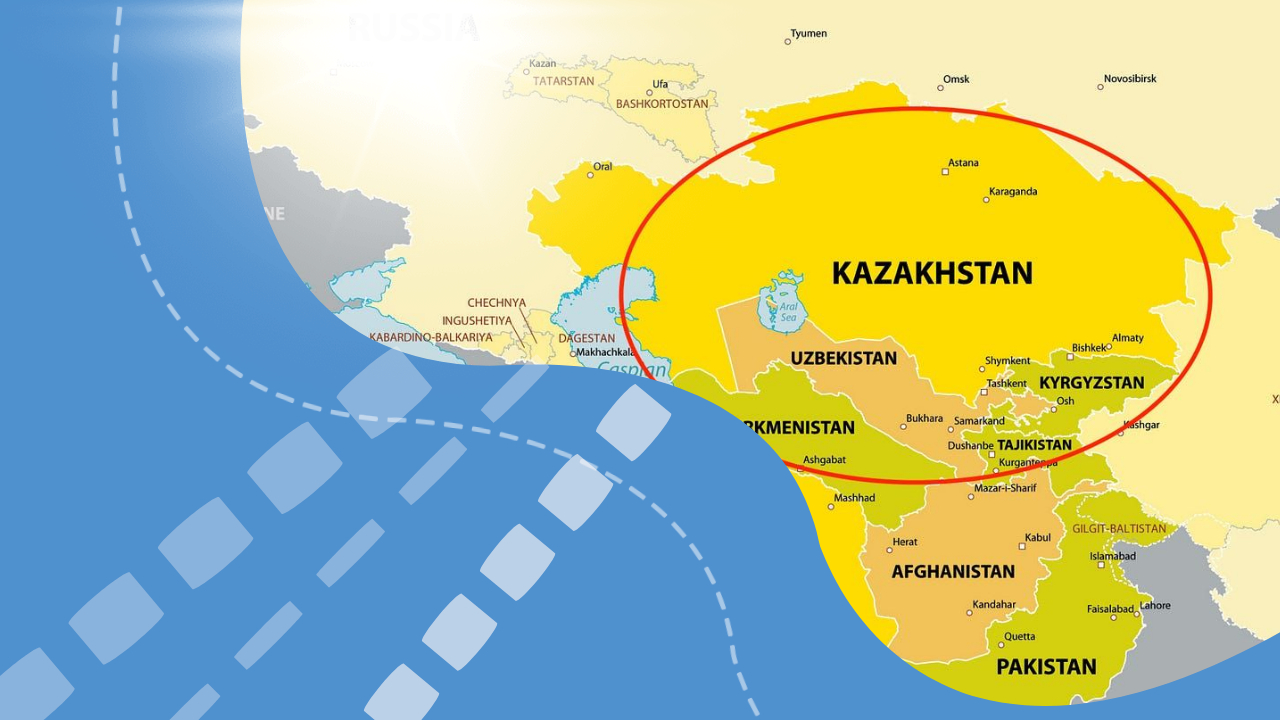
    Central Asia boasts substantial reserves of critical resources, including manganese ore, chromium, lead, zinc, titanium, and others. Kazakhstan, in particular, holds promise in challenging China’s dominance in rare earth elements, with significant deposits of metals like scandium, yttrium, and lanthanides.

    The United States and the European Union are exploring investment opportunities in Central Asia to diversify their supply chains away from China, which currently dominates the market for rare earth metals. Initiatives like the Economic Resilience Initiative for Central Asia (ERICEN) and the C5+1 Critical Minerals Dialogue underscore the strategic importance of the region.

    China, however, has longstanding relationships and investments in Central Asia, particularly in the uranium industry. As the U.S. and China compete for influence, Central Asian countries find themselves at the centre of a geopolitical contest for resource access and control.

    The strategic advantages of both China and the U.S. are apparent, with China benefiting from geographical proximity and substantial investment potential, while the U.S. leverages its global influence and partnerships to present itself as an alternative to China.

    Central Asia’s role in rare earth metal geopolitics is further highlighted by President Kassym-Jomart Tokayev of Kazakhstan, who has emphasized the importance of prioritizing the development of these resources. The region boasts significant quantities of rare metals concentrated in areas such as the Kazakh steppe, Tien Shan, and Pamir mountains.

    While exact data on Central Asia’s share of global rare earth metals is unavailable, export data suggests their substantial contribution to the global supply chain. However, Central Asian countries face risks and opportunities amidst this competition, including overreliance on external actors and geopolitical rivalry.

  • Kazatomprom and Cameco launch new project in Kazakhstan

    Kazatomprom and Cameco launch new project in Kazakhstan

    Inkai, a joint venture by Kazatomprom (60%) and Canadian Cameco (40%), has announced its plan to build an affinage facility with a capacity of 4,000 tons of uranium per year.

    «This project is going to boost the output at the Inkai uranium mine by 4,000 tons of triuranium octoxide. Under the project, the construction of a new affinage facility, a power substation with a diesel generator and the reconstruction of the existing pregnant solution processing plant are expected. The project starts this year and will be over in 2025,» the joint venture said in a statement on public hearings scheduled for April 2.

    The company plans to build all these new facilities in parallel with uranium production and processing. Once they are ready, these facilities will be integrated into the current utility systems and the power grid. Inkai is going to use artesian water for its production processes and bring drinking water for workers in bottles. Even though the company hasn’t revealed any financial details, the project will be completed within the next 18 months.

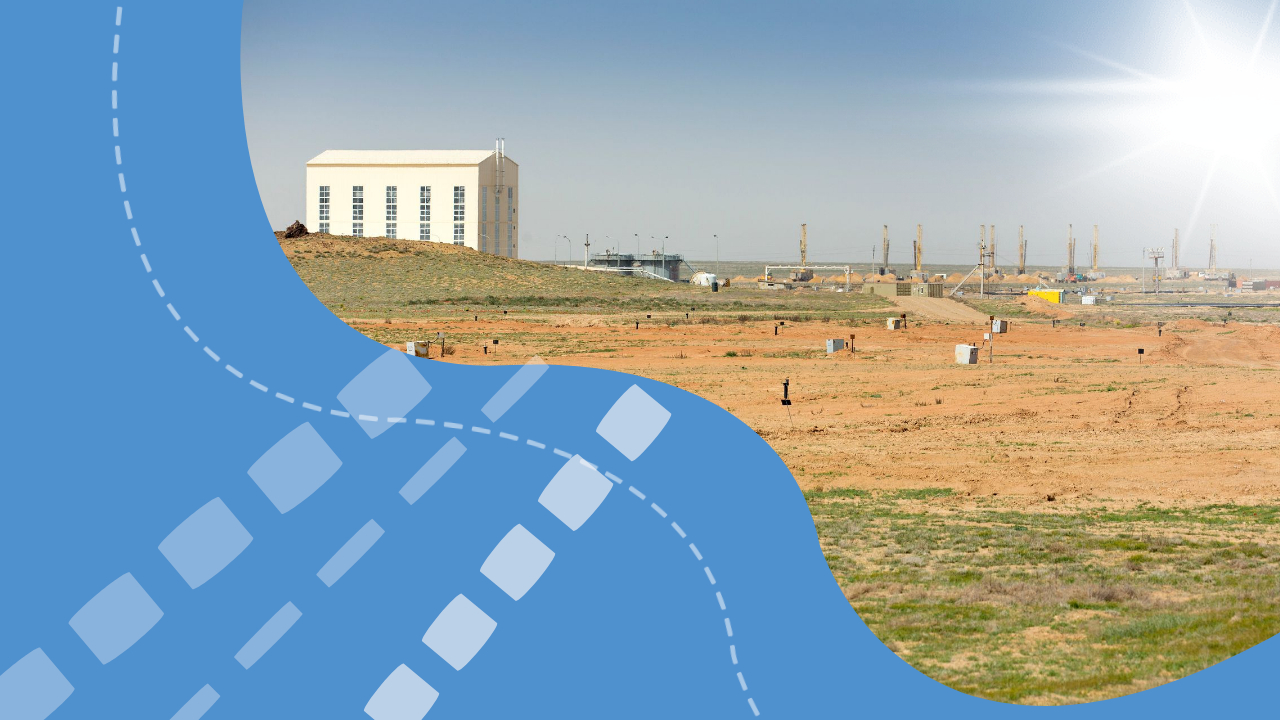
    The project is expected to be implemented within the existing mine that occupies 240.79 square kilometers and is located 10 kilometers away from the Taykonyr village of the Sozak District in the Turkestan region of Kazakhstan. The affinage facility will be in operation until 2045 when the Inkai mine expires. The affinage facility will be equipped with advanced equipment from Cameco. The facility is expected to produce 4,000 tons of uranium if it works 311 days per year or 7,450 hours.

    To produce uranium at the Inkai mine, the joint venture relies on in-situ leaching that involves leaving the ore where it is in the ground and recovering the minerals from it by dissolving them and pumping the pregnant solution to the surface where the minerals can be recovered. Consequently, there is little surface disturbance and no tailings or waste rock generated. After extracting and refining the uranium, the company produces yellowcake, a type of uranium concentrate powder obtained from leach solutions.

    As of January 1, 2023, there were 127,000 tons of uranium in the mine’s ore reserves (the total amount of mineral resources including reserves of 148,000 tons of uranium), according to the company.

    Overall, Inkai consists of four sites. Site #1 is the processing plant; sites #2 and #3 are production facilities and site #4 is a camp for 745 workers.

    According to Cameco, the Inkai mine produced 3,192 tons of uranium last year as the company faced some difficulties linked with reagent supply and well drilling.

    In January 2024, Kazatomptom, which is one of the leaders in the global uranium market, said that it could lower its production plant for 2024 due to a lack of sulfuric acid, a key component for in-situ leaching, in open markets. At the same time, the company reassured its customers that it would deliver its current arrangements. As of yearend 2023, Kazatomprom reported $3.1 billion in revenue (+43%) compared to just a 20% increase in the uranium price.

  • Italy has offered Metinvest, owned by Rinat Akhmetov, the opportunity to rebuild a steel plant in Taranto.

    Italy has offered Metinvest, owned by Rinat Akhmetov, the opportunity to rebuild a steel plant in Taranto.

    The Metinvest mining and metallurgical group intends to build a plant in Piombino in the Italian region of Tuscany as one of the most technologically and environmentally advanced of its kind, which will become a pilot for our future investments of the company in Ukraine, Metinvest CEO Yuriy Ryzhenkov said in an interview with La Repubblica, one of Italy’s largest newspapers. According to him, the new plant in Piombino will produce “green steel.”

    The CEO said during a war the company devotes its greatest efforts to support the country on its path to victory. “For our Group, this means continuing to pay taxes, providing humanitarian aid and helping the Ukrainian army. Despite the loss of two steel mills, as well as the coking plant in Avdiivka, Metinvest remains the largest employer in Ukraine and the largest donor to the Ukrainian army. We have allocated significant funds to support the Ukrainian armed forces and provide humanitarian aid to Ukrainians,” the CEO said.

    Answering a question about the financial results for 2023, the company’s CEO said the net loss was $118 million, “but we have stabilised the business while cash flow is positive, which means we are back on the right track. And this is very important.”

    Regarding plans to build a plant in Piombino, Ryzhenkov said the group currently already owns two plants in Italy but intends to construct a third plant.

    “Metinvest committed to build a new green steel plant in Piombino as part of a programme agreement with the Italian Minister of Enterprises and Made in Italy. This is the result of the cooperation of many institutions, including regional and municipal ones. We hope to finalise the agreement within the next three to four months and to have a precise action plan,” the CEO said.

    “If we finalise the programme agreement by the middle of this year, we could start the plant’s construction towards the end of 2024. The construction itself will take two to three years. In an ideal scenario, we should start production in Piombino in 2027,” Ryzhenkov said.

    He said Italy imports about 6 million tonnes of steel products. And thanks to the production that the company plans to launch, this deficit can be significantly reduced. The plant will become a pilot project for future company investments in Ukraine when the country begins to recover.

    Ryzhenkov also explained plans to build a plant in Italy were made long before the invasion. Then the idea was to use semi-finished products from Azovstal for further processing in Italy. Now there is no Azovstal, but in Ukraine we have iron ore enterprises producing high-quality iron ore, which can be used to make DRI/HBI (direct reduced iron). So now the idea is to build a plant that will use iron ore from Ukraine to produce steel in Italy.

    Responding to a question about the concerns of Italian manufacturers about a possible shortage of scrap due to the future construction of the plant in Piombino, the company’s CEO said in Italy there is no shortage of raw materials, there is competition, like in other countries. Raw materials can also be delivered by sea. And he emphasized that the steel plant in Piombino will receive raw materials from Ukraine.

    “At the moment, we are identifying a location for the construction of the DRI plant, and we know that we are not the only ones, other Italian steelmakers are doing the same. Some are considering building DRI plants outside of Italy, where gas prices are lower. In any case, Metinvest will contribute to this process by supplying raw materials to DRI plants to be built in Italy, just as we will supply them to our DRI plant, which may be built in Ukraine or somewhere else, from which raw materials will be supplied to the Piombino plant,” the CEO said.

    Touching on the topic of some Italian manufacturers purchasing cheaper Russian slabs, he pointed out that the holding in Italy produces coils as finished products, buys about 1 million tonnes of semi-finished products for the production of coils, but not a single ton is supplied from Russia.

    “We buy slabs both in Italy, from Adi in Taranto, and from other European producers such as ThyssenKrupp, Galati or U.S. Steel in Košice. And on the wider market, also in China and Brazil. And it all remains profitable,” Ryzhenkov said.

    He called on Italian manufacturers not to buy metal from Russia, since “it’s like shooting yourself in the foot.”

    Answering a question about Metinvest’s alleged intention to acquire the assets of the former Ilva company, Ryzhenkov said Italian Minister Urso asked the company to pay attention to the plant in Taranto and consider the possibility of restoring it.

    “We have set up a dedicated task force to analyse the situation and scenarios. We are providing our support by supplying raw materials to Taranto. In addition, we are supplying technical specialists to help optimise the use of our raw materials and purchase semi-finished products from Taranto. With this in mind, we are currently focusing on Piombino. But we are continuing to analyse ways in which Metinvest can do more to help the plant in Taranto, even if there are no announcements about this for the time being,” Ryzhenkov said.

    According to him, if by the end of the year the Italian government puts the former Ilva sites up for auction, then Metinvest’s participation will primarily depend on the results of due diligence, after which it will consider the terms of the tender, its restrictions and the level of government support.

    “In general, there are many things to verify before a group like Metinvest can say whether it is interested in an investment of this scale. At the moment, I can only confirm that we are analysing the situation, we can make proposals, but it is up to the government, as it is the one that has to create the conditions for taking further steps. We also know that some other groups in the industry are looking at the former Ilva plant, so we will see what happens next,” the CEO said.

    Metinvest consists of mining and metallurgical enterprises located in Ukraine, Europe and the United States. Its main shareholders are the SCM group (71.24%) and Smart Holding (23.76%), which jointly manage it.

    Metinvest Holding LLC is the management company of the Metinvest group.

  • Ferrexpo Seeks Resumption of Exports Through Temporary Corridor Amid Reduced Capacity and Losses

    Ferrexpo Seeks Resumption of Exports Through Temporary Corridor Amid Reduced Capacity and Losses

    Ukrainian iron ore miner Ferrexpo aims to restart exports via the Black Sea amid risks posed by Russian attacks on ships leaving the port of Odesa. Since Moscow terminated a pact ensuring the safe transport of Ukrainian grain, Kyiv has established a provisional passage for vessels to enter and exit. However, Russia considers all cargo ships headed for Ukraine as potential targets.

    Ferrexpo, producing iron ore pellets, has utilized only half of its four pellet lines due to decreased export capacity. Chairman Lucio Genovese intends to restore exports via the route, acknowledging the challenging circumstances brought about by Russia’s invasion of Ukraine. This predicament has significantly limited shipping opportunities to the Middle East and Asia.

    In related articles, Ferrexpo ranks among the FTSE 350’s poorest performers of 2023, grappling with declining profits and revenue due to the impact of the war on its operations. Additionally, 34 employees have lost their lives in the conflict, while 754 others serve in Ukraine’s military.

    Despite these challenges, Ferrexpo shares experienced a 6.6 percent surge, gaining 5.55p to close at 90.25p. Meanwhile, the London stock market witnessed a premature closure on the final trading day of the year, with the FTSE 100 increasing slightly by 0.1 percent and the FTSE 250 dropping 0.2 percent.

  • Moody’s confirms Metinvest’s ratings, changes outlook from negative to stable

    Moody’s confirms Metinvest’s ratings, changes outlook from negative to stable

    The international rating agency Moody’s Investors Service has confirmed the corporate rating (CFR) of Metinvest B.V. at the “Caa3” level, the default probability rating “Caa3-PD” and the national scale rating “Caa3.ua.”

    The outlook for Metinvest’s ratings has been improved from negative to stable, the agency said in a statement.

    The rating action explains that the affirmation of Metinvest’s ratings and the change in outlook from negative to stable reflects Moody’s expectation that the company will continue to generate positive free cash flow (FCF) in 2024 to generate higher cash balances, in specifically in its offshore accounts to support ongoing debt service and repayment of outstanding notes due June 2025.

    However, the ratings remain constrained by the Ukrainian government’s domestic and foreign currency ceiling, set at Caa3. In addition, Metinvest’s Caa3 CFR reflects the company’s operational and logistics risks associated with the ongoing war in Ukraine.

    Moody’s said the company has a significant portion of its assets in Ukraine and continues to face financial and operational challenges in the midst of Russia’s invasion of the country, including direct damage to its assets in 2022, labour shortages and limited access to the necessary infrastructure to freely export its goods in the current extremely tense circumstances. However, Moody’s states that the opening of the Black Sea corridor in the second half of 2023 has ensured an increase in export capacity.

    Despite these problems, Metinvest has demonstrated financial stability. The company’s 2023 revenue of $7.397 billion was down 11% from the previous year. Moody’s notes that the full-scale invasion of Ukraine affected the comparability of Metinvest’s 2023 results with the previous year, as 2022 results included almost two months of activity before the war.

    Lower selling prices contributed to overall revenue declines of 51% and 15% in the Mining and Metals segments in 2023, respectively, for sales and resale of steel, coke, iron ore and coking coal products. Price pressures were partly mitigated by higher sales volumes, particularly in the company’s mining segment, with strong growth in iron ore product sales (iron ore concentrate and pellets), while metals production volumes remained relatively flat, supported, among other things, by higher volumes production of Kametstal (billings) and re-rolling assets, as well as strengthening the resale of steel and coke.

    The increase in volumes was due, among other things, to the opening of the Black Sea corridor in the second half of 2023, providing additional export opportunities and opportunities to reach distant markets. Moody’s expects Metinvest to benefit from improved access to export markets during 2024, leading to higher capacity utilization and resulting higher sales volumes, which will more than offset projected lower average selling prices and lead to a moderate recovery arrived.

    At the same time, Metinvest experienced a significant decline in adjusted EBITDA (according to the company) to $861 million in 2023 from $1.873 billion in the previous year. The decline was mainly due to lower average selling prices and higher transportation costs, as well as a higher comparison base in 2022, where nearly two months of operations were unaffected by the war.

    Despite the decline in EBITDA, Metinvest generated significant positive free cash flow (calculated by the company as net cash from operating activities minus net cash used in investing activities) of $410 million in 2023, supported by favourable working capital movements following a reduction in steel and coal reserves products, as well as lower capex of $284 million focused on maintenance capex to preserve cash.

    Moody’s believes Metinvest will benefit from an adequate liquidity position over the next 18 months, supported by a cash balance of $646 million at year-end 2023, which is expected to increase in 2024 due to significant positive free cash flow generation.

    The rating agency suggests that about 75% of cash balances are held in offshore accounts, but some of this cash is subject to a requirement to repatriate foreign currency earnings from Ukrainian exports within 180 days under National Bank of Ukraine (NBU) restrictions. Although the amount of fully unrestricted offshore cash is unknown, the company has continued to meet its debt obligations since the start of the war, and liquidity is likely to be sufficient in 2024 and 2025 for Metinvest to fund its operations, service interest payments and coupon payments on its debt and will repay the outstanding amount of approximately EUR 234 million on the senior notes due June 2025.

    The outstanding amount of the senior notes due 2025 was reduced to EUR 234 million in early 2024 following the company’s repurchase of approximately EUR 61 million of the notes and their immediate repayment in January and February 2024.

    At the same time, Moody’s said that Metinvest will face significant debt maturities beyond 2025, including $494 million of outstanding senior notes due April 2026, which remain subject to increased risk of default in the absence of market access debt capital, as well as strong earnings and cash flow recovery.

    The stable outlook reflects Moody’s expectation that Metinvest will increase sales volumes in 2024, with the majority directed to exports to mitigate the decline in forecast prices, while maintaining sufficient levels of offshore cash balances to support the timely repayment of senior notes maturing in June 2025. The stable outlook also reflects the expectation that while the operating environment will remain challenging due to the ongoing war in Ukraine, the company will not experience a deterioration in its production and logistics capabilities.

    A rating upgrade at this stage is unlikely unless there is a change in sovereign ratings or ceilings, as Metinvest’s CFR is at the level of Ukraine’s country ceiling. Downward pressure on the ratings could come from a downgrade of the sovereign rating or further weakening of the company’s credit profile as a result of pronounced physical damage to assets, market and logistics disruptions, cash flow generation and reduced liquidity. Erosion of liquidity is likely to increase the probability of default, which could also lead to downward pressure, as can the expectation of lower recovery to bondholders in the event of default.

    Metinvest consists of mining and metallurgical enterprises located in Ukraine, Europe and the USA. Its main shareholders are the SCM group (71.24%) and Smart Holding (23.76%), which jointly manage it.