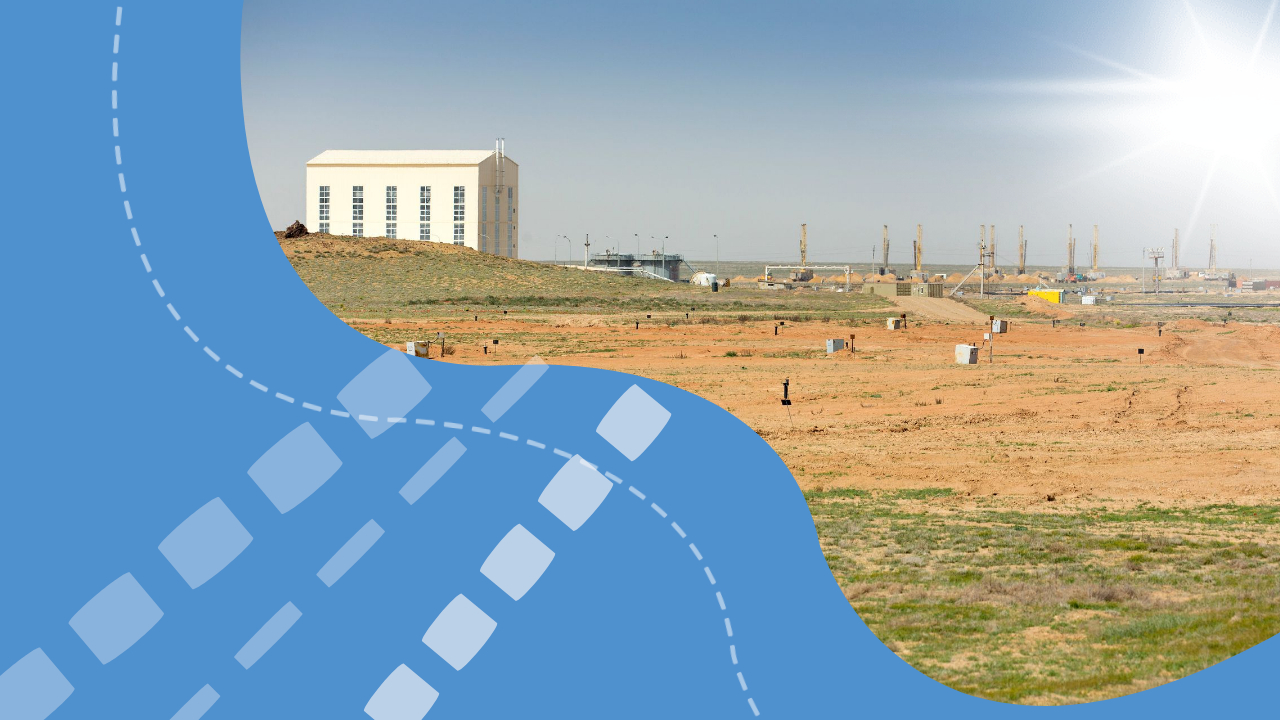
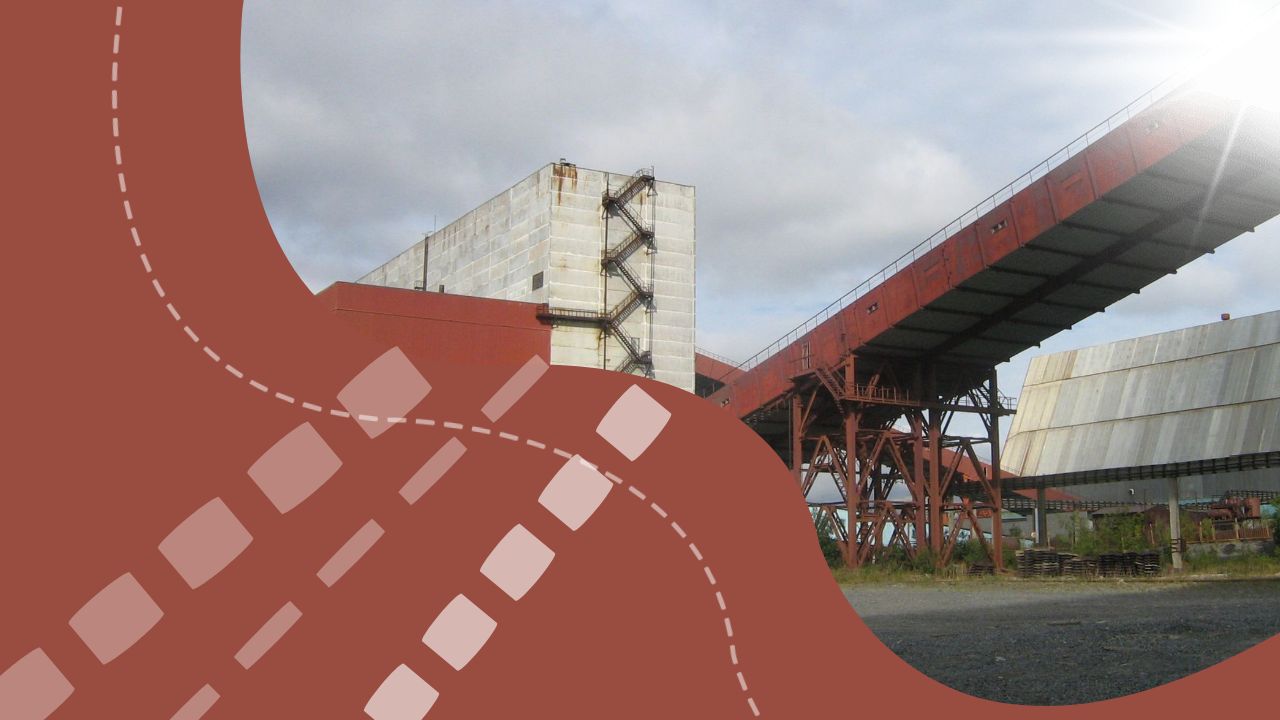
The Stepnogorsk Sulfuric Acid Plant (SSAP), 90.11% owned by Samruk-Kazyna’s subsidiary, with the remaining 9.89% belonging to Kazatomprom (another Samruk-Kazyna subsidiary), intends to double its capacity to 360,000 tons per year of sulfuric acid, required by Kazatomprom, and increase sulfur purchases from Tengizchevroil, the main supplier of the product to the plant. The implementation of the proposed activity – the construction of the second line of the sulfuric acid plant – will lead to an increase in the production capacity of the enterprise, producing technical sulfuric acid, from 180,000 tons to 360,000 tons per year, according to materials for public hearings on the project’s second phase, scheduled for April 30. As indicated on the plant’s website, the main sulfur supplier for the enterprise is the Tengiz oil field operator – Tengizchevroil, which stores sulfur in large volumes. Accordingly, with the launch of the second phase, the plant will double its sulfur purchases necessary for sulfuric acid production. The main product of the plant is technical sulfuric acid of the first grade according to GOST 2184-2013 with a concentration of 92.5–94%. The project also includes the possibility of obtaining acid with a concentration of 98.5% (without additional dilution). By-products of production include electrical and thermal energy. Construction and installation work is planned to be carried out around the clock in 2024-2025, and the launch of the second phase into operation is scheduled for 2026. The second phase will produce sulfuric acid around the clock for 345 days a year. The plant fully meets its own needs for thermal and electrical energy. According to materials for public hearings, the production of sulfuric acid from the second phase will provide the plant with about 30–40 MW of electricity through the generation of superheated steam. At the same time, the plant annually concludes a contract for the supply of electricity with Stepnogorskenergosbyt. The main equipment supplier will be the Italian company Desmet Ballestras.p.a., and the main technological equipment manufacturer will be the Kazakhstani company “Belkamit”. The second phase will be built within the boundaries of the existing plant, which will not cease its operation during production expansion. The sulfuric acid plant is located in the industrial zone of the city of Stepnogorsk in the Akmola region. The nearest settlements are Zavodskoye village – three km away – and the city of Stepnogorsk – 18 km away. The nearest railway stations are AltynTau – 10 km away and Ermantau – 130 km away. The plant has been operating at its full capacity since 2021 against the backdrop of sulfuric acid shortages in Kazakhstan, which is needed for uranium mining. In January, Kazatomprom announced an expected adjustment to its production plan for 2024 due to difficulties in sulfuric acid supplies, which is a key component in uranium mining. A plant for the production of 800,000 tons of sulfuric acid will be built by 2026 in the Turkestan region using the Italian Balestra technology, announced Nurlan Zhakupov, Chairman of the Management Board of Samruk-Kazyna. It is worth noting that Baurzhan Ibraev, Chairman of the Advisory Board of the British New Nuclear Watch Institute (NNWI) for Central Asia, who had been a member of the Board of Directors and Chief Production and Nuclear Fuel Cycle Director of Kazatomprom for several years, expressed his opinion to journalists at a seminar on atomic energy in December 2023 that increasing uranium production in Kazakhstan in the coming years, according to the plans announced by Kazatomprom and its affiliated joint ventures, will require about 3 million tons of sulfuric acid annually. “For acid, we will need – today we consume about 2.2 million tons. If we want to fulfill the announced plans, probably, we will need no less than 3 million tons. Unfortunately, Kazakhstan today does not produce so much… At one time, production capacities in Kazakhstan were around 3.6 million tons, but this does not mean that they produced so much. I don’t know how much everyone produces today, but I know that today Kazatomprom does not satisfy its acid needs,” he said. According to his estimates, Kazatomprom’s joint ventures purchased sulfuric acid at a price of $130 per ton. Expenditures on this key component, used in uranium mining by the method of underground in-situ leaching as a chemical reagent, accounted for about 30–40% of the total cost of uranium in Kazakhstan. However, even now, before the increase in production volumes by Kazatomprom, there is a sulfuric acid deficit in Kazakhstan, Ibraev noted. In contrast to this, uranium enterprises in Uzbekistan, according to him, receive sulfuric acid at $30 per ton.
Month: April 2024
-

ERG Increases Flood Relief Fund to 500 Million Tenge
RG has now allocated a total of 500 million tenge for flood relief efforts and assistance to affected residents. Last week, the company had already allocated 400 million tenge in aid. In addition to financial assistance, Group enterprises continue to provide support with specialized equipment and personnel involved in flood prevention and mitigation efforts. Volunteer workers from the enterprises are also contributing to the relief efforts.
-

Saryarka Tungsten Plans Development of Southern Zhaure Deposit in Karaganda Region
The Saryarka Tungsten LLP intends to exploit the Southern Zhaure deposit located in the Karaganda region. The company has submitted its project documentation on the Unified Environmental Portal of Kazakhstan. The mining site falls within the Shetsk district. Tungsten ores and valuable components of the deposit were included in the state balance back in 2016. The company’s mining plans highlight that the balance reserves of ore amount to 122.19 million tons, with 199 thousand tons of tungsten trioxide (average metal content in ore – 0.163%), 13.1 thousand tons of molybdenum (average content – 0.010%), and 6.4 thousand tons of bismuth (average content – 0.005%). Additionally, there are another 36 million tons of unbalanced ore and 62.3 thousand tons of tungsten trioxide. Studies have revealed that the ores of Southern Zhaure are easily enrichable compared to those of similar deposits such as Northern Katpar and Upper Kayraktinskoye. Saryarka Tungsten LLP aims to extract up to 4 million tons of ore annually. It is estimated that the deposits will be sufficient for over 30 years of quarry operation. The company plans to construct a new ore enrichment plant on the site, with production slated to begin in 2027. The company will produce concentrates of grades KMSH-2 with a tungsten trioxide content of 60% and KMSH-3 with a tungsten trioxide content of 55%.
-

Ulytau Resources Secures Uranium Exploration License in Jambyl Region
Ulytau Resources has obtained a license for uranium exploration at the Djusandali deposit in the Jambyl region. Covering an area of 29.43 square kilometers, the license allows the licensee to conduct exploration activities from 2024 to 2028. The search for the radioactive metal will be conducted near the uranium-molybdenum deposit of Botaburum in the southern Pribylkhazhye, as reported by inbusiness.kz. Apart from prospecting for new uranium sites, Ulytau Resources is tasked with evaluating previously discovered reserves. Additionally, specialists from the company will monitor the natural radiation background during the drilling phase. The company has announced that public discussions regarding the obtained uranium exploration license are scheduled for April 25. According to reports, uranium deposits in Djusandali were discovered back in 1982. In 1991, the republic’s experts estimated the reserves of this metal under categories C1 and C2 and transferred all data for analysis to “Yuzhpolymetall,” whose employees have been engaged in geological exploration at Botaburum since 1957.
-
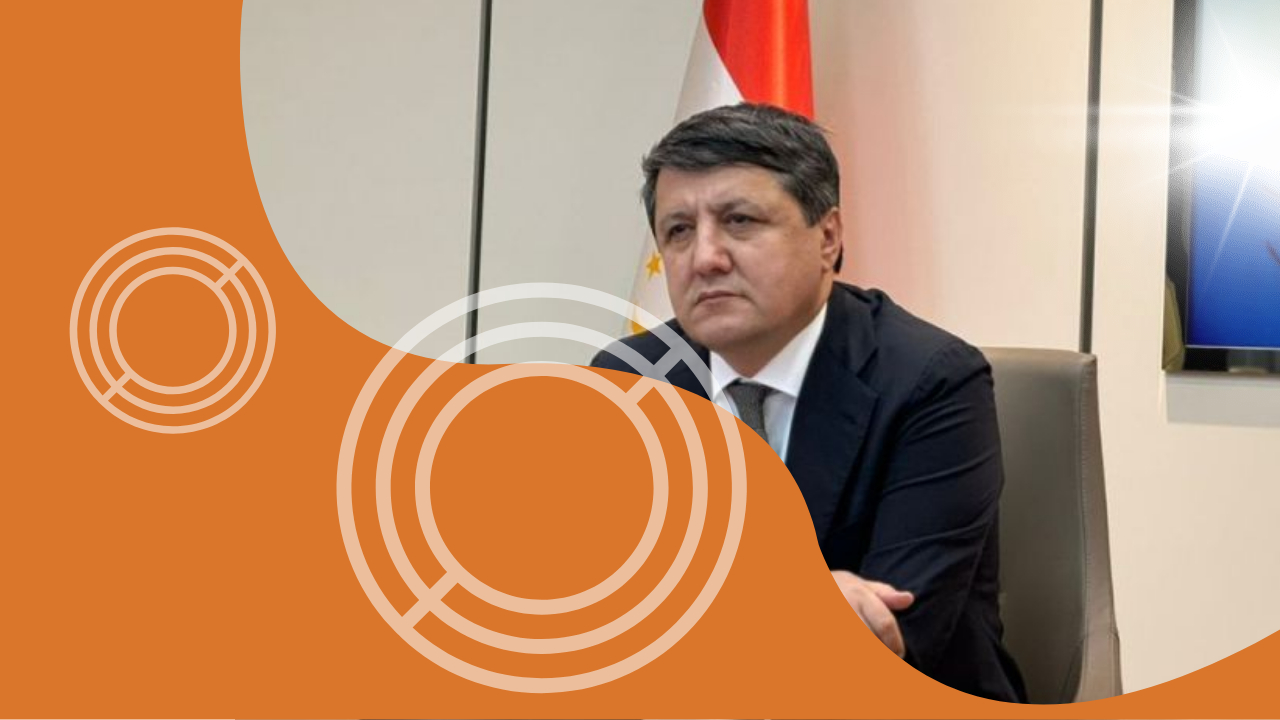
Таджикистан принял участие в Форуме партнерства по безопасности минеральных ресурсов
Таджикистан принял участие в Форуме партнерства по безопасности минеральных ресурсов, который состоялся 5 апреля 2024 года в бельгийском городе Левен. Этот форум объединил Евросоюз, США и других партнеров, заинтересованных в области безопасности полезных ископаемых.
Форум был открыт Госсекретарем США Энтони Дж. Блинкеном, а также сопровождался исполнительным вице-президентом Европейской комиссии и комиссаром по торговле Валдисом Домбровскисом 1.
На Форуме присутствовали представители разных стран, включая:
- Томас Альвиндо, Министр горнодобывающей промышленности и энергетики Намибии.
- Владимир Кузио, заместитель Министра экономики Украины.
- Канат Шарлапаев, Министр промышленности и строительства Казахстана.
- Лазиз Кудратов, Министр инвестиций, промышленности и торговли Узбекистана.
Более 30 участников, включая руководителей министерств и ведомств из других стран, также приняли участие в режиме онлайн 1.
Министр промышленности и новых технологий Республики Таджикистан, Шерали Кабир, также принял участие в Форуме. Он подчеркнул огромный энергетический потенциал страны и значительные запасы полезных ископаемых. Таджикистан располагает практически всеми критически важными сырьевыми материалами, такими как алюминий, медь, цинк, сурьма, олово, вольфрам, литий и другие 1.
Форум MSP станет новой платформой для сотрудничества в области критически важных сырьевых материалов, которые играют жизненно важную роль в глобальном переходе к “зеленым” и цифровым технологиям. Созданный ранее “Клуб критического сырья” теперь становится полноправной частью Форума MSP
-
Tajikistan joins the launch of the USA – EU “Critical Raw Material Club”
The Minerals Security Partnership Forum was held on 5 April 2024, in Leuven, Belgium, organised by the European Union, the United States and other partners in mining security.
The forum was opened by US Secretary of State Anthony J. Blinken with Executive Vice President of the European Commission Valdis Dombrovskis. Minister Thomas Alvindo from Namibia’s Ministry of Mining and Energy, Deputy Minister Vladimir Kuzio from Ukraine’s Ministry of Economy, Minister Kanat Sharlapaev from Kazakhstan’s Ministry of Industry and Construction, and Minister Laziz Kudratov from Uzbekistan’s Ministry of Investments, Industry and Trade were present. More than 30 participants (ministerial heads) from other countries joined online.
Tajikistan was represented online by Minister of Industry and New Technologies Sherali Kabir, who noted the country’s significant energy potential and reserves of useful minerals.
The European Commission emphasized that the MSP Forum will serve as a new platform for cooperation in critical raw materials essential for global transitions to green technologies and digitalization. The “Critical Raw Material Club” announced earlier by the European Commission is now fully integrated into the MSP Forum.
-
EU and international partners agree to expand cooperation on critical raw materials
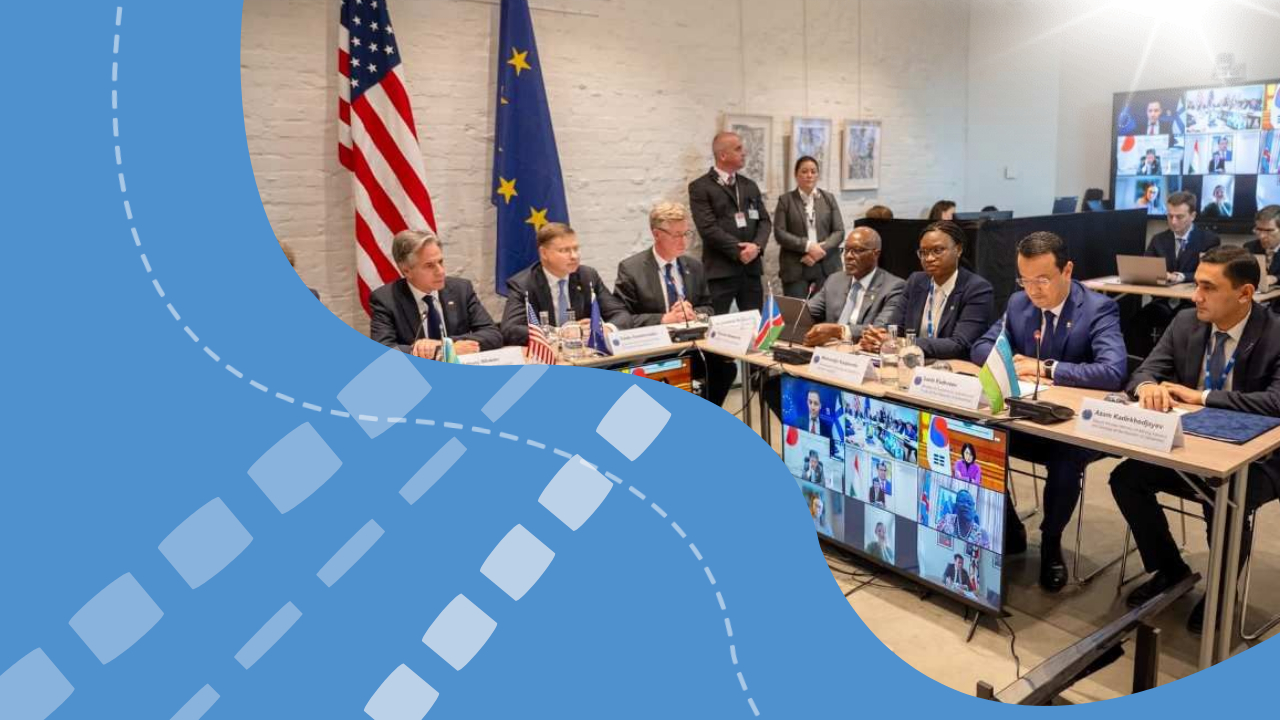
On 5 April 2024 Secretary of State Antony J. Blinken, accompanied by Under Secretary Fernandez, hosted an event with the European Commission Executive Vice President and Trade Commissioner Valdis Dombrovskis to formally launch the Minerals Security Partnership (MSP) Forum in Leuven, Belgium. Ministers from MSP partner economies and
minerals-producing countries were invited to participate virtually and in person. Additional in-person a ttendees included Thomas Alweendo, Minister for Mines and Energy of Namibia, Volodymyr Kuzio, Deputy Minister of Economy of Ukraine, Kanat Sharlapaev, Minister of Industry and Construction of Kazakhstan, and Laziz Kudratov, Minister of Investment, Industry, and Trade of Uzbekistan. MSP partners first announced the creation of the MSP Forum in March on the margins of the Prospectors and Developers Association of Canada (PDAC) Convention in Toronto. The MSP Forum cements the MSP’s partnership with minerals-producing countries committed to advancing and accelerating individual projects with high environmental, social, and governance (ESG) standards. Th
e MSP Forum provides a platform for MSP partners and Forum members to consider and advance both projects and policies. Together, they will promote diverse and resilient supply chains while supporting local industry and capacity. The Project component of the MSP Forum, led by the United States, may include project information sharing among MSP partners, Forum members, and the private sector; presentations on critical minerals opportunities, technical collaboration, and more. The Policy Dialogue component of the MSP Forum, led by the EU, may include topics such as policies to boost sustainable production and local capacities; discussions on regulatory cooperation to foster fair competition and transparency; policies to foster the application of high ESG standards; and policies to promote and facilitate effective recycling.
Background
The MSP Forum builds on the EU’s Critical Raw Materials Package adopted in March 2023, which emphasised the need for more diverse and more sustainable CRM supply chains through new, mutually supportive international partnerships, such as the CRM Club. The EU has previously established raw materials partnerships with Canada (2021), Ukraine (2021), Kazakhstan (2022), Namibia (2022), Chile (2023), Argentina (2023), Zambia (2023), the Democratic Republic of Congo (2023) and the Autonomous Territory of Greenland (2023).
CRMs are indispensable for a wide set of technologies needed for EU strategic sectors such as the net-zero industry, digital, space and defence. While the demand for such critical raw materials has never been higher, it is expected to continue to grow driven by the green and digital transitions. For instance, EU demand for lithium used in electric-vehicles batteries and energy storage is expected to increase twelve-fold by 2030. Meanwhile, the supply of CRMs is confronted with rising geopolitical, environmental, and social risks and challenges.
Learn more about the MSP at:
https://www.state.gov/
minerals-security-partnership/ https://ec.europa.eu/commission/presscorner/detail/fen/ip_24_1807
Photo@ European Commission
-
EU and Uzbekistan ink strategic partnership to secure critical raw materials
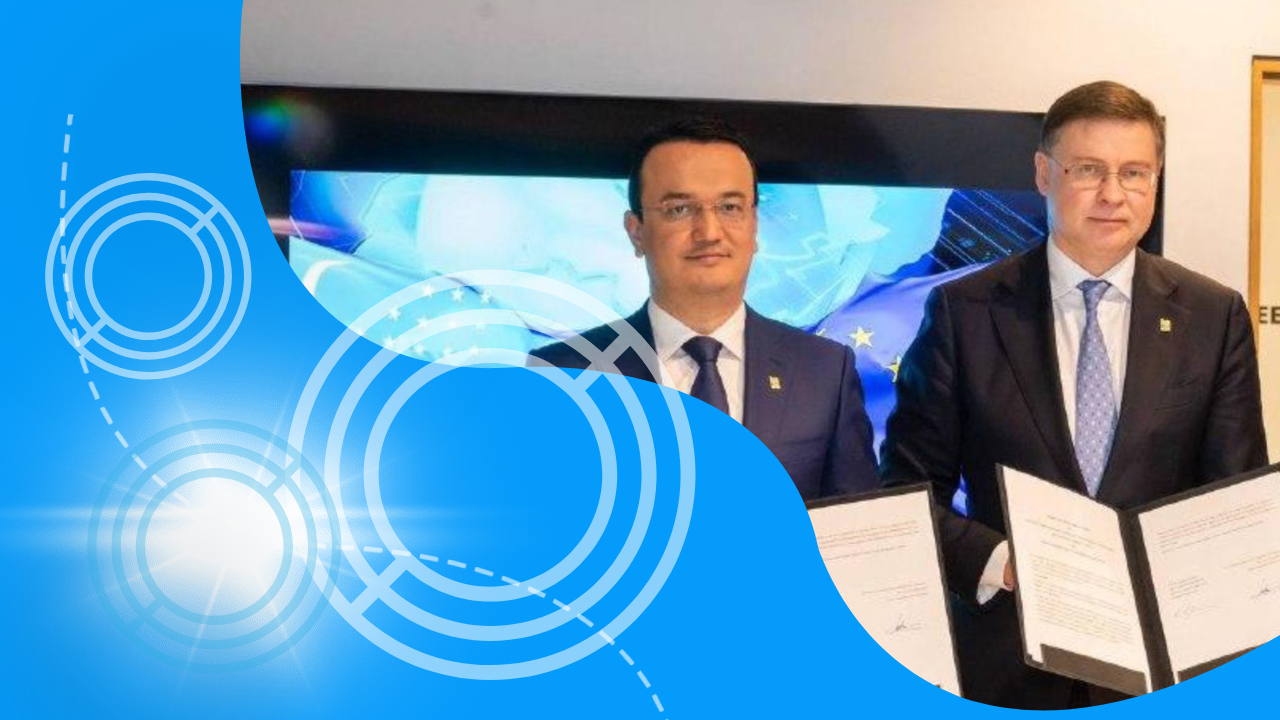
The MoU, inked by European Commission Executive Vice-President Valdis Dombrovskis and Uzbekistan’s Minister of Investment, Industry, and Trade Laziz Kudratov, underscores a mutual commitment to bolster cooperation in the realm of CRMs.
The strategic partnership delineates several key areas of collaboration:
- Integration of Sustainable CRM Value Chains: This entails networking, project proposal selection, joint project development, and trade and investment facilitation along the entire value chain.
- Enhancing Resilience of CRM Supply Chains: Both parties will engage in dialogue to bolster transparency regarding investments, operations, and exports.
- Mobilization of Funding: Efforts will be directed towards funding projects arising from the partnership, alongside the development of necessary infrastructure, such as clean energy supply.
- Promoting Sustainable and Responsible Production: The partnership aims to ensure sustainable and ethical production and sourcing of CRMs.
- Research and Innovation Collaboration: Both entities will share knowledge and technologies related to sustainable exploration, extraction, processing, and recycling of CRMs.
- Capacity Building: Cooperation will extend to enforcing relevant rules, alongside training and skill development initiatives.
Moving forward, subsequent to the MoU’s endorsement, the EU and Uzbekistan will collaboratively formulate an operational roadmap comprising concrete implementation actions.
It will be important to improve the resilience of CRM supply chains and establish a dialogue to enhance the transparency of measures related to investments, operations and exports. Funding needs to be mobilised for projects resulting from the EU-Uzbekistan partnership and for the development of infrastructure, such as the development of clean energy supply.
Next steps include agreeing on an operational roadmap with concrete steps towards its implementation, as part of the EU’s commitment to establishing mutually beneficial CRM value chain partnerships with resource-rich countries. Uzbekistan has the second-largest reserves of CRMs in Central Asia, boasting significant deposits of various minerals such as copper, molybdenum, and gold. The country’s mining strategy aligns with its ambitions to increase the processing of CRMs for both domestic and international industries, particularly in automotive and consumer electronics.
In a broader context, this partnership resonates with the objectives articulated in the 2020 Action Plan for Critical Raw Materials and the EU’s external energy engagement strategy. It underscores the EU’s commitment to fostering mutually beneficial CRM value chain partnerships with resource-endowed nations.
Uzbekistan, boasting the second-largest reserves of CRMs in Central Asia, possesses important deposits of minerals such as copper, molybdenum, and gold. The country’s mining strategy aligns with its aspirations to enhance CRM processing for both domestic utilization and international industries, notably the automotive and consumer electronics sectors.
This strategic alliance aligns seamlessly with the EU’s Global Gateway strategy, a flagship initiative earmarked for sustainable and high-quality investments worldwide. The strategy aims to address the needs of partner countries, ensuring enduring benefits for local communities. As part of this initiative, the EU aims to mobilize up to €300bn in investments by 2027.
The EU has already forged raw materials partnerships with several nations, including Canada, Ukraine, Kazakhstan, Namibia, Chile, Argentina, Zambia, the Democratic Republic of Congo, and the Autonomous Territory of Greenland, underscoring its proactive approach to securing critical resources and fostering global partnerships.
Photo © EUROPEAN COMMISSION
-
Kazatomprom Successfully Completes Uranium Concentrate Delivery to Romanian Energy Company
The National Atomic Company “Kazatomprom” (hereinafter referred to as “Kazatomprom” or the “Company”) announces the successful completion of uranium concentrate deliveries to the energy company Societatea Natională “Nuclearelectrica” S.A. (“SNN”). SNN is Romania’s state-owned company in the field of electricity and heat supply, engaged in nuclear fuel production, and operates the Cernavodă Nuclear Power Plant, which accounts for approximately 20% of the country’s energy production.
In December 2022, Kazatomprom was declared the winner of an open tender by SNN for the supply of uranium dioxide for Romania’s nuclear energy needs. In accordance with the contract terms, the Company delivered natural uranium to the SNN plant. Kazatomprom exported its product through the Trans-Caspian International Transport Route (TCITR), which the Company has actively utilized since 2018.
Recognized as a reliable and preferred supplier in the global nuclear fuel market, Kazatomprom will continue diversifying its supply geography and exploring new sales markets.
-
Reforming Efforts Underway in Kazakhstan’s Geological and Mining Committee
The Committee of Geological, Mining, Coal Mining, and Metallurgical Industry (CGMCMI) of the Presidium of the National Chamber of Entrepreneurs of the Republic of Kazakhstan “Atameken” is currently undergoing a phase of restructuring. These changes not only affect the organizational structure but also aim to enhance the overall efficiency of its operations. Highlighting the committee’s proactive approach, Atameken’s Presidium Chairman Raimbek Batalov emphasized the necessity for adaptation, citing the evolving landscape of strategic issues within the mining and metallurgy sector, requiring innovative approaches and swift community consolidation.
During the latest committee session chaired by CGMCMI Director Nikolay Radostovets, discussions revolved around topics such as research and development funding amounting to 1% of extraction expenses, reforming commodity exchange legislation, procurement of goods by subsoil users, agreement on the roadmap for mining and metallurgy development, supply of metals to processing industry enterprises, and the establishment of a Working Group to incentivize waste processing. Deputy Chairperson of Atameken’s Presidium, Gulnara Bizhanova, also participated in the committee session.
Among the deliberations was the initiative from government bodies and parliamentarians to amend the funding procedure for research and development, setting it at 1% of extraction expenses. Within the Working Group discussing the science and technology policy bill, proposals were made to channel all allocated funds for research and development through the Science Fund via the national and local budgets.
According to Atameken’s expert, Erlan Smailov, centralizing research funding through the Science Fund could diminish the economy’s innovation capacity and pose financial burdens. He argued against interfering with a system that has demonstrated growth, presenting statistics indicating a 42% increase in research and development expenditure in the science and education sector in 2023 compared to the previous year.
Deputy Executive Director of the CGMCMI, Erbol Zakariyanov, reminded of similar discussions held three years ago when legislative amendments were proposed to ensure non-tax revenues to the national budget through subsoil user funds allocated for research and development. These proposals failed to gain government support.
Zakariyanov stressed the significant role of subsoil users in advancing industry science, conducting research in their own research centers and laboratories, partly financed through contractual obligations. He emphasized the need for a funding mechanism that prevents adverse impacts on subsoil users, maintains conditions for their research activities, and only centralizes unused funds.
The agenda also included discussions on the roadmap for mining and metallurgy development. Deputy Chairperson of Atameken’s Presidium, Gulnara Bizhanova, highlighted the industry’s lack of strategy and accumulated issues. As a result, a comprehensive set of proposals addressing key industry challenges was formulated within the roadmap. Two roadmaps were developed, one requiring decisions from the authorized body and the other involving the government with other state agencies. Both documents were endorsed during the session and will be submitted for government approval.
Attention was also given to ensuring domestic raw material supply to processing industry enterprises based on relevant agreements. Domestic raw materials refer to goods listed in the domestic raw material products list approved by the Ministry of Industry and Infrastructure Development. Export of domestic raw materials listed in the list is allowed based on licenses issued by the authorized body. The licensing mechanism will be enforced six months after the law comes into effect.