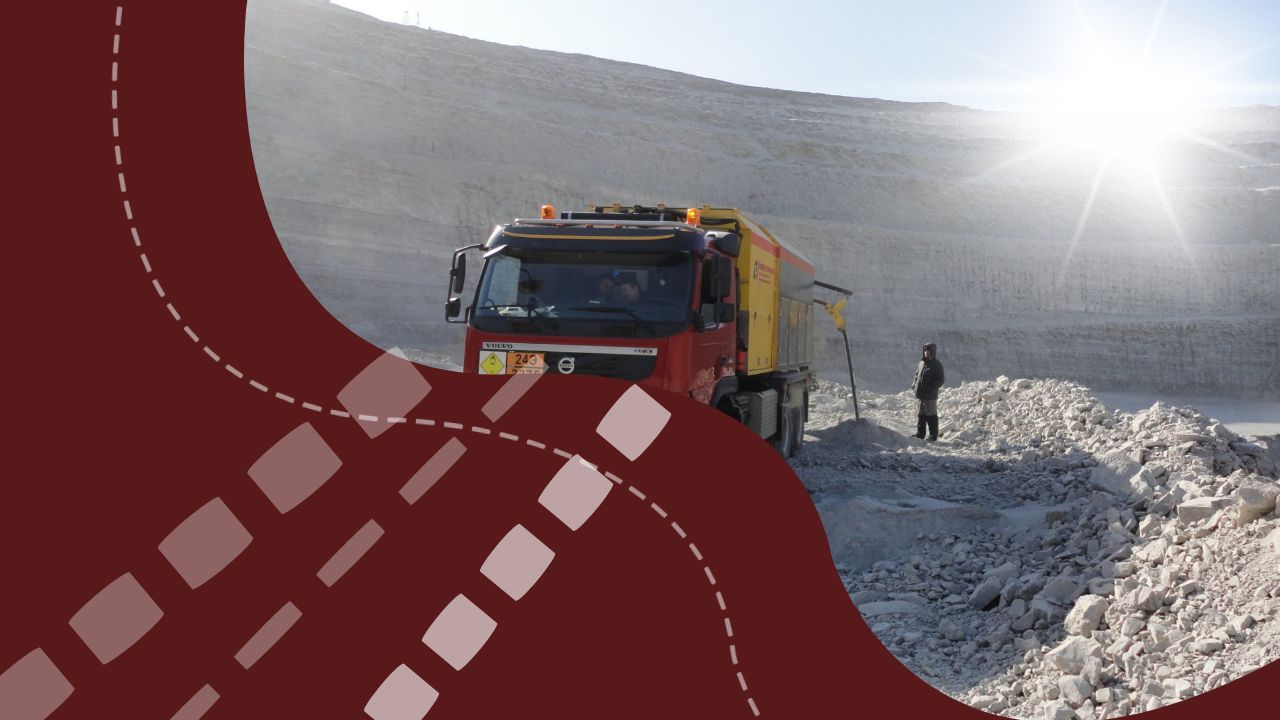
Kanat Sharlapaev, Minister of Industry and Infrastructure Development of Kazakhstan, met with representatives of Jiaxing International Resources Investment LTD to discuss the progress of the tungsten mining project at the Bugytinskoye deposit in the Almaty region.
TOO “Zhetysu Tungsten” is constructing a mining enterprise to implement the tungsten mining project at the Bugytinskoye deposit. The deposit holds a contract for mineral extraction (Contract No. 4608-TPI dated June 2, 2015, for a term of 25 years).
Construction, installation, and mining operations are actively underway with operations scheduled to commence by the end of 2024. The deposit and processing plant are expected to create 1000 job opportunities.
The project aims to mine and process 3.3 million tons of tungsten ore, producing 65% tungsten concentrate. Currently, there’s an economic feasibility study for constructing a deep processing complex to further process the 65% tungsten concentrate into 88.5% ammonium paratungstate and high-purity tungsten carbide.
Following the meeting, both parties expressed gratitude and underscored the importance of bilateral relationship development.
Yerzhan Yelekeyev, Chairman of the Board of JSC “NC KAZAKH INVEST,” convened a meeting with the leadership of British company Concrete Canvas Ltd. to discuss the potential establishment of a concrete canvas production plant in Kazakhstan.
Concrete Canvas Ltd. has recently established a representative office in Kazakhstan, conducting market research and engaging in negotiations with relevant governmental bodies. Initially considering production localization in Russia, the company pivoted to Kazakhstan due to geopolitical circumstances.
The proposed project aims to address Kazakhstan’s urgent needs in irrigation system construction and reconstruction using innovative Concrete Canvas technology. This initiative promises to enhance the operational reliability of irrigation systems, mitigate water loss in the agro-industrial sector, and decrease budgetary expenditures on infrastructure renovation programs.
Concrete Canvas Ltd. specializes in geosynthetic cement composite mats, ensuring water retention during filtration while maintaining material durability. Their technology utilizes a rolled multicomponent material with a cement filler, rapidly solidifying to form a thin, robust, reinforced, and waterproof concrete layer. Notably, the installation process is significantly faster, requiring 95% fewer materials compared to conventional concrete methods, thus reducing environmental impact.
Yelekeyev acquainted Concrete Canvas representatives with Kazakhstan’s investment policies and the extensive support provided by KAZAKH INVEST for investment projects. Highlighting the British company’s intent to localize production in Kazakhstan, Yelekeyev detailed subsidy mechanisms and the benefits of concluding an Investment Agreement.
Assuring comprehensive support for the promising investment endeavor, Yelekeyev affirmed KAZAKH INVEST’s commitment following the meeting.
On March 26, BGV Group Management, one of Ukraine’s largest investment companies, showcased cooperation opportunities with Ukraine in the mining sector at a prestigious event in London. Founder Gennadii Butkevych and the management team were invited to join British parliamentarians, members of the House of Lords, and state ministers at the Houses of Parliament to discuss investment prospects in Ukraine. The focus was on fostering British-Ukrainian collaboration in critical minerals mining to facilitate the UK’s advancement in technology and its transition to clean energy.
The event witnessed the participation of Lord Martin Callanan, Under Secretary for Energy Efficiency and Green Investment at the Department for Energy Security and Net Zero, and Bob Seely MP, alongside representatives from Ukrainian business entities.
During their address, the BGV team outlined three key areas for bilateral development:
Exploration of Ukraine’s Mining Potential: Highlighting Ukraine’s abundance of critical minerals essential for advanced technologies and clean energy transition. With over 117 mineral types discovered, including 22 out of 30 critical resources identified by the EU, Ukraine possesses substantial reserves of minerals like beryllium, zirconium, titanium, rare earths, and graphite, strategically located with favorable logistics.
Risk Mitigation: Emphasizing the necessity of war risk insurance to safeguard foreign investments in Ukraine. The Multilateral Investment Guarantee Agency (MIGA) and other international entities offer insurance mechanisms to support investments in Ukrainian projects.
Investment Opportunities: Encouraging increased British investment in Ukrainian mining. BGV Group, with over $100 million invested in Ukrainian mining projects, expressed readiness to collaborate with British investors. Projects such as the Balakhiv graphite production complex and the Perzhansk beryllium deposit were presented as potential areas for investment.
The BGV team stressed that collaboration in critical minerals could provide Britain with a robust resource base for various industries, including medicine, automotive, technology, aerospace, while reducing European dependence on Chinese minerals.
Kazatomprom’s CEO, Meirzhan Yussupov, highlighted a significant surge in the demand for nuclear power amidst geopolitical tensions in 2023. Yussupov stated that despite the challenges, the demand for nuclear energy, being a stable and low-carbon source, notably increased. With Kazakhstan contributing around 40% of the global uranium production annually, Yussupov proudly mentioned that approximately every third nuclear reactor worldwide is powered by Kazakh uranium.
The company emphasized its role in the energy security agenda amidst ongoing global geopolitical uncertainties. Operating in an ESG-compliant and low-risk jurisdiction, Kazatomprom positions itself as a reliable supplier of natural uranium, ready to cater to utilities’ needs in diversifying their supply sources.
Addressing the impacts of international sanctions, Kazatomprom reiterated its commitment to assessing and monitoring sanctions risks continuously. The company has developed action plans to mitigate negative impacts on its activities, adapting them to evolving risks and updates.
Regarding financial resilience amid geopolitical tensions, Kazatomprom stated that events in Ukraine have not affected its financial position significantly. Majority of its revenues are in US dollars, providing a natural hedge against currency risks.
The company has taken cautious steps regarding operations involving Russian banks under active international sanctions processes. Additionally, it continues to assess risks associated with its contracts, such as uranium processing with entities in the Russian Federation.
Despite potential challenges in transportation due to sanctions, Kazatomprom assures uninterrupted supply to end customers, thanks to continuous monitoring and the Trans-Caspian International Transport Route.
Regarding proposed US legislation on Russian enriched uranium imports, Kazatomprom clarified that it wouldn’t impact its primary business of natural uranium production.
The company reported a significant revenue increase in 2023, attributed to higher average realized prices, increased sales volumes, and revenue growth from fuel assembly and rare metal products segments.
Looking ahead, Kazatomprom expects uranium production volumes for 2024 to remain consistent, but acknowledges uncertainties due to construction delays at new sites, which may affect operating performance.
The Ministry of Natural Resources underscores the significance of adhering to the legislative requirements of the Kyrgyz Republic concerning the regulation of relationships in the sphere of subsoil use. With the objective of preventing the transfer of licenses for subsoil use through means not provided for by the legislation, the Ministry notifies that, in accordance with the “On Subsoil” Law, the transfer of a license is not possible until two years have elapsed from the date of concluding the licensing agreement for conducting operations. It is emphasized that the transfer of a license to another party as a result of transferring rights under the license is equated to obtaining a license and entails the payment of a bonus stipulated by the tax legislation of the Kyrgyz Republic. Moreover, the transfer of the license is only possible in the absence of any arrears from the subsoil user in paying bonus amounts, royalties, and fees for subsoil use. According to Article 351 of the Tax Code, the transfer of the right to use subsoil to another party, except in cases of inheritance or the reorganization of a legal entity that does not result in changes to the composition of participants (shareholders) or shares (stocks) of the authorized capital, is subject to taxation. Failure to pay the bonus or license fees within the specified period leads to the suspension, and subsequently, the termination of the right to use subsoil.
Transatlantic allies recently convened in Belgium to discuss trade and technology. Unfortunately, their efforts to reach an accord on critical mineral supply chains fell short this week. The final draft statement acknowledges that the transatlantic allies are “advancing negotiations toward a critical minerals agreement,” but it does not constitute a finalized deal. An earlier version of the statement had left room for an “agreement in principle.”
Despite this setback, both the US and EU remain hopeful about reaching an agreement later this year, especially before the upcoming elections on both sides of the Atlantic. However, their attempts to conclude an agreement have faced challenges. The EU has pointed out that the US’s terms are more demanding than those it required from Japan in a similar arrangement, particularly concerning labor rights across supply chains.
The European Commission has not yet responded to requests for comment, while the US Trade Representative’s office acknowledges that there is still work to be done. The negotiations aim to deepen the clean energy partnership between the US and the EU, ensuring access to sustainable and trusted sources of critical minerals. Such an agreement would allow European companies to benefit from green subsidies under President Joe Biden’s Inflation Reduction Act, supporting clean-energy projects in North America.
While a minerals accord would be akin to a free-trade agreement, it may not fully cover recycled critical minerals or address certain provisions. Nevertheless, it would enable electric vehicles containing EU-extracted and processed critical minerals to qualify for IRA subsidies.
In 2022, the EU exported €8.6 billion ($9.26 billion) worth of key minerals to the US. As discussions continue, this week’s trade and technology meeting is expected to focus on various issues, including 6G, quantum computing, semiconductors, bio-technologies, gender-based violence prevention online, disinformation combat, and principles governing artificial intelligence. The goal is to establish a foundation for ongoing collaboration beyond this year’s elections.
По имеющимся данным, в Центральной Азии сосредоточено 38,6 % мировых запасов марганцевой руды, 30,07 % хрома, 20 % свинца, 12,6 % цинка, 8,7 % титана и значительные запасы других материалов. Эксперты считают, что Казахстан имеет потенциал составить конкуренцию Китаю, который доминирует в производстве редкоземельных элементов (70% мирового производства), в добыче таких металлов как скандий, иттрий и 15 лантаноидов. Эти элементы широко используются в изготовлении компьютеров, турбин и автомобилей. Соединенные Штаты и Европейский Союз заинтересованы в инвестировании в крупные горнодобывающие проекты в Казахстане, так как их высокая зависимость от китайских редкоземельных элементов заставляет искать альтернативные источники поставок. Сейчас США сильно зависят от импорта иттрия и скандия, в то время как Евросоюз импортирует 98% необходимых ему редких металлов из Китая.
Критические ресурсы – это природные ресурсы, которые считаются важными для экономического и технологического развития стран в связи с их ключевой ролью в производстве широкого спектра высокотехнологичных продуктов. Эти ресурсы характеризуются дефицитом, сложностью их добычи и переработки, а также географической концентрацией их месторождений. К таким ресурсам относятся, в частности, редкоземельные элементы (РЗЭ), стратегические металлы и другие минералы.
Могут ли внешние акторы конкурировать за доступ к ресурсам в Центральной Азии?
США и Китай уже вступают в конкуренцию за критические ресурсы стран Центральной Азии. Это видно в изменении подхода США к взаимодействию со странами Центральной Азии. Соединенные Штаты начали делать больший упор на критических ресурсах — сфере, где присутствие России и Китая не столько сильно. В сентябре 2022 года администрация Байдена запустила Инициативу экономической устойчивости в Центральной Азии (ERICEN). В 2022 году планировалось вложить 25 млн. долл. США с целью диверсификации торговых маршрутов и расширения инвестиций в регион. 18-19 мая 2023 года на саммите “Китай-Центральная Азия” Председатель КНР Си Цзиньпин заявил, что Китай выделит 4 миллиарда долларов странам региона в виде финансового сопровождения и безвозмездной помощи. В этот промежуток времени США и Евросоюз вероятно поняли, что активизация взаимодействий со странами Центральной Азии имеет немного запоздалый характер и конкуренция с РФ и КНР в таких сферах как безопасность и экономика будет иметь малый успех.
В дальнейшем принимается решение провести саммит “США-Центральная Азия” в сентябре 2023 года, хотя годом ранее в 2022 году Президент Казахстана на полях 77-ой Генеральной Ассамблеи ООН встретился с председателем Еврокомиссии Урсулой фон дер Ляйен, с Президентом Австрии Ван дер Белленом, с руководителями крупнейших американских корпораций и глобальных финансовых институтов, но не с Джо Байденом. Но данный саммит выделяется на фоне других событий. Анализ действий США после саммита подчеркивает, что стремление к доступу к редкоземельным металлам в Центральной Азии было одной из ключевых целей. Саммит прошел 20 сентября 2023 года, и в совместной декларации “C5+1” отдельно уделяется внимание созданию разнообразных, устойчивых и надежных цепочек поставок критических минералов, разработку новых технологий для добычи и переработки сырья, а также созданию добавленной стоимости в рамках регионального промышленного сотрудничества для снижения стратегической зависимости. Стоит отметить, что в других стратегических документах США, связанных с Центральной Азией, критические минералы не упоминались: ни в стратегии США в Центральной Азии 2019-2025, ни в комплексных стратегиях по каждой отдельной республике региона опубликованных Госдепом США в 2022 году.
Разведка, добыча и обработка критических ресурсов становится той сферой, где США могут бросить вызов влиянию России и Китая. Соединенные штаты значительно активизировались в этом направлении. 8 февраля 2024 года в Государственном департаменте США состоялось первое заседание Диалога по важнейшим полезным ископаемым (CMD) в формате C5+1 с участием высокопоставленных чиновников из всех пяти стран Центральной Азии. Представители всех сторон выразили заинтересованность в изучении возможностей для американских инвестиций в добычу и переработку этих важнейших минералов в регионе. К тому же инвестиции в полезные ископаемые Казахстана обсуждали Госсекретарь США Энтони Блинкен с министром иностранных дел Казахстана Муратом Нуртлеу 26 марта 2024 года. Рост числа американских экспертных оценок намекает на повышенный интерес этой страны к вопросам критически значимых редкоземельных элементов в ЦА по сравнению с другими государствами. Поэтому авторы ссылаются на американские источники в силу их актуальности и доступности. Стоит добавить, что в ежегодном докладе разведывательного сообщества США об оценке угроз говорится:
“Китай рассматривает конкурентные меры Вашингтона против Пекина как часть более широких дипломатических, экономических, военных и технологических усилий США, направленных на сдерживание его подъема, подрыв правления КПК и недопущение реализации региональных и глобальных властных амбиций КНР. “ (стр. 7)
А в чем именно можно сдерживать развитие Китая? В экономическом развитии, для которого требуются большие ресурсы в особенности для создания хай-тек технологий. 5 марта 2024 года премьер-министр Китая Ли Цян на ежегодной сессии Всекитайского собрания народных представителей заявил, что правительство работает над преобразованием модели развития страны. В том числе правительство страны продолжит вкладывать ресурсы в технологические инновации и передовое производство в соответствии со стремлением главы государства Си Цзиньпина к созданию “новых производительных сил”. Применение инноваций касается также создания микрочипов и развитие оборонных технологий, в обеих сферах требуются критические ресурсы и обе являются критически важными для КНР в данный момент. Поэтому стратегия США может заключаться в снижении зависимости от поставок критических ресурсов из Китая и сузить возможности китайских компаний расширять источники данных ресурсов. Как отмечает Каспийский политический центр, по мере усиления соперничества между Китаем и США, зависимость США от Китая в области критически важных минералов становится все более уязвимым стратегическим местом. Китай является бесспорным лидером в цепочках поставок важнейших минералов, контролируя почти 60 % предприятий по добыче редкоземельных металлов и более 85 % мировых перерабатывающих мощностей. При желании Китай может использовать свою почти монопольную позицию на критически важные минералы, чтобы нанести ущерб высокотехнологичной промышленности и военно-промышленному потенциалу Соединенных Штатов, отмечает каспийский политический центр. К примеру, Пекин объявил в декабре 2023 об ограничениях на экспорт ряда минералов, а также технологий их добычи и переработки. При этом некоторые эксперты считают, что страны Центральной Азии могут составить конкуренцию Китаю в производстве редкоземельных металлов.
Для Китая приоритетом является сохранение своих стратегических позиций, а также, если рассуждать в логике конкуренции великих держав, предотвращение возможности для США и их союзников обнаружения и использования новых источников критически важных ресурсов. Примечательно, что после визита Президента Франции Эммануэля Макрона в Казахстан и Узбекистан 1-2 ноября, Министр горной промышленности и геологии Бобир Исламов сообщил, что Узбекистан и французская компания “Orano” ранее подписали соглашение о стратегическом партнёрстве. Он также добавил, что Orano планирует инвестировать до 500 млн долларов в добычу и переработку урана в Узбекистане. При этом 7 ноября Государственное предприятие Узбекистана “Навоиуран” и китайская компания “China National Nuclear Corporation” подписали меморандум о стратегическом сотрудничестве в урановой промышленности.
Одной из главных ниш конкуренции западных стран с Китаем в сфере критических ресурсов будет получение возможности добывать и обрабатывать сырье. Это сравнительно новое пространство и, как отмечают американские эксперты, Центральная Азия имеет возможность расширить добычу редкоземельных элементов, будучи не полностью зависимой от Китая. Однако, учитывая, что не все месторождения в регионе изучены, известно, что китайские компании владеют большинством лицензий на добычу важнейших полезных ископаемых в Таджикистане и Кыргызстане.
В этой связи важно проанализировать стратегические преимущества Китая и США в конкуренции за критические ресурсы стран Центральной Азии:
Китай:
Географическая близость: Китай граничит с несколькими странами Центральной Азии, что облегчает доступ и снижает транспортные расходы на добычу ресурсов.
Инвестиционный потенциал: Китай обладает значительными финансовыми ресурсами для инвестирования в крупномасштабные проекты по добыче полезных ископаемых и развитию инфраструктуры, часто предлагая кредиты и инвестиции странам Центральной Азии в рамках своей внешней политики и стратегии расширения экономического сотрудничества. Это наглядно было показано по количество средств, которые США и Китай были готовы выделить для развития различных проектов.
Долгосрочные отношения: Китай активно поддерживает долгосрочные отношения со странами Центральной Азии посредством дипломатии и экономического партнерства, создавая благоприятные условия для работы своих компаний.
США:
Позиционирование в качестве альтернативы Китаю: США могут сформулировать и распространить нарратив, подчеркивающий их сильные стороны в области инноваций, демократических ценностей и приверженности этическим стандартам в области технологий и добычи ресурсов. Этот нарратив должен также представлять США в качестве альтернативы доминирующему Китаю для снижения зависимости от последней.
Глобальное влияние и партнерство: США обладают широкой сетью глобальных альянсов и партнерств, которые могут быть использованы для заключения соглашений о добыче ресурсов и создания коалиций для инвестиций в Центральную Азию. В качестве примера можно привести Партнерство по безопасности минералов, которое было создано для противостояния китайскому доминированию. К данному партнерству присоединились Австралия, Канада, Эстония, Финляндия, Франция, Германия, Индия, Италия, Япония, Норвегия, Республика Корея, Швеция, Великобритания, Соединенные Штаты и Европейский Союз (представленный Европейской Комиссией). Данное партнерство пригласило богатые минералами африканские страны противостоять китайскому доминированию. В их число вошли такие богатые ресурсами страны, как ЮАР, Ботсвана, Ангола, Мозамбик, Намибия, Танзания, Замбия, Уганда и Демократическая Республика Конго.
Мягкая сила и дипломатия: С помощью своей “мягкой силы”, включая помощь в области образования, культуры и развития, США могут способствовать развитию отношений, которые облегчают переговоры и операции в Центральной Азии, подчеркивая демократические ценности и корпоративную ответственность.
Какие риски и возможности открываются перед странами Центральной Азии в связи с конкуренцией в данной сфере?
Конкуренция между великими державами за доступ к важнейшим ресурсам в Центральной Азии представляет собой сочетание рисков и возможностей для стран этого региона. Страны Центральной Азии, обладающие огромными запасами критически важных минералов и редкоземельных металлов, могут играть ключевую роль в глобальном стремлении к технологическому прогрессу и энергетическому переходу. Этот сценарий разворачивается в более широком геополитическом контексте, где эти страны занимают позиции между интересами крупных держав, таких как Китай, США и, в меньшей степени, Россия и Европейский союз.
Возможности для стран Центральной Азии:
Экономическое развитие и диверсификация: Спрос на критически важные ресурсы открывает перед странами Центральной Азии широкие возможности для развития и диверсификации экономики за пределами традиционных секторов, таких как сельское хозяйство и энергетика. Инвестиции в горнодобывающие и перерабатывающие предприятия могут стимулировать создание новых рабочих мест, развитие инфраструктуры и передачу технологий, повышая общую экономическую устойчивость.
Стратегическое партнерство и иностранные инвестиции: Растущий интерес со стороны США, Китая и ЕС может привести к увеличению прямых иностранных инвестиций (ПИИ) в регион. Этот приток капитала и опыта может быть использован для развития других секторов экономики, улучшения инфраструктуры и наращивания человеческого капитала через программы образования и обучения, спонсируемые иностранными партнерами.
Улучшение глобального положения: Играя более заметную роль в глобальной цепочке поставок критически важных минералов, страны Центральной Азии могут повысить свое стратегическое значение на мировой арене, что даст им больше рычагов влияния на международную дипломатию и торговые переговоры.
Риски для стран Центральной Азии:
Зависимость от внешних акторов: Стремясь к освоению своих минеральных богатств, страны Центральной Азии могут попасть в чрезмерную зависимость от одной или нескольких внешних держав в вопросах экономической стабильности. Такая зависимость может ограничить их внешнеполитическую автономию и сделать их уязвимыми для экономического или политического давления.
Деградация окружающей среды: Добыча и переработка редкоземельных металлов и важнейших минералов может оказать значительное воздействие на окружающую среду, включая загрязнение воды, деградацию почвы и разрушение среды обитания. Без жесткого экологического регулирования и надзора погоня за экономическими выгодами может привести к долгосрочному экологическому ущербу.
Социально-экономические диспропорции: Приток иностранных инвестиций и ориентация на добычу полезных ископаемых могут усугубить социально-экономическое неравенство в странах Центральной Азии. Регионы, богатые полезными ископаемыми, могут получить значительное развитие, в то время как другие отстают, что может привести к внутренней напряженности и социальным беспорядкам.
Геополитическое соперничество: Острая конкуренция между крупными державами за доступ к важнейшим ресурсам может стать причиной геополитических манипуляций в странах Центральной Азии. Так, часть ресурсов, которые расположены на территории стран региона могут быть использованы для военной промышленности, что может не нравится конкурирующим сторонам.
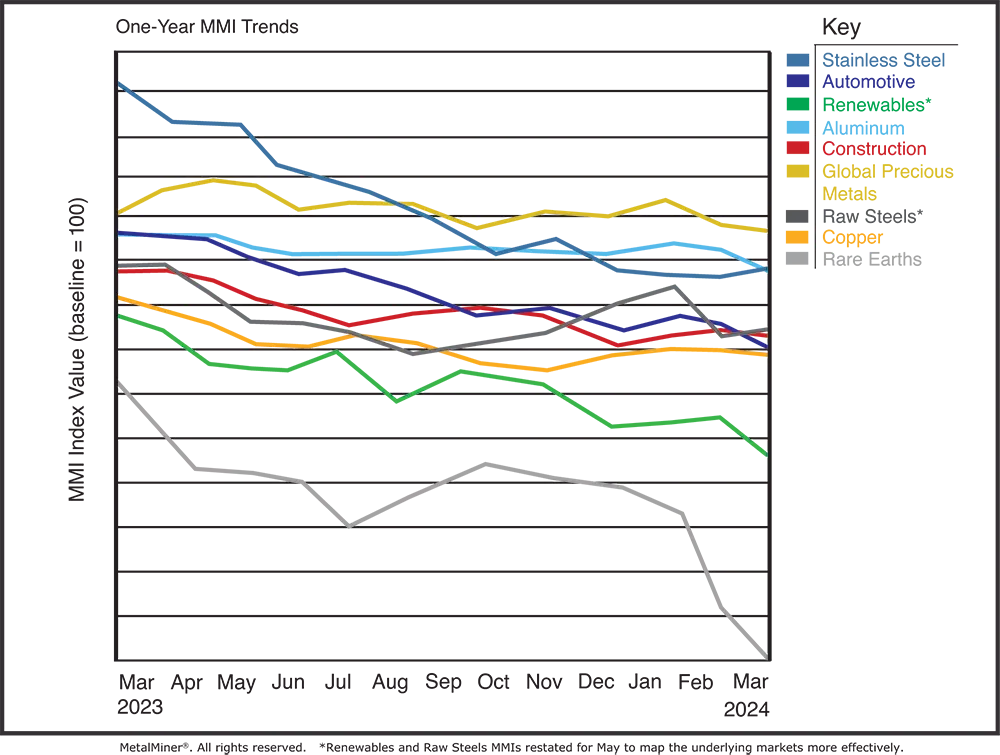
Изменение цен на рынках: Цены на редкоземельные металлы, как отмечает “Metal Miner”(рисунок ниже) пошли резко вниз с начала 2024 года. В то время как слабый спрос на переработку РЗМ (в первую очередь в Китае, что является косвенным индикатором застоя в микроэлектронике страны) может оказаться одной из причин падения цен, другим потенциальным фактором является увеличение мирового производства и поиска запасов редкоземельных элементов за пределами Китая. С выходом стран Центральной Азии на рынок редкоземельных элементов цены на данные ресурсы могут снизиться, из-за чего страны региона могут также потерять часть потенциальной прибыли.
Место стран Центральной Азии в геополитике редкоземельных металлов
Страны Центральной Азии постепенно выходят на передовую геополитической арены, связанной с добычей и распределением редкоземельных металлов и стараются на это соответственно реагировать. Так, Президент Казахстана Касым-Жомарт Токаев в ежегодном Послании народу Казахстана призвал обеспечить приоритетное право на недропользование инвесторам, осуществляющим геологическое изучение за счет своих средств, добавив:
“Одной из приоритетных задач должно стать освоение залежей редких и редкоземельных металлов, по сути превратившихся в “новую нефть”. Страны, которые смогут реализовать свой потенциал в этой сфере, будут определять вектор технологического прогресса всего мира”.
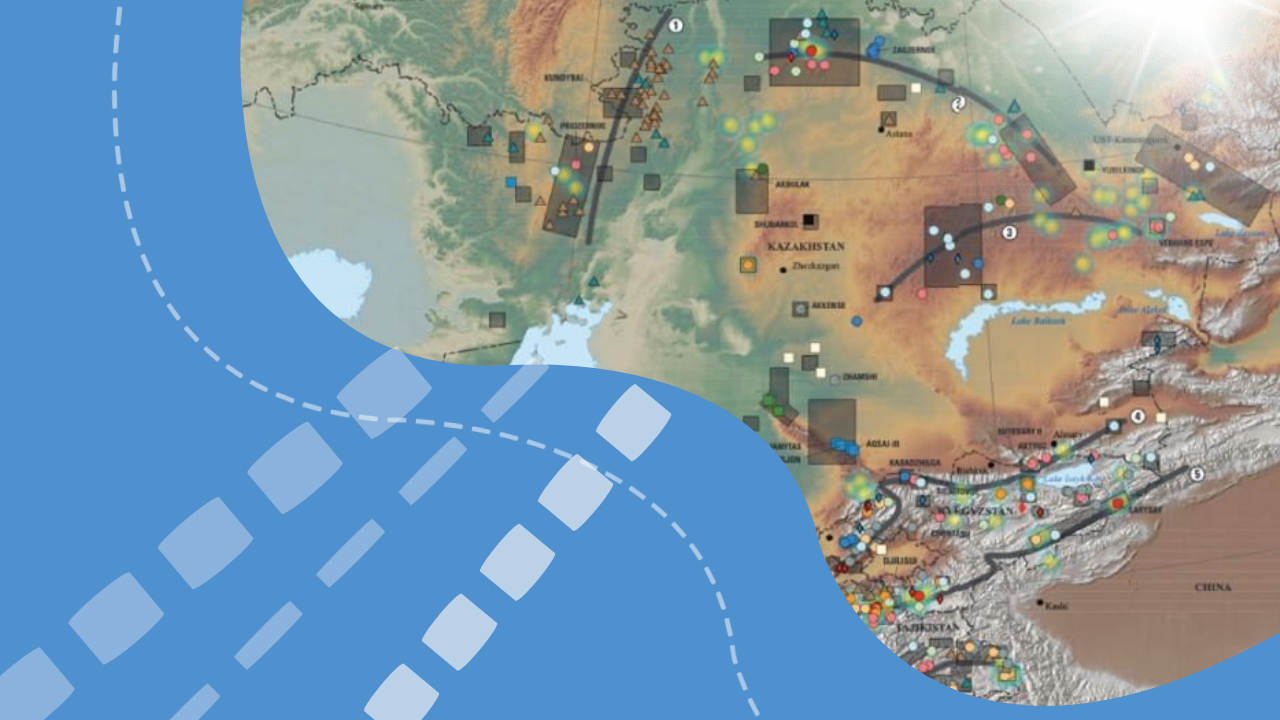
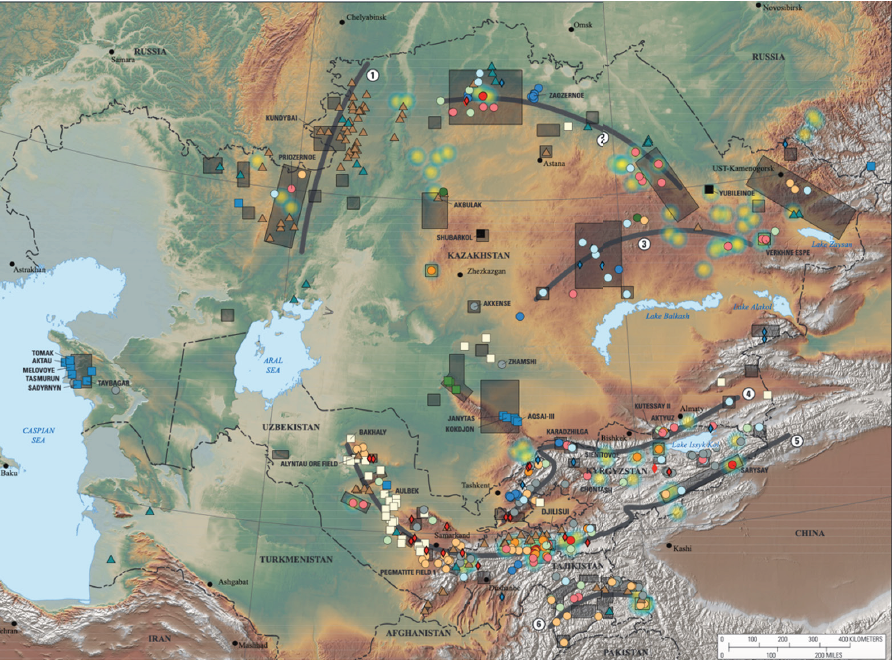
В 2012 году Геологическая служба США начала оценку минерального потенциала редкоземельных элементов в Центральной Азии, завершив в 2016 году с перечнем из 384 месторождений. Это включало места в Казахстане (160), Кыргызстане (75), Таджикистане (60), Туркменистане (2) и Узбекистане (87). Регионы Тянь-Шаня и Памира также привлекли внимание для разведки, учитывая их значительные неразработанные ресурсы.
На данный момент известно, что монацит, циркон, апатит, ксенотим, пирохлор, алланит и колумбит – одни из самых распространенных редких металлов и минералов в Центральной Азии. Эти металлы встречаются в значительных объемах, в частности, в таких районах, как казахская степь, горы Тянь-Шаня и Памира. Потенциал добычи редкоземельных элементов в Центральной Азии значителен, что говорит о перспективности освоения этих ресурсов. Даже на данном этапе, согласно данным из отчета международного энергетического агентства доля минералов и металлов в общем объеме экспорта продукции Кыргызстана составляет больше 50%, у Узбекистана и Таджикистана свыше 30%.
Каждый из перечисленных минералов играет важнейшую роль в современных технологиях и промышленности, от электроники и энергетики до аэрокосмической отрасли и сельского хозяйства, подчеркивая критическое значение редкоземельных элементов и связанных с ними минералов для развития технологий и поддержки глобального экономического развития. Найти точные данные о доли расположенных в Центральной Азии редкоземельных металлов в мире не удалось, но получить приближенное понимание через анализ данных об экспорте руды, металлов, драгоценных и немонетарных камней. Такие данные по странам Центральной Азии предоставляет Конференция ООН по торговле и развитию (ЮНКТАД).
Как показано на рисунке 2 на данном этапе, в обобщенном виде, экспорт руды, металлов и драгоценных камней не сосредоточен только на одном из возможных акторов, как например, Китай, но разбалансировано между двумя крупными потребителями, хотя доля Азии постепенно увеличивается. К сожалению, найти более подробные данные не представляется возможным. Как отметил, Уэсли Хилл, руководитель международной программы по энергетике, росту и безопасности в Международном центре налогов и инвестиций, Китай еще не контролирует добычу редкоземельных металлов в Центральной Азии, несмотря на активность китайской стороны в регионе и на доминирование Китая в добыче и обработке данных ресурсов.
Заключение
Активизация борьбы за критически важные ресурсы в Центральной Азии, в первую очередь с участием США и Китая, подчеркивает растущее стратегическое значение региона в глобальной цепочке поставок редкоземельных металлов и основных полезных ископаемых. Огромные запасы этих ресурсов в Центральной Азии позволяют ей стать потенциальным противовесом нынешнему доминированию Китая в производстве и переработке редкоземельных элементов, необходимых для высоких технологий, возобновляемой энергетики, оборонной и автомобильной промышленности.
Соединенные Штаты уделяют повышенное внимание диверсификации источников критически важных минералов, чтобы снизить зависимость от Китая, о чем свидетельствуют такие инициативы, как Инициатива экономической устойчивости для Центральной Азии (ERICEN) и Диалог C5+1 по критически важным минералам. Эти усилия направлены на создание устойчивых и надежных цепочек поставок, развитие регионального промышленного сотрудничества и стимулирование разведки, добычи и переработки критических минералов в Центральной Азии.
С другой стороны, Китай стремится сохранить свои стратегические позиции и не допустить США и их союзников к новым источникам критически важных ресурсов, что видно по его экономическому влиянию в регионе и стратегическим партнерствам, например, с Узбекистаном в области добычи урана.
Страны Центральной Азии стоят на перепутье, сталкиваясь как с рисками, так и с возможностями. У них есть шанс использовать свои минеральные богатства для экономического развития, привлечения иностранных инвестиций и улучшения своего положения в мире. Однако им может придется преодолевать проблемы, связанные с геополитическим соперничество, деградацией окружающей среды, экономическим неравенством и нестабильностью рынка. Конкуренция между великими державами в регионе подчеркивает, что странам Центральной Азии необходимо тщательно разрабатывать стратегию, чтобы извлечь максимальную выгоду и одновременно снизить риски, обеспечить устойчивое развитие и сохранить автономию в отношении своих природных ресурсов.
Central Asia boasts a significant share of the world’s essential minerals, holding 38.6% of its manganese ore, 30.07% of chromium, 20% of lead, 12.6% of zinc, and 8.7% of titanium, alongside other valuable resources. Kazakhstan, in particular, emerges as a contender against China’s dominance in rare earth elements production, which accounts for 70% globally. The country shows promise in extracting metals like scandium, yttrium, and the 15 lanthanides, crucial for producing computers, turbines, and automobiles. This potential has attracted the attention of the United States and the European Union, both keen to invest in Kazakhstan’s mining projects to reduce their reliance on Chinese rare earths. Currently, the US heavily imports yttrium and scandium, whereas the EU gets 98% of its rare earth supplies from China.
Critical resources are essential natural materials vital for economic and technological progress, due to their crucial use in producing a broad array of high-tech products. These resources, including rare earth elements, strategic metals, and other minerals, are characterized by their scarcity, the complex nature of their extraction and processing, and the concentrated geographical locations of their deposits.
The Race for Central Asia’s Resources: Can Foreign Powers Secure a Stake?
The United States and China are locked in a contest for Central Asia’s vital minerals, marking a shift in American engagement tactics in the region. Moving away from areas traditionally dominated by Russia and China, the U.S. is now zeroing in on critical resources. In September 2022, under the Biden administration, the U.S. rolled out the Economic Resilience Initiative for Central Asia (ERICEN), earmarking $25 million for the year to foster trade diversity and bolster regional investments. Meanwhile, at the May 18-19, 2023, China-Central Asia Summit, Chinese President Xi Jinping pledged $4 billion in financial aid to the region, underscoring the geopolitical stakes. This period also saw a growing realization within the U.S. and EU that their heightened engagement with Central Asia might be too little, too late, facing stiff competition from Russia and China in security and economic spheres.
In September 2023, the U.S. hosted the “US-Central Asia” summit, a significant development given that just a year prior, in 2022, the Kazakh President had met with European and corporate leaders at the 77th UN General Assembly but not with President Joe Biden. This summit was distinct in its focus and outcomes. A post-summit analysis revealed that securing access to Central Asia’s rare earth metals was a primary objective. The summit’s C5+1 joint declaration on September 20, 2023, underscored the aim to forge diverse, sustainable, and reliable critical mineral supply chains, innovate in mining and raw material processing, and foster regional industrial cooperation to lessen strategic dependencies. Notably, this emphasis on critical minerals was not present in previous U.S. strategic documents for Central Asia, neither in the 2019-2025 strategy nor in the individual country strategies published by the U.S. State Department in 2022.
The arena of critical resource exploration, extraction, and processing is emerging as a battleground for the U.S. to counter Russian and Chinese sway. The U.S. has ramped up its involvement notably, hosting the inaugural C5+1 Critical Minerals Dialogue (CMD) with top officials from all five Central Asian nations on February 8, 2024. The dialogue saw a mutual eagerness to delve into prospects for American investment in the region’s critical mineral sectors. Further underscoring this focus, U.S. Secretary of State Anthony Blinken and Kazakh Foreign Minister Murat Nurtleu engaged in discussions on mineral investments in Kazakhstan on March 26, 2024. An increasing volume of analyses by American experts signals a growing U.S. interest in Central Asia’s critical rare earth elements, setting it apart from other nations’ focus. This heightened attention to American perspectives stems from their timely and accessible nature. Additionally, the 2024 Annual Threat Assessment of the U.S. Intelligence Community underscores that:
“China views Washington’s competitive measures against Beijing as part of a broader U.S. diplomatic, economic, military, and technological effort to contain its rise, undermine CCP rule, and prevent the PRC from achieving its regional and global power ambitions.“ (p. 7)
What constraints could impede China’s technological and economic march, particularly in high-tech realms? On March 5, 2024, Premier Li Qiang, addressing the National People’s Congress, outlined China’s pivot towards a new development paradigm, earmarking significant investment for technological innovation and advanced manufacturing. This shift, echoing President Xi Jinping’s vision for fostering “new productive forces,” encompasses pivotal sectors like microchip production and defense technology, both heavily reliant on critical resources. In this context, the U.S. strategy appears to pivot towards diminishing reliance on China for these essential materials, concurrently aiming to curb Chinese firms’ ability to broaden their resource bases. As the Caspian Policy Center points out, the escalating Sino-American competition casts the U.S.’s dependency on China for critical minerals as a strategic Achilles’ heel. Dominating nearly 60% of global rare earth mining and over 85% of processing capabilities, China’s potential to leverage its quasi-monopolistic stance in critical minerals poses a significant threat to the U.S.’s high-tech and defense sectors. This was underscored by Beijing’s December 2023 move to restrict exports of certain minerals and related technologies. Yet, some analysts see Central Asian nations as viable contenders in challenging China’s rare-earth metal supremacy.
For China, safeguarding its strategic dominance and thwarting U.S. and allied efforts to tap new critical resource reserves are paramount, especially within the context of global power dynamics. This strategy was underscored following French President Emmanuel Macron’s tour of Kazakhstan and Uzbekistan on November 1-2. Post-visit, Uzbekistan’s Minister of Mines and Geology, Bobir Islamov, revealed a strategic partnership between Uzbekistan and the French firm Orano, with Orano committing to a $500 million investment in uranium extraction and processing in the country. Concurrently, on November 7, Uzbekistan’s Navoiuran and the China National Nuclear Corporation cemented a strategic memorandum for cooperation in the uranium sector, highlighting the intense international competition for critical resources.
In the arena of critical resources, the ability to mine and refine raw materials emerges as one of key battlegrounds for Western nations vis-à-vis China. This relatively uncharted territory presents Central Asia with the chance to scale up its rare earth element extraction, potentially reducing its reliance on Chinese expertise and investment. However, the landscape is complex; despite the region’s untapped potential, Chinese firms currently dominate, holding the majority of mining licenses for critical minerals in Tajikistan and Kyrgyzstan, as observed by U.S. analysts.
In the competition for Central Asia’s critical resources, China and the United States bring distinct strategic advantages to the table:
China:
Geographic Proximity: Sharing borders with several Central Asian countries, China benefits from easier access and lower transportation costs for extracting resources.
Financial Resources: China’s substantial financial reserves are directed towards significant mining and infrastructure projects in the region, often as part of its broader foreign policy to foster economic cooperation. This commitment is evident in the considerable funds China and the U.S. have allocated for regional development projects.
Long-standing Relationships: Through continuous diplomatic and economic engagement, China has cultivated enduring relationships with Central Asian nations, providing a favorable operational climate for its companies.
United States:
Positioning as an Alternative: The U.S. emphasizes its strengths in innovation, adherence to democratic values, and ethical standards in technology and resource extraction, positioning itself as a counterbalance to China’s influence and offering Central Asian countries an alternative partnership model.
Global Alliances: The U.S. leverages its extensive network of global alliances and partnerships for resource agreements and investment initiatives in Central Asia. A prime example is the Mineral Security Partnership, aimed at countering Chinese dominance, which includes members like Australia, Canada, Estonia, Finland, France, Germany, India, Italy, Japan, Norway, the Republic of Korea, Sweden, the United Kingdom, the United States, and the European Union. This initiative also reaches out to mineral-rich African nations like South Africa, Botswana, Angola, Mozambique, Namibia, Tanzania, Zambia, Uganda, and the Democratic Republic of Congo, to mitigate Chinese influence.
Diplomatic Soft Power: The U.S. employs soft power, including educational, cultural, and development assistance, to cultivate relationships that facilitate its strategic objectives in Central Asia, promoting democratic values and responsible corporate practices.
In the Resource Rivalry, What Risks and Rewards Lie Ahead for Central Asia?
Competition among the great powers for access to critical resources in Central Asia presents a mix of risks and opportunities for the countries of the region. Central Asian countries, with their vast reserves of critical minerals and rare earth metals, can play a key role in the global pursuit of technological progress and energy transition. This scenario unfolds in a broader geopolitical context where these countries are positioned between the interests of major powers such as China, the United States and, to a lesser extent, Russia and the European Union.
Opportunities for Central Asian countries:
Economic Development and Diversification: The demand for critical resources offers Central Asian countries significant opportunities for economic development and diversification beyond traditional sectors such as agriculture and energy. Investments in mining and processing enterprises can stimulate job creation, infrastructure development and technology transfer, increasing overall economic resilience.
Strategic Partnerships and Foreign Investment: Growing interest from the U.S., China, and the EU could lead to increased foreign direct investment (FDI) in the region. This influx of capital and expertise can be used to develop other sectors of the economy, improve infrastructure, and build human capital through education and training programs sponsored by foreign partners.
Improved global standing: By playing a more prominent role in the global supply chain for critical minerals, Central Asian countries can increase their strategic importance on the world stage, giving them greater leverage in international diplomacy and trade negotiations.
Risks for Central Asian countries:
Dependence on external actors: In their quest to exploit their mineral wealth, Central Asian countries may become overly dependent on one or more external powers for economic stability. Such dependence may limit their foreign policy autonomy and make them vulnerable to economic or political pressure.
Environmental degradation: The mining and processing of rare earth metals and essential minerals can have significant environmental impacts, including water pollution, soil degradation and habitat destruction. Without strong environmental regulation and oversight, the pursuit of economic gains can lead to long-term environmental damage.
Socio-economic disparities: The influx of foreign investment and the focus on mining can exacerbate socio-economic inequalities in Central Asian countries. Mineral-rich regions may gain significant development while others lag behind, which may lead to internal tensions and social unrest.
Geopolitical rivalry: Fierce competition between major powers for access to critical resources can cause geopolitical manipulation in Central Asian countries. For example, some of the resources located on the territory of the countries of the region may be used for military industry, which may not be to the liking of the competing parties.
Price movements in the markets: Rare earth metal prices, as Metal Miner (figure below) notes, have gone down sharply since the beginning of 2024. While weak demand for REM processing (primarily in China, which is a proxy for the country’s stagnant microelectronics industry) may be one reason for the price decline, another potential factor is increased global production and the search for rare earth element reserves outside of China. As Central Asian countries enter the rare earth market, prices for these resources may fall, causing countries in the region to lose some of their potential profits as well.
The place of Central Asian countries in the geopolitics of rare earth metals
Central Asian countries are gradually coming to the forefront of the geopolitical arena related to the extraction and distribution of rare earth metals and are trying to respond accordingly. Thus, the President of Kazakhstan Kassym-Jomart Tokayev in his annual Address to the People of Kazakhstan called for ensuring priority rights to subsoil use to investors who carry out geological exploration at their own expense, adding:
“One of the priority tasks should be the development of deposits of rare and rare-earth metals, which have essentially turned into “new oil”. The countries that will be able to realize their potential in this area will determine the vector of technological progress of the entire world”.
In 2012, the U.S. Geological Survey began assessing the mineral potential of rare earth elements in Central Asia, concluding in 2016 with a list of 384 deposits. This included locations in Kazakhstan (160), Kyrgyzstan (75), Tajikistan (60), Turkmenistan (2) and Uzbekistan (87). The Tien Shan and Pamir regions have also attracted exploration attention given their significant undeveloped resources.
It is currently known that monazite, zircon, apatite, xenotime, pyrochlore, allanite and columbite are among the most common rare metals and minerals in Central Asia. These metals occur in significant quantities, particularly in areas such as the Kazakh steppe, the Tien Shan and Pamir mountains. The potential for mining rare earth elements in Central Asia is significant, which indicates that the development of these resources is promising. Even at this stage, according to a report by the International Energy Agency, the share of minerals and metals in Kyrgyzstan’s total exports is over 50%, while Uzbekistan and Tajikistan have over 30%.
Each of the minerals listed plays a critical role in modern technology and industry, from electronics and energy to aerospace and agriculture, emphasizing the critical importance of rare earth elements and related minerals in advancing technology and supporting global economic development. It was not possible to find exact data on the share of rare earth metals in the world located in Central Asia, but it was not possible to obtain a rough understanding by analyzing data on exports of ores, metals, precious and non-monetary stones. Such data on Central Asian countries is provided by the UN Conference on Trade and Development (UNCTAD).
As Figure 2 shows at this stage, in a generalized form, exports of ores, metals and gemstones are not concentrated on only one of the possible actors, such as China, but are unbalanced between the two major consumers, although Asia’s share is gradually increasing. Unfortunately, it is not possible to find more detailed data. As noted by Wesley Hill, head of the international program on energy, growth and security at the International Tax and Investment Center, China does not yet control rare earth mining in Central Asia, despite Chinese activity in the region and China’s dominance in mining and processing these resources.
Conclusions
The intensifying competition for critical resources in Central Asia, primarily involving the United States and China, underscores the region’s growing strategic importance in the global supply chain for rare earth metals and key minerals. Central Asia’s vast reserves of these resources make it a potential counterweight to China’s current dominance in the production and processing of rare earth elements needed for high-tech, renewable energy, defense, and automotive industries.
The United States has placed increased emphasis on diversifying sources of critical minerals to reduce dependence on China, as evidenced by initiatives such as the Economic Resilience Initiative for Central Asia (ERICEN) and the C5+1 Critical Minerals Dialogue. These efforts aim to create sustainable and reliable supply chains, promote regional industrial cooperation, and encourage exploration, mining and processing of critical minerals in Central Asia.
On the other hand, China seeks to maintain its strategic position and prevent the U.S. and its allies from accessing new sources of critical resources, as seen in its economic clout in the region and strategic partnerships, such as with Uzbekistan in uranium mining.
Central Asian countries stand at a crossroads, facing both risks and opportunities. They have a chance to utilize their mineral wealth for economic development, attract foreign investment and improve their standing in the world. But they may have to overcome the challenges of geopolitical rivalry, environmental degradation, economic inequality and market instability. The competition between the great powers in the region emphasizes that Central Asian countries need to strategize carefully in order to maximize benefits while mitigating risks, ensuring sustainable development and preserving autonomy over their natural resources.
Kazakhstan’s metallurgical sector anticipates the implementation of eight projects worth 169 billion tenge this year, involving the production of aluminum radiators, cathode copper, Dore alloys, and other products. These initiatives, upon full realization, are projected to create around 2000 job opportunities, as reported by the Project Implementation Monitoring and Analysis Directorate, QazIndustry.
“When all eight projects reach their designed capacity, production volumes will amount to about 136 billion tenge, including plans to export products worth 71 billion tenge,” the statement reads.
Currently, the metallurgical industry hosts 49 projects at various stages of implementation, including eight slated for 2024, with a total investment of 1.8 trillion tenge. The commencement of these productions is expected to provide employment to over 11,000 citizens, with approximately 7400 residing in rural areas and 377 in monotowns.
Upon reaching full capacity, the projected production volume of all 49 projects will reach around 2.3 trillion tenge. Notably, over half of this amount, approximately 1.4 trillion tenge, is earmarked for export.
In the previous year, the metallurgical sector saw the realization of five projects worth 26.8 billion tenge, resulting in the creation of 835 job opportunities. These projects encompassed the production of alloys of non-ferrous metals, Dore alloys, zinc products, among others.
Kazakhstan’s metallurgical industry stands as one of the largest and leading sectors of the domestic economy, buoyed by a sufficient reserve of raw materials, including copper, zinc, nickel, lead, aluminum, gold, and silver ores.
The majority of ongoing projects are concentrated in the Karaganda region and the city of Shymkent.
Despite the geopolitical turbulence of 2023, the global demand for nuclear power, regarded as a stable and low-carbon energy source, has surged, according to Meirzhan Yussupov, CEO of Kazatomprom, Kazakhstan’s national atomic company. Yussupov highlighted Kazakhstan’s pivotal role, with the country contributing approximately 40% of the world’s uranium production annually, powering a significant portion of the world’s nuclear reactors.
In light of ongoing global uncertainties and discussions about market bifurcation, Kazatomprom emphasizes its commitment to energy security. Positioned in an ESG-compliant and low-risk jurisdiction, the company asserts its capability to maintain its leadership as a reliable supplier of natural uranium, catering to utilities’ needs in diversifying their supply sources.
Navigating through the constantly evolving sanctions landscape, Kazatomprom remains vigilant, continually assessing and monitoring sanctions risks. The company has devised an action plan to mitigate potential negative impacts, adjusting it as new risks emerge.
Despite the geopolitical turmoil, Kazatomprom’s financial position remains robust. With the majority of revenues in US dollars and financing raised likewise, the company benefits from a natural hedging effect against currency risks.
Regarding sanctions against Russian banks, Kazatomprom has refrained from engaging with sanctioned entities and redirected funds to unsanctioned banks. While maintaining services with Uranium Enrichment Center JSC in Russia, the company scrutinizes compliance with sanctions regimes, aiming to mitigate associated risks.
Amid concerns about transportation disruptions due to sanctions, Kazatomprom ensures continuous monitoring of potential impacts. Leveraging the Trans-Caspian International Transport Route, the company mitigates risks associated with its primary uranium transportation route.
Addressing proposed US legislation targeting Russian enriched uranium imports, Kazatomprom asserts its resilience, noting that its primary business focuses on natural uranium production, unaffected by the proposed ban.
Despite market uncertainties stemming from geopolitical tensions, Kazatomprom reports strong financial performance in 2023. Consolidated revenue surged by 43% compared to 2022, reaching KZT1435 billion (USD3.19 billion), driven by factors such as increased spot market prices for U3O8 and additional sales volumes.
Looking ahead to 2024, Kazatomprom maintains its production guidance, aiming for 21,000-22,500 tU (100% basis). While the company has secured necessary volumes of sulfuric acid, delays in construction works at new sites pose potential operating uncertainties for the year.