Website: Kazakhstan.com

  • President Tokayev Signs New Water Code to Strengthen Kazakhstan’s Water Security

    President Tokayev Signs New Water Code to Strengthen Kazakhstan’s Water Security

    President of Kazakhstan Kassym-Jomart Tokayev has signed the new Water Code of the Republic of Kazakhstan, according to the press service of Akorda. The newly adopted legislation introduces comprehensive reforms aimed at improving water resource management and enhancing national water security.

    For the first time, the concept of “water security” has been introduced into Kazakh legislation. It encompasses protecting the population and the economy from water shortages and pollution, as well as safeguarding Kazakhstan’s interests in the management and use of transboundary water resources.

    The Water Code is structured into five key sections. The first introduces mechanisms for water conservation and protection of water bodies. The second focuses on prioritizing water resource protection, promoting public involvement in decision-making, and emphasizing basin-based water management.

    The third section outlines measures to prevent and mitigate harmful water impacts, including flood control initiatives. The fourth strengthens state regulation and oversight, granting basin water inspections expanded authority for state supervision and rapid response.

    The fifth section is dedicated to ensuring the safety of hydraulic structures. The development of the legislation was guided by five core principles: recognizing water as an essential part of the environment and economic development, valuing water as an economic resource, integrated use of surface and underground waters, conservation through efficient use, and active public participation in managing and protecting water resources.

    The new Water Code consists of 121 articles, 14 chapters, and six sections. It also introduces amendments to four existing codes and nine laws. The updated version of the Water Code was presented to the Mazhilis in November 2024.

  • Navoi Mining and Metallurgical Combine Reports 40% Profit Increase

    Navoi Mining and Metallurgical Combine Reports 40% Profit Increase

    Navoiy Gornometallurgichesky Kombinat (NGMK) has announced a 40% rise in net profit, reaching $2.1 billion, according to the company’s press service.

    Kuvandik Sanakulov, Chairman and CEO, commented: “NMMC achieved record revenue in 2024, increasing gold production by 5.4%. Thanks to the acceleration of investment projects, the company has successfully implemented 24 major investment projects worth $3 billion over the past eight years. This has enabled us to meet the production targets set for 2026 ahead of schedule – two years earlier than planned. At the same time, NGMK continues to maintain its position as one of the most cost-efficient producers in the industry, while investing in the company’s future sustainable growth.”

    Key Highlights:

    • Gold Production: The total gold production for FY 2024 amounted to 3.10 million ounces, representing a 5.4% increase compared to 2.94 million ounces in FY 2023. This growth was driven by the launch of new mining and processing capacities during the period.
    • Revenue: NGMK reported revenue of $7.4 billion for FY 2024, a 29.8% increase from $5.7 billion in FY 2023, marking a record-high for the company.
    • All-in Sustaining Costs (AISC): The total AISC for the period was $979 per ounce, up from $866 per ounce in FY 2023. This increase was primarily driven by higher royalty payments following increased gold sales, fuel costs related to the higher volume of material extraction, and rising labour expenses.
    • Adjusted EBITDA: Adjusted EBITDA for FY 2024 reached $4.6 billion, a 39.4% increase from $3.3 billion in FY 2023. Gold price growth outpaced cost increases, resulting in a rise in the adjusted EBITDA margin to 62% in 2024, up from 58% in 2023.
    • Net Profit: The company posted a net profit of $2.1 billion in FY 2024, compared to $1.5 billion in FY 2023.
    • Cash Flow and Investments: Net cash used in investing activities (capital expenditures) totalled $914 million in FY 2024, an increase of 34.6% from $679 million in FY 2023. This reflects the company’s ongoing investment programme aimed at increasing production at existing mines and exploring new deposits near mining operations.
    • Debt Position: NGMK’s leverage ratio (net debt to adjusted EBITDA) improved to 0.5x by the end of FY 2024, compared to 0.7x at the end of FY 2023, indicating strong financial stability and the company’s ability to service external debt. As of 31 December 2024, the company successfully completed its debut Eurobond issue, raising $1 billion in October 2024, split into two tranches of $500 million each, with maturities of 4 and 7 years.

    Financial Performance Summary:

    Indicator 2024 2023
    Gold Production (million ounces) 3.10 2.94 +5.4%
    All-in Sustaining Costs (AISC) $979 $866 +13.0%
    Revenue (billion USD) $7.4 $5.7 +29.8%
    Operating Profit (billion USD) $3.9 $2.9 +34.5%
    Adjusted EBITDA (billion USD) $4.6 $3.3 +39.4%
    Adjusted EBITDA Margin (%) 62% 58% +4 ppts.
    Net Profit (billion USD) $2.1 $1.5 +40.0%
    Operating Cash Flow (billion USD) $2.7 $2.0 +35.0%
    Net Cash Used in Investing (million USD) $914 $679 +34.6%
    Net Debt (billion USD) $2.5 $2.2 +13.6%
    Net Debt / Adjusted EBITDA Ratio 0.5x 0.7x -28.6%

    Full IFRS financial results are available online at: NGMK Annual Report 2024

    About the Company

    NGMK is the world’s fourth-largest gold producer, with an annual output of 3.1 million ounces of gold (2024) and a total mineral resource base of 148 million ounces. The company’s operating mines include the Muruntau-Mutenbay gold deposit, the largest in the world with a resource base of over 100 million ounces. NGMK’s business model encompasses exploration, construction of mining operations, mining, and processing, as well as gold refining and the manufacture and repair of mining equipment. The company employs over 47,000 people across 12 major mining and 9 processing plants.

    Further information about NGMK can be found on the company’s website: www.ngmk.uz.

  • Armenian Government Recovers $1 Billion Through Zangezur Copper-Molybdenum Combine

    Armenian Government Recovers $1 Billion Through Zangezur Copper-Molybdenum Combine

    YEREVAN, Armenia – Prime Minister Nikol Pashinyan announced today in parliament that Armenia has recovered over $1 billion from the Zangezur Copper-Molybdenum Combine (ZCMC) after years of alleged mismanagement.

    “Armenia holds a 21.8% stake in ZCMC, and its market value alone amounts to hundreds of millions of dollars,” Pashinyan stated, emphasizing the government’s commitment to returning plundered assets to the national budget.

    Pashinyan highlighted further successes, revealing that the company’s tax payments doubled between 2018-2024 compared to the previous seven-year period. In 2024 alone, ZCMC paid 33 billion 249 million drams in dividends to the Armenian government.

    “Isn’t this a return of what was stolen?” Pashinyan questioned, emphasizing that through persistent efforts, Armenia has recovered over $1 billion worth of assets and funds solely through actions related to ZCMC.

    ZCMC, Armenia’s largest mining company, operates the Kajaran copper-molybdenum deposit, boasting sufficient reserves for approximately 150 years. The company produces molybdenum and copper concentrates, contributing significantly to Armenia’s economy.

    Pashinyan’s announcement underscores the Armenian government’s commitment to transparency and accountability in the mining sector, highlighting the successful efforts to recover assets and ensure rightful revenue streams for the nation.

  • Kyrgyzstan and Russia Partner to Complete Min-Kush Uranium Site Cleanup by August

    Kyrgyzstan and Russia Partner to Complete Min-Kush Uranium Site Cleanup by August

    The reclamation efforts at the former uranium mining site in Min-Kush, located in Kyrgyzstan’s Naryn region, are on track for completion by August 2025. This updated timeline was announced during a meeting between Kyrgyzstan’s Minister of Emergency Situations, Boobek Azhikeev, and the Deputy Director General of Russia’s Rosatom State Corporation, Nikolai Spassky.

    According to a press release from the Ministry of Emergency Situations, the primary focus of the discussion was the finalization of the project aimed at rehabilitating the Min-Kush uranium site.

    Rosatom representatives informed Minister Azhikeev that all planned work at the location is scheduled to be finished in August. As a symbol of the region’s mining history and the strategic partnership between Kyrgyzstan and Russia, a memorial stele will be erected in Min-Kush.

    This significant environmental remediation project is being carried out under the framework of an interstate program dedicated to reclaiming territories impacted by uranium mining. It also aligns with an agreement established between the Cabinet of Ministers of Kyrgyzstan and the Government of Russia, which was signed in March 2024.

    During the meeting, the parties also discussed future steps concerning the rehabilitation of other sites in five additional settlements across Kyrgyzstan: Kadzhi-Sai, Kyzyl-Zhar No. 12, Kara-Tash (Too-Moyun), Sumsar, and Kan.

  • Gold Mining Operations Expand at Besapantau Deposit in Uzbekistan

    Gold Mining Operations Expand at Besapantau Deposit in Uzbekistan

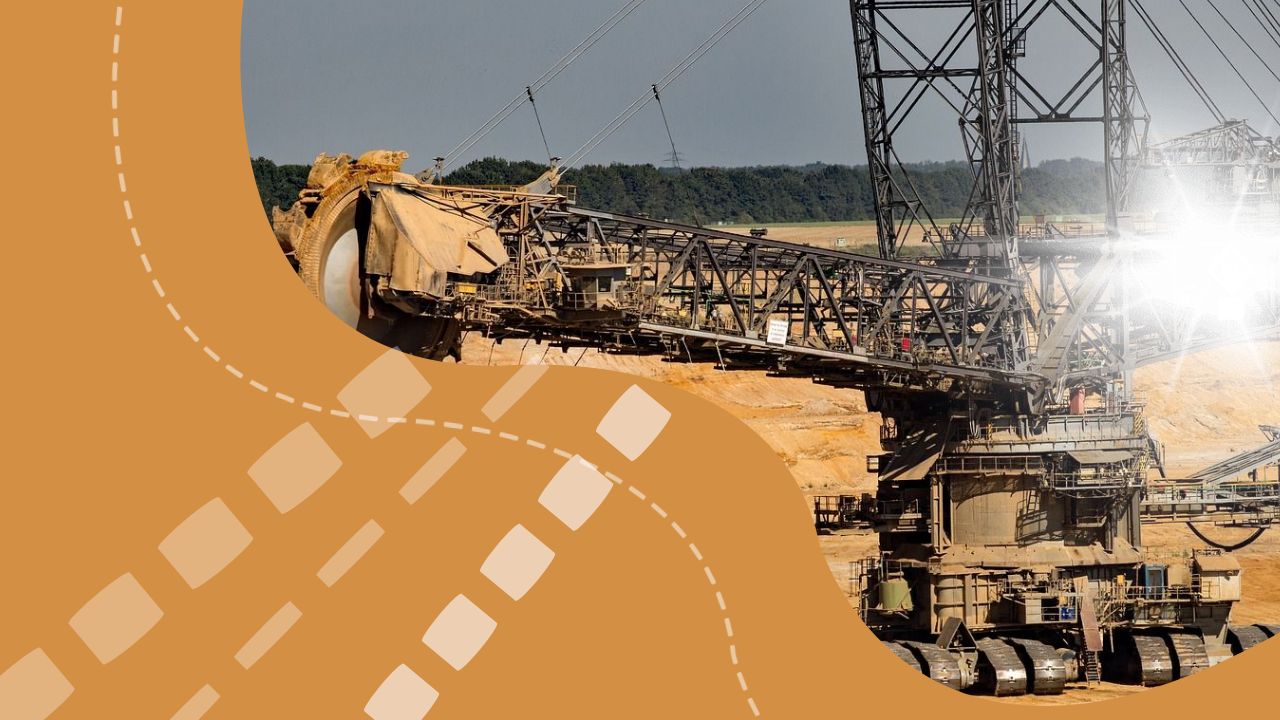
    In a significant development for Uzbekistan’s mining sector, the Besapantau deposit in the Tamdyn district is emerging as one of the most promising gold mining sites in the country. The deposit, which is part of the Central Mining Administration, is currently engaged in the extraction of gold-bearing ore, marking a new chapter in the region’s mineral resource exploitation.

    Dilshod Jumaniazov, the head of the Besapantau mine, provided detailed insights into the ongoing operations:

    “Currently, ore extraction is underway at the Besapantau and Balpantau quarries, which are part of the mine complex. These sites present complex geological structures, requiring specialized mining techniques. Particular attention is being paid to drilling and blasting operations to ensure efficient and safe extraction.”

    The scale of operations at Besapantau is impressive, with approximately 60 units of heavy mining equipment deployed across the site. This includes state-of-the-art machinery such as Epiroc drilling rigs, Hitachi, Komatsu, and Liebherr hydraulic excavators, as well as Komatsu and Caterpillar dump trucks. This extensive array of equipment underscores the significant investment and technological advancement in the project.

    The extracted ore is transported via railway to Hydrometallurgical Plant No. 2 for processing, integrating the mine into the broader mineral processing infrastructure of the region. This logistical setup ensures efficient handling and processing of the extracted resources.

    Looking towards the future, the Besapantau project is set for substantial expansion:

    • The Besapantau quarry is projected to reach dimensions of approximately 1,750 meters in length, 1,050 meters in width, and 300 meters in depth.
    • The Balpantau quarry will extend to about 1,370 meters in length, 1,350 meters in width, and 200 meters in depth.

    These expansions signify the long-term potential and commitment to the project. Jumaniazov further revealed that the mine has set an ambitious target of extracting over 12 million tons of ore annually, highlighting the scale of operations and the deposit’s significance to Uzbekistan’s mining sector.

    The development of the Besapantau deposit is expected to play a crucial role in boosting precious metal production at the Navoi Mining and Metallurgical Combine, one of Uzbekistan’s largest industrial enterprises. This increase in production capacity aligns with the country’s broader strategy to leverage its mineral resources for economic growth and development.

    This expansion comes at a time when global gold production is facing challenges. According to recent data, Kazakhstan, a neighboring country and significant gold producer, is expected to see a decline in gold production with a Compound Annual Growth Rate (CAGR) of -3.38% between 2023 and 2027[6]. In this context, Uzbekistan’s investment in expanding its gold mining operations at sites like Besapantau could potentially position the country to fill gaps in the global gold supply.

    The Besapantau project represents a significant step forward in Uzbekistan’s mining industry, showcasing the country’s commitment to modernizing its mineral extraction capabilities and boosting its economic output through responsible resource development.

  • Tau-Ken Samruk Pays Off EBRD Loan Prior to Project Completion

    Tau-Ken Samruk Pays Off EBRD Loan Prior to Project Completion

    “Tau-Ken Samruk” has fully repaid its loan to the European Bank for Reconstruction and Development (EBRD), which was initially secured for the expansion of the Shalkiya zinc deposit in the Kyzylorda region. This information was disclosed in the mining holding’s consolidated report for 2024.

    The financial document stated, “During 2024, the group received tranches from the EBRD amounting to $8,360 thousand USD, equivalent to 3,786,153 thousand tenge (2023: $35,424 thousand USD or an equivalent of 16,745,062 thousand tenge). On December 18, 2024, the agreement with the EBRD was terminated early, and the loan, including accrued interest, totaling $124,158 thousand USD, or an equivalent of 64,803,815 thousand tenge, was fully repaid. The interest paid for 2024 amounted to 4,549,341 thousand tenge (2023: 2,856,424 thousand tenge).”

    It’s worth recalling that in September 2021, “Tau-Ken Samruk” updated the terms of its credit line with the EBRD for the development of the Shalkiya zinc deposit, reducing the amount to $175 million at a rate of LIBOR plus 2.5% per annum, with a transition to the alternative SOFR 6m + 2.5% rate scheduled for June 30, 2023.

    The loan was guaranteed by “Samruk-Kazyna,” and additionally, a $2.9 million long-term deposit and the rights to funds in all monetary accounts of the mining holding’s subsidiary, “ShalkiyaZinc LTD,” were pledged to the international financial institution. The principal repayment of the credit line was initially planned in equal semi-annual installments from 2025 to 2032, and interest payments in equal six-month installments from December 2021 to December 2032.

    Under the credit line, “Tau-Ken Samruk” received tranches of $35.4 million in 2023, $52.3 million in 2022, and the first transfer from the bank in 2021 amounted to $18.8 million. Throughout 2023, “Tau-Ken Samruk” paid the EBRD 2.9 billion tenge in interest. By the end of that year, the total amount of borrowed funds from the European bank reached 46 billion tenge, exceeding $100 million at the previous year’s exchange rate.

    A year ago, inbusiness.kz reported that the mining holding had failed to meet covenants on the EBRD loan. According to the MFI’s website, the $175 million pre-privatization credit project has been implemented and completed. The European bank reportedly received no complaints regarding the project, as indicated on its project page. Overall, the loan was intended to finance the expansion of mining operations at the existing Shalkiya lead-zinc mine and the construction of a processing plant with a capacity of 4 million tons of ore per year. Incidentally, it was previously reported that Shalkiya might be privatized before the summer.

    In late 2022, inbusiness.kz wrote that the Shalkiya processing plant was expected to be commissioned in November 2025. According to the company’s report on financial and economic activities for the past year, pilot industrial tests were conducted in 2024 to assess the feasibility of obtaining a collective concentrate under the conditions of the processing plant. This year’s plans include the development of technological regulations for this process, pilot industrial tests on the application of X-ray radiometric separation, optimization of capital expenditures for the construction of the processing plant, and a recalculation of reserves according to the KAZRC standard.

    Furthermore, the financial report for 2024 notes that the launch of the Shalkiya plant and reaching its design capacity of 400,000 tons are planned for 2026, with the project expected to continue until 2047.

  • Czech Republic Secures Uranium Supply from Kazakhstan

    Czech Republic Secures Uranium Supply from Kazakhstan

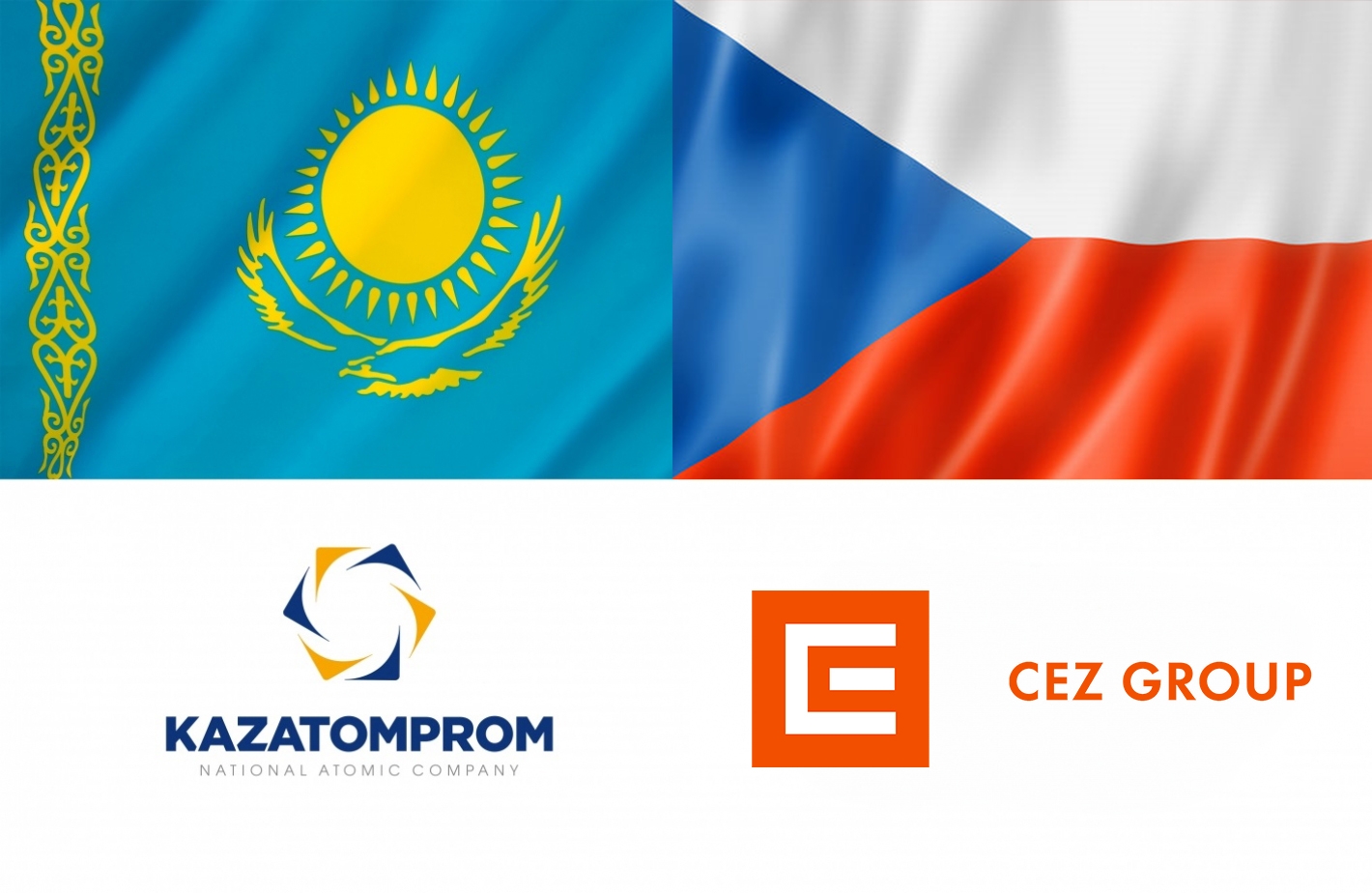
    Kazatomprom, the world’s largest uranium producer, has signed a landmark agreement with ČEZ, a.s., a prominent energy company in the Czech Republic, to supply natural uranium concentrates over the next seven years. The official signing ceremony took place at ČEZ headquarters in Prague.

    Under the terms of the agreement, Kazakh uranium will fulfill approximately one-third of the fuel requirements for Westinghouse-manufactured assemblies used at the Temelín Nuclear Power Plant, one of the Czech Republic’s major nuclear facilities. This collaboration is expected to enhance the Czech Republic’s energy security and align with its decarbonization and sustainability goals.

    Strategic Importance of the Deal

    This deal is a strategic milestone for both countries:

    • For Kazatomprom, it signifies an expanded footprint in the European market and a strengthened position in the global uranium industry. The company has increasingly focused on diversifying its sales portfolio and forging international partnerships, as evidenced by similar agreements with Switzerland earlier this year.
    • For ČEZ, the agreement diversifies its uranium supply chain, reducing reliance on traditional sources and ensuring stability in nuclear fuel provision. Nuclear energy accounts for approximately 36% of the Czech Republic’s electricity production, with ČEZ operating six reactors at the Dukovany and Temelín sites.

    Broader Energy Security and Sustainability Goals

    The deal underscores broader trends in the nuclear energy sector, including supply chain diversification and the shift toward cleaner energy sources. With geopolitical uncertainties affecting traditional uranium markets, partnerships with producers like Kazakhstan, which holds about 12% of the world’s uranium reserves, are becoming increasingly critical.

    Both companies view this partnership as essential for advancing shared sustainability goals. “This agreement is another important milestone in our mission to be the global nuclear energy industry’s partner of choice,” said Kazatomprom Chief Commercial Officer Vladislav Baiguzhin. ČEZ’s Director of Nuclear Energy Division, Bohdan Zronek, emphasized the strategic importance of securing a reliable uranium supply for the Czech Republic’s decarbonization plans under its “Vision 2030” initiative.

    Expanding European Presence

    Kazatomprom, headquartered in Kazakhstan, has been strengthening its presence in the European market. The agreement with ČEZ follows similar contracts signed earlier with Swiss energy companies to supply nuclear power plants in Beznau and Leibstadt. These partnerships reflect the growing reliance on Kazakhstan’s extensive uranium resources for nuclear energy production in Europe.

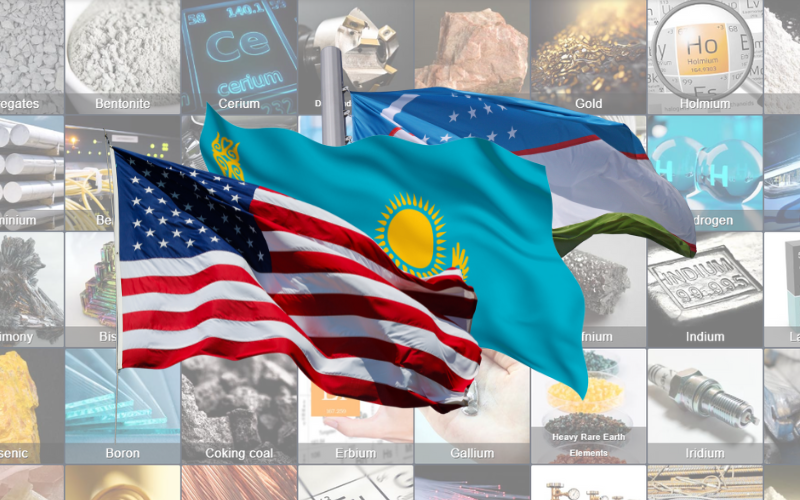
  • U.S. Geological Survey’s Role in Central Asia: A Strategic Perspective

    U.S. Geological Survey’s Role in Central Asia: A Strategic Perspective

    In a recent publication, Pini Althaus, a mining executive and expert on critical minerals, highlighted the underutilized potential of the U.S. Geological Survey (USGS) in supporting America’s critical mineral security, particularly through its work in Central Asia. Althaus critiques the current framework of USGS operations, asserting that its activities, while scientifically impactful, often benefit foreign competitors, particularly China, more than the United States itself.

    Current USGS Efforts in Central Asia

    The USGS has been actively involved in mineral resource mapping and assessments across Central Asia, including resource-rich nations like Kazakhstan, Uzbekistan, Kyrgyzstan, and Tajikistan. These countries boast significant reserves of rare earth elements (REEs), uranium, and other critical minerals essential for advanced technologies and defense industries. For example, the USGS completed an inventory in the region from 2012 to 2016, identifying 384 occurrences of rare and critical minerals, including 160 in Kazakhstan and 87 in Uzbekistan.

    While these efforts contribute to scientific understanding and global development, Althaus points out that the data collected by USGS, funded by American taxpayers, is often made publicly available without prioritization of U.S. strategic interests. This allows foreign competitors, including Chinese state-owned enterprises, to utilize the information strategically, often outmaneuvering U.S. companies in securing access to these valuable resources.

    The Need for Strategic Alignment

    Althaus argues that the USGS should adopt a model akin to Japan’s government-backed agency, JOGMEC, which aligns geological surveys with national and commercial interests. JOGMEC ensures that Japanese companies benefit directly from government-led mineral exploration endeavors through investments, offtake agreements, and first-mover advantages. He proposes several measures to recalibrate the USGS’s role to serve U.S. critical mineral goals:

    • Strategic Mapping: Prioritize surveys in countries open to U.S. partnerships, securing agreements favoring U.S. stakeholders.
    • Data Access Restrictions: Delay public release of mapping data until U.S. firms have assessed and acted on it.
    • Government-to-Government MOUs: Establish formal agreements with host nations like Kazakhstan and Uzbekistan to give U.S. firms preferential access to concessions mapped by the USGS.
    • Collaboration: Foster partnerships between USGS and local geological bureaus, including joint ventures with U.S. companies.
    • Budget Expansion: Increase the USGS budget proportionately to enable its strategic re-orientation.

    The Strategic Importance of Central Asia

    Central Asia’s critical mineral reserves are pivotal in the global supply chain, offering an opportunity for the U.S. to counter its dependency on China. For instance, Kazakhstan alone is a world leader in reserves of rare earth elements, uranium, and chromium, while Uzbekistan holds significant untapped deposits. Despite this, China currently dominates mineral processing and export, underscoring the urgency for the U.S. to establish stronger ties with the region and promote American access to these resources.

    A Call for Action

    Althaus’s call to “weaponize” the USGS emphasizes utilizing the bureau’s expertise strategically to enhance U.S. economic and national security. This involves balancing the USGS’s mandate for scientific rigor with an alignment of its outcomes to American commercial and geopolitical priorities. He contends that such a shift would not only secure critical mineral supply chains but also foster economic growth through U.S.-led mining and resource development initiatives.

    At a time when global competition for critical minerals is intensifying, aligning the USGS’s efforts with national interests is essential to ensuring America’s resilience in technology and defense industries. Althaus’s perspective underscores the need for decisive action to transform the USGS into a keystone of U.S. strategic mineral security.

  • German Company to Establish Lithium Mining and Processing Operations in East Kazakhstan

    German Company to Establish Lithium Mining and Processing Operations in East Kazakhstan

    Two new industrial facilities for the extraction and processing of lithium will be built in the Ulan district of East Kazakhstan by 2029. The announcement was made by Nurymbet Saktaganov, the Akim (governor) of East Kazakhstan, who revealed plans for both a mining and processing plant, as well as a pegmatite ore processing facility.

    $500 Million Investment from Germany

    The project will be led by HMS Bergbau AG, a German mining company that will invest $500 million to develop a lithium deposit discovered in 2023. The project aims to both extract raw lithium materials and produce lithium oxide concentrate, which is highly sought after in the global high-tech market.

    Germany’s growing interest in Kazakhstan’s rare earth resources was first discussed in a September 2023 meeting between President Kassym-Jomart Tokayev and Dennis Schwindt, Chairman of the Board of HMS Bergbau AG. During the meeting, Tokayev emphasized Kazakhstan’s openness to foreign investment and outlined the country’s goal of becoming a major supplier of strategic raw materials, particularly as lithium becomes increasingly important for industries such as renewable energy and advanced manufacturing.

    HMS Bergbau AG, which operates in markets such as the USA, Singapore, South Africa, and Poland, is recognized as a leading player in the global solid minerals sector. The company’s new facility in East Kazakhstan is set to become a critical link in the global lithium supply chain, responding to rising demand driven by electric vehicles, portable electronics, and energy storage systems.

    $15.7 Billion Lithium Discovery by South Korean Researchers

    In a separate development, researchers from the Korea Institute of Geosciences and Mineral Resources (KIGAM) announced in 2024 the discovery of a lithium deposit in East Kazakhstan, valued at approximately $15.7 billion. The deposit, covering 1.6 square kilometers, was previously mined for tantalum. The research, commissioned by the Kazakh government, indicated that lithium, cesium, and tantalum deposits often occur together in the region.

    “KIGAM has been studying the area since May 2023 at the request of the Kazakh government, as tantalum is commonly found alongside lithium and cesium,” reported The Korea Times.

    Lithium: The Foundation of the New Economy

    Lithium is widely recognized as one of the most critical and scarce elements in today’s global economy. It is essential for the production of lithium-ion batteries that power a wide range of technologies, from smartphones and laptops to electric vehicles and large-scale energy storage systems.

    Kazakhstan’s efforts to tap into its lithium reserves in East Kazakhstan are expected to enhance the country’s role in the global energy transition, while opening up significant investment opportunities in the region.

  • Kazakhstan to Use AI for Analyzing Soviet-Era Geological Data

    Kazakhstan to Use AI for Analyzing Soviet-Era Geological Data

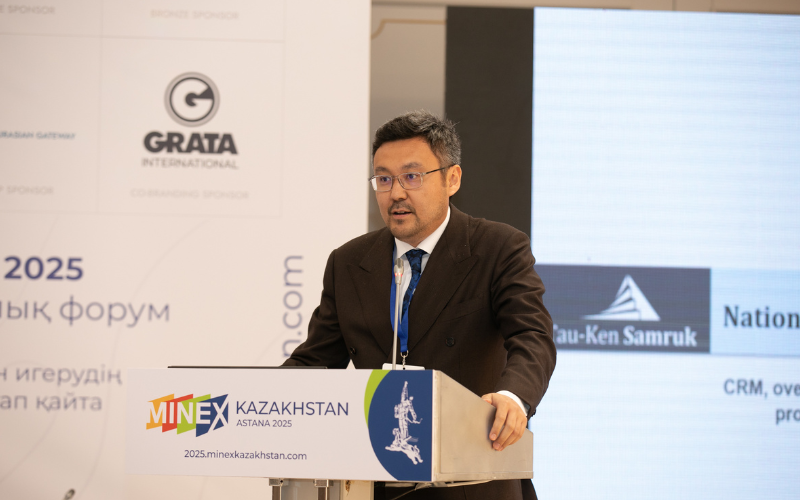
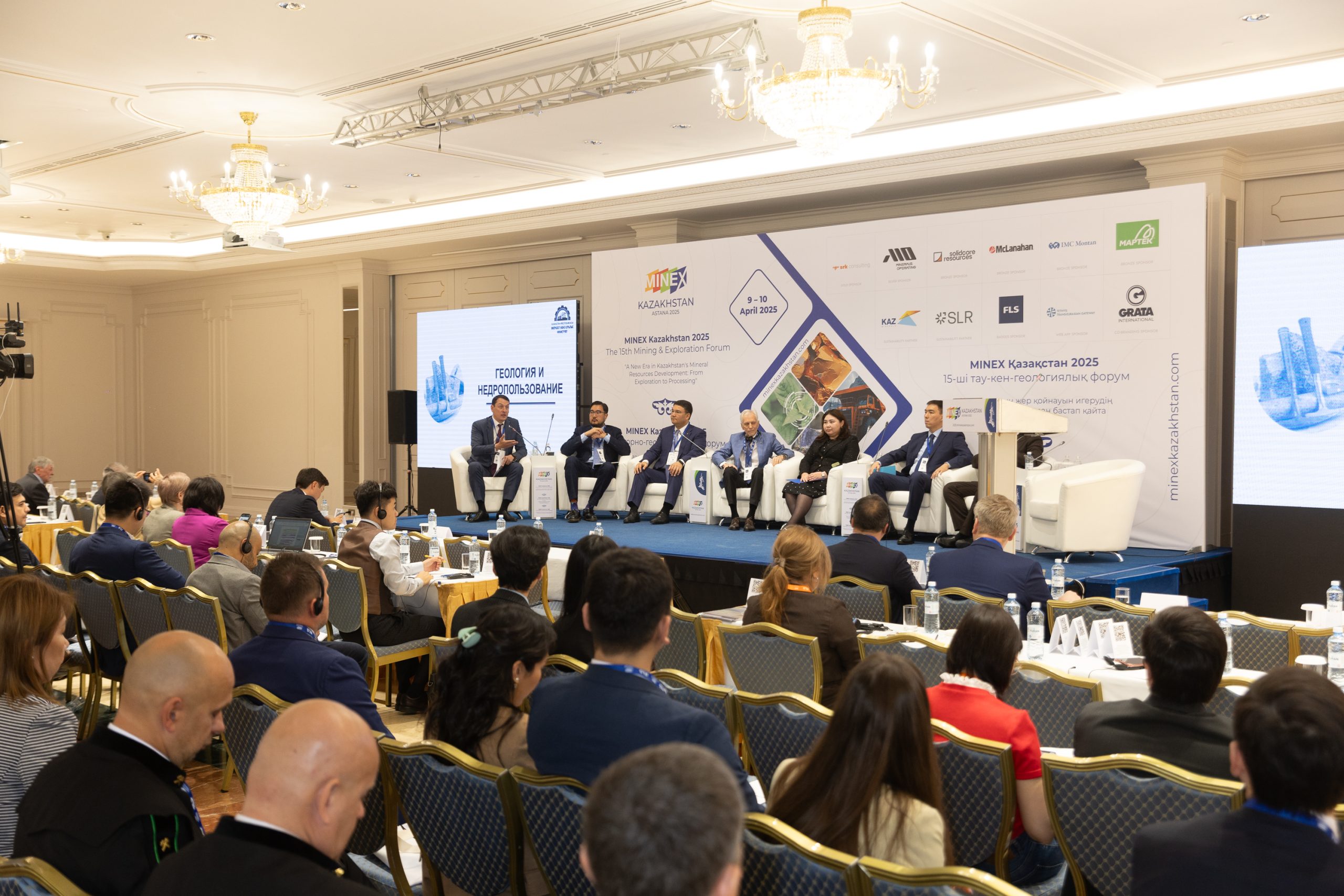
    Kazakhstan’s Ministry of Industry and Construction is integrating artificial intelligence to analyze geological data collected between the 1950s and 1980s, Vice Minister Zhannat Dubirova announced at MINEX Kazakhstan. The digitization of this historic data is set to be completed by the end of the year, with AI tools helping to identify and interpret geological characteristics, create predictive models, and process even low-quality data using Big Data technologies.

    According to Dubirova, over 56,000 geological reports have already been digitized. The AI system currently recognizes up to 90% of information and allows for manual corrections where needed. By 2026, the ministry plans to fully convert all geological data into machine-readable formats, accessible via the Unified Subsoil Use Platform.

    This platform, launched earlier this year, streamlines the entire licensing process for exploration and extraction—from application to auction and licensing—and has already processed over 500 applications. It features an interactive map showing current and available subsoil plots and allows investors to participate directly in auctions without intermediaries.

    Digital control mechanisms are also in place to monitor compliance with issued licenses and contracts for solid mineral resources, replacing a manual system that tracked 3,000 agreements.