Website: Kazakhstan.com

  • Kazakhstan and DR Congo Sign Mining and Geology Cooperation Agreements

    Kazakhstan and DR Congo Sign Mining and Geology Cooperation Agreements

    Kazakhstan’s President Kassym-Jomart Tokayev and Democratic Republic of Congo (DRC) President Félix Tshisekedi have held talks, according to Kapital.kz citing the Akorda press service. The two leaders oversaw the signing of interagency agreements covering diplomatic consultations as well as cooperation in mining and geology.

    Both nations hold vast natural resources and see potential in becoming reliable partners for mutually beneficial projects. The DRC plays a central role in global supply chains of critical minerals, accounting for approximately 76% of the world’s cobalt production, 14% of copper, 8.3% of tin, 42% of tantalum, and 40% of coltan, alongside deposits of other strategic metals essential to high-tech industries.

    Kazakhstan’s Eurasian Resources Group (ERG) already operates successfully in the DRC with the support of Congolese authorities. The new agreements are expected to accelerate the development of bilateral ties in the resource sector.

    In addition, the two presidents agreed to hold regular consultations and maintain close working contacts between their foreign ministries to ensure steady progress in cooperation.

  • Kazakhstan to Open Internationally Accredited Rare-Earth Laboratory

    Kazakhstan to Open Internationally Accredited Rare-Earth Laboratory

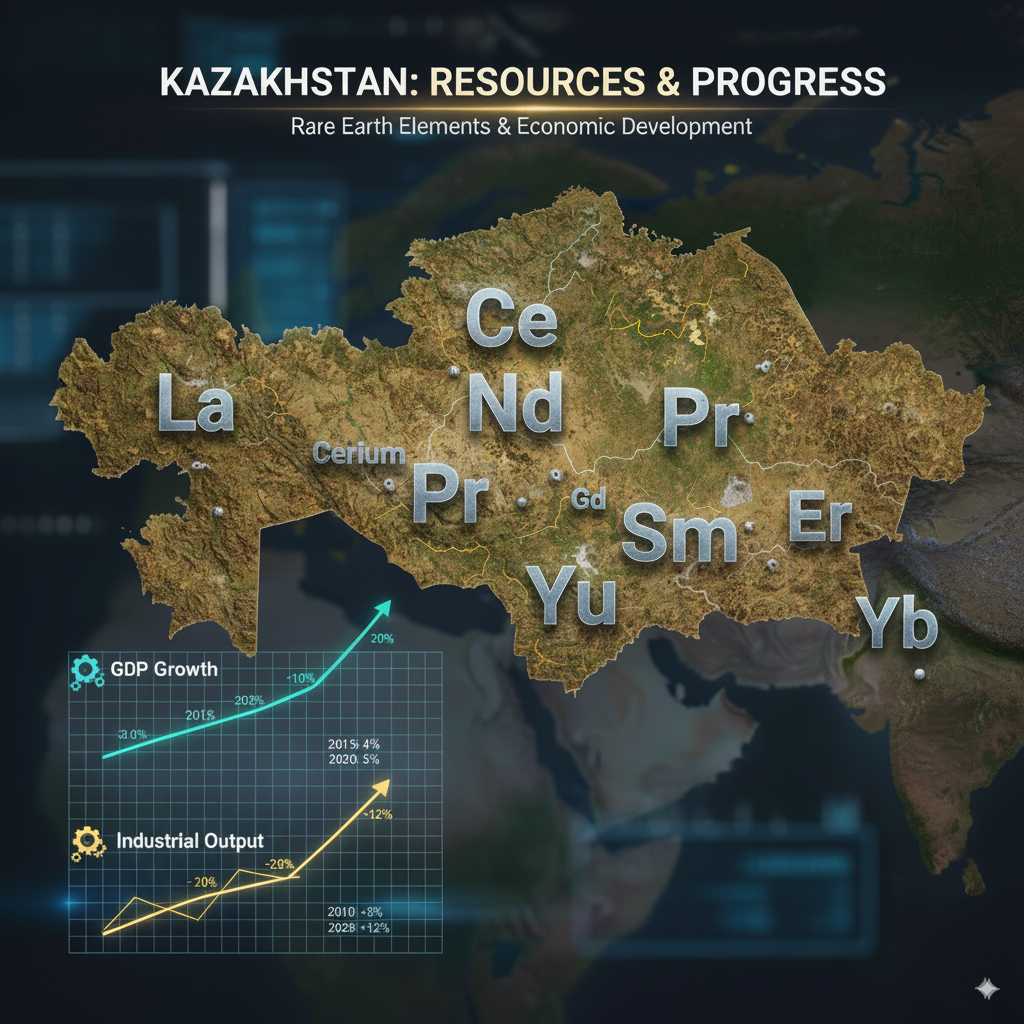
    Kazakhstan is set to establish an internationally accredited geo-analytical laboratory in Astana to support its growing role in global supply chains for rare-earth metals (REEs).

    Minister of Industry and Construction Yersayin Nagaspayev confirmed that agreements have been reached with global laboratory brands RCI Inspection and PARAGON to certify the new geo-analytical center, which is scheduled to open by mid-2026 under the National Geological Service. The laboratory will house core storage and archival repositories, providing transparent and reliable data to researchers and potential investors.

    The initiative follows President Tokayev’s 8 September address to Parliament, in which he stressed the strategic significance of rare-earth elements for Kazakhstan’s long-term economic future. He directed the government to launch at least three high-tech production facilities for rare-earth metals within the next three years, underscoring their growing importance in global technology and trade.

    The government’s plan outlines four strategic priorities for domestic processing: producing battery materials, recycling, manufacturing heat-resistant alloys for jet turbines, and producing semiconductor materials. To achieve these goals, Kazakhstan is actively forging partnerships with the European Union, the United States, Japan, South Korea, and China.

    Planned projects include a gallium plant, the production of high-purity manganese sulfate and graphite for batteries, and the manufacturing of nickel-based superalloys. Additionally, pilot programs for recycling permanent magnets are set to begin next year, in collaboration with European partners, marking a concrete step towards a more sustainable and value-added rare-earth industry.

  • Kazakhstan Targets Economic Growth with Rare-Earth Expansion and SEZ Reforms

    Kazakhstan Targets Economic Growth with Rare-Earth Expansion and SEZ Reforms

    Kazakhstan is launching a comprehensive strategy to boost economic growth by strengthening special economic zones (SEZs) and expanding rare-earth metal production, as announced by Industry and Construction Minister Yersayin Nagaspayev during a government meeting chaired by Prime Minister Olzhas Bektenov

    To improve SEZ efficiency, the government will conduct a comprehensive review of their performance and strengthen monitoring mechanisms to ensure investors fulfill their obligations. The country also plans to introduce a framework for foreign companies to manage certain SEZs, while local authorities will intensify efforts to attract new investors.

    In addition to SEZs, the government has identified rare-earth metal production as a key area for development. Kazakhstan plans to implement at least three major projects in this field, focusing on the production of battery materials, recycling and manufacturing heat-resistant alloys for jet engines, developing semiconductor components, and reprocessing permanent magnets.

    The country has already established strategic partnerships with leading players from the European Union, the United States, Japan, South Korea, and China. Upcoming projects include the launch of gallium production with an annual capacity of 15 tons, the manufacturing of high-purity manganese sulfate, and the production of graphite for battery components.

    Kazakhstan is also taking significant steps to modernize its geological exploration and mapping. A next-generation geological map will be developed using advanced digital tools, with project preparations already underway and fieldwork scheduled to begin in 2026. The government has allocated funding for new surveying methods, including aerogeophysics, geochemistry, spectral imaging, and high-resolution satellite data analysis.

    Furthermore, the country is introducing a unified digital platform to consolidate all processes related to construction and housing management. The platform will be introduced by the end of 2025 and is expected to enhance efficiency and transparency in the sector.

    The reforms are part of Kazakhstan’s efforts to diversify its economy and reduce its dependence on oil exports. The country aims to become a major player in the global rare-earth market and to attract foreign investment in its SEZs.

  • Kazakhstan to Launch Electronic Geological Mapping in 2026

    Kazakhstan to Launch Electronic Geological Mapping in 2026

    Kazakhstan will begin creating an electronic geological map of the country in 2026, following a directive from the president. The project will utilise satellite imagery analysis, along with data from aerogeophysics, geochemistry, and other subsurface research methods, enabling a new level of assessment of the nation’s mineral potential.

    Earlier this year, the government allocated funding from its reserve to develop project documentation for second-generation geological surveys at a 1:50,000 scale. This initiative is part of Kazakhstan’s wider effort to digitise geological information.

    According to the National Geological Exploration Service (NGS), more than 2.6 million units of primary geological data—about 60% of the total—had already been converted into digital format by early 2025. Full digitalisation of the country’s geological data is expected to be completed by 2028.

    Officials say the move will make geological information more reliable and accessible, while also enabling the use of artificial intelligence and automated solutions for data processing.

  • Mining & Metals Analytical Report Highlights Kazakhstan’s Potential as a Mineral Investment Hub

    Mining & Metals Analytical Report Highlights Kazakhstan’s Potential as a Mineral Investment Hub

    A new analytical report produced by AIFC highlights Kazakhstan’s significant potential to become a leading hub for mineral investment, positioning the country as a crucial player in the global energy transition. The report, which includes what is believed to be the first-ever comparative benchmark of Kazakhstan against major mining jurisdictions like Canada, Chile, Australia, and Indonesia, concludes that while the nation has vast untapped potential, it must take specific steps to fully capitalize on it.

    The report identifies several key actions necessary to support this ambition. These include a strategic focus on active investment in junior mining companies, which are vital for early-stage exploration. The country also needs to provide a stable legal and regulatory framework to attract and retain foreign investment. Finally, Kazakhstan must align its development strategy with its mineral strengths and global trends, focusing on the materials most in demand for clean energy technologies.

    The report’s findings are underpinned by compelling data points that showcase Kazakhstan’s existing role and future prospects in the mining and metals sector. In 2024, the industry attracted $3 billion in gross foreign direct investment, accounting for 17% of the national total. Mining and metals also made up a substantial 12.1% of the country’s GDP last year. Despite its established importance, a staggering 65% of Kazakhstan’s geological area remains unexplored, presenting a monumental opportunity for new discoveries. These domestic figures are set against the backdrop of a global context where an estimated $2.1 trillion in mining investment will be needed by 2050 to meet the demands of a net-zero world.

  • Kazatomprom Expands Exploration and Seeks International Ventures

    Kazatomprom Expands Exploration and Seeks International Ventures

    Kazatomprom, the world’s largest uranium producer, has announced plans to significantly increase its exploration activities both in Kazakhstan and internationally, as the company seeks to capitalise on growing global demand for uranium. The state-controlled giant revealed that it will triple its exploration efforts in Kazakhstan while also pursuing new ventures abroad, following recent agreements with Jordan and Mongolia.

    Currently, Kazatomprom produces all of its uranium domestically, but last week the company signed a landmark agreement with Jordan to develop the country’s uranium assets. Meirzhan Yussupov, the company’s CEO, addressed the World Nuclear Symposium in London, highlighting the company’s reputation in mining and its growing interest in international expansion. “We are acknowledged for our ability to do mining, and that’s why … we are also looking at opportunities abroad,” Yussupov said.

    Kazatomprom has also made strides beyond Kazakhstan’s borders in recent years. Last year, the company signed a cooperation agreement with Mongolia’s state nuclear company, Mon-Atom, and Yussupov hinted that further international opportunities are being explored, although he did not provide specific details.

    “We are trying to diversify our operations on a global scale geographically,” Yussupov explained, reinforcing the company’s strategy of global expansion.

    The push for greater international expansion comes amid rising demand for uranium. The World Nuclear Association’s report, released on Friday, warned that global uranium demand for nuclear reactors is expected to more than double by 2040, necessitating the development of new mining operations. To meet this demand, Kazatomprom has launched an ambitious exploration programme in Kazakhstan, increasing its exploration capacity threefold.

    The company, which supplies about 20% of the world’s primary uranium, has already seen growth in its output. In the first half of 2025, Kazatomprom boosted production by 13% and confirmed its production guidance for 2025. However, it also noted that it plans to scale back its output expansion in 2026 due to market conditions.

    Uranium prices have been on the rise, more than doubling over the past five years to $76 per pound. However, prices are still well below the February 2024 peak of $106 per pound, which was the highest level seen since November 2007.

    With increased exploration efforts and an eye on global diversification, Kazatomprom appears poised to strengthen its position as a key player in the uranium market, aligning with the long-term outlook of rising nuclear energy demand worldwide.

  • SSGPO Secures $400 Million Syndicated Loan for Strategic Expansion

    SSGPO Secures $400 Million Syndicated Loan for Strategic Expansion

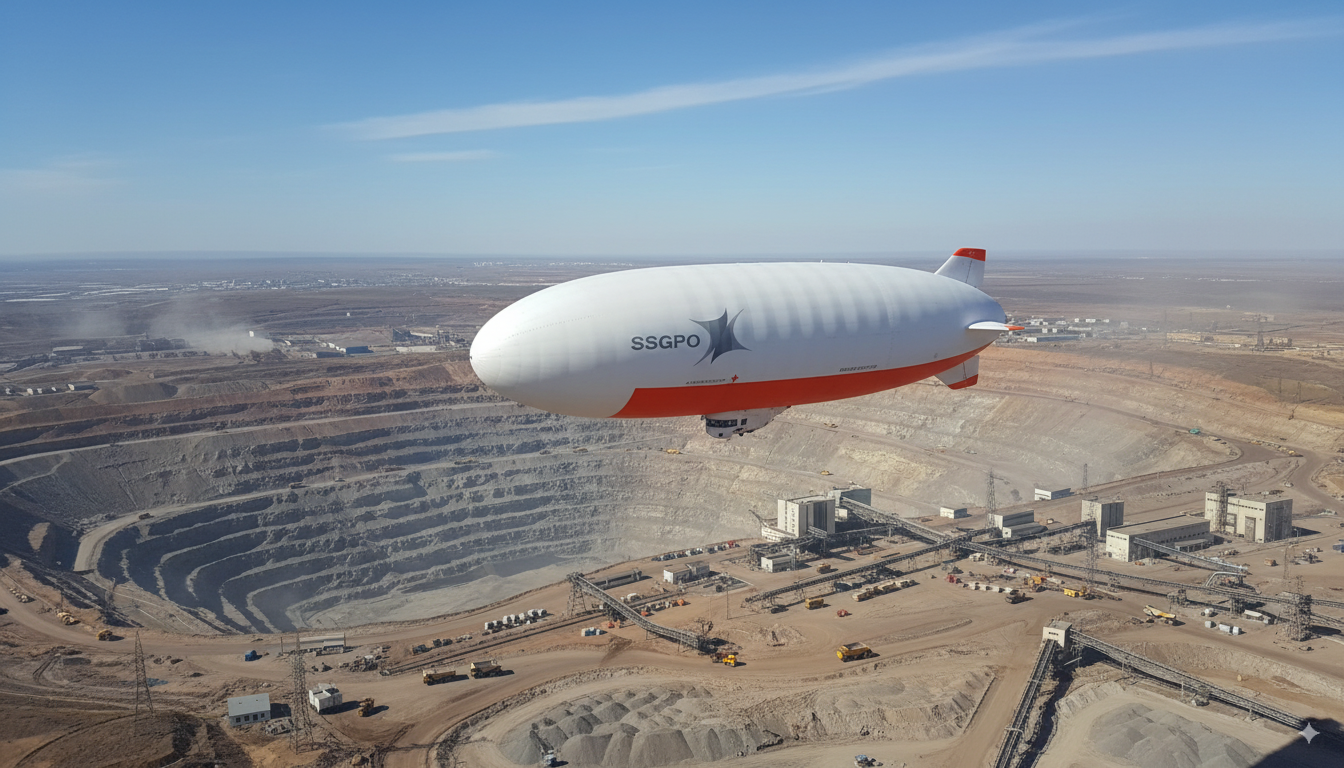
    Sokolovsko-Sarbayskoye Mining Production Association (SSGPO), part of the Eurasian Resources Group (ERG), has opened a new syndicated credit line worth up to $400 million with other firms under common control, according to its recently published financial report. The agreement was finalised in February 2025 and is set to run until 2029. The document states that the interest rate on the loans, denominated in US dollars and euros, will be a market rate.

    This latest move follows a similar arrangement made in 2024, when SSGPO signed a syndicated credit line agreement with affiliated companies for up to $300 million, with a repayment deadline of the end of 2028. Furthermore, SSGPO acts as a co-guarantor for ERG’s loans, alongside other subsidiaries within the group. As part of the new credit line, SSGPO provided a loan of $6 million to an unnamed company under common control in June 2025.

    SSGPO’s core business is the extraction and processing of iron ore. The company holds a number of iron ore mining contracts in the Kostanay region, which are due to expire in 2033, 2035, and 2040. In addition, SSGPO is currently constructing a hot-briquetted iron plant in Rudny, which is scheduled to commence operations in late 2027. The company’s financial performance for 2024 showed an increase in revenue to 424.1 billion tenge from 389.6 billion tenge in the previous year, although it recorded a loss of 69.3 billion tenge, a slight improvement on the 71.4 billion tenge loss in 2023. The sole owner of SSGPO is ERG Iron Ore Holding B.V., which is part of the broader ERG group. The Eurasian Resources Group itself is co-owned by the Ministry of Finance of the Republic of Kazakhstan, which holds a 40% stake, with the remaining shares divided between the heirs of Alexander Mashkevich and the Ibragimov family, each with 20.7%, and Patokh Shodiev, who holds 18.6%. The Ibragimov family is listed by Forbes as the seventh wealthiest in Kazakhstan, with a net worth of $2.06 billion.

  • Kazakhmys Overhauls Safety Protocol Following Jomart Mine Tragedy

    Kazakhmys Overhauls Safety Protocol Following Jomart Mine Tragedy

    Kazakhstan’s mining and metallurgical giant Kazakhmys is implementing sweeping safety reforms following the February 2025 methane explosion at its Zhomart copper mine, which claimed seven lives. The tragedy exposed systemic risks in the sector, long regarded as one of the most hazardous in the country, and prompted regulators to issue 45 safety directives, over half of which have already been addressed.

    The company has since launched a comprehensive modernisation programme under its Digital Kazakhmys initiative. Key measures include real-time GPS tracking of all underground staff, predictive gas monitoring via advanced sensors integrated into the DMMS digital platform, and the installation of an in-house gas analysis laboratory. Additional safeguards—such as automatic equipment shutdowns when methane thresholds are exceeded—aim to reduce reliance on human intervention.

    Kazakhmys is also working with scientific institutes to study gas emissions in copper ore deposits, a relatively new phenomenon for the industry, with the aim of shaping updated mining regulations by 2026. The Zhomart mine has effectively become a testing ground for technologies that could transform Kazakhstan’s mining sector from one of the deadliest into a more predictable and manageable industry.

  • Eurasian Resources Group Launches Major Wind Farm in Kazakhstan

    Eurasian Resources Group Launches Major Wind Farm in Kazakhstan

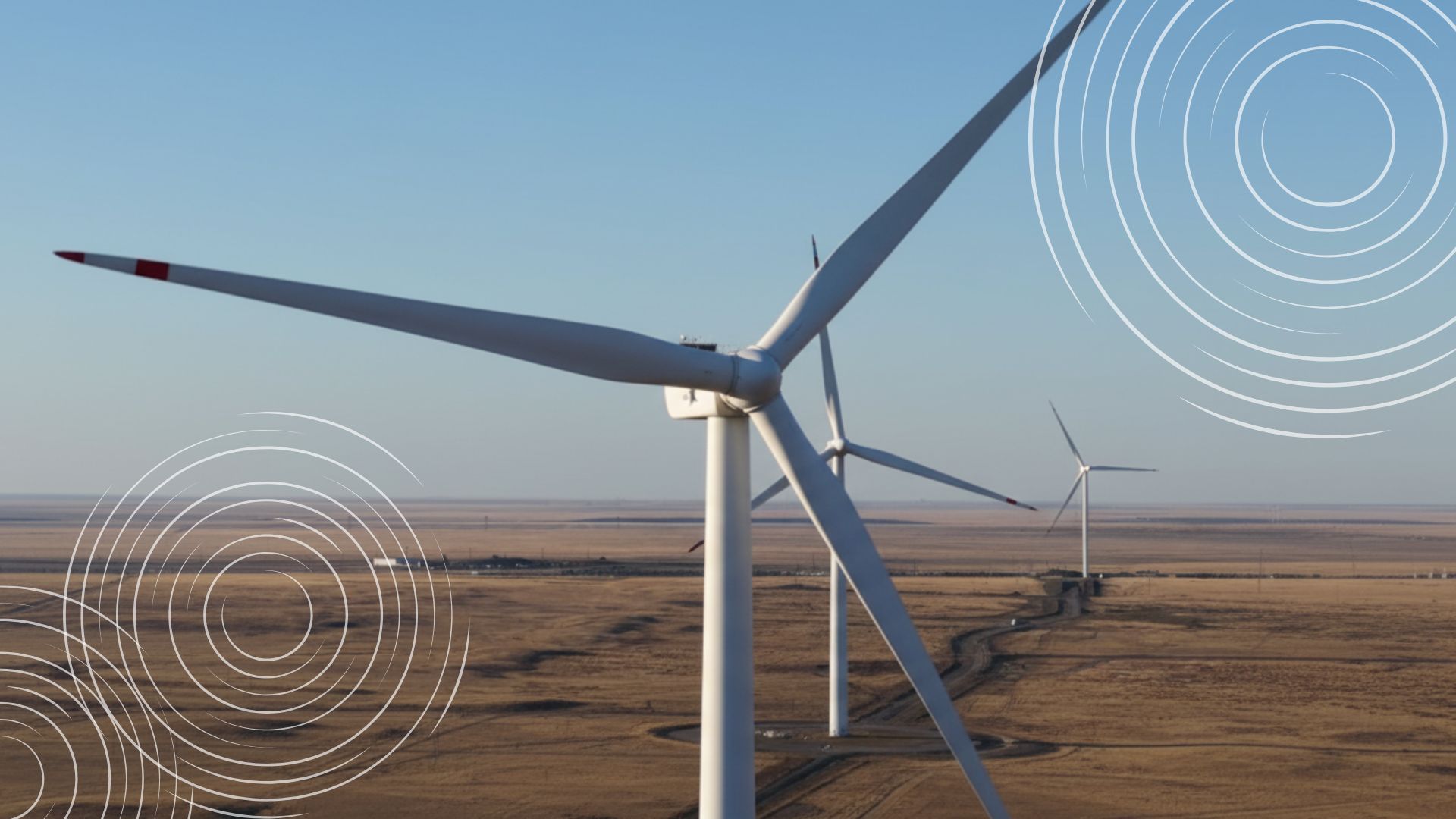
    Eurasian Resources Group (ERG), a global metals and mining company headquartered in Luxembourg, has opened the Khromtau wind farm in Kazakhstan with a capacity of 150 megawatts of green energy. The project is one of the largest renewable energy facilities in Kazakhstan and Central Asia and required an investment of more than US$142 million. The wind farm is located in the Aktobe Region and includes 24 turbines. The facility will generate more than 500 million kilowatt hours of green energy annually. All in all, the facility will help reduce up to 440,000 tonnes of carbon dioxide emissions and save more than 300,000 tonnes of coal each year. The project has been implemented by ERG Capital Projects, a Group subsidiary, with financial support from the Development Bank of Kazakhstan.

    During the opening ceremony of this critical green energy project, Shukhrat Ibragimov, CEO and Chairman of the Board of Directors of ERG, said: “With its Khromtau wind power project, the Group makes a major contribution towards achieving Kazakhstan’s national goal of increasing the share of renewable energy sources. ERG is committed to ESG principles, and the new Khromtau wind power farm is a logical and very ambitious next step while implementing this. ERG’s first wind power project has already become a symbol of our transition to green energy.”

    The ESG Agenda is part of the company’s Strategy. The Group’s medium-term goal is to reduce the carbon footprint of its core products (aluminium, ferroalloys and iron ore pellets) by 30%. To achieve this, ERG is implementing projects with cumulative investments totalling US$300 million. In addition to wind power, these projects include switching the Kacharsky heating centre to gas in the Iron Ore Division, reducing steam consumption and improving the alumina production process in the Aluminium Division, and building a ferroalloy gas recycling power facility at the Aktobe Ferroalloys Plant to convert secondary energy resources into electricity.

  • Kazakhstan Detects $1.9 Million in Subsoil Use Violations Through Digital Monitoring

    Kazakhstan Detects $1.9 Million in Subsoil Use Violations Through Digital Monitoring

    Since January 2025, Kazakhstan has operated a Unified Subsoil Use Platform, through which 2,443 operators have submitted electronic reports. The new digital monitoring tool has enabled regulators to uncover violations of subsoil use legislation.

    As a result, companies received notifications of breaches across 196 contracts and licenses, with total penalties amounting to 910 million tenge (approx. $1.9 million). In addition, 37 contracts were terminated — 30 for geological exploration, five for extraction, and two for combined activities. Authorities also revoked 61 licenses from non-compliant operators.

    The Ministry of Internal Affairs and the National Security Committee have halted illegal mining operations in four regions of the country. In the third quarter of this year, the agencies plan to issue about 350 notifications and conduct 65 on-site inspections.

    By the end of the year, a draft law on digitalization and auctions, along with amendments to allocate 50% of subscription bonuses to state geological exploration, will be submitted to the Parliament of Kazakhstan, Kazinform reports.