Website: Kazakhstan.com

  • Eurasian Resources Group Commits $1 Billion to Kazakhstan’s Industrial Future

    Eurasian Resources Group Commits $1 Billion to Kazakhstan’s Industrial Future

    Eurasian Resources Group (ERG) has announced a significant investment of approximately $1 billion in Kazakhstan, aimed at bolstering the country’s industrial potential and long-term competitiveness. This investment strategy is rooted in the belief that the most impactful investments are those that continue to create value well beyond the initial capital commitment. ERG’s development program is designed not only to expand its business operations but also to enhance regional economies and contribute to the overall economic landscape of Kazakhstan.

    The investment initiative is set to modernise mining operations and production facilities, promote cleaner energy solutions, and accelerate the digital transformation within the industry. By the end of next year, ERG anticipates creating over 1,100 new jobs, while also contributing an estimated $1.3 billion annually to Kazakhstan’s GDP through direct production and associated economic activities. Key projects under this initiative include the Bolashak Mine, ERG Green, Spetskoks, and various renewable energy ventures, all of which reflect a commitment to industrial performance and environmental responsibility.

    Kudrat Shamiyev, CEO of ERG Kazakhstan, emphasised that effective leadership is about making decisions that will positively impact future opportunities, not just immediate financial results. He highlighted the extraordinary industrial potential of Kazakhstan and the necessity for strategic partnerships, continuous innovation, and responsible environmental practices to unlock this potential. The projects currently underway are viewed as foundational steps towards a more robust industrial future for Kazakhstan, reinforcing the notion that investment should focus on building a stronger future for the nation.
  • Azerbaijan and Uzbekistan Forge Joint Venture for Geological Exploration

    Azerbaijan and Uzbekistan Forge Joint Venture for Geological Exploration

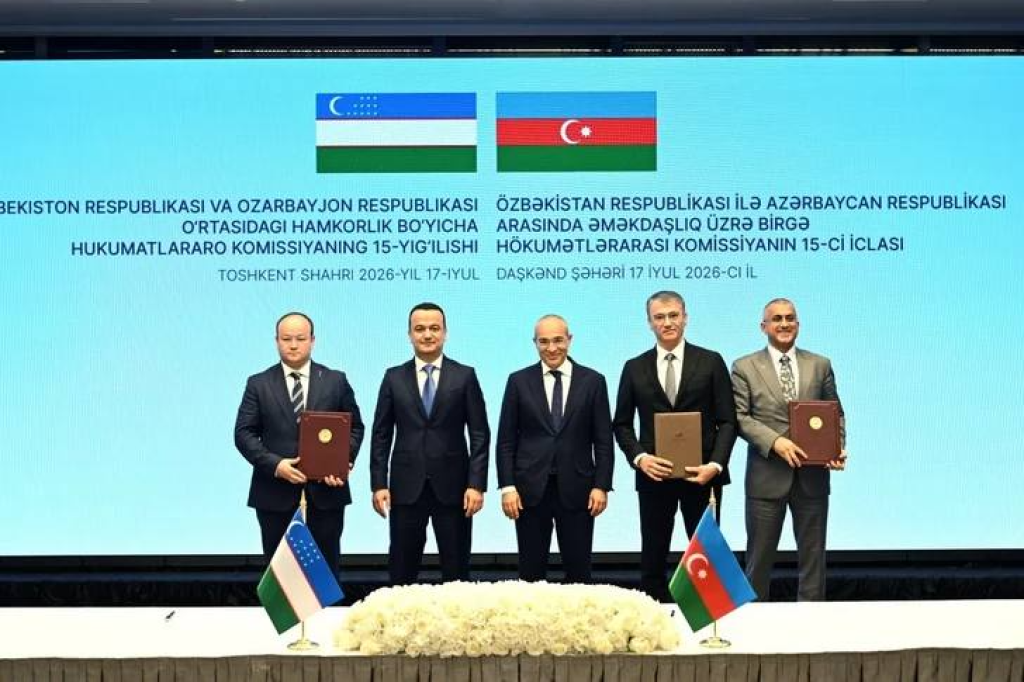
    In a significant move to enhance bilateral cooperation in the mining sector, the Azerbaijan – Uzbekistan Investment Company (AUIC), Azerbaijan’s AzerGold CJSC, and Uzbekgeologorazvedka JSC have signed a term sheet to establish a joint venture dedicated to geological exploration in Uzbekistan. This agreement was formalised during the 15th meeting of the Joint Intergovernmental Commission on Cooperation between Azerbaijan and Uzbekistan, which took place in Tashkent. The meeting was attended by key officials, including Azerbaijan’s Minister of Economy, Mikayil Jabbarov, and Uzbekistan’s Minister of Investment, Industry and Trade, Laziz Kudratov.

    The collaboration aims to leverage AUIC’s investment capabilities, AzerGold’s technical expertise, and the extensive experience of Uzbekgeologorazvedka JSC. By combining these strengths, the joint venture intends to create an effective model for project implementation that spans from geological exploration to attracting strategic investors and facilitating the commercial development of mineral deposits. This initiative is expected to not only boost bilateral investment but also to incorporate modern technologies into geological exploration processes, thereby enhancing the overall investment appeal of Uzbekistan’s mineral resource sector.

    As both countries seek to strengthen their economic ties, this joint venture represents a strategic step towards improving the mining landscape in Uzbekistan. The focus on modern technology and strategic investment is poised to attract further interest in the region’s mineral resources, potentially leading to significant advancements in the sector. The partnership reflects a growing trend in the region towards collaborative efforts in resource development, which could serve as a model for future initiatives between other nations in Central Asia.


  • UK-Kazakhstan Strategic Partnership: A New Era of Economic Cooperation

    UK-Kazakhstan Strategic Partnership: A New Era of Economic Cooperation

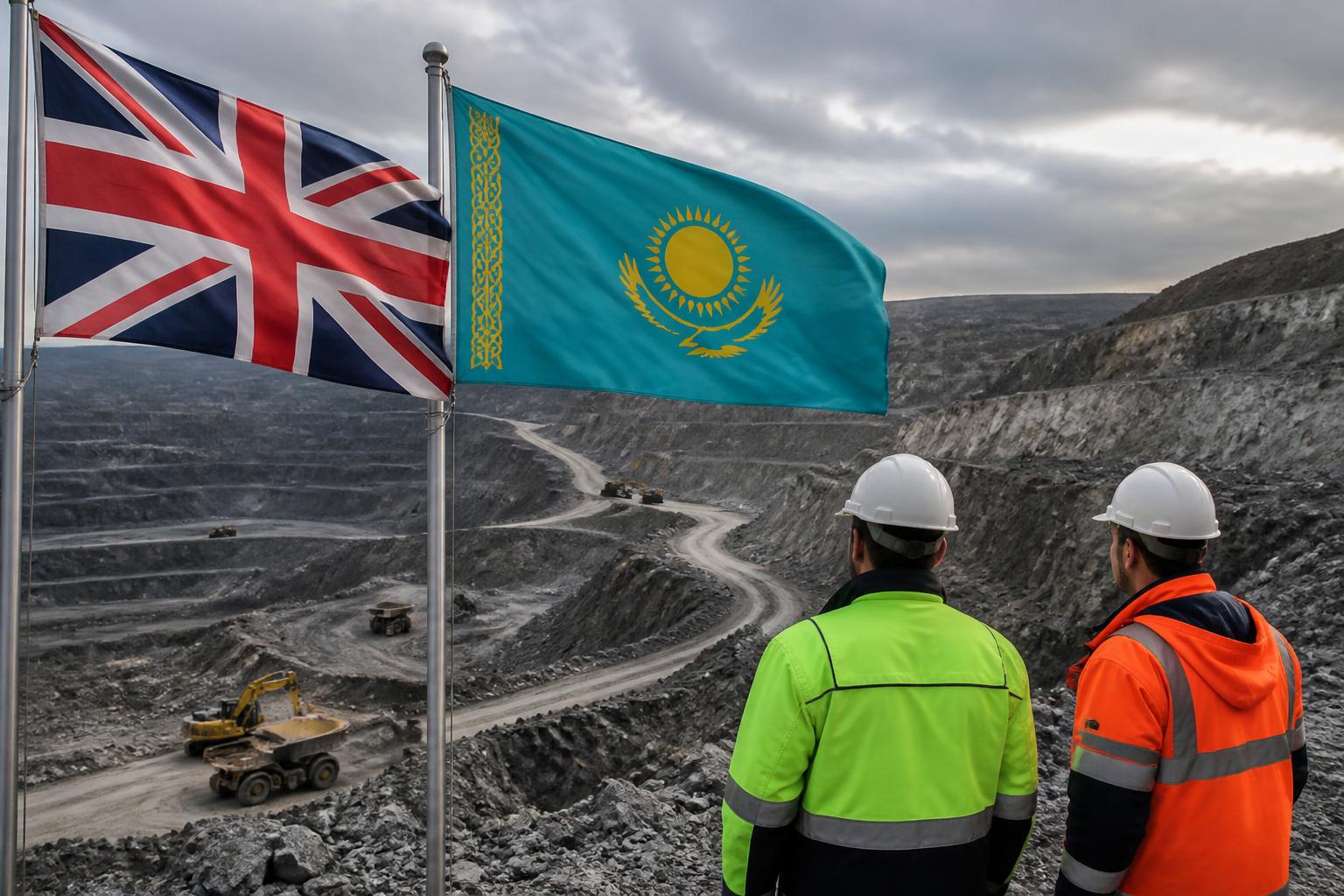
    The recent entry into force of the Strategic Partnership and Cooperation Agreement (SPCA) between the United Kingdom and Kazakhstan marks a significant milestone in the bilateral relationship, with implications that extend beyond mere diplomacy. British Ambassador to Kazakhstan, Sally Axworthy, emphasised that the SPCA is not just a ceremonial agreement but a ‘signal of intent’ that opens avenues for collaboration across various sectors, including critical minerals, energy, education, and technology. This agreement is poised to reshape how the two nations work together, fostering a more integrated economic partnership.

    As global competition for critical minerals intensifies, Kazakhstan’s mineral wealth positions it as a key player in the evolving landscape of resource management and supply chain resilience. The SPCA formalises a shift in focus from traditional sectors to a broader range of industries, reflecting the changing priorities of both countries. Notably, the agreement facilitates discussions around value creation and processing of resources, moving beyond mere extraction to encompass technological advancements and higher-value production. A prime example of this shift is the recent $107 million agreement between the UK’s Maritime House and Kazakhstan’s Zhezkazganredmet, aimed at expanding cooperation in rhenium recycling, a material crucial for aerospace manufacturing.

    Education plays a pivotal role in this evolving partnership, with the UK emerging as a leading partner in higher education for Kazakhstan. The Bolashak Scholarship programme has fostered strong ties, with many Kazakh professionals educated in the UK. The establishment of British university campuses in Kazakhstan signifies a commitment to long-term investment in human capital, aligning educational initiatives with industrial cooperation. As both nations navigate this new phase of their partnership, the SPCA serves as a foundational framework for future collaboration, with the potential to enhance economic ties and foster sustainable growth.


  • Chinese Investor Injects $5 Million into Kazakhstan’s Mining Exploration Sector

    Chinese Investor Injects $5 Million into Kazakhstan’s Mining Exploration Sector

    A new mining exploration company, Zhongjian Hengxin Mining, has been registered at the Astana International Financial Centre (AIFC) with a significant capital investment of $5 million from Chinese investors. The company, established by Jian Zheng, aims to engage in geological exploration and related services to facilitate mineral extraction. This investment marks a notable entry into Kazakhstan’s mining sector, which has been increasingly attracting foreign capital, particularly from China.

    The registration of Zhongjian Hengxin Mining on June 22, 2026, aligns with a growing trend of Chinese companies establishing a presence in Kazakhstan’s mining industry. Notably, the address of the new company has already been home to several other Chinese firms involved in similar activities, including Tianshan Resources, which was registered in June and is also focused on mining services. This trend underscores the strategic interest of Chinese corporations in Kazakhstan’s rich mineral resources, particularly in light of Zijin Mining Group’s recent acquisition of RG Gold, a gold mining company operating in the Akmolinsk region.

    The influx of Chinese investment, exemplified by Zijin Mining Group’s commitment of $600 million towards the development of the Raigorodok gold deposit, highlights the potential for growth in Kazakhstan’s mining sector. As more companies like Zhongjian Hengxin Mining emerge, the collaboration between Kazakhstan and Chinese investors is expected to strengthen, paving the way for enhanced exploration and extraction activities in the region, which is rich in various minerals.


  • Kazakhstan to Import Zinc Ore from Afghanistan Under New Supply Agreement

    Kazakhstan to Import Zinc Ore from Afghanistan Under New Supply Agreement

    Kazakhstan has signed a significant trade agreement to import zinc ore from Afghanistan, marking an expansion of the country’s raw material sourcing strategy. The agreement was formalised during the opening of Kazakhstan’s Trade House in Kabul, where Shalkiya Zinc LTD, a subsidiary of the National Mining Company Tau-Ken Samruk, entered into a contract with Afghan German Bakhtar Company for the supply of zinc ore.

    Under the terms of the contract, Shalkiya Zinc LTD will purchase up to 30,000 tonnes of zinc ore annually, with a total contract value of $18.88 million. The ore will be shipped to Kazakhstan under DAP (Delivered at Place) conditions, meaning Afghan German Bakhtar Company will assume all transportation costs and associated risks, whilst Shalkiya Zinc LTD will handle customs duties and unloading operations. This arrangement provides a clear division of responsibilities and ensures efficient logistics for the supply chain.

    The initiative builds on previous exploratory work conducted by Tau-Ken Samruk, which collected samples from the Pami-Kakrak deposit in Bamian Province during autumn 2025. Laboratory analysis conducted by Kazzinc confirmed that the imported mineral raw material can be integrated into the existing technological processes of Kazakhstan’s mining and processing plants. This validation demonstrates the compatibility of Afghan ore with Kazakhstan’s current production infrastructure, making the partnership commercially viable.

    The new supply channel arrives at a critical time for Kazakhstan’s zinc sector. According to the Bureau of National Statistics, zinc production declined during the first five months of 2026, with copper-zinc ore output falling 18.8 per cent year-on-year to 2.2 million tonnes, and refined zinc production dropping 12.9 per cent to 93,000 tonnes. The Afghan ore imports are expected to help stabilise and support these production figures. Additionally, other Kazakhstani companies, including ERG, are exploring similar opportunities for mineral resource development in Afghanistan, with ERG considering chrome mining ventures potentially structured as joint enterprises.


  • IEA Warns Critical Mineral Supply Concentration and Export Restrictions Pose Growing Economic Security Risks

    IEA Warns Critical Mineral Supply Concentration and Export Restrictions Pose Growing Economic Security Risks

    The International Energy Agency’s (IEA) 2026 Global Critical Minerals Outlook, released today, paints a stark picture of mounting vulnerabilities in the supply chains for minerals essential to the global energy transition and high-tech industries. The report finds that despite a rebound in prices in 2025 and early 2026 due to tightening supply conditions, investment in critical mineral projects fell by 9% in 2025, ending several consecutive years of growth. This decline is attributed to price volatility and escalating geopolitical tensions, which have been exacerbated by a wave of new export restrictions from dominant suppliers. Geographic concentration has intensified, particularly in refining, with top refiners—Indonesia for nickel and China for other key energy minerals—accounting for over three-quarters of total growth in refined supply over the past two years. In markets for manganese, nickel, and graphite, virtually all supply growth came from the dominant supplier. The report highlights that rare earth export controls introduced by China in April 2025 forced some automakers to reduce production or temporarily suspend operations. Further controls announced in October 2025, though delayed for one year, could jeopardize an estimated $6.5 trillion in annual downstream production outside China if fully enacted. However, there are signs of progress. Public finance commitments for critical mineral supply expansion more than quadrupled between 2023 and 2025, reaching $65 billion. In rare earth refining, new projects in the United States and increased production in Malaysia reduced the top supplier’s share from over 90% in 2023 to 85% in 2025, with projections to fall to 70% by 2035. Gaps between projected demand and anticipated supply for copper and lithium have also narrowed. Despite these gains, the report identifies a structural imbalance: investment is concentrated in mining, while refining and downstream capacity expansion lag. For rare earths, planned refining capacity reaches only about two-thirds of expected mine output by 2035, and planned magnet production amounts to just one-third. The IEA urges policymakers to focus on strategic minor minerals, where small markets but outsized economic impacts from disruptions offer opportunities for cost-effective supply security improvements. IEA Executive Director Fatih Birol emphasized that while critical minerals account for a small share of final product prices—allowing diversification costs to be absorbed with limited consumer impact—addressing technology, equipment bottlenecks, and workforce skills is essential. The report recommends emergency preparedness, enabling investment, and closing gaps in technology and skills to build resilient supply chains.


  • Kazakh PM Orders New Measures to Accelerate Metallurgical Sector Growth

    Kazakh PM Orders New Measures to Accelerate Metallurgical Sector Growth

    Prime Minister Olzhas Bektenov has directed Kazakhstan’s Ministry of Industry and Construction to formulate additional stimulus measures for the country’s metallurgical sector within the next month, signaling a renewed push to boost industrial output and investment. The directive was announced during a government meeting reviewing Kazakhstan’s socio-economic performance in the first half of 2026. Bektenov tasked the ministry, alongside state mining company Tau-Ken Samruk, with ensuring full utilization of non-ferrous metallurgical enterprises, including by supplying imported gold for domestic refining. In the ferrous metallurgy segment, the Prime Minister highlighted the need for Qarmet, under its modernization program, to expand its product range to include items most in demand in both domestic and international markets. Bektenov stressed that the pace of growth in the manufacturing sector depends on the timely implementation of investment projects. He instructed the ministry and regional administrations to review all investment projects within one week to identify challenges and outline specific remedial measures. Additionally, the Prime Minister ordered the submission of draft amendments within one month to introduce new mechanisms aimed at improving the efficiency of Kazakhstan’s special economic zones. Bektenov also emphasized the importance of maintaining current construction activity levels, calling for continuous monitoring of housing commissioning and swift resolution of emerging issues. He recalled President Kassym-Jomart Tokayev’s directive to begin a large-scale program for building social and infrastructure facilities, with a particular focus on modern healthcare institutions. The announcement follows earlier reports that Kazakhstan plans to launch eight non-ferrous metallurgy projects in 2026, expected to create over 1,500 jobs, underscoring the government’s commitment to expanding the mining and metals sector as a key driver of economic growth.

  • Middle East Conflict Disrupts Supply of Aluminum, Sulfur, and Critical Minerals Raw Materials

    Middle East Conflict Disrupts Supply of Aluminum, Sulfur, and Critical Minerals Raw Materials

    The ongoing Middle East conflict has triggered significant disruptions in the supply of aluminum, sulfur, and raw materials essential for critical mineral production, according to the International Energy Agency’s (IEA) ‘Global Critical Minerals Market Review 2026’ report. While the primary focus of the conflict has been on oil and gas markets, the closure of the Strait of Hormuz has severely impacted mineral and metal markets. Middle Eastern countries account for approximately 8% of global aluminum production, and production restrictions at several regional plants have intensified market pressures. The region also supplies about a quarter of the world’s sulfur, with half of global seaborne shipments passing through the Strait of Hormuz. Sulfur is a critical input for producing sulfuric acid, which is vital for fertilizer manufacturing and processing a range of critical minerals, including copper, lithium, cobalt, nickel, and rare earth elements. The supply disruptions prompted China to restrict sulfuric acid exports in May 2026, further straining supply chains in both the critical minerals and fertilizer sectors. The resulting rise in sulfuric acid prices has increased production costs for industries reliant on critical minerals, with sulfuric acid expenses in some cases surpassing energy costs to become the largest component of production expenses. This development underscores the vulnerability of global critical mineral supply chains to geopolitical instability and highlights the strategic importance of the Strait of Hormuz for mineral trade.

  • ERG Shareholders Consider Splitting Kazakhstan and International Mining Businesses

    ERG Shareholders Consider Splitting Kazakhstan and International Mining Businesses

    The owners of Eurasian Resources Group (ERG) are considering a major restructuring that would separate the company’s Kazakhstan operations from its international mining assets, according to people familiar with the discussions.

    The proposed split would divide the group between its two principal private shareholders, Shakhmurat Mutalip and Shukhrat Ibragimov. ERG currently generates most of its revenue from iron ore, ferrochrome and aluminium production in Kazakhstan, while also operating mining assets in the Democratic Republic of Congo and Brazil.

    Under the proposal, Shukhrat Ibragimov, ERG’s Chief Executive Officer and Chairman since 2024, would exchange his family’s 20% shareholding for ownership of the international business, which would be transferred into a newly created company. Shakhmurat Mutalip and the Government of Kazakhstan, which holds a 40% stake in ERG, would retain ownership of the group’s Kazakhstan mining and metallurgical operations.

    If completed, the restructuring would strengthen Mutalip’s influence over ERG’s domestic business, while allowing Ibragimov to focus on the company’s international portfolio, particularly its operations in the Democratic Republic of Congo. ERG owns several producing and development-stage assets in the country, including Metalkol, one of the world’s largest cobalt producers and a significant copper supplier.

    The discussions follow Mutalip’s acquisition of a 39.3% stake in ERG in May from the families of co-founders Patokh Chodiev and Alexander Mashkevich, reflecting a broader transition in Kazakhstan’s business landscape. Last month, the chairman of Mutalip’s construction company was appointed Chief Executive Officer of ERG’s Kazakhstan business.

    According to sources, approximately US$2 billion of ERG’s debt would be transferred to the new international company. The business would continue to face operational challenges in the Democratic Republic of Congo, including illegal mining activities affecting concessions operated by Metalkol and Boss Mining SAS.

    The potential restructuring comes amid growing international interest in critical mineral supply chains. The United States has increased its engagement in the Democratic Republic of Congo’s mining sector as part of efforts to diversify supplies of copper and cobalt away from China. In December, Washington signed a strategic partnership with the Congolese government aimed at supporting American investment in mining and infrastructure projects.

    Neither ERG nor representatives of the shareholders immediately commented on the reported plans.

  • Kazakhstan and South Korea to Establish Rare Earth Research Centre in Almaty

    Kazakhstan and South Korea to Establish Rare Earth Research Centre in Almaty

    Satbayev University, in partnership with the Korea Institute of Industrial Technology (KITECH) and the Korea National Institute of Rare Metals (KORAM), will establish a Kazakh-Korean Centre for Rare and Rare Earth Metals Research at the Institute of Metallurgy and Ore Beneficiation in Almaty.

    During a joint meeting, representatives of the three institutions discussed the next stages of the project, including the installation of advanced scientific equipment and future areas of research and technological cooperation.

    According to the Korean partners, the new centre will serve as a leading research platform for training highly qualified specialists in rare and rare earth metals, while providing Kazakh researchers with access to state-of-the-art laboratory facilities and expanding opportunities for scientific research and technology development.

    Satbayev University Rector Professor Meiram Begentayev said the initiative would combine the scientific expertise of Kazakhstan and South Korea to advance technologies for the deep processing of strategic mineral resources, strengthen research capabilities and support the development of internationally competitive specialists.

    The project aligns with Kazakhstan’s strategy to expand value-added processing of mineral resources. The country is currently a global supplier of 21 of the 34 minerals identified as critical raw materials.

    The centre is expected to become one of Kazakhstan’s first specialised full-cycle research and technology facilities dedicated to rare and rare earth metals. It will focus on developing environmentally friendly technologies for producing high- and ultra-high-purity rare metals and rare earth elements, with research progressing through pilot testing to industrial implementation.

    In addition to technology development, the centre will conduct both fundamental and applied research, as well as pilot-scale testing of new technologies for the integrated processing of primary mineral resources and secondary industrial materials.