Website: Kazakhstan.com

  • US Trade Court Orders Review of Antidumping Ruling Against Kazakh Ferrosilicon Producers Kazchrome and YDD Corporation

    US Trade Court Orders Review of Antidumping Ruling Against Kazakh Ferrosilicon Producers Kazchrome and YDD Corporation

    The United States Court of International Trade has ordered the US Department of Commerce to reconsider elements of its antidumping determination against ferrosilicon exported to the American market by Kazakhstan’s Kazchrome and Karaganda-based YDD Corporation, following a legal challenge filed by the two companies.

    The court returned specific questions to the Department of Commerce for further consideration, including the treatment of YDD’s sales to its American customer and the date of sale applied to Kazchrome’s transactions. The court also deferred its ruling on the Department of Commerce’s application of partial adverse facts available — a methodology used to calculate dumping margins when companies fail to provide complete information — and on YDD’s antidumping duty calculation, pending resolution of the remanded sales question.

    The court ordered the matter to be returned for further review with supplementary materials and comments from the parties. Key points of contention during proceedings centred on the calculation of YDD’s margin in light of its product deliveries routed through the US to Canada, and the pricing timeline for Kazchrome’s sales to its trader Telf AG at the point of shipment to the American market.

    In May 2025, the US imposed countervailing duties on Kazakhstani ferrosilicon producers following an investigation: 16.82% on YDD Corporation and affiliated companies, and 265.53% on Kazchrome and its trader Telf AG. The measures followed complaints by US producers CC Metals and Alloys LLC and Ferroglobe USA Inc alleging material injury from unfair trade practices.

    Kazchrome is part of Eurasian Resources Group and represents the group’s primary revenue source. The Kazakhstani government holds a 40% stake in ERG. The Karaganda YDD plant was partially oriented toward the American market and was built with financing from the Development Bank of Kazakhstan. The plant’s ownership is also reported to be changing hands.

  • General Base Minerals to Drill Over 20,000 Metres for Gold in Kazakhstan’s Semipalatinsk Nuclear Safety Zone

    General Base Minerals to Drill Over 20,000 Metres for Gold in Kazakhstan’s Semipalatinsk Nuclear Safety Zone

    General Base Minerals LLP is planning geological exploration across an 11 square kilometre licence area in Abai Region of Kazakhstan, within the boundaries of the Semipalatinsk Nuclear Safety Zone — a designated area established on the former Soviet nuclear test site to facilitate gradual remediation and the return of contaminated land to productive use.

    The exploration area is located approximately 50 kilometres from the village of Sarzhal. The company received its geological exploration licence in February 2026 and plans to begin fieldwork this year, with the full project to be completed by 2031.

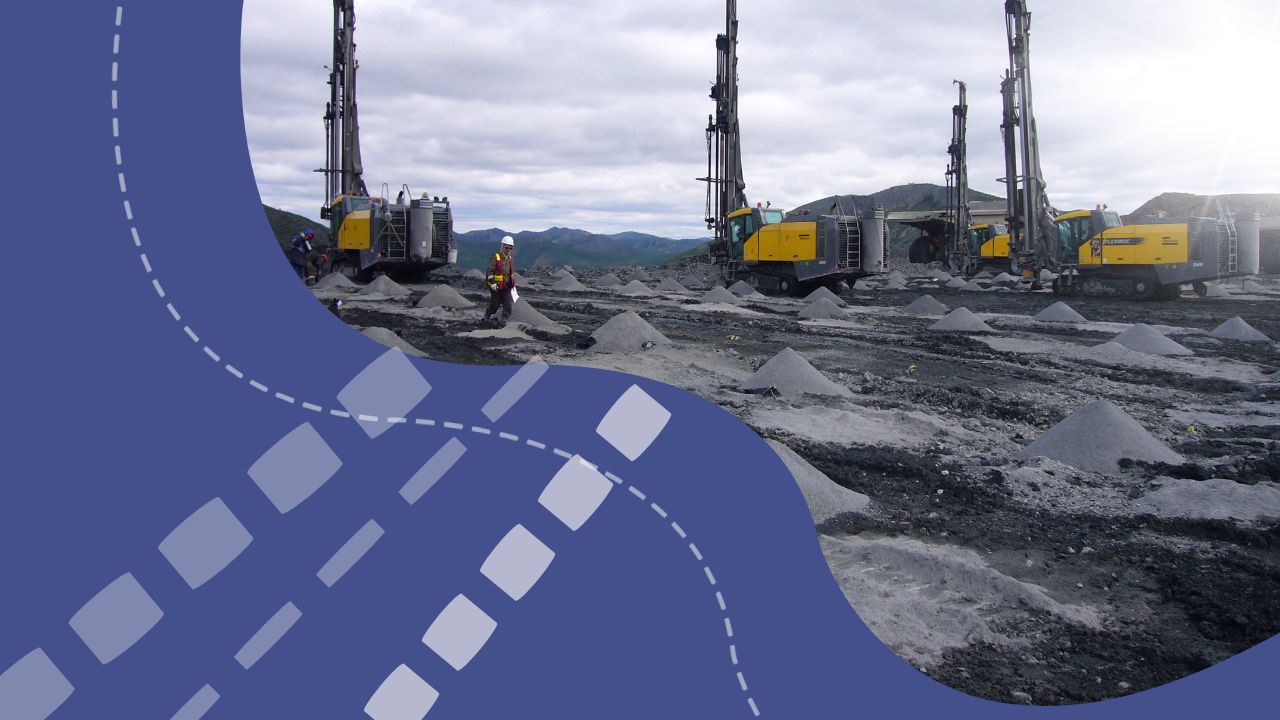
    The programme is designed to confirm the presence of gold mineralisation across five blocks of the Shan area, which forms part of the Boko-Vasilyevskoye gold ore field. Resources will be estimated across three standard categories: Inferred, Indicated and Measured. Planned drilling exceeds 20,000 linear metres, complemented by geophysical and geochemical surveys, mapping boreholes and surface excavation works including more than 20 trenches totalling 6,000 linear metres.

    The Semipalatinsk Nuclear Safety Zone, established on the site of the former Soviet nuclear weapons test polygon where more than 450 nuclear tests were conducted between 1949 and 1989, has been progressively opened to regulated economic activity including mining exploration as remediation work advances.

  • Kazakhstan’s Zhezkazganredmet Signs $107 Million Rhenium Offtake Deal With UK’s Maritime House as $30 Million Processing Plant Planned for Saran

    Kazakhstan’s Zhezkazganredmet Signs $107 Million Rhenium Offtake Deal With UK’s Maritime House as $30 Million Processing Plant Planned for Saran

    Kazakhstan’s state enterprise Zhezkazganredmet has signed a five-year offtake contract worth $107 million with British company Maritime House Ltd for the supply of rhenium metal produced from secondary raw materials, providing the commercial foundation for a $30 million rhenium processing plant planned for the city of Saran in Karaganda Region.

    The long-term contract was signed at the Ministry of Industry and Construction in the presence of Minister Yersaiyn Nagassayev. The agreement is designed to ensure stable production loading at the new facility and underpins the investment case for the project before it has even been launched.

    Maritime House is described as one of the world’s leading producers of metallic rhenium and has been collaborating with Zhezkazganredmet since 2023 on the development of technologies for extracting and processing rare earth elements from various raw material streams, including waste from the aviation and petrochemical industries. Zhezkazganredmet has already developed and implemented a technology for processing heat-resistant nickel alloys, with Rolls-Royce serving as the primary supplier of raw material supported by Maritime House — producing rhenium, nickel-cobalt concentrate and tungsten-tantalum concentrate in the process.

    Looking further ahead, Zhezkazganredmet is planning to develop green technology for processing lithium-ion batteries from electric scooters, electric vehicles and power tools, in partnership with an Australian company. The enterprise also plans to form a consortium with Kazatomprom, SGS and Maritime House to extract rare earth elements from Kazatomprom’s uranium processing streams, and separately to process neodymium-based permanent magnets.

  • Kazakhstan Researchers Develop Carbothermic Technology to Extract Lithium From Low-Grade Aluminosilicate Ores at Double the Concentration of Conventional Methods

    Kazakhstan Researchers Develop Carbothermic Technology to Extract Lithium From Low-Grade Aluminosilicate Ores at Double the Concentration of Conventional Methods

    Researchers at Kazakhstan’s National Centre for Complex Processing of Mineral Raw Materials have developed a new technology for extracting lithium from low-grade aluminosilicate ores, achieving lithium oxide concentrate grades of 12 to 14% — approximately double the concentration achievable through conventional extraction methods.

    The process is based on carbothermic smelting, which enables effective separation of lithium from the aluminosilicate residue. A notable feature of the technology is its dual output: in addition to lithium concentrate, the process produces FS45-grade ferrosilicon as a co-product, adding commercial value to what would otherwise be process waste.

    The new approach is also described as more environmentally responsible than existing methods. By reducing the volume of aggressive sulphuric acid solutions required in processing, the technology lowers both the environmental footprint of production and the associated operating costs — addressing two of the most significant barriers to developing Kazakhstan’s aluminosilicate lithium resources at scale.

    The breakthrough was announced by the press service of Kazakhstan’s Ministry of Industry and Construction and represents a potential pathway to utilising lithium-bearing ore bodies that have previously been considered too low-grade for economic extraction.

  • EBRD Provides $300 Million Loan to Solidcore Resources for Kazakhstan’s First Pressure Oxidation Hydrometallurgical Plant in Pavlodar

    EBRD Provides $300 Million Loan to Solidcore Resources for Kazakhstan’s First Pressure Oxidation Hydrometallurgical Plant in Pavlodar

    The European Bank for Reconstruction and Development is providing a loan of up to $300 million to Solidcore Resources and its subsidiary Ertis Hydrometallurgical Plant for the construction of a pressure oxidation hydrometallurgical complex in the Pavlodar Region of Kazakhstan — the first facility of its kind in Central Asia and a project that will establish a new metallurgical segment in the country.

    The EBRD will act as anchor lender, with Abu Dhabi Commercial Bank, ING Bank and Société Générale serving as co-lenders. The Ertis complex will be capable of processing up to 278,500 tonnes of gold concentrate annually, converting refractory and double-refractory gold concentrates into Doré bars — a semi-pure gold alloy — and significantly reducing Solidcore’s dependence on external processing arrangements.

    The project carries strategic importance for Kazakhstan’s mining sector, which contributes approximately 12% of GDP and around one third of all commodity exports. Refractory ores, which require more complex processing than conventional gold ores, account for approximately half of Kazakhstan’s total gold resources. The ability to process these ores domestically through pressure oxidation technology will unlock material that has previously been difficult to develop economically, boosting the country’s competitiveness and mineral supply potential.

    Pressure oxidation is described by the EBRD as one of the most resource-efficient, environmentally friendly and safe technologies in the hydrometallurgical industry. Solidcore has already tested the technology in similar projects, providing operational confidence for its application at Ertis scale. The project will also benefit from technical assistance provided by the Green Climate Fund and the EBRD to strengthen Solidcore’s corporate climate governance and ESG reporting practices beyond local regulatory requirements.

  • Ulytau Gold Processing Updates Environmental Documentation for Ashiktas Heap Leach Mine in Central Kazakhstan

    Ulytau Gold Processing Updates Environmental Documentation for Ashiktas Heap Leach Mine in Central Kazakhstan

    Ulytau Gold Processing has presented revised project documentation for the Ashiktas gold deposit in Ulytau Region at public hearings this week, with the update driven by the expiry of the current environmental permit defining the operation’s environmental impact.

    The revised project envisages reduced harmful emissions and the construction of a dedicated storage area with a waterproof liner for temporary stockpiling of spent ore for up to one year, with the accumulated technological mineral waste subsequently intended for reintroduction into the processing cycle.

    The Ashiktas processing complex was commissioned in late 2024 as a full-cycle heap leach operation producing Doré alloy. Despite the environmental documentation update, the project’s designed capacity remains unchanged: the complex is planned to process up to 1.5 million tonnes of ore per year and produce more than 1,700 kilograms of gold annually. Recoverable reserves at the deposit stand at approximately 6 tonnes of gold at an average grade of up to 1,600 grams per tonne, with full depletion expected over a nine-year mine life through to 2035.

    The company’s 2025 financial statements were not available in the depository database at time of reporting.

  • Kazakhstan’s Ädilet Party Business Council Calls for Deep Processing Push to Convert Mineral Wealth Into Domestic Economic Value

    Kazakhstan’s Ädilet Party Business Council Calls for Deep Processing Push to Convert Mineral Wealth Into Domestic Economic Value

    Kazakhstan’s political party Ädilet has convened a Business Council meeting bringing together representatives of major mining and metallurgical companies, industry associations and state bodies to debate how the country can retain more value from its mineral wealth domestically rather than exporting raw materials.

    The meeting concluded that deep processing, enterprise modernisation and production of high value-added goods must become the central priorities for Kazakhstan’s mining and metallurgical complex. The sector already accounts for approximately 8% of GDP, with production exceeding 14 trillion tenge and exports reaching $21.4 billion last year, according to figures presented by national mining holding Tau-Ken Samruk — but participants agreed the industry’s potential is substantially higher.

    Ädilet party chairman Aibek Dadebay framed the transition to deep processing as both an economic and a social justice issue. “This is not only an economic question. It is a question of fairness. The wealth of the land must be converted into the wealth of the people. That is why Ädilet fully supports the president’s strategic course toward deep processing, construction of new facilities and increasing output of higher value-added products,” he said.

    Discussion moved from strategic priorities to practical barriers: railway freight tariffs, enterprise modernisation costs, engineering workforce shortages and geological exploration funding. Tau-Ken Samruk chairman Nariman Absametov highlighted the growing strategic importance of rare and rare earth metals. “Access to rare and rare earth minerals is becoming one of the most important factors in the country’s global competitiveness. Kazakhstan possesses a unique mineral resource base, and its effective development will strengthen the country’s position in world markets,” he said.

    Dadebay said proposals from businesses, industry associations and experts would be systematised into a unified package of Ädilet initiatives on mining and metallurgical sector development. “Our task is to ensure that dialogue between business and the state continues on a daily basis,” he said.

  • ForgeX Solutions Plans 46-Year Open-Pit Mine at Kazakhstan’s Unique Tymlay Titanium-Magnetite Deposit in Zhambyl Region

    ForgeX Solutions Plans 46-Year Open-Pit Mine at Kazakhstan’s Unique Tymlay Titanium-Magnetite Deposit in Zhambyl Region

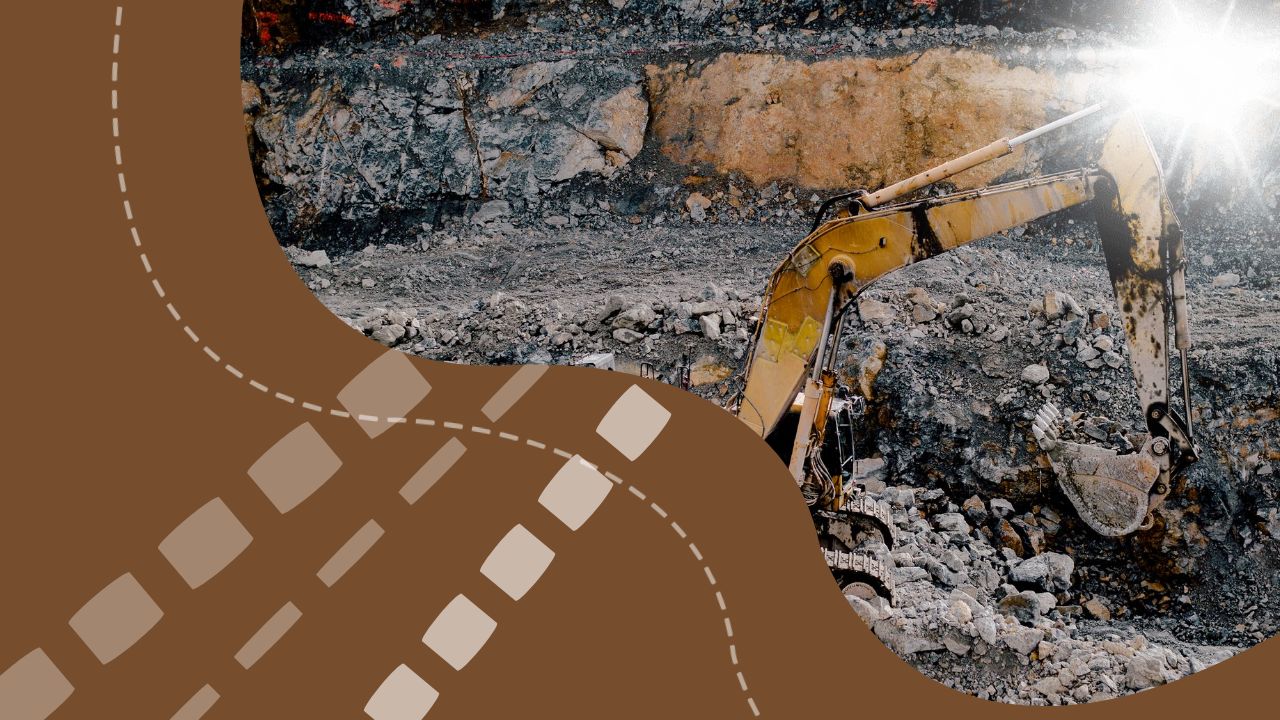
    AIFC-registered private company ForgeX Solutions Ltd is planning to develop the Tymlay titanium-magnetite deposit in the Korday District of Zhambyl Region through open-pit mining, with stripping operations starting in 2027 and ore extraction beginning in 2028 under a 46-year mine plan running to 2072.

    The project envisages extraction of 223.7 million tonnes of marketable ore at a processing plant capacity of 5 million tonnes per year. According to the published mining plan, the deposit’s reserves include 64.5 million tonnes of iron at an average grade of 28.83% and 21.1 million tonnes of titanium dioxide at an average grade of 9.41%. Vanadium pentoxide reserves stand at 232,584 tonnes at an average grade of 0.102%.

    Total titanium-magnetite ore reserves and resources across the Tymlay deposit and associated intrusive bodies in the ore field are estimated at approximately 1 billion tonnes, placing it in the large deposit category and — by titanium content — in the unique category. The project documentation emphasises that Tymlay surpasses all iron ore deposits on the Kazakhstani state balance in titanium content while having among the lowest sulphur and phosphorus concentrations.

    ForgeX Solutions Ltd is registered in the Astana International Financial Centre. Its founder is listed as Zholbarys Baurzhan in the public registry adata.kz. Geological survey and assessment work is planned for this year to verify historical geological information.

    The Tymlay deposit has a complex history. Previous subsoil user TENIR-LOGISTIC conducted exploration from approximately 2006, with plans involving China Machinery Engineering Corporation and China Metallurgical Group Corporation to build a mining and processing complex worth up to $700 million with annual capacity of 5 million tonnes of ore and 1.85 million tonnes of titanium-magnetite concentrate, as well as a chemical-metallurgical plant in Pavlodar Region for titanium dioxide production. Total project estimates ranged from 782 billion tenge to $2.3 billion. The subsoil contract was terminated in 2023 and the deposit returned to state ownership before the current licensing round.

  • Solidcore CEO Warns Gold Prices Near Peak as Company Plans Oman Expansion, Bakyrchik Underground Transition and Pavlodar Hydromet Launch

    Solidcore CEO Warns Gold Prices Near Peak as Company Plans Oman Expansion, Bakyrchik Underground Transition and Pavlodar Hydromet Launch

    Solidcore Resources chief executive Vitaly Nesis is maintaining a deliberately conservative stance on gold prices at a moment when most market participants are optimistic, telling Forbes Kazakhstan he expects a significant price decline within three years and budgeting accordingly — while simultaneously planning the most ambitious expansion programme in the company’s history.

    “I personally expect a meaningful price decline on a three-year horizon,” Nesis said. “As a company, we are budgeting this year at $4,000 per ounce and conducting long-term mine planning at $3,000. This reflects our corporate views. We are optimists, but we consider the current level excessive.”

    Against that cautious macro backdrop, Solidcore has set three strategic priorities: vertical integration through the launch of the Ertis Hydrometallurgical Plant in Pavlodar, geographic diversification beyond Kazakhstan, and growth of the mineral resource base. The Pavlodar plant is the most critical near-term project, as it addresses what Nesis describes as the company’s fundamental structural defect — dependence on a tolling contract with a Russian enterprise for processing concentrate. Solidcore is gradually reducing this exposure through China and Kazakhmys, but Nesis said the risk will only be eliminated once EGMK is commissioned. “This is a fundamental defect in the current commercial structure. We live with it, but it is finite.”

    On geographic diversification, Nesis identified Oman as the priority market, with Tajikistan and Uzbekistan also under active evaluation. He said the company plans to complete at least one asset acquisition outside Kazakhstan in 2026. Solidcore is 29.7% owned by Omani company Maaden International Investment, making the Middle East connection structurally logical.

    At Bakyrchik — the company’s flagship asset and one of Kazakhstan’s largest gold deposits — underground mine development is the next major transition. Design work is completing this year, with underground development beginning in 2026. Nesis acknowledged that high capital expenditure during underground construction may cause production to dip temporarily in 2028, but the company is targeting significantly higher output by 2035 as the new mine reaches full capacity. The company also has more than 20 exploration projects and 30 kilometres of drilling planned for 2026, with the objective of replacing depleted reserves tonne-for-tonne with new resource additions. In Kazakhstan, the company is also exploring acquisition of additional assets including an increased stake in the Beshoku project, building on last year’s acquisition of a tin stake at Syrymbet.

    On technology, Nesis claimed industry leadership in digitalisation, singling out Bakyrchik’s fleet management system as a fully algorithmised AI solution that dispatches trucks and excavators without human involvement. “This is not visualisation or an advisor. This is artificial intelligence that gives instructions to people. The results are very impressive both in productivity gains and cost reduction.” The system is planned for rollout across new company assets. Processing plants use machine vision and optimisation software for mill loading and flotation management.

    Despite Solidcore shares being the most liquid on the Astana International Exchange, Nesis said he remains unsatisfied with market liquidity and considers the exchange’s potential unrealised. He also addressed the legacy issue of shares blocked in Euroclear following EU sanctions on Russia’s National Settlement Depository in 2022, noting that the company’s subsequent delisting from Moscow and multi-stage AIX share exchange successfully migrated more than 90% of affected shares, though some shareholders were unable to participate due to their own sanctions constraints.

  • Kazakhstan’s GeoCube Platform Turns Decades of Soviet Geological Archives Into AI-Powered Investment Intelligence

    Kazakhstan’s GeoCube Platform Turns Decades of Soviet Geological Archives Into AI-Powered Investment Intelligence

    Kazakhstan’s mining and exploration sector is beginning to unlock one of its most underutilised assets — not a new mineral deposit, but the accumulated knowledge of several generations of Soviet and post-Soviet geologists stored in hundreds of thousands of reports, maps, drilling results and geophysical surveys that have long sat in archives, only partially accessible to investors and exploration companies.

    The GeoCube platform, developed by Terra Exploration with more than 30 years of accumulated expertise in satellite data applications for the oil, gas and mining industries, is designed to address this structural gap. The platform integrates geological data, satellite analytics and artificial intelligence to build digital subsurface models that allow investors and exploration companies to identify prospective targets more rapidly, assess risks more accurately and make data-driven decisions at the early stages of project evaluation — before field teams are deployed.

    Satellite monitoring is one of the platform’s core elements. High-resolution satellite imagery enables the identification of geological structures, terrain analysis, surface change detection and the spotting of early indicators of prospective zones. Combined with archived geological materials and AI algorithms, this approach can significantly accelerate early-stage exploration and reduce its cost — a material advantage in an environment of intensifying global competition for critical mineral resources.

    The developers emphasise that artificial intelligence functions as a tool to amplify the expertise of geologists rather than replace them. The platform works with historical reports, drilling results, geophysical surveys, high-resolution satellite imagery and modern spatial data, with AI identifying patterns and correlations that help direct further exploration work.

    The broader significance of GeoCube reflects a shift in how the mining industry defines competitive advantage. The question is no longer simply “where is the deposit?” — investors also need to assess infrastructure access, transport routes, energy capacity, water availability and market proximity. Digital platforms that integrate geology with economics and logistics represent the next layer of value creation in exploration.

    Kazakhstan’s government has separately been investing in the digitisation of its state geological archive, with over 97% of primary geological information — approximately 250 terabytes — now scanned into a unified system. Platforms like GeoCube that can extract intelligence from this data represent a strategic capability as much as a commercial product.