Website: Europe.com

  • EU Announces Retaliatory Measures Against U.S. Steel and Aluminum Tariffs, Targeting $28 Billion in Goods

    EU Announces Retaliatory Measures Against U.S. Steel and Aluminum Tariffs, Targeting $28 Billion in Goods

    The European Union has unveiled plans to impose duties on over $28 billion worth of U.S. goods in response to new tariffs on steel and aluminum imports announced by the United States, according to an official statement released on March 12. This move comes after U.S. President Donald Trumpreinstated a 25% tariff on imported steel and aluminum, reigniting long-standing trade tensionsbetween Washington and Brussels.

    The European Commission described the U.S. tariffs as “unjustified” and emphasized that its countermeasures aim to protect EU businesses, workers, and consumers. The EU’s retaliatory steps will be implemented in two phases. The first phase, set to begin on April 1, will reinstate previously suspended countermeasures from 2018 and 2020, addressing U.S. tariffs that cost the EU 8 billion euros in exports.

    European Commission President Ursula von der Leyen criticized the U.S. tariffs, stating, “Tariffs are taxes. They are bad for business and even worse for consumers. These tariffs are disrupting supply chains and bringing uncertainty to the economy.” Despite the strong response, the EU signaled its willingness to negotiate a resolution, noting that the measures could be lifted if an agreement is reached.

    The dispute traces back to 2018, when the Trump administration imposed tariffs on nearly $7 billion of European exports, citing national security concerns. The EU retaliated with its own tariffs on American products. A temporary truce was reached in 2021 under the Biden administration, which replaced the tariffs with a quota system, prompting the EU to freeze its countermeasures.

    The renewed tariffs threaten to disrupt global supply chains and increase costs for businesses and consumers. Additionally, the U.S. tariffs could negatively impact Ukraine’s steel industry, a critical sector of its economy and the second-largest source of foreign currency after agriculture.


  • Ukraine Defies Odds with Steel Production Growth in Early 2025 Despite Key Mine Loss

    Ukraine Defies Odds with Steel Production Growth in Early 2025 Despite Key Mine Loss

    Ukraine has managed to achieve a 9.9% increase in raw steel production during the first two months of 2025, reaching 1.18 million metric tons, according to data released by the Ukrainian steel producers’ union on Saturday. This growth comes despite the suspension of operations at the country’s key coking coal mine in Pokrovsk, located in the eastern region, due to escalating security concerns as Russian forces advance.

    The suspension of the Pokrovsk mine, operated by Ukrainian steelmaker Metinvest, has raised fears of a significant decline in steel output. The mine, which supplies a critical ingredient for steel production, has been a cornerstone of Ukraine’s industrial sector. The steelmakers’ union had previously warned that the potential closure of the mine could slash production to 2-3 million metric tons in 2025.

    Despite these challenges, Ukraine’s steel industry has shown resilience. The country, once a major global steel producer and exporter, saw its output plummet by 70.7% in 2022 to 6.3 million tonsfollowing Russia’s invasion. Production slightly declined to 6 million tons in 2023 but rebounded to 7.58 million tons in 2024.

    Producers are now exploring alternatives to sustain output, including sourcing coking coal from other domestic locations and relying on imports, though the latter option is expected to drive up costs. The ongoing conflict continues to pose significant risks to Ukraine’s industrial infrastructure, with several major steel plants already destroyed since the war began in February 2022.

  • Chinese-Owned PTL Cancels Major Green Energy Investment in Sweden

    Chinese-Owned PTL Cancels Major Green Energy Investment in Sweden

    In a significant blow to Sweden’s green energy ambitions, Chinese-owned PTL has scrapped its planned SEK 13 billion investment in a state-of-the-art anode factory in Timrå. The project, which aimed to produce battery anodes for the growing electric vehicle market, would have created 1,900 jobs and positioned PTL as a key supplier to Northvolt, Sweden’s leading battery manufacturer. However, stringent security policy requirements imposed by the Swedish Inspectorate for Strategic Products (ISP) ultimately led to the project’s cancellation.

    The ISP’s conditions included restrictions on PTL’s ownership, mandating that the company could not hold a majority stake in the factory. Additionally, the CEO, board chairman, and a majority of board members had to be Swedish citizens. PTL, unable to meet these demands within the required timeframe, appealed to the Swedish government but ultimately decided to withdraw from the venture.

    On Thursday, PTL announced the termination of its land contract for the industrial site in Torsboda, effectively ending the project. Dr. Yu Han, PTL’s chief representative in Europe, expressed regret over the decision, stating, “The anode factory in Timrå would have played a key role in a future Swedish battery industry and contributed to the green transition. However, the delays mean that we have to call it a day. The business case for the investment no longer exists.”

    Despite the setback, PTL has agreed to assist Torsboda Industrial Park in exploring opportunities to continue the project with another operator. The cancellation underscores the challenges of balancing foreign investment with national security concerns, particularly in strategic industries like battery manufacturing.

  • Ukraine’s Mineral Wealth Attracts Global Interest, Valued at $26 Trillion

    Ukraine’s Mineral Wealth Attracts Global Interest, Valued at $26 Trillion

    Ukraine’s vast mineral resources, estimated to be worth $26 trillion, have drawn significant international attention. The country’s subsoil holds approximately 5% of the world’s total mineral resources, including rare earth metals, which have sparked particular interest from the new US president.

    Ukraine boasts over 20,000 mineral deposits of at least 20 types, making it a key player in the global mining industry. Among its most valuable resources are iron ore, titanium, manganese, uranium, rare earth metals, graphite, lithium, gallium, copper, and zinc.

    The Kryvyi Rih Basin is home to Ukraine’s largest iron ore reserves, estimated at 27.4 billion tons, accounting for over 90% of the country’s production. Ukraine also holds the largest titanium reservesin Europe, representing about 7% of the global total, a critical resource for industries like aerospaceand medical equipment.

    In addition, Ukraine is a global leader in manganese reserves, with significant deposits in the Nikopol Basin. The country also possesses 2.3% of the world’s uranium reserves and a variety of rare earth metals essential for nuclear energy and advanced technologies.

    Ukraine ranks among the top five countries globally for natural graphite reserves, with 18 million tonsof confirmed deposits and 100 million tons of potential resources. The country is also a major supplier of lithium, with estimated reserves of 500,000 tons, crucial for battery production.

    Furthermore, Ukraine is the fifth-largest producer of gallium, a vital component in semiconductor manufacturing, and a significant producer of copper (4th in Europe) and zinc (6th in Europe).

  • Strickland Metals Discovers Significant Gold Potential at Jezerska Reka Prospect in Serbia

    Strickland Metals Discovers Significant Gold Potential at Jezerska Reka Prospect in Serbia

    Australian mining company Strickland Metals has announced a major breakthrough at its Jezerska Reka prospect, part of the Rogozna gold and base metals project in southern Serbia. The company reported drilling through over 490 metres of porphyry-related veining, alteration, and gold anomalism, signaling promising potential for a large-scale discovery.

    The results from the second drill hole at Jezerska Reka revealed a 493-metre intercept grading 0.14 grams of gold per tonne, starting at a depth of 223.6 metres. Strickland’s Managing Director, Paul L’Herpiniere, described the findings as “highly encouraging,” emphasizing the prospect’s potential to significantly enhance the already substantial resource inventory of the Rogozna project.

    Earlier drilling at Jezerska Reka also yielded positive results, including a 94-metre intercept grading 0.4 grams of gold per tonne from a depth of 484 metres. The company plans to conduct additional drilling in early April to further explore the target area.

    This development follows Strickland’s recent announcement of a maiden mineral resource estimate (MRE) for the Medenovac prospect, which increased the Rogozna project’s total MRE to 6.69 million ounces of gold equivalent, up from 5.41 million ounces. Strickland believes the Rogozna site, currently comprising four prospects, could become one of the world’s largest undeveloped gold deposits.

    In a related move, Strickland finalized a $37 million agreement in April 2024 with Ibaera Capital Fund’s subsidiary ISIHC to acquire Betoota Holdings, the owner of Serbia’s Zlatna Reka Resources, which holds 100% of the Rogozna project.

  • Euromines President Stresses Balance Between EU Climate Goals and Industrial Competitiveness

    Euromines President Stresses Balance Between EU Climate Goals and Industrial Competitiveness

    At the Strategic Dialogue on Steel, hosted by European Commission President Ursula von der Leyen, Euromines President Jan Moström (LKAB) underscored the need to balance EU climate ambitions with industrial competitiveness. Speaking at the event, Moström highlighted key priorities for ensuring a sustainable and resilient steel sector in Europe.

    He emphasized that electric arc furnace (EAF) steelmaking powered by low-carbon electricity is the future of decarbonization. To build resilient value chains, he stressed the necessity of combining scrap and direct reduced (DR) pellets, while also acknowledging the scarcity of high-grade iron ore.

    Moström also called for a robust Omnibus permitting framework to unlock sustainable raw materials and boost renewable energy capacity. Additionally, he urged the EU to implement an Affordable Energy Action Plan, advocating for electricity market reform to curb volatility and attract investment.

    For Europe’s clean industrial future, securing affordable, fossil-free electricity and reliable raw materials is essential to maintaining a competitive and resilient minerals mining industry.

  • Uzbekistan’s Hidden Mining Giant Steps onto the Global Stage at PDAC 2025

    Uzbekistan’s Hidden Mining Giant Steps onto the Global Stage at PDAC 2025

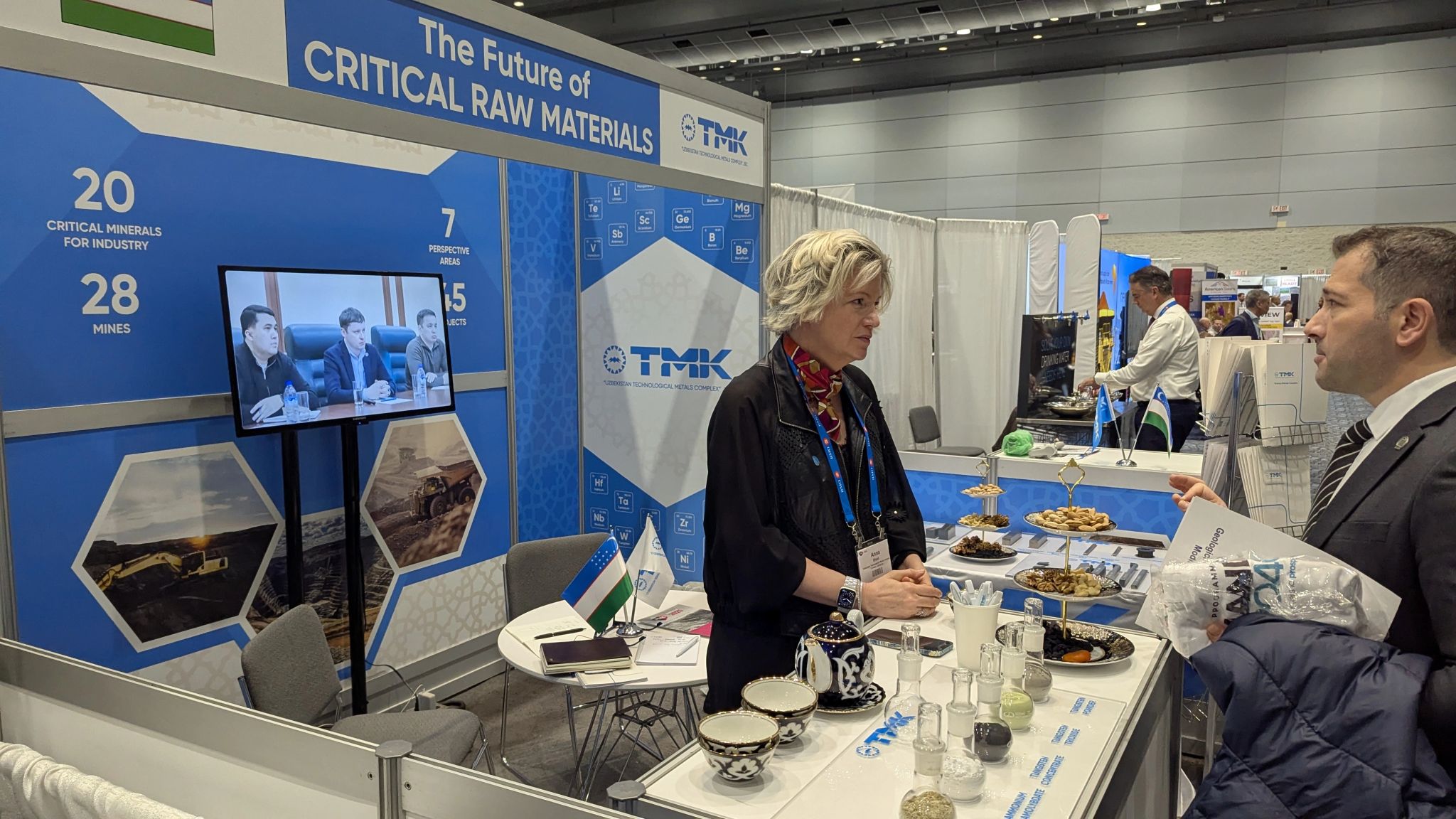
    One of the most intriguing newcomers at PDAC this year is UzTMK, a mining and metallurgical powerhouse from Uzbekistan that many have yet to hear about—despite its origins dating back to 1956.

    As an integrated producer of critical materials, UzTMK is gaining attention from the U.S. and European nations looking to secure their supply chains for industries such as automotive, renewable energy, infrastructure, healthcare, aerospace, and defense.

    During a TSX-hosted presentation, UzTMK shared its ambitious vision: expanding its existing infrastructure to create Central Asia’s largest diversified cluster for mining and processing rare earth elements, tungsten, and other strategic materials.

    With $200 million in funding, the company is poised to:
    ✅ Establish the largest R&D and Analytical Center for critical raw materials in Central Asia
    ✅ Expand mineral exploration programs
    ✅ Construct a state-of-the-art metallurgical plant using low-energy powder and nanotechnology

    Already under construction, the new facility is set to launch by 2028, with UzTMK’s market valuation projected to hit $2 billion.

    Meanwhile, Ukraine’s Critical Raw Materials deal, expected to be signed this Friday in Washington, could unlock the largest geological exploration program in decades—but with security and infrastructure challenges, it could take 15–20 years before production begins. In contrast, Uzbekistan’s strategic investment and tech partnerships could deliver production in just three years.

    UzTMK’s vision for Central Asia’s largest critical raw materials hub will be showcased at the MINEX Central Asia Mining and Exploration Forum in 2025, offering attendees a firsthand look at its mining operations and metallurgical facilities.

    Stay informed on the latest mining developments across 30 nations in Central Asia, the Caspian region, Mongolia, the Caucasus, and Europe—sign up for the Eurasian Mining Digest at www.minexforum.com.

  • U.S. and Ukraine Reach Initial Deal on Critical Minerals Investment

    U.S. and Ukraine Reach Initial Deal on Critical Minerals Investment

    The United States and Ukraine have reached an initial agreement to jointly invest in Ukraine’s critical minerals sector. The framework, which still requires further negotiations, establishes a reconstruction investment fund with shared U.S.-Ukraine ownership. Under the terms, Ukraine will contribute 50% of future revenues from state-owned mineral, oil, and gas assets to the fund, excluding existing operations like Naftogaz and Ukrnafta.

    The goal of the agreement is to attract private sector investment to develop Ukraine’s vast mineral resources, but significant hurdles remain. Ukraine lacks modern geological mapping of its rare earth deposits, and key infrastructure, including energy grids, has been severely damaged by war. Additionally, security risks and political uncertainty may deter long-term investors.

    Unlike previous proposals, the deal does not require Ukraine to use its mineral wealth to repay U.S. military aid, nor does it provide security guarantees. Instead, it assumes that U.S. financial stakes in Ukraine’s resources will create an incentive for continued support. However, tensions between President Trump and President Zelensky over Ukraine’s wartime policies could complicate future negotiations.

    While the agreement signals the U.S. administration’s focus on securing critical minerals, its success will depend on overcoming economic and geopolitical challenges in the region.

  • Ferrexpo Shares Surge Amid Ukraine’s Move to Nationalize Poltava Plant

    Ferrexpo Shares Surge Amid Ukraine’s Move to Nationalize Poltava Plant

    Shares of UK-based iron ore producer Ferrexpo (LON:FXPO) jumped over 13% on Friday following reports that the Ukrainian government is seeking to nationalize its key asset, the Poltava Mining and Processing Plant. The move comes amid allegations of fund misappropriation linked to illegal mining activities.

    The State Bureau of Investigations has filed an appeal with the High Anti-Corruption Court to transfer 49.5% of the plant’s authorized capital to state ownership. In addition, authorities have frozen the plant’s assets as investigations continue. Ferrexpo, however, stated that it has not received any formal notification regarding these claims and is working closely with its legal team to assess the situation.

    The stock’s sharp rise suggests a mixed response from investors. While some may perceive the nationalization effort as a political maneuver rather than a direct financial threat, others speculate that short sellers covering their positions contributed to the surge. Ferrexpo’s stock had previously been under pressure due to the ongoing war in Ukraine and operational uncertainties.

    Despite the uncertainty, the global iron ore market remains resilient, and Ferrexpo’s long-term assets—including its significant reserves and 50-year mine life—continue to attract investor interest.

  • LKAB to Replace Aging Sorting Plant in Vitåfors

    LKAB to Replace Aging Sorting Plant in Vitåfors

    Swedish mining company LKAB has announced plans to replace its aging sorting plant in Vitåfors, which has reached the end of its service life. The new facility will be constructed adjacent to the existing plant on a 24,000-square-meter site, improving efficiency and accommodating larger volumes of iron ore processing.

    “The sorting plant has served us well over the years, but it no longer meets modern operational requirements in terms of work environment and technology. Additionally, we need to handle greater production volumes,” said Monika Sammelin, Area Manager at LKAB.

    The project will begin with excavation work to create space for the new plant, followed by foundation engineering and groundwork preparations. A construction contract will be signed when building work officially begins.

    This initiative follows an earlier agreement in June 2024, when LKAB partnered with NCC to build a direct reduction plant and related infrastructure in Malmberget. The companies are now expanding their collaboration in the Swedish Ore Fields.

    “By being involved from an early stage, we can provide both resources and specialist expertise to ensure an efficient project implementation. We are pleased to support LKAB’s continued growth,” said Helena Hed, Head of NCC Green Industry Transformation.