Website: Europe.com

  • China Rebukes G7 and EU Over Rare Earth Criticism and Trade Policy Tensions

    China Rebukes G7 and EU Over Rare Earth Criticism and Trade Policy Tensions

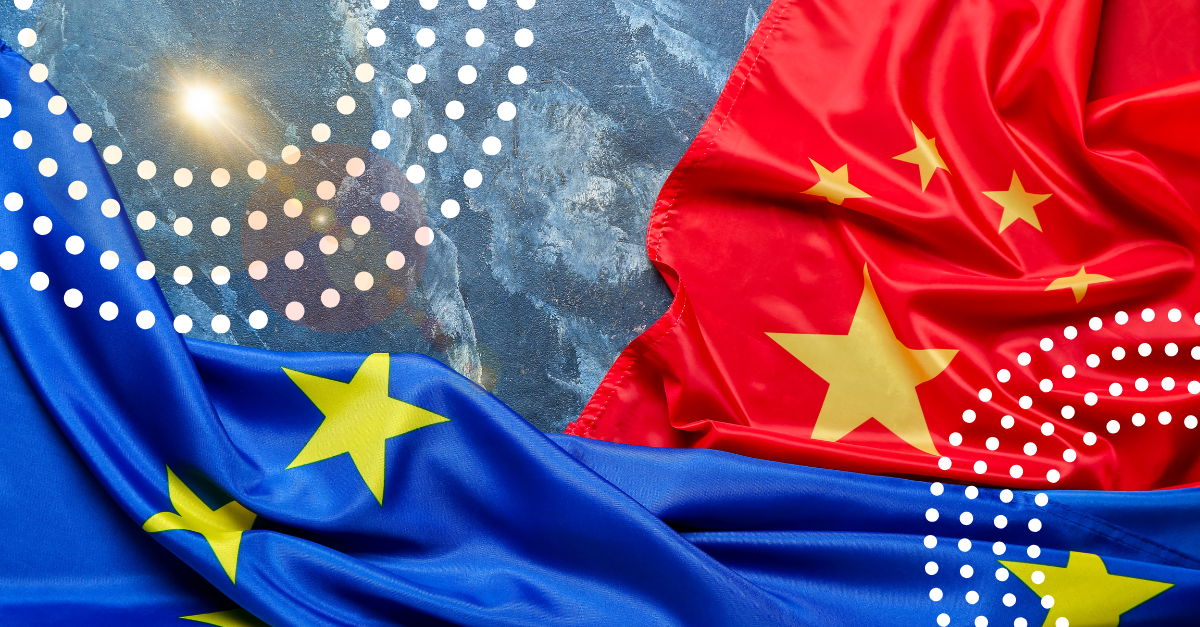
    China has strongly condemned the Group of Seven (G7) nations and European Commission President Ursula von der Leyen for what it described as interference in its internal affairs and unfair criticism of its economic practices. The backlash follows a G7 statement issued after the summit in Alberta, where Canadian Prime Minister Mark Carney urged China to curb “market distortions and harmful overcapacity.”

    Chinese Foreign Ministry spokesperson Guo Jiakun labeled the remarks “irresponsible” and “manipulative,” asserting that accusations of overcapacity were a pretext for trade protectionism. He also rejected claims that China’s rare earth dominance was being weaponized, calling such allegations a smear on China’s industrial policy.

    Von der Leyen had warned of a new “China Shock,” accusing Beijing of flooding global markets with subsidized goods and leveraging its control over critical materials to undermine competitors. Her comments coincided with the EU’s decision to postpone an economic dialogue with China due to stalled trade progress.

    Guo defended China’s subsidy policies as fair and transparent, and called for cooperation with the EU to foster a non-discriminatory business environment. Von der Leyen is expected to visit China for a summit next month.

  • Metinvest Completes Buyback of Eurobonds Due 2025

    Metinvest Completes Buyback of Eurobonds Due 2025

    Metinvest BV, the Dutch-based parent company of Ukrainian mining and metallurgical giant Metinvest Group, has fully redeemed its 2025 Eurobonds, according to a stock market disclosure. The bonds were officially paid off on June 17.

    Chief Executive Officer Yuriy Ryzhenkov noted that since the start of Russia’s full-scale invasion in 2022, Metinvest has repaid two bond series totaling nearly $600 million—a significant milestone considering the company continues to operate under extreme wartime conditions.

    “These payments were made despite the war’s profound impact on the Group’s business model, including the loss of operational control and shutdown of certain assets in Ukraine,” Ryzhenkov told Interfax-Ukraine.

    Metinvest, a vertically integrated group with operations across Ukraine (Donetsk, Luhansk, Zaporizhzhia, and Dnipropetrovsk regions), the EU, UK, and US, is majority-owned by SCM Group (71.24%) and Smart-Holding (23.76%).

    In December 2024, Metinvest repurchased $16.27 million worth of its 2025 Eurobonds during an auction, buying them back at prices ranging from 86% to 92.5% of par value. Following the auction, €161.9 million in bonds remained outstanding.

    The company explained the buyback was part of a broader strategy to manage its debt portfolio, smooth payment obligations, bolster resilience, and ease liquidity pressures amid the high-risk operating environment in Ukraine.

    Despite these financial maneuvers, Metinvest reported a third consecutive annual loss in 2024, totaling $1.15 billion, mainly due to asset write-downs at Pokrovske Coal Group. In Q1 2025, steel output held steady, though coal production declined due to the situation in Pokrovsk, and iron ore concentrate volumes dropped by 21% compared to the same period in 2024.

  • Europe puts flagship green steel project in jeopardy

    Europe puts flagship green steel project in jeopardy

    The potential closure of the Steelanol plant in Ghent, Belgium, by ArcelorMittal, due to restrictive and unsupportive EU regulations, highlights a critical issue in the intersection of climate policy and industrial innovation. This plant is a pioneering project in the decarbonization strategy of ArcelorMittal, capturing CO2 from blast furnace gases and converting it into ethanol, thereby reducing carbon emissions and turning industrial waste into a valuable product.

    The EU has shown a clear preference for hydrogen as the path to climate neutrality, potentially overshadowing other technological innovations like Steelanol, which offer immediate CO2 savings. This situation puts €250 million of investment, as well as 35 jobs, at risk, and underlines the challenges that companies face when navigating the complex and sometimes unpredictable regulatory landscape in Europe.

  • Daimler Truck Boosts Inventories to Shield Against Rare Earth Supply Risks from China

    Daimler Truck Boosts Inventories to Shield Against Rare Earth Supply Risks from China

    Faced with tightening export controls from China, German truckmaker Daimler Truck is ramping up inventories of key raw materials to protect against supply disruptions, CEO Karin Rådström said Tuesday at a press conference in Gothenburg.

    Citing lessons learned during the semiconductor crisis of the COVID-19 pandemic, Rådström explained that the company had already begun stockpiling critical components like chips to reduce reliance on just-in-time delivery systems — even though this approach requires tying up more capital.

    “With everything that’s going on in the world right now, this seems to be a good and necessary strategy,” she told reporters.

    A fresh concern is China’s new rare earth export licensing regime, implemented in April. The measures have slowed the flow of critical materials such as neodymium and dysprosium, used in vehicle motors, sensors, and electric power systems.

    China currently dominates the rare earths market, controlling the vast majority of global production and processing capacity. Automakers fear that bureaucratic delays or political tensions could choke supply lines vital for the green transition.

    While Daimler Truck has not yet experienced production halts, Rådström acknowledged the company is monitoring the situation closely. “So far, we seem to be getting what we need,” she said, adding that their purchasing department considers it a top priority.

  • Critical Metals Secures U.S. EXIM Support for Greenland Rare Earths Project Amid Global Supply Battle

    Critical Metals Secures U.S. EXIM Support for Greenland Rare Earths Project Amid Global Supply Battle

    Critical Metals Corp. (NASDAQ: CRML) has secured preliminary approval for up to $120 million in funding from the U.S. Export-Import Bank (EXIM) to advance its Tanbreez rare earths project in southern Greenland — one of the world’s largest untapped deposits of heavy rare earths. The loan, which covers nearly half of the project’s estimated $290 million cost, is contingent on Critical Metals securing sufficient equity from strategic investors.

    Tanbreez, situated on a massive 4.7-billion-tonne kakortokite unit, is expected to begin producing 85,000 tonnes of rare earth concentrates annually by 2026, with plans to scale up to 425,000 tonnes. The resource contains over 27% heavy rare earth elements (HREEs) like dysprosium, terbium, and yttrium — crucial for electric vehicles and defense applications.

    The EXIM support highlights U.S. efforts to counter China’s grip on the rare earths market, where it dominates both production and processing. Tanbreez would be the first overseas mining project backed by the U.S. under the Trump administration and follows prior diplomatic pressure to keep the asset from falling into Chinese hands.

    Critical Metals is conducting a definitive feasibility study due in 2025 and plans to invest an additional $10 million in exploration this year, potentially increasing its stake in Tanbreez to 92.5%. The company aims to process the rare earths in the U.S., with earlier Department of Defense funding applications still pending.

    The announcement sent CRML shares soaring over 21% on the Nasdaq, boosting its market cap to $225.8 million. The loan approval underscores U.S. strategic interest in Greenland’s mineral potential amid a wider push to de-risk Western supply chains for critical materials.

  • Savannah Resources Appoints Ex-Ministers to Steer Controversial Lithium Mine Forward

    Savannah Resources Appoints Ex-Ministers to Steer Controversial Lithium Mine Forward

    Despite persistent local resistance and legal challenges, Savannah Resources continues to press ahead with its controversial open-pit lithium mine in Barroso, northern Portugal. The company announced the formation of a new advisory committee, composed of former Portuguese government ministers Luís Mira Amaral (PSD) and Luís Amado (PS), German supply chain specialist Astrid Karamira, and former EDM president Carlos Caxaria.

    Savannah’s CEO Emanuel Proença stated that the committee’s role is to provide strategic guidance to ensure the “success and sustainability” of the Barroso lithium project, which is slated to begin production in 2027. The mine received a conditional Environmental Impact Statement (EIS) in 2023 and has been classified as a strategic project by the European Commission under the Critical Raw Materials Regulation.

    However, opposition remains fierce. NGOs including Unidos em Defesa de Covas do Barroso (UDCB), MiningWatch Portugal, and ClientEarth have formally challenged the European Commission’s support, claiming the project’s environmental and social impacts were insufficiently assessed.

    Savannah argues that the mine could supply enough lithium to power over half a million electric vehicle batteries annually — more than three times Portugal’s yearly vehicle sales. Nonetheless, the lack of a domestic refinery has drawn criticism, with the original plan for a lithium processing plant by GALP now abandoned and a new facility only projected for 2028.

  • Dundee Precious Metals to Acquire Adriatic Metals in $1.25 Billion Deal

    Dundee Precious Metals to Acquire Adriatic Metals in $1.25 Billion Deal

    Toronto-listed Dundee Precious Metals (DPM) is set to acquire London- and Sydney-listed Adriatic Metals in a $1.25 billion cash-and-stock transaction, expanding its portfolio with the addition of the Vareš silver project in Bosnia and Herzegovina. The deal strengthens DPM’s position in the Balkans and adds near-term production growth and cash flow diversification.

    Adriatic shareholders will receive 0.1590 new DPM shares and 93 pence in cash for each Adriatic share, valuing each share at 268 pence—a 50.5% premium to Adriatic’s LSE closing price on May 19. DPM has already secured support from Adriatic directors and shareholders holding 37.23% of shares.

    The Vareš project, Adriatic’s flagship operation, completed construction last year and began producing silver/lead and zinc concentrates. The mine is ramping up to nameplate capacity of 0.8 million tonnes per year by the second half of 2025, with expansion studies under way to increase output to 1.3 million tonnes.

    “This transaction brings together complementary strengths to create a dynamic and diversified mining company with meaningful scale,” said Adriatic CEO Laura Tyler. DPM CEO David Rae highlighted the strategic fit, citing DPM’s expertise in underground mining and financial strength to maximise Vareš’ potential.

    Analysts from SP Angel endorsed the deal, viewing it as beneficial for Adriatic shareholders and noting that the combined entity could become a key player in the Balkan mining sector. They also noted possible but unlikely interference from Zijin, which already operates in the region.

  • Intensifying Competition for Central Asia’s Critical Raw Materials

    Intensifying Competition for Central Asia’s Critical Raw Materials

    As the race for Central Asia’s critical raw materials accelerates, the EU is intensifying efforts to reduce its dependency on China—currently the dominant force in the region’s resource exports. Brussels is taking a new approach: instead of merely sourcing raw ore, it is promoting full value-chain development within Kazakhstan and Uzbekistan.

    The EU’s strict environmental standards contrast with growing criticism of China’s ecological impact. In response, Beijing is highlighting its commitment to “green” cooperation. Over the past 18 months, Chinese investments in Central Asia’s energy and manufacturing sectors have surged to $4.1 billion and $11.8 billion, respectively.

    EU MOVES TO STAKE CLAIM IN STRATEGIC MINERALS

    In June 2025, the European Commission designated the Sarytogan graphite deposit as strategic under its Critical Raw Materials Act and began courting investors with EU-backed contract support. Located between Europe and China—which processes over 90% of global graphite—Sarytogan has become a focal point in the resource race.

    Earlier, in August 2024, the European Bank for Reconstruction and Development (EBRD) made its first direct investment in Central Asian graphite, acquiring a 17.36% stake in Sarytogan Graphite for €3 million. Germany has also moved decisively: in mid-2023, HMS Bergbau AG secured a $200 million lithium deal, followed by the formation of a German industrial consortium in Kazakhstan in early 2024.

    CHINA UPS ESG STANDARDS AT HOME AND ABROAD

    Facing growing scrutiny, China has enacted a new Mineral Resources Law, effective July 1, 2025, that for the first time mandates environmental restoration plans prior to mining. While the law raises environmental, social, and governance (ESG) requirements, critics point to vague restoration rules and weak provisions for community involvement. Nonetheless, China is encouraging similar standards in its overseas projects—including in Central Asia.

    To secure supply chains, China is focusing on vertical integration. One major initiative is East Hope Group’s $12 billion industrial project in Kazakhstan, which will combine mining, processing, electrolysis, and power generation, creating up to 10,000 jobs and a self-contained industrial ecosystem.

    INTENSIFYING COMPETITION AND NEW STANDARDS

    As competition heats up, Central Asian governments are under pressure to elevate both environmental and technological benchmarks. The EU is leveraging “soft power” through financing, green policy frameworks, and public diplomacy. Meanwhile, China is building vertically integrated industrial clusters and expanding its outreach through experts and state media.
  • Talga’s Swedish Graphite Mine Gets Final Green Light, Bolstering EU’s Battery Supply Chain

    Talga’s Swedish Graphite Mine Gets Final Green Light, Bolstering EU’s Battery Supply Chain

    Australia’s Talga Group (ASX: TLG) has secured full regulatory approval to begin development of its Nunasvaara South graphite mine in northern Sweden, after the country’s government officially dismissed all remaining appeals against the exploitation concession.

    The decision marks the end of a long and turbulent permitting process, unlocking Talga’s broader Vittangi anode project, which integrates the newly approved mine with its previously permitted Luleå anode refinery. Together, these form one of Europe’s most advanced vertically integrated graphite projects.

    “Today validates years of dedication,” said Talga founder and managing director Mark Thompson, calling the milestone a major step in the company’s ambitions to supply Europe’s growing battery market.

    Sweden’s Energy, Business and Industry Minister Ebba Busch also welcomed the news, stating: “The graphite that Talga is planning to produce is a key material in battery manufacturing and the green transition to a fossil-fuel free society.”

    The announcement triggered a strong market reaction, sending Talga shares up 20% on Thursday to A48 cents, and lifting its market capitalization to A$216 million (approx. $140 million).

    A rough permitting journey
    The path to approval was far from smooth. After obtaining environmental and Natura 2000 permits in April 2023, Talga faced a string of legal challenges from environmental groups. While Sweden’s Land and Environment Court of Appeal upheld the permits, opponents took the case to the Supreme Court, which declined to hear it in October 2024.

    A final appeal against the exploitation concession was filed in December 2024, delaying the project again. This week’s rejection of that challenge by Sweden’s Ministry of Climate and Enterprise officially clears the way for development.

    Strategic timing for Europe
    Talga’s mine arrives just as European battery gigafactory capacity is surging, with demand for graphite anodes projected to rise from 30,000 tonnes in 2023 to over 500,000 tonnes annually by 2030. Currently, China controls 84% of global graphite processing, and Talga’s project is seen as a key move to reduce the bloc’s dependency on foreign supply.

    The EU has recognized the strategic importance of Talga’s project, awarding it a €70 million grant via the Innovation Fund, and naming it a strategic initiative under both the Critical Raw Materials Act and the Net-Zero Industry Act.

    Each 10,000 tonnes of locally produced graphite is expected to reduce the EU’s foreign mineral dependency by 7%, making this not just a commercial success for Talga, but a major geopolitical win for Europe’s green transition.

  • NGOs Challenge EU Backing of Controversial Lithium Mine in Portugal

    NGOs Challenge EU Backing of Controversial Lithium Mine in Portugal

    Three NGOs have formally challenged the European Commission’s decision to grant ‘strategic project’ status to the Covas do Barroso lithium mine in northern Portugal — a move they say threatens both the environment and the cultural fabric of the local community.

    MiningWatch Portugal, ClientEarth, and Unidos em Defesa de Covas do Barroso filed the complaint on grounds that the project, fast-tracked under the Critical Raw Materials Act (CRMA), poses serious environmental and social risks that were not adequately assessed. They argue that preferential permitting and financing for the mine were granted without proper scrutiny.

    “The green transition must not be built on environmental harm and social injustice,” said Ilze Tralmaka, a lawyer with ClientEarth. “This mine threatens a fragile ecosystem and a community that has consistently opposed it.”

    Critics cite unsafe tailings storage, unviable water sources, and potential contamination of the Douro River system as key concerns. Additionally, locals argue the project jeopardizes traditional farming practices and rural livelihoods in the Barroso region — a designated Globally Important Agricultural Heritage System (GIAHS).

    NGOs also question the economic feasibility of the mine. With global lithium prices plummeting and multiple higher-grade spodumene projects in Australia shutting down, they argue that the Covas do Barroso project lacks financial justification. “This sets a dangerous precedent,” warns Nik Völker of MiningWatch Portugal. “It turns European peripheries into sacrifice zones.”

    The mine is being advanced by Savannah Resources, which must still pass regulatory and financing hurdles, and present a definitive feasibility study before construction — currently projected for 2026 or 2027.

    Local activist Catarina Alves highlights what’s at stake: “People here rely on clean water for drinking, farming, and livestock. If that’s lost, our way of life is gone. For what? A few years of lithium and a new kind of pollution?”

    The NGOs are calling for a rigorous, evidence-based reassessment of the project’s status. If their request is rejected or unresolved after up to 22 weeks, they plan to take the case to the Court of Justice of the European Union.