Website: Europe.com

  • EU Unlikely to Cut Critical Minerals Dependence on China by 2030, Auditors Warn

    EU Unlikely to Cut Critical Minerals Dependence on China by 2030, Auditors Warn

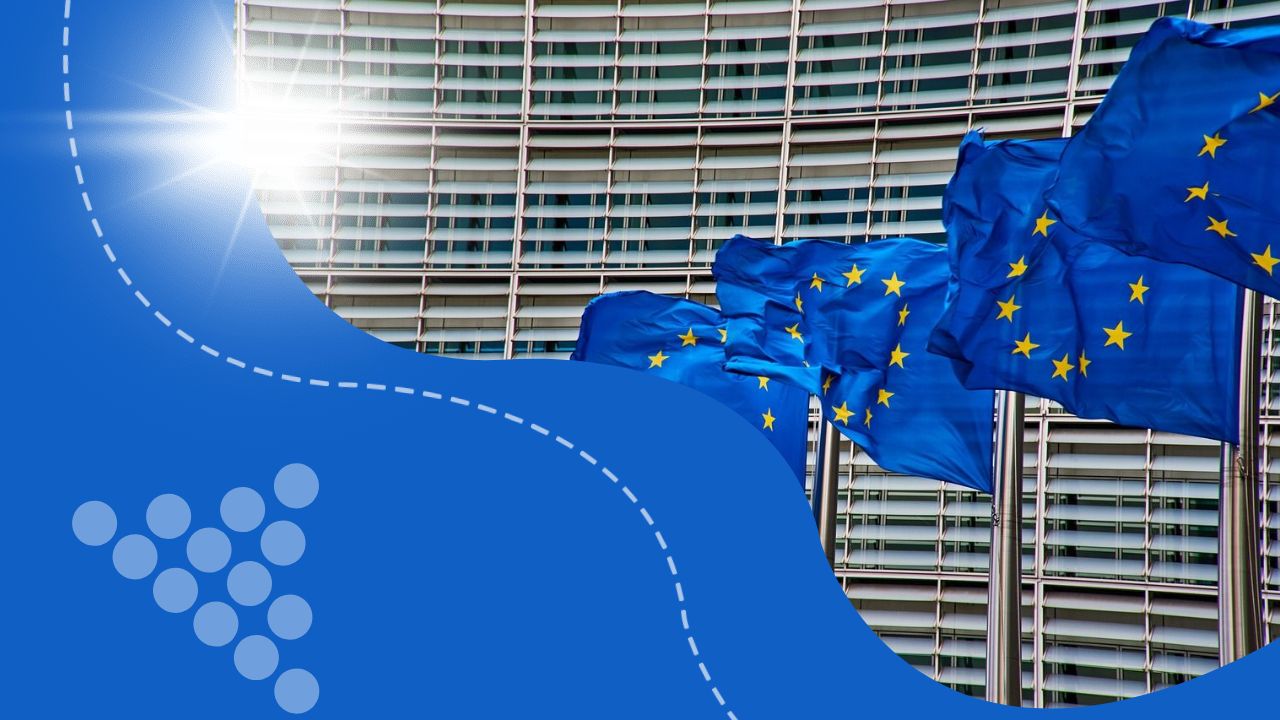
    The European Union is unlikely to diversify its supply of critical raw materials in time to meet its climate and industrial targets, leaving the bloc heavily dependent on China well into the next decade, according to a new report by the European Court of Auditors (ECA).

    Despite the signing of 14 major trade agreements and sustained diversification efforts led by the European Commission, EU auditors concluded that the EU27 is “unlikely to succeed in time” in securing alternative sources of minerals essential for clean technologies such as electric vehicle batteries, wind turbines and solar panels.

    China remains the dominant supplier. The ECA report shows that the EU sources 97% of its magnesium imports from China, alongside large shares of gallium (71%), germanium (45%), baryte (44%), arsenic (39%), graphite (40%) and tungsten (31%). Magnesium is a key input for hydrogen electrolysers, while gallium and germanium are vital for semiconductors and renewable technologies.

    “Without critical raw materials, there will be no energy transition, no competitiveness, and no strategic autonomy,” said Keit Pentus-Rosimannus, warning that the EU is “dangerously dependent” on a small group of external suppliers.

    While countries such as Chile (lithium) and Turkey (boron) are also important partners, China remains unrivalled in both mining output and refining capacity. According to EU data, China controls around 60% of global production of critical raw materials and about 90% of global refining capacity. The European Parliament estimates that the EU depends on China for roughly 90% of its raw materials and 98% of rare-earth magnets.

    The pending Mercosur trade agreement, covering Argentina, Brazil, Paraguay and Uruguay, could help diversify supply once approved by the European Parliament. EU lawmakers are also debating whether to revive a stalled trade and minerals agreement with the United States.

    Speaking in December, EU Executive Vice President Stéphane Séjourné acknowledged the bloc’s raw material dependence and said dialogue with China “remains essential,” even as Brussels rolls out new monitoring measures and prepares to launch a European raw materials centre to coordinate supply, stockpiling and market oversight.

    Auditors noted that Beijing has increasingly used its dominance as geopolitical leverage. Export restrictions on rare earths in recent years, including in 2025, disrupted EU industries. Data from the European Chamber of Commerce in China shows that Chinese authorities approved only 19 out of 141 licence applications submitted by European companies in mid-2025.

    The report also questions whether the EU’s Critical Raw Materials Act (CRMA), adopted in 2024, can realistically meet its targets. The law sets non-binding goals for 2030, including 10% domestic extraction, 40% local processing and 25% recycling, while limiting reliance on any single non-EU supplier to 65%. Auditors say these targets are difficult to achieve given China’s grip on processing for materials such as magnesium, gallium and all rare earth elements.

    The ECA highlights recycling as an underused lever. Ten critical materials needed for the energy transition are not recycled at all in the EU, and existing targets do little to incentivise recycling of specific materials. The auditors recommend binding recycling targets, improved waste collection rules and easier movement of critical-material waste within the bloc to improve the commercial viability of recycling.

    “China’s vertical integration, scale and low costs give it a structural advantage,” Pentus-Rosimannus said, adding that without stronger action on recycling, partnerships and strategic projects, the EU risks falling short of its green and industrial ambitions.

  • Binding Solutions and Mitsui Partner on Low-Carbon Iron Ore Pellets in Australia’s Pilbara

    Binding Solutions and Mitsui Partner on Low-Carbon Iron Ore Pellets in Australia’s Pilbara

    UK-based Binding Solutions has entered into an agreement with a subsidiary of Mitsui & Co to develop low-carbon iron ore pellets using material from Western Australia’s Pilbara region, one of the world’s largest iron ore hubs.

    Under a newly signed memorandum of understanding with Mitsui Iron Ore Development, Binding Solutions will apply its proprietary cold agglomeration technology to convert lower-grade iron ore fines into pellets. The company says the process significantly reduces energy use and carbon dioxide emissions compared with conventional pelletizing methods, which rely on high-temperature heat treatment.

    Binding Solutions chief executive Jon Stewart said the work already carried out with Mitsui’s unit demonstrates strong commercial potential. According to Stewart, the ability to upgrade Pilbara iron ore fines into premium pellets opens up a sizeable new market opportunity, particularly as steelmakers seek cleaner feedstock options.

    The preliminary agreement focuses on utilizing fines that would otherwise require sintering, a highly energy-intensive and polluting step, before they can be used in traditional blast furnaces. Pellets produced via Binding Solutions’ method can bypass this stage and are also suitable for electric arc furnaces, which are increasingly being adopted by steel producers aiming to lower emissions.

    Mitsui holds iron ore interests in the Pilbara through partnerships with major miners including BHP and Rio Tinto. In 2024, the Japanese trading house agreed to acquire a 40% stake in Rio Tinto’s Rhodes Ridge iron ore project in Western Australia for $5.34 billion.

    Binding Solutions has previously completed industrial trials of its technology with British Steel and Germany’s Salzgitter and is now working toward the development of a full-scale industrial plant to commercialize the process.

  • EU Weighs Ban on Russian Platinum Group Metals and Copper in New Sanctions Package

    EU Weighs Ban on Russian Platinum Group Metals and Copper in New Sanctions Package

    The European Union is considering expanding its sanctions regime against Russia to include a ban on imports of several platinum group metals and copper, as Brussels looks to tighten economic pressure over Moscow’s war in Ukraine.

    According to sources familiar with the discussions, the proposed measures could cover iridium, rhodium, platinum and copper. The initiative is still under negotiation and would require unanimous approval from all EU member states. The bloc is aiming to finalize the new sanctions package later this month. The European Commission, which coordinates sanctions policy, declined to comment.

    The potential ban comes at a time of already strained global metals markets. Copper prices have reached record levels this year, driven by strong demand and limited mine supply, while platinum is also expected to remain in deficit. Western trading hubs have been progressively distancing themselves from Russian-origin metals. The UK has barred Russian copper produced after April 13, 2024 from trading or delivery on the London Metal Exchange, and Russian refiners were removed from the London Platinum and Palladium Market’s approved delivery list in 2022.

    These restrictions have reduced demand for Russian metals among Western industrial consumers, particularly because sanctioned material can no longer be used for financing purposes. In the copper market, many European buyers have effectively exited Russian supply altogether, especially as several major Russian producers have come under sanctions. Nevertheless, Russian metals continue to find their way into global markets, with much of the volume redirected to Asia.

    If implemented, the new EU measures would primarily affect MMC Norilsk Nickel, Russia’s largest mining group and a key supplier to global industry. The company accounts for roughly 40% of global palladium used in automotive catalysts, a metal not included in the current proposal. Norilsk Nickel is also Russia’s largest producer of platinum, iridium, rhodium, nickel and copper, and has so far avoided direct EU sanctions because of its systemic importance to global supply chains.

    Separately, the EU is also reviewing options to replace its existing price cap on Russian oil with a ban on maritime services, according to earlier reports.

  • Greenland’s Vast Mineral Potential Draws Strategic Attention as Arctic Competition Intensifies

    Greenland’s Vast Mineral Potential Draws Strategic Attention as Arctic Competition Intensifies

    Greenland’s mineral resources are increasingly attracting international interest as competition over critical raw materials expands into the Arctic, according to Prof. Krzysztof Szamałek, director of the Polish Geological Institute in Warsaw. He noted that the island’s geological potential has gained prominence amid growing geopolitical rivalry and renewed debate over Arctic security.

    Greenland, an autonomous territory within the Kingdom of Denmark, has recently returned to the global spotlight following statements by US President Donald Trump emphasizing the island’s importance to American security. According to estimates cited by Poland’s state news agency PAP, the theoretical value of Greenland’s resource base could reach USD 4.4 trillion, including around USD 1.4 trillion in oil and approximately USD 1.5 trillion in rare earth elements.

    Szamałek explained that Greenland’s resources are strategically significant because they include critical raw materials essential for modern industry, where supply disruptions could severely constrain production. The European Union identified 34 critical raw materials two years ago, many of which are vital for advanced technologies and energy systems.

    However, he cautioned that current knowledge of Greenland’s mineral wealth remains preliminary. Most assessments confirm the presence of mineral-bearing formations rather than verified reserves. Detailed exploration, drilling, and resource calculations would still be required, and the island’s ice-covered interior could hold additional geological insights in the future.

    Potential deposits identified so far include graphite, molybdenum, niobium, tantalum, platinum group elements, and precious metals used in electronics and electrical engineering, as well as strontium, titanium, hafnium, and zirconium. Szamałek stressed that these resources are “estimated, not fully documented,” and that development would be a long and complex process.

    Most known deposits are located in offshore areas and along Greenland’s coastline, reflecting the fact that roughly 80 percent of the island is covered by an ice sheet. Of the EU’s 34 critical raw materials, Szamałek said 25 are believed to occur in Greenland, compared with only four or five in Poland, depending on classification.

    He also pointed out that China currently dominates the production of many rare earth elements, and that interest in Greenland is driven largely by efforts to diversify supply chains rather than by an immediate global shortage. Extracting minerals from beneath Greenland’s ice sheet, he added, remains technologically untested and unnecessary at this stage.

  • Poland Set to Remain EU’s Last Coal Producer Until 2049 Despite Losses

    Poland Set to Remain EU’s Last Coal Producer Until 2049 Despite Losses

    Poland will continue mining coal until at least 2049, despite the sector’s chronic unprofitability, due to a binding agreement signed between the government and labor unions in 2021, according to Interia Biznes. The agreement legally fixes the coal phase-out date, making any earlier shutdown politically and socially difficult.

    The issue has gained renewed attention after the Czech Republic closed its last coal mines at the end of January. From February 1, Poland effectively becomes the only European Union member state still extracting coal, highlighting its exceptional position within the bloc’s energy transition.

    Coal output in Poland has been declining for decades. Production peaked at around 180 million tons in 1989, before falling to 102 million tons in 2000, 76.5 million tons in 2013, and approximately 44 million tons in 2025. Despite this sharp contraction, the industry remains heavily subsidized.

    Domestic coal production is currently loss-making and sustained through state budget support. Coal sells on the Polish market for about 458 zloty (roughly $114) per ton, while production costs are estimated at 944 zloty (around $236) per ton, underscoring the scale of ongoing financial support required to keep the sector operating.

  • Eldorado Gold Uncovers Multiple High-Grade Zones and Eyes Expansion at Key Assets

    Eldorado Gold Uncovers Multiple High-Grade Zones and Eyes Expansion at Key Assets

    Eldorado Gold Corporation has reported a series of significant high-grade discoveries across its exploration portfolio, reinforcing the potential for mine life extensions and future production growth in Canada and Greece. The company also confirmed it has launched studies to assess a possible expansion of processing capacity at its Lamaque Complex in Quebec.

    At Lamaque, recent drilling identified four new high-grade zones around the Ormaque deposit and the historic Lamaque Mine. These include the newly defined Ormaque South-East zone, extensions to the west of Ormaque, the Garnet Zone north of the deposit, and additional mineralization at Lamaque South. The results confirm the presence of multiple stacked and laterally continuous vein systems located close to existing infrastructure, strengthening the case for low-risk, capital-efficient growth. On the back of these results, Eldorado has begun studies to increase throughput at the Sigma mill from around 2,500 tonnes per day toward its fully permitted capacity of 5,000 tonnes per day.

    In Greece, exploration at the Olympias mine outlined a new North West zone with high gold, silver, lead and zinc grades located within 200 metres of current underground workings. Drilling at the West Flats area also intercepted thick massive sulphide mineralization beyond the existing resource, pointing to further expansion potential. In parallel, Eldorado confirmed the discovery of a gold-copper skarn system along the Stratoni Fault, near historic mining operations, adding a new target style to the Kassandra district.

    The company said these discoveries highlight strong upside across its portfolio and support continued investment in exploration. Eldorado plans a substantially expanded drilling programme in 2026 across Quebec, Greece and Turkiye, with total exploration spending expected to rise to between $75 million and $85 million as it targets both resource growth near existing mines and earlier-stage discovery opportunities.

  • Poland Urges Brussels to Act Over Ukraine’s Steel Scrap Export Ban

    Poland Urges Brussels to Act Over Ukraine’s Steel Scrap Export Ban

    Poland has asked the European Commission to intervene after Ukraine introduced measures that effectively halt exports of steel scrap to the European Union, a move Warsaw warns could undermine the competitiveness of its steel industry.

    The dispute highlights growing trade frictions between the two close partners at a time when the EU continues to provide political, financial and military support to Ukraine following Russia’s full-scale invasion. While Poland remains one of Kyiv’s strongest allies, tensions have mounted over trade flows, including agricultural products, transit corridors and now scrap metal.

    From January 1, Ukraine set export quotas for ferrous scrap at zero, effectively blocking shipments of a key input for electric arc furnaces. Poland’s Ministry of Development and Technology said the restrictions are already disrupting supply chains and risk driving up costs for domestic steelmakers.

    Roughly half of Poland’s steel output is produced using electric arc furnaces, which rely heavily on scrap as their primary raw material. In recent years, Poland has been the main destination for Ukrainian scrap exports. According to the ministry, a prolonged shortage could lead to higher production costs, weaker competitiveness and a real risk of output cuts and job losses in the sector.

    Kyiv has defended the measure as a wartime necessity, arguing that limiting exports helps support Ukraine’s own steel industry. Polish industry representatives counter that the policy lowers input costs for Ukrainian producers while increasing prices for manufacturers in the EU.

    Warsaw says it attempted to avert the restrictions before they took effect. On December 18, 2025, the Polish ministry sent a formal letter to Ukraine’s deputy economy minister urging the government to reconsider plans that would block scrap exports. With no response and the zero quotas now in force, Poland escalated the issue to Brussels.

    Following the Ukrainian government’s decision, the ministry formally requested urgent intervention from the European Commission, describing the quotas as a de facto export ban. Polish officials added that the matter will also be raised during upcoming bilateral talks with Ukrainian counterparts.

  • Germany Faces Renewed Calls to Repatriate Gold Stored in the United States

    Germany Faces Renewed Calls to Repatriate Gold Stored in the United States

    Germany is once again under political and public pressure to reconsider the location of its gold reserves, as shifting transatlantic relations and geopolitical uncertainty revive concerns over assets held in the United States.

    The country holds the world’s second-largest official gold reserves and keeps roughly one-third of them, about 1,200 tonnes, in the vaults of the New York Federal Reserve. This storage strategy dates back to the Cold War, when placing bullion abroad was intended to guarantee rapid access in the event of a major global conflict. In addition to New York, Germany also stores gold in London and Paris.

    However, the return of US President Donald Trump to office and the escalation of trade and geopolitical tensions have prompted fresh debate in Berlin. Since April last year, German politicians and fiscal commentators have increasingly questioned whether the United States remains a reliable custodian for such a large share of the country’s reserves.

    Emanuel Mönch, a former senior research official at the Bundesbank, said recently that Germany should reassess its long-standing approach. Speaking to the financial newspaper Handelsblatt, he argued that greater strategic autonomy would justify bringing more gold back to domestic vaults.

    Similar views have been voiced by Michael Jäger, head of the European Taxpayers Association, who has repeatedly urged German authorities to accelerate repatriation plans. This month, he renewed his call after the United States increased pressure over Greenland, warning that political unpredictability could put foreign-held reserves at risk.

    The debate is unfolding against the backdrop of a historic rally in gold prices. The metal has surged to record levels above $5,100 per ounce, up around 80% over the past year. At current prices, Germany’s gold stored in New York alone would be valued at roughly $128 billion.

    Not all economists support the idea. Clemens Fuest, president of the Ifo Institute for Economic Research, cautioned that repatriation could strain diplomatic relations with Washington and potentially trigger unintended economic or political consequences.

    Germany is not alone in facing such pressure. Italy, which ranks as the world’s third-largest holder of gold reserves, has also seen renewed calls to bring home bullion stored in New York.

  • Agnico Eagle Exits Sweden’s Barsele Project, Strengthens Stake in Goldsky

    Agnico Eagle Exits Sweden’s Barsele Project, Strengthens Stake in Goldsky

    Agnico Eagle has agreed to sell its 55% interest in the Barsele gold project in northern Sweden, shifting from direct project ownership to a royalty-based exposure while significantly increasing its equity position in partner Goldsky Resources.

    Under the transaction, Agnico Eagle will receive $20 million in cash and 75.5 million Goldsky shares, valued at C$2.64 each, resulting in Goldsky becoming the sole owner and operator of the Barsele project. The deal also includes a 2% net smelter return royalty retained by Agnico Eagle.

    The sale will be executed through Agnico Sweden AB’s divestment of its stake in Gunnarn Mining AB. Completion is expected by June 30, subject to approvals from the TSX Venture Exchange and Goldsky shareholders.

    Following the transaction, Agnico Eagle’s ownership in Goldsky will increase to approximately 32.5% on a non-diluted basis, up from about 4.1%, with its shareholding rising from roughly 7.4 million to nearly 82.9 million shares. An amended investor rights agreement will allow Agnico Eagle to participate in future equity financings to maintain ownership of up to 19.99% and to nominate up to three directors to Goldsky’s board, though the company said it has no immediate plans to exercise those rights.

    Agnico Eagle said the move reflects ongoing portfolio optimization. While exploration over the past decade has expanded Barsele’s mineral resources, the company noted that additional work is required to move the project toward development.

    Located in Västerbottens Län, around 600 km north of Stockholm, the Barsele project remains one of Sweden’s more advanced gold exploration assets. Agnico Eagle continues to operate producing mines across Canada, Australia, Finland and Mexico.

  • France’s Carester and Malaysia’s Malaco Join Forces on Rare Earth Processing

    France’s Carester and Malaysia’s Malaco Join Forces on Rare Earth Processing

    French rare earth technology company Carester and Malaysia’s Malaco Mining Group have agreed to cooperate on the development of a rare earth separation plant and to explore broader collaboration in rare earth mining, marking a new step in international efforts to diversify critical mineral supply chains.

    The partnership, currently at a pilot stage, will focus on building a rare earth separation facility in Malaysia. According to Benjamin Gallezot, adviser to French President Emmanuel Macron on strategic minerals, the agreement предусматривает передачу технологий Malaco, а также поддержку в вопросах экологического соответствия и соблюдения международных стандартов.

    The project comes as Western economies intensify efforts to reduce dependence on China, which dominates global rare earth production and processing. Rare earth elements are essential inputs for electric vehicles, renewable energy technologies, smartphones and other high-tech applications.

    Malaysia holds an estimated 16.1 million tonnes of rare earth resources but has so far lacked the technological capability to mine and process them domestically. Cooperation with Carester is expected to help close this gap, particularly in separation technologies required before rare earths can be used in permanent magnets and clean technology manufacturing.

    Gallezot said Malaco is already in discussions with several European magnet manufacturers, though specific companies were not named. He also noted interest from Japan, suggesting the project could attract a wider group of international partners.

    In parallel, Gallezot said G7 countries plan to engage with partners outside the group on critical minerals during meetings this year, underlining the growing role of international cooperation in securing diversified and resilient supply chains.