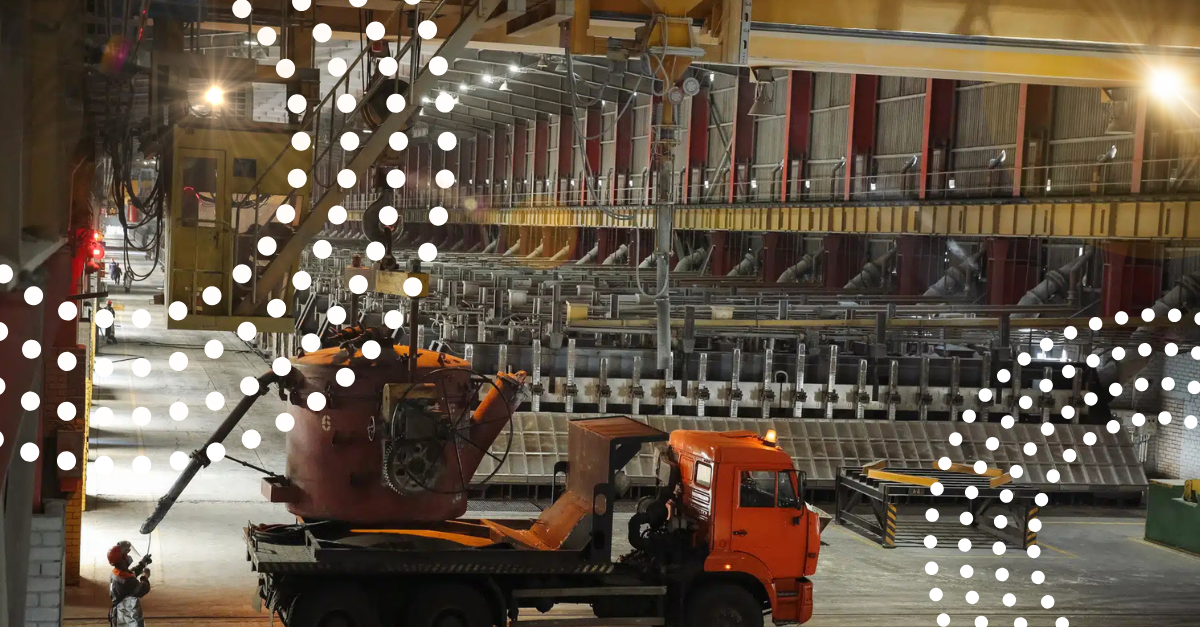
Newly listed Canadian miner Lumina Metals has signed a letter of intent with Polish mining giant KGHM to explore a future copper concentrate supply agreement from its Nowa Sól project in Poland, in a development that could link one of the world’s largest undeveloped copper deposits directly to Europe’s most significant copper processing infrastructure.
The letter of intent, announced on Tuesday, initiates discussions on technical and commercial terms for the supply of copper concentrates from Nowa Sól to KGHM, whose existing copper-silver mine operations in Poland’s Northern copper belt are located in close proximity to the project and host one of Europe’s key copper processing facilities. KGHM is Poland’s only producer of copper and silver and ranked eighth globally in copper output last year.
Nowa Sól covers 120 square kilometres of the Northern copper belt and hosts a measured and indicated resource of 604 million tonnes grading 1.24% copper and 38 grams per tonne silver — figures that place it among the world’s most significant undeveloped copper projects and one of the largest undeveloped silver deposits globally. Lumina has completed more than 51,000 metres of drilling at the project since its initial discovery in 2014.
The announcement follows Lumina’s recent C$406.2 million ($297 million) initial public offering on the Toronto Stock Exchange, one of the larger recent copper-focused IPOs in the Canadian market. The company also plans to list on the Warsaw Stock Exchange. Shares were trading at approximately C$11.50 by midday Tuesday, around C$1 below the IPO price, giving the company a market capitalisation of approximately C$1.2 billion.
Lumina CEO Jordan Pandoff described the KGHM letter of intent as “an important step in reinforcing the Polish metal mining industry” and in positioning Nowa Sól as a cornerstone of copper and silver supply within both Poland and the European Union.
Montenegro’s state-owned coal mining company Rudnik Uglja recorded a net loss of €6.9 million in 2025, reversing a €15 million net profit the previous year, after the extended closure of the country’s sole thermal power plant slashed demand for its output by more than half.
TE Pljevlja, which is Rudnik Uglja’s principal customer and the only coal-fired power station in Montenegro, was taken offline between April and December 2025 for a major ecological overhaul costing approximately €70 million. The shutdown caused Rudnik Uglja’s deliveries to the plant to fall to 561,000 tonnes, a reduction of 849,000 tonnes compared to 2024, and sent net sales revenue plummeting to €32 million from €65 million the prior year.
Total coal mined in 2025 reached 733,000 tonnes — 27% below the company’s production plan and 55% lower than 2024 output. After supplying TE Pljevlja, the remaining volume was sold to other buyers in Montenegro and the wider region. Operating expenses held broadly flat at €29.7 million against €29.6 million in 2024, while staff costs fell to €24.4 million from €26.3 million. The company swung to an operating loss of €7.5 million from an €18 million operating profit in 2024.
Both Rudnik Uglja and TE Pljevlja are owned by state power utility Elektroprivreda Crne Gore. The thermal plant returned to trial operations in December 2025 and is expected to resume normal output by mid-2026, which should restore coal demand to more typical levels in the current financial year.
Norway is set to formally join Pax Silica, the US-led initiative designed to secure critical mineral supply chains and reduce Western dependence on China across artificial intelligence, clean energy and advanced technology sectors, with the signing scheduled for Wednesday.
The Norwegian government confirmed the move following a report by Semafor that Washington planned to add the Nordic country this week as part of a broader effort to counter China’s dominance in key materials and infrastructure. Launched in December, Pax Silica is a central pillar of the Trump administration’s allied coordination strategy, encompassing critical minerals access, supply chain resilience and technology value chain integration.
Norway’s accession brings two assets of particular strategic interest. The country is home to the world’s largest sovereign wealth fund — the Government Pension Fund Global — and holds significant critical mineral reserves, including the Fen rare earth deposit recently confirmed as Europe’s largest. “Norway is home to the world’s largest sovereign wealth fund, and the depth of that institutional capital combined with critical mineral reserves are important,” said Jacob Helberg, the US State Department’s undersecretary for economic affairs.
Norwegian Trade and Industry Minister Cecilie Myrseth framed the decision in terms of economic opportunity as much as geopolitical alignment. “This initiative can give Norwegian companies better access to advanced technological value chains,” she said, pointing to the potential for deeper integration with allied economies.
Norway joins a coalition that already includes the UK, Japan, South Korea, Singapore, Israel, Australia, the UAE, India, the Netherlands, Qatar, the Philippines and Sweden, which signed on in March. The expanding membership reflects growing Western urgency to build coordinated alternatives to Chinese dominance across mineral supply chains that underpin semiconductor manufacturing, battery production and clean energy infrastructure.
France has convened an online meeting of G7 finance and industry ministers for Thursday to coordinate Western strategy on breaking China’s dominance of critical materials supply chains, as Paris simultaneously unveiled an ambitious national plan to rebuild its own rare earth and permanent magnets industry from the ground up.
Finance Minister Roland Lescure announced the meeting while speaking in Lacq, a town in southwestern France being developed as the country’s centre for rare earth processing. The ministerial session is intended to prepare common ground ahead of the G7 leaders’ summit in the French spa town of Evian in mid-June, where critical minerals are expected to feature prominently on the agenda.
Lescure framed China’s dominance of the rare earth market as the result of deliberate strategic investment and aggressive pricing that drove potential competitors out of business over decades. He drew a direct parallel with the energy crisis of the 1970s, arguing that the moment calls for a comparable institutional response. “One of the projects we have in mind within the G7 is to ensure — much as the International Energy Agency was created in the 1970s when OPEC held a production monopoly — that we develop alternatives through international cooperation,” he said.
France’s domestic strategy targets the full rare earth value chain, from securing overseas mineral supplies through to refining, alloy production and magnet manufacturing on French soil. The plan is explicitly tied to reducing dependence on China for materials critical to electric vehicles, wind turbines, electronics and defence — a dependency that European governments have identified as a strategic vulnerability following China’s progressive tightening of rare earth and critical mineral export controls.
By 2030, France aims to produce rare earth oxides covering 100% of European demand for heavy rare earths and approximately a quarter of demand for light rare earths, as well as alloys meeting around 10% of European needs. To support the investment required, the government plans to loosen access to state guarantees for strategic projects, extend and simplify tax credits for green industrial investment through to 2028, and channel additional funding through an existing long-term investment programme and a dedicated metals fund. The government is also planning to approach international commodity traders about securing critical mineral supply, potentially backed by a French state project finance guarantee.
Ukraine has the potential to integrate into European critical raw material supply chains far faster than a typical mining project timeline would suggest, with the country’s vast inherited geological data base and existing industrial assets positioning it as a near-term contributor to the EU’s minerals strategy, according to senior business and government officials.
Speaking at a recent forum, Serhiy Voitsekhovsky, board member of BGV Group Management, argued that while launching a mining project from scratch globally takes an average of 17 years, Ukraine could achieve the same in roughly four — a fourfold acceleration driven primarily by the country’s extensive Soviet-era geological records, which are now being actively digitised and updated. BGV Group has invested more than €150 million of its own capital to demonstrate that Ukraine holds not only lithium and graphite but also rubidium, tantalum and rare earth elements — materials the European technology sector identifies as critically needed.
On the government side, Deputy Minister of Economy Ihor Bezkaravayny confirmed that Ukraine is preparing large state-owned assets for privatisation, including facilities that produce titanium sponge and aluminium plants. The objective, he said, is not simply to sell the facilities but to integrate them into high-technology production chains aligned with European industrial needs.
The financing architecture is also taking shape. European Commission representative Anna Yarosh-Fris confirmed that the EU is already connecting the export credit agencies of Poland, Finland and France to finance Ukrainian critical minerals projects, with the explicit goal of turning Ukrainian subsoil into a shared asset of the EU’s internal market.
TETHYS, a Turkish-incorporated critical minerals and strategic infrastructure platform with projects across Eurasia, and Hartree Metals LLC, a subsidiary of the global commodities firm Hartree Partners LP — a leading independent commodities trading and asset management company — have entered into a life-of-mine offtake and commercial prepayment arrangement to support concentrate exports from the Cataltepe polymetallic mining project in north-western Türkiye.
The agreement establishes a long-term commercial partnership between the two companies, anchored on the Cataltepe operation. Production from the mine is expected to be processed at the Kalkım flotation facility, generating zinc, lead, and copper concentrates for export to international smelting markets.
Under the arrangement, Hartree Metals has provided a commercial advance payment to support the restart of operations and ongoing production activities, and will purchase and export 100% of the zinc, lead, and copper concentrates produced for the life of the operation. Production at Cataltepe is expected to commence shortly, with monthly shipments increasing progressively as operations ramp up.
The transaction demonstrates a shared commercial understanding of the project and a mutual commitment to establishing reliable concentrate supply chains in Türkiye. For TETHYS, the agreement represents the commercial activation of its flagship Turkish operation and a significant milestone in its broader strategy to develop a multi-country portfolio of critical mineral assets across Eurasia. For Hartree Metals, it signifies a deepening of its commercial engagement with Türkiye’s expanding mining sector.
Prof. Dr Leyla Keser, Chairperson of TETHYS Gateway Trading LLC, said: “The Cataltepe offtake agreement is a landmark transaction for TETHYS and a strong endorsement of the project’s commercial potential. We are delighted to be partnering with Hartree Metals as our long-term trading partner and look forward to building on this relationship as TETHYS continues to develop its portfolio of mineral assets across the region.”
In the early 1990s, while the West was celebrating the “End of History” and the triumph of globalized trade, Deng Xiaoping issued a quiet prophecy: “The Middle East has oil; China has rare earths.”
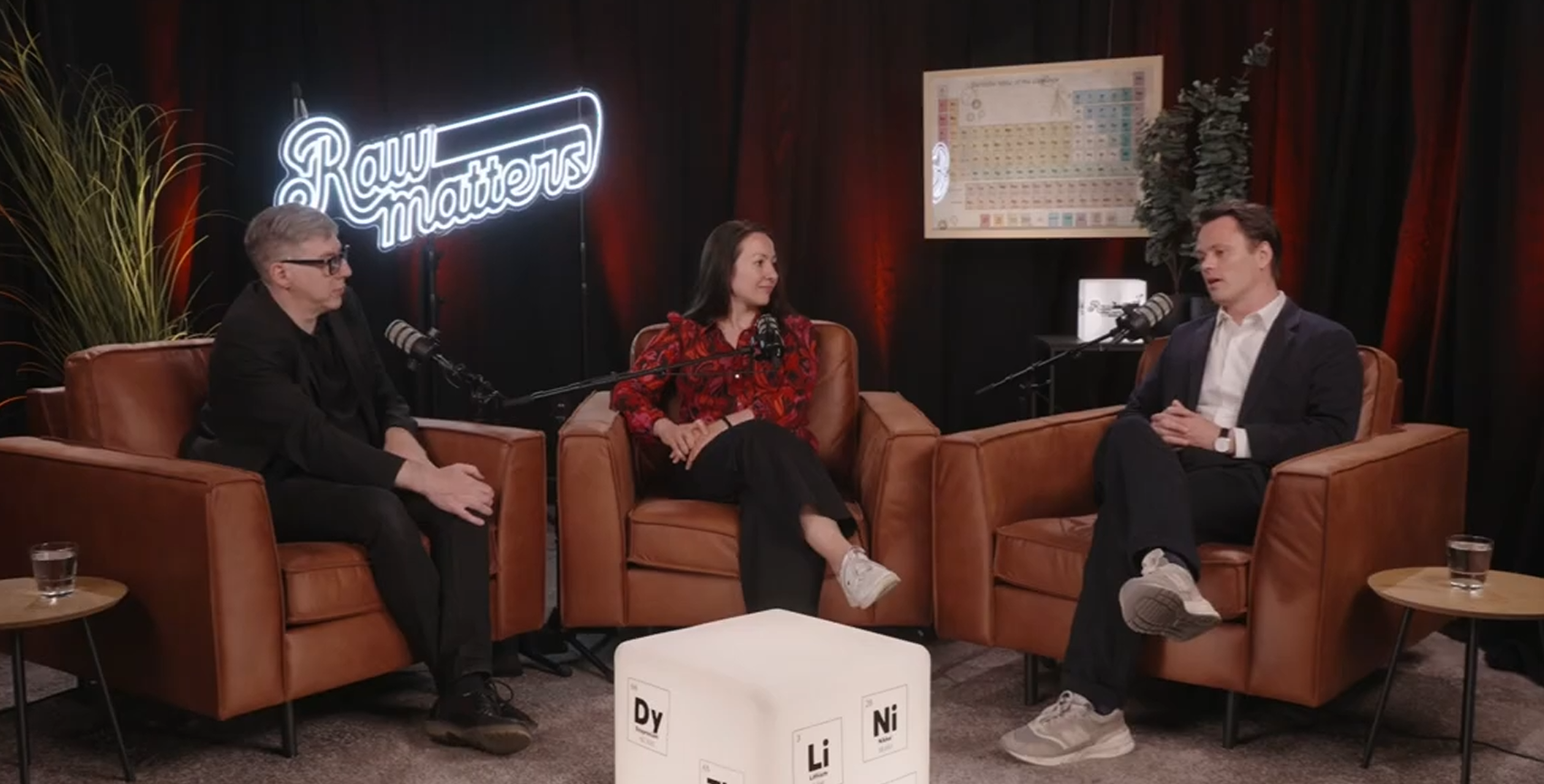
For three decades, that statement was treated as an industrial footnote. Today, it has become the defining thesis of a new, colder era of geopolitics. In the latest episode of the Raw Matters podcast, hosts Peter Tom Jones and Julia Poliscanova sat down with Albéric Mongrenier, Executive Director of the European Initiative for Energy Security (EIES), to peel back the layers of Europe’s strategic “naivety.”
The verdict? Europe’s transition to clean energy isn’t just an environmental project—it is a massive transfer of strategic dependency that could, if left unmanaged, leave the continent’s power grids and military hardware under the remote control of Beijing.
The Cyber Trojan Horse in the Power Grid
The conversation begins with a startling reality check regarding the hardware of the energy transition. We often talk about “critical minerals” as raw commodities—lithium, cobalt, copper. But Mongrenier points to a more immediate, digital threat: the inverter.
Every solar panel, wind turbine, and EV charger requires an inverter to convert DC power to AC. Today, approximately 80% of new solar installations in Europe use Chinese inverters, with a massive share provided by a single company: Huawei.
“These devices are connected to the internet,” Mongrenier warns. “They are entry doors for cyberattacks.” This creates two distinct levels of vulnerability:
Intelligence Harvesting: By controlling the inverters, external actors can map Europe’s energy consumption and grid behavior with more granularity than European governments themselves.
The “Kill Switch”: Mongrenier references reports from the US and UK regarding hidden “kill switches” discovered in Chinese-made components. In a conflict scenario, the theoretical ability to remotely disable Europe’s energy system—shutting down wind farms and solar arrays at the click of a button—is no longer science fiction.
Dual-Use: The F-35 and the Wind Turbine
One of the most persistent myths of the “Green Deal” is that critical minerals are purely “clean tech” materials. In reality, the minerals powering the energy transition are the exact same materials required for modern warfare.
“NATO came up with its own list of 12 defense-critical minerals late in 2024,” Mongrenier notes. The overlap is nearly total:
Rare Earths: Essential for the permanent magnets in EV motors, but also for the guidance systems of missiles and the engines of F-35 fighter jets.
Graphite: Used in battery anodes, but also vital for the hulls of submarines.
Titanium & Cobalt: The bread and butter of both high-performance turbines and military superalloys.
This dual-use nature has created a “Mineral Security Trap.” If Europe cannot secure its own supply of these minerals, it loses more than just its ability to hit climate targets—it loses the industrial base required to defend itself.
A Tale of Two Strategies: The US Stick vs. The EU Paper
The podcast highlights a widening gap between how Washington and Brussels are reacting to the Chinese monopoly.
The American “All-of-Government” Blitz
Under both the Biden and now the Trump administrations, the US has moved with aggressive speed. The US has set a hard deadline: January 2027. By then, defense contractors must purge Chinese rare earths, titanium, and tantalum from their supply chains.
“The US uses a big stick,” says Mongrenier. They aren’t just asking for change; they are mandating it while simultaneously throwing tens of billions of dollars in subsidies and equity stakes at domestic projects like MP Materials.
The European “Silo” Problem
In contrast, Europe’s response remains “timid.” Poliscanova points out that Europe is still hampered by siloed decision-making. While the US treats mineral security as a singular mission across all departments, the EU is split between various Directorates-General (DGs) that often fail to communicate.
Furthermore, Europe remains obsessed with the “business case.” “Strategic infrastructure does not always have a business case,” Poliscanova argues. “Sometimes you just invest because it’s a critical asset. We need to forget about the short-term profit and think about resilience.”
The Axis of Minerals: Russia, Iran, and China
The discussion takes a darker turn when addressing the current conflict in the Middle East. Mongrenier points out that the “axis” of Russia, Iran, and China is not a loose association—it is a functional industrial alliance.
Take the drones currently saturating battlefields in Ukraine and the Middle East. Whether they are Iranian Shahed drones or Russian variants, their supply chains lead back to China. “90% of these drones are battery-powered,” Mongrenier says. “If we build a ‘European Drone Wall’ for our own defense, but the batteries and minerals come from China, have we actually improved our security?”
The Path Forward: Ending the Naivety
As the episode concludes, the hosts and guest outline a roadmap for a more resilient Europe:
Aggregating Demand: Europe must connect the car industry and the defense sector to send a massive, unified “demand signal” to miners and refiners outside of China.
The “Carrot and the Stick”: Europe needs to provide the financial “carrots” (subsidies and public procurement) while wielding the “stick” (vetting components for cyber risks and mandating non-Chinese supply chains for critical defense hardware).
Industrial Sovereignty: 2026 and 2027 are viewed as the “midterm” years for European leadership to finally treat energy and mineral security as the same issue.
The message is clear: Europe’s “naivety” has been a luxury of a more stable world. In 2026, as missiles fly and megawatts become the new currency of power, that luxury has officially run out. To save its climate, Europe must first secure its minerals—and to secure its minerals, it must finally learn to play the game of “Realpolitik.”
The European Union’s largest economies have rejected a US attempt to resolve a long-running dispute over metals tariffs, injecting fresh uncertainty into the ratification of a transatlantic trade deal that has already faced repeated delays since it was first agreed last July.
Germany and France voiced frustration in a closed meeting of EU envoys after the US recently changed how it calculates tariffs on hundreds of products containing steel and aluminium — a modification Washington presented as an olive branch to address European concerns. But after EU officials and industry groups crunched the numbers, the adjustment proved to fall well short of expectations. France and Germany noted that the tweak actually worsens the tariff situation for roughly half of the affected products, while VDMA, a major German industrial association, calculated that the average tariff rate for affected companies had risen from 21% to 26%.
The European Commission said it is considering possible responses, though it has not yet specified what form these might take. EU Trade Commissioner Maroš Šefčovič raised the metals tariff issue during a visit to Washington last week but failed to achieve a breakthrough. Both sides have agreed to continue technical discussions, and the Commission told EU envoys that more fully implementing some of the bloc’s existing trade deal commitments could help unlock concessions from the US side.
The metals dispute traces back to August last year, when Washington widened a 50% tariff on steel and aluminium to cover hundreds of additional products containing these metals — a move that drew accusations from Brussels that the US was already violating the spirit of the July agreement. Under that initial deal, the EU agreed to eliminate tariffs on US industrial goods in exchange for a 15% ceiling on most EU exports, a lopsided arrangement the bloc accepted to keep President Donald Trump engaged on Ukraine and avoid a broader trade rupture.
The path to ratification has since been repeatedly disrupted. EU lawmakers paused the process twice — first after Trump threatened to take Greenland, and again after the US Supreme Court invalidated Washington’s global tariff regime. More recently both sides had expressed a renewed desire to conclude ratification, with EU member states and lawmakers simultaneously negotiating amendments including an expiration clause and stronger safeguards for European industries — provisions the Commission has warned could derail the accord entirely.
The European Union will not retreat from its industrial sovereignty agenda despite Chinese threats of retaliation, EU Trade Commissioner Maroš Šefčovič has declared, issuing one of his most combative statements yet on the deteriorating state of EU-China trade relations.
Speaking exclusively to Euronews, Šefčovič said the bloc would “always” defend the interests of its companies and workers. “We will fight tooth and nail for every European job, for every European company, for every open sector, if we see they are treated unfairly,” he said, responding to Beijing’s threat of countermeasures over the EU’s Industrial Acceleration Act and its Cybersecurity Act — two pieces of legislation China has accused of discriminating against its companies.
Relations between Brussels and Beijing have deteriorated sharply over the past year. China has tightened export controls on rare earths vital to Europe’s clean technology and defence industries and restricted semiconductor chips essential to the automotive sector, intensifying pressure on already strained supply chains. In response, the EU has pressed ahead with legislation tightening market access for foreign companies and potentially restricting Chinese telecoms firms’ presence across the bloc — prompting Beijing to warn that the EU should not underestimate China’s “firm resolve” to safeguard its interests.
Šefčovič rejected characterisations of the situation as a looming trade war but was unequivocal that Brussels would not operate under pressure. “We never threaten our partners, and we certainly don’t do it through the media,” he said. “What we need is strategic patience and a great deal of courage.” He noted that a trade conflict is easy to start but difficult to exit — a warning he appeared to direct as much at Beijing as at domestic audiences.
At the heart of the EU’s grievances is a trade deficit with China that reached €359.3 billion in 2025 — a level Šefčovič described as “simply unsustainable” and one showing no signs of improvement despite repeated EU calls for rebalancing. Brussels is also growing increasingly concerned that Chinese exports being shut out of the US market by higher tariffs are being redirected toward Europe, compounding existing overcapacity concerns.
Šefčovič said he had invited China’s foreign minister to Brussels for a comprehensive assessment of the current state of relations, stressing that what he wants is “constructive engagement” rather than escalation. He defended the EU’s industrial policy ambitions by pointing to equivalent frameworks elsewhere: “There are very strong industrial policies in China. You have the same in the US, in Canada, in Japan and in Korea. So nobody should be surprised if the European Union responds in kind.”
Ferrexpo has suspended the listing and trading of its shares on the London Stock Exchange with effect from 7:30 a.m. on 1 May, as the Ukraine-focused iron ore producer failed to complete a planned capital raise and publish its 2025 annual financial results by the deadline it had previously set itself.
The suspension will remain in place until the company completes its audit, publishes its annual report and financial statements for 2025, and implements a financing solution — with no certainty provided on when, or whether, trading will resume. “There is no certainty regarding the expected timing of the lifting of the suspension of listing and the resumption of trading in shares, if it happens at all,” Ferrexpo said in its statement.
The company has received indicative, non-binding expressions of interest from institutional investors in a potential recapitalisation of more than $100 million, but was unable to finalise the transaction before the end of April. Ferrexpo has described an equity raise of at least $100 million as the only viable solution to meet current obligations and provide sufficient working capital for the next 18 months. Without a successful financing outcome, the group has sufficient available cash only until approximately the end of August 2026. The company previously warned that failure to complete the fundraise could force it to file for insolvency.
The financial crisis has unfolded against a backdrop of severe operational disruption. In the first quarter of 2026, Ferrexpo reduced iron ore production by 72% year-on-year to 592,750 metric tonnes, and by 45% compared to the previous quarter, as Russian attacks on Ukraine’s energy sector largely suspended production activities. A limited resumption at reduced capacity occurred only at the end of February.