Website: Europe.com

  • Finland’s Critical Materials Industry: Navigating Bottlenecks for Sustainable Growth

    Finland’s Critical Materials Industry: Navigating Bottlenecks for Sustainable Growth

    Finland’s critical materials industry is at a crossroads, facing significant challenges in capital investment, processing capacity, and regulatory approval that hinder its ability to meet rising demand for essential minerals. Despite having ample deposits, the European Union (EU) currently attracts only a fraction of global mineral exploration investment, which is a stark contrast to countries like Canada and Australia. A recent study by the European Investment Bank (EIB) highlights that to achieve the EU’s 2030 domestic supply targets, exploration spending must increase tenfold. This indicates that the real bottleneck lies not in the availability of resources but in the capability to develop them effectively.

    The industry must shift its focus from merely increasing extraction volumes to strategically positioning itself around critical bottlenecks in the value chain. Companies that can manage these bottlenecks—such as financing, permitting, and processing—will be better equipped to capture value and mitigate risks associated with commodity price fluctuations and regulatory challenges. For instance, firms like Terrafame and Outokumpu are redefining their business models by moving beyond raw material extraction to producing high-value battery chemicals and lower-carbon steel, respectively. This transition reflects a broader trend where the emphasis is on processing capabilities and customer integration rather than just resource ownership.

    Moreover, the Finnish mining sector is grappling with two significant tensions: the need for capital and legitimacy, and the relationship between processing and performance. While strategic relevance is crucial for attracting investment, it does not guarantee acceptance for new mining projects. Companies must demonstrate environmental and social credibility to secure permits and financing. The path forward for Finland’s critical materials industry lies in developing capabilities that address these tensions, ensuring that operations remain viable and competitive in an increasingly complex market. The long-term winners will be those who can navigate these challenges and turn constraints into opportunities for sustainable growth.
  • Unlocking Europe’s Geological Potential for Critical Raw Materials

    Unlocking Europe’s Geological Potential for Critical Raw Materials

    As Europe strives to secure its future in critical raw materials, a recent study underscores the urgent need for increased investment in mineral exploration. Currently, the European Union attracts a mere 3% of global mineral exploration investment, a stark contrast to Canada’s 20% and Australia’s 16%. This disparity highlights the challenges Europe faces in meeting its strategic objectives for the green and digital transitions, which are heavily reliant on a stable supply of critical raw materials.

    To align with these objectives, the study indicates that annual mineral exploration spending in the EU must surge from approximately €0.2 billion to €2 billion over the next five years. This tenfold increase is essential for Europe to enhance its role in securing the necessary resources for clean technologies, energy security, and industrial competitiveness. The geological potential within Europe is promising, with countries like Finland and Sweden already demonstrating that increased exploration activity is feasible and beneficial.

    However, unlocking this potential will necessitate a concerted effort involving long-term investments, supportive policies, and a collective commitment to establishing resilient and sustainable value chains. By fostering a more robust exploration environment, Europe can not only meet its current demands but also position itself as a leader in the global market for critical raw materials, essential for the future of its economy and environmental goals.


  • LME Introduces Streamlined Listing Process for New Metal Brands

    LME Introduces Streamlined Listing Process for New Metal Brands

    The London Metal Exchange (LME), the world’s oldest and largest industrial metals exchange, has announced a proposal to expedite the listing process for new metal brands. This initiative aims to enhance the efficiency of the exchange and strengthen its physical market infrastructure, as outlined in a recent consultation paper. The LME is currently seeking feedback from its members regarding several key proposals, including the introduction of indelible markings for aluminum, zinc, and lead, as well as the possibility of allowing the outdoor storage of primary aluminum in Hong Kong.

    One of the most significant changes proposed is the reduction of the minimum production period required before a brand listing application can be considered. Currently set at 12 months, this period would be cut to six months for most metals, including aluminum, lead, zinc, nickel, and tin. For copper, producers would still need to demonstrate six months of production before applying, but the timeline for Stage Two testing would remain at 12 months. This adjustment is expected to facilitate quicker entry for new producers into the market, thereby increasing competition and potentially benefiting consumers.

    Additionally, the LME is considering allowing primary aluminum to be stored outdoors in Hong Kong, a move that could alleviate storage constraints that have previously hampered aluminum arbitrage between mainland China and the LME warehouse network. The exchange is also proposing that new brands and shapes of primary aluminum, lead, and zinc carry permanent production cast markings to prevent issues arising from damaged or detached labels. These proposals are part of the LME’s ongoing efforts to modernise its operations and maintain its position as a leading player in the global metals market.


  • Nordic Innovation Launches Call for Proposals on Secondary Critical Raw Materials Value Chains

    Nordic Innovation Launches Call for Proposals on Secondary Critical Raw Materials Value Chains

    Nordic Innovation has announced a call for proposals aimed at developing industry-driven value chains for secondary critical raw materials (CRMs) in the Nordic region. With a budget of 10 million NOK ( €915,219.99), the initiative seeks to enhance the recycling and domestic supply of CRMs, which are essential for the green and digital transitions. The deadline for submission is set for 23 September 2026, with project funding ranging from 2 to 5 million NOK per project. The funding decision will be made in November 2026, with projects expected to commence in the fourth quarter of 2026 and run for a maximum of 36 months.

    The call for proposals is part of the Nordic Innovation programme, Innovative Solutions for 2030, which aims to accelerate the introduction of solutions for the green transition. The Nordic region is estimated to have around 900,000 tonnes of CRMs embedded in waste and industrial side streams, highlighting the untapped potential for recycling and resource recovery. However, the lack of functioning value chains poses a significant challenge, as many initiatives fail to progress beyond early-stage development. This funding opportunity aims to address these barriers by supporting projects that validate key assumptions in the value chain and bring together relevant actors across the industry.

    Eligible projects must focus on developing concrete value chains for secondary CRMs, such as those derived from batteries, electronic waste, and construction waste. The evaluation criteria for proposals will consider the project’s impact, relevance to Nordic Innovation’s mission, and the competence of the consortium involved. Strong industrial involvement and access to relevant material streams will be crucial for successful applications. The initiative is expected to contribute to strengthening Nordic competitiveness, resource security, and the development of circular value chains for critical raw materials.


  • DMT GROUP Engages in Technical Due Diligence for German Raw Materials Fund Projects

    DMT GROUP Engages in Technical Due Diligence for German Raw Materials Fund Projects

    DMT GROUP, a prominent player in the mining and commodities sector, has been appointed to conduct technical due diligence for projects under the German Raw Materials Fund, which was established by the German government. This initiative aims to secure long-term access to critical raw materials, reduce strategic dependencies, and enhance the competitiveness of German and European industries. The fund is managed by KfW on behalf of the Bundesministerium für Wirtschaft und Energie, with PwC overseeing the overall coordination of due diligence processes. DMT’s role focuses on evaluating the technical viability of various projects, assessing factors such as project implementation, process chains, infrastructure, cost assumptions, and potential technical risks.

    Julia Ridder, Project Manager for Technical Due Diligence at DMT, highlighted the comprehensive approach taken during the evaluation process. The technical due diligence involves a thorough examination of essential factors, including geology, mining operations, processing methods, logistics, and implementation strategies. This meticulous analysis aims to provide a reliable foundation for investment decisions that will bolster the supply of raw materials in Germany and across Europe. The results of these evaluations will inform technical assessments, recommendations, and risk analyses, ensuring that investments are based on solid technical groundwork.

    Jens-Peter Lux, Managing Director at DMT, emphasised the significance of the German Raw Materials Fund as a strategic tool for advancing critical raw material projects. He noted that similar initiatives are emerging in other European countries, reflecting a broader commitment to enhancing national security regarding raw material supplies. This fund represents a crucial step towards fostering long-term cooperation within the extractive sector across Europe, aiming to strengthen the region’s resilience and competitiveness in the global market.


  • RAW MATTERS Podcast Celebrates 1,000 Followers and Prepares for Season 2

    RAW MATTERS Podcast Celebrates 1,000 Followers and Prepares for Season 2

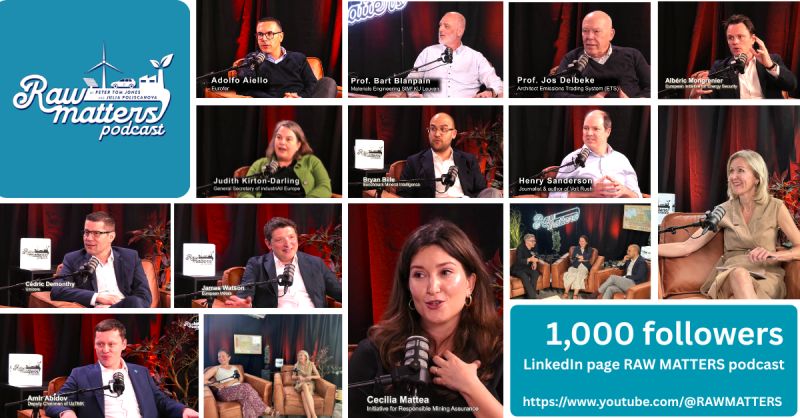
    The RAW MATTERS podcast has reached a significant milestone, celebrating 1,000 followers. While this number might not seem impressive in the vast landscape of social media, it holds substantial meaning for a niche podcast dedicated to addressing complex issues within the mining and critical minerals sectors. The podcast, which aims to foster informed discussions and enhance public understanding of the intricate relationships between critical minerals, industrial policy, clean technologies, climate action, economic resilience, and strategic autonomy, has garnered appreciation from its guests, listeners, and supporters.

    Launched just six months ago, RAW MATTERS was conceived with the intention of transcending siloed debates and promoting a holistic view of the mining industry and its impact on various sectors. The podcast’s mission aligns with the growing recognition of the importance of critical minerals in achieving sustainable development and climate goals. As highlighted by guest Salvatore Pinizzotto, the podcast advocates for a comprehensive approach that encompasses financing, permitting, legislation, mining, refining, and cleantech manufacturing, all working in concert to address the challenges facing the industry.

    Looking ahead, RAW MATTERS is gearing up for its second season, with the first recordings scheduled to commence on 15 September. Listeners can catch up on all 12 episodes of Season 1, hosted by Peter Tom Jones and Julia Poliscanova, available on platforms such as YouTube, Spotify, and Apple Podcasts. The podcast continues to strive for a systems perspective in its discussions, aiming to contribute to better decision-making in the critical minerals sector and beyond.


  • Europe’s Rivers Face Crisis as Extreme Heat Causes Record Low Water Levels

    Europe’s Rivers Face Crisis as Extreme Heat Causes Record Low Water Levels

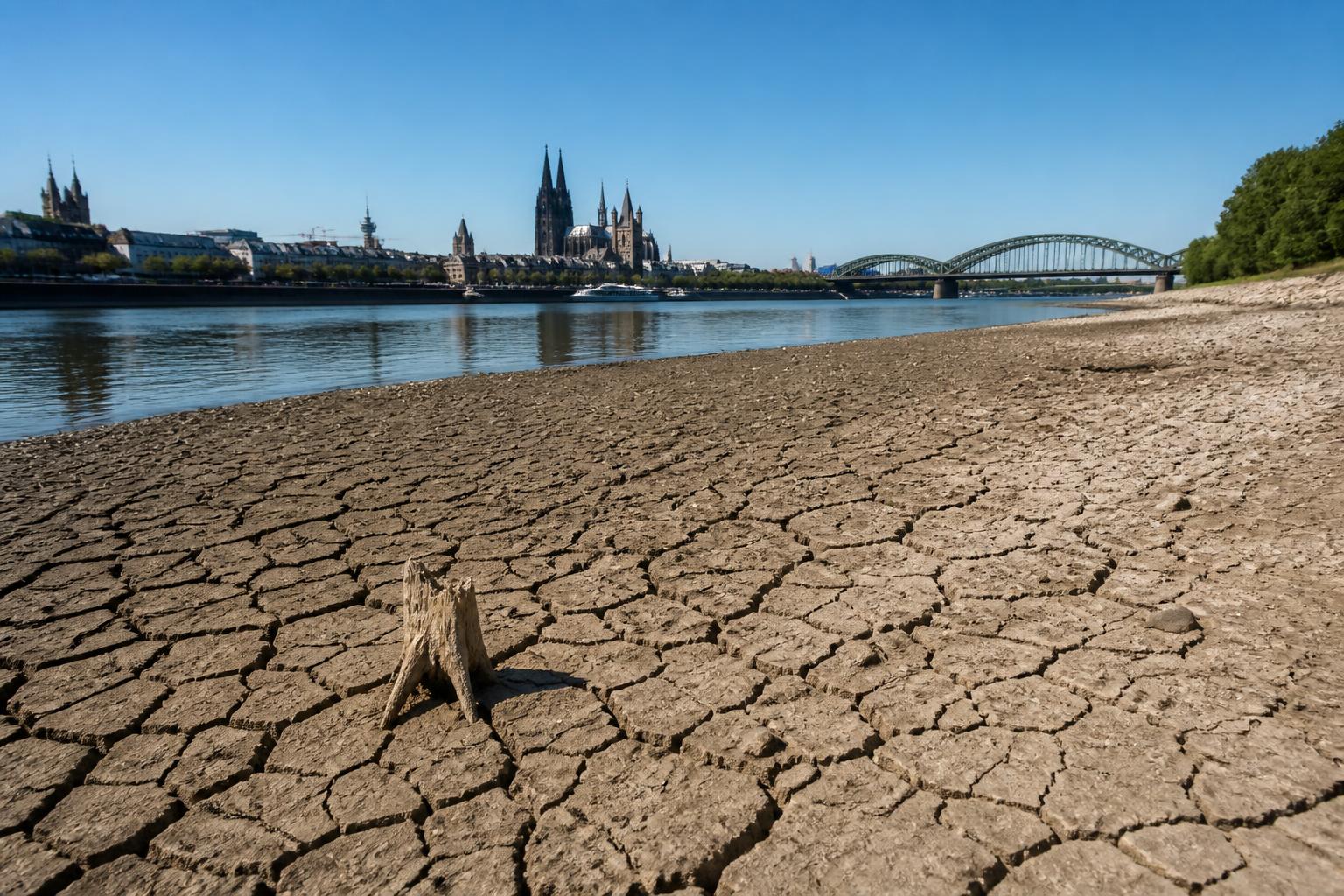
    Europe is grappling with a severe drought as its major rivers, including the Rhine and Danube, experience unprecedented low water levels due to a series of extreme heat waves. This situation poses significant challenges for the region’s heavy industries, which rely heavily on these waterways for the transportation of essential goods such as chemicals and oil products. As water levels drop, freight costs are rising, and power generation at riverside nuclear reactors is being curtailed, leading to increased energy prices and economic strain, particularly in Eastern Europe.

    The Rhine, a critical shipping route, has seen water levels at key chokepoints like Kaub plummet to 25 centimeters, matching the lows recorded during the drought of 2018. Experts predict that levels could fall even further, potentially reaching historic lows not seen since records began in 1880. Companies like BASF, which were forced to reduce production during past droughts, are now seeking alternative transport methods, albeit at higher costs. The situation has prompted discussions among industry leaders about the long-term implications for supply chains and the competitiveness of European industries against global rivals.

    As the drought continues, countries like Hungary and Romania are facing severe energy challenges, with Hungary shutting down its only nuclear plant for the first time in its history due to insufficient cooling water. The Hungarian government has called for more prudent energy and water consumption, while Romania remains on alert as it seeks support from neighbouring Ukraine during peak demand. The ongoing heat waves and drought conditions are not only impacting industrial operations but also threatening agricultural practices, as rivers like the Po in Italy dwindle below historic lows, raising concerns about irrigation and saltwater intrusion. With forecasts indicating continued high temperatures and limited rainfall, the outlook for Europe’s rivers remains bleak, underscoring the urgent need for adaptation to the realities of climate change.


  • European Metals Day 2026: Shaping the Future of Europe’s Metals Sector

    European Metals Day 2026: Shaping the Future of Europe’s Metals Sector

    On 29 September 2026, the European Metals community will convene at the European Parliament in Brussels for the highly anticipated #MetalsDay26. This flagship event will bring together members of the European Metals sector, invited guests, policymakers, and industry leaders to engage in critical discussions about the future of Europe’s metals value chains. The event, hosted by prominent Members of the European Parliament (MEPs) including Radan Kanev, Prof. Yannis Maniatis, and Bruno Tobback, promises to be a significant platform for dialogue and collaboration.

    The agenda for #MetalsDay26 includes panel discussions featuring contributions from notable MEPs such as Hildegard Bentele, Sara Matthieu, and Christophe Grudler. Together, these industry leaders and policymakers will address Europe’s key industrial priorities, focusing on competitiveness, sustainability, circularity, and the strategic role of metals in facilitating the green and digital transitions. As Europe strives to enhance its industrial resilience and achieve strategic autonomy, this event aims to foster meaningful dialogue across the metals value chain, contributing to the shaping of the European metals sector’s future.

    European Metals Day 2026 is expected to play a vital role in aligning the interests of various stakeholders within the metals industry, ensuring that Europe remains at the forefront of global metal production and innovation. By addressing pressing issues and exploring collaborative opportunities, the event seeks to strengthen the position of European metals in a rapidly evolving industrial landscape.


  • Nordic Region’s Role in Strengthening Europe’s Supply of Critical Raw Materials

    Nordic Region’s Role in Strengthening Europe’s Supply of Critical Raw Materials

    A recent report highlights the Nordic region’s significant potential to enhance Europe’s supply of critical and strategic raw materials amid rising global demand and geopolitical uncertainties. As competition for these essential resources intensifies worldwide, the interplay between the green and digital transitions, along with evolving geopolitical dynamics, is reshaping both demand and supply systems. In this context, the ability to deliver reliable, scalable, and timely supplies of metals and minerals has become paramount, alongside ensuring resource availability.

    The report identifies the Nordic region as a selective yet strong contributor to Europe’s raw material supply chain. Its strengths lie in its strategic role within global value chains, characterised by a selective, complementary, and long-term contribution that supports diversification and resilience rather than merely replacing existing global networks. The analysis underscores the connection between EU and global geopolitical strategies and the strengthening of national and EU supply chains, suggesting a future where mineral value chains are more sustainable and secure.

    The Nordic region boasts significant geological potential for various critical raw materials, including lithium, copper, cobalt, graphite, nickel, and rare earth elements. However, the challenge lies not in the existence of these resources but in the ability to develop and coordinate them efficiently and sustainably to mitigate vulnerabilities in European supply chains. The report calls for sustained investment in geological knowledge, coordinated development efforts, and long-term policy support to unlock the full potential of the Nordic region as a key component of a more resilient European raw materials system.


  • Strengthening Europe’s Defence Supply Chains Through Resilient Raw Materials

    Strengthening Europe’s Defence Supply Chains Through Resilient Raw Materials

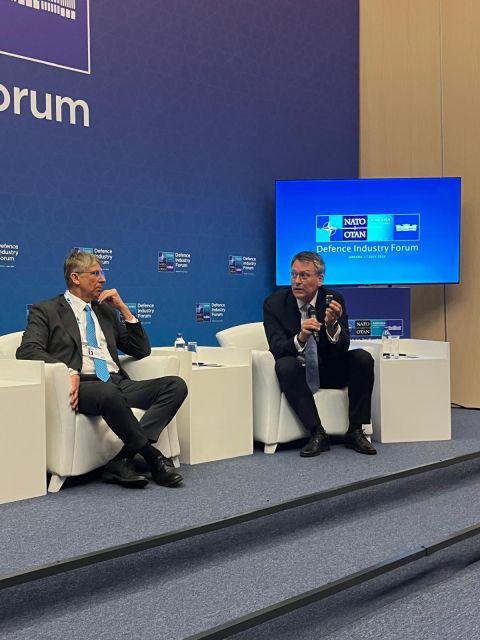
    At the NATO Summit Defence Industry Forum held in Ankara, Euromines President Jan Moström emphasised the critical role of raw materials in ensuring resilient supply chains for Europe’s defence and industrial sectors. The forum brought together leaders from various industries, including semiconductors and automotive, to discuss strategies for future-proofing supply chains amidst rising geopolitical tensions. Moström highlighted that secure access to critical raw materials is essential for maintaining Europe’s industrial competitiveness and technological leadership, particularly in the context of increasing strategic competition.

    During the panel discussion titled “Resilient by Design: Future-proofing Allied Supply Chains,” Moström outlined four key policy priorities aimed at bolstering Europe’s industrial preparedness. Firstly, he advocated for a shift from “just-in-time” to “just-in-case” supply chains, which would better equip industries to handle crises. Secondly, he called for stable and predictable investment conditions, stressing that mining projects require long-term certainty to thrive. Thirdly, he urged the importance of building and maintaining supply chains during peacetime to ensure readiness in times of crisis. Lastly, he emphasised the need to reduce legislative fragmentation and administrative burdens to accelerate the development of strategic projects that Europe urgently needs.

    The discussion underscored that a secure industrial base begins well before the manufacturing stage, rooted in a competitive and responsible mining sector. Moström’s insights reflect a growing recognition that coherent policies and long-term investment certainty are vital for strengthening Europe’s security and industrial base. As NATO and its allies work towards reinforcing industrial resilience, the role of raw materials in this equation cannot be overstated. The forum concluded with a call for strategic prioritisation of secure access to these materials, which are foundational to the continent’s defence capabilities.