Website: Europe.com

  • Vast Resources Completes Reverse Takeover of Gulf International Minerals and Re-Admission to AIM

    Vast Resources Completes Reverse Takeover of Gulf International Minerals and Re-Admission to AIM

    Vast Resources plc, a mining and resource development company listed on AIM, has successfully completed a reverse takeover of Gulf International Minerals Limited. This strategic move marks a significant milestone for Vast, as it enhances its portfolio of producing and development-stage projects in Tajikistan and Romania. The completion of the reverse takeover was announced following the passing of all resolutions at a General Meeting held on 18 August 2026, with the re-admission of the company’s enlarged ordinary share capital to trading on AIM set for 19 August 2026.

    As part of the acquisition, Vast has acquired a 49% beneficial interest in the Aprelevka Joint Venture, which operates four active mining licences along the Tien Shan Gold Belt in northern Tajikistan. This venture is expected to yield approximately 11,000 ounces of gold and 130,000 ounces of silver annually from mined ore and tailings. The company has also raised around £7.5 million through a placing and subscription, alongside an oversubscribed retail offer, to fund creditor settlements, professional fees related to the takeover, and the technical development of the Aprelevka assets.

    In addition to the reverse takeover, Vast has undergone a share consolidation, with every 25 existing ordinary shares consolidated into one new ordinary share. Following this, the company will have approximately 1.65 billion ordinary shares in issue.

    Vast Resources has also announced a drilling campaign in Tajikistan aimed at establishing a maiden JORC-compliant resource for the Aprelevka assets. CEO Andrew Prelea expressed optimism about the company’s future, highlighting the potential for growth and the commitment to responsible mining practices in collaboration with the Government of Tajikistan. The company is also exploring opportunities in the broader Central Asian region and plans to restart operations at its Romanian assets, ensuring continued growth.

    This development is seen as a pivotal moment for Vast Resources, positioning the company for future success as it aims to become a profitable mid-tier mining entity with a focus on sustainable practices and operational efficiency.
  • Can responsible mining truly exist? How IRMA shows the way forward [Cecilia Mattea, RM#9]

    Can responsible mining truly exist? How IRMA shows the way forward [Cecilia Mattea, RM#9]


    As the global energy transition accelerates, so does the demand for critical raw materials. But this raises a fundamental question: can responsible mining truly exist? In this episode of RAW MATTERS, host Peter Tom Jones and co-host Julia Poliscanova are joined by Cecilia Mattea (IRMA) to unpack one of the most pressing dilemmas of the energy transition.

    🎯 What you’ll learn in this episode:

    • Why more mining is unavoidable – even under the most optimistic circular economy scenarios

    • What “responsible mining” actually means in practice – beyond slogans and green claims

    • How IRMA works as a global standard for environmental, social and governance (ESG) performance (examples covered: Imerys’ EMILI project in France; Eramet in Senegal; AngloAmerican in South Africa, Brazil, Peru and Chile; Novandino in Chile]

    • Why third-party audits and scoring systems matter for building trust across supply chains

    • The true cost of responsible mining – and why it is surprisingly small compared to total project investments

    • Europe’s mining paradox (“The elephant in the room”): ambitious policy goals vs. strong local resistance to new projects

    • Whether Europe is outsourcing environmental and social impacts through continued reliance on imports

    • How to balance urgency and legitimacy – fast-tracking projects vs. meaningful community engagement (including FPIC)

    • What recent Nordic debates reveal about (reindeer-herding Sami) tensions between speed, scale, and social acceptance

    • The growing role of EU policy and due diligence, including the Battery Regulation and corporate sustainability frameworks

    • Why responsible mining is central to the credibility of the energy transition itself

    🎙️ Why this episode mattersWithout trust, transparency and accountability, the mining projects needed to decarbonise our economies may simply not happen.

    🎧 RAW MATTERS is your go-to podcast on the geopolitics, sustainability and future of critical raw materials.

    Follow us on YouTube, Apple, Spotify and LinkedIn.

  • DPM Metals Achieves Commercial Production at Vareš Silver-Gold Mine Ahead of Schedule

    DPM Metals Achieves Commercial Production at Vareš Silver-Gold Mine Ahead of Schedule

    DPM Metals Inc., a Canadian-based international gold mining company, has announced that it has achieved commercial production at its Vareš silver-gold mine in Bosnia and Herzegovina as of 10 August 2026. This milestone was reached by exceeding an average of 60% of the design throughput capacity and recoveries over a consecutive 30-day period, with daily throughput averaging 72% of the plant’s design capacity. This achievement not only underscores the operational efficiency of the Vareš facility but also positions the mine to reach its full production run-rate of 850,000 tonnes per annum by the end of 2026.

    David Rae, President and CEO of DPM Metals, expressed pride in the team’s dedication and hard work, noting that the early achievement of commercial production reflects the company’s commitment to building and optimising mining operations. Rae highlighted the importance of health and safety standards, local team training, and the transfer of proven operating practices as foundational elements for the mine’s success. He also acknowledged the support from local communities and stakeholders, which has been crucial in reaching this milestone.

    Looking ahead, DPM Metals anticipates that production at Vareš for 2026 will be at the higher end of its guidance range, estimating between 105,000 to 130,000 gold equivalent ounces. This positive outlook is based on strong performance in the first half of the year and the company’s strategic focus on sustainable and efficient gold production.

    DPM Metals operates not only in Bosnia and Herzegovina but also has projects in Bulgaria, Serbia, and Ecuador. The company’s strategic objective is to evolve into a mid-tier precious metals producer, leveraging its portfolio to deliver robust growth and above-average returns for shareholders. The announcement of commercial production at Vareš is a significant step towards achieving this goal, reinforcing DPM’s position in the competitive mining landscape.

    For further details regarding DPM’s production guidance and operational strategies, stakeholders are encouraged to refer to the management’s discussion and analysis available on the company’s website and SEDAR+ platform. DPM Metals continues to navigate the complexities of the mining industry while maintaining a focus on responsible and sustainable practices.


  • EU’s Strategic Investment in Critical Raw Materials: A Pathway to Economic Security and Enlargement

    EU’s Strategic Investment in Critical Raw Materials: A Pathway to Economic Security and Enlargement

    The European Union (EU) is urged to link its economic security objectives with its enlargement strategy through strategic investments in critical raw materials (CRM) projects. This approach aims to achieve dual goals: enhancing the EU’s economic security while fostering development in enlargement partners. To ensure the success of these projects, public financing is deemed essential, alongside strict adherence to environmental, social, and governance (ESG) standards, as well as governance reforms in partner countries. While these initiatives may not eliminate the EU’s critical dependencies immediately, they are viewed as long-term investments crucial for the EU’s economic stability.

    The EU’s commitment to high standards is positioned as a means to maintain its credibility as a transformative actor in the region, countering narratives of neo-colonialism. The EUISS  study highlights the competitive landscape, noting that China has already established a significant presence in the Western Balkans’ mining sector, particularly through Zijin Mining’s control of major copper deposits in Serbia. Meanwhile, the US is expanding its mining interests in Ukraine, including the Dobra lithium project. The article warns that a short-sighted approach could lead to strategic failures for the EU.

    Moreover, the EU is encouraged to support projects that develop localized value chains, integrating mining, clean processing, advanced manufacturing, and recycling. This strategy aims to foster sustainable development in enlargement partners, moving beyond mere resource extraction to broader industrial development. The EU-Ukraine Strategic Partnership on Raw Materials, initiated in 2021, serves as a foundation for this approach, with an emphasis on localizing key stages of production to enhance value creation.

    Investing in local value chains is presented as a means to counter perceptions that the EU seeks to exploit partner societies for its own gain. By demonstrating that CRM partnerships can lead to sustainable development and shared economic security, the EU can strengthen its position in the region. The article also points out the importance of addressing processing monopolies held by external actors, which could leave Europe reliant on third parties despite increased extraction capacities.

    The EUISS  study concludes by reiterating that both economic security and enlargement are strategic objectives that must be approached with foresight. Given that new mines typically take over 16 years to reach production, the focus should be on long-term outcomes. Support for strategic CRM projects should be integrated into broader governance reform efforts, ensuring that the same standards of transparency and environmental protection that apply within the EU are upheld in partner countries. Only through this comprehensive approach can CRM partnerships bolster Europe’s economic security and the rationale for enlargement.


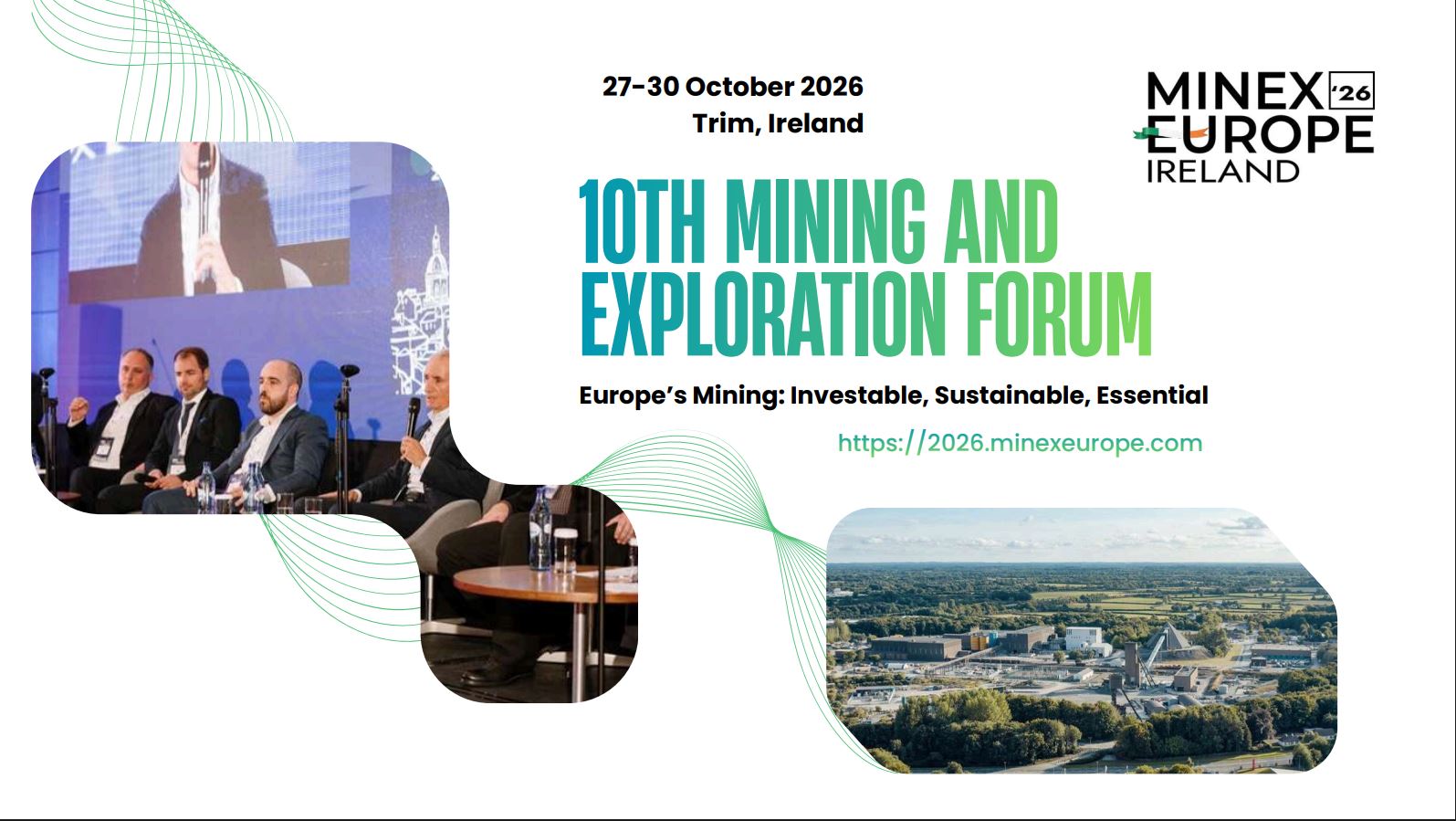
  • MINEX Europe 2026 Brochure

    MINEX Europe 2026 Brochure

    The 10th MINEX Europe Mining and Exploration Forum will take place on 28-30 October 2026 in Trim, Ireland – a short distance from Dublin Airport.

    The Forum and Industry exhibition will take place on 27-29 October 2026 at the Knightsbrook Hotel Spa and Golf Resort.

    On 30 October, the Forum participants will be offered an opportunity to visit Tara Mine – one of Europe’s largest mines operated by Boliden, producing zinc and lead concentrates for the European market.

    Europe needs critical raw materials. But it also needs trust, investment, processing capacity and projects that can move forward responsibly. MINEX Europe Forum 2026 is the meeting place for leaders shaping the next phase of Europe’s mineral future.

    Central thesis

    Europe is learning that passing legislation is not the same thing as rebuilding an industry. The Critical Raw Materials Act, launched in 2024, promised faster permitting – 27 months for extraction, 15 for processing – and bold 2030 targets for domestic mining, refining and recycling. On paper, it looked like Europe’s industrial reset. Progress remains uneven. Projects are not built by regulation alone. They are built where markets work, communities’ consent, energy is competitive and trust is earned. Finland – already one of the EU’s most mining‑friendly jurisdictions – has advanced lithium projects, but this reflects Finland’s existing institutional culture more than a continental shift. Elsewhere, Europe’s most high‑profile lithium project in Serbia became a political flashpoint, stalled by public opposition. Serbia is not in the EU, but the signal to global investors was unmistakable. The deeper issue isn’t geology. It is legitimacy.
    Europe can tighten controls on aluminium scrap exports to keep feedstock inside the bloc in the name of circularity and security, yet high energy and regulatory costs still make recycling in Europe structurally uncompetitive in many cases. Markets respond to price signals, not declarations. So, we live with a contradiction: Europe wants electrification, re‑industrialisation and strategic autonomy – but mining still lacks moral legitimacy in the public imagination. Europe doesn’t lack minerals; it lacks social licence. Until that changes, no permitting timeline written in Brussels will materially shift outcomes on the ground.
    MINEX Europe 2026 positions itself precisely at this junction between law, legitimacy and investment. Recently, the EU appointed a special envoy in the European Parliament to reopen parts of the CRMA, an act some see as political theatre and others as recognition that the core challenge is narrative, not spreadsheets.
    The Forum in Trim will focus its agenda on the missing pieces: how the mineral-rich European jurisdictions like Ireland can turn strong policy into trusted practice; how companies, communities and policymakers can rebuild mining’s moral legitimacy; and how Europe can turn its industrial ambitions into bankable projects that are not only investable and sustainable, but seen by citizens as essential.

  • Savannah Resources Gains Local Support for Controversial Barroso Lithium Project in Portugal

    Savannah Resources Gains Local Support for Controversial Barroso Lithium Project in Portugal

    Savannah Resources has secured new backing from local landowners for its Barroso lithium project in northern Portugal, which is set to become Europe’s largest lithium mine. This development comes as the company seeks to navigate years of community opposition and legal challenges that have delayed the project. The Barroso project, with a capital expenditure of $417 million, has been designated as strategic by the EU, highlighting its importance in establishing a European lithium supply chain critical for the electric vehicle industry.

    The company announced three new benefit-sharing agreements with local communal land managers, known as baldios, which aim to ensure that the communities have a stake in the project and its benefits. CEO Emanuel Proença emphasised that these agreements are not just about land access but also about recognising the rights of local communities that have managed these lands for generations. Savannah is optimistic about receiving its final environmental licence in the third quarter of this year, with plans to make a final investment decision by the end of the year and commence production by 2028.

    Despite the backing from local landowners, the Barroso project has faced significant opposition from residents and environmental groups concerned about its potential impact on agriculture, water resources, and biodiversity in the region, which is recognised by the UN as a Globally Important Agricultural Heritage System. The project’s feasibility study, released in July, indicated that it could produce an average of 183,000 tonnes of spodumene concentrate annually, enough to supply batteries for approximately 500,000 electric vehicles.

    Savannah’s study also projected a robust after-tax net present value of $913 million and an internal rate of return of 43%, with a payback period of less than two years. The project is positioned competitively within the global hard-rock lithium cost curve, with average operating costs estimated at $473 per tonne of concentrate.

    To address environmental concerns, Savannah has proposed measures such as dry-stack tailings, a lined storage facility, and a water recycling system. The new agreements with local baldios include provisions for community participation in project oversight, local reinvestment of project benefits, and inflation-indexed rental payments. Additionally, a partnership with the regional baldios secretariat aims to support forest management and wildfire prevention in the area.

    Portugal has a history of lithium production for the ceramics industry, but the Barroso project represents a significant step towards developing a large-scale battery materials sector in the country. Earlier this year, the Portuguese government awarded Savannah a €110 million grant to support the advancement of the Barroso project, further underscoring the official backing for this initiative. The project has also seen a 40% increase in its mineral reserve estimates, reinforcing its economic viability as it aims to become western Europe’s first major lithium mine.


  • Cornish Lithium Secures £7.2 Million Government Funding for Geothermal Lithium Project

    Cornish Lithium Secures £7.2 Million Government Funding for Geothermal Lithium Project

    Cornish Lithium has announced that it will receive £7.2 million in government funding as part of a £14.5 million drilling and testing programme aimed at advancing the Cross Lanes Geothermal Lithium project in Cornwall. This funding, part of the DRIVE 35 initiative, is intended to enhance the technical and economic viability of commercial lithium production from geothermal sources. The project aligns with the UK Government’s Industrial Strategy and Growth Sector strategies, particularly in light of the increasing importance of lithium in the energy transition.

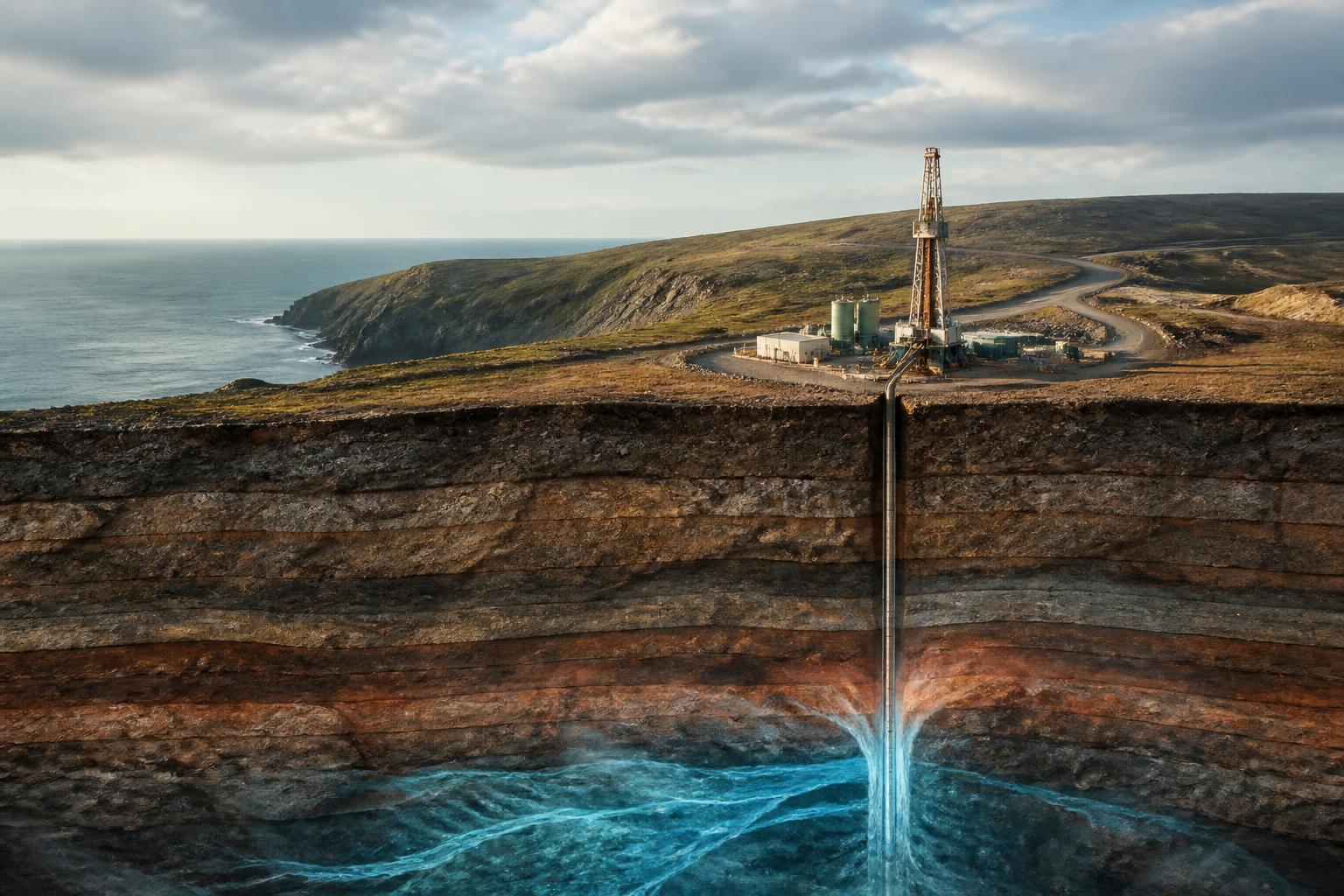
    The funding will facilitate the drilling of two production wells, each reaching depths of 2,000 metres, and the operation of a Direct Lithium Extraction demonstration plant at the Cross Lanes site. Additionally, an appraisal well will be drilled at the nearby Baldhu site to confirm the presence of further lithium resources. Exploration drilling conducted in 2023 has already established the existence of lithium-enriched geothermal waters circulating through the underlying rock formations at the project site, near Chacewater.

    Cornish Lithium received planning consent for the development of the site in 2025, which includes further phases of testing and evaluation. The company aims to contribute to the UK’s domestic lithium production target of 50,000 tonnes per year by 2035, recognising lithium’s critical role in the transition to sustainable energy. The full planning application and associated documents can be accessed on the Cornwall Council planning register under PA24/06661.

    This initiative not only supports local economic growth but also positions the UK as a key player in the global lithium market, which is essential for the production of batteries used in electric vehicles and renewable energy storage solutions. As the demand for lithium continues to rise, projects like Cornish Lithium’s are crucial for ensuring a sustainable supply chain within the UK.


  • BGS Enhances International Collaboration with Icelandic Research Institutions

    BGS Enhances International Collaboration with Icelandic Research Institutions

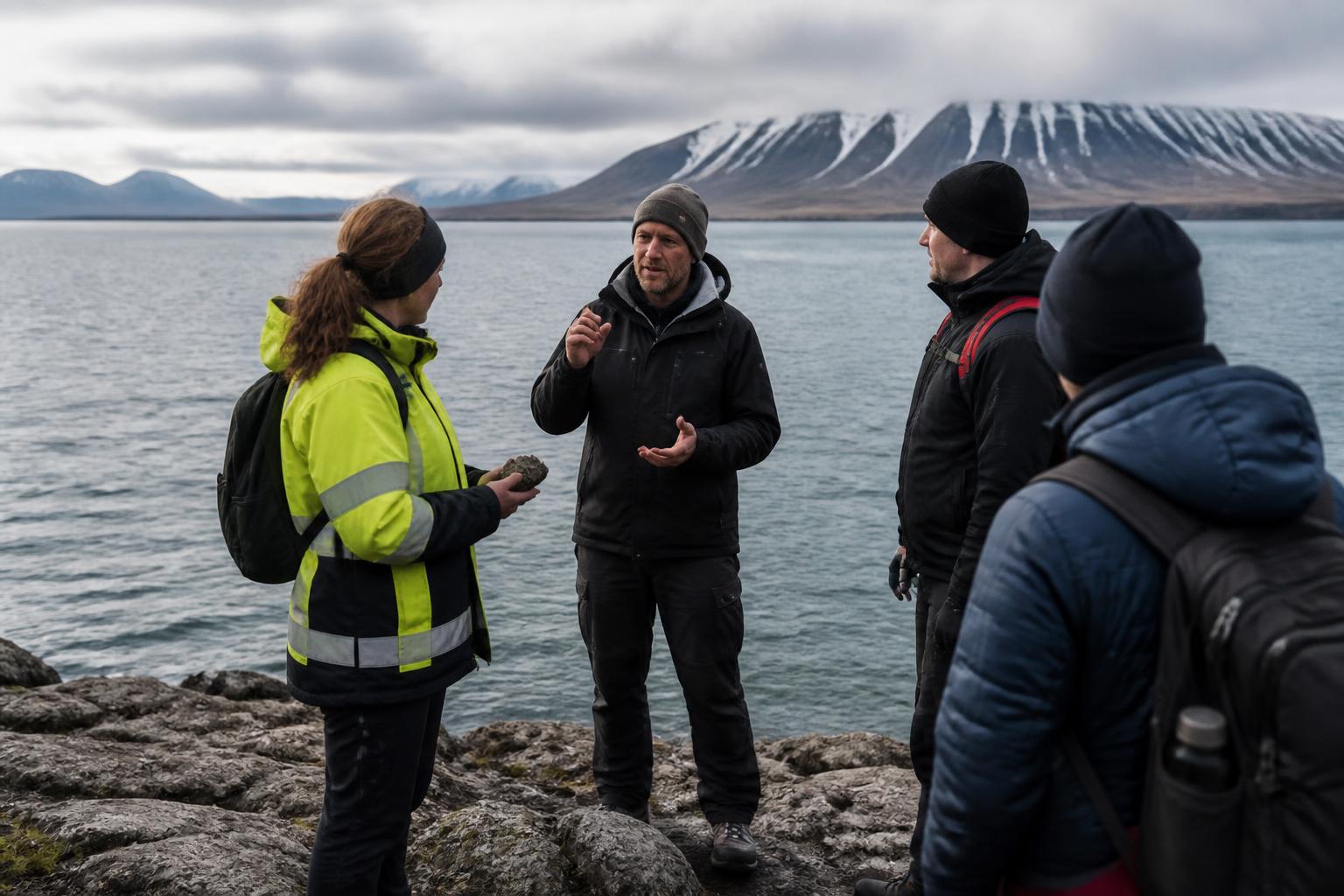
    Researchers from the British Geological Survey (BGS) recently embarked on a three-day visit to Iceland, aimed at fostering international partnerships and exploring future collaborative research opportunities under the Research and Innovation Scotland (RIS) initiative. The visit brought together experts from various fields, including marine geoscience, volcanology, geological hazards, geothermal energy, carbon storage, and offshore infrastructure, collaborating with prominent Icelandic organisations such as Iceland GeoSurvey (ÍSOR), the Icelandic Meteorological Office (IMO), and the University of Iceland.

    The initiative stemmed from discussions between BGS scientists at the Lyell Centre and Professor Eric Bréard from the University of Edinburgh, focusing on leveraging Iceland’s unique geological features and its renowned expertise in active volcanic and geothermal systems. A primary goal of the RIS-funded project was to strengthen connections between Scottish researchers and their Icelandic counterparts, facilitating knowledge exchange and the identification of future research collaborations.

    During the visit, participants engaged in workshops, field visits, and technical discussions, which provided a platform for developing new relationships and sharing insights. A workshop hosted by ÍSOR featured presentations on marine geophysical surveying, geological hazards, volcanology, and carbon storage, highlighting the potential for combining Icelandic marine geophysical capabilities with BGS’s expertise in geological interpretation and hazard assessment.

    Field trips to the Reykjanes Peninsula allowed researchers to observe recent volcanic activity and discuss how geological data can enhance understanding of hazards affecting local communities and infrastructure. Additionally, the delegation visited Carbfix facilities to learn about Iceland’s innovative carbon mineralisation technology, discussing future opportunities for collaboration in carbon storage and subsurface characterisation relevant to developments in Scotland and the UK.

    The visit culminated in the identification of several collaborative opportunities across various domains, including marine geoscience, offshore hazard mapping, and geological characterisation of the Icelandic shelf. This project was facilitated by BGS’s membership in the Scottish Alliance for Geoscience, Environment and Society (SAGES), which promotes collaboration across environmental sciences and supports the development of international partnerships.

    Overall, the visit underscored the importance of international collaboration, highlighting how Iceland’s strengths in geological sciences can complement BGS’s experience in offshore mapping and decision-support products to address shared scientific and societal challenges.


  • Transforming a Coal Mine into Spain’s Largest Artificial Lake: The As Pontes Success Story

    Transforming a Coal Mine into Spain’s Largest Artificial Lake: The As Pontes Success Story

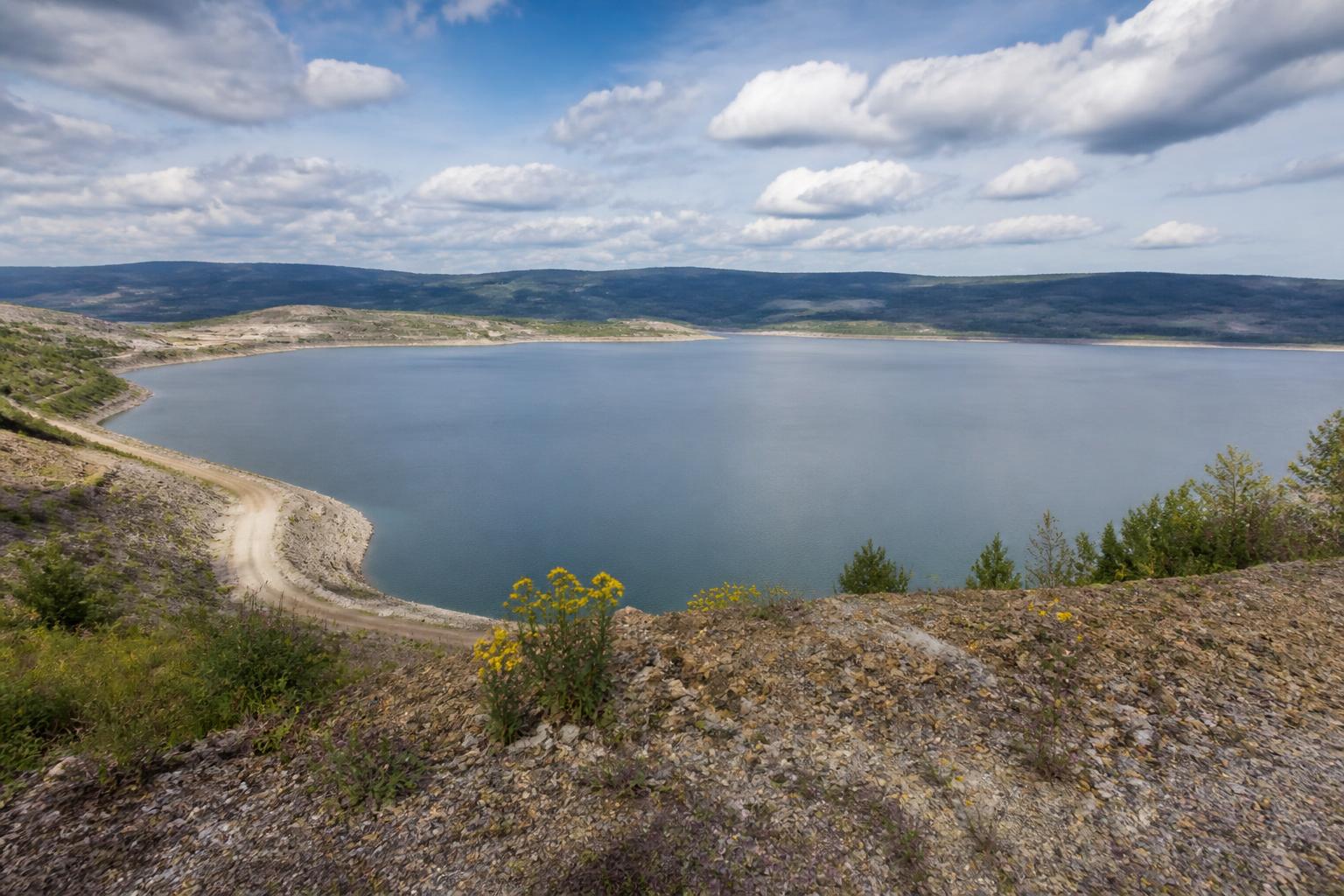
    In northwest Spain, the As Pontes coal mine has undergone a remarkable transformation from a deep pit left by nearly 60 years of lignite extraction to one of the country’s largest artificial lakes. This change began in 2008 when engineers filled the massive pit, which had reached depths of over 300 metres and covered an area equivalent to 1,600 American football fields, with approximately 547 billion litres of water. The mine, initially operated by a state-run company since the 1940s and later by Endesa, Spain’s largest coal-fired power station, extracted around 260 million tonnes of lignite before its closure in 2007 due to stricter EU air pollution regulations.

    The process of filling the pit was not straightforward; it required careful planning to determine the water sources, the rate of filling, and the chemical implications of the water settling into the pit. A study published in the journal Boletín Geológico y Minero details this engineering feat, highlighting the challenges faced and the innovative solutions developed by the research team from the University of A Coruña. The filling was completed in April 2012, and subsequent studies revealed the formation of two distinct layers within the lake: a top layer that is mildly acidic and oxygen-rich, and a deeper layer that is more acidic and devoid of oxygen, separated by a chemocline.

    Today, the As Pontes lake spans 865 hectares and features recreational facilities such as sandy beaches and nature trails. It has received Blue Flag certification, indicating high water quality and safety standards. The surrounding area has seen the emergence of diverse habitats, including meadows and woodlands, and the local economy has shifted from reliance on mining to tourism, with activities like kayaking and canoeing now popular in the area.

    The As Pontes case serves as a significant example of successful mine rehabilitation, showcasing how old mining sites can be transformed into valuable recreational spaces. This transformation is not unique to Spain; similar mining sites around the world, from Germany to the United States, face the challenge of rehabilitation. As more coal mines are closed globally, the lessons learned from As Pontes could guide future efforts to manage and repurpose former mining operations, turning environmental scars into thriving ecosystems and community assets.


  • Exploring the Rhine Valley’s Potential for Lithium and Rubidium Extraction

    Exploring the Rhine Valley’s Potential for Lithium and Rubidium Extraction

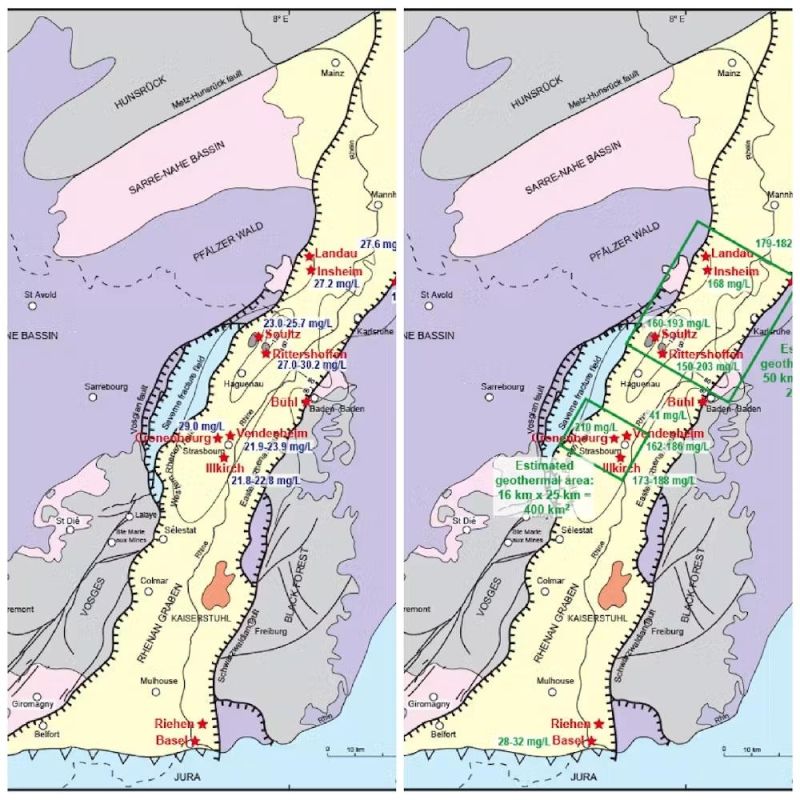
    The Rhine Graben, a geological formation located between France and Germany, is emerging as a significant potential source of strategic metals, specifically lithium and rubidium. A recent study highlights the region’s promising resources, which are found in the hot, saline waters of its geothermal systems. As Europe seeks to reduce its reliance on external sources, particularly China, for these critical elements, the Rhine Valley could play a pivotal role in meeting the growing demand, especially for lithium used in electric vehicle batteries.

    Lithium demand is surging due to its essential role in the production of electric vehicle batteries, while rubidium, though less known, is vital for advanced technologies including optics and atomic clocks. The study suggests that the geothermal brines in the Rhine Graben, which are already being harnessed for energy production, could also be tapped for their rich lithium and rubidium content. The brines contain approximately 174 mg/L of lithium and 25 mg/L of rubidium, making them among the richest sources globally.

    The research updates previous estimates of lithium reserves in the Rhine Graben, now suggesting they could range from 1 million to 16 million tonnes, with an average estimate of 6.2 million tonnes. This is a significant increase from earlier figures, indicating the region’s potential to contribute substantially to Europe’s lithium supply, especially as global production is projected to rise.

    Rubidium resources are also noteworthy, estimated between 150,000 and 2.3 million tonnes, which could incentivize further exploration and extraction efforts. The study proposes that integrating lithium and rubidium extraction into existing geothermal energy operations could be a sustainable approach, potentially producing 3,000 to 9,000 tonnes of lithium annually, meeting a considerable portion of France’s projected needs by 2035.

    However, several challenges remain before these resources can be fully exploited. Technical hurdles include identifying the most productive areas within the complex geological formations and improving extraction technologies. Additionally, environmental concerns, particularly the risk of induced seismicity associated with deep geothermal energy, must be addressed to gain public support.

    Initial pilot projects in the region are already underway, with ambitions to establish Alsace as a hub for low-carbon lithium production. As the exploration and extraction of these strategic metals progress, the Rhine Graben could soon become a key player in Europe’s quest for energy independence and sustainability.