Website: Europe.com

  • Rio Tinto CEO Addresses Public Concerns Over Jadar Project

    Rio Tinto CEO Addresses Public Concerns Over Jadar Project

    In an op-ed published today in Politika, Rio Tinto’s CEO, Jakob Stausholm, acknowledged the public’s concerns about the controversial “Jadar” project. Stausholm emphasized that the company respects and understands the worries of Serbian citizens and is ready to address any questions that may arise.

    He pointed out that there is a significant amount of misinformation and misinterpretation circulating about both the Jadar project and Rio Tinto, claiming that this is part of a well-coordinated campaign to spread disinformation. “This is the first time in our long history that the company has faced such a situation,” Stausholm remarked. He added that the project is causing confusion, concern, and division among the public, with employees even receiving threats and online harassment.

    Stausholm reaffirmed his commitment to ensuring that the project will be developed in a safe manner, in line with the highest standards of environmental protection, social responsibility, and corporate governance. He also emphasized that all environmental impact studies will be subject to public review, allowing citizens to provide feedback, questions, and suggestions to improve the studies.

    He further mentioned that Rio Tinto is advocating for more public debates, similar to the one held last Saturday in Ljubovija, which was broadcast by local media.

  • Karelian Diamond Resources Nears Discovery of Rare Green Diamond Source in Finland

    Karelian Diamond Resources Nears Discovery of Rare Green Diamond Source in Finland

    Karelian Diamond Resources (AIM: KDR), an Irish explorer, believes it is edging closer to identifying the source of a rare green diamond found in 2022. The company recently completed a series of follow-up excavations in Finland’s Kuhmo region and has collected 21 glacial till samples for analysis. Depending on the results of the mineral analysis, Karelian plans to initiate a drilling program during the winter to further investigate identified kimberlitic targets.

    According to Karelian, the thickness of the glacial till increases to the northwest, near a swampy area that is currently inaccessible until the ground freezes. The company has excavated as close as possible to this region, where it believes the source of the kimberlite minerals and the green diamond may be located. Six potential kimberlite sites, previously identified through geophysical methods, are in the same zone, with excavation pits strategically placed to follow the trail of indicator minerals.

    In parallel, the Dublin-based company is advancing other assets in Finland, including the Lahtojoki deposit, which could become the first diamond mine within the European Union. Karelian recently resolved legal disputes with local landowners and is now awaiting the Finnish National Land Survey’s decision to finalize the project boundaries. The company believes the Lahtojoki kimberlite pipe has the potential to become a profitable open-pit mine, containing valuable white diamonds, as well as pink and colored diamonds that could fetch prices up to 20 times higher than their colorless counterparts.

  • Europe’s Aerospace Industry Faces Titanium Dependency Challenge Amid Sanctions

    Europe’s Aerospace Industry Faces Titanium Dependency Challenge Amid Sanctions

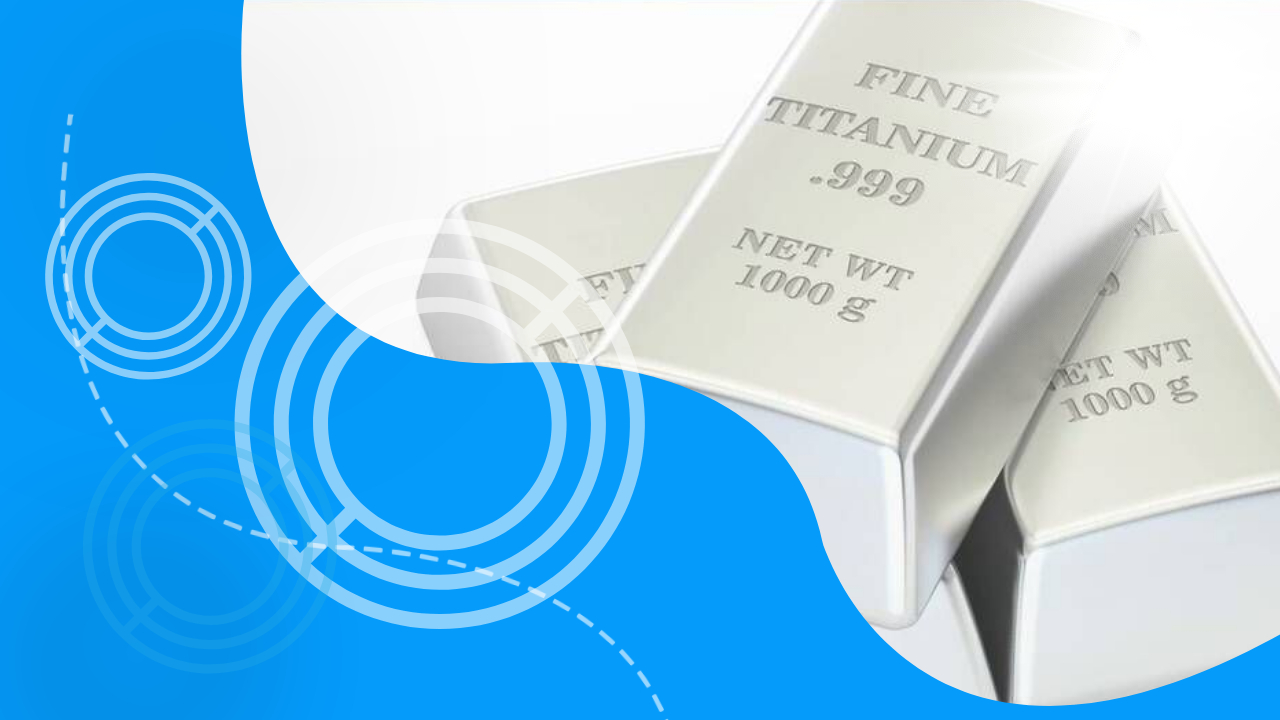
    Fans of Apple’s titanium-cased iPhones need not worry about a material shortage. Although Russian President Vladimir Putin has suggested capping exports of titanium in response to Western sanctions, China remains Apple’smain supplier, ensuring that the company will not need to switch back to stainless steel. However, the European aerospace sector faces more significant challenges. VSMPO-AVISMA, the world’s largest titanium producer, supplies a considerable portion of the European market, and while Europe has restricted imports of many Russian metals, titaniumhas remained largely unaffected by these sanctions.

    In February, when Canada imposed sanctions on VSMPO-AVISMA, French President Emmanuel Macronpersonally intervened to secure waivers for Airbus and other aerospace companies, illustrating the deep reliance on Russian titanium. This dependency is difficult to break because titanium is a critical component in aircraft manufacturing due to its strength, light weight, and corrosion resistance.

    Europe’s problem is compounded by the fact that it lacks significant domestic capacity for producing aviation-grade titanium, which requires extremely high purity levels and specialized accreditation from aircraft manufacturers like Airbus and Boeing. As a result, Europe risks replacing its dependence on Russia with a reliance on U.S. titanium suppliers, especially since the U.S. receives nearly 70% of Europe’s titanium scrap.

    Breaking this transatlantic loop is crucial as the European Union’s Critical Raw Materials Act sets ambitious goals for domestic extraction and recycling by 2030. While Ukraine may offer a potential future supply of titanium, European recycling capabilities must be expanded to meet the short-term demand. Government-level negotiations between Europeand the U.S. are likely needed to reshape the titanium supply chain.

  • Europe Faces Challenges in Reducing Reliance on Russian Titanium

    Europe Faces Challenges in Reducing Reliance on Russian Titanium

    In the wake of Western sanctions against Russia, European policymakers are grappling with the continent’s heavy dependence on Russian-produced titanium, a critical material for the aerospace industry.

    Despite banning or restricting imports of other Russian metals, Europe has yet to take similar action on titanium. This is largely due to the aerospace sector’s significant reliance on supplies from VSMPO-AVISMA, the world’s largest integrated titanium producer, which is based in Russia.

    The issue came to the fore earlier this year when Canada imposed sanctions on VSMPO-AVISMA, prompting a personal intervention by French President Emmanuel Macron to secure waivers for European aerospace firms like Airbus. This underscores Europe’s continued vulnerability to potential Russian retaliation through titanium export restrictions.

    Titanium’s Importance to Aerospace
    Titanium is highly prized in the aerospace industry for its unique properties – it is lightweight, incredibly strong, has a high melting point and is corrosion resistant. It is a crucial material used in aircraft engines, landing gear and fuselage.

    However, the supply of aerospace-grade titanium is limited, as only a handful of producers globally can meet the stringent purity and quality standards required. Prior to the 2022 Ukraine invasion, VSMPO-AVISMA was estimated to have supplied up to a third of the global aviation sector’s titanium needs.

    Europe’s Titanium Dependency
    Europe was the top destination for Russian titanium product exports in 2019, accounting for 45% of the total. Russian titanium, primarily in the form of wrought alloy for aviation, made up 16% of the EU’s imports that year.

    The problem for Europe is that it lacks domestic titanium sponge production, has limited ingot capacity, and virtually no recycling facilities. This leaves the continent heavily reliant on imports, swapping one dependency (Russia) for another (the United States).

    Transatlantic Recycling Loops
    Much of Europe’s titanium scrap is currently processed in the US, where it is used alongside imported Japanese sponge to produce aerospace-grade alloys. This “transatlantic loop” effectively locks Europe into an asymmetric relationship with US suppliers, discouraging investments in domestic recycling capacity.

    Potential Solutions
    Experts argue that Europe’s best short-term solution is to re-shore its scrap processing capabilities, reducing reliance on US suppliers. However, this will require navigating the interests of European aerospace firms and the leverage of their American counterparts.

    Longer-term, integrating Ukraine’s titanium sponge production into the European supply chain could help, but the timeline for this is uncertain. The EU’s Critical Raw Materials Act also sets ambitious targets for domestic extraction, processing and recycling of critical minerals like titanium by 2030 – goals that Europe is currently far from achieving.

    Ultimately, breaking free of Russia’s titanium grip and reducing Europe’s strategic dependencies will require a concerted, multi-pronged effort by policymakers and industry. The stakes are high, as the aerospace sector’s competitiveness and resilience hang in the balance.
  • EU Long Steel Market Faces Challenges Amid Fluctuating Demand and Global Competition

    EU Long Steel Market Faces Challenges Amid Fluctuating Demand and Global Competition

    The EU long steel market has experienced several phases of development between 2010 and 2023. After the 2008 global financial crisis, production saw modest growth, hindered by weak demand in construction and infrastructuresectors. A key period of recovery from 2015 to 2018 boosted infrastructure projects, leading to a stable production volume of 54-57 million tons in the EU. Countries like Germany, Italy, and Spain increased production, though stricter environmental standards limited further growth.

    Consumption of long steel products closely followed the ups and downs of the construction sector, peaking between 2015 and 2019 due to rising investments in transport infrastructure and residential construction. However, the COVID-19 pandemic in 2020 led to a sharp decline in demand. In 2021-2022, the market rebounded with government support, though by 2023, consumption hit a decade-low of 46.3 million tons due to economic stagnation in the EU.

    In terms of exports, the EU long steel sector thrived in the Middle East and North Africa, but lost ground to Chineseand Turkish competitors offering cheaper products. The EU’s export share, once 18-21% between 2012 and 2016, dropped to 10-12% by 2023. Imports have remained significant, especially from China and Turkey, peaking at 7.9 million tons in 2018 and slightly falling to 5.5 million tons in 2023 due to weak demand.

    Looking forward, the outlook for the EU long steel market remains uncertain. While lower ECB rates and anticipated growth in construction may drive demand, high energy costs and global economic instability pose challenges. Government initiatives to support infrastructure development and stabilize electricity prices are crucial to the market’s future.

  • Northvolt to Cut 1,600 Jobs Amid Challenges in the Electric Car Industry

    Northvolt to Cut 1,600 Jobs Amid Challenges in the Electric Car Industry

    Swedish battery manufacturer Northvolt is set to eliminate 1,600 jobs as it faces significant challenges in the electric car industry. The company announced the cuts across three of its locations, with 1,000 jobs being lost at its Skellefteå site in northern Sweden, where it is halting the expansion of Northvolt Ett, Europe’s first battery gigafactory. Another 400 jobswill be cut in Västerås, home to Northvolt Labs, and 200 at its Stockholm headquarters.

    CEO Peter Carlsson emphasized that while the overall momentum for electrification remains strong, “tough decisions” are necessary to secure the company’s future. The announcement follows weeks of uncertainty for Northvolt employees, who have been dealing with reports of financial difficulties and halted spending.

    The electric vehicle market in Europe has been struggling with slower-than-expected growth in consumer demand. Industry figures recently showed that EU car sales fell to 643,000 in August. Carlsson noted the importance of focusing on Northvolt’s core business and scaling up operations at the Skellefteå site to meet a planned 16GWh production capacity, which could eventually expand to 30GWh annually.

    The layoffs are part of a wider trend in the industry, following job cuts at companies like Tesla and Volkswagen. Additionally, Northvolt addressed a recent incident involving chemical leaks at its Skellefteå plant, insisting that safety protocols were in place and that the leaks were not related to the building’s design.

  • Europe’s First Lithium Refinery Opens in Germany, Set to Power 500,000 Electric Cars Annually

    Europe’s First Lithium Refinery Opens in Germany, Set to Power 500,000 Electric Cars Annually

    AMG Lithium has opened Europe’s first lithium refinery in Bitterfeld-Wolfen, Germany, a significant step in boosting the continent’s electric vehicle (EV) industry. The refinery, built in just over two years at a cost of 140 million euros, will convert Brazilian lithium into battery-compatible lithium hydroxide. The plant is expected to produce 20,000 tonnes of lithium hydroxide annually, enough to power 500,000 electric vehicles.

    Lithium, a key component in EV battery production, is in high demand due to the global transition to green energy. To address this growing need, the European Union (EU) introduced the Critical Raw Materials Action Plan in 2020, aimed at reducing Europe’s reliance on external sources for these vital materials.

    Currently, most electric and hybrid vehicles rely on lithium-ion batteries, which are favored for their performance and range. Stefan Scherer, Managing Director of AMG Lithium, highlighted the importance of lithium-ion technology, stating, “If you want a certain performance and range when driving, then the lithium-ion battery is simply unbeatable.”

    In the future, lithium sourced from European mines—such as those in Portugal and the Ore Mountains—will also be processed at the Bitterfeld-Wolfen plant.

  • Rio Tinto Calls for New Mines to Meet Demand for Key Energy Metals

    Rio Tinto Calls for New Mines to Meet Demand for Key Energy Metals

    The world needs more mines to meet the growing demand for energy-transition metals such as copper, according to Rio Tinto Group chairman Dominic Barton. Speaking in a Bloomberg TV interview, Barton stated that mergers and acquisitions alone will not solve the impending supply gap. “As an industry, we’re not going to inorganic our way out of this challenge,” Barton said, referring to the industry’s reliance on deals for growth. He highlighted the need for new mining projects in at least five key commodity areas.

    While global mining mergers and acquisitions (M&A) have surged recently—driven by strong cash flows and the increasing demand for green energy metals—Barton emphasized that building new mines is essential. BHP Group has been one of the most active players, notably making a move on Filo after its $49-billion bid for Anglo American was rejected.

    Unlike BHP, Rio Tinto has remained relatively quiet in the M&A space, choosing instead to invest hundreds of millions into exploration, with a primary focus on copper and lithium. However, Barton confirmed that the company is still evaluating acquisition opportunities. “We’re just going to have to build more,” he said, stressing the urgent need to discover and mine more copper in the next 30 years.

  • Eurogroup Laminations Partners with ArcelorMittal to Meet Rising Demand for Electric Motor Solutions

    Eurogroup Laminations Partners with ArcelorMittal to Meet Rising Demand for Electric Motor Solutions

    The demand for stators and rotors, essential components of electric motors and generators, is experiencing a surge, particularly from global Original Equipment Manufacturers (OEMs) in the automotive industry, driven by the electric vehicle (EV) revolution. There is also a growing need for advanced motor cores across various industries due to the rapid advancement in renewable energy and automation. In response to this demand, Eurogroup Laminations has entered into a partnership with ArcelorMittal to provide innovative motor core solutions, combining Eurogroup’s expertise in motor core design with ArcelorMittal’s production capacity in non-oriented electrical steels (NOES). According to Marco Barabino, Key Account Manager Electrical Steel at ArcelorMittal Europe, the partnership is crucial for meeting EU deadlines for transitioning away from conventional internal combustion vehicles by 2035. This collaboration will enable a significant increase in electrical steel production, with plans for a new facility in Mardyck, France, aimed at tripling annual capacity to 300,000 tonnes. As the world shifts towards an energy transition, Eurogroup’s CEO Marco Arduini emphasizes the importance of expanding production capabilities while focusing on tailored investments across global operations. ArcelorMittal’s iCARe range of electrical steels has been specifically designed for the automotive market, offering solutions that meet the performance and efficiency demands of modern EVs. The partnership aims to deliver customized motor core solutions to meet the diverse needs of customers in the automotive sector and beyond

  • Germany Launches Raw Materials Fund to Bolster Supply Chains

    Germany Launches Raw Materials Fund to Bolster Supply Chains

    Germany has introduced a €1 billion ($1.1 billion) investment fund aimed at securing critical raw materials and strengthening its supply chains. This initiative seeks to reduce the country’s reliance on foreign suppliers, particularly from regions like China, which dominate the production of essential materials needed for technologies such as electric vehicles and renewable energy systems. By boosting investment in these critical sectors, Germany aims to ensure a stable, long-term supply of raw materials necessary for the green and digital transitions, while also enhancing its economic resilience. The fund forms part of broader European efforts to diversify supply chains and reduce vulnerability to geopolitical risks.