Website: Eurasia.com

  • Kazakhstan Registers Five New Mineral Deposits Following 2025 Exploration Campaign

    Kazakhstan Registers Five New Mineral Deposits Following 2025 Exploration Campaign

    Kazakhstan has added five new deposits to its state mineral register based on geological exploration conducted in 2025, Vice Minister of Industry and Construction Iran Sharkhan announced during a government meeting on the development and digitalization of the country’s geological sector.

    The newly identified deposits—Altyn-Shoko, Samombet, Studenchesky, Takyr-Kaldzhir and Kok-Zhon at the Bolattobe site—have expanded the national mineral base by approximately 98 tonnes of gold, 36,000 tonnes of copper, 11 million tonnes of manganese and more than 1.3 million tonnes of phosphorites.

    Kazakhstan currently holds 103 types of mineral resources and around 10,000 deposits on the state balance. More than 2,900 licenses have been issued to subsoil users, along with 250 contracts for the development of solid minerals.

    From 2026 to 2028, geologists plan to survey an additional 100,000 square kilometers, followed by annual exploration covering 30,000 square kilometers through 2030. The government has allocated 240 million tenge to form a portfolio of 20 potential investment projects, aiming to improve early-stage discovery and increase overall efficiency of geological works.

    To support advanced scientific methods in exploration, the government approved the creation of a specialized laboratory within a geological cluster in Astana. Construction is scheduled to begin in 2026, enabling comprehensive mineral-geochemical and analytical research.

  • Kazakhstan’s Mining Sector Enters New Era as Dual AIX–Hong Kong IPO Signals Rising Global Integration

    Kazakhstan’s Mining Sector Enters New Era as Dual AIX–Hong Kong IPO Signals Rising Global Integration

    Kazakhstan’s mining industry took a major step toward global capital market integration in the summer of 2025 with the dual listing of Jiaxin International Resources Investment Limited on the Astana International Exchange (AIX) and the Hong Kong Stock Exchange. The company, which is developing the Boguty tungsten deposit under the “Zhetysu Tungsten” brand, conducted the first yuan-denominated IPO in Central Asia and the first cross-listing between AIX and Hong Kong.

    The offering drew massive investor interest, with demand exceeding supply by hundreds of times and share prices more than doubling on the first trading day. Analysts say the strong performance reflects growing confidence in Kazakhstan’s mining sector and its shift toward public market financing.

    The event aligns with global trends in resource development, where companies increasingly rely on stock exchanges in addition to bank lending and private investment. Countries such as Canada and Australia have long used public markets—particularly TSX and ASX—to fund early-stage exploration and junior mining companies, allowing them to evolve into major global producers.

    Kazakhstan is now moving along a similar path, supported by its substantial mineral base, established technical expertise, and a developing financial infrastructure. AIX’s simplified regime for junior listings enables exploration-stage companies to access public capital, creating opportunities for broader participation in the national resource sector.

    Jiaxin’s cross-listing illustrates how Kazakh projects can attract both regional and Asian investors. Experts expect more mining companies to follow, as investors seek exposure to real assets and mining firms pursue transparent, institutional financing channels.

    With international partnerships, expanding exchange infrastructure, and mounting interest from global markets, Kazakhstan is positioned to become part of the global network of exchanges that facilitate resource-sector investment. Industry observers say the sector is entering a new phase—one defined by openness, market-based financing, and deeper global integration.

  • Pipelines and Rare Elements: How Central Asia Became America’s New Geo-economic Frontier

    Pipelines and Rare Elements: How Central Asia Became America’s New Geo-economic Frontier

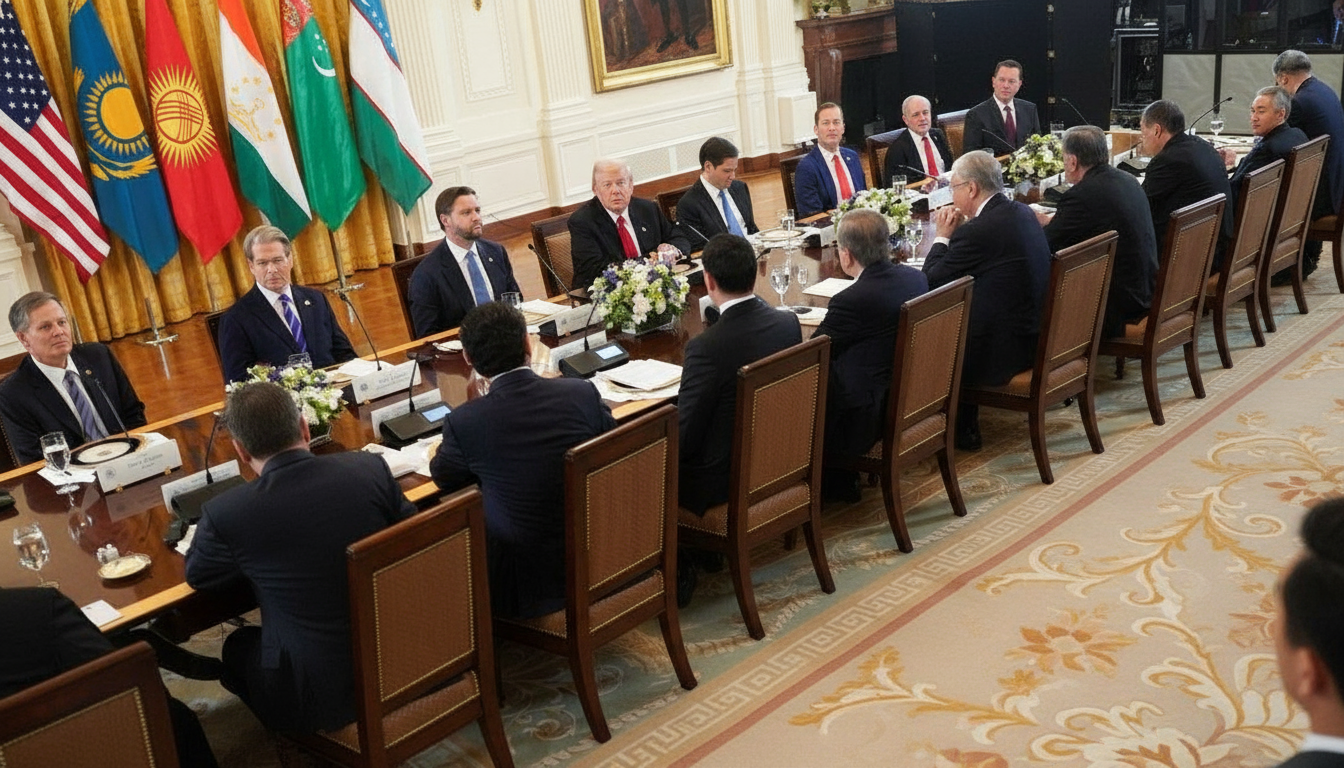
    The C5+1 summit held in Washington on November 6, 2025, marks a new chapter in U.S.–Central Asia relations, shifting the focus from energy pipelines to strategic mineral resources. Rare earth elements are now central to Washington’s strategy against China, which dominates mining and processing globally.

    Recent agreements—highlighted by substantial investments in Kazakhstan’s tungsten mines and commitments to Uzbekistan—illustrate a strategy that blends economic aims with national security, defense modernization, and leadership in green technologies. By partnering with Kazakhstan, Uzbekistan, and Turkmenistan, the U.S. seeks to counter China’s and Russia’s longstanding influence, establishing a “new resource-centered” framework for engagement. Rare earths are becoming tools of strategic power, supplanting traditional energy diplomacy and strengthening supply chains for renewable energy.

    This shift extends beyond resource access; mining investments are shaping political, economic, and diplomatic orientations across Central Asia, challenging China’s Belt and Road Initiative through economic means. The U.S. approach converts energy diplomacy into “mining diplomacy,” turning Central Asia into a global geo-economic crossroads.

    America’s renewed focus reflects a broader repositioning—building “strategic balancing” structures rather than pursuing mere economic or military dominance. The C5+1 format has become the central mechanism for promoting a model of regional integration that excludes Russia and China, offering a “third way” rooted in soft power, sustainable development, and technological partnerships.

    Strengthening transport routes like the Trans-Caspian corridor aims to liberate Central Asia from Russia’s logistical grip and curtail China’s influence over the Middle Corridor. Moscow and Beijing view these moves as containment strategies, intensifying geopolitical competition while granting Central Asian states greater autonomy through multilateral diplomacy.

    Ultimately, America’s strategy is about establishing a new Eurasian power architecture. Its success will depend on delivering sustainable investments and on Central Asian states maintaining independent balancing acts amid great-power competition.

  • Kazzinc to Invest $700 Million in Expanding Gold Production at the Vasilkovskoye Deposit

    Kazzinc to Invest $700 Million in Expanding Gold Production at the Vasilkovskoye Deposit

    Kazakhstan’s Kazzinc JSC has announced plans to invest over $700 million to expand operations at the Vasilkovskoye gold deposit in the Akmola region. The project is operated by Altyntau Kokshetau JSC, a Kazzinc subsidiary, which currently extracts ore using open-pit methods.

    Since the beginning of 2025, Kazzinc has produced 408,000 ounces of gold, down 9% compared to the same period in 2024. The decline is mainly due to lower ore grades as mining moves deeper into the pit, the company said.

    Vasilkovskoye remains one of Kazakhstan’s largest gold assets. As of the end of 2024, its total ore reserves were estimated at 40 million tonnes, with an average gold grade of 2.1 grams per tonne, according to Swiss company Glencore, which owns 69.61% of Kazzinc’s shares. The sovereign wealth fund Tau-Ken Samruk holds another 29.8%.

    In 2024, the mine produced more than 18.7 tonnes of gold, depleting high-grade ore reserves but delivering higher profits than in 2023.

    The new investment project introduces a hybrid mining approach, combining open-pit and underground operations. The open pit will be deepened to 680 meters, with annual ore extraction of up to 6 million tonnes, while a new underground mine will produce up to 2 million tonnes of ore per year.

  • Austrian Firms Eye Mining, Hydropower, and Tech Investments in Kyrgyzstan

    Austrian Firms Eye Mining, Hydropower, and Tech Investments in Kyrgyzstan

    Austrian companies are exploring new opportunities to participate in Kyrgyzstan’s mining, industrial, hydropower, winter tourism, digitalization, and security technology sectors, the Kyrgyz Ministry of Foreign Affairs announced following high-level meetings in Vienna, Trend reports.

    During the visit, Kyrgyz Deputy Foreign Minister Meder Abakirov held a series of discussions with senior Austrian officials, including Markus Hoffer, Head of the Austria–Central Asia parliamentary friendship group, and members of the Austrian Parliament. Talks centered on strengthening economic and technological cooperation between the two countries, as well as expanding dialogue within the Central Asia+ format.

    Deputy Minister Abakirov also briefed the Austrian side on preparations for Kyrgyzstan’s parliamentary elections scheduled for November 30, 2025, and invited Austria to join as election observers. Hoffer confirmed that Austrian parliamentarians plan to participate as part of an OSCE monitoring mission.


    Economic and Industrial Cooperation

    In a separate meeting with Austrian Deputy Finance Minister Andreas Reichhardt, the two sides reviewed progress on agreements reached during Kyrgyz President Sadyr Japarov’s visit to Austria in November 2024. Key focus areas included finance, natural resources development, and digital transformation initiatives.

    Both parties emphasized Austria’s technological expertise and discussed the involvement of Austrian firms in a range of Kyrgyz projects, including:

    • Mining and industrial production,

    • Hydropower development,

    • Winter tourism and skiing infrastructure,

    • Digital and security technology applications.


    Strategic Dialogue and Regional Role

    Deputy Minister Abakirov also met with experts from the Austrian Institute for European and Security Policy (AIES), where he provided updates on Kyrgyzstan’s reform agenda, current economic and political developments, and the country’s role in regional and global security.

    The discussions were also joined by members of the Kyrgyz-Austrian Friendship Society, underscoring the growing diplomatic and cultural engagement between the two nations.

  • Serbia Zijin Copper Files for Environmental Review of New Kraku Bugaresku–Cerovo Expansion

    Serbia Zijin Copper Files for Environmental Review of New Kraku Bugaresku–Cerovo Expansion

    Serbia Zijin Copper LLC Bor, a subsidiary of Zijin Mining Group, has filed a formal request with Serbia’s Ministry of Environmental Protection to prepare an Environmental Impact Assessment (EIA) for the planned exploitation of the Cementation 2 and Cementation 3 ore bodies at the Kraku Bugaresku–Cerovo Cementation deposit, near Bor.

    The new project marks a continuation of decades-long mining activity in the region, following previous open-pit operations at Cementation 1, according to eKapija. The deposit lies about 13 kilometers from Bor and 2 kilometers from Mali Krivelj, on the ridge of the Kraku Bugaresku hill.


    Project Scope and Development Phases

    The EIA request, prepared by the Faculty of Mining and Geology at the University of Belgrade, builds on earlier approvals from the Ministry of Mining and Energy dating back to 1991 and 2018.

    Mining at Cementation 2 and 3 will proceed in five phases:

    1. Initial extraction in the northern section of Cementation 2.

    2. Expansion southwest.

    3. Opening of the Cementation 3 pit.

    4. Southward expansion of both pits.

    5. Subsequent exploitation of Cementation 4 reserves in the southeast.

    The open-pit Cementation 2 is designed to produce 3.5 million tonnes of ore annually over a seven-year mine life. The project’s estimated net present value (NPV) stands at $117 million in the best-case scenario, positioning it among Serbia’s most significant mining investments in recent years.


    Waste Management and Environmental Measures

    Ore extraction will follow discontinuous mining technology, involving drilling, blasting, loading, and transport to the primary crusher, alongside drainage and auxiliary works.

    A total of 61.1 million tonnes of waste rock is expected to be generated. The existing waste rock dumps from Cementation 1 will be expanded to accommodate material from Cementation 2 and 3, increasing total dump capacity to 61.9 million tonnes.

    The project also requires hydrological modification: the Cerova River, which flows between the open pit and access roads, will be diverted and piped, with a reinforced embankment wall constructed downstream to protect infrastructure.


    Context and Outlook

    The Kraku Bugaresku–Cerovo expansion reinforces Zijin’s long-term presence in Serbia, where the company operates major copper and gold projects. It also reflects the continued development of Serbia’s Bor mining basin into a regional hub for base metals production.

    The forthcoming Environmental Impact Assessment will evaluate the project’s potential effects on water resources, biodiversity, waste management, and local communities, determining the conditions under which exploitation may proceed.

  • China’s Mineral Export Curbs Could Shave Over $1 Billion from US GDP — Macquarie

    China’s Mineral Export Curbs Could Shave Over $1 Billion from US GDP — Macquarie

    China’s export restrictions on a handful of critical minerals could cost the United States more than $1 billion annually in GDP losses, according to new research by Macquarie Group.

    The analysis, led by chief economist Ric Deverell, modeled the potential impact of Beijing’s export controls on four rare earth elements — samarium, lutetium, terbium, and dysprosium — along with gallium, all of which appear on the US government’s updated list of 60 critical minerals, which now also includes copper and silver.

    While the direct trade exposure may appear limited, Macquarie’s study highlights how supply disruptions to these small but indispensable materials could ripple through the defense, semiconductor, and clean-tech sectors, amplifying the economic impact far beyond their raw import value.


    The Numbers Behind the Risk

    In 2024, the US mined $17.5 billion worth of minerals domestically but imported $65 billion, Macquarie reported. Although China accounted for just $2 billion, or 3% of total US mineral imports, the concentration of value-added processing and material specialization in China means even a limited export ban could have disproportionate effects.

    Macquarie found that the US was:

    • 100% import reliant on 12 critical minerals, and

    • over 50% dependent on imports for another 33.

    For rare earths, the dependency is especially acute. The US relies on imports for around 80% of its rare earth compounds and metals, and about 70% of that supply originates from China.

    While the nominal import value of these materials is small — around $170 million in 2024, with $120 million sourced from China — the knock-on effects of an export halt could dent US GDP by over $1 billion in a single year, Macquarie estimated.

    The report also flagged gallium — a key input in semiconductors, LEDs, and defense electronics — as another potential choke point.


    Strategic, Not Just Economic, Damage

    Beyond direct losses, Macquarie warned that the strategic cost of supply disruption would be significant. Rare earths and gallium underpin advanced manufacturing, defense systems, and energy technologies, sectors that are difficult to substitute or reshore quickly.

    “Even a temporary interruption in these supply chains would carry lasting industrial and strategic repercussions,” the report noted.


    Australia’s Emerging Role

    Macquarie analysts also pointed to Australia as a potential replacement source for US critical mineral imports currently coming from China.

    Australia, which recently signed a Critical Minerals Framework agreement with the US, holds over 15% of the world’s critical mineral reserves and already produces nearly half of the minerals on Washington’s critical list.

    Although Australian exports currently account for just 2% of US critical mineral imports, investment in the sector is accelerating. As of October 2024, more than $50 billion in new projects were in the pipeline, positioning Australia to play a much larger role in diversifying Western supply chains.

    “Over time, Australia could feasibly replace all Chinese-origin critical minerals in the US import mix,” Macquarie said.

  • Ukraine’s Titanium Comeback: A Strategic Blueprint for Rebuilding Europe’s Titanium Industry

    Ukraine’s Titanium Comeback: A Strategic Blueprint for Rebuilding Europe’s Titanium Industry

    For decades, titanium has been a cornerstone of aerospace, defense, and high-tech manufacturing — prized for its strength, lightness, and resistance to corrosion. Yet behind this strategic metal lies a highly concentrated global industry, where only a handful of nations control production of titanium sponge, the raw metallic form of the element.

    Among them, Ukraine once stood as a global leader, the industrial backbone of the Soviet titanium complex and one of the few countries that mastered the Kroll process — the key technology for sponge production. Ukraine uniquely combined chemical, metallurgical, and scientific expertise, hosting its own Institute of Titanium and advanced hydrometallurgical facilities capable of extracting not only titanium but also zirconium and hafnium.

    Today, that legacy stands disrupted. The Russian invasion has fractured Ukraine’s heavy industry and halted sponge production since 2021. But it also opened a potential path forward: the chance for Ukraine to reclaim a central role in Western titanium supply chains, as the world scrambles to reduce dependence on Russia and China.


    Global Titanium Landscape

    According to the US Geological Survey, global titanium sponge capacity reached 410,000 tons in 2024, with production steady at around 320,000 tons. The market is heavily consolidated:

    • China accounts for nearly 69% of global output, producing mainly industrial-grade sponge for domestic use.

    • Japan, Saudi Arabia, and Kazakhstan supply almost all of the aerospace-grade sponge imported by the United States and the European Union.

    • Russia remains integrated in its own defense value chain, but sanctions have eroded margins and logistics competitiveness.

    • Ukraine, a former key player, has recorded zero production since 2021.

    While China dominates the midstream segment with state-backed clusters, low-cost energy, and full integration, it lacks certification pathways to access Western aerospace markets. By contrast, Japan and Saudi Arabia occupy the high-quality premium segment, selling sponge at $11,000–13,000 per ton, compared with China’s $7,000 average price.

    The United States and EU remain the largest consumers and stockpilers, offering the most stable and profitable end markets — but they are also the most supply-constrained.


    Why Ukraine Matters

    Ukraine is the only European nation with both a high-grade mineral base and the industrial legacy to re-enter titanium sponge production. Its ilmenite and rutile deposits can support chloride-route Kroll processing, the same route used for aerospace-quality sponge.

    Even a 10,000–15,000 tpa facility could anchor a new Titanium Cluster serving Western markets. The cluster could later expand into VAR smelting (Vacuum Arc Remelting) to produce ingots and billets, especially for Ti-6Al-4V alloys used in aviation and defense.

    Strategically, this would fill a critical gap in the non-Chinese, non-Russian titanium segment, providing Europe with a certified domestic source of titanium metal for the first time in decades.


    Key Enablers and Investment Model

    Rebuilding Ukraine’s titanium metallurgy requires three foundational pillars:

    1. Energy Efficiency and Security:
      Titanium sponge production is power-intensive, with electricity costs accounting for 20–30% of total cash costs. Stable, affordable power — ideally renewable or nuclear — is crucial.

    2. Integrated Clustering:
      A vertically integrated industrial cluster combining mining, sponge, smelting, and by-product recovery (zirconium, hafnium, germanium) would minimize costs and maximize value retention.

    3. Strategic Financing:
      A $400–700 million CAPEX is needed for a 10,000–15,000 tpa sponge facility, with an additional $350–400 million for smelting capacity. Financing could come through long-term offtake contracts with Western aerospace and defense OEMs, supported by instruments such as the U.S.–Ukraine Reconstruction Investment Fund.

    Advanced payments and consortium-based equity could unlock broader project financing, while ensuring certification alignment with Western standards.


    Outlook and Feasibility

    Global titanium sponge output is forecast to reach 400,000–440,000 tons by 2035, driven by:

    • Rising aerospace demand (notably from Airbus A320 and Boeing 737 MAX programs).

    • Global rearmament and stockpiling.

    • Ongoing supply diversification efforts by Western governments.

    Within this framework, Ukraine and India are viewed as the two most promising re-entry markets. Ukraine could restore 5,000–10,000 tons per year of production by 2035, scaling to 15,000 tons under favorable conditions.

    Even modest early-stage output would offer strategic returns: it would anchor a European titanium hub, reduce Western supply risk, and cement Ukraine’s industrial role in the critical minerals value chain.


    Conclusion

    Ukraine possesses the minerals, know-how, and geographic advantage to rebuild a titanium industry that serves Europe’s long-term strategic interests.

    If paired with targeted investment, certification partnerships, and energy reforms, Ukraine could re-establish itself as a core supplier of aerospace-grade titanium, bridging the gap between resource-rich producers and high-tech Western consumers.

    Far from a nostalgic revival, this would mark a new strategic chapter — positioning Ukraine not just as a raw material exporter, but as Europe’s titanium powerhouse.


  • Tungsten West Produces First Tungsten Concentrate in Hemerdon Restart Trial

    Tungsten West Produces First Tungsten Concentrate in Hemerdon Restart Trial

    Tungsten West (LON: TUN) has achieved a major milestone in its plans to restart production at the Hemerdon mine in Devon, England, after successfully producing its first tungsten concentrate during an ongoing mineral processing trial.

    The trial is part of a broader plant optimization and technical validation program, designed to test and enhance the performance of key sections of the mine’s processing facility. The company said the data collected will support the planned restart of full-scale operations, expected by late 2026.

    “This progress marks an important milestone in restarting operations at Hemerdon,” said CEO Jeff Court. “It provides confidence to our neighbours, the environment agency, investors and off-takers that we are moving towards production.”

    Court added that the company is maintaining high environmental and operational standards throughout the trial, noting Hemerdon’s growing importance as demand for diversified tungsten supply intensifies globally.


    Strategic Importance

    Hemerdon — historically known as Drakelands mine — is one of the largest tungsten deposits in the world. Located about 7 miles northeast of Plymouth, the site has a long mining history, with operations dating back to 1918 and production during both World Wars.

    After feasibility work in the 1980s, the mine was redeveloped into a modern tungsten and tin operation that ran from 2015 to 2018 under previous ownership. The project’s restart is considered strategically significant for both the UK and Europe, offering a potential secure tungsten supply outside China, which dominates global production.

    Tungsten is a relatively small market — valued at around $5 billion in 2023 — but it plays a critical role in defense and high-tech industries. Its density and hardness make it the material of choice for armour-piercing ammunition, aerospace components, and heavy-duty tools.


    Market Reaction

    Shares in Tungsten West rose 12% following the announcement, closing with a market capitalization of £21.28 million ($28 million).

    The company’s management emphasized that the successful trial demonstrates technical readiness and operational credibility, key steps toward securing financing and offtake agreements for the mine’s full-scale restart.

  • Sweden Lifts Uranium Mining Ban, Opening Path to Exploration from January

    Sweden Lifts Uranium Mining Ban, Opening Path to Exploration from January

    Sweden’s parliament, the Riksdag, has voted to repeal a 2018 moratorium on uranium mining, reopening the country to exploration and production beginning January 1. The decision restores uranium’s status under the Minerals Act, enabling companies to apply for exploration and mining concessions after a seven-year freeze.

    The move positions Sweden — which holds an estimated 27% of Europe’s known uranium resources, according to the Geological Survey of Sweden — to play a larger role in Europe’s energy transition and nuclear fuel supply security.

    “It is very positive that the Riksdag is now backing the government’s proposal,” said Maria Sunér, CEO of the Swedish Mining Association (Svemin). “There are no factual reasons for uranium to be treated differently than other metals, and it is therefore entirely reasonable that we now have the opportunity to utilize the resources found in our bedrock efficiently.”

    A municipal veto on handling small quantities of uranium was also narrowed, reducing local barriers to development.


    Policy Shift and Strategic Context

    The repeal caps a two-year legislative push led by Sweden’s Climate and Enterprise Ministry. The government formally presented the bill in August 2025, describing uranium as strategic for both nuclear energy expansion and raw-materials security.

    Sweden operates six nuclear reactors, supplying roughly one-third of the nation’s electricity. Plans are underway to build several new reactors over the next decade to meet surging power demand.

    The change also aligns with broader EU supply-chain resilience goals, as the bloc seeks to reduce its dependence on imported uranium, particularly from Russia.


    Exploration Ready to Resume

    Several companies are preparing to act immediately.

    Australian explorer Aura Energy (ASX: AEE; AIM: AURA), which controls the Häggån polymetallic deposit in Jämtland, has already submitted a 25-year exploitation permit to Sweden’s Mining Inspectorate. Häggån’s JORC resource includes roughly 800 million lb of uranium oxide (U₃O₈) within a 2.55-billion-tonne vanadium deposit.

    “This vote means that from now on uranium has the potential to be an important contributor to Sweden’s economy and energy security and to support the region’s intention to triple nuclear power,” said Aura executive chairman Phil Mitchell.

    Canada’s District Metals (TSXV: DMX) also hailed the vote as a “historic step.” The company plans fieldwork in 2026 at its Viken project, including geophysics, drilling, and economic studies. Viken hosts an indicated resource of 176 million lb U₃O₈ and an inferred resource of 1.54 billion lb U₃O₈, alongside vanadium and molybdenum.


    Market Response

    Despite the legislative breakthrough, uranium developers saw modest share pullbacks:

    • Aura Energy fell 7% to A$0.20, trimming its 12-month gain to 46% (market cap A$188 million / $122 million).

    • District Metals slipped 6% to C$1.37, giving it a valuation of C$228 million ($162 million), though its stock has quadrupled in the past year.


    Next Steps

    A separate proposal is now under consultation until December 3 to redefine uranium mining so it is no longer legally classified as a nuclear installation. If adopted, that change would take effect on July 1, 2026, further simplifying the permitting process.