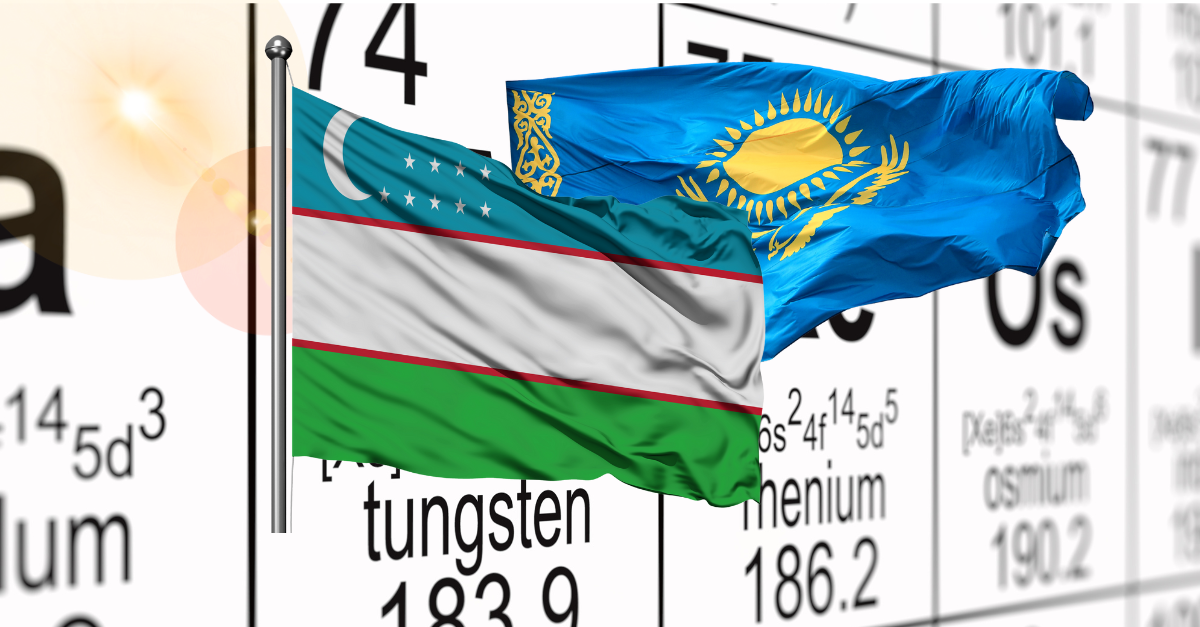
Uzbekistan is plotting a tighter grip on critical minerals by seeking to purchase tungsten concentrate from Kazakhstan, as Uzbekistan’s government-led Uzbek Metal Processing Plant (TMK) prepares to ramp up production. Metin Alemder, TMK’s technical adviser, told inbusiness.kz at the China Mining summit in Tianjin that TMK is in talks with Kazakh colleagues to secure tungsten concentrate, signaling a strategic push to source raw materials locally for its expanding operations.
Kazakhstan has been developing tungsten at the Boguty mine in the Almaty region near the Charyn Canyon. The project is led by Zhetyсу Wolfram LLC, in which Chinese-backed Jiaxin International Resources Investment Limited is a major shareholder. Boguty is regarded as one of the world’s larger tungsten deposits, with a mining licence valid through 2040. Early projections estimated an annual processing capacity of 3.3 million tonnes of ore to produce about 10,000 tonnes of 65% tungsten oxide concentrate, primarily destined for China. The site also contains molybdenum, bismuth, and beryllium, with plans to raise tungsten extraction to nearly 5 million tonnes of ore by 2027.
Other Kazakh tungsten prospects include Aksoran at the SCO-Akmola border, as well as Northern Katpar and Verkhnee Kairakty in Karaganda. Notably, the last two are set to be developed via a joint venture in which Cove Capital (70%) partners with state mining firm Tau-Ken Samruk (30%) in a project budget of about $1.1 billion, with production expected to start in roughly 3.5 years. Cove Capital also has interests in Uzbekistan.
Alemder notes that China already controls more than 80% of global tungsten production and leads fundamental research in this strategic metal, which Czech-like knowledge in Uzbekistan could help leverage. Tungsten is not a rare earth metal, but it remains a critical material due to its unique properties and supply concentration.
TMK currently relies largely on local tungsten concentrates, with Uzbekistan able to produce tungsten using both hydrometallurgical and pyrometallurgical methods. The company’s plant in Chirchik is expanding capabilities, and a new hydrometallurgical workshop in Samarkand is slated to begin in 2027, targeting 5,000 tonnes of tungsten oxide annually. By 2030, production is expected to reach 15,000 tonnes per year, requiring growing external ore supplies. In the interim, the plant utilises residual tailings from an older deposit.
In addition to tungsten, TMK is expanding molybdenum production from tailings from the Almalyk Mining and Metallurgical Complex and is developing tellurium and osmium. A sulfuric acid plant with a capacity of 500,000 tonnes annually is under construction, feeding consumables for the chemical sector, fertiliser production, and uranium mining via in-situ leaching, using sulfur supplied by Uzbekneftegaz and local gas-processing facilities.
A series of major announcements followed the recent US–Central Asia Summit in Washington, where American companies outlined plans to step up exploration and extraction of strategic minerals in Kazakhstan, Uzbekistan, and neighboring states. The push aligns with President Donald Trump’s call to secure critical materials for the United States amid efforts to reduce dependence on China, which currently dominates global supply chains.
One of the largest initiatives involves a $1.1 billion joint venture between Kazakhstan’s Kazgeologia and US-based Cove Capital to develop the North Katpar and Verkhnee Kairakty tungsten deposits—assets holding roughly 1.3 million tonnes of tungsten oxide. This comes after reports that China attempted to outbid the US for the same project, highlighting growing strategic competition between the two powers. While American companies seek access to tungsten for defense applications, Chinese firms such as Jiaxin International Resources continue expanding their own footprint in Kazakhstan, including at the Boguty deposit.
Uzbekistan also announced agreements with two US companies—Denali Exploration Group and ReElement Technologies—focused on rare earth elements. Earlier this year, Tashkent signed a separate memorandum with China National Gold Group, underscoring the region’s role as a battleground for critical mineral partnerships.
Experts say the surge in US interest poses minimal risk to Russia, whose investment focus in Central Asia remains tied to oil, gas, and uranium via Rosatom and Kazatomprom. Analysts argue that Central Asian states are leveraging geopolitical competition to secure better investment conditions, diversify partners, and strengthen their bargaining power with Russia and China.
At the same time, they caution that the new agreements carry risks for the region, particularly if they mirror the disadvantageous production-sharing contracts of the 1990s. Some deals involve large purchases of US-made goods, such as aircraft, rather than localised production, which could create long-term financial obligations.
Still, specialists note that Donald Trump’s approach remains pragmatic: securing critical minerals for US industries while opening new export markets. For Central Asia, the challenge will be to balance relationships across the US, China, Russia, and the EU, extracting maximum benefit while avoiding overdependence on any single power.
Mundoro has strengthened its long-running collaboration with BHP through a new option agreement covering seven exploration licences in Serbia’s Timok Magmatic Complex, one of the world’s premier copper districts. Announced on 13 October, the deal allows BHP to earn 100% ownership of the Central Timok Project over ten years by investing US$35 million in exploration.
Under the terms, Mundoro will retain a 2% NSR royalty upon full earn-in, while also receiving escalating annual option payments that start at US$323,000. The company will operate the project during the exploration phase and collect annual operator fees.
CEO Teo Dechev said the expanded partnership reflects the quality of Mundoro’s portfolio and builds on more than a decade of operational experience in the region. She emphasized that combining Mundoro’s local geological expertise with BHP’s global porphyry exploration capabilities will strengthen targeting strategies and improve the chances of making new copper discoveries in eastern Serbia.
Alongside ongoing work in Serbia and the United States, Mundoro continues to pursue new project-generation opportunities aimed at long-term value creation for shareholders.
East Star Resources Plc has entered into a binding earn-in and joint venture agreement with Endeavour Exploration, a subsidiary of global gold major Endeavour Mining, securing more than $25 million in staged investment for gold exploration across Kazakhstan.
Under the newly established JV structure, Endeavour can earn up to an 80% stake in a dedicated joint venture company through phased funding. The first stage requires a $5 million investment within two years to secure 51%, followed by a further $20 million over three years to reach 70%. Completion of a NI 43-101 compliant pre-feasibility study would grant Endeavour the final 10% interest.
East Star will retain a 20% stake upon full earn-in and will manage the joint venture during early operations, receiving compensation for its role. The agreement also includes milestone payments tied to maiden resource and PFS outcomes, to be verified by an independent qualified person.
CEO Alex Walker described the deal as a transformative step for the company, highlighting Endeavour’s strong discovery and project-development track record, including five mines built in the past decade.
A webcast for investors will be held on 18 November 2025 to discuss the agreement, with registration available through the Investor Meet Company platform.
A new mining and processing plant will be built at the Syrymbet deposit in Kazakhstan’s Ayyrtau district, where Tin One Mining — part of Solidcore Resources — plans to produce up to 11,000 tonnes of tin annually. The investment project, valued at $227 million, was announced by regional deputy governor Kanat Duzelbayev during the North Kazakhstan–China Investment Business Forum.
Tin One Mining intends to commission the plant in 2028, creating around 600 jobs. The Syrymbet deposit, discovered by Soviet geologists in 1985, contains a complex mix of metals including tin, tungsten, tantalum, niobium, molybdenum, beryllium, bismuth, copper, and fluorite. Early studies identified tin-rich weathering crusts that formed a new industrial category of tin-bearing ore for the region.
The site’s resources were estimated under JORC standards in 2018 at 206,000 tonnes of tin and over 70,000 tonnes of copper. Following exploration in 2025, tin reserves were upgraded to 286,000 tonnes, while copper reserves were revised downward to 55,000 tonnes. Solidcore Resources acquired a 55% stake in the project operator for $82.5 million at the end of 2024.
Savannah Resources’ latest update on its lithium mining plans in Boticas has triggered a wave of public backlash, with nearly 500 critical comments appearing under the report published by SIC Notícias. The response reflects rising public awareness and concern over large-scale extractive projects long opposed by environmental groups and local communities.
Despite holding 27% Portuguese share capital and enjoying backing from the European Commission, Savannah continues to face deep mistrust. Citizens reacting to the news accused authorities of “selling the country in pieces” and appealed to the media to help resist “economic interests” they see as threatening Portugal’s landscape and rural communities.
Critics also linked Savannah’s project to a broader trend of mega-developments — from lithium and copper mines to vast photovoltaic parks — that they fear will leave Portugal depleted of its natural assets. Activists from the movement opposing the massive Sophia Solar Park echoed the concerns, calling the situation a “calamity” and urging immediate resistance.
Savannah, however, remains optimistic. The company aims to begin construction at the Barroso mine by late 2026 and start production in 2028. It has also secured the Aldeia concession, where it plans to extract lithium, quartz and feldspar. CEO Emanuel Proença said studies show larger-than-expected lithium resources at Boticas, projecting long-term economic benefits and job creation through on-site processing.
Planned infrastructure includes a factory, internal roads, water reservoirs, a WWTP, offices and a laboratory — all scheduled to be built in parallel over an 18-month period. Savannah is currently awaiting government approval for a second administrative easement for geotechnical work, already facing strong local opposition.
While the company continues to detail its engineering, financing and regulatory preparation, public sentiment appears increasingly hostile. Local residents and environmental advocates remain unconvinced and continue to challenge the project at every stage.
The Rio Tinto Group has placed its contested $2.95-billion Jadar lithium project in Serbia into “care and maintenance”, according to an internal memo this week. The move, confirmed by a company spokesperson, effectively halts active development on what was slated to be Europe’s largest lithium mine, capable of supplying an estimated 90% of the continent’s current lithium demand.
Key Takeaways and Context
The decision is a direct consequence of a “lack of progress in permitting” and sustained fierce local opposition and political volatility in Serbia. CEO Simon Trott’s focus on simplifying the company’s sprawling portfolio and cutting spending also played a role, especially given the project’s high capital allocation with no immediate production in sight.
What does “Care and Maintenance” mean for Jadar?
“Care and maintenance” is a mining industry term for a temporary suspension of operations. It means that while the site is not actively being developed, it is being managed to ensure it remains in a safe, stable, and environmentally compliant condition so that operations could be recommenced at a later date if regulatory, economic, or social conditions improve.
Rio Tinto reiterated that it “remains in Serbia” and continues to view Jadar as an “exceptional quality” deposit with the potential to play a “significant role in the energy transition” of Serbia and Europe. Their immediate focus will be on supporting employees and fulfilling legal obligations as responsible landowners in the Jadar valley.
🇪🇺 Critical Hit to EU’s Raw Materials Strategy
The mothballing of Jadar is a significant setback for the European Union’s ambitions for self-sufficiency in key battery metals, as outlined in the Critical Raw Materials Act (CRMA).
Strategic Project Loss: Jadar was designated as one of the EU’s few Strategic Projects outside of its borders, specifically for lithium. At its estimated full capacity of 58,000 tonnes of lithium carbonate annually, it was considered a cornerstone for establishing a secure, diversified, and domestic European battery supply chain, reducing reliance on dominant suppliers like China.
A Warning on Governance: The project’s failure underscores a critical dilemma for the EU. As Peter Tom Jones highlights, attempts to increase self-sufficiency through projects in third countries must not lead to “uncritical support for autocratic regimes”. The sustained local opposition, environmental concerns, and political instability in Serbia—an EU candidate country—demonstrate that effective governance and a democratization process are as critical as the resource itself.
Alternative Lithium Projects: The focus will now intensify on accelerating other European lithium projects, such as those in Portugal, France, and Finland, to meet the CRMA’s targets.
This situation calls for the EU to demand robust ecological and social standards—potentially through collaboration with third-party verification bodies like the Initiative for Responsible Mining Assurance (IRMA)—to rebuild confidence in such projects in the Western Balkans and beyond.
The shifting sands of Kazakhstan’s mining sector were the focus of a recent British-Kazakh Society (BKS) webinar, bringing together legal experts, industry professionals, and policymakers to dissect the impacts of evolving government regulations. Held on 13 November 2025, the discussion revealed a concerning trend of increasing investor uncertainty, despite the country’s rich geological potential.
Land Barriers Continue to Hamper Investment
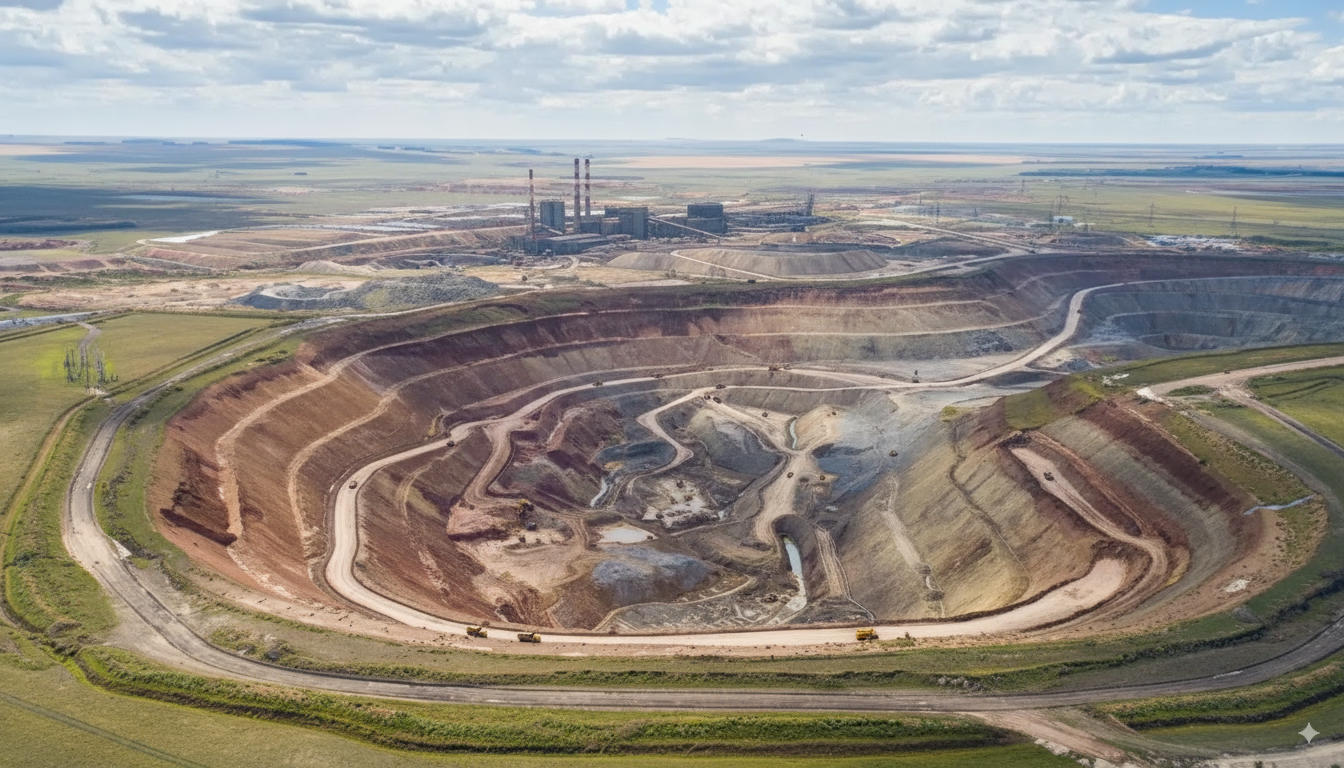
Kazakhstan’s crucial mining sector is undergoing significant changes, grappling with persistent land access issues and the introduction of new tax policies. A presentation by Almat Daumov, Partner at GRATA International in Almaty, shed light on these challenges and proposed solutions, highlighting both potential hurdles and opportunities for investors.
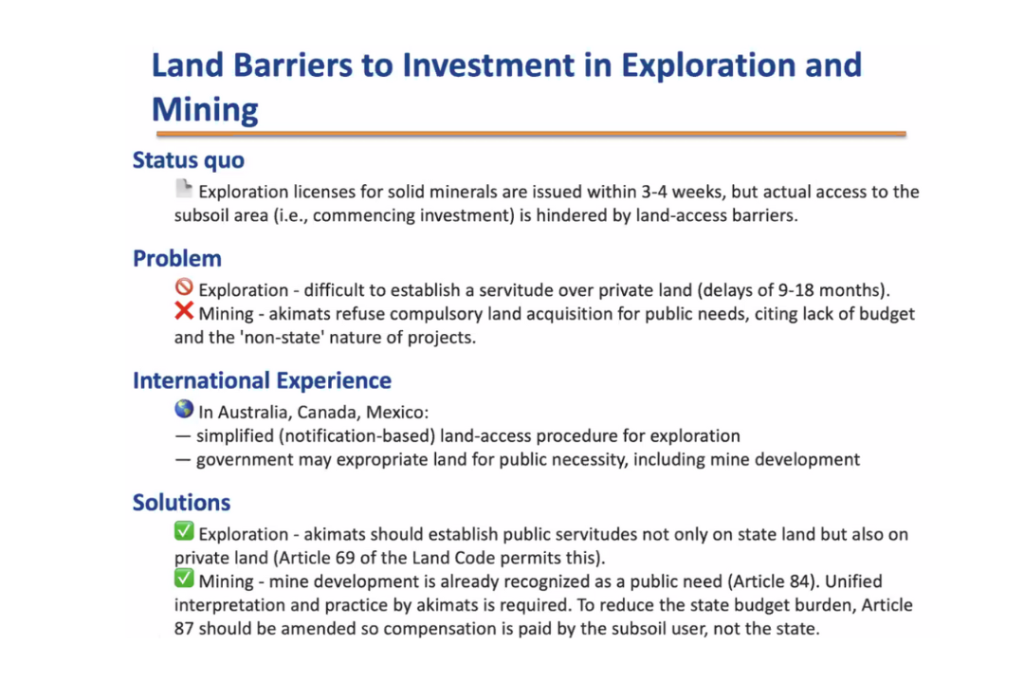
Despite seemingly swift issuance of exploration licenses for solid minerals (within 3-4 weeks), actual investment is frequently stalled by complex land-access barriers. Daumov emphasised that establishing servitude over private land for exploration can cause delays of 9-18 months. Even more critical, “akimats” (local executive bodies) are reportedly refusing compulsory land acquisition for mining projects deemed “non-state” in nature, citing budget limitations.
Drawing on international experience, Daumov pointed to successful models in Australia, Canada, and Mexico, where simplified (notification-based) land-access procedures for exploration and government expropriation of land for public necessity (including mine development) are common.
Proposed Solutions for Land Access:
To address these issues, Daumov proposed key solutions:
Exploration: Akimats should establish public servitudes on both state and private land, as permitted by Article 69 of the Land Code.
Mining: Mine development should be consistently recognised as a public need (Article 84). He stressed the need for unified interpretation and practice by akimats. Furthermore, to alleviate the state budget burden, Article 87 should be amended to ensure compensation is paid directly to the subsoil user, not the state.
New Tax Policies Introduce Volatility and Opportunity
Beyond land access, Kazakhstan’s mining sector is also navigating significant tax policy changes.
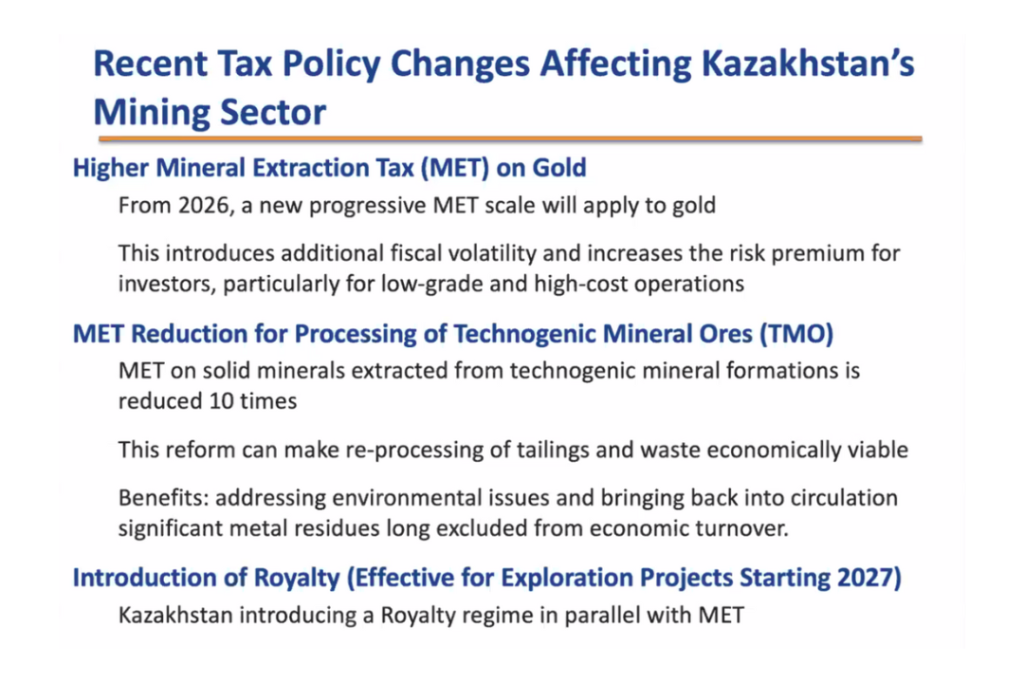
Higher Mineral Extraction Tax (MET) on Gold:
Starting in 2026, a new progressive MET scale will apply to gold. This change is expected to introduce additional fiscal volatility and increase the risk premium for investors, particularly those involved in low-grade and high-cost operations.
MET Reduction for Technogenic Mineral Ores (TMO):
In a more positive development, the MET on solid minerals extracted from technogenic mineral formations will be reduced tenfold. This reform aims to make the re-processing of tailings and waste economically viable. The benefits are twofold: addressing environmental issues and bringing significant metal residues, long excluded from economic turnover, back into circulation.
Introduction of Royalty Regime:
Effective for exploration projects starting in 2027, Kazakhstan will introduce a Royalty regime in parallel with the MET. Current proposed royalty rates are 7% for metals and alloys, 10% for concentrates, and 13% for ores, raising concerns among industry stakeholders.
Daumov’s analysis underscores a critical period for Kazakhstan’s mining sector. While the government aims to streamline processes and introduce new revenue streams, the effectiveness of these reforms will largely depend on clear implementation and a willingness to address investor concerns regarding both land access and fiscal predictability.
Kazakhstan on the Investment Attractiveness Index
Daniel A. Witt, President of the International Tax and Investment Center (ITIC), painted a picture of mixed signals for potential investors. While Kazakhstan has achieved its goal of being a top 50 most competitive country globally (ranking 34th in the 2025 IMD World Competitiveness Report), the micro-picture in the mining sector is less favourable.
Witt cited the Fraser Institute Annual Survey of Mining Companies (2024), noting a significant drop in the country’s Policy Perception Index (PPI) score—the metric heavily influenced by government control over tax, legal, and regulatory parameters.
“Kazakhstan came in 59 [on the Investment Attractiveness Index]. They fell… 59 is just barely passing,” stated Witt, stressing that the key challenge remains building a stable, predictable, and transparent fiscal and regulatory regime to attract large-scale international mining projects, similar to the success seen in the oil and gas sector. Specific concerns raised included the complexity of the tax system, difficulties obtaining VAT refunds, and the need for mechanisms to share risk between the state and investors.
Policy Trends and Regulatory Erosion
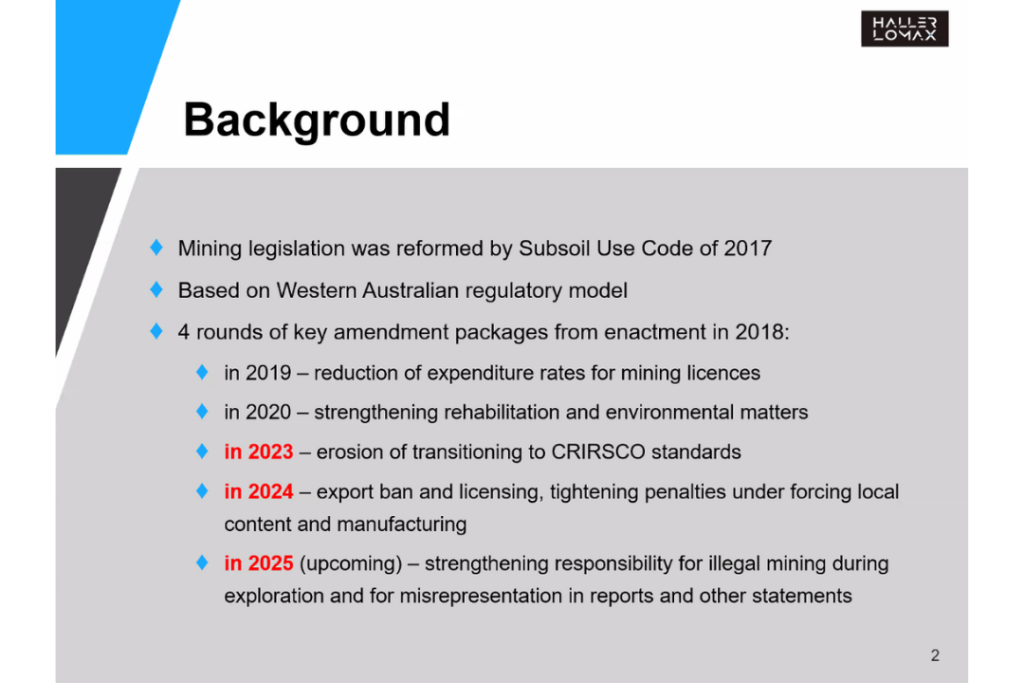
Timur Odilov, Founding Partner at Haller Lomax highlighted a worrying erosion of reforms designed to align Kazakhstan with international standards.
Odilov noted that following the adoption of the Western Australian-based Mining Code in 2017, subsequent years have seen the re-emergence of stricter rules and instability, particularly since 2023. Key changes discussed included:
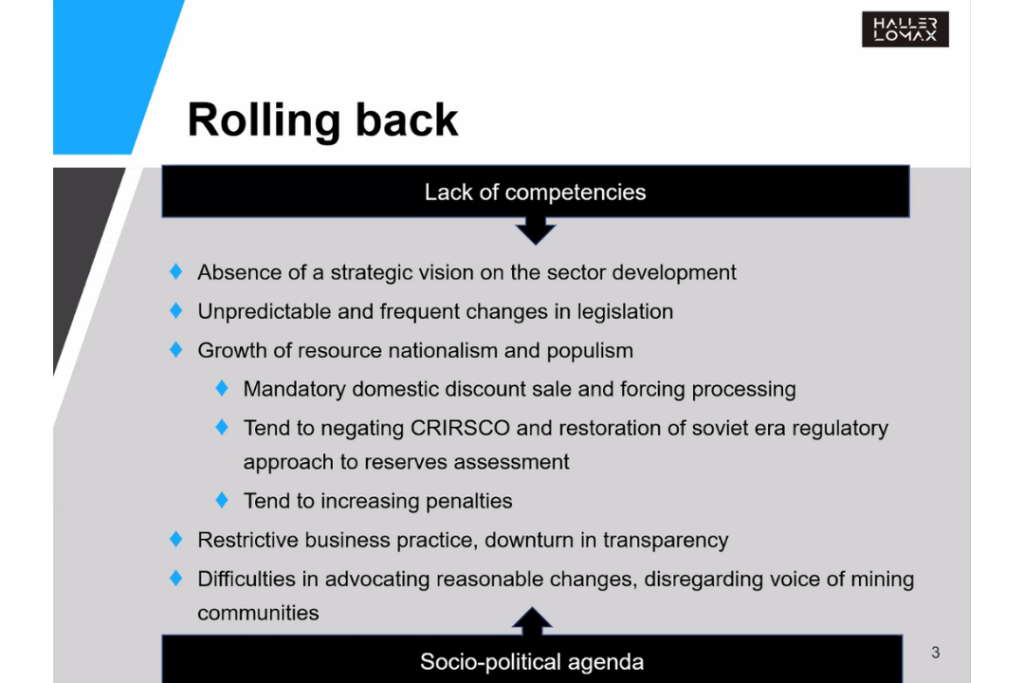
Erosion of CRISCO Standards: Discussions in parliament have begun challenging the transition to international reporting standards, favouring a return to Soviet-era standards.
Resource Nationalism: Increasing pressure for mandatory domestic discount sales and forced processing, even for materials that cannot be domestically processed (such as certain rare earths).
Uncertainty and Lack of Strategy: The policy shifts are driven by a mix of socio-political agendas and a perceived lack of “institutional memory” or a holistic strategic vision for the sector’s long-term development.
Olga Petrova, Rio Tinto Exploration Kazakhstan Country Manager, affirmed this trend, stating that while the government continues to express interest in attracting investment, the actions—such as increasing land access costs for explorers—are “a little different,” appearing as a short-term win that ignores long-term losses.
Investment Opportunities and Future Outlook
Despite the challenges, the webinar underscored the vast potential of Kazakhstan’s mining sector. With abundant geology and a strategic location, Kazakhstan is well-positioned to become a global leader in critical minerals. However, to attract investment, the government must address policy risks, ensure property rights, and create a stable regulatory environment.
Rio Tinto will suspend development of its long-delayed Jadar lithium project in Serbia, effectively mothballing what was once slated to become Europe’s largest lithium mine. The decision, first reported by Bloomberg and later confirmed by a company spokesperson, places the nearly $3-billion project into “care and maintenance” as the miner seeks to reduce spending and refocus its lithium strategy.
The move ends Rio’s two-decade effort to unlock the massive Jadar deposit, discovered in 2004 and estimated to produce 58,000 tonnes of battery-grade lithium carbonate annually. Despite the project’s strategic importance for Europe’s battery supply chain, Jadar has repeatedly stalled amid regulatory hurdles, political uncertainty and strong community opposition. Serbia revoked Rio’s licence in 2022 over environmental concerns and only reinstated it last year, but permitting made little progress.
In the internal memo cited by Bloomberg, Rio said it could no longer justify the level of investment given the limited advancement of the project. Earlier this year, the company raised Jadar’s cost estimate to nearly $3 billion, citing the need to meet stringent EU environmental and human rights standards.
The suspension is part of broader cost-cutting measures under new CEO Simon Trott, who has introduced restructuring efforts and workforce reductions across the company. With Jadar shelved, Rio is expected to concentrate its lithium ambitions on South America, including Argentina’s Rincon project and joint ventures in Chile.
Analysts say the decision underscores Rio’s pivot away from hard-rock assets inherited through its merger with Arcadium, and some expect those projects could be sold. The halt also deals a blow to EU plans to secure domestic lithium supply, as Jadar was projected to cover nearly 90% of Europe’s current demand.
Chemicals group Solvay has secured two new supply agreements with US magnet manufacturers as it accelerates efforts to scale up rare earth processing at its La Rochelle plant in France. The company, one of the few outside China capable of performing complex rare earth separation, began limited processing in April and has been seeking commercial commitments from industry and government partners to expand production.
Solvay will supply neodymium, praseodymium, dysprosium and terbium (NdPr and DyTb) to Texas-based Noveon Magnetics under the first agreement. These elements are essential for neodymium-iron-boron (NdFeB) permanent magnets used in electric vehicles, defence systems, consumer electronics, and wind turbines. Noveon began commercial production of sintered NdFeB magnets in 2023.
A second agreement with Permag covers the supply of samarium oxide, which will be converted into samarium metal by UK-based Less Common Metals. Samarium-based magnets can withstand extremely high temperatures and are widely used in defence and nuclear applications.
Solvay CEO Philippe Kehren said the initial deliveries involve limited volumes but noted that the La Rochelle facility could rapidly increase output. Production of NdPr and samarium oxide will begin shortly, while DyTb output is expected to start in 2026.
Kehren also indicated that Solvay is exploring the possibility of building a rare earths processing plant in the United States, where financial support for strategic materials is stronger than in Europe. Company executives said US customers are already willing to sign long-term contracts, while European buyers are still moving more slowly despite recognizing the need for supply chain independence.



 Kazakhstan’s crucial mining sector is undergoing significant changes, grappling with persistent land access issues and the introduction of new tax policies. A presentation by