Website: Eurasia.com

  • EIT RawMaterials Invests in Greenland Resources to Boost Europe’s Magnesium Supply and Reduce Dependence on China

    EIT RawMaterials Invests in Greenland Resources to Boost Europe’s Magnesium Supply and Reduce Dependence on China

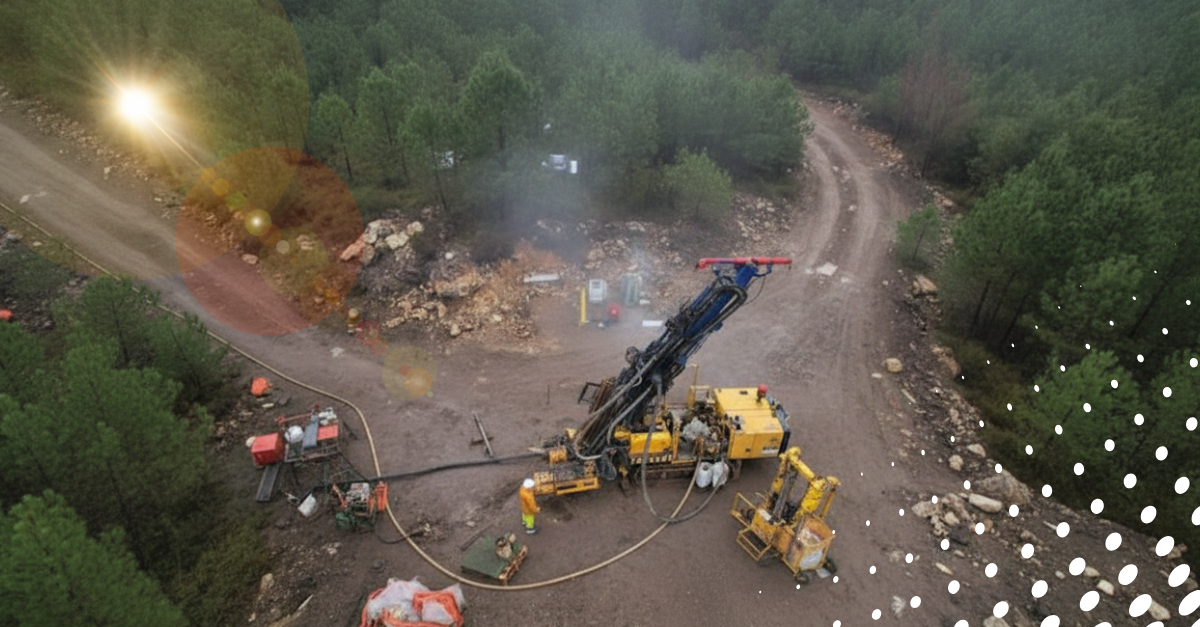
    EIT RawMaterials GmbH has announced a €0.5 million equity investment in Greenland Resources A/S, a wholly owned subsidiary of Greenland Resources Inc. and developer of the Malmbjerg molybdenum project in central-east Greenland. The initiative aims to accelerate the recovery of magnesium—currently being evaluated as a potential by-product—from both process water and primary ore, strengthening Europe’s resource security amid growing concerns over supply concentration.

    China currently supplies around 95%–97% of Europe’s magnesium imports, posing a major vulnerability for industrial sectors reliant on the metal. Magnesium is a critical alloying element in aluminum production and plays an essential role in lightweight mobility, defence applications, and modern manufacturing.

    Supported by the EU-backed European Institute of Innovation and Technology (EIT), EIT RawMaterials has collaborated with Greenland Resources from the outset to develop sustainable European molybdenum production. The new financing, provided under the Horizon Europe framework, will enable testing and scaling of low-emission technologies to extract magnesium from saline process water generated during molybdenum operations. Additional investment from existing Greenland Resources shareholders will focus on recovering magnesium directly from primary ore.

    Bernd Schäfer, CEO and Managing Director of EIT RawMaterials, emphasized the strategic importance of the effort. “Magnesium is mission-critical for Europe’s competitiveness — from lightweight mobility to defence — and yet the EU depends on China for nearly all its supply,” he said. He noted that the initiative addresses risks to key industries such as aluminum manufacturing, where magnesium is indispensable, and aligns with EU efforts to expand access to critical raw materials while reducing carbon intensity.

    The investment supports the objectives of the EU’s Critical Raw Materials Act (CRMA), which targets diversification and increased security of critical material supplies by 2030. Magnesium is officially classified as both a critical and strategic raw material, making projects that expand domestic or allied production a clear priority for the EU.

    By advancing technologies to recover magnesium from both process water and ore, the project aims to add new, lower-carbon supply streams to Europe’s raw materials portfolio. It complements the EU’s broader CRMA Strategic Projects and fits within EIT RawMaterials’ mission to mobilize investment and innovation across the raw materials value chain.

    Greenland Resources secured a 30-year exploitation licence for molybdenum and magnesium in June 2025, creating a robust permitting framework for the development pathway that this investment supports.

  • EU Plans Centralized Critical Minerals Purchasing Body to Counter U.S. Global Stockpiling

    EU Plans Centralized Critical Minerals Purchasing Body to Counter U.S. Global Stockpiling

    The European Union is preparing to establish a central authority to co-ordinate the purchasing and stockpiling of critical minerals in an effort to prevent the United States from securing global supplies ahead of the bloc, according to Stéphane Séjourné, the EU’s executive vice-president for industrial strategy.

    Séjourné told the Financial Times that Europe has become “collateral damage” in the intensifying U.S.–China rivalry over access to rare earth minerals, which are essential for defense systems, renewable energy technologies, and advanced electronics.

    Tensions escalated after China imposed export controls on 17 rare earth metals in April, a reaction to U.S. restrictions on advanced technology sales to Chinese companies. The Chinese measures forced several EU manufacturers to halt production lines and lay off workers due to shortages of critical inputs. Although Beijing agreed last month to delay broader export curbs for a year following a temporary easing of tariff disputes with Washington, the EU remains exposed.

    In response, the European Commission accelerated efforts to diversify and secure supplies of critical raw materials—including rare earths, lithium, and copper—beyond China. Beijing currently dominates the market, accounting for 88% of global rare earth refining, more than 75% of refined germanium and gallium, and roughly 70% of processed lithium, according to EU data.

    Séjourné said Brussels intends to create a critical minerals “center” equipped with dedicated funding to conduct purchases, coordinate procurement across member states, build strategic reserves, and encourage EU companies to factor economic security into their supply chains. He acknowledged that Europe is “late” to adopt such mechanisms compared with the U.S., which has invested heavily in domestic mining and struck numerous supply agreements with foreign governments.

    “The Americans have a business department that buys stocks of critical materials before us everywhere in the world. They often buy them from under our noses,” Séjourné said.

    The proposal—still subject to approval by all 27 commissioners—also calls for rapidly signing supply partnerships with countries such as Brazil and South Africa. Séjourné is scheduled to visit both nations in the coming weeks to advance negotiations.

    He further suggested that the EU could consider price floors to guarantee access to domestic reserves, noting that European miners and processors hesitate to invest because cheaper Chinese products can undermine the market at any time. Many companies maintain only a few weeks’ worth of inventory, leaving them vulnerable to supply shocks.

    The Commission is expected to issue recommendations to prioritize stockpiling and diversify supply routes, with possible legislation to follow if industry practices do not shift.

    Industry voices say urgency is critical. Victor van Hoorn, director at Cleantech for Europe, warned that the recent Chinese export controls were a “wake-up call,” urging the EU to map its vulnerabilities and aggressively de-risk its supply chain.

    While the EU set domestic production goals for critical minerals in 2023, new projects face delays due to lengthy permitting processes and environmental resistance.

    Séjourné also backed the Dutch government’s decision to seize chipmaker Nexperia from its Chinese owner, calling it an action taken “in the European interest,” despite Beijing’s anger and subsequent disruptions to EU chip supplies.

    Looking ahead, the EU’s plan will also support research into technologies that require fewer or no rare earths. “The best way to become independent is not to have to use the raw material,” Séjourné said.

  • Rare-Earth Metals Move to the Center of Global Tech Competition as Kazakhstan Emerges as a Major Future Player

    Rare-Earth Metals Move to the Center of Global Tech Competition as Kazakhstan Emerges as a Major Future Player

    Rare-earth metals, long overshadowed by more familiar raw materials, have become the backbone of the global technological race, according to BAQ.KZ citing Energyprom. These 17 elements, found in nature in dispersed form, are essential to modern economic resilience. They are critical for manufacturing microchips, lasers, batteries, electric vehicle magnets, and key components of military electronics.

    Surging demand—driven by the rapid expansion of electric mobility, the growth of renewable energy, and increasing defense budgets—has turned rare-earth elements into one of the world’s most strained and politically sensitive commodity markets. Supply growth continues to lag behind demand, intensifying geopolitical tensions especially given that China controls over 70% of global mining and nearly 90% of processing.

    Over the past two decades, the industry has undergone several drastic shifts, ranging from declining output in the early 2010s to a strong production boom between 2018 and 2023. Global output rose from 101.5 thousand tonnes in 2004 to 379.9 thousand tonnes in 2024—nearly a fourfold increase. China remains the dominant producer with 270 thousand tonnes annually, followed by the United States with 45 thousand tonnes, Australia and Thailand with 13 thousand tonnes each, and Russia with just 2.5 thousand tonnes.

    Beijing continues to leverage its vast production capacity and near-total processing dominance as both an economic and geopolitical tool. In recent months, China has expanded export controls on multiple rare-earth elements. The U.S. has accused China of market manipulation and exerting “economic pressure.” While a recent meeting between leaders of the two nations helped temporarily reduce tensions—China agreed to delay some restrictions and the U.S. softened select tariffs—the underlying rivalry persists.

    China’s share of global production has fluctuated sharply. It dropped from 85.7% in 2014 to 57.3% by 2020, before rebounding to 71.1% in 2024. Despite global efforts to diversify, China remains the central pillar of the supply chain.

    Global rare-earth reserves are estimated at 90–91 million tonnes. China holds roughly half—44 million tonnes—followed by Brazil (21 million), India (6.9 million), Australia (5.7 million), and Russia (3.8 million). In comparison, the U.S., Madagascar, and Thailand possess only minor reserves.

    A new major player, however, is rapidly emerging. Kazakhstan, according to the State Committee on Geology, holds an estimated 28.2 million tonnes of rare-earth reserves, placing it second in the world behind only China. Experts emphasize that true competitiveness depends not just on resources but on processing capacity. While Brazil has vast reserves, it produces only about 20 tonnes per year due to limited processing capabilities. China, in contrast, combines large reserves with unmatched technological strength.

    Recognizing the sector’s strategic importance, Kazakhstan’s President Kassym-Jomart Tokayev has ordered the launch of at least three rare-earth processing and deep-refining enterprises within the next three years. At the same time, Kazakhstan is actively expanding international partnerships, including signing a Memorandum of Understanding with the United States on critical minerals. This move may play a key role in diversifying global supply chains and strengthening Kazakhstan’s position in the emerging resource architecture of the future.

  • Tau-Ken Samruk Begins Exploration of Rare and Rare-Earth Metals in Rwanda and Afghanistan

    Tau-Ken Samruk Begins Exploration of Rare and Rare-Earth Metals in Rwanda and Afghanistan

    Kazakhstan’s state-owned mining company Tau-Ken Samruk has launched geological exploration efforts for rare and rare-earth metals in Rwanda and Afghanistan, according to Nurlan Zhakupov, Chairman of the Board of Samruk-Kazyna. The initiatives are viewed as strategically important for strengthening Kazakhstan’s resource security and expanding its processing capabilities.

    In Rwanda, the national company has already signed a cooperation agreement that will pave the way for establishing a joint venture with the country’s state enterprise. Once the joint company is formed, exploration activities will begin, eventually leading to the extraction of strategic minerals.

    Work in Afghanistan remains at an early evaluation stage. Specialists collected and analyzed geological samples in July and reported promising results. However, joint mining is not yet under consideration, as licensing and resource assessment procedures still need to be resolved.

    Zhakupov noted that these international exploration projects will help Kazakhstan develop deeper processing of raw materials sourced from third countries. The government has declared its intention to process rare and rare-earth metals domestically, and the Ministry of Industry and Construction has prepared a development program for the sector covering 2024–2028.

    Tau-Ken Samruk continues to focus on gold, copper, and lead-zinc deposits while also identifying strong potential in the extraction of strategic resources, including rare and rare-earth elements.

  • EU Moves Toward Restricting Aluminum Scrap Exports Amid Supply and Decarbonization Concerns

    EU Moves Toward Restricting Aluminum Scrap Exports Amid Supply and Decarbonization Concerns

    BRUSSELS — The European Commission is preparing new measures to curb exports of aluminum scrap from the European Union in an effort to prevent domestic shortages of a key material needed for industrial decarbonization, EU Trade Commissioner Maros Sefcovic announced on Tuesday.

    EU aluminum scrap exports reached a record 1.26 million metric tons in 2024, according to data from industry group European Aluminium—a nearly 50% increase over five years, with most shipments destined for Asian markets. European producers warn that rising exports risk depriving the bloc’s industry of essential recycled material at a time when aluminum recycling plays a critical role in reducing emissions.

    The situation has been exacerbated by U.S. trade policy. Under former President Donald Trump, the United States imposed a 50% tariff on aluminum imports but only a 15% tariff on aluminum scrap. This disparity boosted U.S. scrap imports and reduced its own exports, prompting Asian buyers to turn increasingly to European supply.

    The European Commission began monitoring scrap outflows in July and is now advancing “preparatory work” on a new export measure to address what Sefcovic described as “aluminum scrap leakage.” The proposal is expected to be finalized in spring 2026 and will aim to balance the interests of producers, recyclers, and downstream sectors.

    Recycled aluminum is central to Europe’s climate goals, requiring 95% less energy to produce compared with aluminum smelted from raw bauxite ore. However, recycling industry association EuRIC argues that export restrictions would not address the root cause of rising shipments, saying they stem from low domestic demand and limited EU capacity to process mixed scrap, including material from shredded vehicles.

  • Euro Sun Mining Advances Romanian Copper-Gold Project with Key Regulatory Wins and Strong Updated Feasibility Results

    Euro Sun Mining Advances Romanian Copper-Gold Project with Key Regulatory Wins and Strong Updated Feasibility Results

    TORONTO — Euro Sun Mining Inc. (TSX: ESM) announced a major regulatory breakthrough in Romania as the government has adopted an Emergency Ordinance establishing a national Single Point of Contact to implement the European Union’s Critical Raw Materials Act (CRMA). This new framework is designed to accelerate permitting and streamline processes for strategic projects, directly benefiting Euro Sun’s flagship Rovina Valley Copper-Gold Project.

    The company also released results from its optimized and updated definitive feasibility study (DFS) for the Colnic and Rovina open pits, marking the first phase of development for the project. According to the updated economic model, the project’s pre-tax net present value (NPV) has surged 173% to US$1.776 billion, with a pre-tax internal rate of return (IRR) of 39.7%, based on copper priced at US$4.50/lb and gold at US$3,300/oz.

    Euro Sun estimates the first-stage development will produce 403 million pounds of copper and 1.472 million ounces of gold at an all-in sustaining cost (AISC) of US$1,206 per gold-equivalent ounce. The project incorporates a cyanide-free process and dry stack tailings, aligning with responsible mining practices. Initial capital expenditure (CAPEX) is estimated at US$607.1 million.

    CEO Grant Sboros called the regulatory milestone and DFS results “significant,” adding that the company’s environmental impact assessment technical report has also been completed. Sboros emphasized that the strengthened project economics reaffirm Rovina Valley’s importance as a future European source of critical metals.

    Euro Sun further announced it has fully repaid a US$350,000 secured debenture owed to a company affiliated with one of its directors, releasing all associated security interests.

    In a strategic move, the company has appointed Cantor Fitzgerald Canada Corp. as its exclusive financial advisor to explore potential mergers, acquisitions, or asset-level transactions that could unlock additional value.

    The environmental impact assessment is now ready for submission, and Euro Sun plans to work closely with Romanian authorities to advance the project toward construction. The updated DFS reflects current cost data and revalidated economic assumptions, and it maintains a phased development approach. While the initial phase focuses on the Colnic and Rovina open pits, the underground Ciresata deposit may be integrated later pending future studies.

    Located in Romania’s historic Golden Quadrilateral Mining District, the Rovina Valley Project has access to established infrastructure, skilled local labor, and proximity to major transportation hubs. Over its 17-year open-pit operation, the project is expected to mine 140 million tonnes of ore, delivering 123.3 million tonnes for processing and stockpiling lower-grade material where feasible. Total material movement over the mine life is projected at 219 million tonnes, with a stripping ratio of 1.78:1.

  • Germany Moves to Secure Bolivian Lithium as Serbia’s Jadar Project Stalls

    Germany Moves to Secure Bolivian Lithium as Serbia’s Jadar Project Stalls

    Germany is accelerating efforts to secure long-term lithium supplies from Bolivia while exploring domestic mining options, even as Rio Tinto’s Jadar project in Serbia remains effectively dormant. Ahead of his visit to La Paz, Germany’s Foreign Minister Johann Wadephul emphasized Bolivia’s strategic importance, calling its vast lithium and rare earth reserves “indispensable” for Germany’s energy transition and electric mobility sectors.

    Wadephul is one of the first foreign officials to engage with Bolivia’s newly elected president Rodrigo Paz Pereira, stressing Germany’s readiness to strengthen cooperation and support the country’s economic recovery. Bolivia holds the world’s largest lithium reserves, but previous governments strictly limited foreign participation in mining projects.

    Germany’s intensified outreach comes as competition for lithium and rare earths escalates globally amid China’s market dominance and ongoing US–China trade tensions. Berlin has also indicated it may tap its national raw materials fund to support domestic lithium extraction projects, including those based on geothermal brines.

    Meanwhile, Rio Tinto’s Jadar project in Serbia—once seen as a cornerstone of Europe’s lithium supply strategy—has made little progress despite receiving strategic backing from the EU and Germany in 2024. Political instability in Serbia has slowed development, with officials now estimating that the environmental impact assessment will take at least 18 months to complete. Final approval remains uncertain, leaving Europe’s long-term battery supply ambitions in limbo.

  • Uzbekistan Opens First National Center for Critical Minerals Research

    Uzbekistan Opens First National Center for Critical Minerals Research

    Uzbekistan has launched a new scientific center dedicated to critical minerals, established on the initiative of the Technological Metals Combine (TMK) and located inside the National Library. According to the company, this is the country’s first innovation hub designed to connect science with industrial development and serve as a national analytical platform for critical raw materials.

    The center will operate as an open-access facility for researchers, students, and industry specialists. TMK plans to implement more than 50 projects related to strategic minerals between 2025 and 2027, including 13 new production facilities.

    The Ministry of Mining and Geology reports that Uzbekistan holds deposits containing 28 types of critical minerals, including copper, lithium, graphite, germanium, tungsten, vanadium, tantalum, niobium, and rare-earth elements.

    By 2028, the country aims to complete 70 projects focused on developing strategically important mineral resources, with a total investment portfolio exceeding $1.6 billion.

  • Illegal Gold Mining Operation Uncovered in East Kazakhstan, Damage Estimated at 400 Million Tenge

    Illegal Gold Mining Operation Uncovered in East Kazakhstan, Damage Estimated at 400 Million Tenge

    Authorities in East Kazakhstan have uncovered two cases of illegal gold mining, including a major operation in the Shybынды River valley in Ulan district, where offenders extracted gold without a license for two years. According to Timur Mukanov, deputy head of the regional Department of Economic Investigations, the group altered the riverbed and caused significant environmental damage, with total losses estimated at 400 million tenge.

    During the investigation, officials confiscated 6.7 kilograms of gold, specialized equipment, machinery, and $56,000 in cash. The organizers of the illegal mining scheme have been detained, and the criminal case is being prepared for court.

    The department emphasized the importance of strict oversight to prevent unlawful extraction of precious metals. Regional environmental authorities noted that earlier violations in the mining sector had resulted in 9.7 million tenge in fines for companies and individuals in East Kazakhstan.

  • Kazakhstan and Uzbekistan Strengthen Cooperation with New Agreements on Geology, Rare Metals and Energy Projects

    Kazakhstan and Uzbekistan Strengthen Cooperation with New Agreements on Geology, Rare Metals and Energy Projects

    Kazakhstan’s President Kassym-Jomart Tokayev and Uzbekistan’s President Shavkat Mirziyoyev met on November 15 at the Kuksaroy residence near Tashkent, where the two leaders advanced bilateral cooperation across key industrial sectors. According to lsm.kz, the talks focused on joint initiatives in the oil and gas industry, as well as mining and metallurgy.

    Among the signed documents was a decision by the Higher Interstate Council to establish a bilateral working group on geology and the extraction of rare and rare earth metals. The presidents also endorsed a Memorandum of Understanding between Kazakhstan’s Ministry of Industry and Construction and Uzbekistan’s Ministry of Mining and Geology to expand collaboration in the sector.

    The countries additionally approved a framework agreement to launch joint projects in the oil and gas chemical industry. One of the major initiatives under consideration is a partnership between KazMunayGas and Uzbekneftegaz to build a new linear alkylbenzene production complex in Uzbekistan’s Kashkadarya region, with a planned output capacity of up to 50,000 tonnes per year. A final investment decision will be made after completion of the project design phase.