Website: Eurasia.com

  • Almalyk MMC expands copper processing capacity at Concentrator No. 2

    Almalyk MMC expands copper processing capacity at Concentrator No. 2

    Almalyk Mining and Metallurgical Complex (AGMK) is constructing new beneficiation facilities at its Copper Concentrator No. 2 to increase ore processing capacity. The new complex will cover an area of 3.1 hectares and is designed to process up to 5 million tonnes of ore per year from the Yoshlik I deposit, producing 74,200 tonnes of copper concentrate, the company’s press service said.

    Construction is being carried out by the Olmalikmetallurgkurilish trust, which is part of AGMK. The project is currently at the earthworks stage, while the design documentation for the new production unit was prepared by the complex’s internal project management division.

    The facility will be equipped with modern crushing, grinding, flotation, filtration and thickening units, as well as compressor stations. Key equipment will be manufactured at AGMK’s central repair and mechanical plant, with installation handled by its specialised maintenance unit.

    Around 600 jobs will be created at the new complex. Once commissioned, AGMK’s total ore processing capacity is expected to reach nearly 10 million tonnes per year.

  • Czech Republic to close its last black coal mine, ending more than 250 years of deep mining

    Czech Republic to close its last black coal mine, ending more than 250 years of deep mining

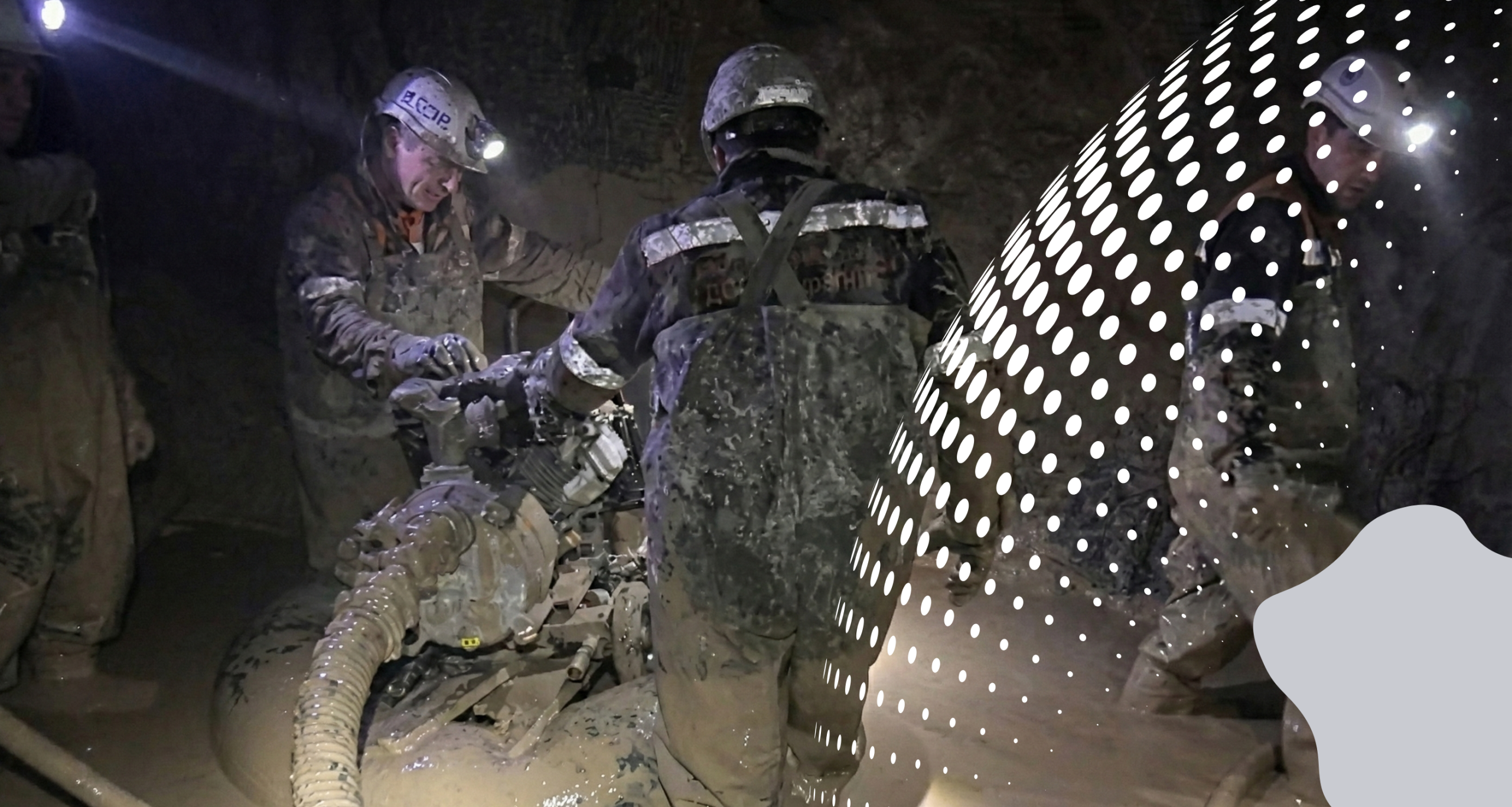
    The Czech Republic will shut its final black coal shaft at the end of January, marking the end of more than 250 years of deep coal mining that once underpinned the rise of heavy industry in Central Europe. The last coal is now being extracted from kilometre-deep shafts at the CSM mine in Stonava near the Polish border, as low global coal prices and Europe’s industrial and environmental transition erode demand.

    State-owned miner OKD had planned to close the operation three years earlier, but Russia’s full-scale invasion of Ukraine in 2022 temporarily boosted energy markets and extended the mine’s life. According to OKD director Roman Sikora, increasing mining depth has driven costs higher, making the operation uncompetitive amid weak prices.

    Coal mining in the Ostrava region began in the late 18th century, transforming the area into an industrial hub supported by railways, steelworks and large-scale infrastructure. Employment peaked in the 1980s with more than 100,000 miners and annual output of up to 25 million tonnes. Following the collapse of communist-era heavy industry after 1989, mines closed gradually and employment fell sharply. By October last year, OKD’s output had dropped to 1.1 million tonnes, with its workforce reduced to 2,300 and a further 1,550 jobs set to be cut.

    The region has since diversified its economy, supported by retraining programmes, foreign investment and EU funding. It is set to receive 19 billion Czech crowns from the EU’s Just Transition Fund to support post-coal redevelopment. OKD plans to remain active above ground through coal trading and new projects, including a battery park, data centre and a small methane-powered plant using gas from former shafts.

  • Kazakhstan launches large-scale programme to refine geological mapping and resource forecasts

    Kazakhstan launches large-scale programme to refine geological mapping and resource forecasts

    Kazakhstan will roll out a three-year programme of advanced subsurface studies aimed at improving the accuracy of geological forecasting, according to the Ministry of Industry and Construction. A central element of the initiative is the transition to geological mapping at a scale of 1:50,000, which is four times more detailed than the Soviet-era standard of 1:200,000.

    In 2025, authorities approved 20 projects covering a total area of 100,000 square kilometres. During the next stage, around 30,000 square kilometres of the most prospective territories are expected to be studied annually. Funding of 240 billion tenge, or about $500 million, has been allocated for geological exploration of 20 sites, seismic surveys in poorly studied sedimentary basins, and the creation of a digital geological data infrastructure. This represents the largest level of investment in the sector in the past 15 years.

    The programme includes analysis of satellite imagery, aerogeophysical and geochemical surveys, as well as extensive fieldwork. Areas were selected based on declining reserves, the absence of active subsoil users, and strong potential for key minerals. Priority targets include zones prospective for copper, gold, lead, zinc, rare earth metals, barite and bauxite.

    Special focus will be placed on oil and gas potential. Seismic surveys are planned in the North Torgai, Shu-Sarysu and Syrdarya basins, alongside upgrades to laboratory facilities and the digitisation of geological data.

    According to Ulzhabay Ismailov, генеральный директор GeoByte-Info, mapping at a 1:50,000 scale makes it possible not only to chart territories in detail but also to reconstruct geological history, identify ore distribution patterns and better assess exploration prospects. Refining forecast resources in the R3 and R2 categories will help more precisely select targets for subsequent exploration, he said.

  • Critical Metals shares jump on Tanbreez upgrades and renewed US focus on Greenland

    Critical Metals shares jump on Tanbreez upgrades and renewed US focus on Greenland

    Shares of Critical Metals surged to their highest level in nearly three months after the company announced further upgrades to its flagship Tanbreez rare earth project in southern Greenland, amid renewed geopolitical attention on the Arctic territory from the United States.

    Earlier this week, the Nasdaq-listed company said it will acquire a fully integrated, mobile assay laboratory to support its Tanbreez project, which hosts one of the world’s largest known rare earth deposits. The laboratory, developed by mining solutions provider Bromet, will enable real-time, on-site geochemical analysis of drill core and pilot plant samples, strengthening data collection and accelerating decision-making as the project advances toward pilot-scale operations.

    Critical Metals CEO Tony Sage described the acquisition as a transformative step in moving Tanbreez from exploration into pre-mining development. The company is expected to pay around $1 million for the mobile laboratory. The move follows a recent decision to construct an Arctic-grade storage and pilot facility in Qaqortoq, scheduled for completion by mid-2026, and comes alongside potential logistics improvements linked to the planned opening of a new international airport near the project site.

    The upgrades are part of a modular, turnkey development strategy aimed at fast-tracking Tanbreez into production as early as this year. A preliminary economic assessment released last year outlined an initial production target of approximately 85,000 tonnes of rare earth oxides per year, with potential expansion to 425,000 tonnes annually. The assessment estimated a pre-tax net present value of about $3 billion and an internal rate of return of 180%, based on resources of at least 45 million tonnes within the largely underexplored kakortokite unit.

    Investor interest has also been boosted by rising geopolitical tensions surrounding Greenland. US President Donald Trump reiterated his desire for US control of Greenland this week, citing national security concerns, and senior US, Danish and Greenlandic officials held discussions in Washington on the issue. Analysts view Greenland’s vast untapped mineral resources, including rare earths, as a key driver behind Washington’s intensified interest.

    Following the announcements and geopolitical developments, shares of Critical Metals jumped as much as 35% in New York trading, lifting the company’s market capitalization to around $2.1 billion.

  • EU steps up critical minerals policy but risks falling behind the US and China

    EU steps up critical minerals policy but risks falling behind the US and China

    The European Union has intensified efforts to strengthen critical mineral supply chains that underpin the energy transition, but analysts warn that Europe is moving more slowly and offering weaker support than the United States, leaving it exposed to China’s dominant position in global markets.

    China already controls much of the global supply of solar power components and dominates processing capacity for key battery and clean energy materials, including lithium, nickel, cobalt, manganese, graphite, rare earths and permanent magnets. According to Eurostat, 95% of EU rare earth imports in 2024 came from just three countries: China, Malaysia and Russia. Data from Wood Mackenzie shows China accounts for 32% of global lithium production and controls a further 18% through overseas projects, while holding 81% of global critical minerals processing capacity.

    This concentration creates significant risks for European clean energy developers, as over-reliance on a small group of suppliers increases exposure to licensing delays, export controls and sudden supply disruptions. Industry experts note that despite growing awareness among policymakers, Europe’s response remains fragmented and underpowered.

    To accelerate investment, the EU adopted the ResourceEU action plan in December 2025. Backed by €3 billion from the Critical Raw Materials Act, the plan aims to expand domestic extraction and refining, promote recycling, reduce dependence on dominant suppliers, speed up permitting and restrict scrap exports. The EU has set targets to extract 10% of its critical minerals needs domestically, host 40% of processing capacity within the bloc and reach a 15% recycling rate by 2030.

    However, analysts say the funding and policy tools fall short of a fully fledged industrial strategy. Investment momentum has weakened amid low commodity prices, and existing regulations have not yet made most European projects sufficiently bankable. Several high-profile projects, including the Chvaletice manganese project in the Czech Republic, have stalled due to permitting delays and grid access issues, despite being labelled strategic.

    By contrast, the United States has adopted a more aggressive, security-driven approach. Through measures such as the Inflation Reduction Act, the One Big Beautiful Bill and the use of the Defense Production Act, Washington offers tax credits, grants, loans, price guarantees and offtake support to accelerate mine-to-battery and mine-to-magnet supply chains. As a result, the US is advancing diversification faster than Europe.

    While projects such as LKAB’s rare earth and phosphorus processing plant in Sweden signal progress, experts caution that Europe’s public tools for de-risking investments remain limited compared with those of the US and China. Without stronger financial instruments, streamlined permitting and a greater focus on processing and recycling, Europe risks remaining vulnerable in the global race for critical minerals.
  • Kazakhstan moves to define “underexplored areas” as part of subsoil use reform

    Kazakhstan moves to define “underexplored areas” as part of subsoil use reform

    Recent amendments to Kazakhstan’s Subsoil Code have given formal shape to the idea of designating so-called underexplored areas, where subsoil use rights could be granted under simplified conditions. The concept itself is not controversial: territories that are objectively complex, high-risk and poorly studied may justify more flexible terms for investors. However, experts say the success of the reform will depend on how “underexplored” is defined in practice.

    Industry specialists warn that relying on a purely formal or simplified definition risks creating new disputes, allegations of lobbying and inefficient decisions. Geological knowledge alone is not sufficient to determine the true level of exploration. Instead, the degree of exploration should be assessed through a combination of factors, including drilling history, certainty of petroleum systems, presence or absence of proven reserves, technological readiness, market interest and auction results.

    Kazakhstan offers clear examples of why a narrow approach can be misleading. Parts of the Pre-Caspian Basin are formally considered well explored, yet large areas have seen little or no modern exploration activity since Soviet times. Conversely, the Chu-Sarysu Basin is sometimes labelled underexplored, despite hosting multiple discovered and producing gas fields and attracting strong investor interest at recent auctions.

    Experts argue that underexploration should be understood as a lack of sufficient certainty to justify a reliable forecast of commercial reserves, rather than the absence of individual geological surveys. Even areas covered by seismic data may remain underexplored if drilling has not reached target horizons or failed to confirm industrial-scale hydrocarbons.

    The issue becomes more complex when considering unconventional resources such as coalbed methane and shale hydrocarbons. Although legally classified as hydrocarbons, these resources often remain underexplored due to the absence of proven technologies, economic models and successful commercial examples. Coal basins like Karaganda are well studied for coal mining, but industrial production of coalbed methane has yet to be established, making such resources effectively underexplored from an oil and gas perspective.

    Market behaviour is another critical indicator. Areas repeatedly offered at auctions without attracting bidders signal high risk and low certainty, while strong investor demand suggests that simplified access mechanisms may be inappropriate. Ignoring these signals could undermine fair competition.

    To reduce subjectivity, analysts propose an integrated scoring system that combines geological data, drilling results, technological readiness and market activity. Such a framework would allow regulators to justify decisions transparently, strengthen investor confidence and reduce legal and reputational risks. A clear, well-defined methodology, experts conclude, could become one of the most effective elements of Kazakhstan’s subsoil use reform, benefiting the state, investors and regulators alike.

  • Portugal aims to launch lithium prospecting tender in 2025 with focus on local benefits

    Portugal aims to launch lithium prospecting tender in 2025 with focus on local benefits

    Portugal’s government plans to launch a long-delayed tender for lithium prospecting licenses later this year, as part of efforts to strengthen Europe’s battery materials supply chain while addressing local opposition to mining projects. Environment Minister Maria da Graca Carvalho said the government is preparing a national mining strategy to be finalized by the summer, with an emphasis on community involvement and regional value creation.

    Portugal currently holds around 60,000 tonnes of lithium reserves and is Europe’s largest lithium producer, though output has traditionally been used for ceramics rather than battery-grade material. Expanding into battery-quality lithium is seen as critical for reducing Europe’s dependence on imports and supporting the continent’s clean energy transition.

    Carvalho told Reuters that future mining projects would prioritize keeping economic benefits within the country, sharing revenues regionally and creating local jobs. She added that the government is reviewing international best Reed practices while moving quickly to unlock investment. The original tender was first planned in 2018 but was repeatedly delayed due to political instability, including the collapse of several governments. The current minority administration took office in March 2025.

    Regulatory progress has already been made on specific projects. Portugal’s environmental agency APA has granted initial approval for lithium extraction at the Barroso mine, operated by Savannah Resources, as well as the Montalegre project developed by local firm Lusorecursos.

    Separately, Carvalho commented on ongoing talks between Portuguese energy company Galp and private equity-backed Moeve regarding a potential merger of their oil refining businesses. If completed, the deal would create one of Europe’s largest refining groups, with a combined capacity of about 700,000 barrels per day. The Portuguese state currently holds an 8% stake in Galp.

  • Greenland’s Kvanefjeld rare earth project highlights Europe’s late scramble for strategic minerals

    Greenland’s Kvanefjeld rare earth project highlights Europe’s late scramble for strategic minerals

    On Greenland’s southern tip, the Kvanefjeld mining project has become a symbol of both vast opportunity and prolonged paralysis. Beneath its icy terrain lies one of the world’s most significant deposits of neodymium and praseodymium, rare earth elements essential for wind turbines, electric vehicles and advanced military technologies. If developed, Greenland, a semi-autonomous territory within the Kingdom of Denmark, would become the first European source of these critical materials.

    The project is led by Energy Transition Minerals, which has long signaled readiness to move into production. However, progress stalled after the Greenlandic government imposed a ban on uranium mining in 2021, citing environmental and public health concerns. Because rare earths at Kvanefjeld are geologically associated with uranium, the ban effectively froze the project, triggering legal disputes that continue to delay development.

    Former Danish foreign minister Jeppe Kofod, now a strategic adviser to Energy Transition Minerals, said the case illustrates how regulatory uncertainty, geopolitics and high capital requirements can obstruct even strategically vital projects. Despite Greenland holding rare earth resources estimated to cover up to a quarter of global demand, alongside substantial oil, gas and other mineral potential, only two small mines are currently operating on the island.

    European interest has increased only recently. In 2023, the European Union signed a memorandum of understanding with Greenland to cooperate on mining projects, followed by the adoption of the EU Critical Raw Materials Act, which explicitly recognizes Greenland’s strategic importance. The European Commission has since committed funding to Greenland’s Malmbjerg molybdenum project to support defense-related supply chains.

    Analysts warn, however, that Europe may have moved too slowly. With the United States and China intensifying their focus on Greenland’s resources and U.S. President Donald Trump openly signaling aggressive ambitions toward the island, European policymakers risk being sidelined. Greenland’s harsh climate, limited infrastructure, small population and strict environmental rules further complicate development, even as climate change gradually improves access to previously icebound regions.

    While Brussels maintains that the future of Greenland’s resources rests solely with its people and elected authorities, growing geopolitical pressure suggests that external powers may play an increasingly decisive role in shaping the island’s mining future.

  • European Metals submits full EIA for Cinovec lithium project in Czech Republic

    European Metals submits full EIA for Cinovec lithium project in Czech Republic

    European Metals Holdings has submitted the full environmental impact assessment (EIA) for its Cinovec lithium project to the Czech Ministry of the Environment, marking a key regulatory milestone and meeting an important condition tied to EU funding. The EIA was formally lodged on 31 December, completing the two-stage environmental assessment process that began with an initial screening submission earlier in the year.

    The filing covers the entire Cinovec development and aligns with the recently completed definitive feasibility study, which outlined a mine life exceeding 26 years and forecast annual production of about 37,500 tonnes of battery-grade lithium carbonate. The ministry will now begin its formal review, with public consultations and hearings expected later in the quarter.

    The submission also satisfies a core requirement of the EU Just Transition Fund grant awarded to the project. In April, Czech authorities approved CZK 800 million, around $36 million at the time, subject to the EIA being filed by the end of 2025 and approved by mid-2026. European Metals said the project remains on track to meet the full timetable.

  • Zinnwald Lithium advances German lithium project after planning assessment

    Zinnwald Lithium advances German lithium project after planning assessment

    Zinnwald Lithium has completed the spatial impact assessment for its proposed integrated lithium mining and processing project in Germany. The Saxony State Directorate concluded that the development concept outlined in the company’s pre-feasibility study is spatially compatible and the most favourable option for large-scale development.

    The concept предусматривает processing at Liebenau with ore transported via a conveyor tunnel. While the assessment does not constitute a development permit, it provides the planning framework needed to proceed to the environmental impact assessment and mining permitting stages under the Saxon Mining Authority. The milestone reduces regulatory risk and supports the project’s role in supplying lithium to Europe’s battery industry.