Website: Eurasia.com

  • Ukraine’s lithium sector emerges as a strategic pillar for Europe’s critical minerals security

    Ukraine’s lithium sector emerges as a strategic pillar for Europe’s critical minerals security

    Ukraine’s lithium sector is drawing growing international attention as global supply chains for critical minerals are reshaped by geopolitical tensions and Europe’s push for greater resource independence. Investors increasingly view Ukrainian lithium not merely as an alternative source, but as part of a broader restructuring of supply chains that prioritises security, resilience and regional integration over lowest-cost production.

    At the centre of this shift is the Dobra lithium deposit in the Kirovohrad region, one of the most prominent hard-rock lithium prospects in continental Europe outside the Nordic countries. Pegmatite-hosted resources such as Dobra could offer European battery producers a closer and potentially more secure supply base compared with traditional producers in South America and Australia.

    Ukraine’s lithium ambitions align with the European Union’s critical raw materials strategy, which emphasises diversification and reduced dependence on a narrow group of suppliers. Pegmatite deposits, however, require different extraction and processing technologies than brine-based lithium operations, resulting in higher upfront capital costs and longer development timelines. These technical factors, combined with political and security risks, make project structuring and risk management central to investment decisions.

    The Dobra project is being advanced under a production sharing agreement rather than a conventional mining licence. Under this framework, the state retains a share of future revenues while investors gain operational control. In January 2026, authorities announced that a consortium led by Dobra Lithium Holdings committed a minimum of $179 million to the project, including $12 million earmarked for exploration and reserve verification. The remaining capital is expected to fund mine development and processing infrastructure, following successful resource validation.

    Analysts note that PSA frameworks are gaining traction in emerging markets as they allow governments to participate in strategic resource projects without direct capital expenditure, while offering investors greater flexibility and clearer risk allocation. For Ukraine, this structure is also intended to attract foreign capital and technology transfer at a time when access to financing remains constrained.

    From a geological perspective, Ukrainian lithium deposits differ from many global peers. Hard-rock pegmatite resources typically offer higher grades but require complex crushing, flotation and hydrometallurgical processing. Proximity to European markets partially offsets higher development costs by reducing transport distances and supporting supply chain resilience, a factor increasingly valued by battery manufacturers.

    Future development pathways depend heavily on security conditions and investor confidence. Under an accelerated stabilisation scenario, production could begin within four years, while a more cautious, phased approach could extend timelines to five or six years. A third, technology-driven pathway envisages modular and automated processing facilities that reduce on-site risks but require higher initial capital outlays.

    Demand fundamentals remain supportive. Europe’s electric vehicle expansion, grid-scale energy storage projects and manufacturing reshoring efforts are all expected to drive lithium consumption over the next decade. While lithium prices have proven volatile, European buyers are increasingly placing a premium on secure, transparent and ESG-compliant supply chains.

    Ultimately, Ukraine’s lithium sector represents a high-risk, high-reward opportunity. Its success will depend on effective risk mitigation, regulatory stability, access to long-term financing and the ability to integrate into Europe’s evolving battery value chain. For investors with the appetite and expertise to navigate these challenges, Ukrainian lithium could become a strategically significant component of Europe’s critical minerals landscape.

  • EU carbon border tax could give Canadian nickel a competitive edge in Europe

    EU carbon border tax could give Canadian nickel a competitive edge in Europe

    The European Union’s Carbon Border Adjustment Mechanism (CBAM), which entered its full phase this month, has begun imposing a carbon price on imports of carbon-intensive goods such as steel, iron, aluminum and cement from non-EU countries. Importers must now pay a levy equivalent to the cost of carbon allowances under the EU’s Emissions Trading Scheme, currently close to €90 per tonne.

    In December, the European Commission proposed expanding CBAM to cover around 180 downstream products with a high steel or aluminum content, including car parts, machinery and construction equipment. While nickel was not included in this round, the Commission has left the door open to adding it in future updates, potentially from 2028, when the next legislative proposal is due.

    Such a move could significantly benefit Canadian nickel exporters. Canada’s nickel production is relatively low-carbon, largely because of the country’s clean electricity mix, making it more competitive under CBAM compared with higher-emission producers such as Indonesia, where coal-fired power dominates.

    Mark Selby, chief executive of Canada Nickel, said the company already expects to benefit indirectly from CBAM through steel and alloy exports, and would gain further if nickel itself is covered. Canada Nickel is advancing the Crawford sulphide nickel project in Ontario, targeting construction by the end of 2026 and initial production of around 30,000 tonnes of nickel per year, rising to 50,000 tonnes. Europe is expected to be a key export market.

    Nickel is classified as a critical raw material for the EU, essential for electric vehicles, batteries and defence applications. Europe remains highly dependent on imports, with all of its mined nickel production in 2024 coming from just two sulphide mines in Finland. Canada, the world’s sixth-largest nickel producer, already supplies the EU and could expand its market share if CBAM favours low-carbon producers.

    Photinie Koustavlis of the Mining Association of Canada said a well-designed CBAM that accurately measures embedded emissions would tend to favour responsible producers. Independent analysis consistently shows Canadian nickel among the lowest in carbon intensity globally, in contrast to significantly higher emissions from some Indonesian operations.

    With CBAM’s full rollout next year set to test compliance systems and reporting, exporters and importers alike will be watching closely. For Canadian nickel producers, a future expansion of CBAM could strengthen their position in a market increasingly shaped by carbon costs.

  • Deep beneath Kiruna, Sweden pushes forward in Europe’s race to mine rare earths

    Deep beneath Kiruna, Sweden pushes forward in Europe’s race to mine rare earths

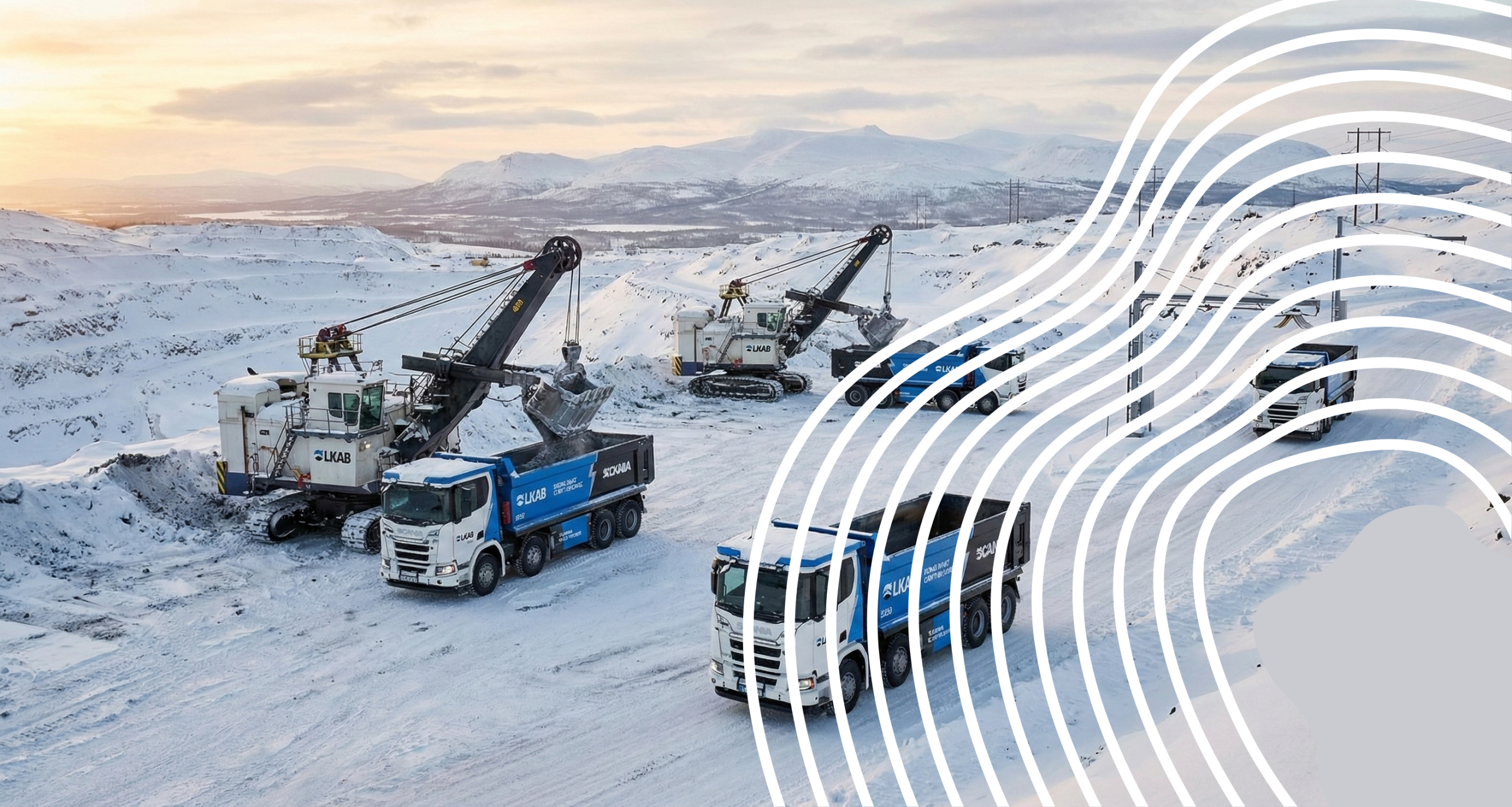
    In the depths of Arctic winter, with temperatures plunging to minus 20 degrees Celsius and daylight reduced to a few hours of twilight, a team of miners is advancing one of Europe’s most strategically important resource projects beneath the Swedish town of Kiruna. Around 900 metres underground, workers at the state-owned LKAB are tunnelling toward the Per Geijer deposit, regarded as one of the continent’s largest known concentrations of rare earth elements.

    Europe currently has no operating rare earth mines, despite rising demand for materials critical to electric vehicles, renewable energy systems, consumer electronics and defence technologies. The push to develop domestic supply has intensified as geopolitical tensions grow and China maintains near-total dominance over rare earth processing and magnet production.

    At Kiruna, the rare earths occur alongside iron ore in a magnetite-hematite-phosphate formation identified more than a century ago. Teams work at depths of up to 1.3 kilometres, drilling, blasting and reinforcing tunnels that will eventually link the existing iron ore mine with the Per Geijer resource roughly two kilometres away. Progress is incremental, averaging about five metres per day, reflecting both the technical complexity and environmental sensitivity of the operation.

    LKAB’s strategy differs from earlier mining approaches. Rather than exposing the entire deposit at once, the company plans phased development, gradually integrating rare earth extraction into the established iron ore system. Chief executive Jan Moström has said this approach is essential to manage risk, control costs and accelerate learning as Europe rebuilds lost mining and processing capabilities.

    To shorten timelines, LKAB has invested €80 million in a demonstration plant in Luleå to test separation technologies ahead of full-scale mining. The company has also taken a stake in Norway-based REEtec to develop cleaner refining methods, aiming to meet strict European environmental standards.

    Industry experts note that even with favourable geology, moving from resource discovery to refined rare earth products can take a decade or more. Still, Kiruna is widely viewed as Europe’s strongest near-term opportunity to reduce dependence on Chinese supply chains, which currently account for around 85% of global rare earth processing and virtually all heavy rare earth refining.

    European officials, including EU industry commissioner Stéphane Séjourné, have visited the site, underlining its strategic importance as the bloc seeks greater resource autonomy. While China is expected to retain dominance for years, projects like Kiruna are seen as critical first steps toward a more resilient European supply chain.

  • Uzbekistan’s mining sector marks a year of major discoveries, expansions and digital upgrades

    Uzbekistan’s mining sector marks a year of major discoveries, expansions and digital upgrades

    The past year brought several landmark developments for Uzbekistan’s extractive industry, ranging from new discoveries to large-scale industrial expansion and digital transformation.

    In September, President Shavkat Mirziyoyev announced the discovery of a giant gas deposit on the Ustyurt Plateau. For the first time in the country’s history, exploration drilling in the area reached depths of 6.5 km. While technical details of the find have not yet been disclosed, exploration work in the region is being carried out by Uzbekneftegaz in partnership with Azerbaijan’s SOCAR.

    Industrial expansion was led by Almalyk Mining and Metallurgical Complex, one of the country’s largest resource producers. In October, the company launched the first processing line of its new MOF-3 concentrator. Once all lines are commissioned by 2026, the facility is expected to process up to 60 million tonnes of ore annually, producing 894,000 tonnes of copper concentrate and 1,500 tonnes of molybdenum concentrate. AMMC says MOF-3 will become the largest copper production facility in Central Asia.

    The company also commissioned its own emulsion explosives plant with a capacity of 90,000 tonnes per year, supporting expanded drilling and blasting operations at the Yoshlik I deposit. In addition, AMMC became the first producer in Uzbekistan to introduce an automated fleet management system at the Kalmakyr and Yoshlik I open pits.

    Another key milestone came in April, when Navoi Mining and Metallurgical Company put into operation a new mine shaft at the Zarmitan gold deposit. The “Skipovoy” shaft, 6.5 meters in diameter and 1 km deep, will increase ore transport to Hydrometallurgical Plant No. 4 by 1.4 million tonnes per year.

    At the policy level, the government also announced plans to implement 76 projects focused on rare and rare earth metals, with total investments estimated at $2.6 billion.

  • Germany calls for stronger cooperation on critical raw materials ahead of Washington talks

    Germany calls for stronger cooperation on critical raw materials ahead of Washington talks

    German Finance Minister Lars Klingbeil on Sunday urged closer international cooperation on critical raw materials as he prepared to travel to Washington for high-level talks with counterparts from major industrialized nations.

    Speaking before his departure from Berlin, Klingbeil, who also serves as vice chancellor and leader of the Social Democratic Party (SPD), said Germany and the European Union remain committed to fair, rule-based and reliable trade. He emphasized that access to critical raw materials such as lithium, cobalt and rare earths is essential for economic growth, technological development and job security.

    The United States has invited finance ministers from several leading economies to discuss securing access to these materials, whose global supply chains are highly concentrated and largely dependent on a small number of countries, including China.

    “Access to critical raw materials and reliable supply chains is of utmost importance for the economy and jobs,” Klingbeil said, adding that Germany has a strong interest in expanding international cooperation to strengthen supply security, reduce strategic dependencies and ensure stable economic conditions. He stressed that joint action should be taken wherever possible.

  • Kazakhstan to study lithium potential near Caspian and Aral seas from 2027

    Kazakhstan to study lithium potential near Caspian and Aral seas from 2027

    Kazakhstan plans to launch large-scale geological studies between 2027 and 2029 to assess the potential for industrial lithium extraction in several regions of the country, the Ministry of Industry and Construction of Kazakhstan said in response to an inquiry from LS.

    The programme will focus on mineralized brines, saline lake waters and salt flats located near the Caspian Sea and the Aral Sea, as well as subsurface resources in the Bayankol ore district. The aim is to determine whether these areas are suitable for commercial lithium production. The work will be carried out under the state geological exploration programme, with 600 million tenge allocated from the national budget.

    In parallel, geological assessment continues in Central Kalba. By 2027, specialists are expected to complete studies of areas prospective for lithium, as well as rare and rare earth metals within the Kalba–Narym zone.

    According to the ministry, there is a high probability of discovering new rare metal deposits in several regions, including northern Kazakhstan’s Kokshetau rare-metal province, western Kazakhstan’s Mugodzhar province with lithium-fluorine type granites, and the southeastern part of the Chingiz–Tarbagatai rare earth metallogenic zone in eastern Kazakhstan.

    The ministry also noted that lithium occurrences have already been confirmed in salt flats in the Aral Sea region and in Betpak-Dala, indicating tangible exploration potential in southern parts of the country.

  • Kazakhstan’s mining majors step up decarbonization with renewables and waste recycling projects

    Kazakhstan’s mining majors step up decarbonization with renewables and waste recycling projects

    In 2025, Kazakhstan’s leading mining and metals companies continued to expand environmental programmes focused on emissions reduction, waste processing and biodiversity protection, while also completing several major renewable energy projects.

    In December, Solidcore Resources announced the completion of a solar power plant at its Varvarinskoye gold mine. The facility has an installed capacity of 22.6 MW and is expected to generate around 28.5 million kWh of electricity annually. The project, which includes more than 36,000 solar panels and a supplementary gas piston power plant to cover periods of low solar output, required investments of about 29 billion tenge. Solidcore estimates that switching Varvarinskoye to renewable energy will cut indirect greenhouse gas emissions by approximately 50%.

    Another major producer, Eurasian Resources Group (ERG), reported in September that all 24 wind turbines had been installed near its Donskoy Mining and Processing Plant. Once operating at full capacity, the wind farm is expected to generate more than 500 million kWh of electricity per year. The project will allow ERG to save over 300,000 tonnes of coal annually and reduce emissions by up to 440,000 tonnes.

    Alongside renewable energy investments, ERG also launched processing of accumulated tailings at the Donskoy plant. Chromium is now being recovered from technogenic mineral raw materials using flotation technology, supporting both waste reduction and resource efficiency.

    Another notable initiative is the gasification of the Qarmet metallurgical plant. In July, the company began pressure testing and commissioning a new gas pipeline. Partial replacement of fuel oil and coke with natural gas is expected to significantly reduce atmospheric emissions from steel production.

    Together, these projects highlight a broader shift by Kazakhstan’s mining and metals sector toward cleaner energy, circular resource use and lower environmental impact.

  • Mercuria lends $1.2 billion to finance Kazakhmys buyout, strengthening its push into global copper markets

    Mercuria lends $1.2 billion to finance Kazakhmys buyout, strengthening its push into global copper markets

    Commodity trading house Mercuria Energy Group has agreed to lend $1.2 billion to help fund the buyout of major Kazakh copper producer Kazakhmys, marking one of the largest metals pre-financing deals ever concluded. The transaction underscores Mercuria’s rapid expansion in metals trading and financing, a space long dominated by rivals Glencore and Trafigura Group.

    The Kazakhmys deal is the biggest among more than $3.5 billion in metals financing and prepayment agreements Mercuria has signed in just over a year, following its strategic push into metals under the leadership of Kostas Bintas, the former co-head of metals at Trafigura. Bintas has been a long-time bull on copper and has capitalized on supply chain disruptions, rising geopolitical risks and the threat of US import tariffs that have helped push copper prices above $13,000 per tonne.

    Under the terms of the agreement, Mercuria will provide financing over an eight-year period. In return, it will receive 200,000 tonnes of copper cathodes annually during the first four years, followed by a percentage of production thereafter. Bintas described the transaction as one of the largest pre-financing deals of his career and noted that such long-tenor, large-scale arrangements were historically more common in energy markets than in metals.

    The financing highlights Mercuria’s growing footprint in Kazakhstan, a market traditionally dominated by Glencore in metals and Vitol Group in oil. The deal comes amid a broader reshaping of ownership across Kazakhstan’s resource sector, as economic influence shifts away from elites linked to former president Nursultan Nazarbayev toward a new business class under President Kassym-Jomart Tokayev.

    Kazakhmys, once part of one of the London Stock Exchange’s largest listed copper producers, was recently acquired by construction magnate Nurlan Artykbayev through his company Qazaq Acquisition Corp. The purchase price was not disclosed. Mercuria has also previously struck a prepayment deal with Eurasian Resources Group, another major Kazakh miner facing potential ownership changes.

    Mercuria’s aggressive expansion mirrors a broader trend of trading houses stepping in as financiers to miners, providing upfront capital in exchange for long-term commodity flows. With copper prices remaining elevated, Bintas said Mercuria expects metals financing activity to increase further in 2026, even as high prices have temporarily dampened physical buying in China, the world’s largest copper consumer.

  • Savannah Resources secures up to €110 million state grant for Barroso lithium project in Portugal

    Savannah Resources secures up to €110 million state grant for Barroso lithium project in Portugal

    Savannah Resources has been awarded a non-reimbursable grant of up to approximately €110 million from the Portuguese State to support construction of its flagship Barroso lithium project in northern Portugal. The project has been designated as strategic under the European Union’s Critical Raw Materials framework.

    The funding represents one of the largest public financial contributions to a mining project in Portugal and reflects support from both national and European authorities for the development of a domestic lithium supply chain linked to the energy transition. Barroso is Europe’s largest known spodumene lithium deposit and is viewed as a cornerstone asset for strengthening regional battery raw material security.

    According to Savannah, the grant will be provided under Portugal’s Investments in Strategic Sectors Incentive Scheme and falls within the contractual investment regime for large-scale projects considered critical to carbon neutrality and economic transformation. The funding is backed by national resources and the European Commission’s Temporary Crisis and Transition Framework.

    The €110 million grant is split into two parts. Around 75%, or €82.25 million, will support initial capital expenditure, while the remaining €27.42 million is tied to operational performance milestones once the mine enters production. The funding is non-repayable but subject to specific conditions and project timelines.

    The award will be formalized through an investment agreement with AICEP, following approvals from the Compete 2030 programme and the Ministry of Economy and Territorial Cohesion. Savannah said it expects the first tranche of funding to be drawn alongside the initial capital development phase.

    Chief executive Emanuel Proença said the grant marks a major milestone for both Savannah and the Barroso project, significantly strengthening its capital structure as the company targets first production from 2028. He added that the project is expected to deliver broad economic and social benefits, including job creation in the Barroso region, the development of a new industry in Portugal, and improved European energy independence through locally sourced lithium.

    Chief financial officer Henrique Freire noted that the grant enhances the project’s financial position ahead of a final investment decision expected later this year, as Savannah continues to advance discussions on debt financing and strategic partnerships.

  • Kazakh MP questions state support for KazZinc and Glencore over exporter financing

    Kazakh MP questions state support for KazZinc and Glencore over exporter financing

    A debate over the allocation of state export financing has flared up in Kazakhstan’s parliament, after MP Erlan Sairov sharply criticized the national holding Baiterek and Swiss commodities giant Glencore, which owns around 70% of KazZinc.

    Speaking at a Mazhilis session on business support measures, Sairov said that about 35% of nearly 1 trillion tenge allocated under the exporter financing program went to KazZinc. He questioned why a company exporting semi-finished metal products and operating largely on a prepayment basis required state-backed loans. According to the MP, export support should primarily help domestic high-tech products enter international markets, not finance a multinational corporation.

    Sairov argued that during Glencore’s two decades of presence in Kazakhstan, the company had failed to create high-value, high-tech domestic production, raising concerns about the use of public funds to support foreign-controlled enterprises. His remarks were directed at Baiterek chief executive Rustam Karagoishin.

    In response, Karagoishin stressed that KazZinc is legally registered in Kazakhstan and therefore qualifies as a domestic client for Baiterek. He said the holding is obliged to assess and approve financing applications that meet its criteria, noting that exports remain a key source of foreign currency inflows and budget revenues. While acknowledging the priority given to high-tech sectors, Karagoishin said traditional exporters still play a crucial role, particularly as Kazakhstan’s metallurgical sector faces growing challenges on global markets.

    The discussion comes amid renewed uncertainty around KazZinc’s ownership. Bloomberg reported in mid-2024 that Glencore was considering selling its stake in the company, including the Vasilkovskoye gold asset, before later shelving the plan. Talks reportedly resumed in 2025, with Bloomberg sources naming businessman Shakhmurat Mutalip as a potential buyer. Mutalip is also said by the Financial Times to be pursuing a major stake in Eurasian Resources Group, despite not appearing on Kazakhstan’s Forbes rich list.