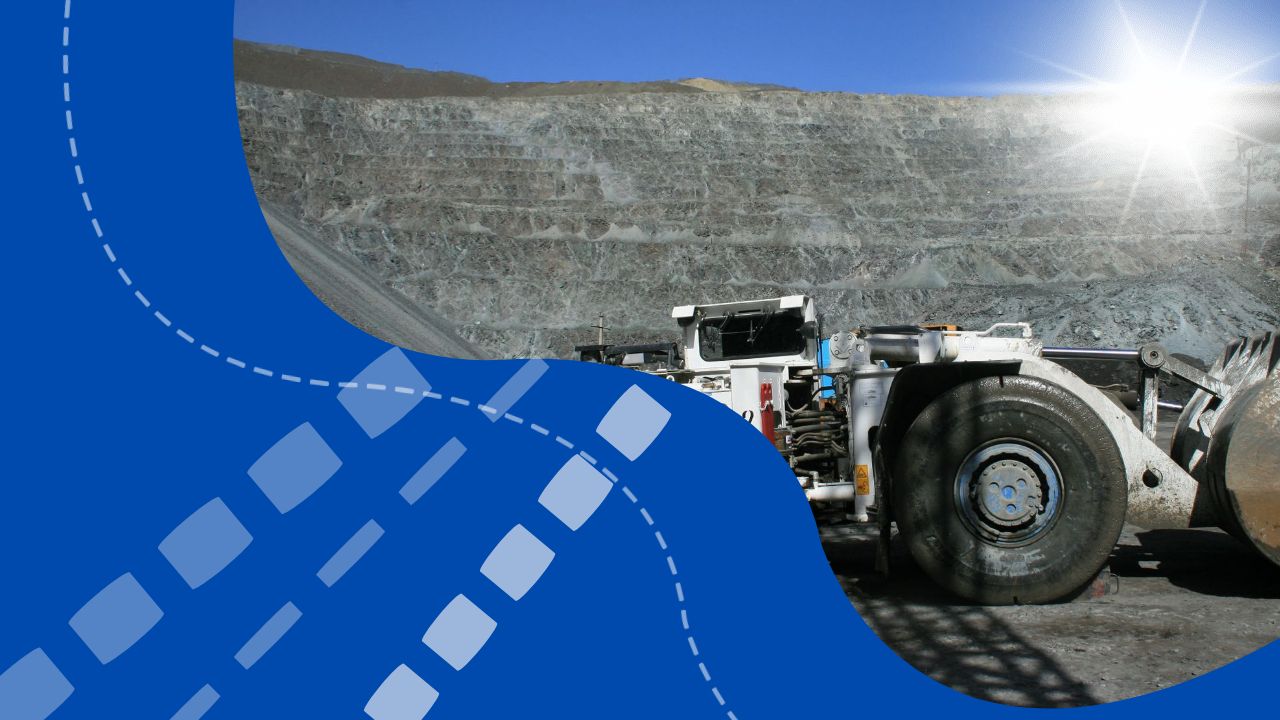
The company “Kumtor Gold Company” (KGC), which is developing the Kumtor deposit in the Issyk-Kul region of the Kyrgyz Republic, has provided explanations regarding the expenses for gold production, acknowledging that production costs have increased.
However, the company does not agree with characterizing these figures as “unprofitable” operations.
Several local publications have presented data on KGC’s performance in the first quarter of 2023. Simultaneously, it became known that authorities granted the company an additional area for gold mining.
Expenses and Profits A new wave of discussions surrounding the activities of KGC, which has come under the full control of Kyrgyzstan’s authorities, began in May when the report on the company’s performance for the first quarter of 2023 was made public. Kyrgyzstani media outlets also addressed this topic, with many of them presenting analytics in August based on production data.
For instance, publications such as 24.kg, AKIpress, Economist, Vesti, Akchabar, and others concluded in their materials that the expenses of the gold miner exceeded its revenues, effectively making the company unprofitable. In simple terms, if more than $2,000 was spent on producing one ounce of gold, it was sold for a lower amount, around $1,900 per ounce.
“Production costs per ounce of realized gold in the first quarter of 2019 were $360, in 2020 – $322, and this year they almost doubled – to $706. At the same time, costs for maintaining production based on by-products, including taxes, are estimated at $2,053 per ounce of gold in the first quarter. Profits are not particularly visible either. Over the first three months of 2023, 77,547 ounces of gold were sold at a price of $1,891 per ounce. However, expenses amounted to $2,053 per ounce. As a result, the mining company earned $146.6 million from gold sales, but spent $159.2 million on metal production. It turns out that Kumtor incurred losses of $12.5 million in the first quarter of 2023,” writes the news agency 24.kg.
According to local media, taking into account taxes and other expenses, the production cost of an ounce of gold in 2020 was $864. There is no data for 2021, but in 2022, this figure reached $1,589 per ounce of gold. In other words, the expenses for this year at $2,053 per ounce of gold are the highest in recent years.
On August 3rd, KGC (Kumtor Gold Company) commented on these publications, stating that the claims that “the company did not generate a profit in 2023 and became unprofitable” are not in line with reality.
In a statement dated August 15th, the company presented a detailed report, noting that since 2014, the company has been using the All-in Costs (AIC) method on the recommendation of the World Gold Council, which “requires accounting for all production costs, including capital expenditures relative to the gold produced.”
“In the first quarter of 2023, the all-in costs (including capital) amounted to $2,053 [per ounce of gold]. The increase in costs is associated with increased long-term and capital investments (overburden removal, modernization of the gold processing plant (GPP), upgrading heavy and auxiliary equipment at the mine, etc.). Capital investments are not considered in the calculation of the cost, as they increase the company’s assets. It is also worth noting that Kumtor ensures stable profitability,” the company’s statement said.
In simpler terms, KGC does not deny that the total production costs for an ounce of gold amounted to $2,053, but emphasizes that when considering the actual cost of the sold precious metal, it was $1,415 per ounce in the first quarter of 2023. Considering that the average selling price of gold was $1,891 per ounce, the net profit for this period reached $36.9 million, according to the company.
Almaz Baryktabasov, President of KGC, provided brief explanations about the company’s production activities in a video interview published on the company’s social media pages.
“If we are a loss-making company, then where do we get the funds to pay salaries? On what money are we conducting modernization work? We allocate planned funds for capital projects. If we were only working at a loss, how could we pay dividends?”
According to the plans for 2023, KGC (Kumtor Gold Company) was expected to produce 14 tons of gold. However, based on the published reports for the first quarter, the company mined 2 tons and 504 kilograms of precious metal, generating a profit of $36.9 million or 3.1 billion soms.
In July, KGC presented the results for the first half of 2023 but without a detailed report. According to brief information posted on the company’s Facebook page, from January to June, 5 tons and 499 kilograms of gold were sold for $341.3 million. It also mentioned that the “net profit for the first half was $101.2 million.”
However, since there is no detailed report for the past six months, journalists have to rely on the first-quarter figures.
Former Vice-Speaker of the Jogorku Kenesh (Kyrgyzstan’s Parliament) Kubanychbek Isabekov commented on the increased production costs for gold:
“In the world, gold mining and the production of precious metals are considered the most profitable types of activities. That’s why the Canadians (the Canadian company Centerra Gold Inc., which previously operated Kumtor) were mining until the very end and exporting everything that was at the deposit. Therefore, it is surprising that over the past two years, when the mine came under our government’s control, the production of an ounce of gold became unprofitable. This raises various questions. No one is hindering [the company’s activities], everything is in the hands of the state, so what is the matter? Why isn’t the State Audit Chamber checking? The Canadians, whom we didn’t like, left a long time ago, and their salaries were sky-high. But if the salaries of current employees were reduced, then expenses should have also decreased. As for exploration work, the ore is currently being mined mainly at the Central Pit (Borborduk). The Sarı-Tor and South-West areas are located there as well. These are the zones where exploration work has already been carried out, and there is no need to do anything there. If this continues, the company could very well go bankrupt. Because if the production cost of gold exceeds its selling price, what will happen? In general, there are many questions.”
Taxes and Contributions Meanwhile, as KGC prepares its report for the first half of 2023, other organizations have published figures indicating a decrease in production at Kumtor.
For instance, the Eurasian Development Bank (EDB) noted in its review dated August 15th that “revenues from the Kumtor enterprise have decreased.”
“The state budget is executed with a surplus of 1.9% of GDP as of January-May 2023 (compared to a surplus of 2.4% of GDP a year earlier). State budget revenues for January-June 2023 increased by 4.2% of GDP. Tax revenues increased (+1.9% of GDP) due to the activation of foreign trade, mainly with China. However, revenues from the Kumtor enterprise decreased by 4.7% of GDP. Expenses increased by 4.5% of GDP,” the EDB report stated.
The authorities of the Kyrgyz Republic have not commented on these figures yet. However, the Ministry of Economy and Commerce of the Kyrgyz Republic, in its release dated August 11, acknowledged that industrial enterprises produced gross output worth 246 billion soms for January-July 2023, and “the volume of production decreased by 1.8% compared to the same period in 2022.” The agency’s statement further stated that “the decrease in industrial production volumes compared to January-July of the previous year is mainly due to a 12.6% reduction in the production of basic metals.”
Nasirdin Shamsiev, Head of the Macroeconomic Analysis and Industry Economics Department at the Macroeconomic Policy Management Unit of the Ministry of Economy and Commerce, previously noted in an interview with “Azattyk”:
“Do you remember that the GDP growth rate in January was 4.8%? For January-April, the growth was 4.4%. However, for the period of January-June, it decreased to 3.9% due to the reduction in the production of basic metals at the Kumtor deposit. Their share of gold in the ore decreased because the coefficient of precious metal in the rock turned out to be low. And this mine accounts for a quarter of our industrial output. Therefore, the fluctuations in its indicators affect the overall figures.”
In 2021, when the authorities of the Kyrgyz Republic took external management of Kumtor, 14.6 tons of gold were extracted. Of these, 4-5 tons were exported by the Canadian company Centerra Gold, which managed the mine for approximately one-third of the year, while the remaining 10 tons remained in Kyrgyzstan. It was noted that the sale of this gold volume brought a profit of $323 million to the Kyrgyz government, and 13.6 billion soms were paid to the republican budget in taxes.
In 2022, when the Kyrgyz side exclusively managed production at Kumtor, 17.3 tons of gold were extracted, exceeding the plan by 200 kilograms. The company’s profit at that time was $986.5 million, and it contributed 32.1 billion soms in taxes and other contributions to the state treasury.
In 2023, the company has so far only disclosed data for the first quarter. According to these figures, payments to the Kyrgyz Republic’s budget in the form of taxes, contributions to the Social Fund of the Kyrgyz Republic, and “other mandatory payments stipulated by the revised investment agreement of 2009” amounted to $48.1 million.
Plans for a New Area
In the meantime, it has been revealed that KGC (Kumtor Gold Company) and Kumtor Operating Company (KOC) have obtained a new area for gold exploration. This area can effectively be considered a separate deposit as it is located 30-40 kilometers away from Kumtor.
We are talking about the Togolok area in the Jeti-Oguz district of the Issyk-Kul region of the Kyrgyz Republic, for which the Kyrgyz Cabinet of Ministers approved exploration with a resolution dated August 4th. Its area covers 42.2 hectares, and the gold reserves are estimated at 17 tons and 367 kilograms. In addition to this, the government has also given the green light for the development of the Zhanguard area, covering 10,379.8 hectares. In other words, if gold-bearing ore is discovered in these areas, these companies will receive a license for mining.
Almaz Baryktabasov, the head of KGC, recently said the following in an interview with the “Ala-Too 24” television channel regarding this:
“From 2023 to 2031, we will be working in an open pit. At the same time, underground mining will begin in 2026. In addition, we will be extracting gold from tailings storage. All of this gives us a volume of gold in the range of 150-155 tons. Our total reserves exceed 300 tons of gold. But we are not stopping there, and currently, we are actively working on deposits near Kumtor, not far from it. As soon as we obtain the necessary documents, we will commence exploration work.”
As of today, KGC and KOC hold licenses for the Central, Sarı-Tor, and South-Western sections of the Kumtor mine. Their total area covers 16.3 thousand hectares. Since gold reserves there are depleting, it was reported after the transition of management to Kyrgyzstan that mining would also begin in the Togolok area.
These plans have been announced by President of the Kyrgyz Republic, Sadyr Japarov, Prime Minister Akylbek Japarov, and Tengiz Bolturuk, the former head of KGC. Furthermore, the latter stated that the reserves of precious metals in this area amount to “approximately 100 tons.”
Duyshenbek Kamchybekov, Chairman of the Association of Miners and Geologists of Kyrgyzstan, spoke to “Azattyk” about the Togolok deposit:
“It was explored during the Soviet era, and they determined the reserves [of gold], but until today, they couldn’t find a company that could start mining there. When Centerra was managing Kumtor, they also showed no interest in developing this deposit because they were working on finding additional areas within Kumtor itself. But the main reason why Togolok wasn’t explored by the Canadians or other investors is the lack of infrastructure there. High-voltage power lines (HVP) need to be extended, roads need to be built. Considering this and other factors, there would be significant expenses. However, now that Kyrgyzstan is managing Kumtor itself, it is necessary to look for new areas nearby and conduct exploration. So, it is right that they are transferring Togolok to them. They have all the possibilities for building roads and extending HVP. I believe the company could start preparations and already work on the technical and economic justification. Although it is said that the reserves [in the Togolok deposit] amount to 17 tons, just like at Kumtor, other gold-bearing areas could be found nearby.”
As a result of geological exploration work conducted in 2012, it was known that operations at Kumtor would cease in 2026. However, subsequent geological exploration showed that mining at this deposit could be extended until 2031-2032. If gold extraction from tailings storage facilities located at the mine is added to this, the enterprise can continue operating until 2040-2042. It is evident that production volumes of precious metals will decrease each year compared to previous figures.
Kubanychbek Isabekov expressed his opinion on the transfer of the Togolok deposit to the two aforementioned companies:
“To develop this deposit, you need to establish a separate company, build a gold extraction factory (ZIF), which means there will be significant expenses. That’s the first point. Secondly, just holding onto it and doing nothing with this deposit is not rational. If we want to boost the economy and the well-being of the people, it would be right to start its development. Besides Togolok, there are other areas there. From an ecological perspective, it’s also correct because we won’t have to build a new ZIF and tailings storage facilities, using the existing ones at Kumtor. For example, we have gold-bearing mines like Taldy-Bulak, Andash, and Jeryui. They are all being developed by different companies, each with its own ZIF and tailings storage facilities. So, it results in significant expenses. Moreover, there’s environmental harm. Although all three areas are located nearby. In short, considering all these factors, I support the development of the Togolok deposit. But if KGC is already running at a loss, I’m afraid we won’t make a profit from mining at Togolok either.”
When the government changed in Kyrgyzstan in October 2020, Tengiz Bolturuk, a Kyrgyz citizen residing in Canada, joined the Board of Directors of Centerra Gold Inc. In May 2021, he was appointed as the external manager of KGC. The company became fully owned by Kyrgyzstan in April 2022.
Since then, questions about the economic profitability of the enterprise, as well as excessive expenses and even extravagance of its leadership, have been raised in the country.
For some time, Tengiz Bolturuk simultaneously headed both KGC and the national holding “Heritage of Great Nomads,” which was established in early 2022. However, in September of the same year, it was revealed that the General Prosecutor’s Office of Kyrgyzstan had detained him on suspicion of corruption during his time at the company. In addition to him, Aisha-Gyul Frontbek kyzy, KGC’s supply specialist, and Ryspek Toktogulov, the director of the company’s financial management department, were arrested. In January 2023, Kanat Kurmanov, the former executive director of the enterprise, was captured while attempting to leave the country.
These arrests were made in the context of four criminal cases that were initiated following an audit of KGC conducted by a group of employees from the General Prosecutor’s Office and the Accounting Chamber of Kyrgyzstan. According to the investigation, the suspects caused damage in the amount of 1,146,449,000 Kyrgyz soms through their actions. As of the beginning of August, 844,512,858 soms of this amount have been reimbursed. Two of the detained individuals, including Tengiz Bolturuk, were placed under house arrest.
Prior to this, in February, the Accounting Chamber published a report on the results of an audit of KGC’s activities for the period from May 2021 to June 2022, which revealed the misappropriation of significant funds. This document, spanning 100 pages, presented the entire financial activity of the company, including expenses for employee vacations, charity, management bonuses, and other unjustified expenditures amounting to hundreds of millions of soms. Among the largest expenses was the purchase of furniture for KGC’s new office, which cost 179,700,000 soms for purchase, delivery, and installation.
By the way, at the end of 2022, after less than a year of operation, the “Heritage of Great Nomads” holding was closed, which had received 3.5 billion soms from the state budget for its activities. The company had spent approximately 700 million soms during this period.