Website: Eurasia.com

  • For the first time at SSGPO, new equipment has been produced for the factory complex

    For the first time at SSGPO, new equipment has been produced for the factory complex

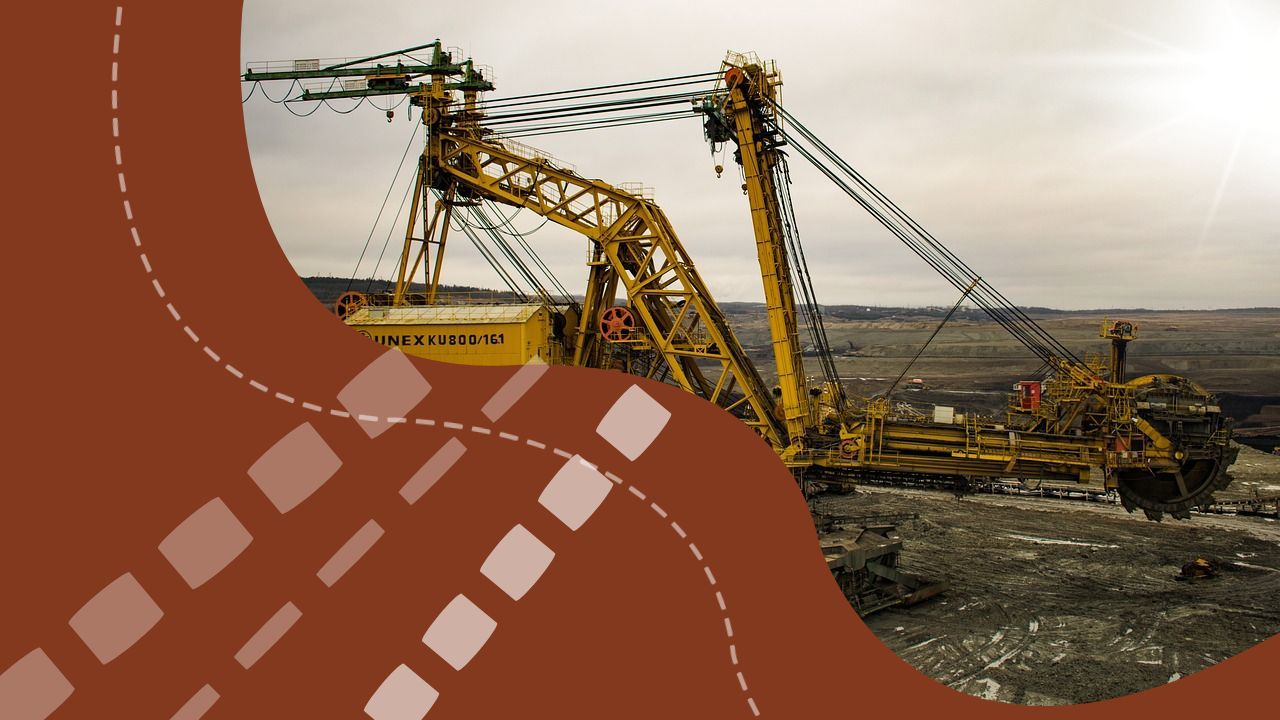
    “For the first time at the Sokolov-Sarbaysk Mining and Enrichment Production Association (SSGPO), a subsidiary of ERG (Eurasian Resources Group), the employees of the repair-mechanical metallurgical plant have manufactured a bath for a magnetic separator. This bath is a crucial component in the enrichment of strongly magnetic ores through the wet separation method. Producing this equipment in-house will lead to a reduction in the cost of the final product.

    Within the ore enrichment section of the SSGPO factory complex, 280 separators of various types and sizes are installed. The majority of these are the PBM-P-120/300 separators, which play a role in enriching ore and materials with a size of 3 mm, dividing them into two products: magnetic and non-magnetic.

    These mechanisms consist of a magnetic drum and a counter-flow bath. The wear of the latter impacts the loss of produced iron ore concentrate, which goes to tailings and is disposed of in tailings storage.

    To address this situation, the question of producing counter-flow baths within the conditions of the repair-mechanical metallurgical plant (RMMZ) was thoroughly examined. The first trial bath for the PBM-P-120/300 separator has been manufactured.

    “Employees of the factory approached us with a proposal to create equipment necessary for the technological production chain,” explains Denis Shein, the master of the metallurgical constructions section at RMMZ. “We used stainless steel for manufacturing, a material we hadn’t worked with before. We modernized and reconfigured our own equipment. Four repair fitters and three electric gas welders, led by a master, completed the task within a month. Currently, we have produced one frame and a magnetic separator bath in a trial version. In the future, we will reach the planned production rates.

    Achieving the optimal operating mode for the modern equipment will occur in the near future. The production process for the baths will be put into full operation afterwards. According to preliminary data, 80 units of the new equipment are needed.

    “The proposed systemic work will not only make the production process more flexible and reduce dependence on external suppliers but will also expand the possibilities of the enterprises,” says Alexey Shtal, the head of the mechanics department in the Industrial Complex. “We can now replace old separator mechanisms with new ones and outline a joint action plan. The bath is manufactured at the plant and sent to the factory before planned preventive work on the technological section. During maintenance work, equipment modernization is conducted.

    This proposed system will reduce the need for repairs, prevent the loss of iron ore concentrate, and decrease the cost of the final product.”

  • Alikhan Smailov demands completion of all fields revision and taking measures against unscrupulous subsoil users by end of 2023

    Alikhan Smailov demands completion of all fields revision and taking measures against unscrupulous subsoil users by end of 2023

    Deputy Minister of Industry and Infrastructural Development Azamat Beyspekov said that the mineral resource base of the republic includes deposits of solid and common minerals, hydrocarbons and underground water. In total, the state balance sheet accounts for more than 8 thousand deposits of more than 100 types of minerals.

    The state geological study of subsoil is carried out in two directions – regional study of subsoil and prospecting. According to the first one, today 94.5% of the territory of Kazakhstan is covered by geological exploration of areas in two hundred thousand scale. Within the framework of the second direction prospecting works on 16 areas are carried out to ensure stable functioning of town-forming enterprises located near single-industry towns.

    The information platform “Minerals.gov.kz” has been put into commercial operation since this year. Currently, it is being filled with geological information: about 40 thousand reports have already been uploaded, and another 16 thousand reports are expected by the end of the year. To ensure open access to geological materials, it is planned to digitize business processes of subsoil users, as well as to implement the principle of a single window for potential and existing investors.

    The Minister of Energy Almassadam Satkaliyev spoke about the work being done in the field of hydrocarbon exploration. Minister of Digital Development, Innovation and Aerospace Industry Bagdat Mussin made a report on the digitization of the geological industry and subsoil use.

    Having heard the speakers, the Prime Minister emphasized that the development of the geological industry is the basis for replenishing the mineral resource base of the republic and providing the domestic manufacturing industry.

    Thus, the procedure for obtaining the appropriate license has been simplified for subsoil users according to the principle of “the first one in and the first one out”. In order to increase the efficiency of the state geological study of subsurface resources, the Concept of development of the geological industry was adopted.

    At the same time, an online digital information platform providing open access to geological materials has been put into operation. It provides for the passage of all procedures: from filing an application to obtaining a license.

    “An audit of all fields is now underway. Licenses are withdrawn from defaulting subsoil users and contracts are terminated,” Alikhan Smailov said.

    At the same time, he pointed out that despite leading positions in the world in certain types of metals, there is a significant reduction in the raw material base. For example, reserves of chromium, aluminum, zinc, copper and lead are declining.

    Exploration of rare and rare-earth metals, which are the basis for the production of high-tech products, is proceeding at a low pace.

    “We still do not see new discoveries and real work of junior companies, which received licenses on the principle of the first application,” Prime Minister said.

    According to the Head of Government, there is a need for a significant upgrade of the scientific base and infrastructure of subsoil research, as well as digitization of geological information for further attraction of investors. In addition, there is a shortage of qualified geologists and surveyors.

    “Despite the fact that for 12 years more than 2 trillion tenge of private investments have been directed to exploration works, we are still lagging behind in terms of investments in exploration of new deposits. All necessary amendments to the current legislation have been made to solve all the problems outlined,” Alikhan Smailov emphasized.

    Summarizing the above, Prime Minister instructed to prepare a roadmap for increasing the resource base and organization of production of high-tech products based on rare and rare earth metals, to analyze historical data of gas-bearing provinces using modern technological solutions within 2 months, and by the end of the year – to analyze the scientific base and infrastructure with the development of measures for their development.

    In conclusion, Alikhan Smailov also noted the need to conduct a comprehensive analysis of all types of historical data and ensure maximum filling of the online platform by the end of the year, as well as to complete the revision of all fields with taking measures against unscrupulous subsoil users.

  • Kazakhstan Houses More Than 8 Thousand Mineral Deposits, Reports MIID RK

    Kazakhstan Houses More Than 8 Thousand Mineral Deposits, Reports MIID RK

    The Ministry of Foreign Affairs’ Deputy Head highlighted the dual-pronged approach in the nation’s geological study of its subsoil: “regional subsoil exploration” and “prospecting endeavors.”

    Nationwide regional subsoil studies have achieved substantial coverage, encompassing 94.5% of Kazakhstan’s territory through expansive geological surveys at a 200,000th scale. In tandem, focused prospecting efforts are underway across 16 key areas, aimed at securing the stability of pivotal city-centric industries adjacent to single-industry towns. Notably, 12 of these sites are actively engaged in developing the rare earth metals sector, following Cabinet directives.

    The Program overseeing the State Subsoil Fund encompasses the entirety of Kazakhstan’s subsoil accessible for use. To unlock the nation’s potential and amplify investment in exploration, the Vice Minister underscored the necessity of allocating funds for regional research.

    MIID RK is strategically poised to augment the mineral resource repository and attract investments for geological exploration. Their proposal encompasses the integration of geological exploration into Kazakhstan’s national priorities, introducing innovative mechanisms to heighten both public and private investments. This strategy is complemented by an exhaustive review of historical data, culminating in a methodical approach tailored to the distinct mineral types.

    Additionally, Beispekov detailed the successful launch of the minerals.gov.kz information platform this year. With around 40,000 reports integrated into the system, plans are underway to digitize the operational processes of subsoil users. This initiative aims to provide open access to geological materials and simplify interactions for prospective and existing investors through a unified interface.

    Simultaneously, the National Geological Service, established in 2021, is actively digitizing primary geological data. This transformation will result in publicly available information on minerals.gov.kz. The conversion target for the year includes 861,000 paper records, 129,000 graphical documents, 38,000 magnetic media, and 16,000 cartridges into electronic formats.

    Beispekov emphasized the comprehensive nature of Kazakhstan’s state balance sheet, accounting for over 8,000 deposits spanning a diverse range of more than 100 mineral types, including solid minerals, hydrocarbons, and groundwater.

  • Altynalmas: Analyzing First Half of 2023 Financial Report

    Altynalmas: Analyzing First Half of 2023 Financial Report

    In the dynamic landscape of the mining industry, the performance of key players reflects not only the company’s strategies but also broader market trends. In this comprehensive analysis, we delve into the financial report of “Altynalmas,” a prominent gold mining company, for the first half of 2023. The report provides insights into the company’s net profit, operating profit, revenue, product sales, and production costs, shedding light on its overall performance and strategic directions.

    Net Profit and Operating Profit: A Comparative Overview

    During the initial six months of 2023, “Altynalmas” reported a net profit of 26.7 billion tenge. This figure marked a noteworthy decline of 49.5 billion tenge compared to the corresponding period in the previous year. This decrease prompts an exploration into the factors contributing to this considerable difference. It is essential to understand the strategies employed by the company during this time frame and how they may have influenced the financial outcome.

    The operating profit, a key indicator of the company’s operational efficiency, was halved to 41.7 billion tenge in the first half of 2023. This reduction raises questions about the company’s cost management strategies, production processes, and market demand for its products. Delving deeper into the operational aspects can provide valuable insights into the areas that might require optimization and improvement.

    Revenue Streams: Precious Metals Contracts and Product Sales

    A significant portion of “Altynalmas” revenue is derived from precious metal contracts. In the first half of 2023, the company’s revenue from these contracts slightly decreased to 215.7 billion tenge. Analyzing the variations in these revenue streams could offer insights into market dynamics, pricing strategies, and the company’s ability to secure and fulfill contracts.

    The sale of Doré alloys and gold-containing products contributed substantially to “Altynalmas” revenue, generating an impressive 180 billion tenge. Notably, sales of Doré alloys witnessed an increase of 7 billion tenge, while gold-containing product sales decreased by the same amount. This divergence prompts an exploration into consumer preferences, market trends, and the company’s product mix strategies.

    Silver Sales Surge: Unveiling New Avenues

    A striking highlight of the financial report is the surge in silver sales revenue. In the first half of 2023, silver sales revenue skyrocketed from 47 million tenge to an impressive 417 million tenge. This remarkable growth signifies a potential diversification strategy for “Altynalmas.” Understanding the factors driving this surge and the strategic significance of silver in the company’s portfolio could shed light on future opportunities and market positioning.

    Production Costs and Asset Dynamics

    The analysis of “Altynalmas” financial report also unveils critical information about the company’s production costs and asset dynamics. Production costs increased by 1.5 times, amounting to 158.2 billion tenge. This increase demands an examination of cost drivers, operational efficiencies, and potential areas for cost optimization without compromising product quality and safety standards.

    Additionally, “Altynalmas” experienced a reduction in assets, which now stand at 726.4 billion tenge, down by 23 billion tenge compared to the previous year. Understanding the asset dynamics and the company’s strategic decisions regarding asset management is crucial for assessing its financial health and future growth prospects.

    Strategic Outlook: Contract Termination and Future Prospects

    Looking forward, “Altynalmas” has made strategic decisions to terminate contracts for the Zholymbet and Svetinskoye assets this year. This strategic move demands an exploration of the rationale behind these decisions, potential implications on the company’s operations, and the overall alignment of these actions with the company’s long-term goals and market conditions.

    In conclusion, the first half of 2023 has brought forth notable shifts in “Altynalmas” financial performance. While challenges such as decreased net profit and operating profit have emerged, opportunities such as the surge in silver sales and strategic asset management decisions are equally noteworthy. To navigate these dynamics successfully, “Altynalmas” needs to strategically align its operations with market trends, optimize costs, and leverage diversification opportunities.

    By providing a comprehensive analysis of “Altynalmas” financial report, we have explored the intricacies of its performance during the first half of 2023. This analysis not only serves as an insightful review but also offers valuable insights that can guide the company’s strategies and decisions in the evolving mining industry landscape.

  • Erdene Resource Development Corp reveals positive Feasibility update on Byan Khundii Project

    Erdene Resource Development Corp reveals positive Feasibility update on Byan Khundii Project

    Erdene Resource Development Corp (TSX:ERD, OTC:ERDCF) CEO Peter Akerley joined Steve Darling from Proactive to share news the company has announced the results of an updated independent Feasibility Study for the open-pit Bayan Khundii Gold Project in southwest Mongolia.

    Akerley telling Proactive the numbers have been much improved including after-tax Net Present Value of 170 million (NPV5%) and 35.3% Internal Rate of Return, increasing to US$196 million and 38.95% IRR, respectively, at the current gold price of US$1,900/oz.

    Life of Mine Earnings Before Interest, Taxes and Depreciation of US$451 million, increasing to US$495 million at a US$1,900/oz gold price. Total recovered gold of 476,000 ounces, a 25% increase compared to the 2020 Feasibility Study from an average gold recovery rate of 93%.

    Measured and Indicated Resources of 674,700 ounces of gold at an average grade of 2.6 g/t gold, and 319,000 ounces of silver at an average grade of 1.38 g/t silver. The company also sees room for growth with adjacent high-grade resources and recent discoveries provide a high probability for expansion.

    The company, with its strategic alliance with MMC, Mongolia’s largest independent miner, is moving towards production. Early construction works are underway with the first gold and cash flow expected in 2025.

  • Steppe Gold Issues Inaugural ESG Report

    Steppe Gold Issues Inaugural ESG Report

    Steppe Gold Ltd. (TSX: STGO) (OTCQX: STPGF) (FSE: 2J9) (“Steppe Gold” or the “Company“) is pleased to announce the release of its inaugural Environmental, Social and Governance (“ESG“) Report. The report is the Company’s first annual disclosure of its approach and performance on a range of material ESG topics as well as the Company’s plans and priorities for 2023 and beyond. The report is available on Steppe Gold’s website at www.steppegold.com under Sustainability. The Company has also shared a corporate video highlighting its ESG efforts: Steppe Gold – Embracing Sustainable Mining in Mongolia.

    Steppe Gold’s 2022 ESG Report summarizes its strategy, efforts, and actions for responsible and sustainable operations since 2018. The Report provides enhanced transparency regarding the Company’s ESG efforts and approach to managing ESG factors that have the greatest potential to impact Steppe’s value and success. Building on the Company’s commitment to ongoing transparency and disclosure, the ESG Report has been prepared in alignment with the Sustainability Accounting Standards Board (SASB) Metals & Mining Sustainability Accounting Standard.

    Steppe Gold Chairman and CEO, Mr. Bataa Tumur-Ochir, noted, “I am delighted to present our inaugural ESG report, encompassing the period from 2018 to 2022. As our vision is to create long-lasting value for all stakeholders, promote social and economic development in our local community, and responsibly manage our impact on the environment, I am proud to say that Steppe Gold has been committed to social responsibility to ensure our mines and communities are sustainable and profitable for many years to come.”

  • Fitch Places Mongolian Mining on Watch Negative

    Fitch Places Mongolian Mining on Watch Negative

    At the same time, Fitch has assigned a ‘B(EXP)’ expected rating to MMC’s proposed US-dollar senior exchange notes and new issuance with a Recovery Rating of ‘RR4’. The final rating is contingent upon the receipt of final documents conforming to information already received.

    The proposed notes will mature on the third anniversary of the exchange settlement date and will be jointly and severally issued by MMC and its wholly owned subsidiary, Energy Resources LLC.

    We do not consider the proposed debt exchange transaction as default avoidance, despite the maturity extension for MMC’s existing USD350 million senior secured notes due April 2024, as we believe MMC is able to accumulate sufficient cash to repay the notes, even without the proposed issuance.

    The RWN takes into consideration the low cash buffer that will be available after the repayment of the notes due 2024, should the exchange offer fail, to manage variances in the operating environment. The inherent volatility and lack of predictability of the post repayment cash position is more consistent with a rating level that is one notch lower. We will remove the RWN and affirm the rating with a Stable Outlook if the exchange is completed at the terms communicated.

    KEY RATING DRIVERS

    Exchange to Address Refinancing Risk: The exchange offer is at par value, using a combination of cash and new notes, subject to a minimum acceptance of 75% of outstanding principal. A successful transaction would reduce the funding requirements for MMC’s 2024 notes and would be credit positive, as it would improve the company’s maturity profile.

    Sufficient Cash for Repayment: If the proposed exchange fails, we expect that MMC would have the capacity to repay its 2024 notes with cash generated from operations, taking into consideration our forecast of a lower average selling price (ASP) in 2H23 and 1Q24. The outstanding balance of MMC’s 2024 notes was USD350 million at mid-August 2023. The company had a cash balance of over USD200 million at end-June 2023, up from USD65 million at end-2022.

    We expect MMC could generate over USD250 million in EBITDA between June 2023 to 1Q24, which, after taking into consideration other cash flow uses, such as interest, taxes and capex, together with the USD50 million in an unused committed facility, would leave the company with sufficient cash for the bond repayment and continued operation.

    Limited Cash Buffer Post Repayment: We expect MMC to have over USD350 million of cash available as of end 1Q24 without the exchange offer, with an additional USD50 million in an unutilised committed facility. We calculate that the company will have a cash buffer of around USD50 million after the USD350 million principal repayment after subtracting the minimum USD50 million of cash required to maintain its operation. However, the inherent variances of MMC’s operating environment can result in the buffer varying widely, which is commensurate with a one-notch lower rating.

    Robust Operational Improvements: MMC’s coking-coal operation has normalised, with Covid-19 pandemic-related disruption at the border with China having eased in 1Q23. Average daily throughput rose to about 800 trucks in 1H23, surpassing pre-pandemic and the 1H22 level of around 240 trucks. MMC ramped up processing volume to 6.8 million tonnes in 1H23, from 0.9 million tonnes in 1H22, ahead of our expectations. Meanwhile, the realised ASP for hard coking coal exceeded USD160/tonne, from a 2022 average of USD147/tonne.

    We expect the ASP to fall in 2H23, but for average ASP in 2023 to remain above 2022 levels. We also expect washed hard coking coal sales volume to reach 5.5 million tonnes, against our previous forecast of 5.0 million tonnes (2022: 3.5 million tonnes). As a result, the EBITDA margin should improve to over 40%, from around 24% in 2022, with greater free cash flow from the higher volume, stronger pricing assumptions and lower costs. We also forecast net leverage to drop to below 1.0x (2022: 3.0x), supported by a strong ASP and margin expansion.

    Small Scale, Single Product: MMC is small by revenue compared with Fitch-rated coal miners globally. Washed hard coking coal accounted for over 95% of its total revenue in 2022. Its latest coal reserve statements show total marketable coal reserves of just under 400 million tonnes, or a reserve life of around 35 years. MMC’s small scale and product concentration constrain its business profile to the ‘b’ category. MMC is looking to diversify away from coking coal, but we believe it will remain its dominant revenue contributor in the short to medium term.

    Regional Cost Advantage: MMC’s cash costs, including royalties, are in the second quartile of the global coking-coal cost curve, but its cost advantage is only in the northern part of China due to the proximity of its mines to steel mills in the area. Land transportation costs to Chinese customers averaged at about USD13/tonne in 1H23, limiting MMC’s cost competitiveness and putting it in the higher quartile of the global cost curve. Delivery beyond northern China would raise costs, limiting its customer-base to mainly northern China.

    DERIVATION SUMMARY

    The RWN reflects the narrow buffer provided by MMC’s Fitch-estimated cash balance after the principal repayment on the 2024 notes, which may not protect MMC from volatile market conditions should the exchange offer not proceed. MMC has a smaller revenue scale compared with rated peers, such as Guangyang Antai Holdings Limited (B/Stable), PT Indika Energy Tbk (BB-/Stable) and PT Golden Energy Mines Tbk (GEMS, BB-/Stable).

    Guangyang Antai’s revenue is more than 10x times that of MMC, while Indika’s revenue scale is more than 7x larger and GEMS’ 5x. However, MMC margin is much higher than that of Guangyang Antai and similar to that of Indika and GEM. MMC is a single-product coal miner, similar to the peers. Its operational profile in terms of mine life is similar to that of GEMS, whose mine life is over 25 years. Indika’s mine life is shorter, at around 15 years.

    MMC’s leverage and financial flexibility profile is weaker than that of GEMS. GEMS has more stable free cash flow generation ability, much lower leverage and well-distributed amortising debt. Both MMC and Indika have had choppy free cash flow generation in the past few years and concentrated debt maturities. Nevertheless, Indika has better interest coverage and much lower leverage. We expect lower leverage at MMC compared with Guangyang Antai, but both companies have had weak FCF generation in the past few years.

    KEY ASSUMPTIONS

    Fitch’s Key Assumptions within our Rating Case for the Issuer:

    – No exchange offer is considered

    – Hard coking coal ASP of USD150/tonne in 2023 and over USD140/tonne in 2024, consistent with Fitch’s price deck assumptions

    – Total sales volume over 8.5 million tonnes in 2023, dropping to just under 7.0 million tonnes from 2024

    – EBITDA margin to average at slightly below 40% in 2023-2025, supported by higher volume, a strong ASP and normalised costs

    – Capex at average at around 10% of revenue in 2023-2025

    – No dividend payments in 2023-2025

    RATING SENSITIVITIES

    Factors that could, individually or collectively, lead to positive rating action/upgrade:

    – We will remove the RWN and affirm the ratings with a Stable Outlook upon completion of the exchange offer at the terms communicated.

    Factors that could, individually or collectively, lead to negative rating action/downgrade:

    – Failure to complete the exchange offer or secure other means of funding to reduce refinancing risk by end-3Q23

    BEST/WORST CASE RATING SCENARIO

    International scale credit ratings of Non-Financial Corporate issuers have a best-case rating upgrade scenario (defined as the 99th percentile of rating transitions, measured in a positive direction) of three notches over a three-year rating horizon; and a worst-case rating downgrade scenario (defined as the 99th percentile of rating transitions, measured in a negative direction) of four notches over three years. The complete span of best- and worst-case scenario credit ratings for all rating categories ranges from ‘AAA’ to ‘D’. Best- and worst-case scenario credit ratings are based on historical performance. For more information about the methodology used to determine sector-specific best- and worst-case scenario credit ratings, visit https://www.fitchratings.com/site/re/10111579.

    LIQUIDITY AND DEBT STRUCTURE

    Adequate Liquidity: MMC had USD208 million of cash on hand and USD50 million in unutilised credit facilities at end June 2023. However, this is insufficient to repay the notes due in April 2024, which had a face value of USD350 million in mid-August 2023. Nevertheless, we expect that the company will be able to accumulate additional cash in 2H23 and 1Q24 to meet the principal repayment and retain a cash buffer to sustain its operation.

    ISSUER PROFILE

    MMC is the largest producer and exporter of high-quality hard coking coal in Mongolia. It owns and operates the Ukhaa Khudag and Baruun Naran open-pit coking coal mines in South Gobi province. MMC processed 6.6 million tonnes of run-of-mine coal in 2022, which yielded around 3.0 million tonnes of washed coking coal as a primary product and 1.2 million tonnes of washed thermal coal as a secondary product.

    REFERENCES FOR SUBSTANTIALLY MATERIAL SOURCE CITED AS KEY DRIVER OF RATING

    The principal sources of information used in the analysis are described in the Applicable Criteria.

    ESG CONSIDERATIONS

    The highest level of ESG credit relevance is a score of ‘3’, unless otherwise disclosed in this section. A score of ‘3’ means ESG issues are credit-neutral or have only a minimal credit impact on the entity, either due to their nature or the way in which they are being managed by the entity. Fitch’s ESG Relevance Scores are not inputs in the rating process; they are an observation on the relevance and materiality of ESG factors in the rating decision. For more information on Fitch’s ESG Relevance Scores, visit www.fitchratings.com/topics/esg/products#esg-relevance-scores

  • Armenian Businessman Buying Kapan Gold Mine for $55 Million

    Armenian Businessman Buying Kapan Gold Mine for $55 Million

    The Shahumyan gold-polymetallic mine, the second largest gold mine in Armenia, is located near the town of Kapan, in the country’s southern Syunik Province.

    Mining.com quoted CGH CEO Mike Fraser as saying the deal represents a “a beneficial exit opportunity at a time when Kapan is facing higher costs, potential losses and further funding requirements”.

    statement on the sale issued by CGH says the buyer of its subsidiary Chaarat Kapan CJSC, operates the Lichkvaz gold mine located some 70 kms from the Syunik town of Kapan.

    In fact, the Lichkvaz mine is operated by Lichkvaz CJSC, not Gold Mining Company LLC.

    Lichkvaz CJSC is owned by Yerevan resident Sasun Avetisyan, who’s from Kajaran. He also owns Gold Mining Company.

    Lichkvaz CJSC, registered in Yerevan, was founded in 2010 and has the right to operate the Lichkvaz-Tey mine until 2036. Gold Mining Company received state registration this month, on August 2. This company was essentially formed to buy the shares of Chaarat Kapan from Chaarat Gold Holdings.

    CGH also announced that Sasun Avetisyan, the owner of buyer Gold Mining Company, is the director and co-owner of S&A Mining LLC (S&A Mining), which has been one of the contractor partners of the Kapan Mining Combine (aka Chaarat Kapan CJSC) for a long time.

    Sasun Avetisyan is indeed the director of the Yerevan-based S&A Mining LLC, founded in 2015, but is not its formal owner, because S&A Mining belongs to another Yerevan company, Vand-Gass LLC. The latter is owned by Sasun Avetisyan’s father, Slavik Avetisyan, and Mariam Nersisyan from Kajaran, whose father, Aristakes Nersisyan, was the chief accountant of the Zangezur Copper-Molybdenum Combine (ZCMC) at the time when Maxim Hakobyan was the general director.

    The current director of Vand-Gass is the brother of Mariam Nersisyan, Garnik Nersisyan, who replaced Sasun Avetisyan in that position. It turns out that the contractor partner of Chaarat Kapan, S&A Mining, is the joint business of the families of Aristakes Nersisyan, one of the former influential figures of ZCMC, and Sasun Avetisyan. The two are consolidating their positions in the mining industry.

    Sasun Avetisyan’s business network

    Avetisyan, in addition to Lichkvaz CJSC, Gold Mining Company LLC and S&A Mining LLC (his link here is through his father), has a stake in the following companies.

    AGRS (Armenian Gold Resource Corporation) LLC, registered in Yerevan, is the sole owner of Lichkvaz CJSC and in turn is fully owned by Sasun Avetisyan, who is also the general director of the company.

    Avetisyan acquired AGRS in 2019 from the Cypriot and Dutch subsidiaries of the offshore Polymetal International. (Polymetal International sold the Kapan Mining Company to Chaarat Gold Holdings in 2018 for $55 million.)

    Sasun Avetisyan is the general director of Aparag Mining LLC registered in Yerevan. LLC belongs to another Yerevan company, Vand-Sa LLC, equally owned by Slavik Avetisyan (Sasun Avetisyan’s father) and Garnik Nersisyan. (The latter is also the director of Vand-Sa).

    Sasun Avetisyan and his partner Samvel Ivanyan have two companies of the same name in Yerevan: NRM (Natural Resource Management) CJSC and NRM CJSC. The second company was created in a separate manner from the first, that is, it’s its successor. Ivanyan is the general director of both and owns 20%. Avetisyan owns 75%. The remainder belongs to Vahram Avagyan.

    According to Armenia’s State Revenue Commission, NRM (Natural Resource Management) provides support services in the field of mining, and NRM is engaged in engineering work and related technical consulting.

    The 47-year-old businessman is also involved in the construction industry. He has a 25% stake in AP Tower LLC registered in Yerevan. Avetisyan’s wife, Liana Hovhannisyan, owns the same percentage of shares. The company is engaged in the construction of residential, public and industrial buildings and is now constructing the Panorama Hills residential complex in Yerevan.

  • Uzbekistan to build large chemical complex in Karakul Free Economic Zone

    Uzbekistan to build large chemical complex in Karakul Free Economic Zone

    The construction project of the ‘Karakulkimiyo’ chemical complex for the production of nitrogen fertilizers became a resident of Uzbekistan’s Karakul Free Economic Zone, Trend reports.

    According to an official source, the Ferkensco Management Limited company, which is implementing the project, has received a 50-hectare plot in this zone for long-term use.

    The chemical complex, which will become one of the largest industrial enterprises in the Bukhara region, will annually produce up to 495,000 tons of ammonia and 594,000 tons of urea.

    The project partners are the Enter Engineering company as well as the Swiss Casale SA company, which, within the framework of this project, provides services for the design and provision of a license to use its own manufacturing technology for this type of chemical product.

    Furthermore, the construction stage of ‘Karakulkimiyo’ is scheduled for the fourth quarter of 2023, the opening of production is January 1, 2026, and the total investment is $600 million.

    Ferkensco Management Limited is an investment company that creates a chain of production of phosphorous, nitrogen, and potash fertilizers in Uzbekistan. Among the company’s projects is the construction of chemical complexes in Samarkand city, as well as in Bukhara, Navoi, and Surkhandarya regions.

  • Kazakhstan will limit coal exports in the face of its reduction

    Kazakhstan will limit coal exports in the face of its reduction

    Kazakhstan is set to impose restrictions on coal exports in response to declining output. A draft government decree is being finalized, intending to exclusively grant coal mining and processing companies the right to export coal from the country. Turar Zholmagambetov, deputy chairman of the industrial development committee of the Ministry of Industry and Infrastructure Development, revealed that this measure is being taken to counteract intermediary firms that purchase coal at domestic prices and resell it abroad at higher rates. The decree aims to restrict such activities and grant export rights only to specialized entities involved in coal production and processing.

    This resolution is expected to be adopted in September after coordination with government bodies and the Atameken National Chamber of Entrepreneurs. Zholmagambetov acknowledged that some intermediary firms affiliated with coal mines will still be permitted to sell coal abroad if they maintain a legitimate coal supply chain.

    In the period from January to July, coal exports from Kazakhstan dropped to 18.3 million tons, down by 1.5 million tons (7.5%) compared to the same period in 2022. The Ministry of Industry and Infrastructure Development has yet to predict the extent to which these new restrictions will impact coal exports.

    During the first seven months of the year, Kazakhstan produced approximately 61.7 million tons of coal, a 3.7% decrease from the previous year. Of this production, 36.8 million tons were supplied to the domestic market for energy purposes, while 3.9 million tons were allocated to the household sector. The Ministry of Industry and Infrastructure Development anticipates a demand of 9.1 million tons of coal for the 2023-2024 heating season, with 6.8 million tons for the population and 2.3 million tons for household consumers. However, as of August 28, only 2.2 million tons (24% of the plan) had been delivered.

    The draft government decree, signed by Prime Minister Alikhan Smailov in July, outlines that 26 Kazakh companies engaged in coal mining, processing, and enrichment will be granted exclusive rights to export coal. These companies include ArcelorMittal Temirtau, Satkomir Mining Company, Eurasian Energy Corporation Vostochny Mine, and several others. The licenses for coal export will be issued by the Industrial Development Committee and will be valid for one year. Licenses could be suspended in case of non-compliance with reporting requirements or provision of false information.

    It’s noteworthy that Kazakhstan plans to gradually increase coal exports to Uzbekistan post-2025 to reach 12.8 million tons annually. This decision aligns with the government’s efforts to boost the country’s fuel and energy complex and expand export destinations.