Website: Eurasia.com

  • There are currently no interested buyers for the Kyzylkum phosphorite complex

    There are currently no interested buyers for the Kyzylkum phosphorite complex

    This extension aims to provide all applicants with an opportunity to delve deeper into the economic and financial activities of the company, as detailed in the official statement.

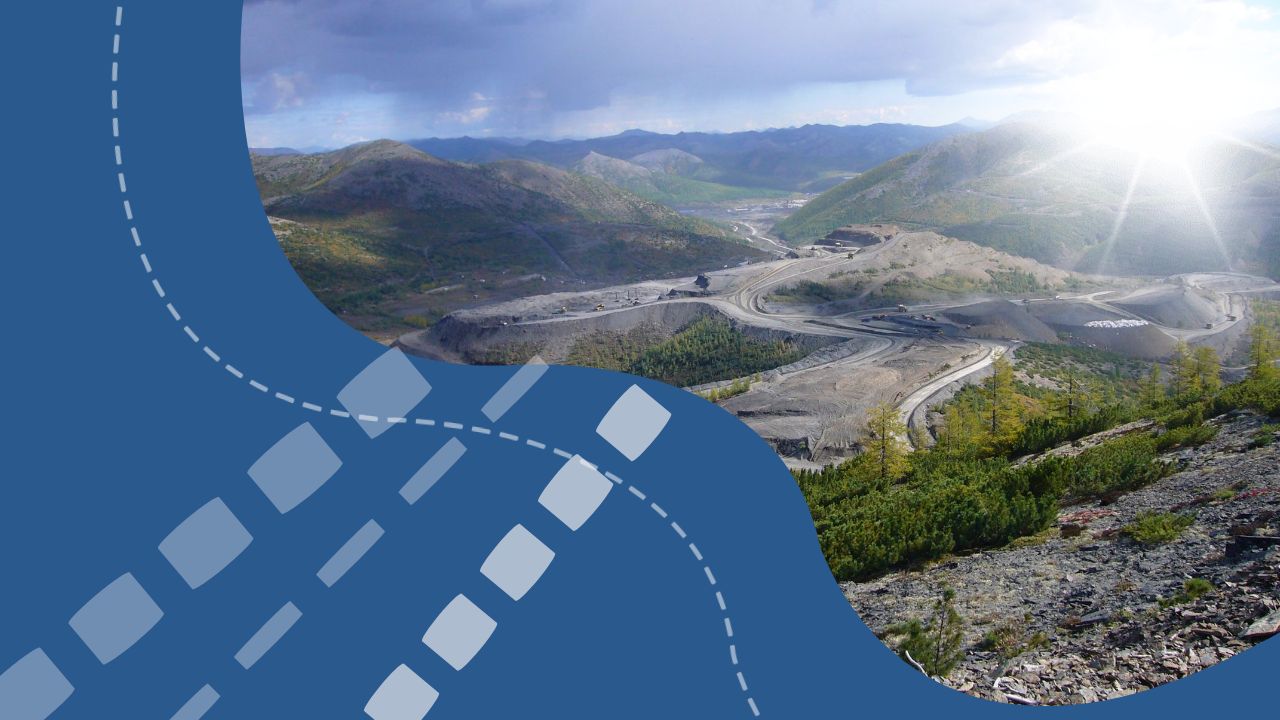
    Previously, it was recalled that following the breakdown of economic ties with the former USSR states and Kazakhstan’s decision to cease phosphate fertilizer production in the republic, Uzbekistan decided to establish its own raw material base.

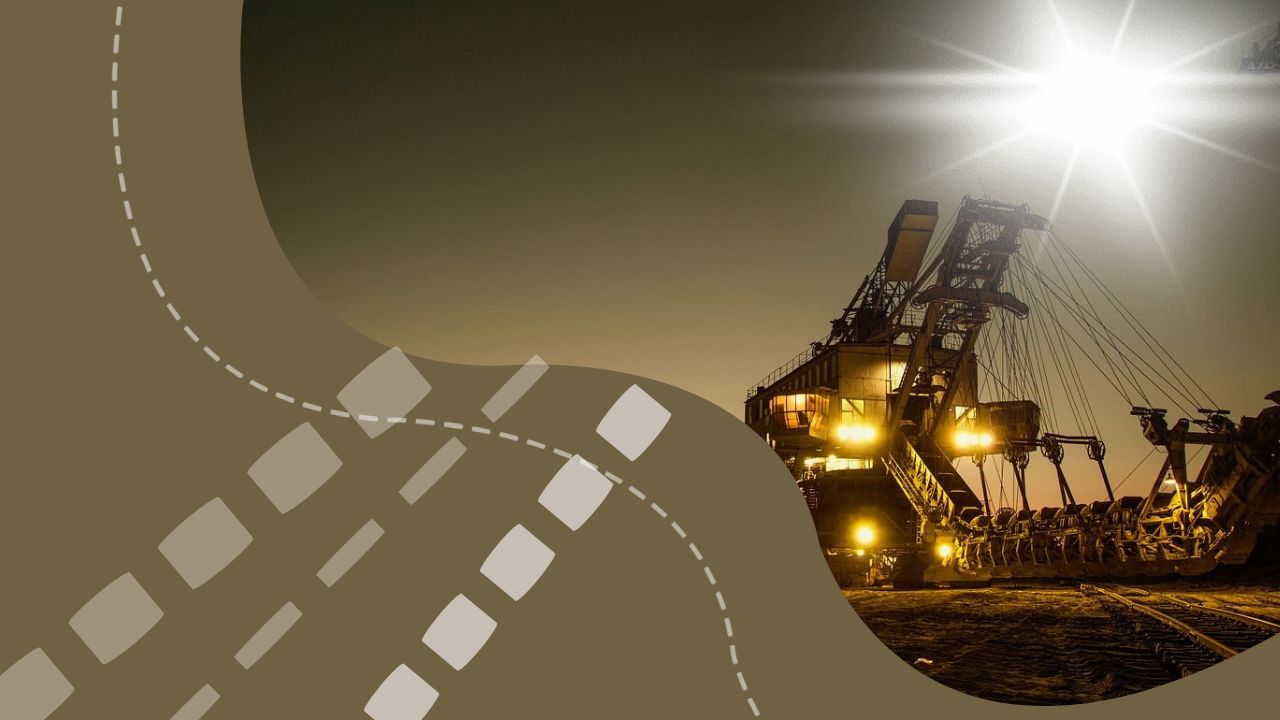
    The Navoi Mining and Metallurgical Combine took on the role of creating this new production giant. In 1998, the first line of a modern mining and processing complex in Kyzylkum, with a nearly completed production cycle from operational exploration to the production of phosphorite raw materials, was inaugurated.

    However, post-commissioning, issues arose as locally produced phosphamide was found to contain a high chlorine content, damaging the chemical plants adapted for Karatau phosphorites previously imported from Kazakhstan. Consequently, a combined scheme for enriching phosphate rocks was necessary, with Engineering Dobersek GmbH, a German company, supplying ore washing equipment for 10 million euros.

    In 2014, the phosphorite plant required additional funding of approximately $60 million, with Navoi MMC State Enterprise contributing about $30 million. The People’s Bank of Uzbekistan provided a $35 million loan from the Pension Savings System.

    In 2018, the complex was transferred to the chemical industry, and in 2020, by government decree, 100% of the authorized capital of the Kyzylkum phosphorite complex was merged with the authorized capital of the Almalyk Mining and Metallurgical Plant.
  • Report on Armenian mining industry’s impact on Azerbaijan’s ecology prepared

    Report on Armenian mining industry’s impact on Azerbaijan’s ecology prepared

    There is a lot of negative information in the Armenian press on this issue. Although the volume of investments in the mining industry of Armenia is increasing, this process is accompanied by rapid destruction of the environmental situation.

    “The ongoing activities of the mining industry do not take place without affecting the environmental situation of the countries in the region. The location of many mines near water sources leads to the discharge of chemical wastes, considered harmful to the environment, into rivers. Approximately 70 percent of Azerbaijan’s surface water resources are generated in neighboring countries through transboundary water flows. Since Armenia is geographically located in the basin of the rivers that pass through Azerbaijan, any mining activities carried out on its territory have a clear environmental impact on our country. As a member of the Espoo Convention, Armenia should be consulted on any activities carried out on its territory and in many cases must obtain Azerbaijan’s consent,” the report says.

    Also, the report includes the results of space monitoring of 26 mining deposits located on the territory of Armenia. Space monitoring works were carried out on the basis of images acquired by SPOT 6 and Azersky (SPOT 7) satellites in 2017 and 2023.

  • Armenia fails to abide by environmental regulations at mining fields

    Armenia fails to abide by environmental regulations at mining fields

    He made the remarks while speaking during the presentation of the report on space monitoring of extractive fields on the territory of Armenia, prepared and presented by the NGO coalition “Environmental Protection First” in cooperation with AzerCosmos.

    Mammadov noted that any activity carried out in fields on the territory of Armenia has an impact on the territory and natural environment of neighboring countries, as well as on the health of the population.

    “We have acceded to the Convention on Transboundary Rivers. However, the upstream countries do not join these conventions, evading their obligations. During almost 30 years of occupation, Armenia has caused very serious damage to the ecology of Azerbaijan by illegally exploiting fields in our territories. Now, after we liberated our territories as a result of the 44-day war, Armenia continues these activities on its lands. It still affects the ecology of Azerbaijan, especially the ecology of the Nakhchivan Autonomous Republic,” he said.

    “Various chemical products are used in the exploitation of these fields. In addition, the explosions have a negative impact on soil fertility, quality of ground and surface water,” Mammadov added.

    He stressed that Armenia should submit relevant environmental reports on the exploitation of the fields in accordance with the obligations undertaken under the conventions to which it has acceded.

    “Unfortunately, the studies that we are conducting as members of the coalition show that they do not observe transparency in carrying out these activities. And we, as a country located in this region, cannot remain indifferent to this. Some fields have been destroyed over the past decades. Space studies show that the territory of these deposits has expanded a lot, and the color of the soil shows that environmental regulations have not been respected,” Mammadov concluded.

  • Launch of unique marochno selenium production “Kazakhmys Progress” marks a new chapter in the history of kazakh science

    Launch of unique marochno selenium production “Kazakhmys Progress” marks a new chapter in the history of kazakh science

    In Balhash, a unique facility for the production of raw selenium by “Kazakhmys Progress” has been inaugurated. For Kazakhstani science, this marks a significant celebration as it signifies trust in domestic science and innovation within the production sector. This event marks the beginning of a new chapter in the history of innovative manufacturing in our country. It’s the world’s first and only production facility utilizing a technology capable of producing highly pure refined selenium, addressing both domestic and international demands. Selenium is a rare material in high demand across global metal markets, difficult to extract and even more challenging to refine. The uniqueness of this technology lies in its ability to obtain pure selenium with over 99.5% purity of its main component in a single cost-effective, non-reagent process. Consequently, the cost of domestically produced pure selenium is expected to be significantly lower than its foreign counterparts. This groundbreaking method for producing marochno selenium was developed by scientists at Satbayev University’s Institute of Metallurgy and Enrichment, with the participation of Russian scientist and professor of technical sciences, Sergey Nekhamin. The projected annual processing capacity is 75 tons of raw selenium. The first batch of metal has already been acquired.

    “Kazakhmys Progress” is a Kazakh company dedicated to developing and implementing innovative metallurgical technologies. The new production represents a modern industrial platform incorporating world-standard technological innovations. The project encompasses two independent technologies: vacuum thermal refining of raw selenium, first introduced within the territory of the Republic of Kazakhstan, and the second technology involves reprocessing slag from the non-ferrous metal workshop through a method of reductive smelting,” noted Nurakhmet Nuriev, Chairman of the Board of “Kazakhmys Corporation.” As such, the vacuum distillation technology for selenium production enables the manufacture of metal not only from traditional raw materials but also utilizes technogenic waste, thereby increasing production efficiency, positively impacting the environment, generating new job opportunities, and opening new possibilities for the region and the entire country. “Kazakhmys Progress” is a Kazakh company engaged in the development and integration of innovative metallurgical technologies. The launch of this new and modern production epitomizes the integration of science and production, aligning seamlessly with the priorities outlined by the Head of State, Kassym-Jomart Tokayev, in his address to the people of Kazakhstan. This initiative will pave the way for the expansion of modern high-tech industries, the achievement of the fifth and sixth levels of technological advancements, and positioning as a vanguard in the process of national economic modernization.

  • The “Kumtor Case”: Tengiz Bolturuk Only Repays 10 Million Som

    The “Kumtor Case”: Tengiz Bolturuk Only Repays 10 Million Som

    Tengiz Bolturuk and Ryspek Toktogulov were previously suspended from their positions. It was reported that the General Prosecutor’s Office initiated a thorough investigation, resulting in three criminal cases with a preliminary estimate of 1 billion som in damages to the state. According to Kaktus.media, citing sources within the law enforcement agencies, Tengiz Bolturuk has only returned 10 million som to the treasury.

    The total damage caused by Tengiz Bolturuk was evaluated at 1,146,161,000 som (approx 13 mln. USD). Throughout the investigation, he and other defendants in the criminal case paid 844,512,858 som.

    “However, out of this entire amount, Tengiz Bolturuk has only paid 10 million som. On April 27, 2023, a certain Chyngyz Tursunbekovich Toguzbaev made a payment, but his identity remains unknown,” the publication reports.

    Former external manager of “Kumtor Gold Company” JSC, Tengiz Bolturuk, remains under house arrest.

  • Kazakhstan’s subsoil tender platform received 315 electronic applications

    Kazakhstan’s subsoil tender platform received 315 electronic applications

    The total number of platform users has reached 1519.

    The exploration of subsoil has received 315 electronic applications. According to the Minister of Digital Development, Innovation, and Aerospace Industry, Bagdat Mussin, the minerals.gov.kz platform was launched in June, as reported by inbusiness.kz.

    “It creates favorable conditions for investors and businesses interested in subsoil development. Today, information about locations with geological survey results and active contracts has been integrated into the system. As of today, 58,620 contours have been digitized. While 39 thousand reports are geographically mapped. By the end of this year, a function will be developed to provide initial geological reports,” he said.

    Additionally, the platform has gathered a collection of layers including defense and national designated lands, water resources, animal burial sites, cemeteries, and other restricted areas. The minister added that this encompasses information from at least 60 cartographic layers.

    “To maintain the ‘currency’ of data, specialized automated workstations of industry state bodies will be added to the platform by the end of this year,” Mussin clarified.

    According to him, the department has also analyzed, reengineered, and digitized processes for businesses and investors, such as application submission, license acquisition, and report filing.

    “As a result, bureaucracy, paperwork, and wear and tear of thresholds in these processes will be reduced. Today, processes such as submitting applications for exploration and extraction, verifying the use of restricted territories, license signing, approval or rejection of applications, and court filing are automated. To simplify the license issuance process, integration with relevant information systems of state bodies has been carried out. At the initial stage, databases of individuals and legal entities, personal data control services, and unified account information systems have been added,” explained the department head.

    In the future, information systems such as conducting payments with second-tier banks, conducting auctions, and monitoring the timing of government services will be integrated, he noted.

    The total number of platform users has reached 1519. There have been 315 electronic applications submitted for exploration and processing.

  • Metinvest will invest in development of logistics center in Poland to increase sales of Ukrainian steel products

    Metinvest will invest in development of logistics center in Poland to increase sales of Ukrainian steel products

    According to him, Zaporizhstal and Kamet Steel are currently operating at 65-70% and 75% of their capacity, respectively. About 25% of products are sold on the domestic market, the rest goes mainly to the EU. At the same time, steel is sold mainly in neighboring countries, such as Poland, Slovakia, the Czech Republic, Romania, and Bulgaria.

    The company also sells metal products to Italy, Germany or France.

    “Steel mills can hardly complain about the low level of sales, but iron ore enterprises were less fortunate. Here, in addition to domestic consumption, China was also a buyer. However, in the current situation, exports there are practically impossible, since the Black Sea ports are blocked, therefore, the border countries of the EU also remain buyers here. Iron ore enterprises now use about 35-40% of their capacity. We tried to send raw materials to China through Romanian and Polish ports. However, unfortunately, the economy of this logistics simply does not work in the current market,” the top manager said.

    He noted that at the same time, the coal production of the company in Ukraine operates at 100% capacity. The mined coal is supplied to the group’s coking enterprises in Ukraine, and is also sold on the local market. The rest is sold abroad, mainly in Slovakia and Poland.

    “In 2022, our steel production decreased by 69% compared to last year. This affected a number of financial indicators. For example, our profit in 2022 is 54% less than last year,” the CEO said.

    He also stated that Metinvest’s strategy has not changed – the company wanted to connect Ukraine and Ukrainian iron ore with the European steel production chain. Therefore, the group continues to look for opportunities to acquire assets that would allow it to use the Ukrainian raw material base, produce products in the EU and supply them to European consumers.

  • Pokrovskugol to Purchase Mining Machine, Expand Production

    Pokrovskugol to Purchase Mining Machine, Expand Production

    The mining machine, a KDK500 manufactured by the Corum Group plant, is capable of cutting up to 24 tons of coal per minute. It is expected to begin operating at the beginning of next year and will be used to work out the first southern longwall of block 11 at the Pokrovskoye mine.

    In addition to the new mining machine, Metinvest Pokrovskugol has also purchased new face and bottom conveyors from T Machinery. These conveyors will soon be installed in the sixth longwall of the southern panel of block 11. By the end of the year, the number of Chinese-made SANYI EBZ-260 tunneling machines at the Pokrovskoye mine will also increase.

    The company expects the return of one of its JOY combines, which is currently being restored at the manufacturing plant in Poland.

    Metinvest Pokrovskugol has already used more than 16,000 cubic meters of concrete and 2,000 tons of rolled metal in preparing block 11 for operation. The company has also laid 34,000 square meters of roads. When construction is complete, two thousand miners will work on the block every day. The final commissioning of block 11 is planned for 2025.

    This year, the Pokrovskoye mine has already produced almost 3.5 million tons of coal.

    Yuri Ryzhenkov, General Director of Metinvest, noted during his visit to the enterprise that the results shown by the teams of Metinvest Pokrovskugol are worthy of respect.

    “It is very important that our employees and soldiers defend the country with arms in their hands. But no less important are those who hold the economic front, enable the country to function, build up strength. Today, almost every one of our defenders contains a particle of Pokrovsky coal, because the steel that is on body armor, mobile shelters and much more was made from it,” Ryzhenkov said.

    Metinvest created Metinvest Pokrovskugol to manage operational and administrative changes at the enterprises of the Pokrovskaya Coal Group (PUG). The company includes, in particular, the Pokrovskoye mine administration and the Svyato-Varvarinsky concentrating plant.

    Svyato-Varvarinskaya concentrator is a premium-class coal concentrate producer in Ukraine. The production capacity of the enterprise is about 8 million tons of ordinary coking coal per year with the possibility of enriching five different classes of coal.

    Sh / y Pokrovskoe (formerly Krasnoarmeyskaya-Zapadnaya No. 1) is the largest producer of coking coal in Ukraine.

    The main shareholders of Metinvest BV are the SCM Group (71.24%) and the Smart Holding Group (23.76%), which jointly manage the company.

    Metinvest Holding LLC is the management company of the Metinvest group.

  • Don’t the Museums Matter? The Chiatura Manganese Mining History Museum

    Don’t the Museums Matter? The Chiatura Manganese Mining History Museum

  • The Scientific and Production Association for Rare Metals and Hard Alloys, a part of AGMK, has achieved an early fulfillment of the annual forecast

    The Scientific and Production Association for Rare Metals and Hard Alloys, a part of AGMK, has achieved an early fulfillment of the annual forecast

    Scientific and Production Association for Rare Metals and Hard Alloys (NPO PRMiTS), a division of Almalyk Mining and Metallurgical Combine, has achieved an early fulfillment of the projected target for the year 2023 on the eve of the 32nd anniversary of Uzbekistan independence.

    In the current year, the labor collective of NPO PRMiTS was tasked with producing industrial products worth 382.3 billion Uzbekistani soms. As of today, industrial products worth 396.0 billion Uzbekistani soms have been actually produced.

    For reference: This structural unit of Almalyk Mining and Metallurgical Combine is located in the city of Chirchik. The enterprise produces tungsten and molybdenum products in the form of oxides, powders, ingots, and briquettes for alloying cast iron and steel. It also produces high-value-added products such as wires of various cross-sections, molybdenum round and flat bars, refractory metal alloys, single crystals of tungsten, molybdenum, and rhenium obtained through powder metallurgy. Additionally, thanks to research and exploration by the association’s specialists, new types of products have been developed. The Uzbek-Korean Scientific and Technological Center operates under the NPO as well.

    It is worth noting separately that this enterprise concluded the first half of the current year with a net profit of 193.7 billion Uzbekistani soms.