Website: Eurasia.com

  • Zelenskiy Rejects US Demands for $500 Billion Cut from Ukraine’s Mineral Wealth

    Zelenskiy Rejects US Demands for $500 Billion Cut from Ukraine’s Mineral Wealth

    Ukrainian President Volodymyr Zelenskiy confirmed on Sunday that the United States had dropped its demand for Kyiv to commit to paying $500 billion as part of a controversial deal to give Washington a cut of Ukraine’s mineral wealth. However, Zelenskiy made it clear that US military support must be included in any agreement, further signaling the significant differences between the two countries in negotiations.

    The US had previously pressured Zelenskiy to accept a proposal to tap into Ukraine’s mineral wealth, which was introduced by US Treasury Secretary Scott Bessent during a visit to Kyiv on February 12. Zelenskiy rejected the proposal, stating that it lacked the strong security guarantees Ukraine requires in the face of ongoing Russian aggression.

    The deal, which is part of the US strategy to broker a ceasefire in the three-year war with Russia, was presented as a key component of Washington’s broader diplomatic efforts, especially following direct talks with Russia in Saudi Arabia. Zelenskiy, however, stressed that the arrangement must be mutually beneficial for both Ukraine and the US, noting that he would not accept a deal that undermines Ukraine’s security.

    Despite the US’s stance, Zelenskiy also rejected the argument that American companies investing in Ukraine would serve as a form of security guarantee. Instead, he insisted that military support must remain a cornerstone of any agreement.

    In contrast, Bessent, speaking on Fox News, framed the proposal as an opportunity for Ukraine’s economic growth, suggesting that the partnership would focus on strategic minerals and energy, offering an “economic security guarantee” rather than a traditional military one.

    The ongoing talks, however, have led to escalating rhetoric between the two sides. US President Donald Trump has referred to Zelenskiy as a “dictator,” while Zelenskiy has accused Trump of repeating Russian disinformation.

    Ukraine, despite reports of vast mineral resources, does not have internationally recognized reserves of rare earth minerals that would likely yield the $500 billion Trump has proposed. The country’s critical minerals, including titanium and gallium, are not expected to be as valuable as projected by the US.

    Zelenskiy, however, said Ukraine would proceed with a comprehensive survey of its mineral reserves, including clarifying their ownership status and possibly retaking assets acquired illegally.

  • Kazakhstan’s Solidcore Resources Invests in Renewable Energy with Bank Loan

    Kazakhstan’s Solidcore Resources Invests in Renewable Energy with Bank Loan

    Solidcore Resources plc, a gold mining company, has announced a significant investment in renewable energy projects. The company has secured a seven-year loan from Kazakhstan’s CentreCredit Bank to fund several renewable energy initiatives.

    The funds will be used to launch renewable energy projects at the Bakyrchik and Varvarinskoye deposits. At Bakyrchik, a 17 MW solar power plant will be constructed, while at Varvarinskoye, a 23 MW solar plant will be built alongside a 40 MW gas piston unit to ensure energy supply during periods of low sunlight.

    Approval for infrastructure related to the Kyzyl project is expected to take place this year, with alternative energy generation expected to begin in 2026.

    This deal marks the first debt financing transaction after Polymetal International plc was rebranded and its key development strategy was updated. Going forward, Solidcore plans to collaborate with CentreCredit Bank and other local banks.

    The mining company estimates that atmospheric emissions will be reduced by 27% compared to 2023 levels. The renewable energy projects are expected to reduce dependence on external energy sources, particularly coal-fired power plants, and mitigate the impact of rising energy costs.

  • Kazakhstan’s Industry Minister Discusses Subsoil Use Reforms with Mining Chamber

    Kazakhstan’s Industry Minister Discusses Subsoil Use Reforms with Mining Chamber

    Kanat Sharlapaev, the Minister of Industry and Construction of Kazakhstan, held a quarterly meeting with members of the Kazakhstan Mining Chamber Association. The association unites 45 companies, both domestic and foreign investors.

    The Minister emphasized that junior and large international companies entered Kazakhstan after reforms in the subsoil use sector and are making significant contributions to the geological study of the country’s territory.

    He also underscored the importance of private investments and the introduction of advanced technologies in geological exploration.

    During an open dialogue, Kanat Sharlapaev and Chamber members discussed the further development of international reporting standards, taxation issues, and challenges affecting the investment climate.

    The Minister stressed the need to continue the reform process in the subsoil use sector and called for more active cooperation with the Association to develop Kazakhstan’s geological sector.

  • Kazakhstan Summarizes 2024 Results in Geology and Subsoil Use

    Kazakhstan Summarizes 2024 Results in Geology and Subsoil Use

    The Ministry of Industry and Construction of Kazakhstan has released its report on the results for 2024 in the fields of geology and subsoil use. A key objective for the Ministry is to increase the geological exploration of Kazakhstan’s territory to replenish the country’s mineral resource base, thus supporting the active development of all industrial sectors.

    Kazakhstan’s mineral resource base includes over 9,500 deposits, including 987 deposits of solid minerals, 355 hydrocarbon deposits, more than 3,500 deposits of common minerals, and over 4,500 groundwater deposits.

    In the past year, 23 new deposits were registered by subsoil users, and the exploration results showed an increase in reserves: 20 tons of gold, 48,000 tons of copper, 464,000 tons of chrome, and about 290,000 tons of lead and zinc.

    The average reserve fulfillment coefficient for gold, uranium, iron, and manganese has shown a 2% increase over the last decade.

    Efforts to attract investments into subsoil use are also ongoing, with the state geological exploration program identifying 38 promising areas for solid minerals, including rare earth metals (2.6 million tons), beryllium (23,800 tons), brown coal (1.1 billion tons), gold (19 tons), zirconium (2 million tons), niobium (500,000 tons), and tungsten (400,000 tons).

    Additionally, the Kuyretykol deposit has been discovered, with reserves of around 800,000 tons of rare earth metals, including cerium and lanthanoids.

    The opening of areas available for geological exploration has led to a significant rise in private investments for the exploration of solid minerals. In 2023, private investment increased 2.5 times compared to 2018, reaching 82 billion tenge.

    In 2024, 606 exploration licenses were issued, showing growth from previous years. For mining, 33 licenses were issued.

    Private investment in geological exploration is on the rise, as businesses show increased interest in searching for promising subsoil areas. In 2024, two electronic auctions took place, with major foreign companies such as Rio Tinto, Fortescue, Kratos Resources, and others competing with local companies like Kazakhmys and ERG Exploration for exploration rights.

    Foreign companies are already operating in Kazakhstan, investing in exploration with at least 41 billion tenge and social obligations totaling 7.8 billion tenge, covering an area of 25,000 km². The expected results from the exploration of these deposits are expected between 2026 and 2028.

    Growth in private investment in geological exploration is directly linked to the level of funding and effectiveness of early-stage geological studies that identify promising exploration areas. State geological exploration funding amounts to approximately 8 USD per square kilometer.

    From 2018 to 2023, the allocation for geological exploration amounted to 51.2 billion tenge, while investments in subsoil use exploration reached 357 billion tenge.

    In January 2025, an electronic auction for 21 plots took place, attracting over 50 companies. The total signing bonus amounted to 20 billion tenge, with investments of 40 million USD attracted.

    Stable funding for state geological exploration positively impacts private investments and stimulates further exploration. This is essential for expanding the country’s mineral resource base.

    On January 1, 2025, the Unified Subsoil Use Platform (minerals.e-qazyna.kz) was launched, providing open access to all geological data. The platform has digitized 22 government services, processing 506 applications since its launch. It contains a register of geological reports, including over 60,000 reports for free online access, and provides detailed information about licenses, contracts, occupied and free territories, and previous geological and geophysical studies.

    For specific geological materials, subsoil users can apply through the National Geological Service’s website, and requests are processed within five business days.

  • Kazakhstan Discusses Digitalization of Subsoil Use at Round Table Meeting

    Kazakhstan Discusses Digitalization of Subsoil Use at Round Table Meeting

    A round table was held in Astana at Maqsut Narikbayev University under the chairmanship of the Minister of Industry and Construction of Kazakhstan, Kanat Sharlapaev. The event brought together representatives of subsoil user companies to discuss key issues in the fields of geology and subsoil use.

    The Minister emphasized that one of the ministry’s priorities is to enhance geological exploration across Kazakhstan to replenish the country’s mineral resource base. He also reviewed the past year’s results and outlined plans for the current period.

    Deputy Minister Zhannat Dubirova presented projects aimed at digitalizing the sector, including the Unified Subsoil Use Platform (minerals.e-qazyna.kz). According to her, since its launch, the platform has processed 506 applications and provides users with open access to all geological data, including 60,000 reports.

    The platform’s interactive map enables subsoil users to analyze infrastructure, geological, and geophysical data for specific areas, as well as submit auction applications. Additionally, by April, an electronic system for monitoring compliance with license and contract obligations is set to be introduced.

    Round table participants also discussed the digitalization of primary geological reports and the need to integrate the platform into company operations.

  • U.S.-Russia Negotiations and Global Commodity Markets

    U.S.-Russia Negotiations and Global Commodity Markets

    As the United States and Russia engage in negotiations to resolve the ongoing conflict in Ukraine, discussions are intensifying around the reintegration of Russian commodities into the global market. Despite Western sanctions imposed following Russia’s 2022 invasion of Ukraine, Russian exports of vital resources such as oil, gas, and metals have persisted, often finding alternative pathways to international buyers.

    Recent diplomatic efforts signal a potential shift in the geopolitical landscape. In mid-February 2025, U.S. Secretary of State Marco Rubio and Russian Foreign Minister Sergey Lavrov convened in Riyadh, Saudi Arabia, to explore avenues for ending the Ukraine war and improving bilateral relations. These talks, notably excluding Ukrainian representatives, have raised concerns among European allies about the future of sanctions and the potential resurgence of Russian commodities in Western markets. Associated Press

    Russian President Vladimir Putin has proactively proposed economic collaborations, offering U.S. companies joint ventures in rare earth metals and aluminum production. This initiative aims to leverage Russia’s substantial natural resources to attract Western investment and technology, potentially reshaping global supply chains that have been disrupted by the conflict and ensuing sanctions. Reuters

    Despite sanctions, Russia has maintained its role as a key energy supplier. Reports indicate that the European Union’s expenditure on Russian oil and gas in the third year of the war exceeded its financial aid to Ukraine, underscoring the complexities of energy dependence and economic interests. The Guardian

    The Organisation of the Petroleum Exporting Countries and its allies (OPEC+) face strategic decisions regarding production levels. With ongoing negotiations and the possibility of lifting sanctions, the group must balance market stability with member interests, particularly as non-member producers, like the United States, expand their market share. Reuters

    As diplomatic dialogues progress, the global commodities market remains in a state of anticipation. The potential reintegration of Russian resources poses significant implications for energy prices, supply chains, and geopolitical alliances. Stakeholders worldwide are closely monitoring these developments, recognizing that the resolution of the Ukraine conflict could herald a new era in international trade and energy dynamics.

  • The Rare Earth Myth: Unpacking Ukraine’s Mineral Wealth and Geopolitical Hype

    The Rare Earth Myth: Unpacking Ukraine’s Mineral Wealth and Geopolitical Hype

    [vc_row type=”in_container” full_screen_row_position=”middle” column_margin=”default” column_direction=”default” column_direction_tablet=”default” column_direction_phone=”default” scene_position=”center” text_color=”dark” text_align=”left” row_border_radius=”none” row_border_radius_applies=”bg” overflow=”visible” overlay_strength=”0.3″ gradient_direction=”left_to_right” shape_divider_position=”bottom” bg_image_animation=”none”][vc_column column_padding=”no-extra-padding” column_padding_tablet=”inherit” column_padding_phone=”inherit” column_padding_position=”all” column_element_direction_desktop=”default” column_element_spacing=”default” desktop_text_alignment=”default” tablet_text_alignment=”default” phone_text_alignment=”default” background_color_opacity=”1″ background_hover_color_opacity=”1″ column_backdrop_filter=”none” column_shadow=”none” column_border_radius=”none” column_link_target=”_self” column_position=”default” gradient_direction=”left_to_right” overlay_strength=”0.3″ width=”1/1″ tablet_width_inherit=”default” animation_type=”default” bg_image_animation=”none” border_type=”simple” column_border_width=”none” column_border_style=”solid”][vc_column_text text_direction=”default”]

    In the shadow of escalating geopolitical tensions, a narrative has emerged that Ukraine—a nation battered by war and economic instability—sits atop trillions of dollars’ worth of rare earth metals (REMs). This tantalising claim has captured the attention of policymakers, investors, and media outlets alike. But as with many stories born out of crisis, the truth is far more nuanced—and far less sensational—than it appears.

    At the heart of this tale is a proposed $500 billion deal between the White House and Ukrainian President Volodymyr Zelenskyy, aimed at tapping into Ukraine’s purported mineral wealth. The problem? Ukraine doesn’t have any rare earth metals to speak of. What it does have are strategically important minerals like lithium, graphite, titanium, and copper—resources critical for modern technology but not nearly as valuable or transformative as REMs.

    This distinction matters—not just for Ukraine’s economic future but also for global supply chains, energy security, and the geopolitical balance of power. To understand why, we must delve into the science, economics, and politics behind these materials, separating fact from fiction in what could be one of the most misunderstood narratives of our time.

    What Are Rare Earth Metals, Really?

    Rare earth metals (REMs) are a group of 17 elements on the periodic table, including the 15 lanthanides plus scandium and yttrium. Despite their name, most REMs are not particularly rare in the Earth’s crust; rather, they are difficult to extract and refine economically due to their geological dispersion. These elements play an outsised role in modern technology, enabling everything from smartphones and electric vehicles to wind turbines and advanced military systems.

    Their importance lies in their unique chemical properties. When combined with other materials, REMs create alloys and compounds with extraordinary conductivity, magnetism, and durability. For example, neodymium is essential for manufacturing powerful permanent magnets used in wind turbines and electric motors, while dysprosium improves the heat resistance of those same magnets.

    But here’s the rub: despite their critical applications, the total annual value of global REM production hovers around $15 billion—less than the revenue generated by two days of global oil output. While indispensable, REMs are not the golden ticket some imagine them to be.

    Ukraine’s Real Mineral Wealth

    So if Ukraine doesn’t have REMs, what does it have? Quite a bit, actually—but none of it qualifies as “rare earth.” Instead, Ukraine boasts significant reserves of strategically important minerals that are vital for clean energy, electronics, and defense industries. Among these are:

    • Lithium: Often referred to as “white gold,” lithium is crucial for producing high-capacity batteries used in electric vehicles (EVs) and renewable energy storage. Ukraine holds Europe’s largest lithium deposits, estimated at 12–14 million tonnes of lithium carbonate equivalent. However, these resources remain largely untapped. As of 2024, Ukraine produces no lithium and exports nothing. Even if fully exploited, current reserves would be worth between $10 billion and $12.5 billion—not even close to the $500 billion figure touted by U.S. officials.
    • Graphite: Another key component in EV batteries, graphite is also used in fuel cells, lubricants, and industrial applications. Ukraine has substantial graphite reserves, though production has plummeted amid ongoing conflict. In 2024, the country exported just 2,870 tonnes of graphite, worth less than $7 million.
    • Titanium: Ukraine holds a substantial portion of the world’s titanium reserves, crucial minerals like ilmenite and rutile used in high-tech sectors like aerospace, defense, and medicine. Representing about 7% of global reserves and the largest in Europe, these deposits theoretically hold a value of $421 billion. A significant portion of these reserves is located in areas under Russian control or contested, severely hindering extraction. This disruption is reflected in a 37% year-on-year drop in Ukraine’s 2024 titanium concentrate exports, resulting in a mere $11.6 million in revenue. To truly capitalise on its resources and compete with Russia, a long-established producer of titanium sponge, Ukraine must invest in its own sponge production capabilities.
    • Uranium: With 107,200 tonnes of identified uranium reserves, Ukraine ranks among the top global producers of this nuclear fuel source. However, the country lacks refining capacity, leaving it dependent on external processors—chiefly Russia—for enrichment.
    • Cobalt and Nickel: Essential for battery production, Ukraine’s cobalt and nickel reserves are modest but noteworthy. Collectively valued at $3.6 billion, these deposits pale in comparison to those of major producers like the Democratic Republic of Congo and Indonesia.
    • Copper: A cornerstone of electrical wiring and electronics, copper adds depth to Ukraine’s mineral portfolio. Though estimates suggest Ukraine possesses the fourth-largest reserves in Europe, actual production remains nonexistent. Precise figures for Ukraine’s copper reserves are not available, but Poland’s reserves are valued at $340 billion. Ukraine’s reserves are estimated to be a fraction of that amount.

    While these resources are undoubtedly valuable, they do not approach the scale or significance of true REMs. Nor do they justify the astronomical valuations being bandied about in Washington and Brussels.

    The Origins of the Misunderstanding

    How did such a fundamental error gain traction? According to Bloomberg Opinion columnist Javier Blas, the confusion stems from a report published by the NATO Energy Security Centre of Excellence in Lithuania. Titled provocatively, the document lists minerals like titanium, lithium, and uranium alongside genuine REMs, conflating the two categories entirely.

    “What Ukraine has is scorched earth; what it doesn’t have is rare earths. Surprisingly, many people – not least, US President Donald Trump – seem convinced the country has a rich mineral endowment. It’s a folly,” Blas wrote.

    This misclassification has been compounded by political rhetoric. Senator Lindsey Graham, a vocal advocate for the minerals deal, recently claimed that Ukraine possesses $2–7 trillion worth of rare earth minerals. Such hyperbole ignores both the scientific reality and the logistical challenges of mining and processing these resources.

    Even Donald Trump, never one to shy away from grandiose claims, has jumped on the bandwagon. On 3 February 2025, he declared that Ukraine has “very valuable rare earths,” echoing Graham’s assertions without evidence.

    Geopolitics and Supply Chains

    Beyond Ukraine’s borders, the stakes are higher still. China currently dominates global REM production, controlling roughly 80% of the market. Its dominance extends beyond raw materials to include refining and processing capabilities, giving Beijing immense leverage over industries reliant on these metals.

    Russia, too, plays a pivotal role in the supply chain for certain strategic minerals, particularly uranium. By investing heavily in refining infrastructure, Moscow has positioned itself as a key player in the nuclear energy sector.

    For Western nations, this concentration of supply represents a vulnerability—one that has only grown more acute amid rising tensions with Beijing and Moscow. Efforts to diversify sources of critical minerals have thus become a priority, with Ukraine viewed as a potential alternative supplier.

    But achieving this goal will require massive investment in exploration, extraction, and processing facilities—none of which Ukraine currently possesses. Without tens of billions of dollars in funding, turning Ukraine’s mineral potential into reality remains a distant dream.

    Separating Hype from Hope

    Ukraine’s mineral wealth is real, but it is neither as vast nor as transformative as recent headlines suggest. While the country holds promising reserves of lithium, graphite, titanium, and other strategically important minerals, these resources cannot fill the void left by China’s stranglehold on REMs.

    Moreover, the path to monetising Ukraine’s mineral assets is fraught with obstacles. From securing financing to navigating geopolitical minefields, the challenges are immense. Investors willing to take the plunge may find themselves waiting years—or even decades—for returns.

    As the world grapples with the realities of resource scarcity and shifting alliances, clarity is paramount. Misunderstandings like the one surrounding Ukraine’s so-called rare earth metals risk diverting attention and resources away from more pressing issues.

    In the end, Ukraine’s mineral story is not one of untold riches waiting to be unearthed—but rather of cautious optimism tempered by hard truths. It is a reminder that in geopolitics, as in geology, appearances can be deceiving.[/vc_column_text][/vc_column][/vc_row]
  • Zelenskiy Freezes US Mineral Deal, Seeks Middle Eastern Investors

    Zelenskiy Freezes US Mineral Deal, Seeks Middle Eastern Investors

    Ukrainian President Volodymyr Zelenskiy has suspended a proposed deal to exploit Ukraine’s vast mineral resources, estimated to be worth trillions of dollars, after the US provided little in return. Zelenskiy is now seeking new investors in the Middle East.

    The agreement, reached with US Treasury Secretary Scott Bessent last week, remains unsigned as it “does not adequately protect the country’s interests,” according to Zelenskiy. US President Donald Trump demanded access to $500 billion worth of Ukrainian minerals as compensation for US support during the three-year war, but failed to offer the crucial security guarantees Zelenskiy seeks in any deal.

    Zelenskiy insists that any minerals agreement must include not only subsoil resources but also security guarantees and foreign investment in Ukraine, all legally formalized. However, it is increasingly apparent that none of Ukraine’s allies are willing to provide a genuine security deal.

    The relationship between Zelenskiy and Trump has deteriorated, particularly after the US announced Europe’s exclusion from Ukraine ceasefire talks that began in Riyadh on February 18. Retired Lieutenant General Keith Kellogg, special envoy to Ukraine, had stated Ukraine would be at the table, but no Ukrainian representatives were present when Russian Foreign Minister Sergei Lavrov started talks with US Secretary of State Marco Rubio.

    In light of these developments, Zelenskiy has turned to the Middle East for new partnerships. During a visit to the UAE, he announced the signing of a bilateral trade agreement, the first of its kind between Ukraine and a Gulf nation. The agreement opens the UAE market to almost all Ukrainian goods and is expected to boost Ukraine’s GDP growth.

    Zelenskiy was scheduled to visit Saudi Arabia but canceled his plans as President Trump began US-Russia bilateral negotiations in Riyadh aimed at stopping Russia’s war against Ukraine. Prior to this, a Ukrainian delegation had already started discussions with Saudi Arabian entrepreneurs, presenting investment opportunities worth $500 million in various sectors including energy, agriculture, and infrastructure.

    As negotiations continue, the value of Ukraine’s mineral deposits has been estimated at up to $11.5 trillion, including significant reserves of critical minerals such as lithium and titanium. The outcome of these discussions could have significant implications for Ukraine’s economic future and its relationships with global powers.

  • UK Expertise Sparks a Sustainable Mining Revolution Across Europe and Central Asia

    UK Expertise Sparks a Sustainable Mining Revolution Across Europe and Central Asia

    According to the document “UK Capabilities in Mining for Critical Minerals – Industry Case Studies” recently published by the Department for Business and Trade, UK expertise is powering a new wave of mining innovation across Europe and Central Asia, according to a recent industry case study slide pack. The document highlights how British companies are leveraging cutting‐edge technology and sustainable practices to transform mining operations on two continents.

    In Kazakhstan, Central Asia Metals (CAML) is at the forefront. At its Kounrad operation, CAML has installed a 4.77MW solar power plant that now meets up to 18% of the site’s energy demand. This renewable solution not only cuts down on emissions but also underpins the company’s long-term commitment to sustainability. Meanwhile, at its Sasa mine in North Macedonia, CAML is pioneering paste fill mining methods designed to drastically reduce reliance on surface water, marking a significant step towards more sustainable resource extraction.

    Over in Europe, the Vareš Polymetallic Project in Bosnia and Herzegovina is making headlines as the first new mine to open in the region in over a decade. Spearheaded by Adriatic Metals and supported by Wardell Armstrong International, the project showcases how integrated technical expertise—from metallurgical testing to comprehensive ESG assessments—can drive both economic growth and environmental responsibility.

    These case studies underscore the global reach of UK mining capabilities. From renewable energy integration to innovative water management and robust environmental frameworks, British-led solutions are setting a new standard for mining in Europe and Central Asia. As the demand for critical minerals continues to rise, these pioneering projects offer a blueprint for sustainable development that could well shape the future of the industry.

  • Central Asia Mining: Shifting Investment Landscape

    Central Asia Mining: Shifting Investment Landscape

    Central Asia’s mining sector—long a linchpin of the region’s resource-based economy—is at a transformative juncture. A study published on 19 February 2025 by the Eurasian Development Bank (EDB) examining mutual direct investments (MDI) across the Eurasian region from 2016 to the first half of 2024 reveals an evolving investment landscape. Traditionally dominated by investments in extractive industries, the region is now witnessing a broad diversification into sectors such as manufacturing, power, and greenfield projects. Alongside these trends, emerging regulatory frameworks—most notably new Chinese legislation concerning post-mining reconciliation and ESG (Environmental, Social, and Governance) requirements—are poised to significantly influence future investment dynamics.

    Historical Pillar: The Dominance of Extractive Industries

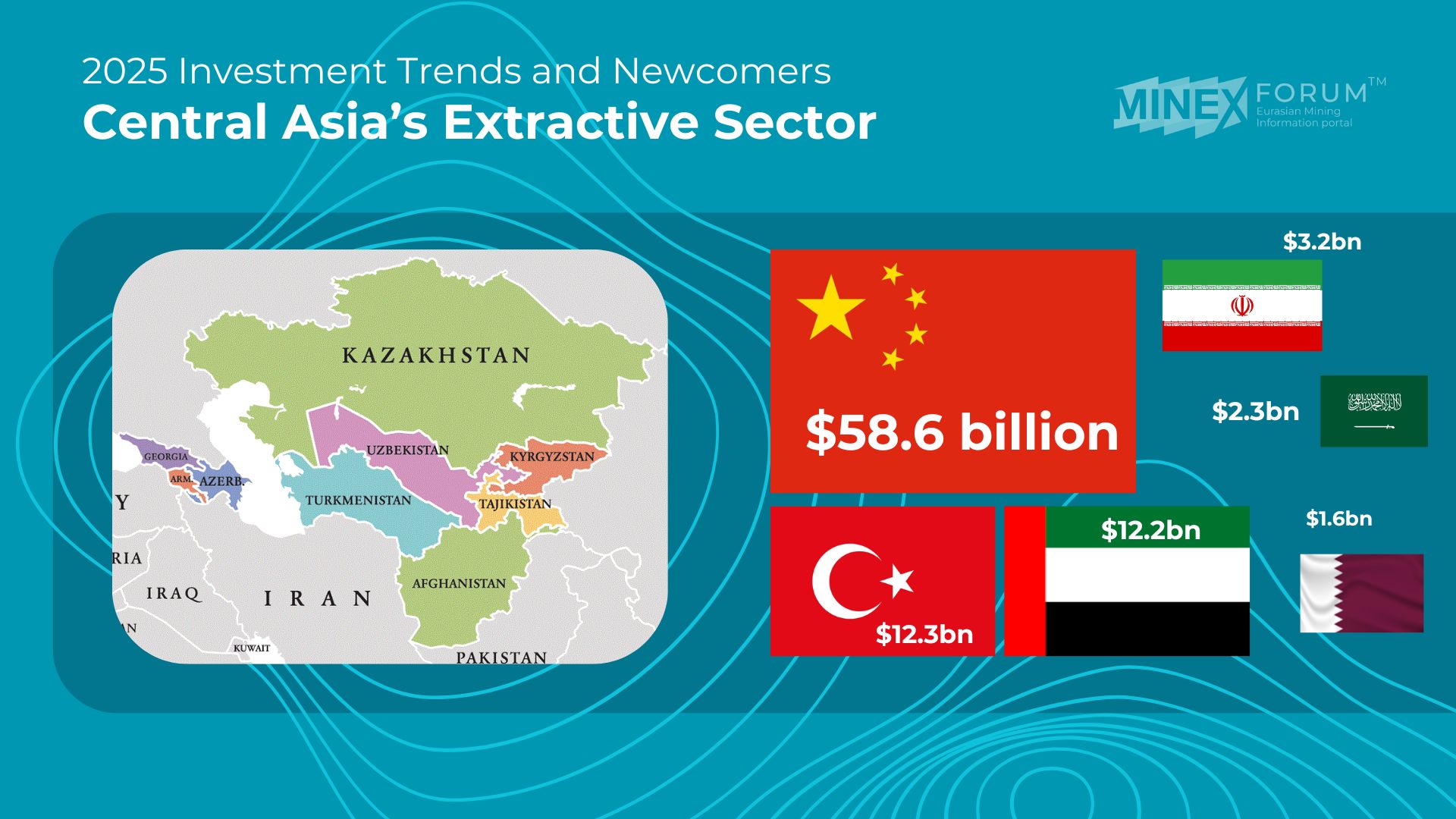
    For decades, mining and the broader extractive industries have formed the backbone of economic development in Central Asia. Rich deposits of minerals and metals have attracted substantial international investment, particularly from China, whose longstanding focus on extractive projects translated into investments of $36.2 billion. This capital influx has been instrumental in developing the region’s infrastructure and export capabilities, cementing mining’s role as a critical driver of economic progress.

    A Shifting Investment Landscape

    While the total MDI stock in the Eurasian region reached $90.4 billion by mid-2024, the extractive sector’s share of investment has begun to contract. Once accounting for 65.4% of the investment portfolio in 2020, its share has decreased to 55% of a $50 billion stock. This trend is less a sign of waning interest in mining and more indicative of a broader reallocation of capital as investors seek opportunities in the new and adjacent sectors.

    Diversification: From Mines to Manufacturing and Power

    The diversification of investments in Central Asia is underscored by significant growth in the manufacturing and energy sectors. Chinese investments, traditionally concentrated in extractive industries, are increasingly flowing into power and manufacturing. For example, investment in the power sector surged to $4.1 billion—a 2.1-fold increase in just a year and a half—primarily in Uzbekistan, while the manufacturing sector attracted $11.8 billion. This capital reallocation suggests that investors are now betting on a more diversified economic future that balances resource extraction with value-added industries.

    Regional Dynamics and the Role of New Partners

    Central Asia’s investment ecosystem is undergoing a fundamental reshaping, influenced not only by traditional players like China but also by new entrants from Türkiye, the Gulf states, and Iran. China remains the largest investor with an MDI stock of $58.6 billion, yet its strategy is evolving from a heavy reliance on extractive projects to a broader portfolio that includes energy, processing and manufacturing. Emerging investments from Saudi Arabia, UAE, Qatar, and Türkiye further illustrate the region’s expanding appeal. This diversification not only mirrors geopolitical shifts but also signals a recalibration of global investors’ risk and reward strategies in an increasingly competitive market.

    Emerging Regulatory Frameworks: China’s Revised Mineral Resources Law

    Adding a new dimension to the evolving investment landscape, recent Chinese legislative reforms are reshaping how mining investments will be planned and executed. According to a report by ICLG law firm, China has revised its Mineral Resources Law (effective from 1 July 2025) to include robust post-mining reconciliation requirements. These new provisions mandate that mining companies develop comprehensive ecological restoration plans once extraction activities cease. Such measures are designed to enforce ESG principles across the industry, ensuring that environmental sustainability and community welfare are prioritised alongside economic gains.

    While the law represents a significant step towards more sustainable mining practices, critics have noted that it lacks clear standards and robust community engagement provisions. The ambiguity surrounding enforcement may challenge the law’s effectiveness in practice. Nevertheless, as Chinese companies are pivotal players in Central Asia’s mining sector, these regulatory changes are expected to have far-reaching implications. By requiring adherence to ESG standards and post-mining reconciliation, the revised law not only elevates environmental and social accountability but also enhances the long-term viability of Chinese investments in the region.

    For Chinese investors, the new legal framework serves as both a challenge and an opportunity. On one hand, increased compliance costs and uncertainty in implementation could complicate investment decisions. On the other, the mandate for sustainable practices is likely to build greater investor confidence among international stakeholders who are increasingly attuned to environmental and social governance criteria. In effect, these reforms could catalyse further Chinese investments in Central Asia by promoting responsible mining practices that align with global trends toward sustainability.

    Greenfield Projects and the Future of Mining in Central Asia

    The momentum of greenfield projects further underscores the region’s dynamic evolution. With investments in new business and infrastructure soaring to $57 billion—almost double the levels of 2016—the emphasis is on modern, sustainable projects that integrate advanced technologies and greener practices. Even as capital shifts towards manufacturing and energy, the mining sector is adapting by incorporating sustainable practices and innovative technologies. This approach not only mitigates the historical environmental impact of mining but also positions the sector as a leader in sustainable resource management.

    Navigating the Future: Challenges and Opportunities

    Central Asia’s mining sector now stands at a crossroads. While traditional extractive investments continue to underpin the region’s economic strength, the emerging trends towards diversification and sustainability present both challenges and opportunities. Investors are increasingly weighing the volatility inherent in commodity markets against the more stable returns offered by sectors such as energy and manufacturing. Moreover, the integration of ESG principles—fuelled by legislative changes like China’s revised Mineral Resources Law among others—introduces a new layer of complexity, urging mining companies to innovate and adapt.

    Technological advancements, ranging from automation to environmentally friendly extraction techniques, hold the promise of revitalising the mining sector. These innovations, in tandem with the new regulatory environment, could help balance economic imperatives with ecological and community well-being. The successful navigation of these changes will be critical in ensuring that Central Asia’s natural resouces wealth continue to drive sustainable and long-term growth.


    Don’t miss the opportunity to explore Kazakhstan’s vast mineral wealth and connect with decision-makers shaping the future of mining in Central Asia at MINEX Kazakhstan Forum.

    MINEX Kazakhstan 2025 will feature:

    • 100+ expert speakers
    • 450+ delegates from 30+ countries
    • 50+ exhibitors showcasing cutting-edge technologies
    • Networking opportunities with key industry stakeholders

    Register here to secure your place at the Forum.

    We look forward to welcoming you in Astana!