Website: Eurasia.com

  • Adriatic Metals CFO Michael Horner Acquires 4,700 Shares

    Adriatic Metals CFO Michael Horner Acquires 4,700 Shares

    Adriatic Metals PLC (ASX:ADT, LSE:ADT1, OTCQX:ADMLF) has announced that its Chief Financial Officer, Michael Horner, has purchased 4,700 ordinary shares of the company. The transaction took place on the London Stock Exchange (LON:LSEG) on Monday, with share prices ranging between £2.01 and £2.02, totaling an investment of £9,449.

    Horner’s purchase is viewed as a positive indicator of confidence in the company’s future, as insider transactions by senior executives often signal strong internal expectations. Adriatic Metals, a key player in the mining industry, is required to publicly disclose such transactions to maintain transparency and investor trust.

    The notification marks Horner’s first reported share acquisition since assuming his role. Managing Director & CEO Laura Tyler was responsible for arranging and authorizing the announcement, ensuring compliance with regulatory requirements.

    By making this investment, Horner adds to the growing record of executive share dealings at Adriatic Metals, offering investors further insights into the leadership’s commitment to the company’s long-term success.

  • LKAB to Replace Aging Sorting Plant in Vitåfors

    LKAB to Replace Aging Sorting Plant in Vitåfors

    Swedish mining company LKAB has announced plans to replace its aging sorting plant in Vitåfors, which has reached the end of its service life. The new facility will be constructed adjacent to the existing plant on a 24,000-square-meter site, improving efficiency and accommodating larger volumes of iron ore processing.

    “The sorting plant has served us well over the years, but it no longer meets modern operational requirements in terms of work environment and technology. Additionally, we need to handle greater production volumes,” said Monika Sammelin, Area Manager at LKAB.

    The project will begin with excavation work to create space for the new plant, followed by foundation engineering and groundwork preparations. A construction contract will be signed when building work officially begins.

    This initiative follows an earlier agreement in June 2024, when LKAB partnered with NCC to build a direct reduction plant and related infrastructure in Malmberget. The companies are now expanding their collaboration in the Swedish Ore Fields.

    “By being involved from an early stage, we can provide both resources and specialist expertise to ensure an efficient project implementation. We are pleased to support LKAB’s continued growth,” said Helena Hed, Head of NCC Green Industry Transformation.

  • Kazatomprom and JUMCO Forge Uranium Mining Partnership in Jordan

    Kazatomprom and JUMCO Forge Uranium Mining Partnership in Jordan

    During an official visit by Kazakhstan’s President Kassym-Jomart Tokayev to Jordan, Kazakhstan’s national atomic company, Kazatomprom, and Jordan Uranium Mining Company (JUMCO) signed a memorandum of understanding to explore joint uranium mining projects. The agreement aims to assess the feasibility of uranium extraction in Jordan and strengthen Kazakhstan’s role in the global uranium industry.

    Kazatomprom CEO Meirzhan Yussupov emphasized that the partnership with JUMCO opens new opportunities for international cooperation and enhances Kazakhstan’s strategic expansion efforts. He noted that potential projects outside Kazakhstan would allow for knowledge exchange and contribute to sustainable development.

    The memorandum outlines plans to evaluate uranium deposits in Jordan, focusing on refining geological characteristics and implementing heap leaching mining technology. Environmental sustainability and economic viability will be key factors in determining the project’s future.

    JUMCO’s General Manager Mohammad Al-Shannag highlighted that the agreement will accelerate Jordan’s commercial uranium production, enabling technology sharing and market insights from Kazatomprom, the world’s leading uranium producer.

    Beyond mining, the partnership is expected to boost Jordan’s nuclear industry, create jobs, enhance infrastructure, and engage local contractors. For Kazakhstan, entry into a new market represents a strategic move to solidify its global influence and strengthen bilateral economic ties with Jordan.

    Both companies have committed to long-term cooperation based on safety, efficiency, and environmental responsibility. They plan to exchange expertise, adopt new technologies, and improve industry standards, laying the foundation for a sustainable uranium sector in both nations.

    Meanwhile, on December 6, 2024, international rating agency S&P Global assigned Kazatomprom a Corporate Sustainability Assessment (CSA) score of 48/100, with an overall ESG rating of 50/100, reflecting the company’s environmental, social, and governance performance.

  • Ukraine’s Mineral Wealth: Reality vs. Hype

    Ukraine’s Mineral Wealth: Reality vs. Hype

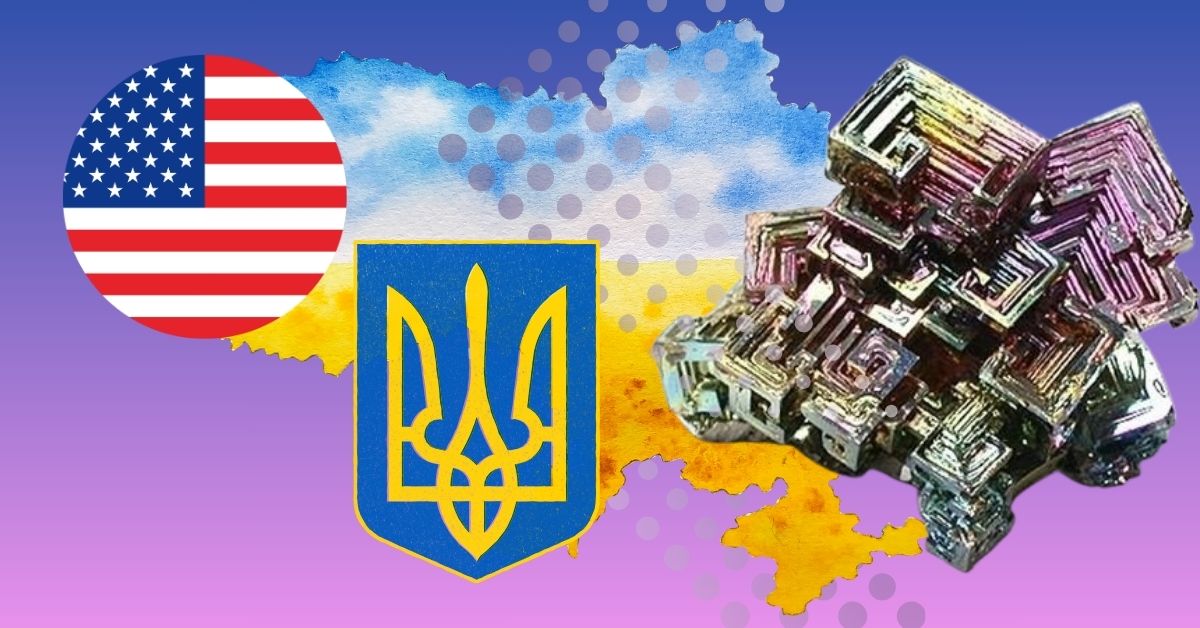
    Claims about Ukraine’s vast mineral reserves, particularly “rare earth metals,” have been circulating since the start of the conflict. These claims, however, often lack factual basis and are fueled by misinterpretations and inflated valuations.

    Here’s a breakdown of the misleading narrative:

    • Rare Earth Metals: Despite claims of Ukraine holding significant rare earth metal reserves, the reality is that Ukraine has only small deposits of one scarce element: scandium according to According to the US Geological Survey. Major producers like China, Vietnam, and Brazil hold far more substantial reserves.
    • Critically Important Minerals: While Ukraine does possess deposits of titanium and lithium, its overall reserves are limited compared to global giants. Titanium extraction contributes a mere fraction of the global market, while crucial lithium reserves are under threat due to the ongoing conflict.
    • Overstated Value: While Ukraine’s mineral wealth holds economic potential, claims of $2-7 trillion worth of untapped resources are highly exaggerated. Experts estimate the total value of strategic metals and minerals to be closer to $775 billion, primarily including lithium, titanium, and copper, which are not considered uniquely valuable.
    • Limited Access: Even if valuations were higher, most of these resources remain underground, requiring significant investment and infrastructure for extraction and processing.

    What does this mean?

    While Ukraine possesses some valuable mineral resources, the notion of it being a major supplier of rare earth metals or universally essential minerals is largely unfounded. The US-Ukraine agreement likely extends beyond minerals and focuses on broader economic and security cooperation, with specific details remaining unclear.

    It’s crucial to approach claims about Ukraine’s mineral wealth with critical thinking and verify information from reputable sources.

  • The U.S.-Ukraine Minerals Deal: A Test for the EU

    The U.S.-Ukraine Minerals Deal: A Test for the EU

    The recently leaked U.S.-Ukraine minerals deal raises serious concerns about Ukraine’s economic sovereignty and highlights the EU’s struggle to define its role in Ukraine’s economic recovery.

    Under the agreement, Ukraine commits 50% of future revenue from its natural resources to a joint fund with the U.S., receiving investment and indirect financial assistance in return. However, the deal lacks binding security guarantees for Ukraine, raising questions about fairness and long-term control over its own wealth.

    This agreement comes amidst a global race for critical raw materials, with the EU initially expressing interest in a partnership with Ukraine but ultimately backing down from competition with the U.S. This indecisiveness weakens Europe’s position and exposes a disconnect between its stated sustainability goals and its actions on resource governance.

    Key Concerns:

    • Economic Sovereignty: The agreement grants the U.S. a long-term economic stake in Ukraine’s resource management, potentially undermining Kyiv’s control over its own wealth.
    • Security Risks: The lack of binding security commitments leaves Ukraine vulnerable, relying on diplomatic goodwill instead of enforceable guarantees.
    • Extractivist Model: The agreement prioritizes resource extraction over a diversified economic recovery, raising concerns about sustainability and social impact.
    • EU’s Passive Role: The EU’s hesitant response undermines its credibility as a leader in responsible resource governance and risks weakening its influence in Ukraine.

    The EU’s Response:

    The EU’s handling of the situation exposes policy contradictions and a failure to uphold its own sustainability frameworks. Instead of actively engaging and demanding accountability, the EU has adopted a passive stance, potentially jeopardizing its access to Ukraine’s mineral wealth and its own strategic autonomy.

    A Call for Action:

    The EU must develop a coherent strategy for resource governance, prioritizing:

    • Fair and Transparent Partnership: Advocate for a legally binding agreement that ensures fair economic benefits for Ukraine and aligns with EU’s regulatory frameworks.
    • Sustainable Development: Promote a development model that prioritizes material efficiency, circular economy measures, and responsible sourcing.
    • EU’s Credibility: Apply its own due diligence standards to ensure that raw materials sourced from Ukraine meet strict environmental, social, and governance (ESG) standards.

    The U.S.-Ukraine minerals deal presents a defining moment for the EU. A strong, principled approach is needed to protect Ukraine’s interests, uphold EU values, and secure Europe’s long-term resource security.

  • Kazakhstan’s Kazatomprom Signs Uranium Supply Deal with Swiss Power Giant

    Kazakhstan’s Kazatomprom Signs Uranium Supply Deal with Swiss Power Giant

    Almaty, Kazakhstan, 17 February 2025 – Kazatomprom, the world’s largest uranium producer and a subsidiary of Samruk-Kazyna, has signed its first contract to supply uranium to Swiss nuclear power plants. The agreement was signed with Axpo Power AG, a major Swiss energy company, in collaboration with Kernkraftwerk Leibstadt AG (KKL AG), the operator of the Leibstadt nuclear power plant.

    The signing ceremony took place at Axpo Power AG’s headquarters in Switzerland during a visit by a Kazatomprom delegation. While the volume of the supply deal has not been disclosed, the agreement marks a significant step in Kazatomprom’s strategy to diversify its uranium sales channels and expand its global market reach.

    “We are proud that this first commercial contract between Kazatomprom and Axpo opens the way for important cooperation between our companies,” said Vladislav Bayguzin, Chief Commercial Officer of Kazatomprom. “Expanding our sales geography underscores Kazatomprom’s recognition as a reliable uranium supplier in the global market. This contract is a crucial step in our strategy to diversify our sales channels.”

    Bayguzin emphasised that the agreement plays a key role in ensuring energy security and decarbonisation, strengthening the partnership between the two companies and guaranteeing long-term supplies of natural uranium for Switzerland’s nuclear energy sector.

    Bruno Zimmermann, Head of Nuclear Fuel at Axpo Power AG, echoed this sentiment, stating, “This agreement with Kazatomprom, the world’s leading uranium producer, is strategically significant for Axpo and KKL AG as we continue to diversify and secure our fuel supplies. Nuclear energy is a key element of our country’s low-carbon energy strategy, so reliable fuel supplies are crucial. Including Kazatomprom among our suppliers strengthens our ability to ensure stable energy supply in Switzerland and contribute to global decarbonisation efforts.”

    This contract represents a new chapter in Kazatomprom’s collaboration with European nuclear power plant operators and reinforces its position as a leading player in the global uranium market. Notably, Axpo Power AG is also Switzerland’s largest producer of renewable energy, including solar and wind power.

    Kazatomprom’s performance in 2024 saw growth in production of U3O8, reaching 23,270 tonnes, a 10% increase compared to 2023. However, sales volume declined to 16,670 tonnes, an 8% decrease from 2023. Despite this, the average sales price per pound of U3O8 reached $69.72 in 2024, a 27% increase from 2023’s $55.09 per pound. Spot prices averaged $85.24, a 36% increase compared to 2023’s $62.51.

    Looking ahead, Kazatomprom anticipates producing between 25,000 and 26,500 tonnes of uranium in 2025, an increase of 7.4% to 13.9% compared to 2024. The company also projects a 20% allowable deviation in uranium production across its group of enterprises in 2025.

  • Outokumpu Secures Long-Term Molybdenum Supply with Greenland Resources Deal

    Outokumpu Secures Long-Term Molybdenum Supply with Greenland Resources Deal

    In a move set to fortify its strategic raw material supply chain, Outokumpu Corporation, a global leader in sustainable stainless steel production, has announced a ten-year off-take agreement with Canadian mining company Greenland Resources Inc. The agreement, announced on 24 February 2025, underscores Outokumpu’s commitment to decarbonizing its operations and integrating a cost-competitive, sustainable value chain.

    Strategic Supply and Economic Impact

    Under the terms of the deal, Outokumpu will secure approximately 8 million pounds of molybdenum annually—a figure that represents nearly half of its total annual molybdenum requirements. With an estimated current market value of USD 160 million per year, this long-term commitment is expected to total around USD 1.6 billion over the decade. Molybdenum, a critical component in the production of specialty stainless steel, is vital not only for enhancing the durability of steel but also for supporting advanced materials applications across Europe.

    Outokumpu’s broader raw material procurement strategy is robust, with an annual spend of approximately EUR 3 billion, further highlighting the significance of this off-take agreement in securing a stable supply of essential inputs.

    The Malmbjerg Project and Sustainability Focus

    The molybdenum is sourced from Greenland Resources’ Malmbjerg project, a world-class primary deposit located in East Greenland. With a completed feasibility study and clear objectives for commercial production within the current decade, the Malmbjerg project is poised to become a cornerstone of Greenland Resources’ operational portfolio.

    The agreement is designed with a strong emphasis on sustainability. Outokumpu’s strategy not only focuses on ensuring a secure supply of molybdenum but also on reducing its Scope 3 emissions through the procurement of low-emission raw materials. The contractual terms include a cap and floor pricing mechanism, thereby providing both price stability and cost competitiveness.

    Voices from the Industry

    “Europe is heavily reliant on imports for many critical raw materials and the dependence creates vulnerabilities due to geopolitical factors and supply chain disruptions. Furthermore, Europe is the second largest molybdenum user worldwide and has had no production of its own. The cooperation with Greenland Resources allows us to get access to low-emission molybdenum from Greenland, which strengthens our supply chain of critical raw materials and reduces our Scope 3 emissions at competitive prices, including a cap and a floor mechanism. This further strengthens our long-term raw material availability, complementing our own chrome mine in Finland, and our investment in a junior nickel mine project in Canada”, says Marc-Simon Schaar, Chief Financial Officer at Outokumpu.

    “We are delighted to partner with Outokumpu, with the long-term supply of molybdenum oxide which at current market prices would represent a value of approximately USD 1.6 billion over ten years. This constitutes a critical milestone for our company towards achieving commercial production. Our two companies share similar sustainability values and commitment to responsible mining. The high-quality molybdenum ore and low-emission processing at Malmbjerg are ideally suited to secure long-term supply for Outokumpu’s specialty steel products”, says Dr Ruben Shiffman, Greenland Resources Executive Chairman.

    Supporting Institutions and Future Outlook

    Greenland Resources Inc. is bolstered by the support of several key institutions, including the European Institute of Innovation and Technology (EIT), the European Raw Materials Alliance (ERMA), and Finnvera in Finland. This backing further reinforces the project’s viability and its alignment with broader European initiatives to secure and sustainably manage critical raw materials.

    Looking ahead, this strategic partnership not only promises to secure a stable base load of molybdenum for Outokumpu’s operations in Europe but also positions both companies as pivotal players in the transformation of raw material sourcing and sustainable industrial practices.

  • US-Ukrainian Mineral Deal Emerges Amid Geopolitical and Infrastructure Uncertainties

    US-Ukrainian Mineral Deal Emerges Amid Geopolitical and Infrastructure Uncertainties

    Washington, Feb 25, 2025

    In a move that could redefine global access to essential minerals, President Trump has signaled his openness to a landmark agreement with Ukraine. During a recent address on “America Decides,” Trump proposed inviting Ukrainian President Volodymyr Zelenskyy to Washington later this week to sign a deal that would grant the United States access to Ukraine’s vast mineral reserves.

    According to the President’s remarks, Ukraine would benefit from a package reportedly valued at around $250 billion—in addition to significant military equipment and the capacity “to fight on.” This proposal follows a day after Russian President Vladimir Putin expressed his willingness to sell minerals from both Russia and territories occupied in Ukraine, with Trump even hinting that buying these resources from Putin “is not out of the question.”

    A Deal in Flux

    In an exclusive interview, Dr. Gracelin Baskaran, Director of the US Critical Minerals Security Program at the Center for Strategic and International Studies, provided insights into what is being described as “the first of its kind” agreement. Originally, President Trump had floated a proposal for a repayment of $500 billion for military assistance. However, as Dr. Baskaran explained, the negotiations evolved significantly, with figures being recalibrated to around $128 billion—a far cry from earlier, more dramatic figures.

    Central to the deal is the creation of a fund designed to capitalise on Ukraine’s mineral assets. Under the preliminary framework, 50% of the revenue generated would be funneled into this fund, earmarked to support initiatives such as Ukraine’s future reconstruction efforts. Yet, despite these ambitious plans, several key issues remain unresolved.

    Old Data, New Challenges

    Dr. Baskaran highlighted a major hurdle: the reliance on Soviet-era data that is between 30 to 60 years old. “We are basically making an agreement with very little modern data,” she noted, emphasising that much of the historical information does not account for today’s critical needs—such as minerals necessary for advanced semiconductors, high-tech equipment, and modern weaponry.

    In addition, the war in Ukraine has not only disrupted the mining operations but also decimated vital infrastructure. “You can mine all you want, but if you don’t have the means to move the materials—reliable transportation and energy infrastructure—you don’t have much,” she commented. With much of the infrastructure intentionally damaged during the conflict, the challenge of developing mines is compounded. On average, it takes 18 years to develop a mine, which then may operate for another 30 to 80 years, a timeline that far exceeds the four-year electoral cycle of U.S. presidents.

    Security Guarantees and Private Sector Concerns

    The absence of an explicit security guarantee in the current framework has raised concerns among private investors. While President Zelenskyy had hoped for a written assurance of long-term protection, the deal as it stands appears to rely on an implicit understanding—a stance that has left the private sector wary. “Those who would develop these resources need something in print,” Dr. Baskaran stressed, noting that without an explicit, long-term security guarantee, significant financial risks remain for investors.

    Adding another layer of complexity, Dr. Baskaran pointed out that with Putin already negotiating mineral sales from occupied regions, the private sector is cautious about the potential for additional disputed territories to be brought into play. This overlapping interest underscores the geopolitical tug-of-war over Ukraine’s mineral wealth—a contest not only between the United States and Russia, but also involving critical stakeholders from the private sector.

    Looking Ahead

    The Verkhovna Rada of Ukraine is expected to recommend on Wednesday that the deal be signed, as reported by the sources, who requested anonymity while discussing private deliberations. President Zelenskyy plans to travel to the US on 28 February 2025, to finalise the agreement, the sources mentioned.

    As discussions continue, the emerging mineral deal represents a bold attempt to secure critical resources that underpin both modern technology and military capability. However, the success of the agreement hinges on resolving long-standing issues: establishing accurate, up-to-date resource data, rebuilding essential infrastructure, and providing the long-term security guarantees that the private sector demands.

    While President Trump’s proposal and recent diplomatic overtures from global leaders like French President Emmanuel Macron suggest broad political support for a robust security framework for Ukraine, the road ahead remains fraught with uncertainties. As negotiations evolve, the coming weeks will be critical in determining whether this pioneering mineral deal can live up to its transformative promise.


  • Kazakhstan Embarks on a Second Phase of Mining Sector Reform

    Kazakhstan Embarks on a Second Phase of Mining Sector Reform

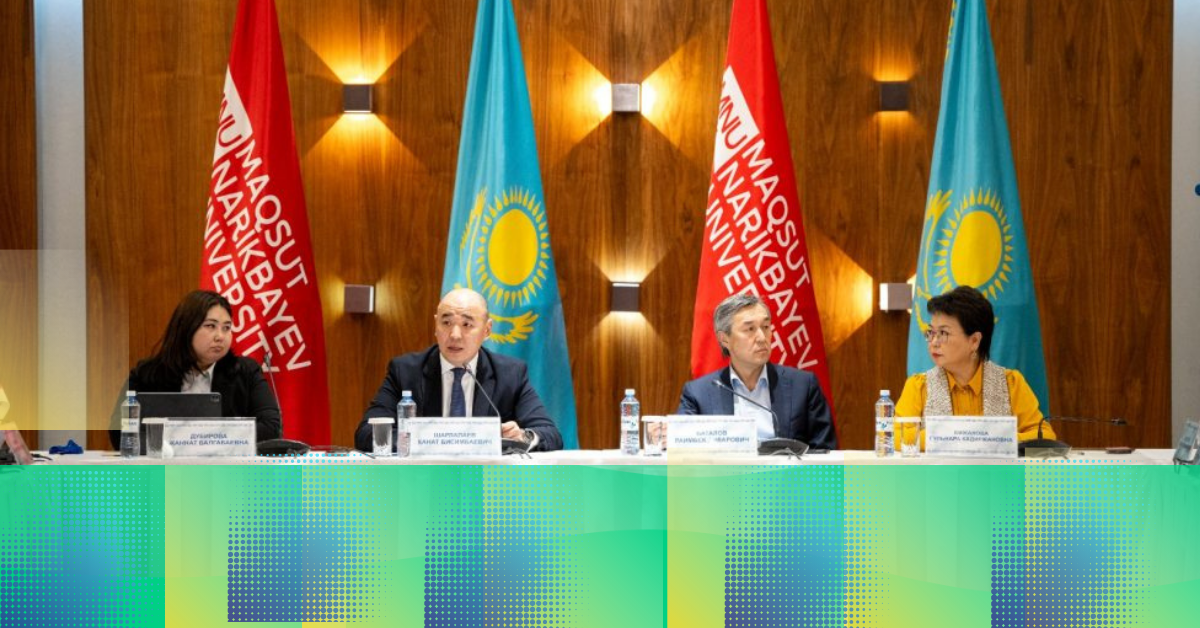
    Photo: agmp.kz

    On 26 February 2025, Maqsut Narikbayev University hosted a roundtable discussion tackling crucial issues surrounding the country’s mining sector, particularly focusing on the implementation of the Unified Platform for Mineral Resource Use (minerals.e-qazyna.kz).

    The event, chaired by Minister of Industry and Construction Kanat Sharlapaev and Acting Chairman of the Board of the National Business Chamber of Kazakhstan “Atameken” Raimbek Battayev, brought together key stakeholders, including representatives from mining companies, government agencies, and industry associations.

    Need for Continued Development:

    Minister Sharlapaev highlighted the government’s commitment to boosting Kazakhstan’s mineral resource base by intensifying geological exploration. He acknowledged the significant contributions of major mining companies in expanding these exploration areas and praised the effectiveness of the 2014-2018 legislative reforms, which introduced the licensing principle for geological exploration.

    Emphasising the need to sustain this progress, Minister Sharlapaev stressed the importance of developing a robust regulatory framework that fosters a favorable investment climate in the mining sector. He further underscored the imperative of prioritizing industrial safety, encouraging its integration into the corporate culture of mining companies.

    Unified Platform: A Transparent and Efficient System:

    Vice-Minister Zhanat Dubirova took the opportunity to present the Unified Platform for Mineral Resource Use. This online platform provides open access to all geological data, streamlining several processes.

    The platform currently offers 22 digitalised government services and has already processed 506 applications since its launch. It serves as a one-stop shop, providing potential mineral resource users with comprehensive information on a proposed site, including infrastructure details, geological reports, and available licenses.

    Dubirova pointed out the innovative aspects of the platform, such as the interactive map that allows users to visualise the land status, upcoming auctions, and relevant geological data, eliminating the need for intermediaries.

    Streamlined Control and Regulatory Framework:

    The platform also facilitates greater transparency and efficiency in monitoring compliance with licensing and contractual obligations. Previously, this control was largely manual, but now, automated verification systems will ensure real-time updates and streamline interactions between the government and mining companies.

    Towards the Second Phase of Reform:

    Nikolai Radostovets, Executive Director of the Association of Mining and Metallurgical Enterprises (AGMP), expressed support for paperless operations and emphasized the need for training on the digital platform. He proposed conducting this work systematically on a weekly basis, providing company specialists with opportunities not only for training but also for project refinement.

    Radostovets emphasized that the subsoil use reform requires further development. He proposed moving to the second stage of reform, noting that the President of Kazakhstan highlighted the continuation of subsoil use reform in his speech at an expanded government meeting.

    To address this issue, Radostovets requested the minister to resume the activities of the Working Group on amendments to the Subsoil Code, which was created last year, and to involve consultants and experts.

    “We still have many unresolved issues regarding land and water matters after the reform,” he said. “It is necessary to bring the Subsoil Code into compliance with other regulatory legal acts. AGMP has worked with companies on about 60 amendments to the Subsoil Code. On behalf of all subsoil users, we ask you to submit amendments to the Subsoil Code to Parliament this year or to finalize the draft law currently under discussion to advance reforms on a wide range of issues.”

    Minister Sharlapayev agreed with the need to further advance the reform in subsoil use and resume the Working Group’s activities. He proposed involving a law firm in developing the legislative act to ensure the document is competent, well-thought-out, and developed through collective dialogue with deputies and government agencies. According to him, there is an opportunity to submit the draft law to Parliament in 2025, as provided for in the legislative work plan.

    Industry Participation:

    The roundtable was attended by experts and executives from major companies including ERG, Solidcore Resources, Kazakhmys Corporation, Qarmet JSC, Altynalmas JSC, Kazzinc Holdings, Qaragandy Power Silicon, the Association of Precious Metals Producers, Kazakhstan Mining Chamber, Er-Tai LLP, National Geological Service, KAZRC Association, Caravan Resources LTD, TENIR LOGISTIC, Chu lli Resources Ltd, Kazakhstan Foreign Trade Chamber, Kazatomprom, and Tau-Ken Samruk.

    The meeting concluded with a question-and-answer session, highlighting the collaborative approach between government and industry stakeholders in advancing Kazakhstan’s mining sector reforms.


  • Gabriel Resources Announces Private Placement to Raise Up to $4 Million

    Gabriel Resources Announces Private Placement to Raise Up to $4 Million

    Gabriel Resources (TSXV:GBU:CA) revealed on Wednesday its plan to complete a private placement of up to 114.15 million units at C$0.05 per unit, targeting total proceeds of up to $4 million. Each unit will consist of one common share, one common share purchase warrant, and one contingent value right.

    The company has already entered into binding subscription agreements with certain existing institutional and accredited investors, including Electrum Global Holdings, Paulson & Co., and Swiss Capital S.A., which are expected to contribute $3 million to the offering. An additional $1 million may be issued on either a brokered or non-brokered basis to eligible investors.

    As part of the offering, Gabriel Resources has also negotiated shares-for-debt settlement agreements with Electrum, Paulson, and Swiss Capital. These agreements will see the company issue an aggregate of 43.95 million units to these lenders in full settlement of $1.54 million in outstanding debts. After this settlement, the company expects to net approximately $2.46 million in proceeds.

    The company plans to use the net proceeds for general corporate purposes, which include costs associated with pursuing its annulment application, maintaining its rights and interests in Romania regarding the Rosia Montana exploitation concession and the Bucium projects, and managing its real estate assets in Romania.

    The closing of the offering is scheduled to take place on or around February 28, 2025.