Website: Eurasia.com

  • European Tungsten Prices Reach Highest Level Since 2013 Amid Chinese Export Curbs

    European Tungsten Prices Reach Highest Level Since 2013 Amid Chinese Export Curbs

    European tungsten prices have surged to their highest point since 2013, driven by China’s tightening restrictions on critical mineral exports. The price of ammonium paratungstate (APT)—a vital intermediate in tungsten metal production—has reached $400 per metric ton unit (mtu) on the European spot market, marking an 18% increase since February, according to Reuters.

    The spike follows China’s recent export curbs and quota reductions on key strategic metals, including tungsten, tellurium, molybdenum, bismuth, and indium. These measures, imposed in retaliation to US tariffs earlier this year, have intensified global supply concerns.

    China dominates global tungsten production, accounting for over 80% of the 81,000 tons produced worldwide last year, according to the US Geological Survey (USGS). Tungsten’s exceptional properties—such as its highest melting point of any element, extreme hardness, and excellent electrical and thermal conductivity—make it indispensable across various industries. Initially popularized in incandescent light bulbs, tungsten now underpins sectors ranging from aerospace and semiconductors to defense and industrial drilling.

    Tungsten carbide, second only to diamond in hardness, is crucial for metalworking tools and industrial drills, while tungsten crucibles facilitate the melting of other high-temperature materials. In the defense sector, tungsten is used for “penetrators,” armor-piercing projectiles currently in high demand amid the ongoing conflict in Ukraine.

    China’s Tightening Grip on Exports
    The global tungsten scarcity has been exacerbated by China’s export restrictions. The country’s first tungsten ore mining quota for 2024 was set at 58,000 tons—a 6.5% decrease from the previous year.

    “Since the Chinese export ban was announced, there has been an over-reliance on scrap supplies, but now those are running thin, and there’s growing panic over the inability to secure new primary tungsten material,” said Oliver Friesen, CEO of Guardian Metal Resources.

    The stakes are especially high for the United States, which ceased commercial tungsten mining in 2015 and remains heavily reliant on imports. A looming 2027 deadline mandates the US military to eliminate purchases of tungsten mined or processed in China or Russia—the latter being the world’s third-largest producer.

    North American Efforts to Secure Supply
    In response, Canada’s Almonty Industries recently announced an offtake agreement to provide tungsten oxide exclusively for US defense applications. The company operates tungsten mines in Spain, Portugal, and South Korea.

    “Almonty can produce enough tungsten for US/EU/Korea defense demand but not enough for the entire US/EU/Korea market—defense and civilian combined,” Almonty’s CEO Lewis Black stated. Shares of Almonty rose 4.6% in Toronto following the announcement, giving the company a market capitalization of C$688 million ($492 million).

    “Tungsten is a small market… But the industries that depend on it are exponentially bigger, which is why it is on everyone’s critical mineral list,” Reuters columnist Andy Home noted.
  • Kazatomprom and Romania’s SN Nuclearelectrica Discuss Expanding Uranium Supply Cooperation

    Kazatomprom and Romania’s SN Nuclearelectrica Discuss Expanding Uranium Supply Cooperation

    Kazatomprom, Kazakhstan’s national atomic company, held discussions with Romania’s Ministry of Energy and state-owned company SN Nuclearelectrica S.A. regarding the expansion of natural uranium supplies and the development of the beryllium industry.

    A key outcome of the talks was the discussion of terms for a ten-year contract to supply Kazakhstani natural uranium for Romania’s current and planned nuclear power plants. Kazatomprom anticipates that the contract will strengthen long-term cooperation between the two countries and provide reliable raw material supplies for Romania’s nuclear energy sector.

    Additionally, the Ulba Metallurgical Plant (UMP), a subsidiary of Kazatomprom, may begin processing Romanian beryllium. Romanian representatives expressed interest in scientific and technical cooperation with UMP and further exploration of processing beryllium raw materials from Romanian deposits. UMP specializes in processing beryllium and tantalum and exports its products globally.

    In Kazatomprom’s 2024 report, uranium production (proportional to its ownership share) reached 12.3 thousand tons, marking a 10% increase from 11.1 thousand tons in 2023 and 11.4 thousand tons in 2022. This growth was mainly driven by joint ventures Budenovskoye, Akbastau, and Karatau.

    However, production of beryllium products fell to 735.1 tons in 2024, down from 842.8 tons in 2023 and 1,295.4 tons in 2022. Tantalum production also declined, with 135.1 tons produced in 2024 compared to 153.8 tons in 2023 and 165.3 tons in 2022.

    Kazatomprom’s 2024 financial report stated that revenue reached 1.81 trillion tenge (up from 1.43 trillion tenge in 2023). The largest consumers of Kazakh uranium and other products included:

    • China: 663.7 billion tenge (522.5 billion tenge in 2023)

    • Kazakhstan: 336.6 billion tenge (182.6 billion tenge)

    • Russia: 253.2 billion tenge (215 billion tenge)

    • Canada: 164.9 billion tenge (131.1 billion tenge)

    • USA: 140.9 billion tenge (152.5 billion tenge)

    • France: 110.9 billion tenge (82.6 billion tenge)

    • United Kingdom: 44.7 billion tenge (40.6 billion tenge)

    • UAE: 29.3 billion tenge (no imports in 2023)

    Other countries purchased Kazakh products worth 69.2 billion tenge, down from 107.6 billion tenge in 2023. Although Romania was not among the largest consumers, Kazatomprom confirmed it continues to supply its products to the country.

  • Uzbekistan Focuses on Supporting Construction Material Producers

    Uzbekistan Focuses on Supporting Construction Material Producers

    A meeting was held with construction material producers of Uzbekistan under the leadership of Deputy Prosecutor General S.I. Samadov and Minister of Mining Industry and Geology B.F. Islamov. The event brought together representatives of responsible departments to address existing challenges in the sector.

    Key issues discussed included operational problems faced by producers, particularly in cement manufacturing, and strategies for overcoming these obstacles. A major point of concern was the availability of coal required for production.

    Officials informed entrepreneurs that coal deposits are actively being developed in the Surkhandarya region, presenting an opportunity for local coal fuel to be supplied to manufacturers. This initiative aims to improve the reliability and quality of fuel for construction material production, reducing dependence on external sources.

    The meeting underscored the government’s commitment to supporting local industries and enhancing the efficiency of Uzbekistan’s construction material sector.

  • US-Ukraine Investment Agreement Faces Long Road to Mining and Energy Sector Boost

    US-Ukraine Investment Agreement Faces Long Road to Mining and Energy Sector Boost

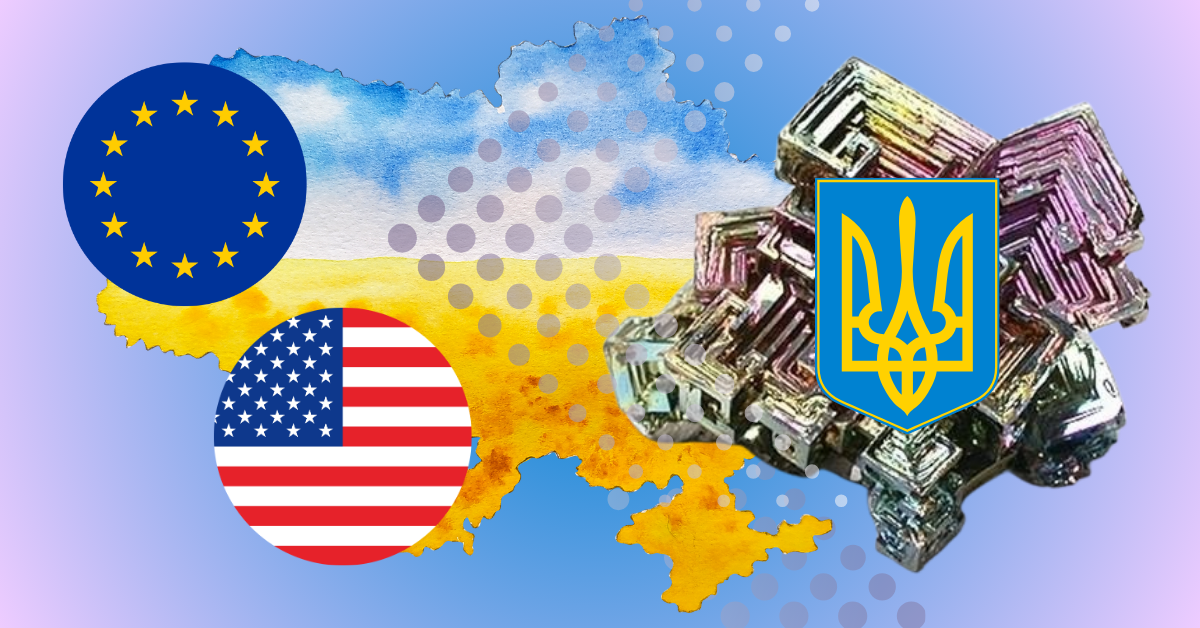
    The recently ratified investment agreement between Ukraine and the United States, championed by US President Donald Trump, is not anticipated to deliver tangible results for at least a decade, experts told the Financial Times.

    The agreement, approved by Ukraine’s parliament on May 8, outlines the establishment of a joint “reconstruction investment fund” to support future mining and energy projects. Despite optimism, industry leaders warn that substantial challenges lie ahead, including Russia’s ongoing war on Ukraine, heavily damaged infrastructure, restricted Soviet-era geological data, corruption risks, and unexploded ordnance contamination.

    According to Eric Rasmussen, former head of natural resources at the European Bank for Reconstruction and Development, “It could be 10-15 years — that’s the sort of timeline we talk about.” Peter Bryant of the advisory group Clareo echoed these sentiments, stating that the deal “does little to de-risk the supply chain in the next 10 years.”

    Ukraine boasts significant natural resources, including iron ore, coal, lithium, graphite, and titanium-bearing ores. It is also Europe’s third-largest gas producer. While oil and gas fields may be quicker to develop, mining projects are expected to face lengthy geological exploration before reaching feasibility.

    Ukrainian Minister Yulia Svyrydenko mentioned that the reconstruction fund would be operational “within a few weeks,” although profits are expected to be reinvested for the first decade.

    US-backed TechMet, which aims to secure Ukrainian lithium, called the agreement promising but noted the long-term commitment required. DTEK, Ukraine’s largest private energy firm, expressed optimism, signaling that Ukraine was “open for business.”

    However, not all are convinced. One mining executive remarked skeptically, “This romantic idea that there’s lakes of lithium to be tapped is just not the case.”

  • Ferrexpo’s Ukrainian Unit Faces Bankruptcy Proceedings Amid Legal Turmoil

    Ferrexpo’s Ukrainian Unit Faces Bankruptcy Proceedings Amid Legal Turmoil

    Ukraine-focused miner Ferrexpo announced on Thursday that the Commercial Court of Poltava has accepted an application to initiate bankruptcy proceedings for its Ukrainian subsidiary, Ferrexpo Poltava Mining (FPM).

    Following the announcement, Ferrexpo’s shares dropped 6.6%, trading at 65 pence.

    Despite the court’s acceptance of the application, the company clarified that formal bankruptcy procedures have not yet commenced. A preparatory court hearing is scheduled for May 27, during which the court will review the application.

    Ferrexpo has been embroiled in legal disputes in Ukraine since 2022 when its main shareholder, Ukrainian billionaire Kostiantyn Zhevago, was arrested on embezzlement charges linked to the collapse of Finance & Credit Bank.

    In 2024, a Ukrainian court ruled against FPM, demanding a payment of 4.73 billion hryvnias ($114.06 million), alleging the subsidiary had provided guarantees to Bank F&C. Although this claim was suspended by the Ukrainian court of appeal, the final decision remains pending.

  • North Macedonia’s ESM Plans to Open New Coal Mine Near Greek Border

    North Macedonia’s ESM Plans to Open New Coal Mine Near Greek Border

    North Macedonia’s state-owned power utility, Elektrani na Severna Makedonija (ESM), has announced plans to open a new coal mine in Zivojno, close to the Greek border, according to the Ministry of Environment and Physical Planning.

    The ministry is currently seeking public feedback on the environmental impact assessment study for the project, with submissions open until May 15.

    ESM intends to begin operations at the Zivojno mine in 2026, following a three-year preparatory phase. Despite its ambitious start, the mine is projected to have a relatively short operational life of just four years, local broadcaster Telma reported.

    The announcement comes amid North Macedonia’s broader strategy to phase out coal-fired energy production. The government has committed to closing its two existing coal plants, REK Bitola and Oslomej, by 2030, as part of its efforts to transition towards cleaner energy sources.

  • Uzbekistan’s Mining Ministry Discusses Cooperation with SinoPowell Capital

    Uzbekistan’s Mining Ministry Discusses Cooperation with SinoPowell Capital

    The Ministry of Mining Industry and Geology of Uzbekistan hosted a meeting between First Deputy Minister O. Nasritdinkhodjaev and Steve Powell, Managing Director of SinoPowell Capital (USA).

    During the discussion, the parties reviewed recent reforms in the mining and geological sectors, as well as key projects led by JSC “Uzbek Technological Metals Plant.” They also explored opportunities for strengthening long-term cooperation in the industry.

    The meeting highlighted Uzbekistan’s commitment to modernizing its mining sector and attracting foreign investment, with SinoPowell Capital expressing interest in potential projects and joint initiatives aimed at enhancing technological advancements and production efficiency.

    Both sides agreed on the importance of continued dialogue to facilitate mutual growth and innovation in the field of technological metals.

  • EU Urged to Create €10 Billion Fund for Critical Raw Materials

    EU Urged to Create €10 Billion Fund for Critical Raw Materials

    The European Union must establish funds exceeding €10 billion ($11.4 billion) to drive investment in the exploration, mining, and recycling of critical raw materials, according to Bernd Schaefer, CEO of EIT RawMaterials, an EU-funded agency for key minerals.

    The EU has set ambitious 2030 targets for 34 critical minerals, including lithium and copper, which are vital for its green transition. These goals aim for 10% of annual demand to be met through domestic mining, 25% through recycling, and 40% through local processing. Furthermore, no single third country should supply more than 65% of any given mineral—a threshold the EU currently surpasses with China for many materials.

    To reach these targets, Schaefer emphasized the necessity of dedicating part of the bloc’s next seven-year budget from 2028 towards mining and recycling initiatives. “It should probably start with at least a billion or 2 billion euros and have the potential to grow considerably,” Schaefer told Reuters.

    Additionally, Schaefer called for the creation of a €10 billion exploration fund to identify minerals within the EU, which, when combined with private investments, could reach around €100 billion. He stressed the importance of evaluating future consumption and supply for each mineral while converting alliances with international partners into tangible volumes amid rising geopolitical tensions.

    “The Americans are very much hands-on in getting things down the road,” Schaefer said, urging Europe to take decisive action.

    Schaefer also pointed out that Europe’s increased defense spending, a factor not considered when setting its raw material targets, would further heighten demand for minerals such as vanadium, titanium, molybdenum, and chromium. He noted that while the required volumes are not massive, the urgency and sensitivity surrounding their sourcing have intensified, surpassing even that for energy and mobility raw materials.

  • Minespider and TETHYS Unite to Digitalize Mining Supply Chains in Türkiye and Central Asia

    Minespider and TETHYS Unite to Digitalize Mining Supply Chains in Türkiye and Central Asia

    Berlin/Istanbul, May 12, 2025 – Minespider, a leading traceability and Digital Product Passport (DPP) platform, has signed a Memorandum of Understanding (MoU) with TETHYS Teknoloji, İnovasyon, Danışmanlık ve Ticaret A.Ş., a subsidiary of Luxembourg-based TETHYS Gateway Investment GP specializing in critical raw materials. The collaboration will develop next-generation digital traceability solutions—focusing on Battery Passports, Digital Product Passports, critical raw materials traceability, and comprehensive ESG data systems—across mining operations in Türkiye and Central Asia.

    This partnership combines TETHYS’s extensive engagement in over a dozen mining projects throughout Türkiye, Central Asia, and the Caucasus region with Minespider’s proven expertise in supply chain digitalization. Together, they will pilot end-to-end systems that embed transparent, verifiable data directly into the mineral supply chain, aiming to:

    • Prevent artisanal mining abuses and curb illicit mining activities

    • Reduce the risk of child labour and human rights violations

    • Ensure compliance with evolving European and global regulations

    • Facilitate market access, particularly into the EU’s regulated markets

    Under the MoU, both partners will jointly pursue technology integration, proof-of-concept developments, and coordinated customer outreach. Their deliverables will include web, mobile, and backend applications that enable traceability, automated regulatory reporting, and real-time ESG data collection throughout exploration, extraction, and production phases.

    “We’re thrilled to partner with TETHYS to bring greater transparency and traceability to mineral supply chains in Türkiye and the Central Asian region,” said Nathan Williams, Founder & CEO of Minespider. “As global demand for responsibly sourced minerals continues to grow, ensuring digital proof of origin and ethical practices is no longer optional—it’s a must. Together with TETHYS, we’re building the digital infrastructure that empowers stakeholders with the data they need to make informed, sustainable decisions.”

    “Our partnership with Minespider is focused on a clear objective: ensuring digital product compatibility for the entire mining lifecycle in Türkiye and Central Asia,” added Leyla Keser Berber, Chairperson of TETHYS. “Through advanced traceability and data systems, we aim to eliminate risks such as illegal mining, artisanal mining abuses, and human rights violations—while supporting industrial players in meeting global regulatory standards.”

    Pilot projects and client engagements are slated to begin shortly, positioning the Minespider–TETHYS alliance as a pioneer in the digital transformation of mining ecosystems across the region.


    Key Facts

    • Türkiye’s mineral diversity: Home to 70 types of natural resources, 60 of which are actively traded internationally.

    • Central Asia’s critical minerals:

      • 38.6 % of global manganese ore

      • 30.07 % of chromium

      • 20 % of lead

      • 12.6 % of zinc

      • 8.7 % of titanium

    • EU regulatory framework: Minerals exported to Europe must comply with the Critical Raw Materials Act (CRMA), Corporate Sustainability Due Diligence Directive (CSDDD), Conflict Minerals Regulation, Battery Regulation, and more.


    About the Companies

    Minespider
    A global traceability platform, Minespider offers Digital Product Passports—digital IDs that carry key data across supply chains. Its clients include Tata Elxsi, Ford Otosan, Renault, Minsur, Luna Smelter, and TEMSA.

    TETHYS Teknoloji, İnovasyon, Danışmanlık ve Ticaret A.Ş.
    Headquartered in Istanbul, TETHYS specializes in critical raw materials, mining innovation, and supply chain digitalization. Its portfolio spans exploration to investment structuring for clients like CVK Mining, Tamer Mining, and Marmotek. TETHYS also facilitates European funding partnerships in sustainability and responsible sourcing.

  • Germany’s New Economy and Energy Minister Calls for “Reality Check” in Energy Policy

    Germany’s New Economy and Energy Minister Calls for “Reality Check” in Energy Policy

    Katherina Reiche, the newly appointed German Economy and Energy Minister from the conservative Christian Democrat (CDU) party, has called for a “new agreement on the fundamentals” of the country’s energy strategy. In her inaugural address, Reiche emphasized the need for a freer energy market and greater innovation, with energy security as the top priority. “The blackout on the Iberian Peninsula showed how vulnerable an electricity system can be. We must prepare ourselves for minimizing risks of this kind,” she stated.

    While acknowledging the progress made in climate action through the expansion of wind and solar power, Reiche stressed that the associated systemic risks and costs had been underestimated. As part of a comprehensive “reality check” in energy policy, she argued for better alignment of renewable power expansion with grid infrastructure improvements.

    Reiche also underlined that renewable energy alone would not suffice to reliably power an industrialized nation like Germany. To bridge this gap, the government plans to expedite auctions for up to 20 gigawatts of new gas-fired power plant capacity and expand carbon management technologies (CCS/CCU). Further, she committed to fulfilling the coalition’s agreements, including a reformed approach to decarbonizing the heating sector with flexible CO2-reduction measures, the introduction of an industry power price, and the use of reserve power plants for price stabilization.

    In her address, Reiche praised her predecessor, Robert Habeck of the Green Party, for his efforts during the energy crisis spurred by Russia’s invasion of Ukraine, recognizing his resilience in facing political pressure while making critical decisions.

    Reiche concluded her speech with a call to tackle Germany’s economic challenges, acknowledging the impact of high taxes, energy costs, and bureaucratic hurdles on industrial competitiveness. While noting external pressures from Russia’s war and the US’s trade policies under Donald Trump, she pointed to Germany’s own structural issues as the primary obstacles. “The root cause of the country’s problems is ‘Made in Germany.’ But that also means the solution can be ‘Made in Germany,’” she affirmed. Reiche promised a policy approach focused on activation and market-driven solutions over regulation.