Website: Eurasia.com

  • Ukraine’s Vast Titanium and Building Stone Reserves Could Shift Global Markets

    Ukraine’s Vast Titanium and Building Stone Reserves Could Shift Global Markets

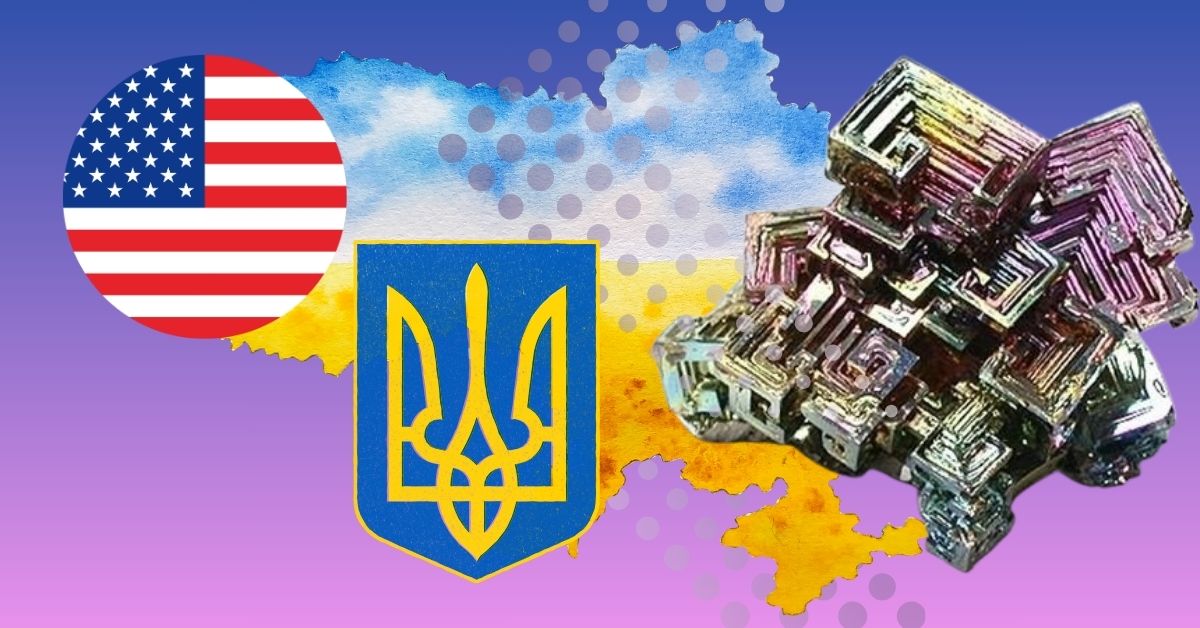
    Ukraine holds substantial reserves of titanium, potentially accounting for up to 20% of the global supply, according to Olena Remezova, Doctor of Science in Geology and Chief of the Mineral Deposits Geology Department at the Institute of Geological Sciences of the National Academy of Sciences of Ukraine. Speaking to RBC-Ukraine, Remezova emphasized Ukraine’s strategic potential in both titanium extraction and building stones, which could significantly influence global markets.

    Despite some international estimates suggesting Ukraine’s titanium reserves are less than 1% of the world total, Remezova asserts that this is a major underestimation. Even Ukraine’s average titanium deposits surpass many found in Russia, solidifying its position as a key player in the strategic metal’s supply chain.

    In addition to titanium, Ukraine is also developing a robust industry for building stones, particularly granite and labradorite. The Zhytomyr region alone boasts around 300 quarries extracting non-metallic materials for construction and decorative applications. Ukrainian labradorites, known for their iridescent properties, are especially prized on the global market, with few equivalents found outside of regions like Norway.

    Ukraine’s geological wealth extends beyond titanium and building stones. The country is home to significant rare earth metal deposits concentrated in the Zhytomyr and Cherkasy regions, as well as the Eastern Azov Sea region, all critical for modern technologies.

    With its vast reserves and growing extraction capabilities, Ukraine is well-positioned to become a major global supplier of these critical materials, potentially reshaping markets and reducing dependency on other producers.


  • Norway’s Sovereign Wealth Fund Engages with Rio Tinto and South32 on Environmental Concerns

    Norway’s Sovereign Wealth Fund Engages with Rio Tinto and South32 on Environmental Concerns

    Norway’s sovereign wealth fund, managed by Norges Bank Investment Management (NBIM), has announced its decision to actively engage with global mining giants Rio Tinto and South32 concerning their environmental practices. The decision follows a recommendation from the Council on Ethics, an independent advisory body appointed by the Norwegian government, which urged the fund to consider divesting its stakes in the companies due to environmental concerns.

    NBIM currently holds approximately 2.5% of Rio Tinto plc, 0.13% of Rio Tinto Ltd, and 2.6% of South32, according to data from LSEG. The ethical concerns center around the companies’ involvement in the Mineração Rio do Norte (MRN) joint venture, a substantial bauxite mining operation located in the Amazon rainforest. The project, a collaboration between Glencore (45%), Rio Tinto (22%), and South32 (33%), has been criticized for contributing to environmental degradation in the region.

    In response, the sovereign wealth fund’s executive board stated that it would engage with the companies over the next five to ten years to encourage substantial improvements in their environmental management and practices.

    In a separate announcement, the fund revealed it had revoked the exclusion of German energy firm RWE AG, applauding its progress toward renewable energy. Conversely, it decided to sell its shares in Mexican oil company Petroleos Mexicanos (Pemex) and Israeli firm Paz Retail and Energy, citing ethical concerns as the primary reason for the divestment.

  • Kazakhstan Strengthens Position in Global Rare Earth Metals Market

    Kazakhstan Strengthens Position in Global Rare Earth Metals Market

    Kazakhstan is reaffirming its status as a key player in the global market for rare and rare earth metals by actively expanding its mineral resource base and fostering a favourable investment climate for processing and high-tech production.

    The country currently hosts over 100 identified deposits of rare and rare earth elements, including major sites such as Kurumsak, Bala-Sauskandyk, Akbulak, Kundybai, and Verkhnee-Espe. Kazakhstan extracts 19 of the 34 rare earth elements deemed critical to the European Union’s economy, including beryllium, tantalum, niobium, and rhenium – metals in high demand across sectors such as electronics, defence, energy, and telecommunications.

    Kazakhstan’s mineral resource base includes significant reserves of:

    • Tungsten – 2.4 million tonnes
    • Molybdenum – 1 million tonnes
    • Lithium – 226.9 thousand tonnes
    • Tantalum – 4.6 thousand tonnes
    • Niobium – 27.2 thousand tonnes
    • Beryllium – 117.5 thousand tonnes

    Particularly valuable are the so-called dispersed elements, such as selenium, tellurium, germanium, gallium, and scandium, which are extracted through integrated mineral processing.

    A central focus of state policy is the advancement of domestic processing of rare and rare earth metals (RMs and REMs), the development of new production facilities, and the manufacture of export-oriented, competitive products. The government is proactively engaging international partners through a “raw materials in exchange for investment and technology” framework.

    With global demand for critical materials projected to quadruple by 2040, Kazakhstan is consolidating its role as a reliable and stable supplier of strategic raw materials to the world’s high-tech industries.

  • UK Launches New ESG Paper to Drive Responsible Lithium Supply Chain Development

    UK Launches New ESG Paper to Drive Responsible Lithium Supply Chain Development

    The UK’s ESG Working Group, under the Competition and Markets Authority (CMA), has launched a comprehensive new paper focused on advancing a responsible and sustainable lithium supply chain within the country. This initiative comes as lithium, a mineral deemed “critical” by the UK and many international partners, becomes increasingly vital for clean energy generation and storage technologies.

    The paper, developed in collaboration with Minviro and other prominent ESG experts, academics, and industry representatives, outlines a strategic roadmap for the UK to lead by example in responsible lithium sourcing and lithium-ion battery manufacturing.

    The report features a foreword from Noah Law MP, Chair of the UK All-Party Parliamentary Group (APPG) for Critical Minerals, highlighting governmental support for sustainable mineral sourcing. It also examines recent policy developments, such as the UK Critical Minerals Strategy, Invest 2035, the EU Battery Regulation, and the Critical Raw Materials Act, emphasizing the UK’s commitment to sustainable growth in critical mineral supply.

    A core focus of the report is on life cycle assessments (LCAs) and other validation tools designed to mitigate environmental and social risks throughout the lithium supply chain. From extraction and processing to cathode material production and battery recycling, the report provides a detailed examination of ESG risks and opportunities at every stage.

    The paper concludes with multi-stakeholder recommendations aimed at bolstering the UK’s capacity to secure a sustainable and responsible domestic lithium supply, ensuring alignment with international ESG standards and long-term environmental goals.

  • Navoi Mining and Metallurgical Combine Expands Capacity at Zarmitan Mine in Uzbekistan

    Navoi Mining and Metallurgical Combine Expands Capacity at Zarmitan Mine in Uzbekistan

    Navoi Mining and Metallurgical Combine (NMMC) has announced the expansion of its operations at the Zarmitan mine, part of its Southern Mining Department. Earlier this May, the company launched a new skip shaft at the site, as reported by the news agency Uza.

    NMMC has been implementing an investment project titled “Development of Lower Horizons of the Mining Complex Based on the Deposits of the Zarmitan Gold Ore Zone” for several years. Mine Construction Alliance s.r.o. was selected as the contractor for the construction of the vertical mine shaft. The same company is also responsible for deepening the “Main” shaft at Zarmitan.

    The shaft, with a diameter of 6.5 meters, has been extended to a depth of 1,000 meters. Ore extracted from various underground levels of the mine will now be lifted to the surface using the new shaft and then sent for processing at the fourth hydrometallurgical plant. Estimates indicate that up to 1.4 million tons of gold-bearing ore will pass through the facility annually.

    The annual economic impact of the skip shaft’s launch is projected at 19.2 billion UZS. Notably, the company expects to save on fuel costs for dump trucks, which would have otherwise spent more time transporting raw materials.

    The mine shaft is equipped with various automation systems, with all operations managed from a central control panel. NMMC claims that this project marks a significant breakthrough for Uzbekistan’s mining and metallurgical sector, highlighting advanced engineering and digital solutions.

  • Ukraine Ratifies Agreement with the US for Access to Natural Resources

    Ukraine Ratifies Agreement with the US for Access to Natural Resources

    Ukraine’s parliament has ratified a landmark agreement with the United States, paving the way for enhanced American access to the country’s natural resources. This move is seen as part of President Volodymyr Zelenskiy’s broader strategy to improve diplomatic and economic ties with former US President Donald Trump.

    The agreement, reached after prolonged negotiations, saw Washington abandon its demand for the repayment of billions of dollars in aid provided to Kyiv since the onset of Russia’s invasion over three years ago. In a decisive vote on Thursday, 338 Ukrainian lawmakers endorsed the ratification, signaling strong political support for the initiative.

    The deal grants the US privileged access to investment opportunities in Ukraine’s resource sectors, including aluminum, graphite, oil, natural gas, and other strategic deposits. This is viewed as a critical step to secure US favor as Trump advocates for an end to the conflict that would potentially benefit Moscow.

    Additionally, the agreement outlines the possibility of the US using future military aid as contributions to a joint investment fund, further solidifying economic cooperation between the two nations. As Russia maintains pressure along a thousand-kilometer frontline, Ukraine appears determined to leverage its natural assets to bolster international alliances and economic resilience.

  • Uzbekistan and Slovakia Hold Inaugural Intergovernmental Meeting to Boost Economic Cooperation

    Uzbekistan and Slovakia Hold Inaugural Intergovernmental Meeting to Boost Economic Cooperation

    The first meeting of the Uzbek-Slovak Intergovernmental Commission on Economic Cooperation took place in Tashkent, according to Trend, citing Uzbekistan’s Ministry of Investment, Industry, and Trade. The session was co-chaired by Vladimir Simonek, Slovakia’s Deputy Minister of Economy, and Shokhrukh Gulamov, Uzbekistan’s Deputy Minister of Investment, Industry, and Trade.

    The discussions focused on deepening economic collaboration in key sectors, particularly renewable energy, agriculture, and critical raw materials. Special attention was given to geological exploration, development, and processing of rare and rare earth minerals, indicating both countries’ commitment to enhancing resource-based cooperation.

    At the conclusion of the meeting, both sides signed a final protocol that outlined the agreements reached and reaffirmed their commitment to furthering bilateral relations. They also agreed to hold the next session of the Commission in Bratislava, Slovakia.

    Additionally, during a separate meeting in March 2025, Uzbekistan and Slovakia reached an agreement to establish a Business Council aimed at strengthening trade and economic relations between the two nations. This initiative is expected to facilitate more effective business cooperation and open new opportunities for mutual investment.

  • Uzbekistan Recognised as a Country with Low Digitalization and Digital Skills

    Uzbekistan Recognised as a Country with Low Digitalization and Digital Skills

    The Asian Development Bank (ADB), in its report “Harnessing Digital Transformation for Good,” has identified Uzbekistan as a country with low levels of digitalization and digital skills. Despite developing countries in the Asia-Pacific region showing rapid digital development, the benefits are distributed unevenly. In Uzbekistan, for instance, 13% more urban residents have internet access compared to rural areas, and the speed of mobile internet in cities is 38% higher.

    ADB emphasizes the need to accelerate digital transformation in low-digitalization countries like Cambodia, Bangladesh, Mongolia, Pakistan, and Uzbekistan. To achieve this, investments in digital infrastructure, skill development, and digital literacy are recommended. Economically efficient solutions such as shared use of radio spectrum, infrastructure, cloud solutions, and new technologies like low-Earth orbit satellites and fixed 5G access are also proposed.

    According to UNESCAP data, Uzbekistan ranked 9th among 11 countries in the region in terms of digital skills as of 2023. Only 15% of the population possesses basic skills (such as typing and copying files), while 7−8% have standard skills (software use and application installation). There is no data available for advanced skills. In comparison, Kazakhstan has 30% of its population with basic skills, 25% with standard skills, and 8% with advanced skills.

    ADB also highlights that the low level of digitalization is accompanied by digital inequality. In urban areas, the average mobile internet speed is around 50 Mbps, while in rural areas, it is approximately 35 Mbps. Fixed internet is faster than mobile, with speeds reaching 70 Mbps in cities and 50 Mbps in rural areas.

    ADB experts stress the importance of investing in digital skills development at all levels to ensure equal access to digital opportunities and prepare the population for future job requirements.

  • Decarbonising the Mining Industry: Challenges and Innovations

    Decarbonising the Mining Industry: Challenges and Innovations

    The drive to decarbonise the global economy is unearthing new challenges in the mining sector, an industry pivotal to the green transition. Mining provides critical minerals for renewable technologies like solar panels, wind turbines, and electric vehicles. Yet, the sector is responsible for 4-7% of global emissions, primarily from methane released by coal mines. While methane emissions are expected to decline over the next 25 years, attention is turning to the decarbonisation of other mining operations essential for the energy shift.

    The International Energy Agency projects that achieving net-zero emissions by 2050 will require a 50% increase in copper demand by 2040, a doubling of nickel and cobalt needs, and an eightfold surge in lithium demand. Amid these projections, Australian iron ore giant Fortescue Metals Group has positioned itself as an industry leader. Unlike many companies relying on carbon offsets, Fortescue aims for “real zero” by 2030, cutting emissions from its massive Pilbara region operations. Fortescue’s Chairman, Andrew Forrest, has been vocal against the concept of “net-zero,” advocating for tangible emission cuts instead.

    Fortescue’s strategy includes replacing diesel and gas with 2-3 gigawatts of solar and wind power, backed by significant battery storage. The company has also pioneered innovative technologies, such as regenerative battery-powered trains that capture gravitational energy during descents. These designs are part of its $6.2 billion decarbonisation plan, aiming to set new standards for emissions reductions in mining.

    Other global mining operations are also adopting renewables. In the Democratic Republic of Congo, the Kamoa Copper mine signed a deal with CrossBoundary Energy for a 222-megawatt solar array and massive battery system to reduce emissions by around 78,750 tonnes annually. Matthew Tilleard of CrossBoundary Energy called it a “baseload renewable energy solution,” marking a significant step for off-grid mining operations.

    Efforts are also underway to decarbonise mining vehicles. The International Council on Mining and Metals (ICMM) has partnered with manufacturers to develop zero-emission vehicles, with full-scale deployment expected by 2030. Bryony Clear Hill of ICMM noted that battery electric technology is gaining traction, with prototypes already in testing.

    However, the path to decarbonisation remains uneven. Regional differences, infrastructure challenges, and government policies significantly affect progress. According to Gregoire Bellois of the Intergovernmental Forum on Mining, Minerals, Metals and Sustainable Development, some companies make genuine strides, while others only achieve “on paper” progress through divestment. Chinese companies, which are rapidly consolidating control over key minerals like cobalt, remain hesitant to decarbonise due to a lack of regulatory pressure.

    Looking ahead, the European Union’s proposed Carbon Border Adjustment Mechanism (CBAM) could reshape global mining. If implemented, CBAM would levy carbon-intensive companies exporting to the EU, potentially pushing high-emission operations toward markets with fewer regulations.

    While the road to “real zero” is fraught with obstacles, experts agree that every effort to reduce emissions is crucial. As mining scales up to meet unprecedented global demand, the pressure to innovate and cut carbon footprints is more significant than ever.

  • Romania Revives Europe’s Largest Graphite Deposit with €200 Million Investment

    Romania Revives Europe’s Largest Graphite Deposit with €200 Million Investment

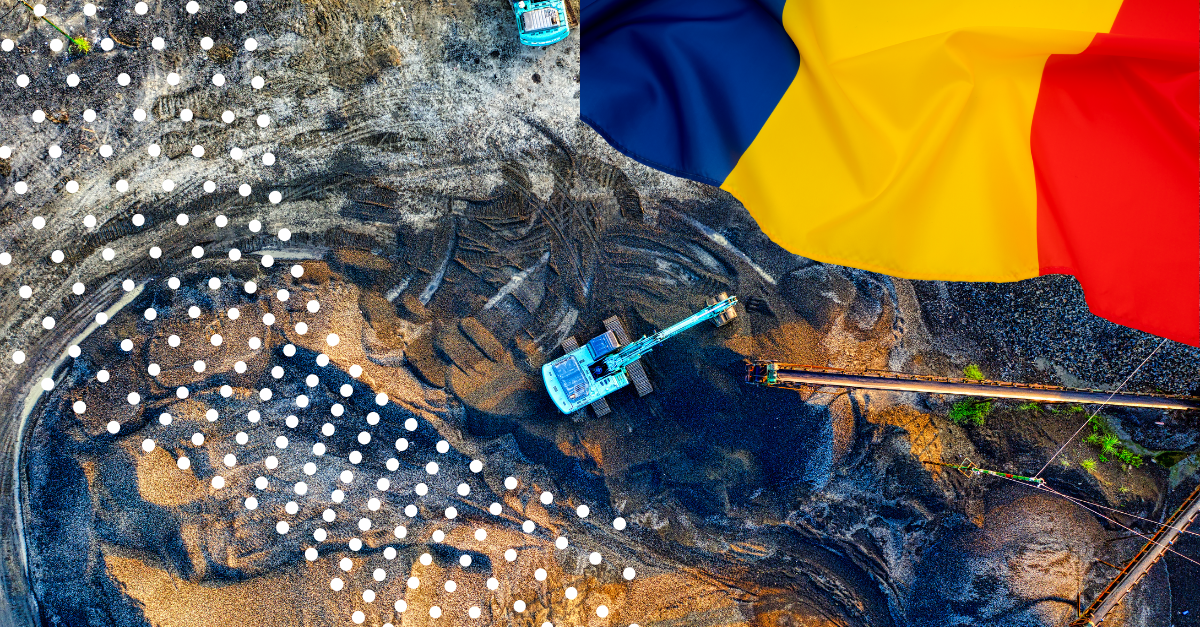
    Romania is set to breathe new life into Europe’s largest graphite deposit, located in Baia de Fier, 235 kilometers west of Bucharest, after 21 years of dormancy. Once a bustling site employing 500 workers, the area now stands as a landscape of decaying metal structures and rusted machinery. However, thanks to nearly €200 million ($227 million) in funding from the European Commission, the Romanian Salt Company is preparing to restart operations. This initiative is part of a broader strategy to reduce Europe’s reliance on critical materials from China, reflecting shifting global geopolitical dynamics.

    The European Commission has designated the Baia de Fier site as one of three strategic mining projects in Romania. The country will receive a total of €615 million ($698 million) from Brussels, with graphite extraction prioritized for its applications in electric vehicle batteries, energy storage systems, electronics, and machine manufacturing, according to Andreea Nestian, Financial Director at A3Build, a consulting firm specializing in mining.

    Two other projects highlighted by the EU include metallic magnesium extraction in Budureasa and copper mining in Rovina, both also located in western Romania. “Magnesium is crucial for producing lightweight alloys used in the automotive, aerospace, and defense industries,” Nestian said, underscoring Europe’s heavy dependency on imports. Meanwhile, the Rovina copper deposit is recognized as the second-largest in Europe, although its development has faced legal challenges from environmentalists.

    In a bid to attract further financial support, Romanian authorities have informed Brussels about additional mineral reserves, including titanium, boron, quartz, phosphorus, germanium, tungsten, gallium, and rare earth elements. Romanian Minister of Economy Bogdan Ivan highlighted their significance across diverse sectors, such as aerospace, medical equipment, solar technologies, and defense.

    Despite the optimism surrounding the revival of Baia de Fier, the project faces significant hurdles. Many of the former workers have retired or emigrated, and Romania’s sole faculty of mining is struggling to attract students due to waning interest in the industry. Experts stress that substantial external investment and a skilled workforce will be crucial for the mine’s successful reactivation.

    The Romanian government plans to submit the project proposal to the European Commission in the third quarter of this year, although a start date for mining operations remains undecided.