Website: Asia.com

  • 12 Gold Mining Companies Acquire 31 Gold-Bearing sites in Navoi

    12 Gold Mining Companies Acquire 31 Gold-Bearing sites in Navoi

    A fierce competition for gold-bearing land unfolded on 4th February as 12 companies participated in an electronic auction for 31 sites in the Navoi region of Uzbekistan. The auction, held on the E-auksion platform, saw intense bidding, with one lot’s price skyrocketing 110 times its initial value after a 10-hour battle.

    Initially, the plots were listed at prices ranging from 26.3 million UZS ($2,190) to 52.5 million UZS ($4,375). Due to fierce competition, prices rose sharply, and the 31 plots were sold for a total of 25.1 billion UZS ($2.09 million), which is 23 times their combined starting value.

    The most expensive plot sold was the Sop-10/24 site in the Nurota district. After more than 10 hours of bidding, Xinlong Mining Drilling won the lot for 3.6 billion UZS ($300,000), 110 times higher than the initial price. This company also acquired the second most expensive gold plot, Sop-14/24, for 1.9 billion UZS ($158,333) after 183 bidding rounds. In total, Xinlong Mining Drilling secured rights to eight gold sites for 9.1 billion UZS ($758,333).

    Other notable purchases include:

    • Neo Gold Mining: 4 plots for 2.7 billion UZS ($225,000)
    • Zhonghuitong Mining Group: 4 sites for 1.13 billion UZS ($94,167)
    • Golden Diggers: 3 plots for 3.24 billion UZS ($270,000)

    Several companies won two lots each: Ipotekaon, King of Gold Mining, Samnurgold, and YVN Gold. AAA Human, Golden SPV One, Kamron Mir Gold, and Orom Medical Center each secured one plot.

    The auctions were highly competitive, with some lots seeing over 200 bidding rounds. Winners have gained rights to extract gold from these areas using artisanal mining methods, as required by current legislation.

    This auction highlights the growing interest in Uzbekistan’s gold mining sector and the potential for significant investments in the Navoi region’s mineral resources.

  • Uzbekistan’s Gold and Currency Reserves Increase in January 2025

    Uzbekistan’s Gold and Currency Reserves Increase in January 2025

    In January 2025, Uzbekistan’s foreign exchange reserves experienced growth, as reported by the Central Bank. According to the data, the total value of assets in reserves reached $42.9 billion by February 1st, which is a $1.72 billion (4.17%) increase compared to the previous month. The value of gold rose by $3.02 billion, reaching $35.06 billion. This increase is attributed to the rise in global prices for the precious metal, with the price per troy ounce approaching $2900. Additionally, the physical volume of gold reserves also increased from 382.57 tons (12.3 million troy ounces) to 391.9 tons (12.6 million troy ounces). However, the country’s foreign currency reserves decreased by $1.29 billion, falling below $7.3 billion. Of these, $442.3 million are held in accounts with other central banks and the International Monetary Fund, while $6.75 billion are in foreign commercial banks.

  • China Imports Up to 70% of Critical Metals from Central Asia

    China Imports Up to 70% of Critical Metals from Central Asia

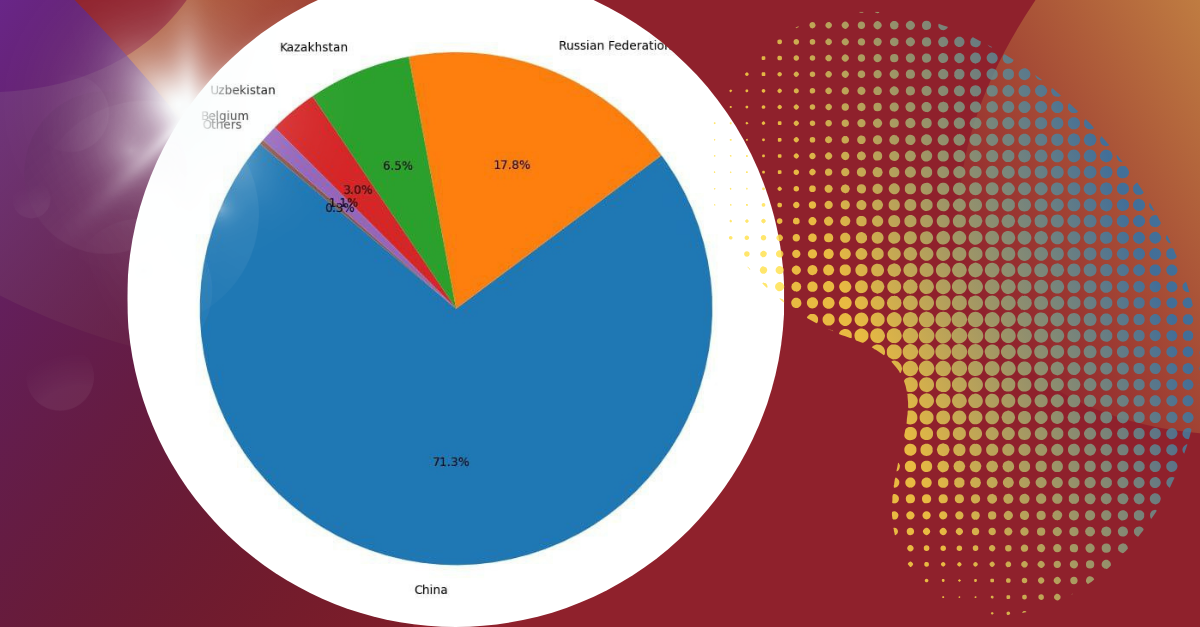
    Despite the lack of official data on the export of rare earth metals by Central Asian countries, an analysis of ore, slag, and ash exports reveals interesting trends. These exports often include critical resources highly sought after by leading global powers, particularly metals such as molybdenum, titanium, and vanadium.

    According to Trademap.org data from 2019 to 2023, Central Asian countries exported a wide range of ores and concentrates, including copper, iron, precious metals, zinc, lead, molybdenum, chromium, and niche metals such as niobium and tantalum.

    In recent years, the market has also seen the introduction of products such as tin, tungsten, and titanium ores. For example, copper ore exports showed stable growth—from approximately $1.17 million in 2019 to around $3.15 million in 2023. Iron ore peaked at $1.6 million in 2021 before experiencing a decline in export volumes in subsequent years.

    One notable trend is the significant increase in molybdenum ore exports, which surged from about $4 million in 2019 to approximately $144 million in 2023. This is a clear reflection of increased global demand and investment.

    An analysis of trade with the European Union under the category “26 Ores, Slags, and Ash” shows that molybdenum stands out: its exports increased from around $11 million in 2021 to nearly $60 million in 2023. In this segment, Kazakhstan holds a dominant position, providing nearly the entire cumulative export value, while contributions from other Central Asian countries remain significantly lower.

    Central Asian countries’ export portfolios reveal a trend towards transitioning from traditional raw materials such as copper and iron to more valuable niche ores, especially molybdenum. This trend is evident both in the global market and in trade with the European Union, where Kazakhstan acts as a key supplier.

    Will the European Union be able to position itself as a key importer of critical metals from Central Asia? The future will tell.

  • Kazzinc Raises Employee Salaries Across All Divisions

    Kazzinc Raises Employee Salaries Across All Divisions

    Kazakhstan’s largest mining and metallurgical company Kazzinc has announced salary increases for its employees. After discussions with shareholders, the company’s management approved an average 8.5% wage hike starting from January 2025.

    This follows two salary increases in 2024 – in March and October – which totaled approximately 10%.

    “It’s no secret that inflation doesn’t stand still and the cost of essential goods is rising. The salary level directly affects the well-being of Kazzinc employees. It’s extremely important for us to maintain it, taking into account market changes,” said Zhanat Zhanbotin, CEO of Kazzinc. “We approached shareholders with a proposal to consider raising Kazzinc employees’ wages at the beginning of this year and they supported us. January salaries have been increased by an average of 8.5%.”

    The raise applies to workers across all divisions of Kazzinc, which is the largest company in East Kazakhstan.

    This move aims to help employees keep pace with inflation and rising costs of living. It demonstrates Kazzinc’s commitment to supporting its workforce’s financial well-being amid changing economic conditions.

  • Kazakhmys Corporation Explores New Ore Enrichment Technologies

    Kazakhmys Corporation Explores New Ore Enrichment Technologies

    In a bid to bolster its resource base, Kazakhmys Corporation is actively seeking new technologies in ore dressing. A recent hackathon held at the Karaganda Technical University named after S.D. Saginov focused on innovative solutions for flotation, a crucial process in the metallurgical industry.

    As many of Kazakhmys’ deposits are nearing depletion and current resource extraction methods are outdated, the corporation is looking to the future.

    “The challenge now is to find engineering solutions that are applicable to our specific cases – our ore, its chemical composition and properties,” explained Saken Shayakhmetov, Director of Sustainable Development at Kazakhmys JSC. “If we can significantly increase efficiency through these solutions, it will be a major breakthrough.”

    Three promising projects from the hackathon will be piloted on a smaller scale production. If proven successful, they will be implemented in larger-scale operations across the corporation.

    This initiative aligns with the government’s focus on sustainable development in the mining industry.

    “Today, we are tackling a specific problem – innovative copper leaching methods,” stated Sayasat Nurbek, Minister of Science and Higher Education of Kazakhstan. “This approach allows for the extraction of valuable minerals without disrupting the land, minimising mining damage, and promoting environmental protection.”

    Beyond technological advancements in ore dressing, Kazakhmys Progress, a subsidiary of Kazakhmys, has achieved a significant milestone.

    “Kazakhmys Progress” has launched the first production line of industrial selenium in Balhash. This marks the beginning of an environmentally friendly industrial-scale production process using a unique vacuum distillation method. The technology was developed by researchers at the Institute of Metallurgy and Enrichment, Satbayev University.

  • ZCMC Management Set to Revise Payment Terms for Employees

    ZCMC Management Set to Revise Payment Terms for Employees

    KAJARAN, Armenia – The Zangezur Copper and Molybdenum Combine (ZCMC) management has announced a series of significant changes to its employee compensation, benefits, and working conditions, following recent strikes and demands for better treatment. The company issued a statement outlining its commitment to addressing employee concerns and urging workers to return to their posts.

    The planned changes include a comprehensive overhaul of the wage system, a new health insurance provider, and significant improvements to workplace infrastructure. The wage review, which began in September 2024, will factor in work experience and qualifications, and will increase the total wage fund by an average of 20%. The new system is expected to be implemented within a month of production resumption.

    Acknowledging employee dissatisfaction with the current health insurance plan, ZCMC will hold an open tender on February 17 to select a new provider. The chosen company will be expected to offer higher quality services that meet employee needs.

    ZCMC also announced plans to modernize its production facilities. Following a technical audit completed in December 2024, the company has begun designing and procuring new ventilation and aspiration systems. These are slated for installation by the end of 2025.

    “Dear employees, we urge you to return to your workplaces,” the ZCMC statement reads. “We can achieve these goals and solve these problems together. ZCMC is a close-knit team, and our common goal is the effective operation of the plant for the benefit of the well-being of employees, the development of the region and the prosperity of Armenia.”

    These announcements come after some ZCMC employees went on strike, demanding a 50% salary increase. The company deemed these demands “unrealistic” and the strikers’ actions as exceeding the bounds of the Labor Code.

    ZCMC is Armenia’s largest mining company, operating the Kajaran copper-molybdenum deposit, which has an estimated ore supply of 150 years. The company is a major contributor to the Armenian economy, consistently ranking among the top taxpayers. In 2024, ZCMC contributed approximately 102 billion drams to the state treasury, a 44% year-on-year increase. This includes 30.2 billion drams in direct taxes and 2.7 billion drams in indirect taxes. In December, Prime Minister Nikol Pashinyan announced that ZCMC had also transferred 33.25 billion drams to the state budget as government dividends, reflecting the government’s shareholder status in the company.

  • KAZ Minerals Sets Processing Record Despite Production Challenges in 2024

    KAZ Minerals Sets Processing Record Despite Production Challenges in 2024

    KAZ Minerals achieved record ore processing volumes in 2024, even as copper production declined due to lower grades at its maturing operations. The Kazakhstan-focused mining company processed 96.5 million tonnes of ore during the year, marking a 6% increase from 2023 and setting a new Group record.

    Andrew Southam, Chief Executive Officer, said: “In 2024, KAZ Minerals set a new milestone by processing 96.5 Mt of ore, a record for the Group and a 6% increase versus 2023. The concentrators at Aktogay and Bozshakol continued to perform above design capacity, highlighting the Group’s commitment to operational excellence.”

    Despite the processing milestone, copper production decreased to 380,000 tonnes in 2024 from 403,000 tonnes in the previous year. The reduction was primarily attributed to lower grades processed across the company’s operations as the ore bodies continue to mature, offsetting the benefits of increased throughput.

    The company also reported decreased production across its by-product portfolio. Output of gold, silver, and zinc declined compared to 2023 levels, as mining activities were conducted in areas with lower polymetallic content.

    On the sales front, KAZ Minerals demonstrated strong performance, with copper sales reaching 387,000 tonnes, exceeding production by 2%. This achievement was attributed to the successful sale of material that had been held in transit at the beginning of the year.

    The company’s ability to maintain high processing rates while managing declining grades underscores its operational capabilities. The continued strong performance of its concentrators at Aktogay and Bozshakol, operating above design capacity, reflects KAZ Minerals’ focus on maximising operational efficiency in the face of natural resource maturation challenges.

  • Mongolia Pushes for New China Railway Link to Boost Coal Trade

    Mongolia Pushes for New China Railway Link to Boost Coal Trade

    Mongolia is set to urge China next week to approve a new railway connection aimed at expanding their already growing coal trade. Prime Minister Oyun-Erdene Luvsannamsrai will visit China on February 13 to sign an agreement for the cross-border railway and the expansion of coal production at the Tavan Tolgoi mine, a government spokesperson told Bloomberg.

    While China’s Foreign Ministry declined to comment on the matter, spokesperson Guo Jiakun stated that both nations remain committed to strengthening bilateral cooperation. Mongolia was China’s fourth-largest foreign coal supplierin 2023, providing 60% of its coking coal imports. A trade boost would increase Mongolia’s revenue, while China seeks alternatives to U.S. and Russian coal due to tariffs and sanctions.

    Mongolia’s parliament has already approved the railway link and allocated 976 billion tugrik ($283 million) for Erdenes Tavan Tolgoi, a state-owned miner, to fund the project, according to Ikon News. The deal with China is also expected to cover coal sales and purchase agreements.

    Mongolia’s coal shipments to China soared to 83 million tons in 2024, up from 70 million in 2023 and 31 million in 2022, following the construction of a 240-km railway from the Tavan Tolgoi mine to the border. However, the gauge difference between Mongolian and Chinese railways remains a key logistical challenge.

  • NMMC Receives First-Ever ESG Rating, Reinforcing Sustainability Commitment

    NMMC Receives First-Ever ESG Rating, Reinforcing Sustainability Commitment

    Navoi Mining & Metallurgical Company (NMMC), the world’s fourth-largest gold producer, has received its debut ESG Entity rating from Sustainable Fitch, marking a significant milestone in its sustainability journey. The company was assigned an ESG rating of ‘3’ (on a scale from 1 to 5, where 1 represents low risk and 5 represents high risk) and an overall entity score of 51 out of 100.

    The rating was based on a comprehensive assessment of NMMC’s sustainability strategy, corporate governance, environmental impact, and social responsibility programs. The company’s environmental and social performancereceived a favorable ‘3’ rating, highlighting strong internal policies on emissions and water management, the absence of major environmental incidents, and a low gender pay gap. Additionally, corporate governance was rated at ‘2’, recognizing adherence to international financial reporting standards, systematic internal audits, and structured risk management.

    NMMC’s ESG rating aligns with global mining industry standards, acknowledging the sector’s inherent environmental challenges, such as high energy and water consumption, greenhouse gas emissions, and industrial waste generation. Notably, NMMC is the first company in Uzbekistan’s mining sector to receive a public ESG rating, reinforcing its industry leadership and commitment to international sustainability principles.

    The company’s ESG efforts are part of a large-scale transformation program, in line with Uzbekistan’s national strategy “Uzbekistan-2030”. With 2025 declared the “Year of Environmental Protection and the Green Economy”in Uzbekistan, NMMC aims to further enhance its sustainability practices and strengthen investor confidence.

  • MINEX Forum in Astana: FDI in Kazakhstan’s Mining & CRMs Takes Center Stage

    MINEX Forum in Astana: FDI in Kazakhstan’s Mining & CRMs Takes Center Stage

    Join here https://2025.minexkazakhstan.com/

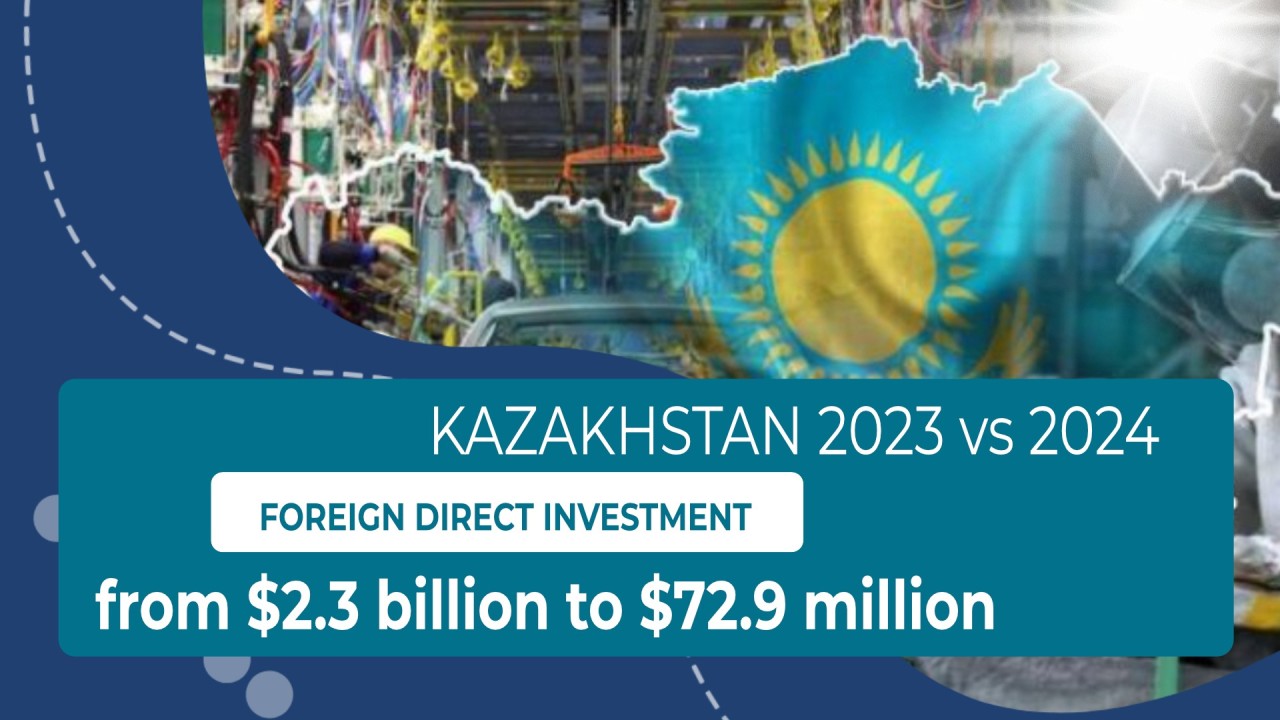
    Foreign direct investment (FDI) in Kazakhstan has experienced an extraordinary 30-fold drop, falling from $2.3 billion to just $72.9 million in the first nine months of 2024, according to data from the National Bank. In response to this dramatic decline, Kazakh Invest, the national agency responsible for promoting foreign investment, has attributed the drop to temporary, cyclical economic factors, stressing that it does not reflect failures in the country’s investment policies.

    Potential Reasons for Decline

    Kazakh Invest explained that the decline is primarily due to global commodity market volatility and changes in investor behavior. Given that the mining sector represents a significant portion of Kazakhstan’s FDI, these external economic shifts are beyond the control of the government.

    Kazakh Invest explained that the National Bank of Kazakhstan withholds data from international investors’ reports due to its obligations towards the International Monetary Fund (IMF) and national legislation. As a result, a significant decline in FDI inflows by 98.4% year-on-year (YoY) was observed, which was primarily attributed to a substantial reduction of 93.4% in reinvested earnings. This could be the outcome of either a decrease in profits earned by foreign enterprises in Kazakhstan or a rise in dividend payments made to international shareholders.

    Kazakh Invest also pointed to the completion of large infrastructure projects, such as the Tengizchevroil Future Growth Project, as another factor behind the reduction. However, the agency views this as a temporary shift, noting that it will allow for increased investment in other promising sectors such as renewable energy, agriculture, logistics, and digital technologies — areas poised for future growth.

    Reasons to be optimistic

    Despite this dip, Kazakh Invest remains optimistic about Kazakhstan’s attractiveness to international investors. According to the United Nations Economic and Social Commission for Asia and the Pacific (ESCAP), Kazakhstan secured $15.7 billion in new investment projects in 2024, an 88% increase from the previous year. The agency also pointed out that Kazakhstan continues to lead the region in new investment volume.

    Expert opinions

    Economist Galymzhan Aitkazin argued that the decline in FDI is more indicative of changing investor interest rather than capital outflows. He emphasised that the completion of the Tengizchevroil project, which contributed significantly to FDI from 2016 to 2024, is a key factor behind the reduced inflows, with the conclusion of its construction phase resulting in a temporary slowdown.

    Government’s FDI strategy

    Kazakh Invest remains committed to attracting foreign investments, reiterating its goal of fostering a favorable business environment. This message aligns with President Kassym-Jomart Tokayev’s call for the development of an integrated ecosystem to bring in “high-quality investments.”

    In the first nine months of 2024, Kazakhstan saw FDI outflows reach $1.5 billion, double the outflows recorded in 2023. However, the net FDI remained negative at -$1.6 billion, though it was an improvement over the previous year’s -$3.2 billion. Despite these fluctuations, analysts caution that FDI figures alone do not fully reflect the health of the investment climate, as they fail to account for capital leaving the country.

    Top investors up to mid-2024

    Russia led foreign direct investment in Kazakhstan as of mid-2024, with inflows of nearly $932 million. However, this represents a decrease of 21.4% compared to the first half of 2023. Other significant investors in Kazakhstan include Singapore, Luxembourg, Switzerland, and Cyprus, focusing primarily on trade, finance, and manufacturing.

    Tax reform 2025 – serious concerns for businesses and experts

    Kazakhstan is considering raising the value-added tax (VAT) rate from 12% to 20%. This proposal was announced at a meeting between Kazakhstan’s Prime Minister Olzhas Bektenov and experts, economists, and business representatives in early January. In addition to increasing the VAT rate, it was also proposed to lower the VAT registration threshold to 15 million tenge per year and reduce special tax regimes. The government justifies the need for these changes due to the budget deficit and reliance on transfers from the National Fund. The situation is further complicated by high current expenditures, which are difficult to reduce without harming the socio-economic well-being of citizens. Some members of the Majilis oppose such a sharp increase in VAT.

    Some experts support these amendments, believing that raising the VAT will help plug holes in the state budget. However, other experts and businessmen oppose this proposal. They are confident that a sharp increase in the VAT rate will lead to higher prices for all products and goods, as well as to an economic slowdown, a decrease in the purchasing power of the population, or even stagnation in the medium term. Experts and businesses suggest focusing on bringing the economy out of the shadows and reducing government spending instead of raising taxes.

    Debated TAX reform raises serious concerns among businesses and experts, even though the government views it as a way to increase budget revenues and safeguard socio-economic interests.

    It is important to note that the issue of raising VAT remains open. The decision to increase VAT has not yet been made, and the discussion on this issue continues. It is crucial to consider all possible consequences of this step to make a balanced and informed decision.