Website: Asia.com

  • Global Heavy Industry Faces Fourth Year of Decline as China Shifts Economic Focus

    Global Heavy Industry Faces Fourth Year of Decline as China Shifts Economic Focus

    Global heavy industry, particularly the demand for steel and non-ferrous metals, is poised for a fourth consecutive year of decline, driven by stagnation in the construction sector and China’s transition from a supply-and-volume-based economic model to one emphasizing demand and quality. This shift, according to Stefan Borgas, CEO of global refractory supplier RHI Magnesita, requires significant structural changes in China’s financing, regulations, and investor mindset.

    China’s steelmaking capacity, currently at 1.25 billion metric tons per year, far exceeds its demand of around 1 billion metric tons. This surplus has led to record steel exports, with over 110 million metric tons shipped in 2024, the second-highest volume ever. Borgas highlighted that this excess steel is flooding foreign markets, reducing demand for refractories and related products. For instance, India’s steel demand grew by 8% last year, but production increased by only 4% due to Chinese imports.

    While the steel industry remains a key profit driver for RHI Magnesita, accounting for 65-70% of its earnings, the non-ferrous metals sector is experiencing a slowdown. Few new copper, nickel, or aluminum plants are under construction, and existing projects are not expected to advance for several years, leading to a projected weakening of RHI Magnesita’s non-ferrous business in 2025.

    In response to these challenges, RHI Magnesita is advocating for the inclusion of refractory-grade magnesite on the EU’s Critical Raw Materials list by 2026. Borgas emphasized the strategic importance of refractories, stating, “Without refractories, you cannot refine critical minerals; if somebody controls your refractories, they can stop you from making copper.”

    The company is also advancing its recycling efforts, with a goal to source 20% of its refractory inputs from secondary materials by 2030. A new laser-based, robotics-supported recycling unit, developed with Norwegian and German partners, aims to enhance the precision of sorting refractory materials.

    Additionally, RHI Magnesita is exploring greater integration into alumina sourcing following recent acquisitions. Alumina prices surged last year, peaking at 785−787 per metric ton in November 2024, before settling at $470 per metric ton in March 2025. Borgas noted that partnerships or acquisitions could help mitigate future price volatility.

    Despite global trade uncertainties, including potential tariffs under US President Donald Trump, Borgas expressed confidence in the company’s flexible global supply chain. However, he acknowledged that adapting raw materials supply to tariff expansions would be challenging.
  • Navoiyuran Reports Record Revenue and Profit Growth in 2023

    Navoiyuran Reports Record Revenue and Profit Growth in 2023

    In 2023, Navoiyuran, Uzbekistan’s leading uranium producer, achieved a remarkable 92.7% increase in revenue, reaching 11.6 trillion UZS. The company’s gross profit from product sales and operating profit more than doubled, hitting 8.67 trillion UZS and 6.15 trillion UZS, respectively. This significant growth underscores Navoiyuran’s strong performance in the global uranium market.

    The company’s retained earnings stood at 6.16 trillion UZS, while its net profit surged from 2.64 trillion UZS in 2022 to 5.31 trillion UZS in 2023, marking a twofold increase. However, total expenses also rose sharply, growing 2.6 times to exceed 2.53 trillion UZS. The primary driver of this increase was a more than threefold jump in other operating expenses, which climbed from 0.65 trillion UZSto 2.14 trillion UZS.

    Earlier in January, Navoiyuran reported a doubling of output in monetary terms, from 6.7 trillion UZSto 13.7 trillion UZS. The company also solidified its position as one of Uzbekistan’s top three taxpayers, contributing 4.6 trillion UZS to the state budget in 2023.

    Navoiyuran, which ranks sixth globally in uranium production, accounts for 7% of the world’s uranium output, producing over 3,800 tons annually. In 2023, Uzbekistan’s uranium concentrate production increased by 11%, reaching 6.7 trillion UZS  in eight projects in 2024, including $50 million in foreign investments.

  • Kazakhstan’s Mining Sector Boosts Local Industry with 70 Contracts Worth 39.6 Billion Tenge

    Kazakhstan’s Mining Sector Boosts Local Industry with 70 Contracts Worth 39.6 Billion Tenge

    From 2020 to 2024, mining companies in Kazakhstan have signed 70 contracts worth a total of 39.6 billion tenge to purchase products from domestic manufacturers, according to the country’s Ministry of Industry and Construction. This initiative is part of a broader effort to strengthen ties between the mining sector and local industries, including machine-building, metallurgical, metalworking, and chemical enterprises.

    Over the past five years, the ministry has facilitated the signing of 353 long-term agreements valued at 226.1 billion tenge between mining companies and local suppliers. These contracts cover a wide range of products, such as pumping equipment, valves, transformers, conveyor systems, automation tools, metal structures, wheels, rubber-metal linings, lime, reagents, and spare parts.

    Additionally, light industry enterprises have been supplying specialized clothing, footwear, and personal protective equipment (PPE) to mining operations. The majority of these offtake contractsare concentrated in the East Kazakhstan, Karaganda, Pavlodar, and Aktobe regions. The East Kazakhstan region leads in the number of agreements, largely due to the presence of two major mining companies, KAZ Minerals and Kazzinc.

  • Uzbekistan Boosts Rare Metal Exploration and Production with $2.6 Billion Investment

    Uzbekistan Boosts Rare Metal Exploration and Production with $2.6 Billion Investment

    Uzbekistan has announced a major push into the exploration and production of rare metals, unveiling 76 new industry projects worth a combined $2.6 billion. The initiative, detailed on the official website of the country’s president, highlights Uzbekistan’s ambition to become a key player in the global race for strategically important resources.

    President Shavkat Mirziyoyev recently reviewed a report from the Ministry of Mining and Geology, which revealed that Uzbekistan has identified deposits of over 30 rare metals, including lithium, tungsten, molybdenum, germanium, and vanadium. Over the next three years, the government plans to significantly increase funding for geological exploration and scientific research to enhance the extraction of these valuable resources.

    A key focus will be on improving the extraction of rare metals from ore deposits and industrial waste, as well as developing high-value-added production. One example is the processing of waste from the Ingichka tungsten mine, which began producing concentrates in mid-2024. Additionally, 18 similar projects aimed at recovering rare metals from industrial byproducts are already in the pipeline.

    To support these efforts, Uzbekistan will establish technoparks in the Samarkand and Tashkent regions, areas rich in tungsten and molybdenum reserves. The country also plans to build new laboratories, training centers, and leverage international expertise to advance enrichment technologies.

  • Uzbekistan’s Hidden Mining Giant Steps onto the Global Stage at PDAC 2025

    Uzbekistan’s Hidden Mining Giant Steps onto the Global Stage at PDAC 2025

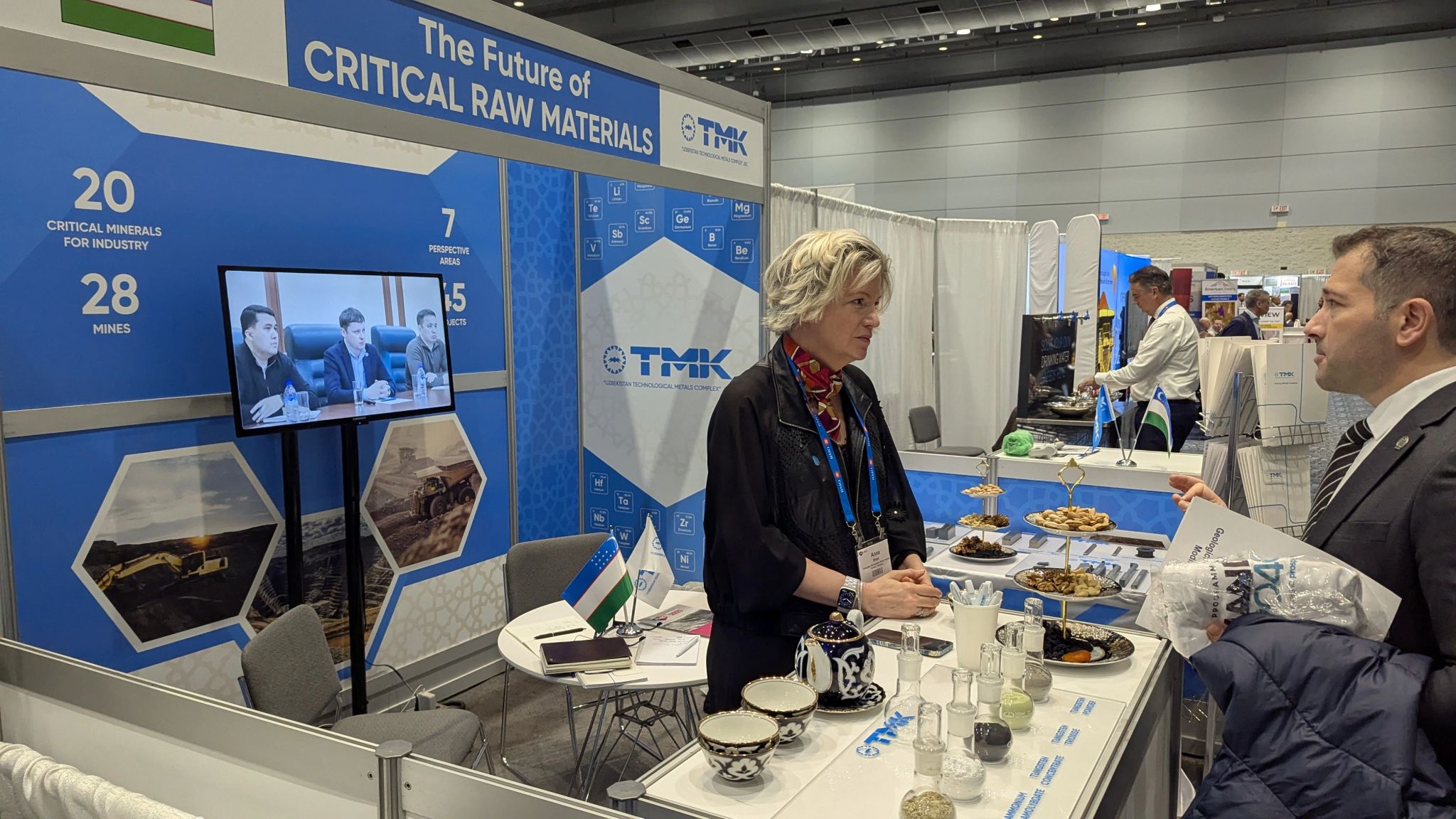
    One of the most intriguing newcomers at PDAC this year is UzTMK, a mining and metallurgical powerhouse from Uzbekistan that many have yet to hear about—despite its origins dating back to 1956.

    As an integrated producer of critical materials, UzTMK is gaining attention from the U.S. and European nations looking to secure their supply chains for industries such as automotive, renewable energy, infrastructure, healthcare, aerospace, and defense.

    During a TSX-hosted presentation, UzTMK shared its ambitious vision: expanding its existing infrastructure to create Central Asia’s largest diversified cluster for mining and processing rare earth elements, tungsten, and other strategic materials.

    With $200 million in funding, the company is poised to:
    ✅ Establish the largest R&D and Analytical Center for critical raw materials in Central Asia
    ✅ Expand mineral exploration programs
    ✅ Construct a state-of-the-art metallurgical plant using low-energy powder and nanotechnology

    Already under construction, the new facility is set to launch by 2028, with UzTMK’s market valuation projected to hit $2 billion.

    Meanwhile, Ukraine’s Critical Raw Materials deal, expected to be signed this Friday in Washington, could unlock the largest geological exploration program in decades—but with security and infrastructure challenges, it could take 15–20 years before production begins. In contrast, Uzbekistan’s strategic investment and tech partnerships could deliver production in just three years.

    UzTMK’s vision for Central Asia’s largest critical raw materials hub will be showcased at the MINEX Central Asia Mining and Exploration Forum in 2025, offering attendees a firsthand look at its mining operations and metallurgical facilities.

    Stay informed on the latest mining developments across 30 nations in Central Asia, the Caspian region, Mongolia, the Caucasus, and Europe—sign up for the Eurasian Mining Digest at www.minexforum.com.

  • U.S. Shifts Strategy to Secure Critical Minerals, Following China’s Playbook

    U.S. Shifts Strategy to Secure Critical Minerals, Following China’s Playbook

    For decades, while China strategically secured minerals worldwide, the United States rarely used foreign policy to obtain the resources it needed. However, under President Donald Trump, this approach has shifted dramatically. Within the first 40 days of his term, Trump expressed interest in acquiring Greenland for its rare earths, annexing Canada for its uranium and copper reserves, and securing control over Ukraine’s rare earths and titanium in exchange for continued U.S. support.

    The fate of the Ukraine minerals deal remains uncertain following a heated exchange between Trump and Ukrainian President Volodymyr Zelensky. While Zelensky insists he is ready to sign the agreement, Trump has expressed doubts about its viability. Regardless of the outcome, experts argue that integrating mineral diplomacy into U.S. foreign policy is essential for national security. However, without significant government investment and diplomatic efforts—mirroring China’s approach—this initiative may fall short.

    The U.S. holds less than 2% of global reserves for rare earths, graphite, cobalt, and nickel, making collaboration with resource-rich nations critical. In contrast, China has strategically positioned itself as a global leader in mineral processing, importing vast quantities of raw materials to dominate industries like electric vehicle manufacturing.

    The draft agreement with Ukraine proposes a joint fund to manage revenue from Ukraine’s natural resources. However, the lack of modern geological data on Ukraine’s mineral deposits raises questions about the economic viability of these resources. Developing a mine and separation plant could cost between 500millionand1 billion, a risky investment without up-to-date surveys.

    To succeed, the U.S. must increase funding for geological mapping, invest in infrastructure in mineral-rich regions, and provide financial support to mitigate risks for private mining companies. Without these steps, the U.S. risks falling further behind China in the global race for mineral security.

  • Kazakhstan’s Kazatomprom Signs Uranium Supply Deal with Swiss Power Giant

    Kazakhstan’s Kazatomprom Signs Uranium Supply Deal with Swiss Power Giant

    Almaty, Kazakhstan, 17 February 2025 – Kazatomprom, the world’s largest uranium producer and a subsidiary of Samruk-Kazyna, has signed its first contract to supply uranium to Swiss nuclear power plants. The agreement was signed with Axpo Power AG, a major Swiss energy company, in collaboration with Kernkraftwerk Leibstadt AG (KKL AG), the operator of the Leibstadt nuclear power plant.

    The signing ceremony took place at Axpo Power AG’s headquarters in Switzerland during a visit by a Kazatomprom delegation. While the volume of the supply deal has not been disclosed, the agreement marks a significant step in Kazatomprom’s strategy to diversify its uranium sales channels and expand its global market reach.

    “We are proud that this first commercial contract between Kazatomprom and Axpo opens the way for important cooperation between our companies,” said Vladislav Bayguzin, Chief Commercial Officer of Kazatomprom. “Expanding our sales geography underscores Kazatomprom’s recognition as a reliable uranium supplier in the global market. This contract is a crucial step in our strategy to diversify our sales channels.”

    Bayguzin emphasised that the agreement plays a key role in ensuring energy security and decarbonisation, strengthening the partnership between the two companies and guaranteeing long-term supplies of natural uranium for Switzerland’s nuclear energy sector.

    Bruno Zimmermann, Head of Nuclear Fuel at Axpo Power AG, echoed this sentiment, stating, “This agreement with Kazatomprom, the world’s leading uranium producer, is strategically significant for Axpo and KKL AG as we continue to diversify and secure our fuel supplies. Nuclear energy is a key element of our country’s low-carbon energy strategy, so reliable fuel supplies are crucial. Including Kazatomprom among our suppliers strengthens our ability to ensure stable energy supply in Switzerland and contribute to global decarbonisation efforts.”

    This contract represents a new chapter in Kazatomprom’s collaboration with European nuclear power plant operators and reinforces its position as a leading player in the global uranium market. Notably, Axpo Power AG is also Switzerland’s largest producer of renewable energy, including solar and wind power.

    Kazatomprom’s performance in 2024 saw growth in production of U3O8, reaching 23,270 tonnes, a 10% increase compared to 2023. However, sales volume declined to 16,670 tonnes, an 8% decrease from 2023. Despite this, the average sales price per pound of U3O8 reached $69.72 in 2024, a 27% increase from 2023’s $55.09 per pound. Spot prices averaged $85.24, a 36% increase compared to 2023’s $62.51.

    Looking ahead, Kazatomprom anticipates producing between 25,000 and 26,500 tonnes of uranium in 2025, an increase of 7.4% to 13.9% compared to 2024. The company also projects a 20% allowable deviation in uranium production across its group of enterprises in 2025.

  • Kazakhstan Embarks on a Second Phase of Mining Sector Reform

    Kazakhstan Embarks on a Second Phase of Mining Sector Reform

    Photo: agmp.kz

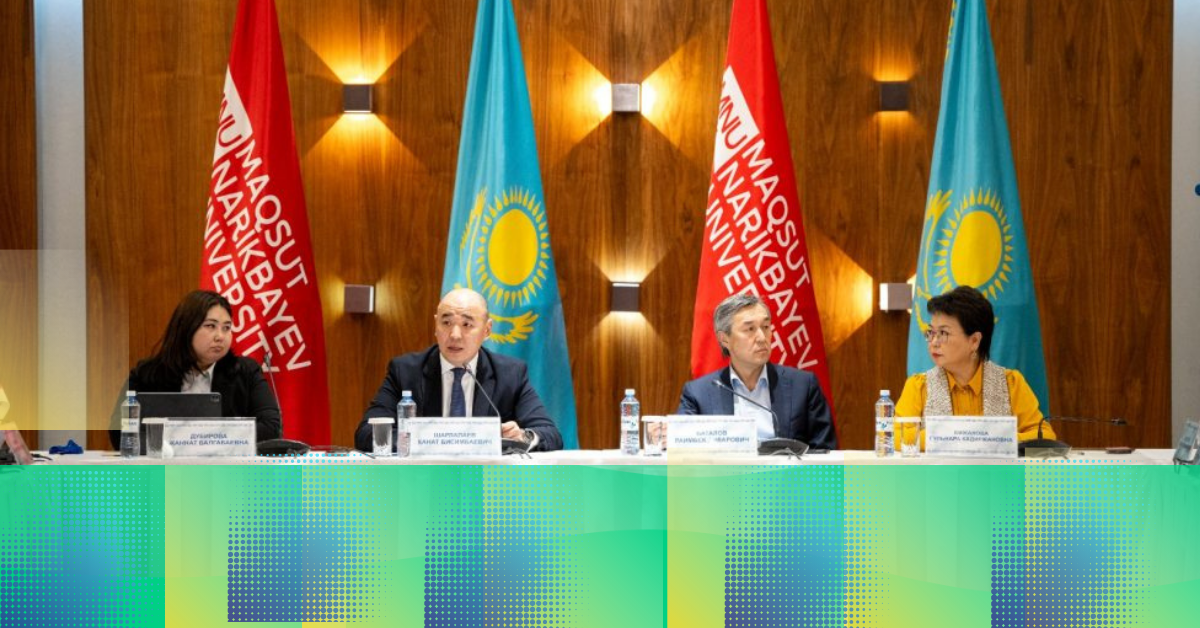
    On 26 February 2025, Maqsut Narikbayev University hosted a roundtable discussion tackling crucial issues surrounding the country’s mining sector, particularly focusing on the implementation of the Unified Platform for Mineral Resource Use (minerals.e-qazyna.kz).

    The event, chaired by Minister of Industry and Construction Kanat Sharlapaev and Acting Chairman of the Board of the National Business Chamber of Kazakhstan “Atameken” Raimbek Battayev, brought together key stakeholders, including representatives from mining companies, government agencies, and industry associations.

    Need for Continued Development:

    Minister Sharlapaev highlighted the government’s commitment to boosting Kazakhstan’s mineral resource base by intensifying geological exploration. He acknowledged the significant contributions of major mining companies in expanding these exploration areas and praised the effectiveness of the 2014-2018 legislative reforms, which introduced the licensing principle for geological exploration.

    Emphasising the need to sustain this progress, Minister Sharlapaev stressed the importance of developing a robust regulatory framework that fosters a favorable investment climate in the mining sector. He further underscored the imperative of prioritizing industrial safety, encouraging its integration into the corporate culture of mining companies.

    Unified Platform: A Transparent and Efficient System:

    Vice-Minister Zhanat Dubirova took the opportunity to present the Unified Platform for Mineral Resource Use. This online platform provides open access to all geological data, streamlining several processes.

    The platform currently offers 22 digitalised government services and has already processed 506 applications since its launch. It serves as a one-stop shop, providing potential mineral resource users with comprehensive information on a proposed site, including infrastructure details, geological reports, and available licenses.

    Dubirova pointed out the innovative aspects of the platform, such as the interactive map that allows users to visualise the land status, upcoming auctions, and relevant geological data, eliminating the need for intermediaries.

    Streamlined Control and Regulatory Framework:

    The platform also facilitates greater transparency and efficiency in monitoring compliance with licensing and contractual obligations. Previously, this control was largely manual, but now, automated verification systems will ensure real-time updates and streamline interactions between the government and mining companies.

    Towards the Second Phase of Reform:

    Nikolai Radostovets, Executive Director of the Association of Mining and Metallurgical Enterprises (AGMP), expressed support for paperless operations and emphasized the need for training on the digital platform. He proposed conducting this work systematically on a weekly basis, providing company specialists with opportunities not only for training but also for project refinement.

    Radostovets emphasized that the subsoil use reform requires further development. He proposed moving to the second stage of reform, noting that the President of Kazakhstan highlighted the continuation of subsoil use reform in his speech at an expanded government meeting.

    To address this issue, Radostovets requested the minister to resume the activities of the Working Group on amendments to the Subsoil Code, which was created last year, and to involve consultants and experts.

    “We still have many unresolved issues regarding land and water matters after the reform,” he said. “It is necessary to bring the Subsoil Code into compliance with other regulatory legal acts. AGMP has worked with companies on about 60 amendments to the Subsoil Code. On behalf of all subsoil users, we ask you to submit amendments to the Subsoil Code to Parliament this year or to finalize the draft law currently under discussion to advance reforms on a wide range of issues.”

    Minister Sharlapayev agreed with the need to further advance the reform in subsoil use and resume the Working Group’s activities. He proposed involving a law firm in developing the legislative act to ensure the document is competent, well-thought-out, and developed through collective dialogue with deputies and government agencies. According to him, there is an opportunity to submit the draft law to Parliament in 2025, as provided for in the legislative work plan.

    Industry Participation:

    The roundtable was attended by experts and executives from major companies including ERG, Solidcore Resources, Kazakhmys Corporation, Qarmet JSC, Altynalmas JSC, Kazzinc Holdings, Qaragandy Power Silicon, the Association of Precious Metals Producers, Kazakhstan Mining Chamber, Er-Tai LLP, National Geological Service, KAZRC Association, Caravan Resources LTD, TENIR LOGISTIC, Chu lli Resources Ltd, Kazakhstan Foreign Trade Chamber, Kazatomprom, and Tau-Ken Samruk.

    The meeting concluded with a question-and-answer session, highlighting the collaborative approach between government and industry stakeholders in advancing Kazakhstan’s mining sector reforms.

  • UK Expertise Sparks a Sustainable Mining Revolution Across Europe and Central Asia

    UK Expertise Sparks a Sustainable Mining Revolution Across Europe and Central Asia

    According to the document “UK Capabilities in Mining for Critical Minerals – Industry Case Studies” recently published by the Department for Business and Trade, UK expertise is powering a new wave of mining innovation across Europe and Central Asia, according to a recent industry case study slide pack. The document highlights how British companies are leveraging cutting‐edge technology and sustainable practices to transform mining operations on two continents.

    In Kazakhstan, Central Asia Metals (CAML) is at the forefront. At its Kounrad operation, CAML has installed a 4.77MW solar power plant that now meets up to 18% of the site’s energy demand. This renewable solution not only cuts down on emissions but also underpins the company’s long-term commitment to sustainability. Meanwhile, at its Sasa mine in North Macedonia, CAML is pioneering paste fill mining methods designed to drastically reduce reliance on surface water, marking a significant step towards more sustainable resource extraction.

    Over in Europe, the Vareš Polymetallic Project in Bosnia and Herzegovina is making headlines as the first new mine to open in the region in over a decade. Spearheaded by Adriatic Metals and supported by Wardell Armstrong International, the project showcases how integrated technical expertise—from metallurgical testing to comprehensive ESG assessments—can drive both economic growth and environmental responsibility.

    These case studies underscore the global reach of UK mining capabilities. From renewable energy integration to innovative water management and robust environmental frameworks, British-led solutions are setting a new standard for mining in Europe and Central Asia. As the demand for critical minerals continues to rise, these pioneering projects offer a blueprint for sustainable development that could well shape the future of the industry.

  • Central Asia Mining: Shifting Investment Landscape

    Central Asia Mining: Shifting Investment Landscape

    Central Asia’s mining sector—long a linchpin of the region’s resource-based economy—is at a transformative juncture. A study published on 19 February 2025 by the Eurasian Development Bank (EDB) examining mutual direct investments (MDI) across the Eurasian region from 2016 to the first half of 2024 reveals an evolving investment landscape. Traditionally dominated by investments in extractive industries, the region is now witnessing a broad diversification into sectors such as manufacturing, power, and greenfield projects. Alongside these trends, emerging regulatory frameworks—most notably new Chinese legislation concerning post-mining reconciliation and ESG (Environmental, Social, and Governance) requirements—are poised to significantly influence future investment dynamics.

    Historical Pillar: The Dominance of Extractive Industries

    For decades, mining and the broader extractive industries have formed the backbone of economic development in Central Asia. Rich deposits of minerals and metals have attracted substantial international investment, particularly from China, whose longstanding focus on extractive projects translated into investments of $36.2 billion. This capital influx has been instrumental in developing the region’s infrastructure and export capabilities, cementing mining’s role as a critical driver of economic progress.

    A Shifting Investment Landscape

    While the total MDI stock in the Eurasian region reached $90.4 billion by mid-2024, the extractive sector’s share of investment has begun to contract. Once accounting for 65.4% of the investment portfolio in 2020, its share has decreased to 55% of a $50 billion stock. This trend is less a sign of waning interest in mining and more indicative of a broader reallocation of capital as investors seek opportunities in the new and adjacent sectors.

    Diversification: From Mines to Manufacturing and Power

    The diversification of investments in Central Asia is underscored by significant growth in the manufacturing and energy sectors. Chinese investments, traditionally concentrated in extractive industries, are increasingly flowing into power and manufacturing. For example, investment in the power sector surged to $4.1 billion—a 2.1-fold increase in just a year and a half—primarily in Uzbekistan, while the manufacturing sector attracted $11.8 billion. This capital reallocation suggests that investors are now betting on a more diversified economic future that balances resource extraction with value-added industries.

    Regional Dynamics and the Role of New Partners

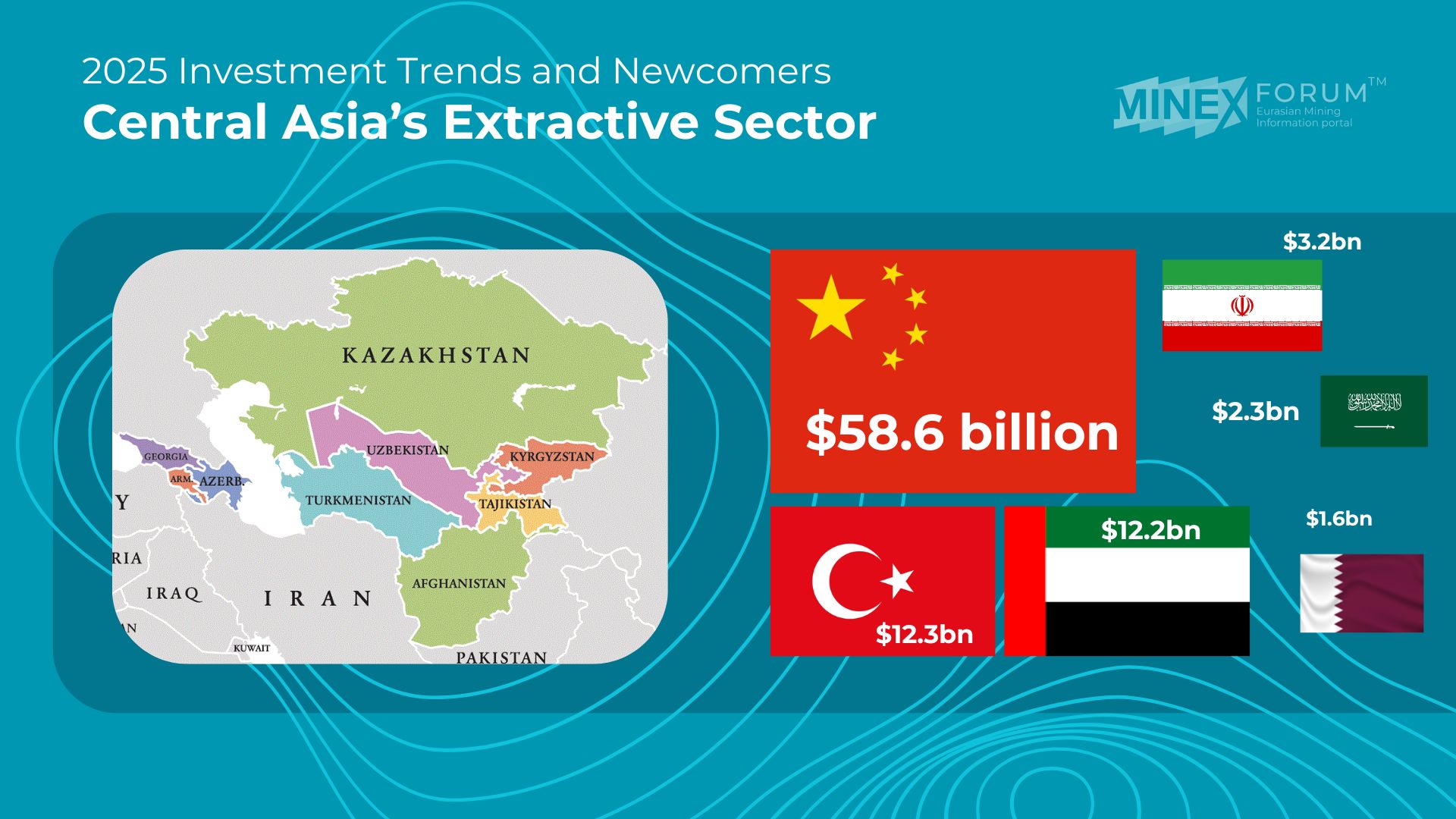
    Central Asia’s investment ecosystem is undergoing a fundamental reshaping, influenced not only by traditional players like China but also by new entrants from Türkiye, the Gulf states, and Iran. China remains the largest investor with an MDI stock of $58.6 billion, yet its strategy is evolving from a heavy reliance on extractive projects to a broader portfolio that includes energy, processing and manufacturing. Emerging investments from Saudi Arabia, UAE, Qatar, and Türkiye further illustrate the region’s expanding appeal. This diversification not only mirrors geopolitical shifts but also signals a recalibration of global investors’ risk and reward strategies in an increasingly competitive market.

    Emerging Regulatory Frameworks: China’s Revised Mineral Resources Law

    Adding a new dimension to the evolving investment landscape, recent Chinese legislative reforms are reshaping how mining investments will be planned and executed. According to a report by ICLG law firm, China has revised its Mineral Resources Law (effective from 1 July 2025) to include robust post-mining reconciliation requirements. These new provisions mandate that mining companies develop comprehensive ecological restoration plans once extraction activities cease. Such measures are designed to enforce ESG principles across the industry, ensuring that environmental sustainability and community welfare are prioritised alongside economic gains.

    While the law represents a significant step towards more sustainable mining practices, critics have noted that it lacks clear standards and robust community engagement provisions. The ambiguity surrounding enforcement may challenge the law’s effectiveness in practice. Nevertheless, as Chinese companies are pivotal players in Central Asia’s mining sector, these regulatory changes are expected to have far-reaching implications. By requiring adherence to ESG standards and post-mining reconciliation, the revised law not only elevates environmental and social accountability but also enhances the long-term viability of Chinese investments in the region.

    For Chinese investors, the new legal framework serves as both a challenge and an opportunity. On one hand, increased compliance costs and uncertainty in implementation could complicate investment decisions. On the other, the mandate for sustainable practices is likely to build greater investor confidence among international stakeholders who are increasingly attuned to environmental and social governance criteria. In effect, these reforms could catalyse further Chinese investments in Central Asia by promoting responsible mining practices that align with global trends toward sustainability.

    Greenfield Projects and the Future of Mining in Central Asia

    The momentum of greenfield projects further underscores the region’s dynamic evolution. With investments in new business and infrastructure soaring to $57 billion—almost double the levels of 2016—the emphasis is on modern, sustainable projects that integrate advanced technologies and greener practices. Even as capital shifts towards manufacturing and energy, the mining sector is adapting by incorporating sustainable practices and innovative technologies. This approach not only mitigates the historical environmental impact of mining but also positions the sector as a leader in sustainable resource management.

    Navigating the Future: Challenges and Opportunities

    Central Asia’s mining sector now stands at a crossroads. While traditional extractive investments continue to underpin the region’s economic strength, the emerging trends towards diversification and sustainability present both challenges and opportunities. Investors are increasingly weighing the volatility inherent in commodity markets against the more stable returns offered by sectors such as energy and manufacturing. Moreover, the integration of ESG principles—fuelled by legislative changes like China’s revised Mineral Resources Law among others—introduces a new layer of complexity, urging mining companies to innovate and adapt.

    Technological advancements, ranging from automation to environmentally friendly extraction techniques, hold the promise of revitalising the mining sector. These innovations, in tandem with the new regulatory environment, could help balance economic imperatives with ecological and community well-being. The successful navigation of these changes will be critical in ensuring that Central Asia’s natural resouces wealth continue to drive sustainable and long-term growth.


    Don’t miss the opportunity to explore Kazakhstan’s vast mineral wealth and connect with decision-makers shaping the future of mining in Central Asia at MINEX Kazakhstan Forum.

    MINEX Kazakhstan 2025 will feature:

    • 100+ expert speakers
    • 450+ delegates from 30+ countries
    • 50+ exhibitors showcasing cutting-edge technologies
    • Networking opportunities with key industry stakeholders

    Register here to secure your place at the Forum.

    We look forward to welcoming you in Astana!