Website: Asia.com

  • Kazakhstan and China Discuss Nuclear Energy Cooperation

    Kazakhstan and China Discuss Nuclear Energy Cooperation

    Kazakhstani President Kassym-Jomart Tokayev met with Shen Yanfeng, General Director of China National Nuclear Corporation (CNNC), to explore opportunities for collaboration in nuclear energy.

    During the discussion, Tokayev outlined Kazakhstan’s strategic plans for the sector, highlighting the recent establishment of the Nuclear Energy Agency to oversee the industry’s systematic development. He expressed interest in CNNC’s extensive expertise as a leading force in China’s nuclear sector.

    Shen Yanfeng, in turn, provided an overview of CNNC’s projects both within China and internationally. The meeting also covered potential cooperation in advancing peaceful nuclear technologies and training Kazakhstani specialists.

    CNNC, founded in 1999, is China’s largest state-owned enterprise dedicated to nuclear energy development, technological innovation, and research.

  • Uzbekistan and Limaomaoli Metal Company Discuss Syurenota Iron Ore Project

    Uzbekistan and Limaomaoli Metal Company Discuss Syurenota Iron Ore Project

    On March 14, Uzbekistan’s Deputy Minister of Investments, Industry, and Trade, Ilzat Kasymov, met with Song Liping, CEO of Limaomaoli Metal Company, to discuss the development of the Syurenota iron ore deposit in the Tashkent region.

    The meeting covered the project’s progress, challenges faced by the investors, and potential areas for further cooperation. Representatives of the Chinese company expressed appreciation for the support received and reaffirmed their commitment to strengthening the partnership.

    Founded in November 2019, Limaomaoli Metal Company specializes in mineral exploration and iron ore extraction.

  • Kazakhstan to Launch 190 Industrial Projects Worth $3 Billion in 2025

    Kazakhstan to Launch 190 Industrial Projects Worth $3 Billion in 2025

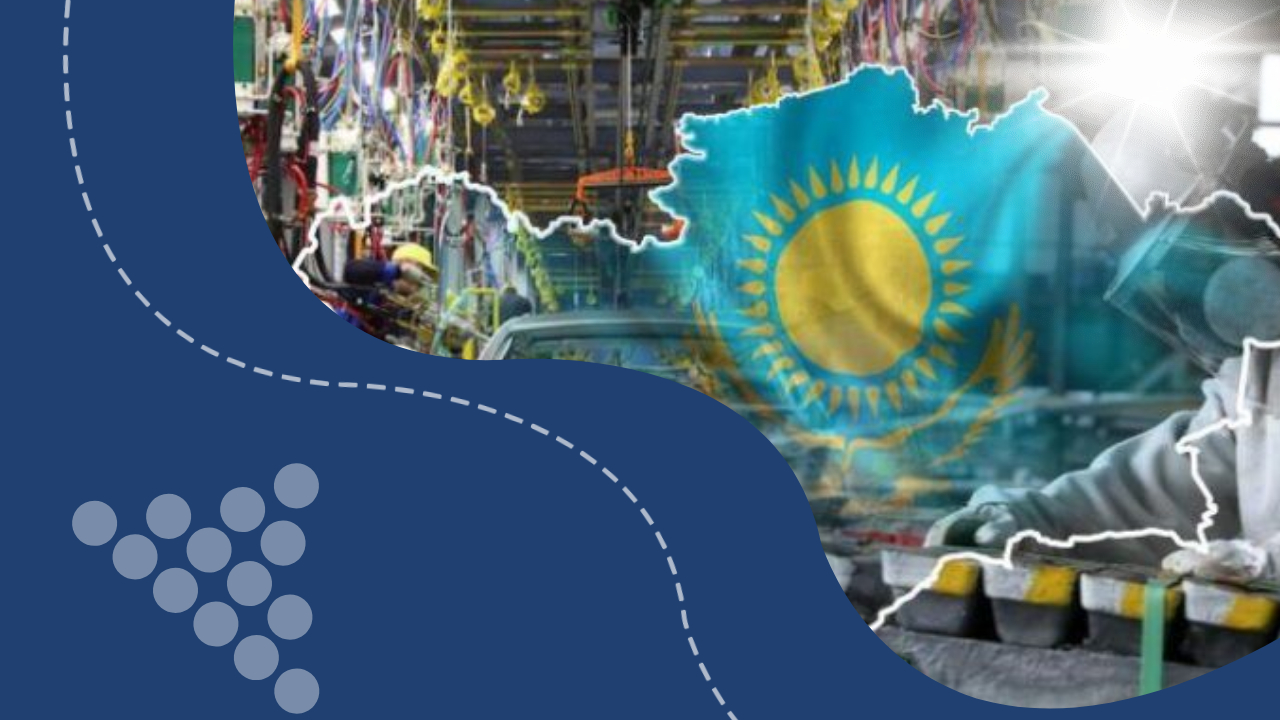
    Kazakhstan is set to implement 190 industrial projects worth 1.5 trillion tenge ($3 billion) in 2025, marking the highest number of such initiatives in the past five years. This announcement was made by the Ministry of Industry and Construction of Kazakhstan, highlighting the country’s push to boost its industrial sector.

    Among these projects are nine major investments in metallurgy, machine building, and the chemical industry, with plans for completion by 2035. Once these new enterprises reach their full operational capacity, the total value of their output is expected to reach $7.3 billion annually.

    Key projects include the launch of hot-briquetted iron production, the construction of a copper smelting plant, a potash salt production complex, and a hydrometallurgical plant. Additionally, Kazakhstan will ramp up production of hydrogen peroxide, liquid glass, sulfuric acid, mineral fertilizers, polypropylene, and yellow phosphorus, according to Sputnik Kazakhstan.

    These initiatives are part of Kazakhstan’s broader strategy to diversify its economy and strengthen its industrial base, positioning the country as a key player in regional and global markets.

  • ERG Expands Academic Mobility Program to Enhance Vocational Training in Kazakhstan

    ERG Expands Academic Mobility Program to Enhance Vocational Training in Kazakhstan

    Under the academic mobility program, students from various regions of Kazakhstan are gaining hands-on experience at partner colleges and industrial facilities. Eurasian Resources Group (ERG) has announced a new phase of collaboration with the Alliance of Colleges, a community of technical and vocational education organizations established with ERG’s support in 2022.

    This month, a group of students from the Kentau Multidisciplinary College in the Turkistan regioncompleted a two-week internship at the Khromtau Mining and Technical College. During the program, they studied 14 production-related topics, including occupational safety, electrical safety, and fire safety. The training incorporated augmented reality technologies, such as simulators for portable drilling machines and dump trucks, providing students with immersive learning experiences. Additionally, the students underwent practical training at the Don Mining and Processing Plant, operated by Kazchrome, a subsidiary of ERG.

    The academic mobility initiative enables ERG to strengthen its collaboration with educational institutions in regions where the company operates. ERG emphasizes that this program is part of a comprehensive workforce development strategy aligned with the national government’s goals. Notably, 2025 has been declared the Year of Working Professions in Kazakhstan, highlighting the importance of vocational training and skilled labor.

  • Orano and Navoiyuran Sign Agreement to Develop South Djenghildy Uranium Deposit in Uzbekistan

    Orano and Navoiyuran Sign Agreement to Develop South Djenghildy Uranium Deposit in Uzbekistan

    French nuclear giant Orano and Uzbek state-owned Navoiyuran have signed a groundbreaking agreement to advance the industrial development of the South Djenghildy uranium deposit in Uzbekistan. The partnership, facilitated through their joint venture Nurlikum Mining, aims to significantly boost uranium production, reaching up to 700 tons annually within a decade.

    The agreement integrates the South Djenghildy project into Navoiyuran’s existing industrial infrastructure, with the Uzbek company serving as the project operator. Notably, the deal introduces a new partner, Japanese corporation ITOCHU, which has acquired a minority stake in the joint venture. While specific ownership details remain undisclosed, the collaboration underscores a shared commitment to advancing the mining project.

    Orano highlighted that the partnership reflects the determination of all parties to expand the South Djenghildy project, leveraging certified resources to ensure stable uranium production for at least ten years. The project is part of a broader strategic framework agreement signed between Orano and Uzbekistan in 2022, which also includes plans for extensive geological exploration to potentially double the joint venture’s mineral resources.

    Xavier Saint-Martin Tillet, Senior Executive Vice President of Orano Mining, emphasized the project’s role in diversifying the group’s raw material sources. He noted that Orano is applying its geological and technical expertise to further develop the initiative.

    Navoiyuran, the fifth-largest uranium producer globally, specializes in uranium mining and processing, supplying uranium oxide to meet the growing global demand for clean energy. The partnership aligns with Uzbekistan’s ambitions to strengthen its position in the global uranium market.

    In related developments, KATCO, a joint venture between Orano Mining and Kazakhstan’s Kazatomprom, announced plans to launch a uranium processing complex at the Moyynkum deposit in Kazakhstan’s Turkistan region by mid-2025. The facility is expected to produce 2,045 tons of uranium annually, contributing to a total output of 4,000 tons per year.

  • Kazakhstan to Supply EU with Critical Raw Materials Under New Agreements

    Kazakhstan to Supply EU with Critical Raw Materials Under New Agreements

    Kazakhstan has signed a landmark agreement to supply the European Union (EU) with critical raw materials, essential for modern industries and technologies. The deal was finalized during a visit by European Commissioner for International Partnerships Jutta Urpilainen to Kazakhstan, as reported by the EU Representation in the country.

    The agreement includes a €3 million contract aimed at fostering cooperation between the EU and Central Asia in the field of critical raw materials. Funding will be provided by the European Bank for Reconstruction and Development (EBRD), with a focus on joint projects to establish reliable supply chains for these resources. Critical raw materials, such as rare earth metals, copper, aluminum, uranium, phosphorus, and potassium, are vital for sectors like technology, energy, defense, and transportation.

    Urpilainen emphasized the importance of the partnership, stating, “Europe needs reliable access to critical raw materials to modernize its economy. We are committed to mutually beneficial cooperation with Kazakhstan in their extraction and development. This partnership supports all Central Asian countries, boosts Kazakhstan’s economy, strengthens its industrial potential, and creates new opportunities for businesses, innovation, and high-quality jobs.”

    In addition to the raw materials agreement, the EU and Kazakhstan signed a €200 million loan deal between the European Investment Bank (EIB) and the Kazakhstan Development Bank. The EU will provide an €18 million guarantee for the loan, which Kazakhstan plans to allocate toward developing transport infrastructure and renewable energy sources.

    During the visit, Kazakh President Kassym-Jomart Tokayev also met with Urpilainen at the Akorda Presidential Palace, underscoring the growing partnership between Kazakhstan and the EU.

  • Condor Energies Secures Lithium Production License in Kazakhstan’s Kolkuduk Field

    Condor Energies Secures Lithium Production License in Kazakhstan’s Kolkuduk Field

    Condor Energies Inc., a Calgary-based energy company, has secured a license to produce solid minerals at the Kolkuduk field in Kazakhstan, spanning 6,800 hectares. The company believes the field holds significant lithium reserves, bolstering its position in the global critical minerals market.

    The Kolkuduk field is adjacent to the Sayakbay field, a 37,300-hectare site already managed by Condor. Both fields are located in a geologically active region characterized by faults that facilitate the accumulation of mineralized brines in underground reservoirs. Initial geological exploration at Kolkuduk has revealed approximately 130 milligrams of lithium per liter of brine water, with historical data indicating the presence of other valuable minerals such as rubidium, strontium, and cesium in brine reservoirs up to 1,000 meters deep.

    Don Streu, Condor’s President and CEO, emphasized the strategic importance of the project, stating, «Condor’s focus on developing critical minerals in Kazakhstan aligns with the global push to create diverse, secure, and sustainable supply chains.» Kazakhstan’s geographic location, situated between Europe and China—two of the largest consumers of critical minerals—further enhances the project’s potential.

    In addition to its mineral exploration, Condor announced in January 2024 that it had secured natural gas quotas to produce 350 tons of liquefied petroleum gas (LPG) daily starting in 2025. This volume could power 125 railway engines or 215 dump trucks with a capacity of 150 tons each, showcasing the company’s diversified energy portfolio.

  • Orano Launches Uranium Mining Project in Uzbekistan with Nurlikum Mining JV

    Orano Launches Uranium Mining Project in Uzbekistan with Nurlikum Mining JV

    French nuclear fuels company Orano announced on Wednesday that it will begin developing the South Djengeldi uranium mining project in Uzbekistan. This initiative is part of its Nurlikum Mining joint venture with Navoiyuran, Uzbekistan’s state-owned mining company. The project is expected to operate for over a decade, with peak production projected at 700 metric tons of uranium annually, according to Orano’s statement.

    In a significant development, Japan’s ITOCHU Corporation has acquired a minority stake in the joint venture. The partners plan to launch an exploration program aimed at at least doubling the joint venture’s mineral resources. This collaboration underscores the growing international interest in Uzbekistan’s uranium reserves and highlights the country’s strategic importance in the global nuclear energy sector.

    The South Djengeldi project marks a key step in Orano’s expansion efforts and strengthens its partnership with Uzbekistan, a country rich in uranium resources. The involvement of ITOCHU Corporation further enhances the project’s potential, bringing additional expertise and investment to the venture.

  • Reducing Dependence on China: The Push for Domestic Critical Minerals Production

    Reducing Dependence on China: The Push for Domestic Critical Minerals Production

    In a recent Fox Business segment, Cove Capital Chairman and CEO Pini Althaus emphasized the growing urgency to reduce reliance on China for critical minerals—a dependence he described as “just not tenable anymore.” As geopolitical tensions escalate and supply chain vulnerabilities come into sharper focus, Althaus highlighted the importance of securing domestic sources of rare earth elements and other essential materials vital to modern industries, including technology, defense, and renewable energy.

    The discussion centered around two key developments: Ukraine’s mineral deal and Cove Capital’s joint venture in the Akbulak rare earth project. These initiatives underscore a broader global effort to diversify supply chains and reclaim control over resources that are indispensable to economic and national security.

    The Strategic Importance of Critical Minerals

    Critical minerals, such as neodymium, lithium, cobalt, and dysprosium, play an indispensable role in manufacturing everything from smartphones and electric vehicles to advanced military equipment like guided missiles and radar systems. However, China currently dominates the global market for these materials, controlling approximately 60% of mining operations and nearly 90% of processing capacity worldwide.

    This heavy reliance on China has raised alarms among U.S. policymakers and business leaders, particularly amid escalating trade disputes and concerns about Beijing’s influence over strategic industries. Althaus warned that depending on a single country for such crucial inputs poses significant risks, especially during times of geopolitical instability or conflict.

    “The world is waking up to the fact that we cannot continue outsourcing our critical mineral needs to China,” Althaus said during the interview. “It’s not just about economics—it’s about sovereignty and ensuring that we have access to the resources necessary to sustain our technological and industrial leadership.”

    Ukraine’s Mineral Deal: A Step Toward Diversification

    One promising development discussed in the segment was Ukraine’s recent agreement to explore and develop its vast mineral reserves. The Eastern European nation is believed to hold substantial deposits of titanium, uranium, and other critical minerals, which could help alleviate Europe’s—and by extension, the West’s—dependence on Chinese imports.

    Althaus praised the deal as a “game-changer” for regional supply chains, noting that it represents a proactive step toward building alternative sources of critical minerals outside of China’s orbit. By investing in Ukraine’s mining sector, Western nations can simultaneously support Kyiv’s economic recovery while advancing their own strategic interests.

    “This isn’t just about helping Ukraine rebuild—it’s about creating a more resilient and diversified global supply chain,” Althaus explained. “Every ton of critical minerals produced in Ukraine is one less ton we need to source from China.”

    Cove Capital’s Joint Venture in Akbulak

    Another focal point of the conversation was Cove Capital’s involvement in the Akbulak rare earth project, located in Kazakhstan. Through a joint venture with local partners, the company aims to extract and process rare earth elements from one of Central Asia’s most promising deposits. If successful, the project could provide a significant boost to non-Chinese supplies of these vital materials.

    Althaus described the Akbulak initiative as part of a larger mission to establish a reliable, ethical, and geopolitically stable source of critical minerals. He stressed the importance of adhering to high environmental and labor standards throughout the extraction process, contrasting this approach with some of the questionable practices associated with Chinese mining operations.

    “We’re not just focused on producing these minerals—we’re committed to doing so responsibly,” Althaus stated. “That means minimizing environmental impact, respecting workers’ rights, and fostering long-term partnerships with host countries.”

    Why Domestic Production Matters

    The push for greater self-sufficiency in critical minerals comes at a pivotal moment for the United States and its allies. With the Biden administration prioritizing clean energy technologies and Congress passing legislation like the Inflation Reduction Act—which includes incentives for domestic battery production—the demand for critical minerals is expected to surge in the coming years.

    However, without secure access to these resources, America’s transition to a green economy could face significant hurdles. Althaus pointed out that relying on foreign suppliers, particularly those tied to adversarial regimes, undermines efforts to achieve true energy independence.

    “If we want to lead the charge in renewable energy and advanced manufacturing, we need to take ownership of our supply chains,” he argued. “That starts with investing in domestic projects and forging alliances with trusted partners who share our values.”
  • Uzbekistan Aims to Boost Critical Mineral Production with $2.6 Billion Investment

    Uzbekistan Aims to Boost Critical Mineral Production with $2.6 Billion Investment

    President Shavkat Mirziyoyev of Uzbekistan has unveiled an ambitious plan to expand the country’s critical mineral resources and produce high-value-added products. During a presentation on March 7, the president emphasized the untapped potential of Uzbekistan’s mineral wealth, which includes deposits of over 30 metals such as tungsten, molybdenum, magnesium, lithium, germanium, graphite, vanadium, and titanium.

    Historically, this sector has been underdeveloped due to a lack of investment in mineral exploration, waste processing, and value-added production. However, recent organizational reforms have laid the groundwork for significant progress. Over the next three years, Uzbekistan plans to implement 76 projects focused on 28 rare minerals, with a total investment of $2.6 billion. These projects aim to enhance the country’s resource base through increased funding for geological exploration and scientific research.

    A key focus of the initiative is the application of modern technologies to extract valuable raw materials directly from ore, improve mineral purity, and produce high-value-added goods. For example, the enrichment of tungsten concentrate from the Ingichka deposit is expected to double its added value. Currently, 18 similar projects have been developed.

    To strengthen the resource-processing-science-production chain, the government has proposed establishing technoparks in the Tashkent and Samarkand regions, which are rich in molybdenumand tungsten. President Mirziyoyev also emphasized the importance of technology transfer, the establishment of modern laboratories, and the creation of training centers to build a robust foundation for Uzbekistan’s participation in the global critical minerals market.

    The president highlighted that, in the era of the Fourth Industrial Revolution, Uzbekistan must secure a strong position in this competitive market.