Region: Kazakhstan

  • Kazakhstan: fire at ArcelorMittal Temirtau mine continues

    Kazakhstan: fire at ArcelorMittal Temirtau mine continues

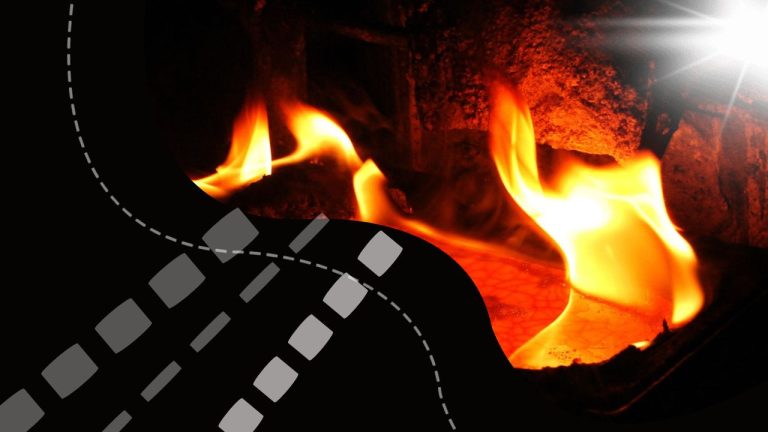
    In the Karaganda region of Kazakhstan, the fire at the Kazakhstanskaya coal mine of ArcelorMittal Temirtau JSC (AMT), which began on the morning of August 17, cannot yet be extinguished, Interfax reports citing the country’s Ministry of Emergency Situations.

    “The situation at the mine “Kazakhstanskaya” as of 8:00 am on August 22: the intensity of fires in the emergency working is not decreasing, there is no improvement in the situation,” the ministry said in a statement.

    According to the source, every effort is being made to contain the fire. It was decided to isolate the emergency section by erecting gypsum bridges.

    Earlier it was reported that on the morning of August 17, a conveyor belt caught fire in the mine at a level of 170 m. At the time of the fire, 227 people were underground. 222 miners were evacuated, of which 13 were injured. Five people died, the youngest of them was 27 years old, the oldest – 58.

    JSC “ArcelorMittal Temirtau” is a part of the international steel concern Arcelor-Mittal. The company owns 15 coal mines and iron ore mines in Kazakhstan.

  • Political decision on ArcelorMittal’s exit from Kazakhstan made – Ministry of Finance

    Political decision on ArcelorMittal’s exit from Kazakhstan made – Ministry of Finance

    The government is negotiating with the shareholders of ArcelorMittal about their withdrawal from Kazakhstan. This was announced on the sidelines of the government by Deputy Prime Minister and Head of the Ministry of Finance of the Republic of Kazakhstan Yerulan Zhamaubaev, Vlast writes.

    What happened. Finance Minister Zhamaubayev told reporters that the political decision to withdraw ArcelorMittal from Kazakhstan had already been made.

    He did not specify whether the government is in talks with the Russian company Severstal to buy the assets of ArcelorMittal.

    “You all have already heard, the statement has been made. This issue is dealt with directly by Roman Sklyar (First Deputy Prime Minister of the Republic of Kazakhstan),” Zhamaubaev answered the question about the transfer of ownership of ArcelorMittal to a Russian company.

    The official emphasized that “a certain circle of people” should be engaged in negotiations on a large enterprise, since this should be a serious negotiation process.

    “Therefore, if everyone comments incompetently at their level, it will be wrong. Moreover, it can affect the negotiation process. So the announcement has already been made. I think there is a political solution (to leave ArcelorMittal from Kazakhstan). Therefore, we will work,” Zhamaubaev assured.

    Context. On August 17 at 10:05 a conveyor belt caught fire at the Kazakhstan mine. There were 227 miners underground. Of these, 222 managed to be evacuated through the flank shaft used for lowering and raising minerals, rocks, materials, equipment, and people. Five people died. The body of the first was found on the day of the tragedy, on August 18 – the second and third dead, on the 19th – the fourth and fifth.

    After the death of five miners, a day of mourning was declared at ArcelorMittal Temirtau.

    The reaction of the authorities. President Kassym-Jomart Tokayev instructed the government and the akimat of the Karaganda region to conduct a comprehensive investigation into the causes of the accident and provide all necessary assistance to the victims. He questioned the further presence of ArcelorMittal Temirtau in Kazakhstan.

    The Prime Minister of the Republic of Kazakhstan, Alikhan Smailov, also stated that the owners of the enterprise were to blame for the tragedy at the ArcelorMittal Temirtau mines. Responsibility for the death of people will be borne by the top management of the company.

    “This is primarily the fault of the owners of the enterprise. Their complete self-withdrawal from the life of the company has led to tragic consequences for several years now. As we can see, for the entire period of activity, attention was paid only to making a profit without creating an adequate level of security for workers. Therefore, accidents are often repeated and, most tragically, people die,” the Prime Minister said.

    Over the years of work of ArcelorMittal Temirtau JSC (AMT), there are more than a hundred dead miners at the enterprise.

  • KAZ Minerals’ Impressive Production and Sales Performance in H1 and Q2 2023

    KAZ Minerals’ Impressive Production and Sales Performance in H1 and Q2 2023

    In a remarkable display of operational prowess and strategic finesse, KAZ Minerals has unveiled its production and sales report for the first half (H1) and second quarter (Q2) of 2023, showcasing a compelling trajectory of growth and success. This comprehensive report reveals a substantial 11% surge in copper production compared to H1 2022, propelled by enhanced throughput and recoveries emanating from the Aktogay sulphide plants. Notably, this achievement underscores KAZ Minerals’ commitment to excellence and its ability to capitalize on synergies within its operations.

    Copper Production Surges by 11%: A Testament to Operational Excellence

    One of the standout highlights of this report is the remarkable 11% increase in copper production, firmly establishing KAZ Minerals as a trailblazer in the mining industry. This impressive upswing can be attributed to the company’s unwavering focus on operational efficiency, resulting in enhanced throughput and recoveries from the Aktogay sulphide plants. This accomplishment reflects KAZ Minerals’ profound understanding of the intricacies of its operations and its proactive approach to optimizing every facet of its processes.

    Silver Production Soars by 14%: Quality Grades Leading the Way

    The report also reveals a significant 14% upsurge in silver production, a testament to the company’s prowess in leveraging higher grades to achieve exceptional results. KAZ Minerals’ commitment to extracting and utilizing higher-grade resources has paid off, showcasing its ability to adapt and thrive in dynamic market conditions. This achievement bolsters the company’s reputation as a stalwart player in the mining sector.

    Zinc Output Skyrockets by 24%: Leveraging Improved Grades and Recovery Rate

    In yet another display of operational excellence, KAZ Minerals has achieved an impressive 24% rise in zinc concentrate output. This remarkable increase can be attributed to the company’s strategic focus on improving grades and recovery rates. By leveraging these key factors, KAZ Minerals has not only demonstrated its ability to optimize its processes but has also positioned itself as an industry leader in harnessing the full potential of its resources.

    Gold Production Adapts, Despite 8% Decrease

    KAZ Minerals’ adaptability and resilience shine through in its approach to gold production. Despite facing a decrease of 8% in gold output due to lower expected grades, the company’s ability to navigate such challenges while continuing to deliver results underscores its commitment to maintaining a diversified and robust production portfolio.

    Market Performance and Sales Mastery

    The report unveils an extraordinary accomplishment in sales, with KAZ Minerals selling an impressive 223 kt of copper in H1 2023—surpassing production figures by a staggering 23 kt. This resounding success is further amplified by the fact that all by-products’ sales volumes have exceeded production figures, a clear testament to the company’s strategic prowess and market responsiveness.

    Operational Efficiency Mitigates Inflation: Rail Logistics and Chinese Demand Take the Lead

    Amidst the challenges of high cost inflation, KAZ Minerals has deftly navigated these headwinds through a combination of improved rail logistics and robust demand from its Chinese customers. These measures have not only mitigated the impact of inflation but have also aided in the reduction of finished goods inventories. This strategic approach speaks volumes about the company’s ability to adapt, innovate, and proactively manage market dynamics.

    6m
    2023
    6m
    2022
    Q2 2023 Q1 2023 Q2 2022
    Copper production1 kt  199.5  179.9  104.4  95.1  90.0
    Aktogay kt  126.6  104.2  64.7  61.9  53.5
    Bozshakol kt  50.2  51.6  26.5  23.7  24.9
    East Region & Bozymchak kt  22.7  24.1  13.2  9.5  11.6
    Gold production2 koz  77.9  84.5  41.4  36.5  41.8
    Silver production2 koz  1,978  1,732  1,141  837  844
    Zinc in concentrate kt  23.9  19.2  14.8  9.1  8.5
    Copper sales3 kt  223.1  187.5  114.8  108.3  96.7
    Gold sales4 koz  92.9  99.5  49.9  43.0  49.1
    Silver sales4 koz  2,033  1,992  1,059  974  990
    Zinc in concentrate sales kt  29.2  24.1  15.6  13.6  9.1

    1. Payable metal in concentrate and copper cathode from Aktogay oxide ore
    2. Payable metal in concentrate
    3. Payable metal in concentrate, toll processed metal and copper cathode from Aktogay oxide ore
    4. Payable metal in concentrate and toll processed metal

    Highlights

    • KAZ Minerals produced 200 kt of copper in H1 2023, an increase of 11% compared with H1 2022 due to the strong performance of the Aktogay sulphide plants which raised ore throughput and copper recoveries.
    • Silver production in H1 2023 increased by 14%, benefiting from higher grades. Zinc in concentrate output increased by 24% due to higher grades and an improvement in the recovery rate, while gold output reduced by 8% due to expected lower grades at Bozshakol and Bozymchak.
    • The Group has continued to make progress in the sale of its accumulated finished goods inventories, with copper sales in H1 2023 of 223 kt, 23kt above production. Sales volumes of all by-products were also in excess of production. The Group has benefited from improved rail logistics compared with the prior year and strong demand for its products from customers.

    Andrew Southam, Chief Executive Officer, said: “KAZ Minerals produced 200 kt of copper in H1 2023, an increase of 11% compared with H1 2022 as Aktogay raised throughput and recoveries, supported by strong operational performances from Bozshakol, East Region and Bozymchak. The Group has progressively reduced its finished goods inventories, benefiting from improved rail logistics and strong demand from customers in China.”

    For further information please contact:

    KAZ Minerals
    Marie Edwards

    Maksut Zhapabayev

    Company Secretary, London

    Corporate Communications, Almaty

    Tel: +44 20 7901 7832

    Tel: +7 727 244 03 53

    REGISTERED OFFICE

    7th Floor, 83 Victoria Street, London SW1H 0HW, United Kingdom

    PLEASE FOLLOW THE LINK TO DOWNLOAD THE FULL ATTACHMENT

  • ArcelorMittal Temirtau must leave the country – ex-director of the mine “Kazakhstanskaya” Arman Kalykov

    ArcelorMittal Temirtau must leave the country – ex-director of the mine “Kazakhstanskaya” Arman Kalykov

    ASTANA. KAZINFORM – On August 17, a conveyor belt caught fire in the working of the D6 coal slope at the Kazakhstanskaya mine. There were 227 miners in the mine. 222 workers were brought to the surface. The bodies of three dead have been found, and the search for the two miners is still ongoing. It turned out that over 100 people died at ArcelorMittal Termirtau facilities over 15 years. We decided to find out the reasons for systematic accidents from the ex-director of the Kazakhstanskaya mine, now a deputy of the Mazhilis, Arman Kalykov, who is now at the site of the tragedy.

    – Tell us about the situation, what measures are being taken now?

    – I visited the operational headquarters, then met with the family of the deceased. He got acquainted with the course of conducting rescue operations, extinguishing a fire. All, of course, painfully familiar. These accidents occur one after another endlessly. Each is a pain in the heart for a miner. With many familiar. I personally knew two of the victims. I worked there as chief engineer, deputy director, director of the mine. While I am here in the region. In principle, I was in the region, but far from the mine. The fire is under control now. Two people were not found. Young guys born in 1994, 1996. Now the situation is such that it is difficult to comment on something. The headquarters is working. I got to know the progress of the case.

    Today, unfortunately, I managed to meet only one family. Expressed condolences. They are also indignant: why did the tape catch fire, why is there a series of deaths? They don’t blame anyone. While questions were asked and all. As a standard, the company provides assistance in accordance with the collective agreement: the families of the victims will be paid 10 annual earnings. Housing will be purchased. All support measures are listed there. I said that the state commission is working. In my opinion, this is all due to underfunding by the shareholder. The company (ArcelorMittal Temirtau) saves money on creating safe conditions and staffing. There is a big problem – not enough numbers. The last two years, by joint efforts, convinced the shareholders – they began to accept people. The company accepted about 2.5 thousand people. Reception has been suspended for the time being. They explain this by the fact that the cost is very high. So there are standard costs. Therefore, the recruitment of staff is now suspended.

    – What is the main cause of the accident at the mine “Kazakhstanskaya”?

    – I can’t say, because the state commission is working. When the cause of the fire is clearly established, then it will be possible to draw some conclusions. Until the fire is extinguished. People have not yet been found, two people are being searched. I can’t draw any conclusions right now.

    – The accident at the mine is not the first time. What is it connected with?

    – All mines were acquired in technical, technological terms in normal working condition. But it was a resource created not by them, not by this company. This resource, which was created in Soviet times, is now over. This is the general depreciation of fixed production assets, buildings, structures, a systematic shortage of personnel, and a lack of modernization. We all worked on the old technology. New technologies have not been introduced in 27 years of the company’s operation.

    – Earlier at the President’s reception, ATM Executive Director Lakshmi Mittal promised to ensure that the miners’ work is organized to the highest standards in the field of labor safety and health protection. What do you think about it?

    “They promise but do nothing, and here are the consequences. When a major accident occurs, the state commission works. After that, measures are drawn up: what needs to be done so that these cases do not happen again. Everything is clearly signed, signed and not executed. Because all management decisions and implementation of activities entail funding. Nothing is done for free. All for money.


    – You spoke about the wear and tear of equipment, underfunding. That is, the cause of the accident lies in this?

    – Well, of course. I don’t see another. We still have the same level as in the Soviet Union: technologies, buildings, structures. There is nothing new in the mines. Separate equipment is bought, but work is not carried out in the complex. Some injections are being made, but there is no systematic, comprehensive work. All decisions, including financial ones, are made by expat leaders. Local leaders do not have the right to make decisions on financing, hiring people. The director of the mine nominally has the rights as the head of the site. It’s a mine, not a pasta factory. Something can change every minute. All these actions must be promptly responded to. But we can’t respond because there is no stock. Don’t let it be created. There are safety rules, where it is clearly written: there must be a three-day supply of materials on the site. The mine must have a 10-day supply of materials. On a conveyor belt, according to safety regulations, 10 people should work, and 5 are served. Does this improve safety? Of course not. It turns out that 1 person can go to work and serve 500 meters of a conveyor belt. This applies not only to the conveyor, but also to other equipment.

    – Has the company’s safety equipment been checked?

    – There is a moratorium on checking private businesses. Only with the permission of the prosecutor can be checked. The inspector cannot promptly arrive at any time and check. To do this, you need to get permission from the prosecutor. Safety precautions are checked every time. But there is such a thing as moments of hiding minor violations …

    – What measures are the deputies planning to take?

    – It is necessary to review the status of state inspectors in all areas so that they have all the necessary powers. This will give increased control by the state. In the labor law there is no such thing as a headcount standard. It must be tied to the existing number of equipment and the range of equipment. Everything should be clear: the conveyor is of such a brand, it should be served by so many people. It needs to be spelled out clearly. The concept of a population standard should be rigid.

    – You have worked for this company for a long time. How was the security then?

    – I thought when you ask me this question. Yes, I worked. I don’t refuse. But he always defended his position and proved: it should be so. When I worked as a mine director, I had powers. I could lead as a single boss. When he became the director of a coal enterprise, the concept blurred. All leaders were at the same level. The left hand doesn’t know what the right hand is doing. You can take the statistics for the time that I was the director of the mines “Kazakhstan” and the name of Lenin. They worked, there were violations and sudden emissions. I worked according to the safety rules.

    – After the accident at the Kazakhstanskaya mine, deputies of the Mazhilis, members of the AMANAT party demanded that the management of JSC ArcelorMittal Temirtau be held criminally liable. Do you support the appeal of the deputies who call on the company to leave the country?

    – Certainly. They only promise. But how much can you? Sorry, every year five, six people (die). They promised $3 billion in investment. In fact, there was nothing. It was two years ago. They promised to build a large metallurgical plant that would produce 6 million tons of steel. But in fact there is nothing.

    Recall that on August 17, in the development of the coal slope D6 (horizon – 170 m), a conveyor belt caught fire. Then there were 227 people in the mine, people were taken out through the flank shaft from the mine to the surface.

    An accident elimination plan was immediately put in place. By 14:00, 222 workers were brought to the surface. There were five people left in the mine.

    In the evening, the body of one miner was raised to the surface. His identity has been established. The next day, the body of another miner was found at the Kazakhstan mine.

    Also on August 18, the body of a third miner was found.

    The fate of the two miners is still unknown. The search is being conducted by employees of the RTSSH PVASS and the Department of Emergency Situations. The cause of the fire will be investigated.

    There are 11 workers in medical institutions, of which 9 people are in Karaganda, and two people are in Shakhtinsk.

    A criminal case has been initiated on the fact of a fire at a coal mine – a pre-trial investigation has been launched under article 277 of part 3 of the Criminal Code of the Republic of Kazakhstan. The case is under the control of the prosecutor’s office of the Karaganda region. Those responsible for the mine accident could face up to 7 years in prison.

    The Prime Minister of the Republic of Kazakhstan, Alikhan Smailov, demanded that the Ministry of Emergency Situations and the Ministry of Ecology promptly complete the industrial and environmental audits conducted at ArcelorMittal Temirtau JSC in order to make an appropriate decision.

    Murat Mashkenov, Secretary General of the Kazakhstan Confederation of Labor, commenting on the accident at the Kazakhstanskaya mine, said that after the investigation of the incident was completed, a decision should be made in favor of a complete revision of the agreements between the Government of the Republic of Kazakhstan and Arcelor Mittal, up to and including breaking off relations.

    On August 19, Alikhan Smailov arrived in the Karaganda region. He met with family members of the miners who died in the accident at the Kazakhstan mine and said that all those responsible would be punished.

  • Shagarshinskoye iron ore deposit to be developed in Aktobe region

    Shagarshinskoye iron ore deposit to be developed in Aktobe region

    Qazaqstan Mining Company plans to start mining iron ore at the Shagarshinskoye deposit, located in the Aitekebi district of the Aktobe region of the Republic of Kazakhstan. The company published the project on the Unified Ecological Portal of Kazakhstan.

    The subsoil user carried out exploration work at the site in 2019–2021. The reserves of Shagarshinsky were put on the state balance sheet in February 2023. The project documentation of the company states that 1,642 thousand tons of iron ore (742 thousand tons of iron with an average metal content in the ore of 45.2%) were classified as probable reserves, 118 thousand tons of ore (52 thousand tons iron with an average metal content of 44.07%).

    Qazaqstan Mining Company has calculated a mining plan for 2024-2031. The quarry area at the end of mining will be 7.79 hectares, depth – 77 m, bottom horizon – +180 m. The manufacturer is going to process raw materials at his own crushing and screening complex.

    In the first two years of operation of the enterprise, it is planned to build an evaporation pond on the site for the accumulation of quarry waters and their technological maintenance.

  • Embracing the Green Economy: How Kazakhstan’s Mining Industry Can Benefit from Renewable Energy

    Embracing the Green Economy: How Kazakhstan’s Mining Industry Can Benefit from Renewable Energy

    [vc_section][vc_row][vc_column][distance desktop_type=”30″][lvs][distance desktop_type=”30″][vc_btn title=”Source – el.kz” color=”sky” i_type=”material” i_icon_material=”vc-material vc-material-perm_device_information” add_icon=”true” link=”url:https%3A%2F%2Fel.kz%2Fru%2Fkak-kazahstan-zarabotaet-na-zelenoy-ekonomike_72031%2F|target:_blank”][distance desktop_type=”30″][vc_column_text]Kazakhstan ranks 108th out of 139 countries in terms of energy intensity of GDP, with its most energy-intensive sector being the mining industry. As the demand for solid minerals grows worldwide, experts predict a further increase in the energy intensity of metal production. This presents an opportunity for the country to capitalize on renewable energy sources (RES), as the mining industry turns to greener energy solutions.

    During the 13th MINEX Kazakhstan Mining and Exploration Forum, environmentalist Elena Borovikova highlighted the potential for alternative energy development in the mining industry. The use of wind, solar, and biomass energy is on the rise, along with emerging green hydrogen projects. The mining industry, being one of the most energy-intensive sectors, can greatly benefit from adopting renewable energy sources.

    Gold production is the most energy-intensive industry, with the highest greenhouse gas emissions per million tons produced. In 2017, over 3.5 tons of gold were produced globally, requiring approximately 250 terawatts of energy and resulting in about 75 million tons of carbon dioxide equivalent emissions. Switching to renewable energy sources can significantly reduce direct and energy emissions from production.

    There are already successful examples of alternative energy development in the global mining industry. Centamin’s Egyptian Sukari mine reduced its direct emissions by commissioning a 26-megawatt solar power plant with a battery system in 2022, saving 70,000 litres of diesel fuel per day. Similarly, Polyus Gold International managed to reduce its energy emissions by almost 100% by switching to hydroelectric power supplied by Russian companies.

    Renewable energy use in mining projects has grown significantly since 2015, with most of the projects launched in 2018-2019 being hybrid, combining solar and wind energy with batteries. Kazakhstan has substantial potential for renewable energy development, with 130 alternative energy facilities already operating in the country by the end of 2022, boasting an installed capacity of 2,400 megawatts.

    The renewable energy sector’s growth will lead to increased demand for metals such as copper, lithium, nickel, and neodymium, which are essential for creating solar and storage batteries and wind turbines. This provides additional opportunities for Kazakhstan, a country rich in mineral resources.

    In 2022, Kazakhstan generated 112.8 billion kWh of electricity, with 4.5 billion kWh coming from renewable energy facilities. The country’s government aims to increase the share of renewable energy in total electricity generation to 5% in 2023. As part of its commitment to achieving carbon neutrality by 2060, Kazakhstan is also considering building a nuclear power plant.

    Kazakhstan has all the prerequisites for developing nuclear power plants, such as significant uranium reserves, processing products, and a strong scientific base. The country is also focusing on cooperation with Total, Masdar, and ACWA Power for implementing joint investment projects in renewable energy.

    By embracing the green economy and focusing on renewable energy, Kazakhstan’s mining industry can greatly benefit from reduced emissions, cost savings, and sustainable growth. This shift will also contribute to the country’s commitment to achieving carbon neutrality by 2060, ensuring a cleaner and more prosperous future for all.[/vc_column_text][distance desktop_type=”30″][vc_btn title=”Subscribe to news digest” color=”danger” i_type=”openiconic” i_icon_openiconic=”vc-oi vc-oi-heart-empty” add_icon=”true” link=”url:https%3A%2F%2Fminexforum.com%2Fuser-subscriber-registration%2F|target:_blank”][distance desktop_type=”30″][/vc_column][/vc_row][/vc_section]

  • Kazakhstan’s national mining company “Tau-Ken Samruk” joines the European Raw Materials Alliance

    Kazakhstan’s national mining company “Tau-Ken Samruk” joines the European Raw Materials Alliance

    [vc_section][vc_row][vc_column][distance desktop_type=”30″][lvs][distance desktop_type=”30″][vc_btn title=”Source – inbusiness.kz” color=”sky” i_type=”material” i_icon_material=”vc-material vc-material-perm_device_information” add_icon=”true” link=”url:https%3A%2F%2Fwww.inbusiness.kz%2Fru%2Fnews%2Fv-evropejskij-syrevoj-alyans-voshla-kazahstanskaya-kompaniya|target:_blank”][distance desktop_type=”30″][vc_column_text]The mining state holding “Tau-Ken Samruk” from Kazakhstan has joined the European Raw Materials Alliance. This move comes after Kazakhstan signed a partnership document with the European Commission in November of the previous year, focusing on sustainable raw materials, batteries, and value chains for “green” hydrogen. The technical development of a cooperation roadmap in this area has been completed, awaiting approval at higher levels. The inclusion of a Kazakhstani company in the alliance has generated positive reactions from participants in the mining industry, including Canadian company Arras Minerals. Additionally, countries such as the United States, Great Britain, and China have expressed active interest in collaborating with Kazakhstan in the exploration and production of critical minerals.

    A raw materials summit is scheduled to take place in Brussels in mid-May, where the Ministry of Industry of Kazakhstan will present investment opportunities to European businesses interested in solid minerals cooperation. Kazakhstani organizations, in consortium with European partners, can participate in the Horizon Europe innovation and research funding program, which has allocated nearly 500 million euros for raw material projects between 2021 and 2024. The European Commission aims to jointly develop the value chain for obtaining critical and strategic raw materials for the green and digital transition, including rare earth metals. Previously, the European Commission report highlighted the EU’s dependence on the supply of Kazakh phosphorus, and there have been ongoing projects in Kazakhstan in collaboration with Europeans focused on critical minerals.

    European companies have shown interest in a project for the exploration and production of lithium in East Kazakhstan, as reported earlier. The European Commission does not focus on specific raw materials but aims to support the development of critical mineral value chains in partnership with Kazakhstan.[/vc_column_text][distance desktop_type=”30″][vc_btn title=”Subscribe to news digest” color=”danger” i_type=”openiconic” i_icon_openiconic=”vc-oi vc-oi-heart-empty” add_icon=”true” link=”url:https%3A%2F%2Fminexforum.com%2Fuser-subscriber-registration%2F|target:_blank”][distance desktop_type=”30″][/vc_column][/vc_row][/vc_section]

  • The EU Supports Kazakhstan’s development and processing of rare earth and other critical metals

    The EU Supports Kazakhstan’s development and processing of rare earth and other critical metals

    [vc_section][vc_row][vc_column][distance desktop_type=”30″][lvs][distance desktop_type=”30″][vc_btn title=”Source – kursiv.media” color=”sky” i_type=”material” i_icon_material=”vc-material vc-material-perm_device_information” add_icon=”true” link=”url:https%3A%2F%2Fkz.kursiv.media%2F2023-04-20%2Fzhnb-titaniumetceu%2F|target:_blank”][distance desktop_type=”30″][vc_column_text]The European Union (EU) has promised to support Kazakhstan in the development and processing of rare earth and other critical metals. The commitment was made during the MINEX Qazaqstan mining forum, where the EU’s strategic partnership with Kazakhstan for the sustainable production of raw materials, batteries, and hydrogen chains was discussed. The European Commission spokesperson, Robert Thomas, mentioned the EU’s strategic partnership with Kazakhstan for the sustainable production of raw materials, batteries, and hydrogen chains.

    The strategic partnership agreement between Kazakhstan and the EU was signed on 7 November 2022, focusing on the sustainable production of raw materials, batteries, and hydrogen chains. The countries are required to develop a partnership roadmap within six months.

    Europe continues to work towards establishing a sustainable supply of critical raw materials, including rare earth metals, for its industries. The European Commission recently introduced a package of legislative amendments to stimulate the supply of such materials. The demand for these materials is driven by various sectors, including renewable energy, aerospace, defence, and the military-industrial complex. The article mentions Europe’s support for Ukraine in terms of weapons and ammunition supply, highlighting the importance of raw material supply for defence purposes.

    To reduce dependence on a single country, particularly China, Europe aims to diversify its sources of raw materials. The European Commission aims to ensure that by 2030, no more than 60% of strategically important raw materials come from a single country. Europe’s increasing demand for new fuels and related materials, driven by its commitment to carbon neutrality by 2050, further intensifies the competition for these resources.

    Kazakhstan plays a significant role in supplying certain critical metals to Europe. For example, it covers 71% of Europe’s phosphorus needs, which is used in the production of lithium-ion batteries, explosives, and incendiary compositions. Additionally, Kazakhstan supplies 36% of Europe’s titanium needs, which is used in the production of civil and military aircraft and tanks.

    The Vice Minister of Foreign Affairs of Kazakhstan, Almas Aidarov, mentioned that the country will consider greater state participation in the exploration of rare earth metals. He emphasized the importance of having a comprehensive understanding of these deposits to attract foreign investors. Aidarov also proposed expediting the return of licenses for unused deposits and ensuring that they are operated by companies committed to exploration and development.[/vc_column_text][distance desktop_type=”30″][vc_btn title=”Subscribe to news digest” color=”danger” i_type=”openiconic” i_icon_openiconic=”vc-oi vc-oi-heart-empty” add_icon=”true” link=”url:https%3A%2F%2Fminexforum.com%2Fuser-subscriber-registration%2F|target:_blank”][distance desktop_type=”30″][/vc_column][/vc_row][/vc_section]

  • Kazakhstan’s Ministry of Industry and Infrastructure Development to Hold Electronic Auction for Mineral Deposits

    Kazakhstan’s Ministry of Industry and Infrastructure Development to Hold Electronic Auction for Mineral Deposits

    [vc_row][vc_column][vc_column_text]The Ministry of Industry and Infrastructure Development (MIID) of Kazakhstan is set to hold an electronic auction for deposits of various minerals, including gold, silver, coal, bauxite, and titanium, on 26 May, according to Vice Minister of Industry Iran Sharhan. The move aims to attract investments in the development of unused deposits. The pilot auction will grant the right to subsoil use for the extraction of solid minerals across 25 deposits, or lots.

    Interested parties can apply to participate in the auction until 5 May, with a starting subscription bonus of 500 monthly calculation indices (1.725 million tenge). Later in the year, the MIID plans to hold additional electronic auctions for about 30 more solid mineral deposits.

    Since November 1 last year, investors can obtain exploration and production licenses online through the minerals.gov.kz website, which also provides access to over 30,000 geological reports.

    Moreover, the MIID is working on a package of amendments to the Subsoil Code aimed at automating and simplifying procedures. The draft law intends to remove administrative barriers and reduce regulatory burdens for subsoil users. The ministry plans to submit the corresponding bill to the Majilis of the parliament in December.[/vc_column_text][/vc_column][/vc_row]

  • Kazakhstan poised for rare earth boom

    Kazakhstan poised for rare earth boom

    [vc_section][vc_row][vc_column][distance desktop_type=”30″][lvs][distance desktop_type=”30″][vc_btn title=”Source – intellinews.com” color=”sky” i_type=”material” i_icon_material=”vc-material vc-material-perm_device_information” add_icon=”true” link=”url:https%3A%2F%2Fintellinews.com%2Frising-em-debt-and-geopolitical-tensions-hurt-china-s-bri-ambitions-in-emerging-europe-270079%2F%3Fsource%3Dkazakhstan|target:_blank”][distance desktop_type=”30″][vc_column_text]The world is looking to break its geopolitically risky dependence on imports of rare earth metals from Russia and China as East and West drift into an increasingly fraught showdown. Kazakhstan may prove to be the best bet of sourcing these crucial materials from a nominally independent provider.

    The Central Asian country is second only to Russia when it comes to rare earth metal deposits and production, an essential component in the construction of electric cars, airplanes, computers and a long list of other everyday goods. The need to find new rare earth metal supplies became particularly acute after US plane-maker Boeing recently suspended titanium purchases from Russia on which it is heavily dependent.

    Rare earths are hard-to-find elements and minerals essential to the production of the high-tech gadgets that drive the world’s economy. These unique minerals appear to be concentrated in their geological distribution in the heart of north-Central Asia. That makes the neighbour of western China – Kazakhstan – the prime locations to look for them.

    For years, China had effectively monopolized world supply and dominates in both the share of deposits (chart) of these elements and the processing and production of them (chart), accounting for more than 90% of the rare earths sold annually.


    But with the supply and production so dependent on China, the world’s rare earths miners are seeking sources outside China, which is fast becoming a national security issue. Rare earths can be produced from uranium tailings, which means countries rich in uranium, such as Kazakhstan, are the most likely places to find them. Kazakhstan is the largest uranium producer and exporter in the world, and as the globe’s ninth largest country in terms of land mass, there are plenty of new places to look for rare earths.

    In many metals Russia is also already one of the dominant suppliers or has significant market power. It supplies a tenth of the world’s aluminium and copper, and a fifth of battery-grade nickel. Its dominance in precious metals such as PGM metals, that includes palladium, key in the automotive and electronics industries, is even greater.

    By luring foreign direct investments into this sector, Kazakhstan is hoping to improve its place in the rare earth metals market.

    “We believe that taking into account the new concept, ESG standards (environmental, social, and corporate governance), as well as the needs of Kazakhstan and the current situation in the world, the new growth points for attracting investment will be rare and rare-earth metals industries and green energy,” wrote the chair of the Investment Committee at the Ministry of Foreign Affairs Ardak Zebeshev in his LinkedIn post on June 24.

    US reliance on rare earth elements

    The US remains particularly vulnerable to disruptions in the global rare earth minerals supply chains, as it is heavily reliant on foreign sources to meet domestic demand for a large and growing number of mineral commodities that are critical for its economy and national security.

    Ever expanding sanctions and the Western resolve to further restrict cash flowing into Russia to finance Putin’s war in Ukraine have made it apparent that domestic supply of just about everything should be racing to the top of the priority list.

    The US Geological Survey report on US Foreign Reliance on Critical Minerals says that the United States imports 35% of its palladium, a critical rare element in catalytic converters, from Russia, more than any other country. Moreover, the US produced 0.7% of nickel worldwide in 2020 and 2021, but imports most of its nickel from Canada. It even relies on Russia for 16% of its uranium.

    However, previous reports suggested that  US president Joe Biden’s administration is lobbying Congress for a $4.3bn spending plan to buy enriched rare earth elements directly from domestic producers to phase out Russian imports. Russia has also reportedly considered an uranium exports ban as a possible counter-sanction.

    But all is not lost as various Western manufacturing companies can over time start producing replacements to overcome that supply challenge.

    Uranium

    Kazakhstan is by far the largest producer of uranium, mining 21,810 tonnes in 2021, according to the World Nuclear Association. Next comes Namibia with 5,743 tonnes, Canada with 4,692 tonnes and Australia with 4,192 tonnes. Uzbekistan follows with 3,500 tonnes, then Russia with 2,635 tonnes and Niger with 2,248 tonnes. This means that about 75% of uranium comes from Kazakhstan, Canada and Australia – all neutral or Western affiliated countries.

    The country’s uranium national champion Kazatomprom is the world’s largest uranium miner and seller of natural unrefined uranium, providing over 40% of global primary uranium supply in 2019 from its operations in the Kazakh deserts. Kazatomprom’s uranium is used for the generation of nuclear power around the world.

    There are currently 56 identified deposits in Kazakhstan that host reserves and resources in excess of 450,000 tonnes of uranium. Kazatomprom’s operations currently mine uranium from 14 of those deposits, of which one deposit has been fully depleted and is now in the decommissioning stage, while the remaining 13 deposits are being actively developed and mined.

    Each of Kazakhstan’s uranium deposits differ in terms of certain geological features, depth, and value. However, based on common geological settings, genetic traits, and territorial isolation, all are generally considered to be sandstone-hosted roll-front uranium deposits occurring in six provinces: Shu-Sarysu, Syrdariya, North Kazakhstan, the Caspian, Balkhash, Ili.

    Unlike the underground shaft mining or open-pit mining methods, the development of uranium deposits by In Situ Recovery (ISR) method, used by Kazatomprom, has little negative effect on the surface: there is no soil subsidence and disturbance, and no surface storage of low-grade ores or waste rocks. The major processing steps to extract the uranium take place deep underground (hence the term “in-situ”), resulting in lower production costs and an inherently higher level of health and safety performance due to lower mining risks. In addition, ISR in Kazakhstan does not require liquid waste or tailings management facilities. Upon depletion of the resource and completion of mining activities, Kazatomprom’s remote mine site locations are restored to their pre-mining state, both above and below ground.

    When asked about concerns over security of supply and Russia’s involvement in Kazakh uranium projects, Kazatomprom’s chief commercial officer, Askar Batyrbayev, said that Rosatom has been excluded from any imposed sanctions so far.

    “In terms of that, there have been no disruptions in operations. We have five joint ventures with the Rosatom group. All of them are operating normally. Kazatomprom is nevertheless taking measures in case of possible future sanctions on Rosatom that could impact Kazatomprom’s production,” Batyrbayev noted.

    The uncertain future availability of Russian fuel and processing services amid the Ukraine war and related sanctions has brought concerns related to security of supply for Western utilities, driving an increase in both spot and term market activity.

    Kazatomprom recently raised its revenue forecast to KZT790-810bn ($1.78-1.83bn). Previously, it was expecting KZT610-630bn.

    “As a result of the geopolitical developments stemming from the Russia-Ukraine war, spot price rose to $58.30/lb U3O8, a level not seen since April 2011,” a company official said.

    EV metals: lithium and nickel

    With the demand for EVs growing rapidly, the demand for commodities used for EVs is also expected to grow.

    Based on the type of EV, different battery types could be used. Most batteries used in EVs are lithium-ion batteries. The minerals needed for these batteries can differ based on the chemistry of the cathodes, but nickel, lithium, cobalt, graphite, and manganese are considered to be the key materials needed to make these batteries.

    Russia supplies about 10% of the world’s nickel and Russia’s Nornickel is the world’s biggest supplier of battery-grade nickel at 15%-20% of global supply, according to JPMorgan analyst Dominic O’Kane as cited by Reuters. NorNickel is also a leading producer of PGMs (platinum group metals). All these metals are crucial for the production of electric cars.

    The International Energy Agency (IEA) forecast earlier this year that nickel demand in electric vehicles (EVs) will grow by a factor of eight from 2020 to 2030.

    The threat to Russian nickel exports caused the biggest crisis on the London Metals Exchange (LME) in decades at the start of  the war, after the world’s biggest metal exchange was forced to halt trading after nickel prices topped $100,000 per tonne on March 7.

    The surge in prices was blamed on short covering by one of the world’s top producers and cost brokers hundreds of millions of dollars in losses. Amid market panic sparked by Russia’s invasion of Ukraine, buyers are scrambling for the metal crucial for making stainless steel and EV batteries.

    The Shevchenko mine, a largest mine in the north-west of Kazakhstan, represents one of the largest nickel reserves in Kazakhstan having estimated reserves of 104.4mn tonnes of ore containing 0.78mn tonnes of nickel metal.

    Kazakhstan already exports its nickel reserves to countries in Europe. European Union imports of nickel from Kazakhstan was $518,000 during 2021, according to the United Nations COMTRADE database on international trade.

    There were excesses of the maximum allowable concentration of nickel in water samples in Kazakhstan, the Minister of Ecology, Geology and Natural Resources of Kazakhstan, Serikkali Brekeshev, reported in July 2022.

    Kazakhstan also recently has allocated more than $1mn for geological exploration aimed at finding lithium, a rare metal that the electric car industry desperately needs for battery production.

    There are seven lithium fields in Kazakhstan (Yubileynoe, Verkhne-Baymurzinskoe, Bakennoe, Akhmirovskoe, Medvedka and Maralushenskoe). All of them are in the East Kazakhstan region. If geological exploration at Kara-Ayak and Muncha, the two new potential lithium fields succeeds, the country will have nine confirmed lithium sites for further development.

    Kazakhstan currently has co-production agreements with leading companies in Japan, Germany and France to develop rare earths needed for production of electric cars in Kazakhstan. Japan has built a major rare earths production factory at Stepnogorsk in northern Kazakhstan to turn out dysprosium, a vital rare earth needed to make motors for electric and hybrid vehicles among other uses.

    “We think that there is a very good investment climate in this country and that consequently Japanese companies can make long term investments here,” Yerzhan Ishanov, business development manager for Central Eurasia for Sumitomo Corporation, said.

    Aviation metals: titanium

    While Russia has large shares in the global supply of many metals, none are as important as those in the production of titanium and titanium forgings.

    (As some readers have pointed out, titanium is not actually a rare earth metal, but we are including it here as it is an exotic metal and subsject to all the same issues as rare earth metals.)

    Russia is the third-largest titanium producer with a share of around 13.5% after China and Japan, and Ukraine has a share of 2 to 2.6%. Russia and Ukraine combined account for 16% of global output.

    Russia holds a key role in the titanium market and titanium is extremely important not just for commercial aircraft but is also used for the production of defence equipment and as a result is of paramount importance for national security. An obvious sanctions target, thanks to Russia’s importance in the supply chain the European Union removed restrictions on Russian titanium major VSMPO-Avisma from the seventh sanction package at the last minute in July in order not to disrupt the market. Russia is deeply embedded  in the global metals market in general making these materials hard to sanction.

    Titanium and titanium alloys are highly prized for their very high weight to strength ratio that makes them the ideal material for building planes, spacecraft and the defence sector in particular.

    The US and European aviation sectors are likely going to struggle without access to Russian titanium.

    Titanium alloys account for approximately 15% of the Boeing 787 airframe by weight. In the Airbus A350XWB, it is about 14%, and is used in landing gear, pylons, attachments, door surrounds, frames, and other parts.

    Russian production of titanium is so important that Boeing has made major investments into Russia, producing many of its parts for planes as Russian facilities in partnership with VSMPO. It set up the Boeing-VSMPO Innovation Centre in 2000 as well as a joint venture, Ural Boeing Manufacturing, in 2009, on the site of the VSMPO factory, which was expanded in 2018 to produce more parts.

    The US plane-maker announced its suspension of purchases of titanium from Russia and closing down its representatives in Moscow and Kyiv. Boeing has been trying to diversify its titanium supply in recent years, and it said it had enough of the metal on hand to keep making commercial aircraft in the near term.

    Kazakhstan has large reserves of titanium as well. It exported $124mn worth of titanium in 2020, making it the eighth largest exporter of titanium in the world.

    Titanium production in Kazakhstan started in the former Soviet Republic in 1965 in Ust-Kamenogorsk in the east of the country at the foothills of Altai mountains.

    In addition to titanium, it also produces magnesium, vanadium, and scandium – the rarest earth elements.

    The stage of production of titanium sponge is the main stage in the production of metal. Kazakhstan is among the six countries, owning the technology of manufacturing titanium sponge (China, USA, Russia, Japan, Kazakhstan, Ukraine).

    Increasingly, customers around the world will likely be turning to technology that includes a little bit of Kazakhstan.

    Rare earths are critical to the manufacture of many high-tech items, but getting them from the ground to your laptop isn’t easy. They are also often radioactive, and the disposal of the contaminated water from extracting them has angered environmentalists. It will be interesting to see how Kazakhstan will overcome the obstacles to producing these vital inputs for the high-tech world.[/vc_column_text][distance desktop_type=”30″][vc_btn title=”Subscribe to news digest” color=”danger” i_type=”openiconic” i_icon_openiconic=”vc-oi vc-oi-heart-empty” add_icon=”true” link=”url:https%3A%2F%2Fminexforum.com%2Fuser-subscriber-registration%2F|target:_blank”][distance desktop_type=”30″][/vc_column][/vc_row][/vc_section]