Region: Europe

  • Allerdale ruled out as Geological Disposal Facility site for nuclear waste

    Allerdale ruled out as Geological Disposal Facility site for nuclear waste

    Regrettably, the site designated for the underground disposal of nuclear waste in Britain has been deemed unsuitable by the government body Nuclear Waste Services (NWS). Allerdale, located in Cumbria, has been excluded as a potential location for the Geological Disposal Facility (GDF) due to feasibility assessments which revealed a limited volume of safe rock for storage purposes.

    Mark Fryer, the leader of Cumberland Council, expressed his satisfaction with the decision, stating, “Talks of a GDF site here in Cumberland have been ongoing for more than ten years, with differing views and opinions from many. I’m pleased that we finally have a resolution to part of the plans for where the waste will be stored and we know where we stand in terms of it not being in Allerdale.”

    The GDF program aims to securely dispose of “higher activity” nuclear waste by utilizing underground vaults and tunnels, either beneath the Earth’s surface or under the sea. With approximately 80,000 tonnes of nuclear waste at the Sellafield plant requiring disposal, finding suitable locations for the GDF is of paramount importance.

    Corhyn Parr, the Chief Executive of NWS, explained that it is crucial to identify areas with adequate geological conditions to accommodate the GDF and uphold safety standards for its construction, operation, and closure. The assessments conducted indicate a scarcity of suitable rock volume within the Allerdale search area, including the adjacent inshore area.

    NWS further stated that the endeavor to discover a suitable site and a willing community, along with obtaining the necessary consents and permits, could span approximately 15 years. The assessment of three other potential sites is ongoing, and the possibility for new communities to participate in the process remains open.

    Mr. Fryer assured that the council has always been receptive to the GDF process and will represent the community’s interests regarding proposed sites in Copeland.

    Since 2006, the government has been inviting local authorities to volunteer to host nuclear waste storage; however, it has pledged not to proceed with any plans if they are met with opposition from local residents.

  • U.S. optimistic it will reach critical minerals deal with EU

    U.S. optimistic it will reach critical minerals deal with EU

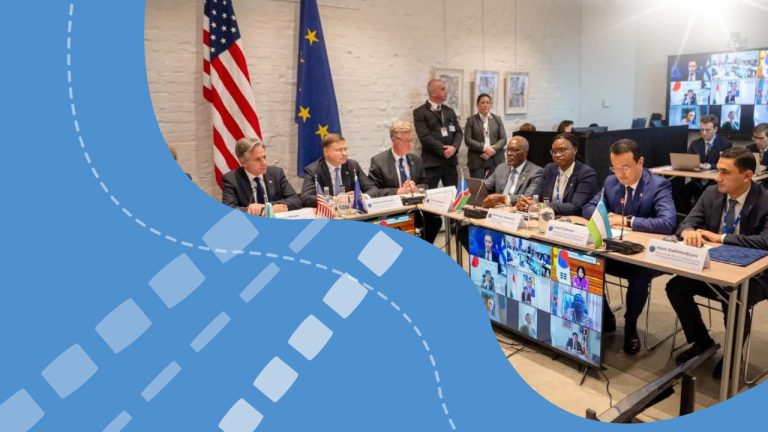
    The United States expresses optimism regarding the possibility of reaching an agreement with the European Union (EU) that would enable critical minerals mined or processed in Europe to qualify for U.S. clean vehicle tax incentives. This encouraging statement was made by a senior U.S. official on Monday.

    Negotiations between the transatlantic partners are underway to determine the eligibility of EU critical minerals, such as lithium and nickel, for green subsidies under the U.S. Inflation Reduction Act. This act specifically promotes products manufactured in North America. Jose Fernandez, the Under Secretary for Economic Growth, Energy, and the Environment at the State Department, shared during a briefing in Brussels that intense negotiations are being conducted.

    Fernandez expressed hope and optimism, stating that negotiations are progressing well. Acknowledging the need for collaborative efforts, he expressed confidence in reaching an agreement between the United States and the European Union.

    He also clarified that there are no plans to link the critical minerals agreement to the resolution of the separate transatlantic negotiations addressing U.S. import tariffs on EU steel. It is important to note that the United States has already signed a minerals agreement with Japan in March. Currently, both the EU and the United Kingdom are seeking similar agreements.

    Additionally, Fernandez mentioned that he is engaging in discussions with EU officials to establish an agenda for the upcoming joint Trade and Technology Council, which the United States will host before the end of the year.

    He emphasized that both sides are committed to establishing safeguards for artificial intelligence and moving beyond general statements to concrete actions. While there is no specific timetable for reaching an agreement, there is a shared understanding that it should occur sooner rather than later. Furthermore, both parties agree that any technological advancements should uphold democratic values, human rights, and individual freedoms.

    The United States remains positive about the ongoing negotiations with the European Union, recognizing the importance of collaboration and the need to promote sustainable and innovative solutions.

  • Turkey demands closure of Armenia’s Metsamor nuclear plant

    Turkey demands closure of Armenia’s Metsamor nuclear plant

    Turkey has recently announced its ongoing international efforts to close down the Metsamor Nuclear Power Plant in Armenia. This decision is primarily driven by the plant’s operational lifespan coming to an end and the associated security risks it poses. Concerns have been raised by citizens in the city of Iğdır, located approximately 16 kilometers from the plant, prompting the Grand National Assembly of Turkey (TBMM) Petitions Committee to respond to these petitions.

    In its response, the committee informed citizens that a radiation emergency plan has been developed in Iğdır to mitigate potential risks. Turkey has also been actively urging the international community to take action in shutting down the Metsamor Nuclear Power Plant. The committee based its response on information provided by relevant ministries, institutions, and organizations involved in this matter.

    Furthermore, the response highlighted that informational campaigns have been conducted in the border villages of Iğdır to raise awareness among local residents. Additionally, in collaboration with the Ministry of Health, iodine tablets have been procured and distributed as a precautionary measure. Moreover, exercises simulating a radiation emergency scenario have been conducted in the city to enhance preparedness at the local level.

    In parallel, it is worth noting that despite expert warnings, the construction of the Akkuyu Nuclear Power Plant (NGS) in Gülnar, Mersin, is still underway. This $20 billion project consists of four power units, each equipped with Russian-designed VVER-1200 reactors. Construction is progressing simultaneously, with significant milestones reached, such as the completion of welding processes for the first power unit’s reactor cooling pipeline and the official granting of status to the plant on April 27, 2023, marked by the arrival of the “first fuel rod.”

    These developments underscore Turkey’s commitment to addressing nuclear safety concerns, both domestically and in the broader region. It demonstrates the country’s proactive approach to safeguarding the well-being of its citizens and working towards a secure and sustainable future.

  • US aiming to deploy Europe’s first small modular reactor ‘in late 2020s’, official says

    US aiming to deploy Europe’s first small modular reactor ‘in late 2020s’, official says

    The United States, with a firm resolve, is aiming to deploy the first American-made small modular nuclear reactor in Romania and Czechia by the end of the decade. A US official stated that the projected timeline for deployment is 2029.

    Romania is the first country in line for this endeavor, with US company NuScale partnering with the national company Nuclear Electrica to develop the country’s inaugural small modular reactors (SMRs). During a recent visit to Bucharest, US Assistant Secretary of State Geoffrey Pyatt commended the “civil nuclear alliance with Romania” and the plans to construct a small modular reactor in the country.

    Pyatt emphasized that no one has yet deployed such a technology. He stated in a video briefing with journalists that the forecasted deployment timeline is 2029. He expressed confidence in achieving this goal, highlighting the significance of the civil nuclear partnership with Romania.

    SMRs are significantly smaller in size compared to traditional nuclear reactors, with a capacity of up to 300 MW(e) per unit. One of their main advantages is the ability to be factory-assembled and transported to areas with limited grid coverage.

    During his visit, Pyatt announced US funding for the construction of a simulator at Bucharest’s Polytechnic University. This simulator aims to build the necessary capacity so that when Nuclear Electrica’s new SMR becomes operational, Romania will have the skilled technicians required to operate the facility.

    The Romanian SMR project is part of a broader US initiative called “Project Phoenix.” This initiative aims to replace coal-fired power plants in central and eastern Europe with small modular reactors. Project proposals from Czechia, Slovakia, and Poland have been selected to participate in Project Phoenix and will receive support for feasibility studies on transitioning from coal to SMRs.

    Furthermore, Kerry launched the Nuclear Expediting the Energy Transition (NEXT) program, which acts as a one-stop-shop for SMR support, providing training and advice to European and Eurasian countries on deploying SMRs.

    Pyatt emphasized the importance of nuclear power in the energy transition, stating that Project Phoenix demonstrates the repurposing of past infrastructure to support cleaner, greener, and more resilient technologies.

    The US’s commitment to small modular reactors was highlighted during the Three Seas initiative summit in Bucharest. The US announced a $300 million contribution to the Three Seas investment fund, which will be used to enhance connectivity and accelerate the clean energy transition in participating countries. Civil nuclear technology, along with wind, solar, and geothermal, is eligible for support.

    While it is assumed that the funding from the US will be directed towards SMR projects utilizing American technology, Pyatt dismissed the notion that Project Phoenix is solely driven by US interests. He emphasized the international nature of the undertaking and cited interest in SMRs from various countries, including Bulgaria, Ukraine, Japan, Korea, and Ghana.

    Pyatt also mentioned that NuScale is not the only US company developing SMRs. Larger groups like Westinghouse and GE, as well as innovative companies like TerraPower and X energy, are also involved in the development of different SMR concepts.

    While acknowledging the hope that American companies will be chosen for Czechia’s large civil nuclear tender, Pyatt emphasized the enduring commitment of the US to its alliance with the Czech Republic.

    The objective in both Romania and Czechia is to expedite the completion of SMR projects, moving the anticipated deployment from the 2030s to the late 2020s. This acceleration aligns with the urgency demanded by the climate crisis.

  • Staff at Scotland’s only gold mine put on unpaid leave

    Staff at Scotland’s only gold mine put on unpaid leave

    Amidst financial difficulties faced by Scotgold Resources, the sole gold mine in Scotland, eighty workers have been placed on short-term unpaid leave. The company, which has expressed the need to secure substantial funds to sustain its operations, hopes to avoid entering administration.

    In a recent update, Scotgold Resources revealed that it is engaged in advanced discussions to secure funds that would enable the retention of key personnel at the Cononish mine. This specialized team, consisting of mining, machinery, and maintenance workers, would be responsible for overseeing the site’s assets near Tyndrum, north of Stirling. Additionally, they would ensure compliance with regulatory and environmental obligations.

    Scotgold Resources stated, “As of 28 September, the company has placed the majority of its employees on short-term unpaid leave until further notice, allowing the company time to advance the financing discussions and preserve funds to help retain some key trained staff members across mining and plant and maintenance.”

    As a precautionary measure, the company is also in discussions with an administration specialist.

    Scotgold Resources conducted a review of its operations in July following disappointing production figures in the first half of the year. Production was impacted in the first quarter due to the interruption of a significant development. Gold production between January and March amounted to only 758 ounces, although gold concentrate production steadily increased in the second quarter, reaching 1,556 ounces. The company reported the production of 1,033 ounces of gold in July.

    The Cononish mine has been under development since 2007 and Scotgold Resources proudly stands as Scotland’s inaugural commercial gold producer. The company has plans to transform Cononish into a gold mine with an annual output of 23,500 ounces, with a portion of the metal allocated for the Scottish jewelry industry.

  • Cornish Lithium raises £5.1m through crowdfunding

    Cornish Lithium raises £5.1m through crowdfunding

    UK-based Cornish Lithium has raised £5.1-million through crowdfunding on a platform called Crowdcube, marking it as one of the largest crowdfunding endeavours undertaken in the UK this year.

    Cornish launched the crowdfunding to provide exiting shareholders, as well as new retail shareholders, the opportunity to invest alongside a landmark £53.6-million fundraise announced on August 8 by UK Infrastructure Bank, Energy and Minerals Group, and TechMet.

  • Tajikistan or Britain? Origin of famous Bronze Age tin ingots sparks controversy

    Tajikistan or Britain? Origin of famous Bronze Age tin ingots sparks controversy

    Tin was used in the Bronze Age for 150 years. Bronze is an alloy of copper and tin, and in the Bronze Age, it was used to make a range of goods including swords, helmets, bracelets, plates and pitchers. A recent study by a team of archaeometallurgists refutes previous findings published in 2022, which state that most of the tin came from the Mushiston tin deposit in northwestern Tajikistan, as well as from two mines in the Taurus Mountains near the present-day Turkish-Syrian border.

    For this previous analysis, researchers took samples of 105 tin ingots from the wreck, determining chemical and isotopic signatures of 90% of the tin cargo. In particular, they measured the isotope ratios of tin and lead, which, like the chemical composition, provide clues to the origin of the tin.

    Also, the proportion of the trace element tellurium points to tin deposits in Central Asia. The group claims to be able to infer a clear attribution based on the matching signatures between the ingots from Uluburun and tin ore samples from the above mentioned mines.

    But according to the new paper, the data doesn’t support this interpretation or a clear conclusion.

    For the current study, Daniel Berger from the Curt Engelhorn Center for Archaeometry (CEZA), extensively checked chemical and isotopic analyses from previous studies and cross-checked them with the 2022 data set.

    “Due to the isotopic ratios and chemical characteristics, it would be even more likely that at least part of the cargo of tin ingots from the Uluburun shipwreck originated from Cornwall in Britain,” Berger said. “In particular, the comparison with Bronze Age tin ingots from Britain and Israel which we have considered in the past on a similar question of origin suggests this conclusion.”

    He added that more samples and analyses of ores from European and Asian tin deposits were needed.

    Overall, the Bronze Age lasted from the late fourth millennium to the early first millennium BCE—but with different beginnings and ends depending on the region of the world. Bronze, an alloy of copper and tin in a ratio of nine to one, is significantly harder than copper alone.

    Copper ores are found in many regions of Eurasia and Africa. However, tin ores that were accessible in the Bronze Age can only be found in a few places in Central Asia, Iran and Europe.

    It is all the more astonishing that some of the earliest bronze artifacts have been found in the Mesopotamian city-states of the Tigris–Euphrates river system. But there are no tin deposits there; the metal had to be obtained via long-distance trade.

    “Numerous archaeological finds show that the British Isles and Central Europe formed an economic sphere with the Mediterranean region in the Bronze Age and was connected via the transport routes of the Danube, Rhine and Rhône rivers, or via the ocean,” Ernst Pernicka, co-author of the new paper, said. “For instance, amber beads likely traded from the Baltic were found in the Uluburun wreck, indicating the existence of north-south trade routes.”

    The use of standardized weights had already spread in the course of the second millennium BCE, coming from Egypt and Mesopotamia, via Syria, Anatolia and the Aegean, and across the Alps to Central Europe. These standard weights were used to weigh merchandise, including tin ingots.

    For the time of the Uluburun ship, neither weight systems nor established trade connections to Europe and the Eastern Mediterranean can be documented for Central Asia, which underscores the likelihood that the tin originated from the West.


  • UK’s ‘first large scale’ lithium refinery gets green light on Teesside

    UK’s ‘first large scale’ lithium refinery gets green light on Teesside

    A plant which will refine lithium – a material used in electric car batteries – is to be built on Teesside.

    Green Lithium, which it said would be the first large-scale facility in the UK, will be located at PD Ports’ Teesport site after getting approval from Redcar and Cleveland Council.

    The company said it was “confident” the plant would open in 2027. It added more than 1,000 jobs would be created during construction, with about 250 more when it opens.

    Chief executive officer Sean Sargent said: “I’m confident we’ve got a great team together and a lot of delivery partners supporting us and that gives me the confidence that we know what we are doing and we’ve got a team in place that understands the risk profile of a project of this nature and knows how to overcome those risks.

    “The next step is we’ve got to complete a fundraising round that’s going on at the moment.”

    The company said the plant would provide an alternative market for European electric car manufacturers who are reliant on China and East Asia, where 89% of the world’s lithium is currently refined.

    Lithium is a key component in rechargeable batteries that power numerous gadgets such as smartphones and laptops, as well as electric cars.

    Last month the mining of battery-grade lithium carbonate in Cornwall was announced.

    It is expected the Teesport plant will produce 50,000 tonnes of battery-grade lithium chemicals to provide batteries for one million EV car batteries every year.

    The 58-acre site was chosen because of its access to a deep-water port, locally supplied renewable energy and hydrogen gas.

    As well as refining lithium for EV batteries, the chemical will also be used in the production of lithium-ion batteries and energy storage.

    Green Lithium hopes the plant will encourage more gigafactories, which produce batteries, to be built in the UK.

    It said over the next three-and-a-half years it would spend 14 months designing the plant and then 28 months building it.

    Redcar and Cleveland Borough Council leader Alec Brown, Labour, said it demonstrated the developer’s “significant confidence in our area”.

    “This investment will create hundreds of jobs supporting electric vehicle production and the decarbonisation of the UK.

    “With the port on our doorsteps, this will hopefully draw other industries linked to battery production to Teesside.”


  • For critical minerals supply we need investment standards, BHP boss warns

    For critical minerals supply we need investment standards, BHP boss warns

    Speaking at the International Energy Agency’s inaugural critical minerals conference in Paris, Henry called for a “small set of common standards” covering environmental, social and governance to underpin access to the capital required for investment the sector.

    Critical minerals, essential for a range of clean and renewable energy technologies, have risen in the policy and business agenda, but a combination of volatile price movements, supply chain bottlenecks and geopolitical concerns have created a potent mix of risks for secure and rapid energy transitions. This has triggered a scramble across the world to enhance the diversity and reliability of critical mineral supplies.

    The head of the Australian multinational mining and metals public company, based in Melbourne, said urbanisation, industrialisation and population growth were driving demand for minerals such as copper, nickel and lithium and steel-making raw materials, along with a push to decarbonise economies.

    “Governments must provide predictability and stability to attract capital at the lowest possible cost and as quickly as possible,” he said.

    “This means stable fiscal settings, streamlined planning and permitting processes and harmonised standards. Too often we see short-termism in government policy, or policies which seek to meet near term political objectives, but which show limited understanding of what drives investment.”

    Australia is the world’s leading producer of unprocessed lithium, the world’s third-largest cobalt exporter and the fourth-largest exporter of rare earths, which are in increased demand from Europe. Australia is also the fourth-largest exporter of mined copper and nickel and a significant producer of aluminium.

    Using copper as a case study, BHP estimated that about $250-billion in growth capital to 2030, in addition to sustaining capital, was needed to support the climate decarbonisation required for a “plausible 1.5 degrees scenario”.

    Addressing the meeting in Paris were several government ministers, including US Energy Secretary Jennifer Granholm, who cautioned about the potential for critical minerals supplies to be “weaponised”.

    Henry called for a global convergence of environmental, social, and governance (ESG) standards.

    “We need a small set of common standards, upheld by all, and where performance against those standards is a greater and increasing determinant of access to capital,” he said.

    Miners, Henry added, should be granted access to resources based on the value they create, including for host communities and First Nations peoples.

    “Opening a mine, done well, creates sustainable wealth and jobs… But of course, this must be done with least possible impact to the environment,” he said.

    In remarks likely aimed at China, Granholm said the world was up against a dominant supplier of critical minerals that “was willing to exploit its market power for political gain”, and warned that energy security would become increasingly complex due to the transition to cleaner power.

    “But our global energy crisis has taken on a new dimension, which is the urgency of this clean energy transition,” she said.

    IEA executive director Fatih Birol said locking in secure and sustainable supplies of critical minerals for the clean energy transition had quickly become a top priority for governments, companies and investors around the world.

    “When we look at both the production and the refining, processing of the critical minerals we see a very high level of concentration,” he said in opening remarks to the conference.

    “Looking at the history of energy in the last 100 years, when there was major concentration of one single country, one single company, one single route, there’s always a challenge.”

    In a recent report, the IEA highlighted the current concentration of supply, with the Democratic Republic of Congo dominating cobalt stocks, China holding half of planned lithium chemical plants and Indonesia representing nearly 90 per cent of planned nickel refining facilities.

  • Macron announces French strategy for climate action, wants more EU funds

    Macron announces French strategy for climate action, wants more EU funds

    President Emmanuel Macron of France declared on Monday that the country will completely phase out coal by 2027. In addition, he emphasized the need for increased climate funding from Europe.

    Macron stressed the importance of European investment in the ecological transition, stating that mere regulation without substantial investment would not suffice for a genuine European decarbonization strategy.

    For months now, the French government has been diligently formulating its strategy in this realm. The objective is to achieve an annual reduction in greenhouse gas emissions of approximately 5% in order to meet the European target of reducing emissions by 55% by 2030 compared to 1990 levels.

    Macron called upon the European Commission to allocate more funding towards climate transition in order to attain these targets.

    France has already allocated €40 billion for climate action in 2024, which is €7 billion more than the previous year.

    This budget will be incorporated in the Finance Bill, which is slated to be presented to the Council of Ministers on Wednesday, followed by debates in the French Parliament.

    Macron also outlined several forthcoming significant measures, including the complete phase-out of coal in France “by January 1, 2027.”

    “This is the priority we have set for our nation, and it is one that we will advocate for in Europe and across the globe,” he asserted. Macron described it as a “French-style ecology” that does not entertain the idea of reopening coal-fired power plants, unlike Germany.

    In reality, France currently operates two coal-fired power plants, with one being reopened in 2022 as a response to the energy crisis.

    Furthermore, Macron revised his stance on phasing out gas-fired boilers, opting instead for a policy that encourages the installation of heat pumps. He expressed plans to produce one million heat pumps in France by 2027.

    In Germany, Great Britain, and the Netherlands, governments have also reconsidered their ban on gas-fired boilers, as they fear potential social unrest.

    Regarding transportation, Macron reiterated the goal of producing one million electric cars in France by 2027. To achieve this, he intends to initiate a comprehensive assessment of France’s mining resources.

    In terms of industry, Macron explained that in October, they will be able to announce electricity prices that are both competitive and conducive to maintaining the competitiveness of households and industrial customers.

    Macron expressed his reluctance to “wait” for the ongoing negotiations regarding the reform of the EU electricity market design in order to ensure that the French population does not have to pay exorbitant prices for electricity, thanks to the country’s reliance on nuclear power.

    The proposed timeline coincides with the upcoming EU Energy Council meeting on October 17, which holds significant importance for the future of the EU electricity market design.

    At present, France continues to advocate for the inclusion of existing nuclear assets within the market design framework, a point of contention with Germany and its allies.