Region: Europe

  • ‘Let nature take it back’: Svalbard is rewilding the site of a massive former coal mine

    ‘Let nature take it back’: Svalbard is rewilding the site of a massive former coal mine

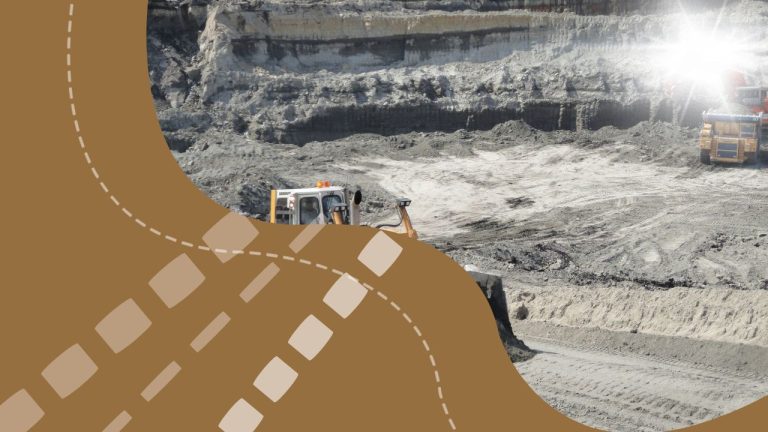
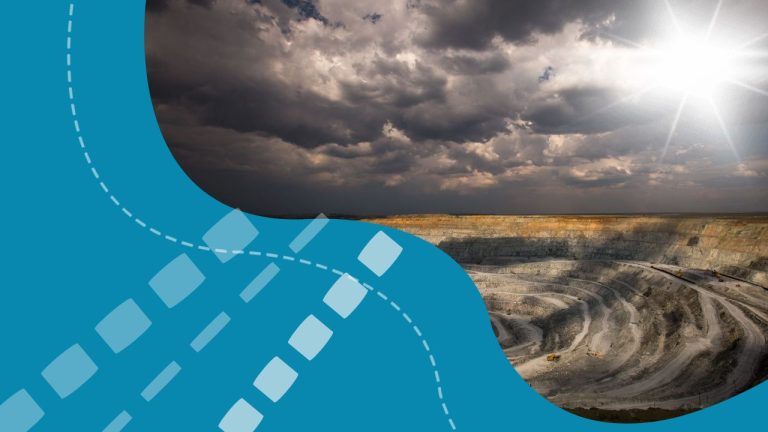
    The Svea mine produced millions of tonnes of coal in its lifetime but now it is being taken back by nature.

    An Arctic mining site in Norway is being returned to nature in one of the country’s biggest-ever natural restoration projects.

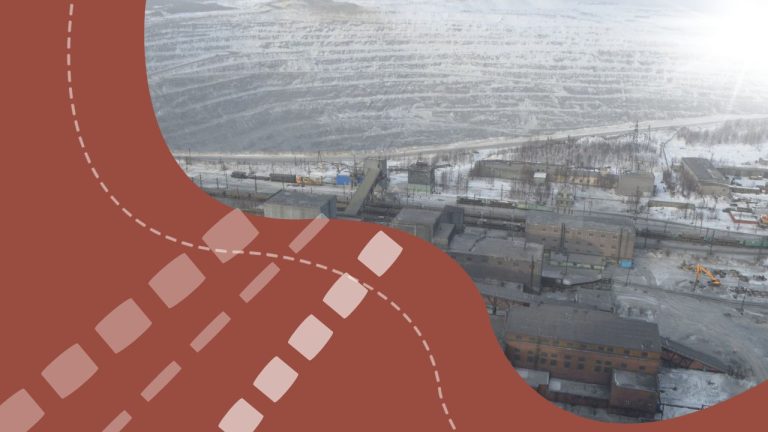
    Svea mine, a 40-minute helicopter ride from Svalbard’s main town of Longyearbyen, produced 34 million metric tonnes of coal in its lifetime. Opened in 1917, thousands of people worked there at its peak with a canteen, airfield, power plant and workshop built on the site.

    It officially closed 100 years later and now its overgrown railway tracks lead nowhere.

    Little is left of the more than 100 buildings that once stood on the site with only the most historically important structures preserved.

  • Finland may be site of Anglo’s next greenfield mining project

    Finland may be site of Anglo’s next greenfield mining project

    Sakatti, with its metal concentrations of platinum group metals (PGMs), copper, nickel, cobalt, and others, may be the site of the next greenfield project of diversified Johannesburg- and London-listed mining company Anglo American. Located in central Lapland in Finland, Sakatti’s polymetallic orebody is aligned to the critical minerals priorities of Finland and the European Union (EU). (Also watch attached Creamer Media video.)

    Sakatti is set to be a remotely operated, low-carbon underground mine with an electric mining fleet.

    No reference was made to whether or not that electric mining fleet will be of the battery electric vehicle variety, generally used in underground environments, or the Anglo-developed green hydrogen electrified kind, which is being advanced at the opencast Mogalakwena PGMs operation in South Africa.

    But already stated is that it will use technology and mining methods that create zero waste and enable high degrees of water recycling, an approach which underpinned the environmental impact assessment (EIA).

    Moreover, in developing Sakatti, Anglo intends building on what it has learnt from its development of the Quellaveco copper mine in Peru as well as what it is learning at its current Woodsmith crop nutrients project in the UK – particularly in terms of minimal surface footprint and using technology and innovation to deliver even better sustainability outcomes.

    In the words of Anglo Crop Nutrients CEO Tom McCulley, that means being “out of sight, safe, reliable, and catering to our customers and society’s needs”.

    “I’ve just come back from Sakatti. It’s in a remote part of the world. It’s designed as the next generation of Future Smart mining… contributing to a sustainable supply of critical minerals to support the energy transition in Finland and the EU,” Anglo projects and development director Alison Atkinson told this week’s sustainability performance update, covered by Mining Weekly.

    “I’m pleased to say that the relevant authorities in Finland have approved the EIA. This is a fantastic achievement and a major milestone for the project, reflecting the true collaboration of all involved.

    “We will continue to drill over the season to refine the modern approach we must and will take in developing this mine,” said Atkinson.

    “We will take our time on this early-stage development. Detailed study, not only of the mine itself, but in its implementation and operations will be critical to delivery. After all, it’s the upfront detailed development that sets the foundation of this asset for decades to come.

    “We will also continue to build the project delivery capabilities as the rigour and discipline in executing a high confidence plan well is as fundamental as the support of the stakeholders and neighbours, in addition to those skilled partners we will work with, to construct and implement our plans.

    “Great projects are done brilliantly when that is in place alongside mature design and robust plan.

    “We’re replicating, continually learning, and approving our approach as we go and putting it into practice at scale across the other parts of the portfolio.

    “We believe this is a competitive advantage for us and a fundamental part of our journey to sustainable mining. Delivering on our ambition is crucial as we have to produce the metals and minerals needed for the energy transition and the ongoing economic development in a responsible way, because that is the only way,” Atkinson emphasised.

  • Russia: Europe imports €13 billion of ‘critical’ metals in sanctions blindspot

    Russia: Europe imports €13 billion of ‘critical’ metals in sanctions blindspot

    Since Russia’s invasion of Ukraine in February 2022, the 27 EU countries have adopted 11 sanction packages, targeting raw materials including oil, coal, steel and timber. But minerals that the EU considers as “critical” raw materials – 34 in total – still flow freely from Russia to Europe in vast quantities, providing crucial funds to state enterprises and oligarch-owned businesses.
    While some of its western allies have targeted Russia’s mining sector – the UK recently banned Russian copper, aluminium and nickel – the EU has continued its imports. Airbus and other European companies are still buying titanium, nickel, and other commodities from firms close to the Kremlin more than a year after the invasion, Investigate Europe can reveal.

    Between March 2022 and July this year, Europe imported €13.7 billion worth of critical raw materials from Russia, data from Eurostat and the EU’s Joint Research Centre shows. More than €3.7 billion arrived between January and July 2023, including €1.2 billion of nickel. The European Policy Centre estimates that up to 90 per cent of some types of nickel used in Europe comes from Russian suppliers.

    “Why are critical raw materials not banned? Because they are critical, right. Let’s be honest,” the EU’s special envoy for sanctions, David O’Sullivan, pithily said at a September conference.

    The Union is desperate for critical raw materials to achieve its aim of climate neutrality by 2050. These commodities are crucial for electronics, solar panels and electric cars, but also for traditional industries like aerospace and defence. Yet they are all too often in scarce supply, unevenly available across the globe, and in high demand.

    “The war in Ukraine has clearly shown the willingness of Russia to weaponise the supply of key resources. As Europeans, we cannot tolerate that,” says Henrike Hahn, a German Green MEP working on the new Critical Raw Materials Act.

    Aluminium giant Rusal also uses tax havens to funnel minerals to Europe, where it owns the EU’s largest alumina refinery in Ireland and a smelter in Sweden. Its Jersey and Swiss-based trading houses brought at least $2.6 billion of aluminium into the bloc in the 16 months following the invasion of Ukraine. In August 2023, Rusal said Europe still accounted for a third of its revenues. Rusal’s main shareholder is oligarch Oleg Deripaska, sanctioned by the EU and its western partners.

    Anti-corruption NGO Transparency International says it does not make sense that the sector has avoided sanctions given the known links. “They are part of the system and fueling Putin’s war,” says senior policy officer Roland Papp. “So it’s perfectly logical to ban those critical raw materials from Russia, as we did for other sectors and goods.”

    Since the start of the war, other European buyers of Russian metals have included Germany’s GGP Metal Powder ($66 million of copper), French arms-maker Safran ($25 million of titanium) and Greece’s Elval Halcor ($13 million of aluminium). Dutch logistics firm C. Steinweg also handled at least $100 million of various critical metals on behalf of its customers.

    Safran confirmed they are still buying titanium from Vsmpo-Avismo but are working to reduce their Russia purchases. GGP Metal Powder said “there is no real alternative to our supplier from Russia”. C. Steinweg said they follow all rules and sanctions. Elval Halcor, Vsmpo-Avisma, Rusal and Nornickel did not reply to requests for comment.

    At the start of the war, Europe was relying on Russian producers for 30 per cent of its nickel, 35 per cent of its alumina and 15 per cent of its aluminium, according to an internal memo by trade body Eurometaux seen by IE. Russia accounted for 41 per cent of the world’s palladium production, and up to 25 per cent of its vanadium output.

    “Russia occupies a large part of Eurasia – it possesses a big part of the strategic reserves of critical raw materials, on par with China,” says Oleg Savytskyi from Razom We Stand, a Ukrainian NGO. Moreover, “the low density of the population, authoritarian control and practical absence of environmental and human rights protections made investments in the mining of Russia’s resources terribly attractive,” he adds.

    The EU’s crippling dependency should have been curbed earlier, argues Transparency International’s Papp. “We’ve had enough time to react. The annexation of Crimea dates back to 2014, the invasion of Georgia even dates back to 2008 15 years ago! And what have we done? We’ve increased our dependence on Russia. It was an absolute and serious mistake.”

    A Polish diplomat said Poland has pressed the EU to “decouple completely” from Russia in several areas, “but for the sake of unity and efficiency in adopting new sanctions packages we have agreed to postpone particular measures until further discussion.”

    As EU sanctions require unanimity among all member states, divergent national economic interests can often water down packages. When the ninth set of sanctions banned fresh investments in Russia’s mining sector in December 2022, it included an exemption to invest in some mining activities for some critical raw materials. As a result, European companies can still pour cash into Russian mines to extract nickel, titanium and other key metals.

    The European Commission won’t publicly comment on whether or not it has proposed a ban on critical raw materials. One reason could be that  “sanctions are carefully designed to hit their targets while preserving EU interests,“ an EU source told IE.

    Weaning the EU off Russia’s critical and strategic materials will be difficult. Replacing suppliers and forging new international partnerships is an arduous process. Finding a raw material, such as titanium or copper, with a similar quality and price of those from Russia is also a challenge. 

    Imposing tariffs or severing ties too quickly could lead to a global price surge which would harm European buyers while benefiting Moscow. A ban could also prompt India, Iran, and China to intensify purchases, further depleting critical raw material resources for EU industries.

    Tymofiy Mylovanov, president of the Kyiv School of Economics, says a ban would be difficult to implement given global demand challenges and Europe’s reliance on Russia. “Overall, with these specific materials, the monetary value of what Russia would lose from the EU import ban, might be smaller than the effect on the EU production,” says Ukraine’s former trade and economic development minister.

    UN trading data shows that while EU imports of Russian copper, nickel and aluminium imports have declined in the past two years, nickel and aluminium revenues remained stable. Russia’s nickel sales to the EU were worth $1 billion in the first half of 2021 and were $1.1 billion two years later.

    The Union is now trying to reduce its dependency. In March, the European Commission presented its Critical Raw Materials Act (CRMA), a new legislation aimed at reducing EU dependency on third countries for critical raw materials.

    “War in Europe is a risk which was not present in the last decades and Russia was known as a reliable supplier,” says German MEP Hildegard Bentele, shadow rapporteur on the CRMA at the European Parliament. “The EU should take immediate action to support European companies to decrease and replace their CRM deliveries from Russia as soon as possible.”

    The High Representative of the Union for Foreign Affairs and Security Policy is expected to propose a 12th package of sanctions in the coming weeks, which will be then discussed by member states. Brussels hopes the package will renew pressure on the Russian economy and sap its fighting strength on the battlefields of Ukraine. Restrictions on critical raw materials does not seem to be on the table.

  • ‘Let nature take it back’: Svalbard is rewilding the site of a massive former coal mine

    ‘Let nature take it back’: Svalbard is rewilding the site of a massive former coal mine

    An Arctic mining site in Norway is being returned to nature in one of the country’s biggest-ever natural restoration projects.

    Svea mine, a 40-minute helicopter ride from Svalbard’s main town of Longyearbyen, produced 34 million metric tonnes of coal in its lifetime. Opened in 1917, thousands of people worked there at its peak with a canteen, airfield, power plant and workshop built on the site.

    It officially closed 100 years later and now its overgrown railway tracks lead nowhere.

    Little is left of the more than 100 buildings that once stood on the site with only the most historically important structures preserved.

    How much has restoring Svea cost?

    “We are committed to preserving as much as we can of the wilderness nature of Svalbard,” says Norway’s former environment minister Espen Barth Eide.

    “And when we have used an area for industrial activities and do not use it any longer, we think that these days we need to try to restore back to nature the area as it originally was.”

    Svea has been returned to its natural state at a cost of around 1.6 billion Norwegian kroner (€1.35 million). It is the country’s largest-ever natural restoration project.

    “The concept is to try to let nature take it back,” Hagen Johansen, head of the Norwegian Directorate for Cultural Heritage, told AFP.

    “That means to let creeks run freely. To make sure that avalanches do happen, because that will transport more sediment down and it will make new creeks.”

    The part of the Barents Sea where the Svalbard archipelago is located is warming up to seven times faster than the rest of the planet, according to a study published last year.

    Svalbard is closing its coal mines

    The Arctic archipelago is slowly ridding itself of its involvement in the fossil fuel industry. Seven more mines in the hills of Longyearbyen have all but closed with the last due to shut in 2025.

    The town also disconnected its coal power station earlier this month in preparation for a transition to renewables.

    Svalbard’s economy is hoping to rely on tourism and scientific research instead.

    While some support the change, others are more sceptical about the region turning a page on its mining past.

    “How green is Norway? Well, it’s nowhere near as green as it thinks it is,” Andrew Hodson, a glaciologist based in Svalbard told AFP.

    “It’s selling climate, well it’s selling oil to the rest of the world while running oil platforms on renewable energies. It’s laughable.”

  • Mining for minerals is not a European business

    Mining for minerals is not a European business

    The EU wants to revive mining in Europe. One stumbling block: it does not have the money to give its ambitions the foundations they need. Banks shy away from what they see as risky trades, while the sector is controlled by non-European actors.

    Gathered in the Berlaymont hotel in late January, a short walk from the EU offices and Belgium’s national car and military history museums, executives from Europe’s leading banks were called to action. “I want you to invest,” European Commissioner Thierry Breton told the financiers, “in operations in the critical raw materials value chain.”

    Two months later, the European Commission presented its draft Critical Raw Materials Act. The CRMA, which could be among the fastest EU laws ever adopted by early 2024, wants to guarantee Europe’s supply of nickel, lithium, magnesium and other materials essential for the green transition and strategic industries. They are vital for electric cars and renewable energy, military equipment and aerospace systems, as well as laptops and mobile phones.

    The Commission wants new mines to open across Europe, reducing the bloc’s dependency on China, but there is a problem. One which Thierry Breton’s hotel gathering reflected: the Commission has no specific fund to finance its CRMA ambitions.

  • Including Western Balkans in the EU Value Chain Partnership aligned with Critical Raw Materials strategy

    Including Western Balkans in the EU Value Chain Partnership aligned with Critical Raw Materials strategy

    Nine years after the launching of Berlin Process in August 2014, the Heads of Government of Albania, Bosnia and Hercegovina, Kosovo, Montenegro, North Macedonia, Serbia, as well as the Heads of State or Government or representatives of Austria, Bulgaria, Croatia, France, Germany, Greece, Italy, Poland, Slovenia and the United Kingdom, Spain, Hungary, Romania and the Netherlands, the representatives of the European Union (EU), and of regional and international organizations and financial institutions met in person in Tirana on 16 October 2023 for the Summit Meeting of the Berlin Process.

    The participants acknowledged that with the current geopolitical situation, a Value Chain Partnership between the EU and the Western Balkans should be explored. They acknowledged the strategic importance of the Western Balkans region in the context of Critical Raw Materials and batteries, and its role in the EU Value Chain and industries. With the increasing global demand for these materials, the Western Balkans hold a significant potential that must be harnessed effectively to contribute to the EU’s security of supply.


  • South Crofty: Work begins to remove water from tin mine

    South Crofty: Work begins to remove water from tin mine

    Work is under way to pump millions of litres of floodwater out of a former tin mine in Cornwall.

    Owners of South Crofty, Cornish Metals said the mine had eight million cubic metres (283 million cubic feet) of void space, much of which was flooded.

    Water pumped from the mine will be cleaned at the company’s newly-built £7m treatment plant.

  • European Lithium closes in on Nasdaq listing; secures Wolfsberg financing

    European Lithium closes in on Nasdaq listing; secures Wolfsberg financing

    European Lithium Ltd provided an update on the progress of its proposed merger, NASDAQ listing and additional equity investment.

    The company confirms that Critical Metals Corp has secured an equity investment facility for additional capital and it is expected to secure more capital in the coming weeks, leading up to shareholder approval of the transaction.

  • Zijin copper in Serbia seeks new exploration permits for production increase

    Zijin copper in Serbia seeks new exploration permits for production increase

    Chinese mining company Zijin (Zijin Mining doo Bor) is seeking a “green” permit for new copper and gold mining at the Chukara Peki Mine near Bor, which is estimated at 3.8 billion US dollars (USD).

    According to the request for a decision on the need for an environmental impact assessment of the project, and as reported by Ekapia, 16 megatons (Mt) of copper and 333 tons of gold lie in the lower zone of the Cukaru Peki mine near the pine.

  • How a junior mining company is bringing critical materials supply back to Europe

    How a junior mining company is bringing critical materials supply back to Europe

    Historically, the European Union (EU) has relied on countries like China for its supply of critical raw materials, but companies like Leading Edge Materials are moving to shift the focus back on its own soil.

    Case in point, the EU proposed the Critical Raw Materials Act (CRMA) in March 2023, which aims to boost supply of strategic raw materials that are crucial in advancing the EU’s move towards a sustainable, digital and sovereign future.

    This comes as a move to shift supply away from China, which currently processes almost all rare earth elements. It is estimated that the country currently produces roughly 70 per cent of global production of rare earth elements, however there are three facilities in Europe that are and will be able to produce the materials – in Sweden, France and Estonia – which will effectively reduce China’s overwhelming grip on the permanent magnet industry