Francis Wedin arrived in Western Australia 15 years ago as a young English engineer with ambitions in gold mining. Today he is overseeing what has become Australia’s largest investment in European manufacturing — a $3.9 billion lithium project under construction in the Rhine Valley outside Frankfurt that is scheduled to begin production in 2028.
The pivot from hard rock gold to geothermal lithium extraction in southern Germany began with a magazine article. After reading about lithium’s potential in The Economist more than a decade ago, Wedin became convinced that battery demand for electric vehicles would create a viable development opportunity — particularly for a greener, lower-cost lithium product produced closer to European customers. His first lithium venture in Western Australia had been acquired by Pilbara Minerals in 2017, freeing him to pursue something different.
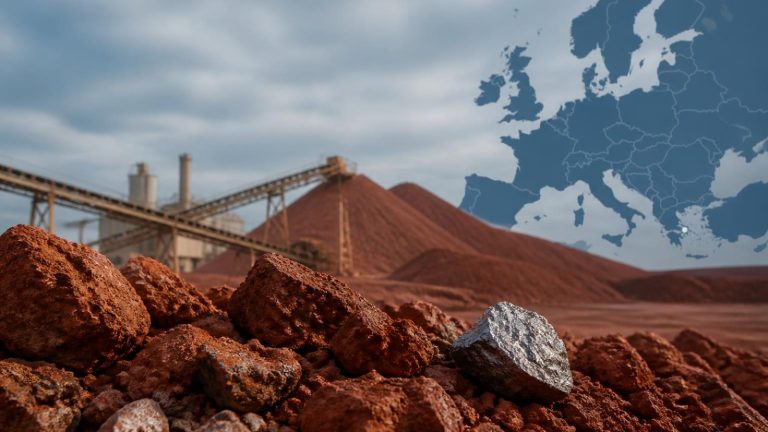
The Upper Rhine Valley delivered what he was looking for: hot lithium-bearing brine in natural underground reservoirs with good chemistry, existing infrastructure and wells, cheap geothermal energy, and proximity to European automotive and battery manufacturing. Vulcan’s direct lithium extraction technology pumps brine from underground and captures lithium chloride by attaching lithium salts to an absorbent resin. The resulting lithium chloride is then processed into battery-grade lithium hydroxide and supplied to customers — Vulcan already holds offtake agreements with battery maker LG, cathode producer Umicore, carmaker Stellantis and trader Glencore. The project’s geothermal heat output also supplies cheap green power and heating to local communities, making it a rare mining development that has attracted neighbourhood support.
The project’s first phase targets 24,000 tonnes of lithium hydroxide per year — enough for approximately 500,000 EV batteries. Wedin deliberately developed the extraction technology in-house. “The technology to do this extraction seemed to mostly come from China, so that was a risk,” he said. “This was really Europe standing up for its own critical raw materials supply chain with Aussie lithium extraction know-how.”
The financing and equity structure reflects the breadth of institutional confidence in the project. German construction company Hochtief and Siemens are equity investors alongside customer Stellantis, while Gina Rinehart’s Hancock Prospecting holds a 4% stake. The German government made its first-ever equity investment in a critical minerals project through KfW’s fund. Export Finance Australia played a pivotal role in helping Vulcan secure financing from the European Investment Bank, its Canadian equivalent and a range of commercial banks, with the package signed last December.
Wedin credits Australia’s retail investor base — “mums and dads” — with providing the early-stage capital that allowed Vulcan to develop its technology and prove its concept before institutional investors arrived. He expressed concern that recent federal budget changes to capital gains tax treatment would disadvantage the next generation of junior explorers seeking the same pathway.