Could Europe Face an Energy Crisis if Niger Halts Uranium Mining for France?
Amidst the aftermath of the coup in Niger, questions loom over the future of uranium supply, a cornerstone of the nation’s economy. Niger, nestled in the Sahel region, possesses extensive underground uranium reserves, making it a vital player in the global uranium market.
France, a former colonial power in Niger, faces a precarious situation. A significant portion, approximately two-thirds, of France’s electricity generation relies on nuclear power plants powered by uranium extracted from Niger. Furthermore, France exports electricity to European nations that lack their own nuclear power facilities.
With coup plotters holding sway in Niger for just over a month, concerns have surged regarding the uninterrupted flow of uranium to global markets. The implications of any disruption in this supply chain are profound, given France’s dependence on nuclear energy and its role as an electricity exporter to Europe.
To shed light on this critical issue, DW has sought insights from experts both in Niger and Europe, delving into the intricate web of the energy supply chain. As Niger’s uranium supply faces uncertainty in the wake of recent events, the consequences for Europe’s energy stability remain a topic of intense scrutiny.
Inequitable Relations Emerge Amidst Niger’s Political Shift
Following the coup in Niger on July 26, the diplomatic and economic ties between the two nations have entered a precarious phase.
The new military junta, led by General Abdourahamane Tiani, has displayed growing disenchantment with France. Upon assuming power, the junta swiftly enacted measures to disrupt the status quo, including suspending uranium exports and issuing a 48-hour ultimatum for the departure of the French envoy. Notably, Ambassador Sylvain Itte has defied expulsion orders and remains stationed in Niamey. Despite the junta’s actions, President Emmanuel Macron’s government is reluctant to relinquish its sway and access to essential raw materials. Nevertheless, patience in Niger for such imbalances is wearing thin.
Mahaman Laouan Gaya, a former Nigerien energy minister and former secretary-general of the Organization of African Petroleum Producers (APPO) until 2020, voiced the prevailing sentiment in Niger, emphasizing the glaring disparities in the partnership. Gaya pointed out that in 2010, Niger exported uranium valued at €3.5 billion ($3.8 billion) to France but received a mere €459 million in return.
Gaya further noted that if Niger were to decide against exporting uranium to France, the repercussions would be profound for France but hold limited impact on the Nigerien economy. The stark reality is that approximately 90% of Niger’s population lacks access to electricity, and exploitative pricing mechanisms have resulted in inadequate income from its exports. The growing sense of inequality in this partnership is a matter of concern as the dynamics between the two nations continue to evolve.
Is Uranium Production at a Standstill?
For decades, the French nuclear giant Orano (formerly known as Areva) has been engaged in uranium mining operations within Niger. The primary purpose of this material is to manufacture fuel rods intended for use in France’s 56 nuclear power plants.
Presently, there is uncertainty surrounding whether the junta’s imposed moratorium on uranium exports is being effectively enforced.
A spokesperson for the company recently informed the AFP news agency that the ongoing crisis has not had any immediate impact on Orano’s capacity to supply uranium.
In contrast, Hama Amadou, Niger’s former prime minister and a prominent opposition figure, shared a different perspective in an interview with Voxafrica. According to him, the mining company continues to produce uranate, the foundational material for uranium.
Amadou expressed skepticism regarding the notion that the new authorities had annulled the uranium mining contracts between France and Niger. He raised questions about why the French state appears concerned about its interests in Niger, given these circumstances.
As this situation unfolds, the status of uranium production remains uncertain, and differing viewpoints persist regarding its continuity.
French Control Over Niger’s Mining Operations Remains Strong
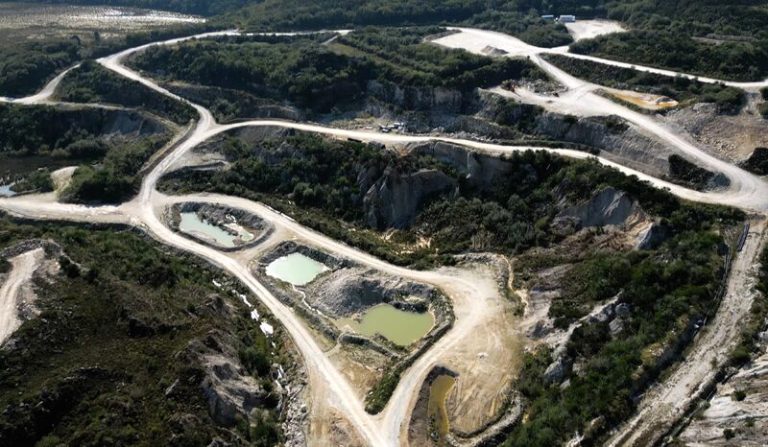
The largest uranium mine in the Sahara, situated on the outskirts of Arlit, is under the firm control of Somair. This mining company is predominantly owned by France’s state-owned Orano group, holding a 63% stake, while the remaining 37% is in the hands of Niger’s state-owned company, Sopamin.
In 2021, the Somair mine played a pivotal role, accounting for over 90% of Niger’s uranium exports. Furthermore, France and the previous government led by Mohamed Bazoum had reached an agreement to recommence operations at another mine.
Notably, in May, Orano solidified its presence in Niger by signing new contracts with the Nigerien government. These agreements extended French uranium mining activities in the country until the year 2040.
Nigerien journalist Seidick Abba has emphasized that the recent coup has not altered the existing commercial arrangements between these corporate entities. He clarified that uranium would continue to be transported from the mine near Arlit to France via Cotonou, emphasizing that the contractual terms do not grant Niger the authority to halt these shipments.
Despite the political upheaval, the junta lacks the means to obstruct these deliveries, underscoring the enduring strength of these arrangements.
Europe’s Alternative Uranium Suppliers
While France has been a significant recipient of uranium from Niger, accounting for roughly one-fifth of its supply, it is essential to note that alternative sources exist. Data from the Euratom Supply Agency reveals that Central Asian nations such as Kazakhstan and Uzbekistan have also played a substantial role in supplying uranium to France.
These alternative uranium suppliers provide France with diversification options, reducing its dependency on a single source.
As recently as 2022, Alex Vines from the London-based think tank Chatham House noted that Niger held the position of France’s third-largest supplier of uranium. However, Vines asserted that the level of dependence on Niger was somewhat overstated, as France engages in uranium trade with other nations like Kazakhstan, Australia, and Namibia. This diverse network of suppliers allows France to readily diversify its uranium sources, reducing reliance on any single provider.
According to the World Nuclear Association, Niger contributed only 5% of the uranium sold on the global market in 2022. Some analysts have raised concerns about potential price hikes and their far-reaching consequences if Niger’s uranium were to become scarcer on the international market.
In 2022, during a period when many power plants faced cooling water shortages, the dominance of French nuclear power within Europe became evident, resulting in increased energy prices.
To mitigate concerns regarding a possible energy crisis stemming from the situation in Niger, European Commission spokesman Adalbert Jahnz offered reassurance. Jahnz explained that the European Union (EU) maintains an adequate supply of natural uranium stocks, ensuring a buffer against short-term supply disruptions. He confirmed the presence of ample deposits on the global market, assuring that the EU’s medium and long-term uranium needs could be met without issue.