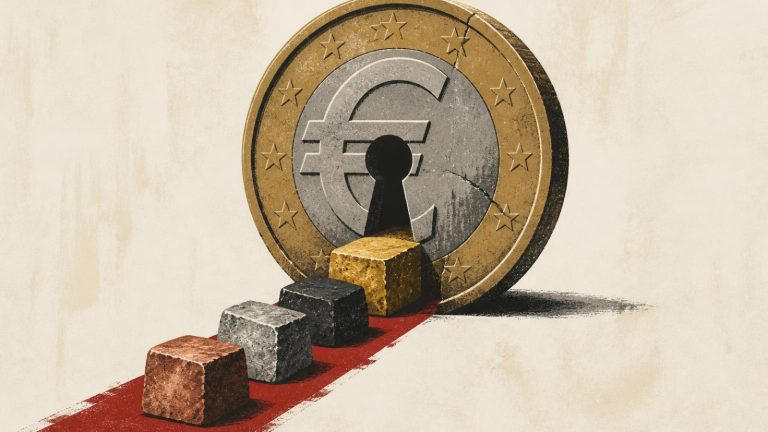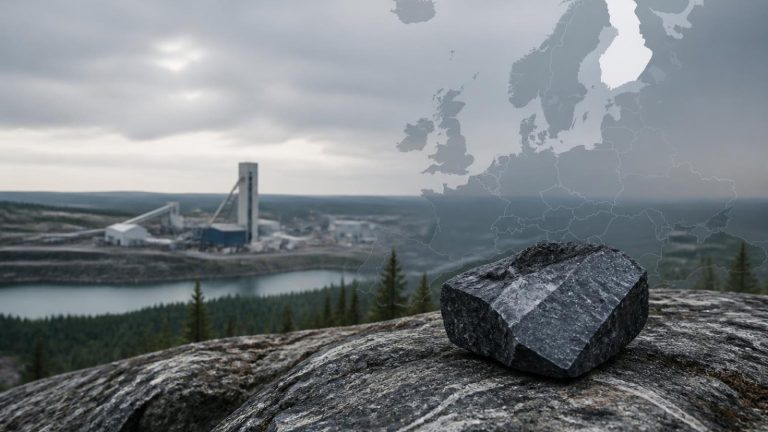
Europe is trying to rebuild a mining industry it spent forty years running down. It has the legislation and the targets; what it lacks is enough ground in production. One of the continent’s most capable, most overlooked mining jurisdictions wants a leading role in closing that gap – and MINEX Europe organised on 28-30 October 2026 in Trim, Co. Meath, is where the case gets made.

A continent rediscovers its rocks
For most of the post-war period, Europe treated mining as something other places did. The continent built its prosperity on manufacturing, chemistry and, latterly, software and finance, while quietly outsourcing the extraction and processing of the raw materials underneath all of it. That arrangement worked reasonably well until it did not. China refines close to all of the European Union’s heavy rare earth elements, the magnets inside every wind turbine and electric motor depend on supply chains routed through a small number of adversarial or simply indifferent capitals, and the same is true, to varying degrees, of the boron, lithium, cobalt and graphite that underpin the energy transition, the digital economy and modern defence manufacturing all at once.
The European Union’s response, the Critical Raw Materials Act, entered into force on 23 May 2024 after final approval in March that year. It set out, for the first time in a single piece of legislation, exactly what “sovereignty” over raw materials is meant to look like by 2030: at least 10% of the EU’s annual consumption of strategic raw materials extracted within the Union, at least 40% processed domestically, at least 25% met through recycling, and no more than 65% of any single strategic material sourced from one third country at any stage of the value chain. It is, in effect, an industrial policy dressed as a supply-chain regulation – and it depends on member states finding, permitting and financing mines and processing plants that, in most cases, do not yet exist.
That dependency has grown more exposed rather than less over the past year. The IEA’s Global Critical Minerals Outlook 2026, published this month, counts the number of Chinese tariff codes under mineral-related export control as having more than tripled since 2023, from around twenty to over sixty, covering rare earths, tungsten, antimony, germanium, gallium and graphite among others. Beijing’s April 2025 licensing regime on seven heavy rare earths was followed, that October, by controls extending Chinese jurisdiction to magnets and finished products made anywhere in the world using Chinese rare earth materials or technology, announced alongside a parallel crackdown on battery-grade graphite, cathode materials and battery-manufacturing equipment. Both packages were suspended for a year in November 2025, and a further tightening on dual-use goods bound for Japan followed in January 2026 – each suspension leaving the underlying vulnerability intact rather than resolved. Some diversification is under way: China’s share of global rare earth refining slipped from around 90% in 2024 to 85% in 2025 as new capacity came on stream in the United States and Malaysia, though the IEA expects that share to fall only gradually, to around 73% by 2035 even if every announced project is delivered on time.

The sovereignty arithmetic
The first results are respectable rather than transformative. In March 2025 the European Commission designated 47 Strategic Projects across 13 member states, covering 14 of the 17 officially designated Strategic Raw Materials and representing roughly €22.5 billion in anticipated capital investment. Designated projects get real advantages: a single national point of contact, priority treatment through permitting, recognition as serving the public interest, and access to financing lines that include €2 billion a year from the European Investment Bank, a further €2 billion earmarked through InvestEU for 2026 and 2027, and €1 billion from the Innovation Fund for clean-technology manufacturing tied to raw materials. A second wave of applicants, understood to number around 161 and expected to be assessed around the time of this year’s Forum, would roughly double the size of the portfolio.
Even so, the arithmetic is uncomfortable. The CRMA sets maximum permitting windows of 27 months for extraction projects and 15 months for processing or recycling, a dramatic compression of historical European timelines – but the European Court of Auditors has already signalled doubt that the Union will hit its 2030 benchmarks. Europe’s battery gigafactory build-out alone represents an estimated €300 billion of investment demanding lithium, cobalt, nickel and graphite, yet the continent controls less than 8% of the refining capacity required to supply it: for battery minerals, extraction is not, in truth, the binding constraint. Copper tells the opposite story. The IEA’s newly published 2026 Outlook shows that even after a run of new project approvals in the Democratic Republic of Congo, Zambia, Peru and Canada narrowed the projected 2035 supply gap from 30% a year ago to around 25%, declining ore grades and a chronic shortage of new discoveries mean the deficit remains, in the Agency’s own words, “the greatest challenge for copper markets”. That structural tightness has already reached prices: copper broke through USD 12,000 a tonne for the first time in December 2025 and surged past USD 14,000 in May 2026, an all-time high, as disruptions at two of the world’s largest mines collided with a sulphuric-acid shock after the closure of the Strait of Hormuz during this year’s Middle East conflict choked off a key input for copper leaching. And where the Commission has tried to move faster on permitting, it has run into its own environmental architecture: proposals to loosen the Water Framework Directive to accelerate mines in Spain, Portugal and Greece, several of them in regions already living through multi-year drought, have drawn open alarm from academics and environmental groups, one UN University institute director going so far as to call the approach “a form of Russian roulette”. Sovereignty, it turns out, is not simply a matter of political will. It is a question of which jurisdictions, and which supply chains, can actually deliver, cleanly and on time.

An island built from the right rocks
This is where Ireland’s position becomes genuinely interesting rather than merely aspirational. The island has been a working mining jurisdiction within living memory, not a theoretical one. Tara Mines, north of Dublin in Co. Meath, is one of Europe’s largest zinc mines: in production since 1977, with more than 85 million tonnes of ore extracted, and in Boliden’s hands since 2004. At the peak of Ireland’s twentieth-century mining boom, with Tara operating alongside the Lisheen and Galmoy mines in Tipperary and Kilkenny, the country supplied close to 40% of Europe’s zinc requirements. Aughinish Alumina, on the Shannon estuary, still refines around 30% of Europe’s alumina from imported bauxite – a reminder that Ireland’s minerals story has never been solely about what comes out of the ground, but also what gets processed once it does.
The exploration picture is, if anything, more compelling than the production history. Group Eleven Resources’ Ballywire discovery, on its wholly owned PG West project in the Limerick Basin, has become one of the most closely watched exploration stories in European mining since systematic drilling began there in 2022. The system hosts a zinc-lead-silver horizon and a separate, deeper copper-silver feeder zone, with a confirmed 3.2-kilometre strike inside a 6-kilometre prospective trend. Assay highlights include 57.3 metres at 6.22% combined zinc and lead, as well as 12.0 metres at 2.3% copper and 560 grams per tonne silver. Trace germanium and antimony in the system matter more than their scale might suggest both feature on the EU’s critical and strategic raw materials lists, and both are typically recovered as by-products of exactly this kind of polymetallic zinc-lead ore.
Elsewhere on the island, gold exploration along the Longford-Down trend, at Curraghinalt in Co. Tyrone and the Omagh mine, demonstrates that the Caledonian geology running through the Republic and Northern Ireland alike still holds significant potential. Meanwhile, stream-sediment sampling in Co. Wicklow identified an unexpectedly extensive zone of high platinum concentration, and around sixty active prospecting licences—roughly 28% of the total in the Republic—are held specifically for lithium.
It is worth being honest about what this does and does not currently mean. Under the EU’s own scoring methodology, none of Ireland’s presently produced primary metals qualify as critical: zinc scores 0.2 on supply risk against a comparator of 5.1 for heavy rare earths, and the global zinc market, spread across fifty producing countries, remains well-supplied. Zinc is treated as critical in the United States, Canada, and the United Kingdom, but not within the EU’s own framework. The opportunity for Ireland is less about relabelling what it already mines, and more about what its geology has not yet been asked to yield: lithium pegmatites, extractive waste and closed mine tailings that may hold recoverable germanium and gallium, and discoveries like Ballywire that demonstrate the island’s subsurface remains under-explored relative to its true potential.

The best-mapped country nobody talks about
Ireland’s single strongest institutional asset in this conversation is data. In 2026, after sixteen years and more than 440,000 kilometres of survey lines, Geological Survey Ireland completed the Tellus programme, an airborne geophysical survey covering the entire country and collecting magnetic, electromagnetic and radioactivity data alongside soil and stream geochemistry. “After 16 years, I am delighted to see the final survey flight and completion of the Tellus airborne geophysics survey,” said GSI Director Koen Verbruggen on its conclusion; the full dataset, already around 80% processed and freely available, is due for complete public release by 2027. Combined with geological mapping stretching back to 1845 and a mineral exploration licensing system in continuous operation since 1940, with all exploration and mining data recorded and searchable online, Ireland is now one of the most comprehensively geologically mapped countries anywhere in the world. Few EU member states can make an equivalent claim, and fewer still can point to the equivalent depth of historical drilling and assay data sitting behind it.
The honest caveat is that data is not the same as delivery, and here Ireland’s own record has recently been more sobering. The national exploration programme that the Critical Raw Materials Act requires every Member State to establish was due to produce a technical report by the end of 2024; it remains unfinished, and Ireland missed the EU’s May 2025 deadline for standing up the programme in the first place.
The Department of Climate, Energy and the Environment has attributed the delay squarely to a shortage of geologists at Geological Survey Ireland – with an entry-level recruitment drive planned for early 2026 and a senior geologist competition to follow – and Minister Darragh O’Brien has acknowledged that the Department may need to procure external services to meet a revised 2027 target.
It is a small, specific example of a much larger European problem: much of the continent’s geoscientific workforce is due to retire within a decade, and there are too few trained geologists, hydrogeologists, and economic geologists coming through to replace them. Ireland’s own third-level geology intake has shrunk in step with the discipline’s declining profile in schools. This is precisely the gap that the research and human-capital side of Ireland’s minerals story – through Geological Survey Ireland’s National Exploration Programme and iCRAG’s research base – now has to close, and quickly.

Institutions catching up with ambition
On the policy side, Ireland has moved further than most Member States in translating the CRMA from Brussels text into domestic machinery. Two Single Points of Contact are being established, one covering extraction and one covering processing and recycling, to give developers a single route through what is otherwise a three-permit system spanning planning permission, an Environmental Protection Agency licence, and a mining lease or licence from the Geoscience Regulation Office, with the Health and Safety Authority regulating operations throughout.
Ireland’s draft Policy Statement on Mineral Exploration and Mining, first published in 2021 and still the reference framework, sets out a clearer separation between policy-making and regulatory functions, commits to greater transparency around licensing decisions, proposes a standing minerals exploration and mining advisory group, and rules out new prospecting licences for coal, lignite, or oil shale outright. It also makes, almost in passing, one of the more striking statistics in the entire European minerals debate: an onshore wind plant requires roughly nine times more mineral resources than an equivalent gas-fired power station. The renewable transition is not a low-minerals transition; it is a high-minerals one, differently distributed.
Capital is starting to follow. In 2024, the Ireland Strategic Investment Fund committed 30 million euros to the Irish Minerals Fund, managed by Lionhead Resources, targeting minority stakes in environmentally sustainable Irish mining projects with a particular focus on zinc. “Responsible mineral extraction,” as ISIF’s Nick Ashmore framed it at the time, sits alongside a more overtly political case made by then Finance Minister Michael McGrath, who pointed to mining’s long history of supporting employment in rural Ireland. That fund has since gone on to back exploration directly, including a recent 1.66 million euro financing alongside Minco Exploration to advance its Rapla project. The picture is not uniformly upward, however: the total number of active State prospecting licences stood at 218 as of 30 June 2025, the lowest figure since 1965, even as the proportion of that shrunken pool held specifically for lithium and other critical-minerals targets has never been higher. Fewer licences, more precisely aimed – that, in one sentence, is where Irish exploration currently stands.

The legitimacy test
Ireland arrives at this moment with one structural advantage that deserves more attention than it gets. As the European Commission weighs relaxing water protections to accelerate mine permitting in Spain, Portugal, and Greece – all three ranked among the EU’s most water-stressed Member States and all three now facing legal challenges over specific project designations – Ireland is not water-stressed. A temperate, high-rainfall island with an established regulatory architecture is, all else equal, a materially lower-risk jurisdiction in which to build the kind of processing and extraction capacity the CRMA requires. That is a genuine comparative advantage, and one Ireland has arguably been slow to make explicit in its own positioning.
It is not, on its own, a substitute for social licence. Ireland carries its own legacy of historic mining that requires active, ongoing management: health, safety, and environmental obligations at closed sites, and the institutional memory of communities who lived through earlier, less carefully regulated extraction. Mining anywhere in Europe now attracts organised opposition, and Ireland is no exception; campaigners here, as elsewhere, have linked new extractive projects to wider critiques of environmental cost, militarisation, and whose interests reindustrialisation ultimately serves.
Those arguments deserve a direct hearing rather than dismissal, not least because the industry’s own experience across Europe suggests that no permitting deadline or strategic designation will materially change outcomes unless mining regains public legitimacy on the ground, project by project. iCRAG’s own research into public perception of mining – cited by Geoscience Ireland as one of the country’s genuine contributions to the wider European debate – is a rare example of an academic institution studying that question directly rather than assuming the answer. Treating legitimacy as a core industrial variable, not an optional communications exercise bolted on at the end, is now the more sophisticated position on offer – and it is the frame MINEX Europe has built directly into its own programme.

Exporting expertise, not just ore
Ireland’s contribution to European reindustrialisation is not confined to what sits under its own fields. Irish exploration, engineering, geotechnical, and environmental consultancies – firms such as QME, Aurum Exploration Services, LTMS, and Mincon among them – are active across Europe, Africa, Australia, and the Americas, applying skills built on decades of domestic mine development to projects the rest of the continent is only now trying to build.
A reindustrialising Europe does not only need new mines; it needs the dense layer of professional and technical services that make mines financeable, permittable, and safe to operate, and Ireland already has a disproportionate share of that layer. That is arguably as strategically valuable, in a genuinely sovereign European supply chain, as anything that will be dug out of Irish ground in the next decade.

What the Ireland sessions are trying to uncover
MINEX Europe 2026, held under the theme Europe’s Mining: Investable, Sustainable, Essential, runs 28 to 29 October at the Knightsbrook Hotel Spa and Golf Resort in Trim, Co. Meath, with a 30 October site visit to Boliden’s Tara Mines. Ireland is the spine of Day One: three consecutive sessions and a fireside chat, none of them a victory lap. Each is built to press on one of the tensions above.
– The opening session tests whether Ireland’s regulatory head start, the new points of contact, the Minerals Fund, the Policy Statement, can convert into permitted, financed projects, and confronts the historic-mine legacy that still shapes public trust.
– The following session sets Ireland’s Tellus advantage against its geologist shortage, asking whether the science base can turn one of Europe’s best-mapped countries into one of its fastest-discovering.
– The advanced-projects session puts Tara Deep, Galmoy, Curraghinalt, Rapla and Omagh in front of the room that decides whether exploration momentum like Ballywire becomes production, weighing permitting, financing and community engagement together rather than one at a time.
– The closing fireside chat takes the story beyond Ireland’s shores, asking how much further Irish expertise can travel as Europe rebuilds capacity it does not currently have.
The call for speakers for the 2026 edition is open now. Project developers, exploration companies, policymakers and regulators, researchers, and geoscience-data and AI companies all have a natural home in this programme.
Full details and the speaker application process are at 2026.minexeurope.com, or contact the Forum Secretariat at eu@minexforum.com. Ireland has the rocks, the data and the momentum. Trim, this October, is where the case gets made.

#CriticalRawMaterials #IrishMining #MineralExploration #EUSovereignty #MiningFinance #RawMaterialsAct #Geoscience