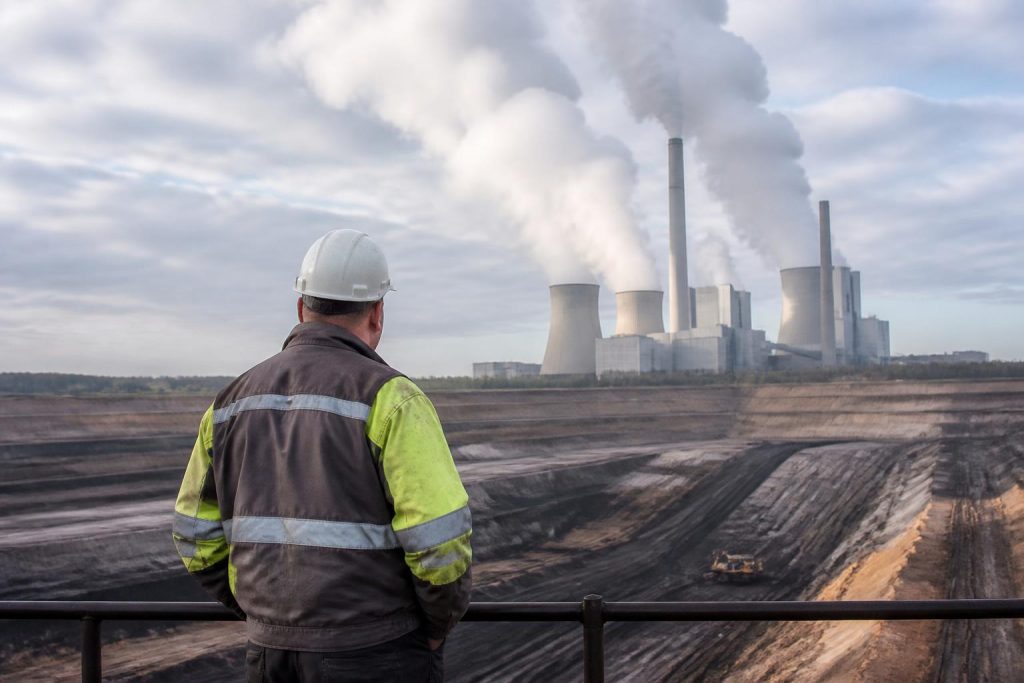
Eastern Germany’s largest lignite plant operator LEAG is lobbying state governments in Brandenburg and Saxony to keep domestic coal production running beyond planned phase-out timelines, arguing that the energy crisis triggered by the Iran war has fundamentally altered the conditions under which Germany’s coal exit was agreed.
According to an internal company presentation reported by business weekly WirtschaftsWoche, LEAG is positioning lignite as a cheap, domestically available alternative to fossil fuel imports disrupted by damage to Persian Gulf energy infrastructure and trade routes. The document, prepared as a briefing ahead of talks with eastern German coal state governments, describes lignite power production as a potentially cost-competitive energy source capable of bolstering Germany’s energy security — but one rendered artificially uncompetitive solely by carbon prices under the EU’s Emissions Trading System.
LEAG’s proposals include excluding lignite-fired power plants from the ETS for a predetermined period, placing selected plants on security standby while mining continues, and introducing an industry power price that could be set at approximately half the market rate if the state absorbs carbon costs. The company did not deny the reports but described its discussions with state governments as routine engagement ahead of a planned summer monitoring report on Germany’s coal phase-out. It added that the Iran conflict had created “changed framework conditions” that make fresh talks “absolutely necessary.”
The push finds some political sympathy. Chancellor Friedrich Merz said after the outbreak of the Iran war that Germany may need to delay the closure of individual coal plants in the event of supply shortages. The state governments in Brandenburg and Saxony acknowledged they hold regular talks with LEAG, which is a major employer in their coal mining regions, without confirming receipt of the specific proposals.
The initiative sits awkwardly against the financial commitments already made around the phase-out. LEAG is set to receive up to 1.75 billion euros under Germany’s coal phase-out law to transition its business toward climate-neutral energy production, while the states themselves are in line for billions of euros in structural adjustment funding ahead of the 2038 phase-out deadline. Removing lignite from the ETS would work directly against one of the trading system’s primary objectives — pushing polluting and inefficient plants out of the market — while market dynamics alone could make coal-fired power generation economically unviable well before 2038, researchers have noted.
In western Germany, RWE has agreed to end coal-fired power production by 2030, conditional on sufficient backup capacity being installed. The federal economy ministry confirmed on Monday that it had contributed more than a third of 240 million euros in transformation investments in North Rhine-Westphalia, covering battery production and recycling facilities among other projects.
LEAG’s owner, Czech investor Daniel Kretinsky, has previously criticised the EU’s carbon pricing scheme. The company said that if none of its proposals are accepted, it would consider closing its least efficient plants ahead of schedule.