Month: April 2026

  • Казахстан переходит от сырьевой модели к экономике добавленной стоимости: роялти, статус стратегического инвестора и 50 аукционов в 2026 году

    Казахстан переходит от сырьевой модели к экономике добавленной стоимости: роялти, статус стратегического инвестора и 50 аукционов в 2026 году

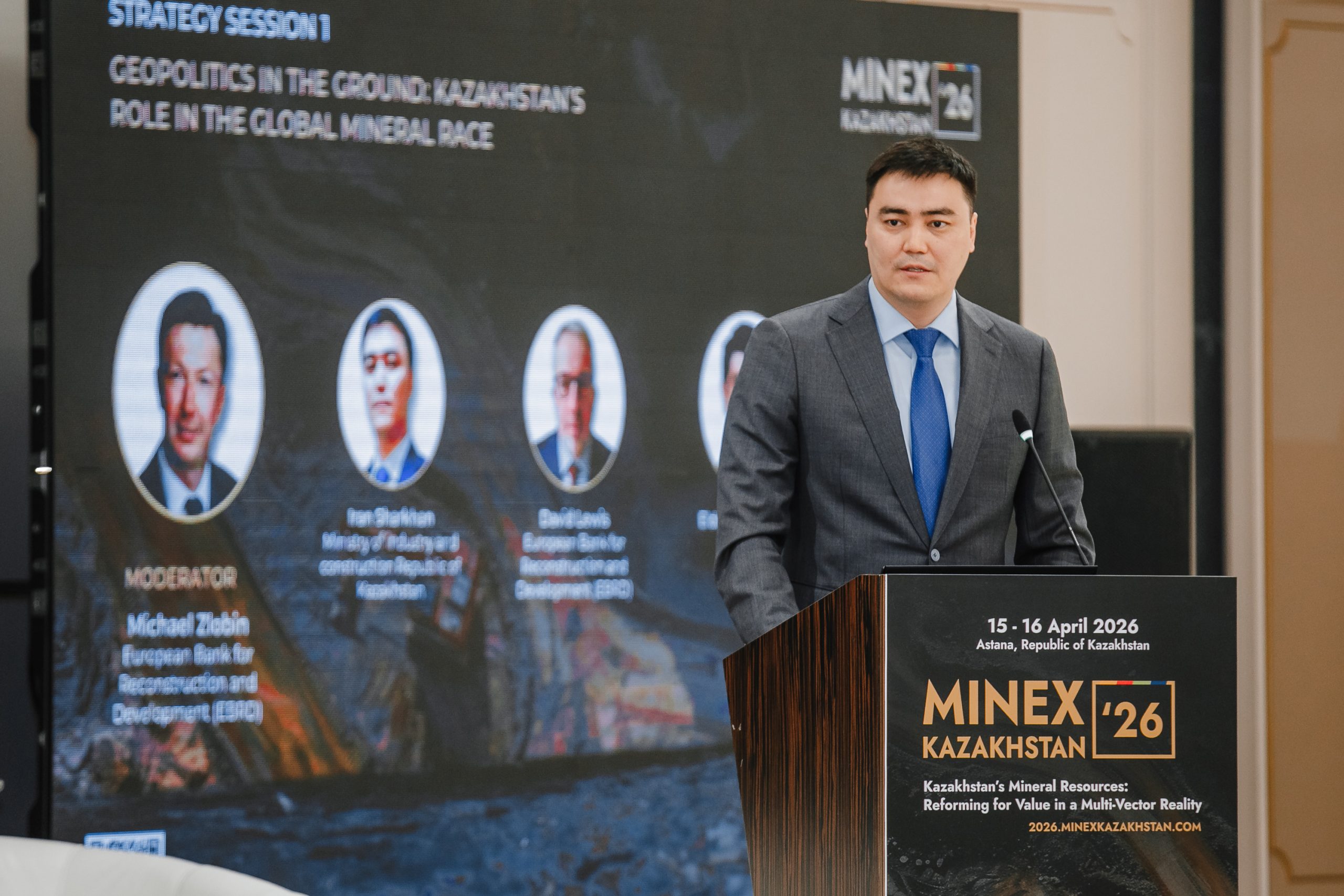
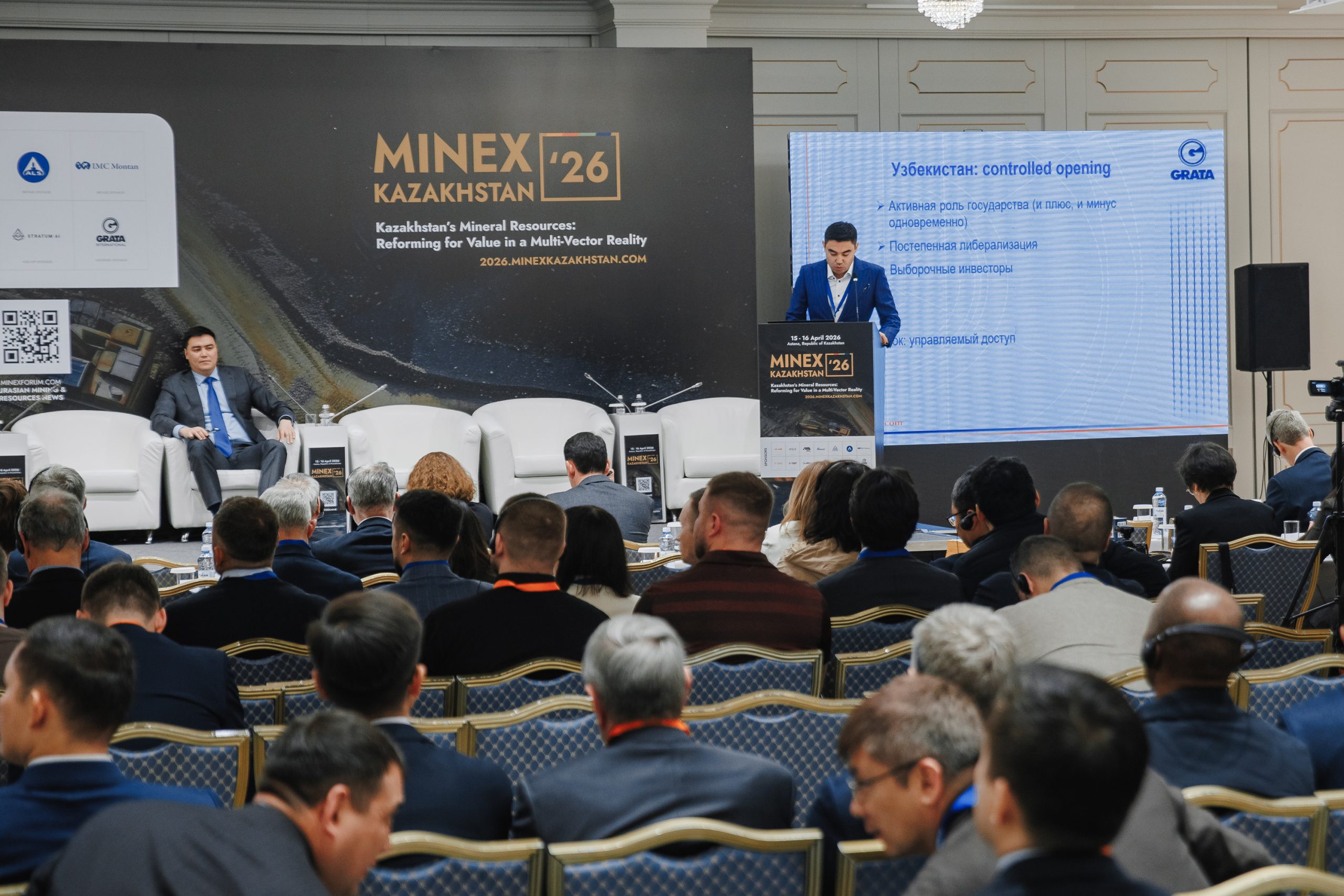
    Казахстан ускоряет переход от экспортно-сырьевой модели к экономике с высокой добавленной стоимостью — глубокая переработка ресурсов внутри страны, законодательные реформы и привлечение долгосрочных стратегических инвесторов становятся ключевыми приоритетами горнодобывающего сектора. Об этом заявил вице-министр промышленности и строительства РК на форуме MINEX Kazakhstan 2026 в Астане.

    Иран Шархан обозначил стратегический вектор развития отрасли: «Казахстан переходит от сырьевой модели к экономике добавленной стоимости. Приоритет — глубокая переработка сырья внутри страны, развитие технологий и привлечение стратегических инвесторов, ориентированных на долгосрочный эффект».

    В центре реформ — два существенных законодательных изменения, закреплённых поправками в Кодекс «О недрах и недропользовании» в 2025 году. Первое — переход с налога на добычу полезных ископаемых на систему роялти, которая, по оценке министерства, повысит прозрачность отрасли и сделает её более привлекательной для долгосрочных инвестиций, особенно в сегменте глубокой переработки. Второе — введение статуса «стратегического инвестора» с предоставлением преференций при условии выполнения обязательств по переработке сырья внутри страны, что создаёт прямой стимул для развития промышленности с добавленной стоимостью.

    Минерально-сырьевая база Казахстана насчитывает около 10 тыс. месторождений. В 2025 году на государственный учёт впервые поставлены 17 объектов, в том числе Кок-Жон, Алтын-Шоко и Самомбет. Геолого-геофизическая изученность территории страны достигла 2,038 млн кв. км при целевом показателе 2,2 млн кв. км к 2026 году; планируется переход на более детальный масштаб геологической съёмки для повышения эффективности выявления перспективных участков. В 2026 году запланировано проведение аукционов по 50 месторождениям для предоставления прав недропользования на разведку и добычу твёрдых полезных ископаемых. В Астане также реализуется проект создания современного лабораторного комплекса на базе Национальной геологической службы — его ввод в эксплуатацию запланирован на 2028 год.

    Форум MINEX Kazakhstan 2026 проходит в Астане с 14 по 16 апреля и объединяет более 500 участников, свыше 100 спикеров, 40 экспонентов и более 1000 посетителей из 33 стран. В центре внимания — реформы отрасли, развитие переработки и повышение инвестиционной привлекательности недропользования.
  • Kazakhstan Pivots From Raw Materials to Value-Added Economy With Royalty Reform and Strategic Investor Status at MINEX 2026

    Kazakhstan Pivots From Raw Materials to Value-Added Economy With Royalty Reform and Strategic Investor Status at MINEX 2026

    Kazakhstan is accelerating its transition from a raw materials export model toward a higher value-added economy, with deep in-country processing, legislative reform and the attraction of long-term strategic investors now at the centre of its mining sector strategy, according to the country’s vice minister of industry and construction.

    Speaking at the MINEX Kazakhstan 2026 forum in Astana, Iran Sharkhan outlined the government’s core priorities for the subsoil use sector. “Kazakhstan is moving from a raw materials model to a value-added economy,” he said. “The priority is deep processing of raw materials within the country, technology development and attracting strategic investors oriented toward long-term impact.”

    Central to the reform agenda are two significant legislative changes introduced through 2025 amendments to the Subsoil and Subsoil Use Code. The first is a shift from a mineral extraction tax to a royalty-based system, which the ministry says will improve sector transparency and make Kazakhstan more attractive for long-term investment, particularly in the deep processing segment. The second is the formal introduction of a “strategic investor” status, granting preferential conditions to investors who commit to processing raw materials domestically — creating a direct incentive for value-added industrial development over simple extraction and export.

    On the geological front, Kazakhstan’s mineral resource base encompasses approximately 10,000 registered deposits. In 2025, seventeen deposits were placed on the state register for the first time, including Kok-Zhon, Altyn-Shoko and Samombet. Survey coverage has now reached 2.038 million square kilometres against a target of 2.2 million square kilometres by 2026, with a transition to more detailed geological mapping scales planned to improve the identification of prospective areas. In 2026, auctions for subsoil use rights across 50 deposits are planned for both exploration and hard mineral extraction. A modern laboratory complex is also under development in Astana on the basis of the National Geological Survey, with commissioning scheduled for 2028.

    MINEX Kazakhstan 2026, running from 14 to 16 April in Astana, has brought together more than 500 participants, over 100 speakers, 40 exhibitors and more than 1,000 visitors from 33 countries, with industry reform, processing development and investment attractiveness as its central themes.

  • МФЦА запускает Junior Mining Platform для привлечения международного капитала в раннюю геологоразведку Казахстана

    МФЦА запускает Junior Mining Platform для привлечения международного капитала в раннюю геологоразведку Казахстана

    Международный финансовый центр «Астана» объявил о запуске специализированной Junior Mining Platform, призванной устранить разрыв в финансировании между компаниями ранней стадии геологоразведки и отечественными и международными инвесторами. Инициатива направлена на раскрытие минерального потенциала, скрытого на 65% территории страны, которая по-прежнему остаётся недостаточно изученной с геологической точки зрения.

    Платформа была представлена в преддверии форума MINEX Kazakhstan 2026 на первом заседании вновь созданного Совета экспертов по горнодобывающему сектору МФЦА — консультативного органа, объединившего ведущих участников отрасли, представителей национальных компаний, международных инвесторов и администрации МФЦА. В состав Совета вошли Нариман Абсаметов, председатель правления НГК «Тау-Кен Самрук»; Ерлан Галиев, председатель правления Национальной геологической службы; Аида Альжанова, заместитель генерального директора Solidcore Resources; Саид Султанов, учредитель Aurora Minerals Group; Тим Барри, генеральный директор Arras Minerals Corp.

    В рамках Junior Mining Platform МФЦА выступает связующим звеном между обладателями лицензий и источниками капитала: проекты проходят предварительный скрининг и отбор по признанным в отрасли критериям, после чего представляются отечественным и международным инвесторам. Инициатива призвана решить наиболее острую структурную проблему сектора — дефицит структурированного доступа к капиталу на ранних стадиях разведки. В Казахстане выдано около 3000 лицензий на геологоразведку, требующих инвестиций, однако многие проекты лишены доступа к финансированию из-за отсутствия подтверждения запасов по международным стандартам — JORC и KAZRC.

    Главный директор по продуктам администрации МФЦА Жанболат Какишев отметил, что платформа создаёт «прозрачную и понятную среду, где проекты получают возможность привлечь финансирование на ранних этапах, а инвесторы — доступ к базе проектов, отобранных по признанным в индустрии критериям». В числе финансовых инструментов, которые МФЦА планирует внедрить в рамках платформы, — роялти, стриминговые соглашения и earn-in сделки, широко применяемые на международных рынках юниорного майнинга, но пока недостаточно распространённые в Казахстане.

    Контекст запуска платформы весьма показателен. В 2024 году горнорудный сектор обеспечил 12,1% ВВП и около 33% совокупного экспорта страны. Казахстан располагает значительными запасами меди, золота, хрома, редкоземельных металлов и других полезных ископаемых, а доля горнодобывающих и металлургических проектов в общем объёме прямых иностранных инвестиций составляет 17%, или 3 млрд долларов. На этом фоне мировая потребность в капитале для добывающей отрасли к 2050 году оценивается в 2,1 трлн долларов — и при условии снижения барьеров для финансирования ранних стадий Казахстан имеет все возможности занять позицию регионального инвестиционного хаба.

    Юниорные компании, заинтересованные в участии в платформе, могут подать заявку и ознакомиться с критериями отбора на официальном сайте МФЦА.

  • Kazakhstan’s AIFC Launches Junior Mining Platform to Connect Early-Stage Explorers With International Capital

    Kazakhstan’s AIFC Launches Junior Mining Platform to Connect Early-Stage Explorers With International Capital

    The Astana International Financial Centre has announced the launch of a dedicated Junior Mining Platform designed to bridge the funding gap between early-stage geological exploration companies and domestic and international investors, as Kazakhstan moves to unlock the vast mineral potential that remains hidden across 65% of its still geologically underexplored territory.

    The platform was unveiled ahead of the MINEX Kazakhstan 2026 forum at the inaugural meeting of the AIFC’s newly established Mining Sector Expert Council — an advisory body bringing together leading industry participants including representatives of national companies, international investors and AIFC officials. Council members include Nariman Absametov, chairman of national geological holding Tau-Ken Samruk; Yerlan Galiyev, chairman of the National Geological Survey; Aida Alzhanova, deputy chief executive of Solidcore Resources; Said Sultanov, founder of Aurora Minerals Group; and Tim Barry, chief executive of Arras Minerals Corp.

    The Junior Mining Platform will see the AIFC act as an intermediary between licence holders and capital providers, screening and selecting projects according to recognised industry criteria before presenting them to investors. The initiative is intended to address what the AIFC describes as the sector’s most acute structural problem: a lack of structured access to capital at the exploration stage. Kazakhstan currently has approximately 3,000 active geological exploration licences requiring investment, yet many projects are unable to access financing due to limited reserve confirmation under internationally recognised standards such as JORC and KAZRC.

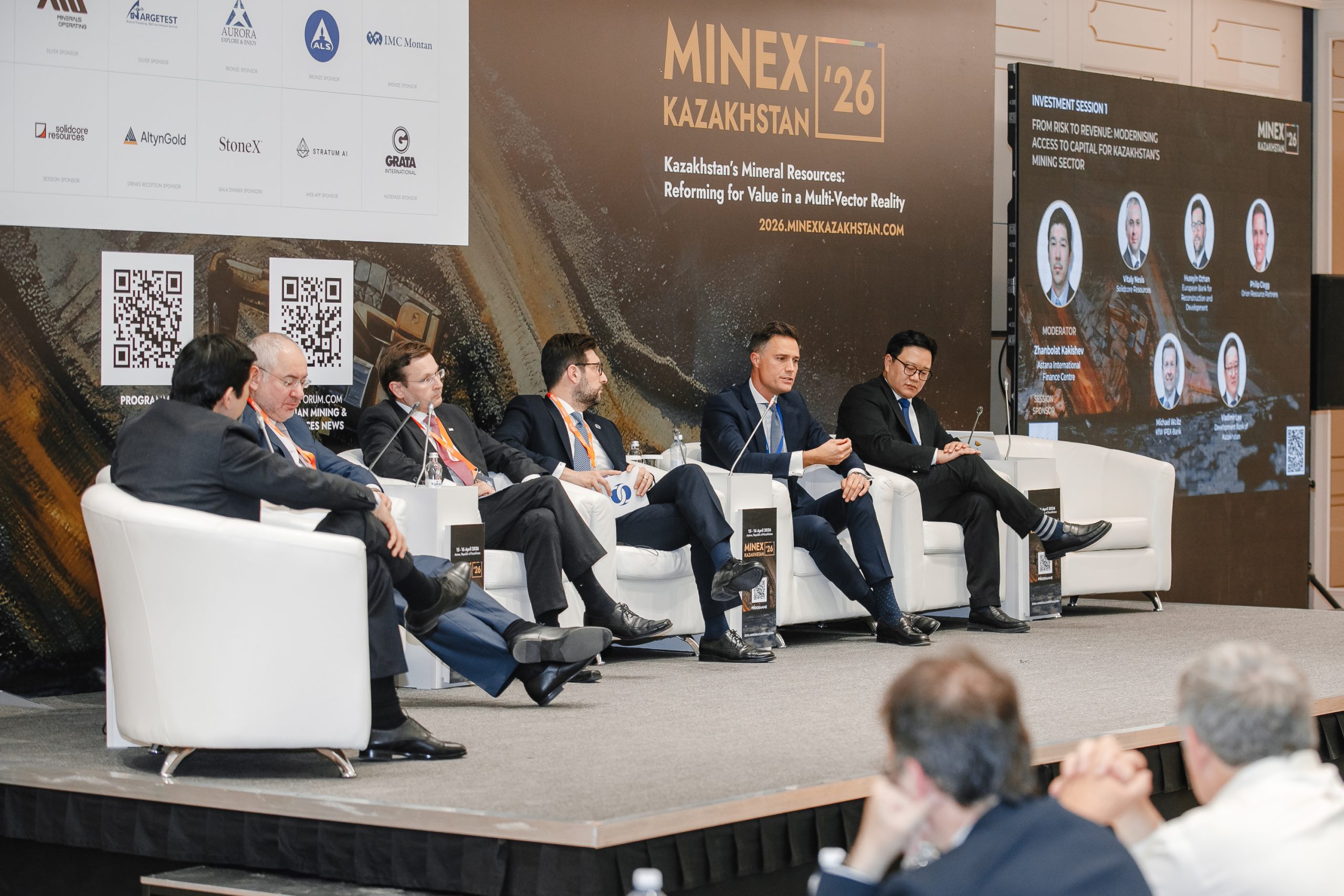
    AIFC chief product officer Zhanbolat Kakishev said the platform was designed to create “a transparent and understandable environment where projects can attract financing at early stages, and investors can access a pipeline of projects selected according to industry-recognised criteria.” Among the financial instruments the AIFC plans to introduce through the platform are royalty arrangements, streaming agreements and earn-in deals — tools widely used in international junior mining markets but less established in Kazakhstan.

    The backdrop to the launch is significant. Kazakhstan’s mining sector contributed 12.1% of GDP and approximately 33% of total national exports in 2024. The country holds substantial reserves of copper, gold, chromium, rare earth elements and other critical minerals, and mining and metallurgy currently account for 17% — or $3 billion — of total foreign direct investment. Against that backdrop, the global capital requirement for the extractive sector is estimated to reach $2.1 trillion by 2050, presenting a substantial opportunity for Kazakhstan to position itself as a regional investment hub if early-stage financing barriers can be reduced.

    Junior companies wishing to participate in the platform can submit applications and review selection criteria on the AIFC’s official website.

  • Международный горнодобывающий форум с участием 30 стран открылся в Астане

    Международный горнодобывающий форум с участием 30 стран открылся в Астане

    В столице Казахстана открылся международный форум по горнодобывающей отрасли, объединивший представителей из 30 стран. Казахстан намерен повысить эффективность освоения минеральных ресурсов, нарастить уровень переработки и привлечь новые иностранные инвестиции.

    В рамках форума приоритет отдаётся презентации передовых технологий и выстраиванию долгосрочного инвестиционного партнёрства. По мнению экспертов, совершенствование системы цифровизации и лицензирования будет способствовать укреплению инвестиционной привлекательности страны, открывая новый этап промышленного роста, ориентированного на устойчивое развитие.

    Тулеген Муканов, советник исполнительного директора Республиканской ассоциации горнодобывающих и горно-металлургических предприятий, обратил внимание на широкий спектр технологий, представленных на выставке: «Посмотрите, сколько компаний выставились в рамках конгресса — демонстрируют свои технологии. Горнодобывающую технику мы сами не производим. Всё наше оборудование — иностранное: шведское, японское, американское, китайское. Но я заметил ряд новых компаний, которые только начинают. В Караганде начали выпускать запасные части для крупной горной техники — что-то вроде реновации».

    Форум проходит на фоне активных усилий Казахстана по позиционированию себя в качестве приоритетного направления для инвестиций в критические минералы — с опорой на реформы в сфере недропользования, запуск единого портала лицензирования и десятикратное увеличение государственного финансирования геологоразведки, объявленное ранее в этом году.

  • International Mining Forum Unites 30 Nations in Astana as Kazakhstan Targets Investment and Industrial Upgrade

    International Mining Forum Unites 30 Nations in Astana as Kazakhstan Targets Investment and Industrial Upgrade

    An international mining forum bringing together representatives from 30 countries has opened in Kazakhstan’s capital Astana, with the Kazakhstani government signalling its ambitions to improve the efficiency of mineral resource development, increase processing capacity and attract greater foreign investment.

    The gathering has placed particular emphasis on the presentation of advanced technologies and the establishment of long-term investment partnerships. Experts attending the forum said that ongoing improvements to the country’s digitalisation agenda and licensing system would strengthen Kazakhstan’s appeal to international investors, marking the beginning of a new phase of industrial growth oriented toward sustainable development.

    Tulegyen Mukanov, adviser to the executive director of the Republican Association of Mining and Metallurgical Enterprises, highlighted the breadth of technology on display. “Look at how many companies are exhibiting at this congress — showcasing their technologies,” he said. “We don’t manufacture mining equipment ourselves. All our machinery comes from abroad — Sweden, Japan, America, China. But I’ve noticed some new companies starting up. In Karaganda, they have begun producing spare parts for heavy mining equipment — a kind of renovation sector is emerging.”

    The forum comes as Kazakhstan continues to position itself as a priority destination for critical minerals investment, backed by recent subsoil use reforms, the launch of a unified licensing portal and a tenfold increase in state geological exploration funding announced earlier this year.

  • Environmental Groups Sound Alarm Over Closed-Door Meeting Between EU Commissioner and Mining Lobbyists on Water Protection Rules

    Environmental Groups Sound Alarm Over Closed-Door Meeting Between EU Commissioner and Mining Lobbyists on Water Protection Rules

    Environmental organisations have raised serious concerns after European Commissioner for Environment Jessika Roswall held a private meeting in Stockholm with a hand-picked group of industrial and mining industry lobbyists to discuss the future of the EU’s Water Framework Directive — the bloc’s primary legal instrument for protecting rivers, lakes and drinking water supplies — with no environmental or civil society representatives invited to attend.

    The Water Framework Directive underpins EU rules on clean drinking water, the health of freshwater ecosystems and climate resilience. Critics argue that any discussion of its future should be subject to open, transparent and inclusive consultation, rather than closed-door talks with an industry that has consistently lobbied to reduce regulatory constraints on extraction operations.

    The European Environmental Bureau condemned the format and framing of the meeting in stark terms. Athénaïs Georges, the organisation’s policy officer for biodiversity and water, said the Commission was “placing short-sighted and specific corporate interests above public and environmental protection” by convening with hand-picked participants while excluding wider civil society. She warned that reopening the directive risked “unleashing a Pandora’s box — jeopardising the health of current and future generations.”

    Diego Marin, the bureau’s senior policy officer for raw materials and resource justice, was equally direct: “Secret deals should not decide our water’s future. All mining projects have serious impacts on water, with pollution travelling far beyond the source and contaminating nature for decades — even permanently.”

    Environmental groups point to an already well-documented record of mining-related water contamination across Europe. Heavy metals, acid mine drainage and other hazardous substances from mining operations have been linked to the contamination of rivers and groundwater, the collapse of aquatic biodiversity and the emergence of ecological dead zones in multiple member states. The organisations argue that weakening the Water Framework Directive at the behest of mining industry interests would compound these harms at a continental scale, threatening public health, local livelihoods and the long-term resilience of freshwater ecosystems.

    The closed nature of the Stockholm meeting has drawn particular criticism at a moment when the EU is simultaneously accelerating its critical minerals agenda and facing mounting pressure from environmental and community groups concerned about the social and ecological costs of rapidly expanding European extraction.

  • Avrupa Minerals Cuts Reporting Frequency as Junior Explorer Focuses Resources on Copper-Gold Projects Across Europe

    Avrupa Minerals Cuts Reporting Frequency as Junior Explorer Focuses Resources on Copper-Gold Projects Across Europe

    Avrupa Minerals has announced it will shift from quarterly to semi-annual financial reporting, reducing its administrative compliance burden as the junior exploration company concentrates its limited resources on copper-zinc and gold projects across Finland, Portugal and Kosovo.

    The Canadian-listed company has confirmed its eligibility under Coordinated Blanket Order 51-933, a TSX Venture Exchange pilot framework that allows qualifying small-revenue venture issuers with a clean disclosure record to file financial statements and management discussion and analysis twice yearly rather than four times, while continuing to produce annual audited results. The change is intended to streamline administrative costs without affecting the company’s core exploration activities.

    Avrupa operates a project generator model, seeking joint venture partners to fund and advance early-stage assets while retaining meaningful interests. Its portfolio spans three European jurisdictions: a series of Finnish volcanogenic massive sulphide targets held through a partnership structure; a wholly owned Portuguese VMS project for which a mining licence application is pending; and a gold interest in Kosovo. The company’s strategy is focused exclusively on politically stable European countries, positioning it to attract partners cautious about jurisdictional risk.

    The most recent analyst rating on Avrupa Minerals stock is a Hold with a price target of C$0.07.

  • Kazakhstan’s Junior Mining Sector Poised for Growth but Held Back by Red Tape, Industry Forum Hears

    Kazakhstan’s Junior Mining Sector Poised for Growth but Held Back by Red Tape, Industry Forum Hears

    Kazakhstan’s junior exploration sector has the geological foundations and regulatory momentum to become a significant driver of new mineral discoveries, but excessive bureaucracy, inadequate targeted support and a one-size-fits-all regulatory framework continue to constrain smaller companies, according to participants at a roundtable held on the sidelines of the Geoscience and Exploration Central Asia 2026 forum in Astana.

    The roundtable — titled “Junior Companies: New Discoveries and the Investment Potential of Central Asia” — brought together investors, junior exploration firms and senior industry experts to assess both the opportunities and the obstacles facing early-stage explorers in Kazakhstan. Presentations were delivered by the chief executives of East Star Resources, QazAurum, Palace Resources, Kogodai and Elementa, as well as the chief geologist of Aurora Minerals Group.

    Opening the session, Kazakhstan Mining Chamber president Ruslan Baimishev said that the subsoil use reforms launched in 2018 had created more favourable conditions for new market entrants, and that junior companies — willing to operate at the earliest, riskiest stages of exploration — were uniquely positioned to generate the new discoveries the country and the global market urgently needed. He noted that a global shortage of major new mineral finds was increasingly directing attention toward the junior sector as the primary source of future resource growth.

    Kogodai CEO Bolat Kabaziyev offered a frank assessment of the structural challenges. Junior companies, he said, differ fundamentally from large producers: they hold no operating assets, are almost entirely dependent on external financing, and typically spend years moving a prospect from initial identification through risk reduction and resource confirmation before it can attract institutional capital. Yet in Kazakhstan, small explorers are largely subject to the same regulatory requirements as major mining companies, despite operating at a fraction of the scale. He argued that commercial success among junior explorers remains rare precisely because access to financing, data quality and decision-making flexibility — the three critical enablers — remain insufficiently developed.

    Participants acknowledged a number of genuine improvements in Kazakhstan’s investment environment: updated legislation, broader access to geological information, simplified licensing procedures and rising investor interest in early-stage exploration. The country’s substantial archive of Soviet-era geological data was highlighted as a strategic asset that, if made more practically accessible, could serve as a foundation for new project generation and foreign investment attraction.

    At the same time, the roundtable identified persistent barriers. Lengthy approval and permitting processes, complexity around land use and environmental requirements, and the absence of dedicated support mechanisms for small exploration companies were all cited as structural weaknesses. Participants called for continued legislative refinement, purpose-built support frameworks for junior operators, and a better-calibrated balance between state oversight and the commercial conditions needed to attract risk capital.

    The consensus was clear: Kazakhstan’s combination of geological endowment, reform momentum and technical expertise creates genuine conditions for junior sector growth — but realising that potential will require the state to treat small explorers as a distinct category deserving tailored policy rather than a scaled-down version of a major mining company.

  • Kazakhstan Junior Qaz Aurum Targets Antimony, Copper and Bonanza-Grade Gold Across Three Projects as It Seeks Investors

    Kazakhstan Junior Qaz Aurum Targets Antimony, Copper and Bonanza-Grade Gold Across Three Projects as It Seeks Investors

    Kazakhstani junior exploration company Qaz Aurum is advancing a diverse portfolio of antimony, copper and gold projects across several regions of the country, driven in part by geopolitical shifts that have dramatically elevated the strategic value of the minerals it is chasing, the company’s director Takhir Kaliyev told the Geoscience and Exploration Central Asia forum in Astana.

    At the Karasuk antimony project in Aktobe Region, historic data points to high-quality mineralisation averaging 6.5% antimony, with peak grades reaching as high as 31% at individual occurrences. The project hosts two mineral showings separated by a tectonic fault which the company believes could host additional resources. All preparatory work has been completed, geophysical surveys and prospecting traverses are planned, and Qaz Aurum says it is ready to begin drilling at Karasuk this year. Antimony — a metalloid that hardens alloys and has critical applications in defence, flame retardants and battery technology — has surged in strategic importance following China’s export restrictions on the material.

    On copper, the company is active at the Egemen porphyry copper project near the settlement of Shortandy in Akmola Region, which benefits from well-developed existing infrastructure. Of 17 drill holes completed to date, 16 have intersected ore-grade mineralisation. The mineralised strike extends approximately two kilometres with widths of up to 300 metres, and the deposit also contains molybdenum. Historical surveys conducted in the 1970s estimated copper potential at 10 million tonnes across the broader area, while Qaz Aurum has so far delineated 370,000 tonnes of copper equivalent in resources. Drilling and metallurgical testing are planned over the next two years, and the company is actively seeking investors to support the programme given current funding constraints.

    The most advanced project in the portfolio is the Ungyrtas gold deposit, located 70 kilometres from Almaty. Qaz Aurum describes it as a high-grade, bonanza-style system — sample grades have exceeded 100 grams of gold per tonne in multiple instances, with a peak assay of 789 grams per tonne. A preliminary resource block modelled in Micromine returned an average grade of 19 grams per tonne over a 50-metre intersection. Metallurgical testwork using gravity separation and cyanidation has achieved gold recovery of 85.6%. The company has already reached an agreement with a processing plant located 70 kilometres away, allowing ore to be delivered without the need for capital-intensive on-site processing infrastructure. Drilling is planned for this year, with a resource estimate to follow, and the company intends to apply for a mining licence in 2026 with production targeted to begin the following year. Investor discussions are also underway for Ungyrtas.

    In addition, Qaz Aurum is in the process of securing fresh exploration licences in the northern Pribalkhashye region, targeting copper and gold mineralisation. Following the forum, company geologists were set to travel to the area on a week-long field expedition to verify mineralisation described in historic geological reports, ahead of planned geophysical, geochemical and drilling programmes.