Month: April 2026

  • Zijin’s Serbian Copper-Gold Operation Posts €1.1 Billion Net Profit in 2025 as Revenues Surge 22%

    Zijin’s Serbian Copper-Gold Operation Posts €1.1 Billion Net Profit in 2025 as Revenues Surge 22%

    Srbija Zijin Mining, the Serbian arm of Chinese mining giant Zijin Mining Group, has reported a net profit exceeding €1.1 billion for 2025 — a 60% increase on the prior year and nearly four times the level recorded in 2021, when the Čukaru Peki mine first came into production.

    The company’s operating revenues reached 213.8 billion dinars in 2025, up more than 18% year-on-year, with the overwhelming majority — 210.9 billion dinars — generated through the sale of copper and gold ore concentrates to affiliated entities abroad. Total revenues climbed to 224 billion dinars, and with expenses growing at a slower pace, overall profitability surged by more than 22%.

    At the heart of the operation is the Čukaru Peki copper-gold mine, located six kilometres from the town of Bor in eastern Serbia, which processes three to four million tonnes of ore annually at average grades of 2.9% copper and 1.7 grams of gold per tonne. Zijin entered Serbia in January 2019 through its acquisition of Canadian company Nevsun Resources, which held ownership of the Čukaru Peki deposit — considered one of the richest ore bodies of its kind in Europe. The mine was formally commissioned in 2021.

    The company also holds five exploration licences across Serbia and retains 100% ownership of both the upper and lower zones of the Čukaru Peki deposit. Development of the Lower Zone is planned across three phases, with intensive construction scheduled to continue through to 2052, according to the annual report. Finalisation of studies and acquisition of trial permits are currently underway.

    Beyond its core mining operations, Srbija Zijin Mining acquired 930 hectares of land across 2,523 plots in 2025, paying €31.25 million in compensation, and took over a former Falkensteiner hotel in Novi Beograd through the acquisition of company Alba Invest. The company’s cash position nearly doubled, rising from 5.9 billion to 10.5 billion dinars, while total property, plant and equipment increased from 117 billion to 133 billion dinars. By the end of 2025, the company employed 1,369 people.

    Srbija Zijin Mining is wholly owned by Čukaru Peki, a Netherlands-registered entity, and forms part of Zijin Mining Group’s global portfolio, which spans 16 provincial-level regions within China and 21 projects across 15 countries, including the Kamoa-Kakula and Kolwezi copper mines in the Democratic Republic of Congo and the Buriticá gold mine in Colombia.

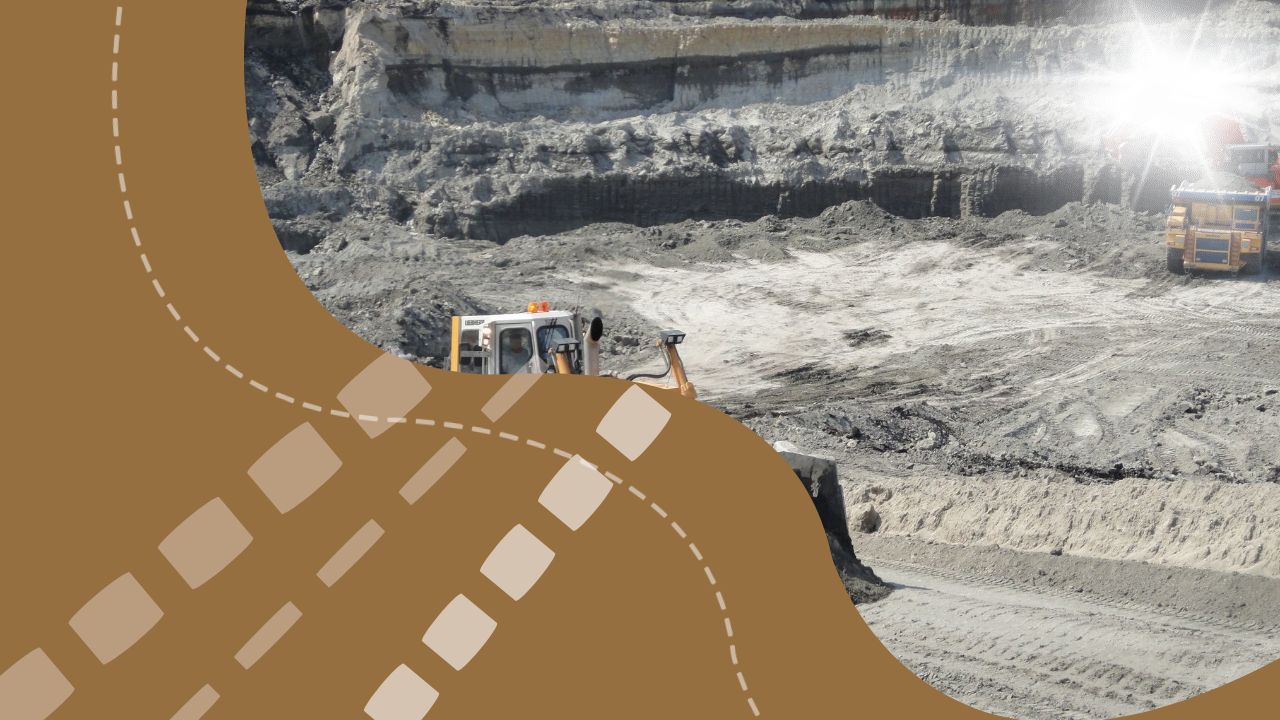
  • Kazakhstan Plans 11% Rise in Coal Output to 128.9 Million Tonnes in 2026 as Investment Surges and New Licences Come to Market

    Kazakhstan Plans 11% Rise in Coal Output to 128.9 Million Tonnes in 2026 as Investment Surges and New Licences Come to Market

    Kazakhstan’s mining operators plan to increase coal production by 11% in 2026, targeting output of 128.9 million tonnes against the 115.9 million tonnes extracted in 2025 — itself a 7% increase on the prior year — according to Energy Minister Yerlan Akkenzhenov, speaking at a government session.

    The accelerating production trajectory is backed by a significant uplift in sector investment. Approximately 553.5 billion tenge is earmarked for the coal industry in 2026, nearly doubling the 305 billion tenge invested in 2025 according to data drawn from mining contract work programmes. Before the end of the year, the Ministry of Energy also plans to hold an auction offering subsoil use rights across approximately ten coal deposits, signalling continued confidence in the sector’s expansion.

    Kazakhstan holds the world’s tenth-largest coal reserves, with 33.6 billion tonnes of the fossil fuel contained within its subsoil — sufficient to sustain extraction at current rates for more than 300 years. The country’s coal base underpins both its domestic energy system and a growing export trade.

    Of the 115.9 million tonnes produced in 2025, 85.9 million tonnes were directed to domestic consumption, serving the municipal heating sector, power generation and industrial users. A further 30 million tonnes were exported, with Russia, Poland, Uzbekistan, Turkey, India and Malaysia among the principal destination markets.

  • Caspian Sunrise Expands into Mining with $25–45 Million Acquisition in Kazakhstan

    Caspian Sunrise Expands into Mining with $25–45 Million Acquisition in Kazakhstan

    UK-based oil and gas company Caspian Sunrise plc is moving to diversify its portfolio through the acquisition of mining assets in Kazakhstan, with a deal valued between 25 and 45 million dollars.

    Under the agreement, the company will acquire 100 percent of Kazikhan Limited, which holds stakes in several entities licensed to explore and develop deposits of manganese, gold, silver, copper, and molybdenum.

    Among the key assets, GRK Borly LLP holds a production licence for manganese with confirmed reserves of approximately 8 million tonnes, while Zhambas PV controls exploration licences for gold and copper, including an estimated 700 kilograms of gold.

    The transaction reflects Caspian Sunrise’s strategic shift toward mining, aimed at increasing profitability while reducing reliance on Kazakhstan’s oil and gas sector. Company leadership views mining projects as requiring lower upfront capital and offering greater resilience to regulatory pressures and commodity price volatility.

    Kazikhan is owned by private shareholders linked to the Oraziman Family Concert Party, which collectively holds a controlling stake in Caspian Sunrise, highlighting a close alignment between the entities involved in the transaction.

    Caspian Sunrise’s core operations remain centred on its BNG contract area in western Kazakhstan, where it is engaged in crude oil exploration and production, alongside oilfield services. However, the latest acquisition follows an earlier move in December, when the company announced the purchase of another Kazakhstan-based asset containing titanium, zirconium, gold, and rare earth elements located near Ekibastuz.

    The expansion signals a broader strategy to build a diversified resource portfolio, positioning the company to benefit from both traditional hydrocarbons and the growing demand for critical and industrial minerals.

  • Greenland Rejects Kvanefjeld Licence Renewal, Dealing Blow to Rare Earths Project

    Greenland Rejects Kvanefjeld Licence Renewal, Dealing Blow to Rare Earths Project

    Energy Transition Minerals (ASX: ETM) said on Tuesday that Greenland does not intend to renew the exploration licence for its Kvanefjeld rare earths project.

    The draft decision represents another setback for one of the territory’s largest undeveloped critical minerals projects, which would include a mine, concentrator and refinery.

    The move stems from Greenland’s 2021 Uranium Act, which effectively prohibits uranium prospecting, exploration and extraction, and is currently the subject of ongoing legal proceedings over its application to Kvanefjeld.

    ETM said similar licences have been renewed since the Act was introduced, raising concerns about regulatory consistency.

    “This draft position appears inconsistent with the historical treatment of the project,” the company said in an emailed statement, noting that Greenland had previously extended the licence even after the uranium legislation came into force and while legal disputes were ongoing.

    ETM said the decision risks sending a broader signal to investors at a sensitive time for Greenland, which is at the centre of increasing geopolitical competition over critical minerals supply. Western governments, including the US and Europe, are seeking to reduce their dependence on China.

    Mining is widely seen as a way for Greenland to diversify its economy, so policy changes that appear to alter the rules may increase concerns about regulatory stability and the long-term commitment to the sector, ETM said.

    The draft outcome also follows Greenland’s efforts to engage with industry at January’s PDAC convention in Canada earlier this year, adding to questions over the direction of policy.

    Shares in ETM fell 7.4 per cent to A$0.050 in Sydney during the first trading session after a halt last week, giving the company a market value of about A$118.7 million. The broader S&P/ASX 200 rose 1.5 per cent. Since the start of the year, the stock has lost half its value.

    Spain support


    The share price decline came despite ETM also securing foreign direct investment approval from the Spanish government for its proposed acquisition of the Penouta tin-tantalum mine.

    The approval removes a key regulatory obstacle, confirms that the investment meets national security requirements, and endorses the company’s financial strength and suitability to operate strategic assets in Spain, marking progress towards completing the deal.

  • Kazakhstan Shifts Focus to Critical Minerals as Exploration Accelerates

    Kazakhstan Shifts Focus to Critical Minerals as Exploration Accelerates

    Kazakhstan is intensifying its geological exploration efforts as it adapts to shifting global demand and prepares for a gradual decline in oil production. While the country has long relied on its vast natural resources, current priorities are increasingly focused on rare and critical minerals, which are emerging as key drivers of future economic growth.

    Over the past year alone, 17 new deposits have been discovered, underscoring the continued potential of the country’s subsoil. Exploration activity has expanded significantly, with geological survey coverage reaching more than 2 million square kilometres. Authorities plan to extend mapping across an additional 100 thousand square kilometres this year, supported by 20 approved project initiatives involving national and industry stakeholders.

    Kazakhstan’s mineral base remains substantial, with approximately 10 thousand deposits identified across the country. Proven reserves include gold, silver, copper, and phosphorites, while total reserves across major resources exceed 2369 tonnes of gold, 4.3 billion tonnes of oil, 3.8 trillion cubic metres of gas, 33.5 billion tonnes of coal, and 26.7 billion tonnes of iron ore.

    A key development is the creation of a certified laboratory complex under the National Geological Service, scheduled for completion by 2028. The facility, valued at 14 billion tenge, will enhance analytical capabilities and support more precise geological data processing.

    According to officials, rising global demand for copper, gold, and rare earth elements is driving a strategic shift in the sector. Greater emphasis is now being placed on improving data accuracy, increasing transparency, and strengthening the investment climate. Over the next three years, the government plans to allocate approximately 240 billion tenge to geological exploration, while also preparing to auction new перспективные участки starting in 2027.

    This renewed focus is partly driven by declining oil output in certain regions, where production has dropped significantly due to resource depletion. In response, exploration is expanding into underexplored sedimentary basins such as the Aral and Syrdarya regions.

    Kazakhstan is also attracting growing private investment, with around 280 billion tenge injected into exploration over the past three years. Rare earth and rare metals are becoming central to this strategy, including deposits such as Kuyryktikol, discovered in 2025, which contains significant reserves of cerium, neodymium, and yttrium.

    More than 100 known deposits across the country contain critical minerals such as tungsten, molybdenum, lithium, beryllium, niobium, tantalum, germanium, and gallium. These materials are essential for high-tech industries, including electric vehicles, electronics, and energy systems, further boosting Kazakhstan’s export potential.

    The evolving structure of the mining sector reflects a broader transformation. Unlike in the past, when extraction often focused on individual elements, modern development requires integrated approaches and advanced technologies. This shift is increasing the sector’s reliance on innovation and international collaboration, as Kazakhstan positions itself as a key supplier in the global critical minerals market.

  • Allied Critical Metals Intersects Significant Tungsten Mineralization at Borralha Project

    Allied Critical Metals Intersects Significant Tungsten Mineralization at Borralha Project

    Allied Critical Metals has reported a major drilling intersection at its Borralha Tungsten Project in northern Portugal, confirming over 200 metres of breccia-hosted tungsten mineralization at the newly defined Venise Breccia target.

    The discovery highlights a potentially extensive mineralized system, with visible wolframite identified alongside molybdenite and chalcopyrite within quartz-sulphide veining. These results are consistent with the company’s geological model and support the continuity of a historically recognised but previously underexplored breccia system.

    The Venise target is located approximately 400 metres from the Santa Helena Breccia deposit, which underpins the project’s current preliminary economic assessment. This proximity reinforces the potential for near-mine resource expansion and longer-term growth of the operation.

    The drilling forms part of a fully funded 20000 metre programme aimed at increasing the resource base, extending mine life, and scaling up the overall project. While the presence of visible mineralization is considered encouraging, the company emphasises that laboratory assay results will be required to confirm grade and economic viability.

    The findings also point to polymetallic potential, with associated molybdenum and copper mineralization suggesting similarities to other breccia-hosted systems in the district. This could further enhance the project’s strategic relevance as Europe seeks to strengthen its supply of critical minerals.

    The Venise Breccia is not yet included in the current resource estimate or mine plan, and further drilling is ongoing to determine the scale and continuity of mineralization. Nonetheless, early results support the company’s strategy of applying modern exploration techniques to historically identified targets.

    As exploration progresses, the Borralha Project is increasingly viewed as a potential district-scale tungsten system, with strategic importance for European and NATO-aligned supply chains amid rising global demand and strong tungsten pricing.

  • Altyndara Advances Development of Koktaszhal and Kyzylshoki Deposits in Kazakhstan

    Altyndara Advances Development of Koktaszhal and Kyzylshoki Deposits in Kazakhstan

    A new phase of development has begun at the Koktaszhal and Kyzylshoki deposits in Kazakhstan’s Karaganda region, following the transfer of the project to Altyndara. The company is preparing to expand geological exploration and gradually scale up production across both sites.

    As part of its development strategy, the investor has outlined plans to increase mining activity and construct a processing plant at the Kyzylshoki site. Total investment in the project is expected to exceed 500 million dollars, reflecting a long-term commitment to unlocking the resource base.

    The initiative is projected to create more than 800 jobs and generate broader economic benefits for the region, including growth in supporting services and infrastructure development.

    Preliminary estimates indicate that ore resources at the deposits exceed 50 million tonnes, with confirmed copper reserves surpassing 500 thousand tonnes. The project was previously held by Altai Polymetally before transitioning to its current operator.

    The expansion underscores ongoing efforts to strengthen Kazakhstan’s mining sector by advancing resource development, attracting investment, and increasing domestic production capacity.

  • Fujian Hengwang to Invest $1.2 Billion in Steel Plant in Kazakhstan

    Fujian Hengwang to Invest $1.2 Billion in Steel Plant in Kazakhstan

    Chinese metallurgical company is set to build a major steel plant in Kazakhstan with an annual production capacity of up to 3 million tonnes. The project, valued at 1.2 billion dollars, is expected to create around 2500 jobs and supply both domestic and export markets.

    The initiative was discussed during a visit by Kazakhstan’s Minister of Trade,  to China’s Fujian province, according to official sources. The project had previously been outlined in February 2025 following talks between Prime Minister  and company chairman Zeng Zhaoqiang.

    Construction of the metallurgical complex is planned in the Zhambyl region, with initial works originally scheduled to begin in April 2025. The first phase, expected to be completed by 2027, will deliver an annual output of 1 million tonnes of steel. Full production capacity of 3 million tonnes per year is targeted by 2029.

    The plant will rely on locally sourced raw materials, including iron ore from deposits in the Ulytau, Karaganda, and Kostanay regions, as well as natural gas and lime.

  • Medaro Mining Shifts Strategic Focus to Sweden to Tap EU Critical Minerals Demand

    Medaro Mining Shifts Strategic Focus to Sweden to Tap EU Critical Minerals Demand

    Medaro Mining is repositioning its operations toward Europe, with a strategic focus on Sweden as it seeks to capitalise on growing demand for critical minerals within the European Union.

    The move follows a comprehensive review of the company’s asset portfolio and aligns with the EU’s , which aims to strengthen domestic supply chains for key raw materials. Sweden has emerged as a favourable destination due to its established mining infrastructure and stable regulatory framework, making it an attractive hub for resource development.

    The company’s current exploration efforts are concentrated on the Bastnäs project, located in the Riddarhyttan-Bastnäs district. Ongoing fieldwork includes detailed surface mapping and systematic sampling campaigns designed to assess the mineral potential of the site. The results of these activities will play a decisive role in determining whether the project advances to the next phase of exploration, including test drilling.

    In parallel with its technical activities, Medaro is also increasing its engagement with investors through a targeted digital marketing initiative aimed at enhancing visibility across European and North American markets.

    Key project milestones include the conclusion of its investor communications programme in July 2026 and the expiration of exploration licences for Bastnäs 100 and 200 in February 2029, as granted by Swedish authorities. These deadlines establish a clear timeline for evaluating the project’s viability and securing further development.

    Market attention is currently focused on assay results from collected rock samples, which are expected to determine whether the project can support a larger-scale exploration programme. As Europe accelerates efforts to secure critical mineral supply chains, Medaro’s Swedish pivot reflects a broader industry shift toward resource development within stable and strategically aligned jurisdictions.

  • Central Asia Advances Geological Reforms to Boost Investment and Resource Development

    Central Asia Advances Geological Reforms to Boost Investment and Resource Development

    Central Asian countries are intensifying efforts to modernise their geology and subsoil use sectors, positioning natural resources as a key driver of economic growth, technological development, and regional cooperation.

    In Kazakhstan, large-scale reforms are being implemented under the direction of President , aimed at improving investment conditions, increasing transparency, and accelerating digital transformation across the sector. Authorities have introduced a Unified Subsoil Use Portal, enabling streamlined access to licensing and geological data, while also aligning reporting standards with international frameworks.

    The country continues to expand its geological exploration coverage, which has now reached over 2 million square kilometres. Funding for geological research has increased significantly and is expected to total around 500 million dollars over the next three years. Kazakhstan’s mineral base remains substantial, with approximately 10 thousand deposits and large reserves of gold, hydrocarbons, coal, and iron, alongside growing attention to rare earth elements.

    Minister of Industry and Construction  noted that the sector is undergoing a structural shift as global demand evolves and resources become more difficult to access. In response, the government is prioritising advanced exploration technologies, including remote sensing, geophysical surveys, and geochemical analysis, as well as deeper institutional reforms to strengthen governance and efficiency.

    Digitalisation is also emerging as a central pillar. A unified platform now supports a full digital cycle from application to licence issuance, integrating electronic auctions and online payment systems. These measures are designed to improve transparency and create a more attractive environment for investors.

    Beyond Kazakhstan, similar reforms are underway across the region. In Uzbekistan, Deputy Minister  highlighted a shift toward investor-led exploration models, supported by legislative updates, tax incentives, and simplified licensing procedures. The country is also prioritising the development of critical minerals, including lithium, tungsten, and rare earth elements, with major investment programmes planned through 2028.

    Tajikistan is likewise advancing its geological strategy, focusing on expanding exploration, increasing resource efficiency, and attracting foreign investment. According to Ilkhomjon Oymuhammadzoda, the country has identified over 70 elements and is preparing hundreds of deposits for industrial development, while promoting joint ventures and domestic processing capabilities.

    Across Central Asia, governments are increasingly viewing geology not only as a source of raw materials but as a foundation for broader economic and technological transformation. Emphasis is shifting toward sustainable resource management, deeper exploration, and regional coordination, including shared geological data, joint studies of cross-border structures, and the development of integrated digital platforms.

    This coordinated approach reflects a wider recognition that future competitiveness in the global minerals market will depend on both resource availability and the ability to manage those resources efficiently, sustainably, and collaboratively.