Month: April 2026

  • European 2030 Critical Raw Materials targets at risk from ‘implementation bottlenecks’

    European 2030 Critical Raw Materials targets at risk from ‘implementation bottlenecks’

    A new policy brief warns that Europe’s ambitious 2030 targets for critical raw materials are under threat, not from a lack of resources, but from a failure to scale industrial operations quickly enough. With less than five years to go, experts are calling for urgent action to de-risk investment and harmonise regulations across the continent.


    The delivery gap

    A collaborative report from REESOURCE and ten other Horizon Europe projects has highlighted that the EU’s transition to green and digital technologies is currently hampered by significant implementation barriers. Despite the benchmarks set by the Critical Raw Materials Act (CRMA)—which mandates 10% domestic extraction, 40% processing, and 25% recycling by 2030—the window for delivery is rapidly closing.

    The brief identifies that the primary risk to these goals is not geological scarcity, but rather “delayed scale-up, fragmented governance, and investment uncertainty”.

    Key barriers to industrial scale-up

    Stakeholders from across the value chain, including mining companies, research organisations, and SMEs, have identified several critical bottlenecks:

    • The “Valley of Death”: Limited access to finance for pilot and first-of-a-kind (FOAK) plants remains the most significant hurdle. Market volatility and price uncertainty frequently stall projects between the research phase and commercial deployment.

    • Regulatory Red Tape: Fragmented waste classifications and inconsistent cross-border transport rules for raw materials continue to undermine the efficiency of recycling flows.

    • Permitting Delays: While the CRMA introduces “fast-track” timelines, the actual administrative capacity and interpretation varies wildly across Member States, damaging investor confidence.

    • Social Acceptance: The report suggests that failing to engage local communities early can lead to delays that “outweigh financial or regulatory barriers combined,” particularly in primary extraction projects.

    Recommendations for action

    To course-correct, the policy brief recommends moving toward milestone-based funding pathways and introducing mandatory traceability requirements—such as Digital Product Passports—for devices containing rare-earth magnets. Furthermore, it stresses that primary extraction and recycling must be developed in parallel to ensure a resilient European supply chain.

    As the 2030 deadline approaches, the focus must shift from legislative design to the “operational delivery” of industrial facilities.

  • Bindi Metals to Launch Maiden Drilling at Serbia’s Ravni Gold Project in May Targeting High-Grade Surface Mineralisation

    Bindi Metals to Launch Maiden Drilling at Serbia’s Ravni Gold Project in May Targeting High-Grade Surface Mineralisation

    Australian mining company Bindi Metals will commence its first drilling programme at the Ravni high-grade gold project in Serbia’s southwestern Raska mining district in May, after securing land access across priority drilling locations, the company confirmed in an ASX filing on Wednesday.

    The maiden diamond drilling programme has been designed to test multiple high-priority targets across the Drenjak and Rujak prospects as well as several scout drilling locations. At Drenjak, the programme will focus on high-grade surface mineralisation, while Rujak will be tested for broad mineralised zones. Serbian contractor Reflex Drilling has been engaged to carry out the work.

    Ravni covers 30 square kilometres of tenure within the Western Tethyan Magmatic Belt — a prolific geological corridor that hosts numerous significant gold, copper and base metal deposits, including the Rogozna project in Serbia and the Vares deposit in Bosnia and Herzegovina. Bindi Metals began exploration at Ravni in November following a binding agreement with Belgrade-based Red Creek to acquire up to an 80% interest in the project.

    Beyond Ravni, Bindi Metals holds two further Serbian assets acquired from Apollo Minerals in 2024 — the Lisa antimony-gold project and the Mutnica antimony-copper project — giving the company a multi-commodity exploration portfolio across one of Europe’s most active mining jurisdictions.

  • Vulcan Energy Breaks Ground Near Frankfurt as Europe Doubles Down on Domestic Lithium Production Amid Iran Energy Shock

    Vulcan Energy Breaks Ground Near Frankfurt as Europe Doubles Down on Domestic Lithium Production Amid Iran Energy Shock

    Vulcan Energy Resources has begun construction on its Lionheart lithium processing facility outside Frankfurt, marking a significant milestone for a project that has become one of the most strategically significant critical minerals investments in Europe as the continent scrambles to reduce dependence on Chinese supply chains and cope with a second major energy shock in four years.

    The first stage of Lionheart, backed by Gina Rinehart and due for completion in 2028, will produce 24,000 tonnes per year of lithium hydroxide monohydrate — sufficient to supply batteries for around 500,000 electric vehicles annually. The project’s process is more chemical than conventional mining: hot, briny water is pumped from underground reservoirs in Landau, approximately two hours from Frankfurt, transported to the processing centre and subjected to electrolysis to extract lithium. The geothermal heat from the same water provides an additional energy stream that offsets much of the production cost and emissions.

    It is that energy advantage that Vulcan chief executive Cris Moreno describes as Lionheart’s competitive edge. “When you look at most lithium-like supply chains, with the biggest cost of production, the one single factor is energy,” Moreno said. “That energy in that brine effectively gives us all the energy we need to develop the entire process, so we’re not buying energy” — allowing the company to compete on cost against Chinese producers despite operating in one of the world’s most expensive labour markets.

    The project has attracted a striking roster of institutional and strategic backers, reflecting its importance to European supply chain policy. The German government has invested €150 million through its Raw Materials Fund administered by KfW, which has also taken a €50 million equity stake in Arafura Rare Earths, another Australian critical minerals company. The European Investment Bank has emerged as Lionheart’s largest lender, committing €250 million. Stellantis, the world’s fifth-largest automaker, holds a stake in the project. KfW’s head of equity investments Jan Klasen noted the development bank has shifted its critical minerals approach from debt financing to direct equity participation, describing critical minerals as “a scarce resource” that warranted the government deploying its most powerful tools.

    The war in Iran — which has inflicted a second major energy shock on European consumers in little more than four years after Russia’s invasion of Ukraine — has only intensified the urgency. The EU-Australia free trade agreement, recently concluded, removes all tariffs on Australian mineral exports to the EU and prohibits dual pricing structures. Brussels has also unveiled its RESourceEU plan targeting €3 billion in mobilised investment over twelve months for projects prioritising materials for magnets, batteries and defence.

    Analysts and policymakers are careful to note, however, that domestic production alone cannot solve Europe’s supply challenge. “Even if Europe develops more of its own mining, refining, processing and recycling, it will almost certainly continue to source a substantial share of critical materials from abroad,” said Petya Barzilska of the European Initiative for Energy Security, who argued that Europe had not necessarily been slower than other regions but had simply built its economic model around efficiency rather than resilience — a trade-off that now requires urgent correction.

  • Mkango Resources Opens Rare Earth Magnet Recycling Plant in Germany as Europe Pushes to Build Domestic Supply Chain

    Mkango Resources Opens Rare Earth Magnet Recycling Plant in Germany as Europe Pushes to Build Domestic Supply Chain

    Mkango Resources has officially opened a rare earth magnet recycling facility in Pforzheim, Germany, operated by its subsidiary HyProMag GmbH, marking a concrete step toward building European domestic capacity in a supply chain currently dominated by China.

    The plant uses Hydrogen Processing of Magnet Scrap technology — developed at the University of Birmingham — to recycle neodymium-iron-boron magnets, the permanent magnets used in electric vehicle motors and wind turbines. The facility carries backing from the German Federal Ministry for Economic Affairs and Energy and featured in the recently signed UK-Germany agreement on critical raw materials, underlining its relevance to both national industrial policy and broader allied supply chain strategy.

    Initial capacity stands at 100 tonnes per year, with a medium-term target of 350 tonnes and a fully permitted ceiling of 750 tonnes annually. The phased ramp-up allows Mkango to grow output without requiring heavy upfront capital deployment, while commissioning is already underway with early processing runs of the core unit completed.

    The plant’s strategic significance exceeds its current output. Europe has been working to reduce dependence on imported rare earths — particularly from China, which dominates both primary production and processing — and magnet recycling offers a lower-carbon and lower-cost alternative to primary mining as a route to domestic supply. Neodymium-iron-boron magnets are among the most critical materials in the energy transition, and recovering them from end-of-life products addresses both supply security and circular economy objectives simultaneously.

  • Critical Minerals Are No Longer a Sector – They Are a System, OECD Forum Panel Argues as Central Asia’s Strategic Role Comes Into Focus

    Critical Minerals Are No Longer a Sector – They Are a System, OECD Forum Panel Argues as Central Asia’s Strategic Role Comes Into Focus

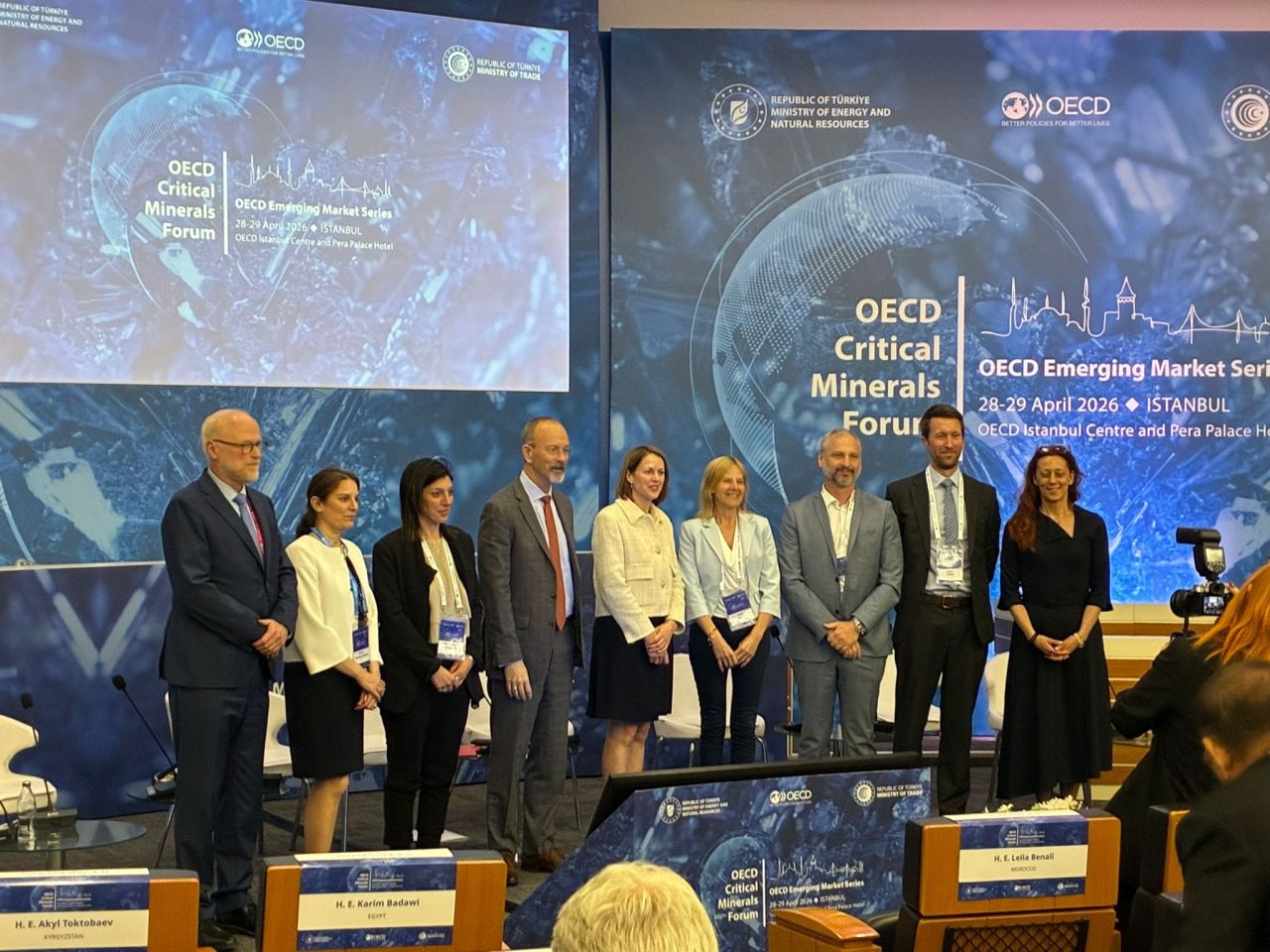
    The global conversation around critical minerals has undergone a fundamental shift, moving beyond resource availability and diplomatic frameworks toward a more complex question: who designs the systems that connect mines to markets, and who captures the value those systems generate. That was the central argument advanced at the OECD Critical Minerals Forum 2026, where a panel examining regional perspectives on critical minerals in Central Asia, Latin America, Southeast Asia and Africa drew a clear conclusion — the era of project-by-project thinking is over.

    The intervention, delivered by a representative of TETHYS during the geoeconomic panel drawing on OECD regional notes, framed critical minerals not as a sector but as the foundation of a broader system-level competition for economic power, industrial resilience and geopolitical alignment. Within that framing, Central Asia and the wider corridor region were positioned not as peripheral suppliers but as potential architects of future global supply chains.

    The core argument was direct: value is no longer created at the mine. It is created across the integrated system that connects extraction to the end market — and building that system requires moving decisively beyond fragmented, project-based approaches toward what the speaker described as integrated mining corridor ecosystems. These ecosystems must connect mining operations with transport and logistics infrastructure, energy and water systems, digital traceability tools and finance — treating each as an interdependent variable rather than a separate consideration.

    Several specific reframings were advanced. Water, the panel argued, must be recognised not merely as an environmental compliance issue but as a core investment and supply chain risk — one that will increasingly determine whether projects are viable and financeable. Mining waste similarly needs to be redefined across three dimensions simultaneously: as a potential resource, as a financial liability and as a risk variable that investors and regulators must account for. State-owned enterprises, often treated as complications in Western investment frameworks, were described as system enablers without which the infrastructure and scale required for corridor-level development cannot be achieved. International standards such as the Initiative for Responsible Mining Assurance were presented not as constraints on operators but as market enablers that create the transparency conditions institutional capital requires. And Digital Product Passports were identified as an emerging system-level tool for traceability, transparency and accountability across the full supply chain.

    The overarching vision articulated was one of endogenous ecosystems — integrated structures in which the connections between components, not the components themselves, become the primary source of economic value. If Central Asia can build those connections, the argument ran, the region will not merely supply the minerals that underpin the energy transition and advanced manufacturing — it will help define the rules by which global supply chains are structured and governed.

  • AltynGold Celebrates ‘Transformational’ 2025 as Production and Profits Soar

    AltynGold Celebrates ‘Transformational’ 2025 as Production and Profits Soar

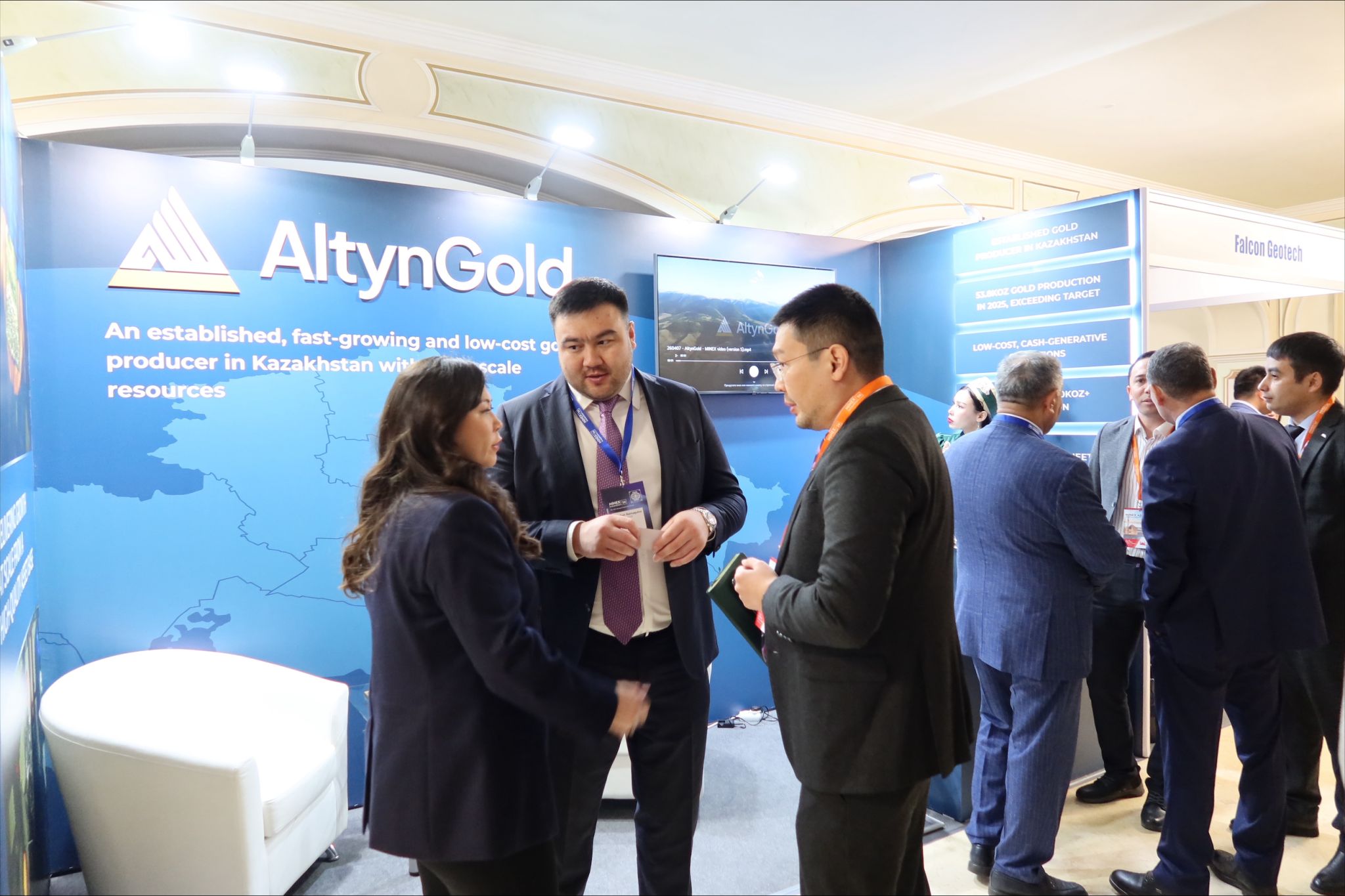
    AltynGold (ALTN), the Kazakhstan-based gold miner, has reported a “transformational” set of annual results for the year ending 31 December 2025. The company saw a massive surge in financial performance, driven by a 50% increase in processing capacity at its flagship Sekisovskoye mine and a significantly higher global gold price.

    The miner’s production figures exceeded expectations, with gold poured rising 44% to 53,852oz, comfortably beating the full-year target of 50,000oz. This operational success, coupled with a realised gold price of US$3,474/oz (up 42% year-on-year), saw AltynGold’s revenue jump by 82% to US$175.4m.

    Financial Highlights at a Glance

    • Net Profit: Increased by 135% to US$62.0m.

    • Adjusted EBITDA: Doubled to US$101.4m.

    • Net Debt: Reduced significantly by US$31.3m to US$18.5m.

    • Safety Record: Achieved its fifth consecutive year without a lost-time incident.

    Looking ahead, AltynGold is poised for further growth. Management is currently evaluating plans to at least double mining capacity at Sekisovskoye to 2.0–2.5Mte per annum, which would elevate the company to mid-tier producer status with an output exceeding 100,000oz in the medium term. Additionally, the company is progressing its application for a production licence at the adjacent Teren-Sai exploration project, with approval expected in 2026.

    With the company deleveraging rapidly and cash generation remainng strong, the Board is also keeping the introduction of a dividend policy under review. Analysts have noted that the company’s valuation remains “extremely attractive” compared to its peers, with the current share price of 1,140p nearly matching the net present value of cash flows from existing operations alone.

  • Mongolia Seeks the Next Oyu Tolgoi While Exporting Drilling Talents Worldwide

    Mongolia Seeks the Next Oyu Tolgoi While Exporting Drilling Talents Worldwide

    Mongolia’s mining sector remains the backbone of its national economy, shaping both its growth trajectory and global trade position. Today, the extractive industry contributes roughly 25% of GDP, 30% of the national budget, and an overwhelming 95% of exports. Copper, gold, coal, iron, oil, and polymetallic resources dominate this export mix, reinforcing the country’s dependence on continued exploration success.

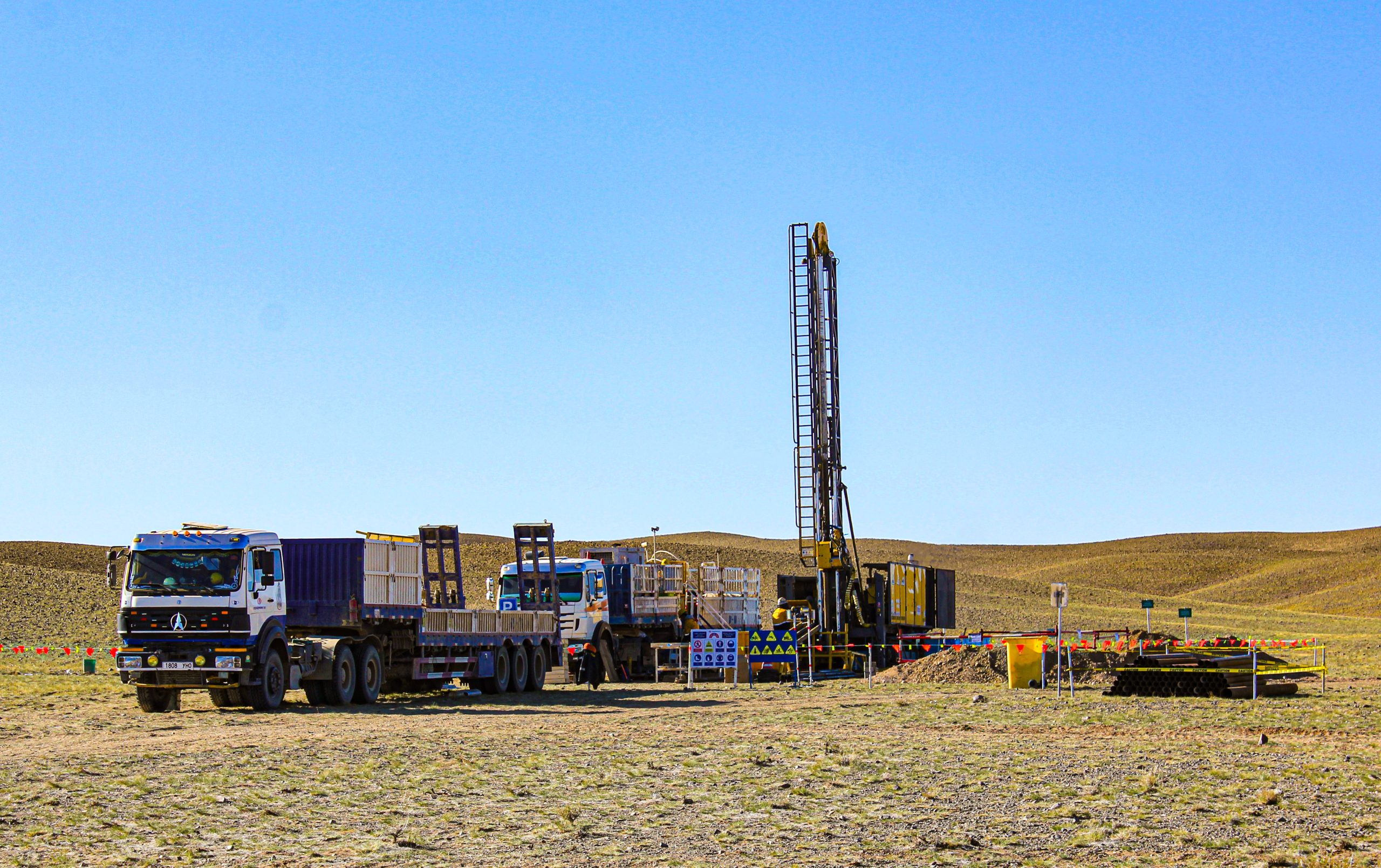
    The drilling industry played a critical role in advancing these mining developments. The modern era of Mongolia’s drilling industry began in the early 2000s, when the development of the Oyu Tolgoi project attracted global expertise and technology. The entry of international contractors such as Major Drilling introduced advanced drilling techniques, setting new benchmarks for performance and efficiency.

    Since then, the industry has matured alongside Mongolia’s broader mining ambitions. Today, exploration activity is increasingly concentrated in the South Gobi Copper-Gold Corridor—a region considered the country’s most promising frontier for the next world-class discovery.

    As global copper and gold prices remain strong, the economic significance of this region continues to grow. Exploration programs here are not just about incremental gains; they are driven by the strategic objective of finding “the next Oyu Tolgoi”.

    Key Projects Driving Drilling Demand

    Kharmagtai: A Near-term copper-gold producer

    Among the most advanced projects in the corridor, the Kharmagtai copper-gold project stands out for both its scale and development timeline. With 47.5 million tons of indicated resources and projected first production by 2027, it represents a major near-term opportunity. Its proximity to Oyu Tolgoi and long mine life further enhance its strategic value, positioning it as a cornerstone of Mongolia’s next generation of mining assets.

    Tereg Uul: Expanding the porphyry trend

    Located along the same mineralized belt, the Tereg Uul prospect highlights the broader potential of the region. Stretching across a 50-kilometer porphyry corridor, it reflects the scale of geological continuity that continues to attract international investment. Recent acquisition activity and committed exploration spending indicate growing confidence in the project’s long-term potential, reinforcing the importance of sustained drilling campaigns.

    Zuun Mod: Deepening confidence through drilling

    In Bayankhongor province, the Zuun Mod molybdenum-copper project demonstrates how targeted drilling programs are refining resource understanding. Recent campaigns have focused on shallow zones while extending deeper sections to improve geological continuity. This phased

    approach—combining near-surface testing with deeper extensions—illustrates the evolving sophistication of Mongolia’s exploration strategies.

    Bayan Khundii: High-grade gold momentum

    The Bayan Khundii gold project represents one of Mongolia’s most promising gold developments. Recent drilling has delivered high-grade intercepts beyond the current resource model, significantly expanding the mineralized footprint. Nearby satellite deposits, such as Dark Horse, further enhance the project’s value, with ongoing drilling aimed at both resource expansion and processing optimization. Together, these efforts underline how continuous drilling drives not only discovery but also project economics.

    Mongolia’s Drilling Talent Goes Global

    As domestic projects advanced, Mongolia’s drilling workforce began to gain international recognition. Trained initially through exposure to global operators and modern equipment, Mongolian drillers quickly developed a reputation for technical skill and resilience.

    By the early 2000s, these specialists had already established an international presence, leveraging their expertise in directional drilling. Their career took them to 70–80 countries on all continents. Today, Mongolian drillers operate across more than 20 countries, particularly in Africa, but also in regions such as South America, Australia, and the Middle East.

    Their experience spans a wide range of commodities—from copper and gold to uranium and gas—and includes some of the world’s most challenging drilling environments. High-altitude projects in the Andes, deep and complex deposits in Europe, and extreme desert conditions in Africa have all become part of their portfolio.

    What distinguishes Mongolian drillers is not only technical capability but also adaptability. Whether operating at 4,900 meters above sea level or in remote desert terrains, they have consistently delivered strong performance—often earning recognition as top-performing crews on international projects.

    Over its 30-year drilling history at the Simandou Iron Ore Project in Guinea, West Africa, an estimated 15 to 18 international drilling crews rotated through one of the world’s most challenging exploration environments. Among them, industry insiders consistently point to the Mongolian drilling teams as the standout performers.

    The Current Challenges

    Despite these strengths, Mongolia’s drilling industry faces significant domestic challenges. Exploration activity has declined since its peak in the early 2010s, reflecting both market cycles and structural constraints.

    One of the most critical issues is the imbalance between exploration and mining licenses. International best practice suggests that exploration licenses should significantly outnumber

    exploitation licenses. In Mongolia, however, the opposite is true, with exploration licenses covering less than 2.8% of the country’s territory.

    This imbalance has direct implications for drilling demand. Reduced exploration activity translates into fewer drilling contracts, putting pressure on service providers and limiting industry growth.

    However, the Minister of Industry and Mineral Resources Mr.Damdinnyam works to fix it and emphasized: The exploration sector has been falling since 2010. We will reopen Mongolia’s exploration sector. State budget funds will be used to dramatically increase explorations.

    At the same time, workforce sustainability is emerging as another concern. While Mongolian drillers are highly skilled, the industry faces a shortage of new entrants. The need to train and develop the next generation is becoming increasingly urgent as the average workforce ages.

    Mr.Erenbaatar, CEO of Elgen drilling company, said: The average age of drillers in large drilling companies is 35 years old, which makes training, preparing, and infusing a new generation of drillers a key goal of our company. In the coming years, we will pay special attention to this area, actively working to train drillers, form an experienced team, and strengthen it.

    The cyclical nature of exploration is clearly reflected in Mongolia’s drilling sector. During the peak years between 2008 and 2012, hundreds of drilling companies operated in the country, supported by strong demand and high drilling rates.

    Today, however, pricing has stagnated, with drilling costs failing to keep pace with inflation or technological advancement. This signals a softer market environment and highlights the dependence of the drilling industry on broader exploration cycles.

    Yet even within this downturn, consolidation has taken place. A smaller number of stronger national companies such as Erdene Drilling, Elgen, Ord Geo, and Tanan Impex have emerged, equipped with larger fleets and improved capabilities—an indication of gradual industry maturation.

    Outlook: Reigniting Exploration Momentum

    Looking ahead, Mongolia’s drilling industry stands at a crossroads. On one hand, it benefits from world-class geology, a proven track record of major discoveries, and a globally competitive workforce. On the other, it faces declining exploration activity and structural constraints that must be addressed.

    Government efforts to revive exploration—through increased funding and policy support—could play a pivotal role in reversing the current cycle. If successful, these initiatives may unlock vast underexplored regions, where nearly 60% of the country remains insufficiently surveyed.

    Ultimately, the future of Mongolia’s drilling industry will depend on its ability to align these elements: revitalizing exploration, investing in people, and continuing to adopt advanced technologies.

    If these pieces come together, the country may not only discover its next Oyu Tolgoi—but also further cement its position as a global exporter of elite drilling talent.
  • Germany and UK Sign Critical Minerals Agreement in Berlin as Post-Brexit Economic Partnership Deepens

    Germany and UK Sign Critical Minerals Agreement in Berlin as Post-Brexit Economic Partnership Deepens

    Germany and the United Kingdom are set to formalise a strategic agreement on rare earth minerals at a German-British economic forum in Berlin, as the two countries build on the framework established by the Kensington Agreement signed in July 2025 to deepen post-Brexit cooperation across defence, security and the economy.

    British Business Secretary Peter Kyle and German Economy Minister Katherina Reiche are due to sign the agreement, which the two ministers described in a joint statement as covering “collaboration across the entirety of the critical raw materials landscape.” The signing marks a concrete step in translating the Kensington Agreement’s broad ambitions into sector-specific industrial policy.

    Kyle, speaking to dpa ahead of the Berlin visit, framed critical minerals as central to both economic security and the growth sectors of the future. “Critical minerals underpin much of the economic security that we need,” he said, pointing to technology, medical equipment and other high-value industries as directly dependent on secure mineral supply. He acknowledged that while both Germany and the UK produce some rare earth minerals domestically, European output cannot match China’s scale — making coordinated action between allied nations essential. “By working together we can be compatible, and we can be strategic, and we can lay the foundations for long-term resilience,” he said, describing the bilateral relationship as “very instinctive.”

    The agreement builds on a period of intensified European engagement with the critical minerals challenge. The EU and the US signed a Critical Minerals Memorandum of Understanding and Action Plan last week. Germany also signed a separate strategic partnership with Brazil focused on rare earth supply earlier this month. The UK has bilateral minerals cooperation agreements with countries including Kazakhstan, Australia and Canada.

    Alongside the minerals agreement, the two countries announced plans to cooperate on artificial intelligence. The UK is joining the EU’s AI Champions initiative, and Kyle argued that Europe’s failure to produce a trillion-dollar technology company underscored the need for cross-border collaboration. “That spark has got to come from like-minded countries that share a sense of ambition,” he said.

  • Blue Moon Metals Approves $184 Million Norway Copper Mine and Eyes Tungsten Restart in Nevada as Western Supply Chain Strategy Takes Shape

    Blue Moon Metals Approves $184 Million Norway Copper Mine and Eyes Tungsten Restart in Nevada as Western Supply Chain Strategy Takes Shape

    Blue Moon Metals has approved construction of its Nussir copper-gold-silver mine in northern Norway and moved toward restarting the Springer tungsten mine in Nevada, pairing a final investment decision with a C$150 million equity raise as the company shifts from developer to builder across two continents.

    The Nussir project, located approximately 1,400 kilometres north of Oslo, locks in a 13-year mine plan for a 6,000-tonne-per-day underground operation with first production targeted for the third quarter of 2027. Total construction capital of $184 million will be funded through the equity raise alongside cash and undrawn capacity from the company’s existing $140 million project financing package. A feasibility study issued this month confirms measured and indicated resources of 28.72 million tonnes grading 1.02% copper, 0.12 grams gold per tonne and 12.3 grams silver — averaging a 1.2% copper-equivalent grade. The project carries an after-tax net present value of $235 million at an 8% discount rate and an internal rate of return of 19%, with annual free cash flow estimated at $77 million at consensus prices and $125 million at spot. Blue Moon targets approximately 19,000 tonnes of copper in concentrate annually from the second half of 2027.

    Nussir benefits from infrastructure that many greenfield projects lack: ore will be processed at the brownfield Øyen industrial site, the mine connects to a 132-kV renewable power grid and ships through an ice-free port. It already holds its operating licence, tailings permit and zoning plan.

    The more strategically ambitious dimension of Blue Moon’s portfolio lies in its US critical minerals assets. The company acquired the Springer tungsten mine in Nevada in February and has now approved a restart programme targeting production by the fourth quarter of 2027, with approximately $50 million of restart capital required. Internal modelling points to between 107,000 and 124,000 tonnes of concentrate, which the company says could make Springer the only major tungsten producer in North America. Blue Moon is also developing the Blue Moon gallium-germanium deposit in California and the Apex deposit in Utah, positioning the three assets as a western supply chain for minerals where China’s dominance is near-total.

    Blue Moon cited figures showing China, Russia and North Korea account for 87% of global tungsten output, China produces approximately 95% of gallium and supplies roughly 75% of germanium. Tungsten prices have surged from $500 to $3,000 per tonne over seven months. Canaccord Genuity analyst William Jones, in an April tungsten industry report, described the supply chain as tightly concentrated and forecast structural deficits through 2030, noting that Western economies remain heavily import-dependent and often rely on Chinese-processed material even where ore is mined domestically.

    The Springer restart was approved without a current feasibility study or current mineral reserves demonstrating economic and technical viability, and Blue Moon cautioned that the 2012 historical resource estimate of 322,050 indicated tonnes grading 0.537% tungsten trioxide should not be relied upon as current.

  • Czech Companies Expand Kazakhstan Footprint With Car Assembly, Heat Exchangers and Uranium Talks Across Six New Agreements

    Czech Companies Expand Kazakhstan Footprint With Car Assembly, Heat Exchangers and Uranium Talks Across Six New Agreements

    Czech businesses are broadening their industrial and energy presence in Kazakhstan, with projects spanning vehicle assembly, manufacturing and nuclear fuel supply taking shape as bilateral economic ties deepen.

    Škoda Auto is advancing an $8.2 million initiative to assemble vehicles locally in Kazakhstan, while industrial company BBS plans to launch heat exchanger production by the end of 2026 with an estimated investment of $9 million. Both projects reflect a wider pattern of Czech industrial firms seeking manufacturing footholds in Kazakhstan’s growing economy.

    In the energy sector, Czech utility giant ČEZ Group is exploring long-term collaboration with Kazatomprom, Kazakhstan’s national nuclear company, including uranium supply agreements previously signed between the two parties. The talks come as European utilities accelerate efforts to diversify uranium procurement away from Russian suppliers following the war in Ukraine.

    Six cooperation agreements were signed between Kazakh and Czech companies at the forum, covering potential joint ventures in energy, transport, machinery production and insurance — a signal of broadening commercial ambition beyond individual project deals.

    Officials noted that growing Czech interest is contributing to a broader uptick in foreign direct investment in Kazakhstan, which rose 14.4% in 2025 to $20.5 billion, with a significant portion directed toward new greenfield projects.