Month: March 2024

  • Kazakhmys Faces Ministry Notice Over Contract Violations

    Kazakhmys Faces Ministry Notice Over Contract Violations

    Kazakhmys has been notified by the Ministry of Industry and Infrastructure Development regarding breaches of obligations under multiple contracts for exploration and extraction of copper and other metals, reports Exclusive.kz citing “Kursiv.”

    The ministry directed a notification to the company, signed by Deputy Minister of Industry and Infrastructure Development Iran Sharkhan, concerning violations of obligations under the contract for the extraction of copper-containing ores from the Zhilandy group deposits in the Karaganda region. The breaches include failure to meet investment plans, taxes, financing for research and development, and extraction.

    The penalty for 2020 amounted to 71.2 million tenge, and for 2021, it was 27.3 million tenge.

    In addition to the non-payment of research and development investments, the ministry identified serious violations under contracts for gold-copper-poly-metallic ore exploration, copper exploration, and extraction in various regions, including the Karaganda region.

    Another company, Kazakhmys Coal, created in 2018 by spinning off coal companies “Razrez Molodezhny” and “Razrez Kuu-Chekinsky” from Kazakhmys, was also subject to inspection. It was found to have violated its contract for coal mining at the Borly deposit in the Karaganda region.

    In total, violations totaling over 260 million tenge for 2020-2022 were identified, along with non-compliance with investments totaling over 300 million tenge. All violations were found in the Karaganda region. The company is required to rectify the violations within a month, otherwise, the ministry may take measures, including unilaterally terminating the contract.

    The Ministry and the company have not commented on the information at this time. However, two weeks ago, the Ministry officially threatened to terminate a coal mining contract due to investment breaches by Shubarkol Premium, owned by Timur Kulibaev, the son-in-law of Nazarbayev, and Shubarkol Komir, owned by Alexander Mashkevich.

    99.1% of Kazakhmys Corporation is owned by Kazakhmys Copper. The ultimate parent company is Kazakhmys Holding Limited, registered in the Astana International Financial Centre. Vladimir Kim, who owns 70% of the group, is Kazakhstan’s wealthiest businessman, with a fortune of $4.6 billion according to Forbes 2023. Eduard Ogay holds the 11th position among the richest Kazakhstani citizens, with a fortune of $750 million.

    Exclusive.kz previously reported on the problem of underpayment by subsoil users for research and development in January 2023.

  • New Nickel-Cobalt Deposit in Aktobe Region to Begin Development in 2025

    New Nickel-Cobalt Deposit in Aktobe Region to Begin Development in 2025

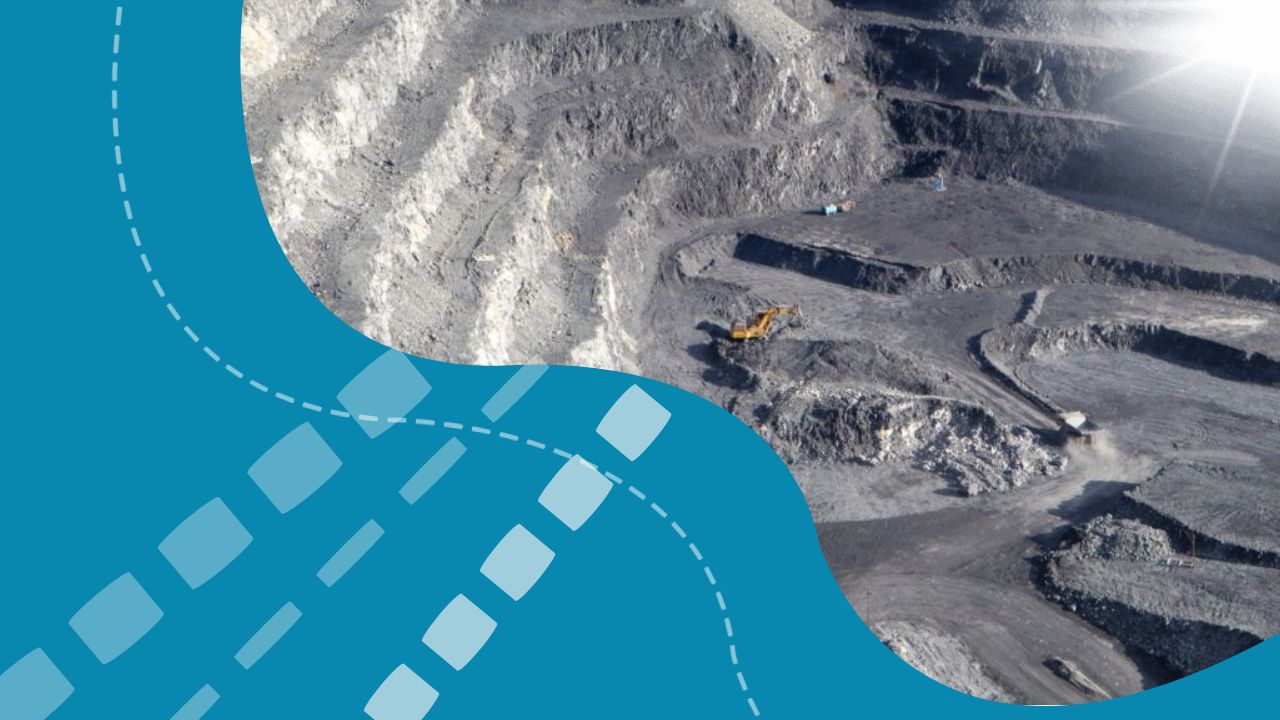
    A mining company plans to start extracting silicate-nickel ores from the Jusalinskoye deposit in 2025. The licensed area is located in the Aktobe region, and the project documentation has been published on Kazakhstan’s Unified Environmental Portal.

    The company plans to mine metals for 20 years. The reserves of the Jusalinskoye deposit were put on the state balance sheet in 2015 and amount to 44.2 thousand tons of nickel and 2.57 thousand tons of cobalt. Development will be carried out using open-pit mining due to the shallow occurrence of the components.

    By the fourth year, it is planned to achieve maximum annual productivity of the quarry, with over 63 thousand tons of ore expected to be sent for processing annually.

    The company “KazMetallGroup” previously announced a similar project and owns another nickel-cobalt deposit, Novo-Buranovskoye, in the same region. It is expected that the ore from both sites will be processed at a single mining and processing plant.

  • Новое никель-кобальтовое месторождение в Актюбинской области начнут разрабатывать в 2025 году

    Новое никель-кобальтовое месторождение в Актюбинской области начнут разрабатывать в 2025 году

    Горнодобывающая компания планирует приступить к отработке месторождения силикатно-никелевых руд Джусалинское в 2025 году. Лицензионный участок располагается в Актюбинской области, а проектная документация опубликована на Едином экологическом портале Казахстана.

    Планируется вести добычу металлов в течение 20 лет. Запасы месторождения поставлены на госбаланс в 2015 году и составляют 44,2 тыс. т никеля и 2,57 тыс. т кобальта. Разработка будет осуществляться открытым способом из-за неглубокого залегания компонентов.

    К четвёртому году планируется достигнуть максимальной годовой производительности карьера, а на переработку рассчитывают отправлять более 63 тыс. т товарной руды в год.

    Компания “КазМеталГрупп” ранее заявляла о подобном проекте и владеет ещё одним никель-кобальтовым месторождением Ново-Бурановское в этом регионе. Планируется, что сырьё с обоих участков будет перерабатываться на одном горно-обогатительном комбинате.

  • RG Gold объявила о сокращении объёмов добычи золота на месторождении Райгородок

    RG Gold объявила о сокращении объёмов добычи золота на месторождении Райгородок

    Компания RG Gold объявила о сокращении объёмов извлечения жёлтого металла на акмолинском месторождении Райгородок. Снижение темпов добычи может произойти уже в этом году в связи с истощением запасов окисленной руды, сообщает inbusiness.kz.

    Сейчас золотодобытчик может перерабатывать 7 млн т сырья, при этом основную часть (5 млн т) подвергают цианированию с последующей сорбцией на уголь. Вторая технология — кучное выщелачивание окисленной золотой руды — рассчитана на 2 млн т.

    По словам финансового директора RG Gold Марата Шаймарданова, с большой вероятностью второй тип переработки придётся заморозить, поскольку запасы окисленной руды Райгородка почти исчерпаны.

    Известно, что в 2023 году показатель EBITDA составлял примерно $200 млн при добыче в 190 тыс. унций. При заморозке ряда перерабатывающих мощностей эта цифра, вероятно, снизится.

    Однако золотодобытчик надеется, что геологи обнаружат дополнительные запасы на близлежащих участках. Тогда компания сможет вновь использовать технологию кучного выщелачивания.

  • RG Gold Announces Reduction in Gold Extraction Volumes at the Raigorodok Deposit

    RG Gold Announces Reduction in Gold Extraction Volumes at the Raigorodok Deposit

    RG Gold company has announced a reduction in the extraction volumes of the yellow metal at the Raigorodok deposit in Akmola region. The decrease in extraction rates may occur as early as this year due to the depletion of oxide ore reserves, as reported by inbusiness.kz.

    Currently, the gold miner can process 7 million tons of raw material, with the majority (5 million tons) undergoing cyanidation followed by sorption on coal. The second technology – heap leaching of oxidized gold ore – is designed for 2 million tons.

    According to Marat Shaimardanov, the financial director of RG Gold, there is a high probability that the second processing method will need to be suspended, as the reserves of Raigorodok’s oxide ore are nearly depleted.

    It is known that in 2023, the EBITDA indicator was approximately $200 million with production of 190 thousand ounces. With the freezing of certain processing capacities, this figure is likely to decrease.

    However, the gold miner hopes that geologists will discover additional reserves in nearby areas. In that case, the company will be able to resume the heap leaching technology.

  • Ukrainian Steel Industry Embraces Digital Transformation for Environmental Sustainability

    Ukrainian Steel Industry Embraces Digital Transformation for Environmental Sustainability

    In a bid to enhance environmental sustainability, Yuriy Ryzhenkov, CEO of Metinvest Group, emphasizes the pivotal role of digital technologies in revolutionizing the Ukrainian steel industry. Speaking at the B7 Italy 2024 conference, Ryzhenkov highlighted the transformative potential of IT and artificial intelligence (AI) in steering traditional sectors towards greener practices.

    Ryzhenkov underscored the remarkable strides made by the Ukrainian steel sector, leveraging AI and analytics to bolster process efficiency. Notably, Azovstal surpassed competitors in 2021, courtesy of AI applications, while augmented reality expedited maintenance tasks and advanced computer vision systems elevated product quality standards. Despite the challenges posed by geopolitical tensions, internal data management systems ensured operational continuity during tumultuous times.

    Acknowledging the global momentum towards environmental initiatives like the Green Deal, Ryzhenkov emphasized the indispensable role of metallurgy in this trajectory. While the industry grapples with traditional frameworks, digitalization emerges as a catalyst for fostering sustainability, efficiency, and competitiveness. Ryzhenkov stressed the necessity of integrating digital and green transitions within heavy industries to align with evolving global paradigms.

    However, Ryzhenkov cautioned against the inherent challenges in navigating this transition, citing a shortage of IT specialists adept at facilitating transformation. The evolving landscape necessitates a paradigm shift in talent acquisition, with Metinvest now training IT professionals to spearhead green and digital initiatives, marking a significant departure from conventional recruitment strategies.

    The B7 Italy 2024 conference, hosted by Confindustria, provided a platform for dialogue among G7 nations’ businesses and governments, amplifying discussions on sustainable industrial practices. Amidst geopolitical uncertainties, Ryzhenkov reaffirmed Metinvest’s unwavering commitment to green strategies, aligning with Ukraine’s accelerated pursuit of EU integration.

  • U.S. House Passes Ban on Russian Uranium Imports: What’s at Stake?

    U.S. House Passes Ban on Russian Uranium Imports: What’s at Stake?

    The U.S. House of Representatives has greenlit a ban on imports of Russian uranium, shedding light on America’s reliance on foreign nuclear fuel. The bill, now pending Senate approval, amplifies discussions on energy security and geopolitical tensions.

    Visualizing U.S. Dependence on Russian Uranium: Utilizing data from the United States Energy Information Administration (EIA), we present a visual depiction of the extent to which the U.S. leans on Russian uranium imports, underscoring the significance of the legislative move.

    U.S. Uranium Suppliers and Global Dependencies: Despite sanctions imposed on Russian oil and gas post-Ukraine invasion, the U.S. continues to import Russian-enriched uranium, highlighting complex geopolitical dynamics. Russia stands as the principal foreign supplier of nuclear fuel to the U.S., with its imports fueling a substantial portion of America’s commercial reactors. While European nations and the Urenco consortium contribute, a significant share of global allies also rely on Russian uranium, complicating diplomatic relations.

    Financial Implications and Energy Landscape: In 2023, the U.S. nuclear sector disbursed over $800 million to Russia’s Rosatom, emphasizing the economic entanglement. Notably, nuclear power accounts for 19% of U.S. electricity, magnifying the significance of secure fuel sources. The roots of this dependence trace back to the 1990s, emphasizing historical contexts.

    Plans for Domestic Expansion: To mitigate reliance on Russian imports, the Biden administration proposes allocating $2.2 billion for expanding domestic uranium enrichment capacities—a strategic maneuver amid escalating tensions.

  • Landmark Court Decision Reverberates Through Poland’s Energy Landscape

    Landmark Court Decision Reverberates Through Poland’s Energy Landscape

    In a groundbreaking decision with far-reaching implications for Poland’s energy sector, the Voivodeship Administrative Court (WSA) in Warsaw has overturned an environmental ruling concerning the Turów lignite coal mine, operated by PGE GiEK. While the ruling doesn’t immediately halt mine operations, it underscores the delicate balance between energy demands and environmental preservation, prompting state-owned power company PGE GiEK to contemplate future strategies.

    Background and Court Ruling: The court’s ruling follows a lawsuit challenging the environmental impacts of the Turów mine, situated near the Polish-Czech border. Criticizing the lack of consideration for a bilateral agreement with the Czech Republic addressing cross-border mining effects, the WSA’s decision resonates beyond legal realms. Despite the verdict, Turów’s operations, vital for Poland’s electricity supply, remain unaffected. PGE GiEK vows compliance with environmental standards and continues investing in mitigating measures.

    Environmental Measures and Investments: PGE GiEK’s substantial investments target minimizing Turów mine’s environmental footprint. Initiatives include constructing an underground anti-filtration screen to safeguard Czech water resources and implementing various ecological and noise-reduction endeavors. These efforts underscore Poland’s struggle to balance energy demands with environmental obligations, shaping the nation’s energy transition trajectory.

    Implications for Future Energy Policy: Although subject to further legal proceedings, the court ruling prompts reflection on Poland’s coal mining future and its broader energy policy. Amidst efforts to diversify energy sources and reduce coal dependency, the Turów case epitomizes the challenges of transitioning towards sustainable energy while ensuring energy security. Beyond Turów, the discourse resonates with Poland’s energy direction and environmental legacy considerations.

  • Gabriel Resources’ Legal Battle Casts Uncertainty on Future Amid Mining Ambitions

    Gabriel Resources’ Legal Battle Casts Uncertainty on Future Amid Mining Ambitions

    Gabriel Resources Ltd., based in Yukon, Canada, once envisioned establishing a significant gold and silver mine in Romania’s Carpathian Mountains, a region steeped in mining history spanning over 2,000 years. However, its aspirations have hit a roadblock as the proposed mining area finds itself listed on the UNESCO World Heritage register, following an eight-year legal dispute with Romania that has clouded the company’s prospects.

    The company’s trajectory serves as a cautionary tale, shedding light on the evolving dynamics surrounding resource extraction and the complexities of the global financial landscape. Gabriel’s focus for over a decade had been its arbitration claim against Romania at the International Centre for Settlement of Investment Disputes, seeking $4.4 billion in damages for hindering its mine project.

    Investors had eagerly anticipated a resolution to the legal impasse, driving Gabriel’s stock price to double in recent months. However, sentiments quickly soured after the arbitration panel’s decision on March 8, rejecting Gabriel’s claim and awarding Romania $10 million in legal fees and expenses. The aftermath was swift and severe, with Gabriel witnessing one of the most significant single-day market cap losses for a Canadian junior mining company in recent memory.

    Richard Brown, Gabriel’s CFO, refrained from commenting on the ruling, although the company criticized the decision, denouncing it as unjust and flawed. Despite contemplating an annulment, Gabriel faces financial uncertainty, with dwindling cash reserves and impending financial obligations.

    Regardless of the outcome, Gabriel’s prolonged legal battle underscores the profound impact of investor protection treaties, which have ramifications on the global economy. Over the past two decades, Canadian investors have initiated numerous arbitration claims, reflecting a broader trend shaping international commerce.

  • Arras Minerals Corp. Acquires Tay Exploration License in Kazakhstan

    Arras Minerals Corp. Acquires Tay Exploration License in Kazakhstan

    Arras Minerals Corp. (TSX-V: ARK) is thrilled to announce the acquisition of the Tay exploration license (“Tay”) in northeastern Kazakhstan. Covering an area of 118 square kilometers, Tay lies within the Bozshakol-Chingiz magmatic arc, an emerging porphyry province in the region. Situated 28 kilometers north of the Bozshakol open pit copper-gold mine operated by Kaz Minerals, Tay represents a significant addition to Arras’ portfolio, fully owned and not part of the Teck-Arras Strategic Exploration Alliance.

    Highlighted features of the Tay project include a 6.5 km x 2.1 km East-West trending coherent Soviet-era Induced Polarization (“IP”) chargeability anomaly, akin to the chargeability high observed at the Bozshakol mine. Despite being a buried target with no systematic modern exploration, Tay presents immense potential, strategically positioned with excellent accessibility and local infrastructure. The project boasts nearby high voltage power lines, railway connections, and roads, facilitating efficient exploration endeavors.

    Tim Barry, CEO of Arras Minerals, expressed enthusiasm, stating, “Discovering such a promising porphyry prospect adjacent to a major operational copper-gold mine like Bozshakol is rare. Tay’s historical IP anomaly mirrors the scale and strength of Bozshakol’s anomaly, remaining relatively unexplored. With shallow sediment cover and a clear continuation of the anomaly to the west, Tay holds significant promise for exploration discoveries.”

    Situated 28 km north of Kaz Mineral’s Bozshakol Mine and 85 km from Arras’ operational base in Ekibastuz, northeastern Kazakhstan, the Tay project lies within the Bozshakol-Chingiz metallogenic belt. The area is known for its mineral-rich deposits, including the Beskauga copper-gold-silver porphyry deposit and Arras’s Elemes project, an emerging copper-gold porphyry prospect.

    Geological assessments reveal that Tay’s geology comprises volcano-sedimentary and sedimentary rocks intersected by major fault zones and intrusive stocks. The historic chargeability anomaly suggests the presence of a buried porphyry-Cu-Au deposit beneath quaternary cover. Arras plans to conduct property-wide airborne magnetic surveys and drilling programs in 2024 to gain a better understanding of the property geology and unlock its full potential.