Website: Kazakhstan.com

  • Kazakhstan Mining Sector Seeks New Financing Solutions Amidst Global Energy Transition

    Kazakhstan Mining Sector Seeks New Financing Solutions Amidst Global Energy Transition

    Ainur Kapparova, Executive Director Business Relations, AIFC (Astana International Financial Centre) a financial expert with 18 years of experience at international companies such as HSBC, State Street Bank, and McKinsey & Company, shares insights on financing opportunities for Kazakhstan’s mining sector. Having worked in the US, Japan, and the UK, Ms Kapparova now focuses on financing solutions for the mining industry in Kazakhstan.

    A New Phase for Mining Amid Global Energy Transition

    “The Kazakhstan mining sector is entering a new phase of development amid the global energy transition,” states Kapparova. “In this context, access to efficient financing instruments is becoming a key factor.”

    Working with leading global financial players, Kapparova and her colleague Temirlan Mukhanbetzhanov have conducted an in-depth analysis of available financing mechanisms at every stage of a mining project’s lifecycle.

    “We’ve identified solutions for financing early exploration stages, streaming mechanisms that allow capital attraction without diluting shareholder stake or creating debt burden, as well as instruments for junior companies to access IPOs in Kazakhstan and abroad,” explains Kapparova.

    Early-Stage Exploration Financing

    When a project is at its earliest stage—with only a land plot and a few test wells—significant investments are needed to develop the deposit to the level of confirmed reserves and obtain an internationally recognized JORC report or equivalent.

    “This is the riskiest phase, so private investment and government support play crucial roles,” notes Kapparova. “Currently, four private companies in Kazakhstan are planning to launch specialized funds for financing such projects.”

    According to Kapparova, the Astana International Financial Centre (AIFC) offers the most convenient platform for structuring these funds, allowing for flexible LP/GP models adapted for the mining sector. Private junior companies, including foreign players, are also active in the country. Some attract financing from global mining companies, but this requires either preliminary confirmation of reserves or an excellent international reputation.

    Financial Solutions for Companies with Confirmed Reserves

    For companies that have already invested in deposit studies and can obtain a JORC report or equivalent, more financing options become available.

    “One such instrument is an IPO on the Astana International Exchange (AIX), which operates a special listing program for juniors,” Kapparova explains. “Additionally, Kazakhstani companies can access foreign exchanges such as the Toronto Stock Exchange (TSX) through SPACs.”

    Kapparova reveals that discussions with several SPACs trading on the TSX have confirmed interest in quality Kazakhstani projects. The Toronto Stock Exchange and its venture platform (TSX Venture Exchange) are leading global venues for capital raising in the mining industry, providing 36% of global equity capital attracted in the mineral extraction sector from 2019 to 2023.

    Financial Instruments for Pre-Feasibility, Feasibility, and Production Stages

    “At the pre-feasibility, feasibility, and production stages, streaming and royalty instruments become available,” says Kapparova. “These allow financing in exchange for a share of future metal supplies or revenue, without diluting equity or creating debt burden before production begins.”

    While this mechanism is currently used on a limited basis in Kazakhstan, Kapparova believes it could become widespread given its flexibility and adaptability to specific projects. Traditional capital raising methods—equity and debt financing—also remain available, with growing interest from both local and foreign investors.

    Comprehensive Approach to Mining Project Financing

    Kapparova emphasises that financing mining projects requires a comprehensive approach involving government, private, and international investments.

    “We’ve identified effective instruments for each stage—from exploration to extraction and processing,” she concludes. “Kazakhstan’s mining sector has enormous growth potential, and the application of modern financial solutions will help companies minimize risks and achieve sustainable development.”
  • Chinese East Hope Group to Implement Major Non-Ferrous Metals Project in Kazakhstan

    Chinese East Hope Group to Implement Major Non-Ferrous Metals Project in Kazakhstan

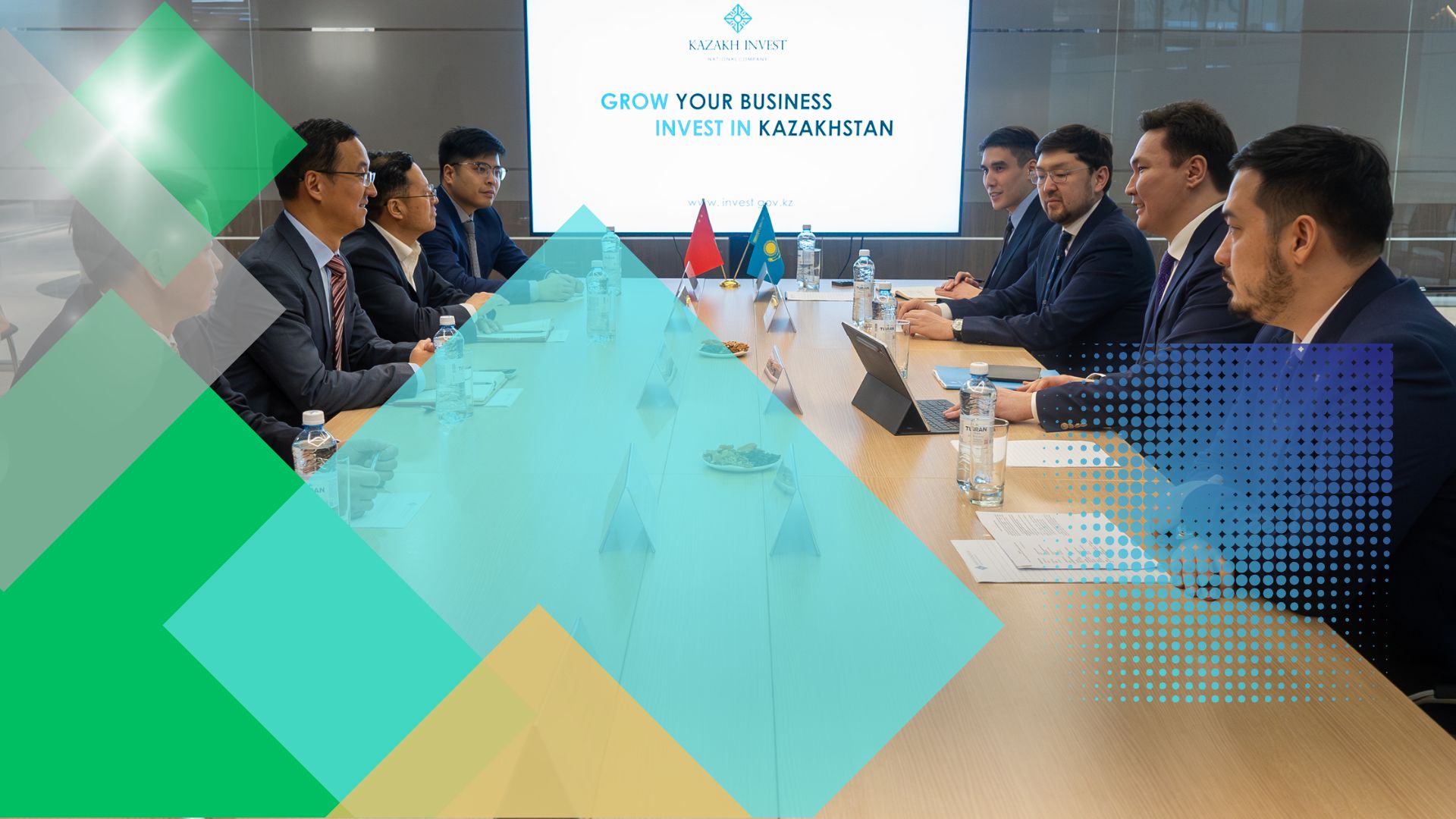
    East Hope Group, a leading Chinese company in non-ferrous metals production, has launched a major investment project in Kazakhstan. Chairman of the Board of JSC “NC” KAZAKH INVEST, Erzhan Elekeev, met with East Hope Group’s CEO Changjun Meng to discuss the prospects of collaboration in the production and advanced processing of non-ferrous metals.

    As part of this investment project, East Hope Group plans to build a large industrial park in Kazakhstan, introducing cutting-edge technologies in the field of non-ferrous metallurgy for deep processing and production of finished products. The project’s cost is expected to exceed $12 billion, with the company planning to supply products to the European Union, Central Asia, and China. The project aims to create up to 10,000 new jobs at various stages of implementation.

    Changjun Meng mentioned that the company has registered a subsidiary in Kazakhstan, which will serve as the main operational center for the project, coordinating further steps for its implementation. Preliminary geodetic and hydrogeological surveys of land plots in several regions have already been conducted, and the company plans to start more detailed studies soon. Erzhan Elekeev emphasized the project’s importance for the development of Kazakhstan’s processing industry and highlighted that its implementation would be a significant step in strengthening economic ties with international partners. “Attracting major strategic investors like East Hope Group opens new perspectives for Kazakhstan. We view this project not only in terms of investment volumes but also in the context of introducing advanced technologies, creating new jobs, and localizing production. The project’s implementation will allow Kazakhstan to occupy a key position in the global non-ferrous metals supply chain and significantly expand the export of finished products.

    We are ready to provide comprehensive support and create favorable conditions for the successful implementation of investments,” stressed Erzhan Elekeev. The parties also discussed the prospect of signing an investment agreement, which would outline the main conditions of cooperation and secure the parties’ commitments. In particular, East Hope Group expressed its readiness to sign a tripartite framework agreement with the Ministry of Foreign Affairs and the Ministry of Industry and Construction of Kazakhstan, marking an important milestone in the project’s development. Following the meeting, Erzhan Elekeev and Changjun Meng expressed confidence in the successful implementation of the initiative and noted Kazakhstan’s high potential as an industrial hub for non-ferrous metals production and deep processing.

    Background Information

    East Hope Group is one of the world’s largest producers in the field of metallurgy and technological innovations. The company has invested approximately $10 billion in the construction of low-carbon industrial complexes in China and continues to expand its international presence. As of 2022, East Hope Group ranked 39th among China’s top 500 private enterprises and 24th in the ranking of China’s top 500 private manufacturing enterprises. The group comprises over 300 subsidiaries. Its main assets are concentrated in mainland China (mainly in Shanghai, Beijing, Xinjiang, Ningxia, Inner Mongolia, Jiangsu, and Hubei), with subsidiaries operating in Vietnam, Cambodia, Singapore, Indonesia, the UAE, and other countries. East Hope Group’s commercial and residential real estate projects are located in Shanghai and Chengdu. Its alumina processing facilities are in Henan province, aluminum production facilities in Baotou and Xinjiang, silicon production facilities in Fukang, and feed and additive production facilities in Xinjiang, Jiangsu, Hubei, Shanghai, and Beijing. —

  • Ivanhoe Mines and Pallas Resources Launch Major Copper Exploration in Kazakhstan

    Ivanhoe Mines and Pallas Resources Launch Major Copper Exploration in Kazakhstan

    Canadian mining company Ivanhoe Mines and UK-based Pallas Resources have announced a joint venture for geological exploration in the Chu-Sarysu Copper Basin in Kazakhstan, according to Interfax-Kazakhstan.

    The Chu-Sarysu Basin is the third-largest sedimentary-hosted copper basin in the world. Experts predict that this project could lead to one of the biggest copper discoveries in Central Asia in recent decades.

    The companies have secured the largest exploration license package in Kazakhstan, covering 16,000 square kilometers—a scale comparable to Ivanhoe Mines’ past exploration projects in Mongolia and the Democratic Republic of Congo.

    According to Robert Friedland, founder of Ivanhoe Mines, Kazakhstan has the potential to become a global hub for copper production. The U.S. Geological Survey estimates that the Chu-Sarysu Basin holds up to 25 million tons of copper resources.

    While the exact start date for exploration has not been disclosed, the companies plan to invest $18.7 million in the first two years. The project will utilize advanced airborne geophysical technologies and digital data analysis, elevating Kazakhstan’s geological exploration to a new level.

  • Scythian Mining Group Advances London Stock Listing Plans

    Scythian Mining Group Advances London Stock Listing Plans

    Scythian Mining Group Ltd has reaffirmed its commitment to pursuing a listing on the London Stock Exchange’s AIM market. Despite facing challenges in 2023-2024, the mining company is moving forward with its plans to go public. Previously, the company struggled with a lack of funds, which hindered its progress on its flagship gold project in Kazakhstan. As a result, drilling operations planned for the year did not take place, as the expected funding from Canadian investors failed to materialise. The company had initially announced its intention to list on the London Stock Exchange’s AIM market in late 2023. Following this announcement, updates were scarce until now. Scythian Mining has now appointed London-based brokerage firm, Tavira Securities, to assist in planning a pre-IPO fundraising of up to $10 million. This staged funding will cover drilling, exploration, and other costs before the Initial Public Offering (IPO). The company remains optimistic about its chances of going public on the London Stock Exchange’s AIM market.

    In late 2023, Scythian discovered a significant copper-gold (Cu-Au) porphyry system in Kazakhstan. Subsequently, Scythian negotiated a 50/50 joint venture with the US-based company IG Global. The joint venture has applied for two new exploration licenses in the region. Under the terms of the agreement, IG Global will finance and conduct exploration activities for the first two years. This arrangement allows Scythian to concentrate on exploring and developing the Kokkus project and preparing for its IPO. To manage its interest in the project, Scythian has established a new wholly-owned subsidiary, Scythian Copper Ltd.

  • Inkai Uranium Production Falls Short of Target in 2024 Amid Supply Challenges

    Inkai Uranium Production Falls Short of Target in 2024 Amid Supply Challenges

    The Inkai joint venture, a partnership between Kazatomprom (60%) and Canada’s Cameco (40%), produced approximately 3,000 tons of uranium in 2024, according to its CEO, Birzhan Zhylkaidarov. This figure falls short of the 3,200-ton annual target stipulated in the company’s subsoil use contract. Final production data for 2024 will be released later, but preliminary estimates indicate a decline compared to the 3,201 tons produced in 2023.

    The contract allows for a 20% deviation from the annual target of 4,000 tons, meaning production between 3,200 and 4,800 tons is acceptable. However, if the final 2024 output remains below 3,200 tons, it would constitute a breach of contractual obligations. While regulators typically issue a warning for first-time violations, repeated failures could result in fines or contract termination.

    Zhylkaidarov attributed the shortfall to supply chain disruptions, particularly irregular deliveries of sulfuric acid, a critical reagent used in the in-situ leaching (ISL) method of uranium extraction. The ISL process, which involves injecting a solution of sulfuric acid and water into underground uranium deposits, is highly sensitive to reagent availability. Delays in acid deliveries from mid-April to mid-May 2024 disrupted production schedules, leading to a 20% drop in output compared to contractual targets.

    The Inkai venture sources sulfuric acid from KAP Logistics, a subsidiary of Kazatomprom, which transports the reagent from domestic producers like KAZ Minerals, Kazzinc, and Kazphosphate. However, operational halts at supplier plants, including a week-long stoppage at Kazphosphate last fall, exacerbated the challenges.

    Looking ahead, Inkai plans to produce 3,200 tons of uranium in 2025. The company is also exploring long-term solutions, including the construction of a sulfuric acid plant in Taykonur, expected to launch in 2027. This facility, with an annual capacity of 800,000 tons, could fully meet Inkai’s sulfuric acid needs.

    Since commencing operations in 2002, Inkai has extracted 39,476.2 tons of uranium from the Inkai-1deposit, one of Kazakhstan’s richest uranium reserves. The venture’s final product, yellowcake, is processed into uranium oxide (U3O8), which is sold to shareholders Kazatomprom and Cameco for distribution to global markets, including France, a leading consumer of nuclear energy in Europe.

  • Kazakhstan’s Investment Strategy Amid Geopolitical Shifts: Challenges and Opportunities

    Kazakhstan’s Investment Strategy Amid Geopolitical Shifts: Challenges and Opportunities

    Amid the ongoing war in Ukraine and geopolitical tensions, Kazakhstan is positioning itself to attract $150 billion in foreign direct investment (FDI) by 2029. The conflict has provided Central Asian nations, including Kazakhstan, opportunities to strengthen economic ties with the West. In 2022-2023, the Netherlands emerged as the leading investor, contributing over $12 billion to Kazakhstan’s economy, followed by the US and Switzerland.

    However, despite its ambitious goals, Kazakhstan faces challenges. In 2023, FDI inflows dropped by 32.3%, reflecting a lack of comprehensive development strategies for industries and regions. To counteract this, the government has introduced initiatives inspired by British and UAE models, notably through the Astana International Financial Center, which is modeled after Dubai’s financial hub. These measures aim to attract global investors by offering tax breaks, reduced bureaucracy, and a regulatory framework based on British Common Law principles.

    Kazakhstan is also focusing on long-term agreements with foreign companies, particularly in its oil and gas sector. President Kassym-Jomart Tokayev acknowledged that renegotiating production-sharing agreements on favorable terms is essential for securing large investments. However, some companies view these moves as signs of “resource nationalism.”

    Further strategies include initiatives like the Digital Nomad visa to attract remote workers and businesses relocating from Russia. Kazakhstan has already attracted 41 foreign companies worth over $1.5 billion and is in talks with Chinese firms such as Xiaomi and TCL to move production facilities.

    The geopolitical realignment caused by sanctions on Russia has also funneled trade through Central Asia, benefiting Kazakhstan’s economy. The government is investing in developing the Trans-Caspian International Transport Route to strengthen its trade links with Europe and Asia.

    Despite inflation and economic stability challenges, Kazakhstan’s prospects remain strong. The country is now ranked among the world’s top 35 most competitive nations, with the Asian Development Bank projecting 5.1% economic growth by 2025. Kazakhstan’s strategic location, trade agreements, and ongoing reforms position it well to become a regional economic leader.

  • Kazatomprom Organizes Press Tour to Inkai Uranium Deposit: Safety, Technology, and Social Responsibility

    Kazatomprom Organizes Press Tour to Inkai Uranium Deposit: Safety, Technology, and Social Responsibility

    Kazatomprom JSC held a press tour at the Inkai uranium deposit, operated by Inkai LLP, located in the Turkestan region. Journalists were shown the company’s uranium extraction and processing technologies, as well as its environmental safety measures and social responsibility initiatives.

    Kazakhstan remains the world’s leader in uranium production, supplying about 40% of the global nuclear energy market. Inkai is one of the country’s key deposits, known for its low extraction costs. Kazatomprom owns 60% of the joint venture’s shares, while Canada’s Cameco holds the remaining 40%.

    Technology and Safety
    Stepan Tretyakov, Head of Mining, highlighted the use of in-situ recovery (ISR) technology, which is considered the safest and most environmentally friendly method of uranium extraction. “We conduct a five-year monitoring program after extraction is complete, ensuring the ore horizons return to their natural state,” he explained.

    At the “Satellite-2” processing facility, Aybek Aidymbekov, Head of Processing, outlined the uranium processing stages, including clarification, sorption using special resin, extraction, and packaging into barrels. Annually, 30 million cubic meters of solution are processed, producing over 11,000 barrels of uranium peroxide.

    Operator Beksyltan Ilyas emphasized the importance of radiation protection and automated monitoring at all stages. Meanwhile, Evgeniy Madzhara, Head of the Laboratory, noted that 24/7 quality control ensures no deviations from the technology and guarantees product quality.

    Social Support and Employee Comfort
    The company is actively investing in regional development, allocating 475.4 million tenge in 2024 for social needs in the Turkestan region. Acting Akim Bolat Esenkabyl shared that the company has lit streets, built sports fields, supported schools, and provided internet access in the village of Taykonur.

    Comfortable conditions have been created for employees in the rotational camp, including a multifunctional sports complex, gym facilities, and recreational zones with entertainment options like billiards, table tennis, and PlayStation consoles.

    Environmental Initiatives
    The press tour concluded with an elm tree planting initiative. Inkai actively supports environmental projects and provides assistance to veterans, children, and low-income families.

    The press tour demonstrated that Kazakhstan’s uranium industry is a high-tech, safe, and socially responsible sector.

  • Kazakh Scientists Develop Innovative Technology for Processing Polymetallic Ore

    Kazakh Scientists Develop Innovative Technology for Processing Polymetallic Ore

    Scientists from the Kazmekhanobr Research and Production Enterprise, a branch of the National Center for Complex Processing of Mineral Raw Materials of Kazakhstan, have developed an innovative technology for processing polymetallic ore from the Chinasyl-Sai deposit. The breakthrough was reported by El.kz, citing the Ministry of Industry and Construction of Kazakhstan.

    The primary challenge in processing such ores lies in their complex composition. The Chinasyl-Sai deposit contains gold, silver, lead, zinc, and pyrite, requiring a method to efficiently extract valuable components while minimizing costs.

    A key achievement of the new technology is the elimination of cyanide reagents, making the process safer and more environmentally friendly. The researchers have perfected a gravity-flotation method that allows ore enrichment without additional grinding of the industrial product.

    The innovative process yields three types of concentrates:

    • A gravity concentrate enriched with gold and silver;
    • A lead flotation concentrate;
    • A zinc flotation concentrate.

    All these products meet the requirements for further production of valuable metals. Moreover, the technology is adaptable for processing similar ores from other deposits, opening new opportunities for the development of Kazakhstan’s mining industry.

  • Kazakhstan’s Modern Coal Power Plants May Require Trillions in Investments

    Kazakhstan’s Modern Coal Power Plants May Require Trillions in Investments

    Kazakhstan’s plans to construct modern coal-fired power plants could demand billions of dollars or trillions of tenge, according to Zhakyb Khairushev, Managing Director of the Atameken National Chamber of Entrepreneurs.

    Speaking with LS, Khairushev assessed President Kassym-Jomart Tokayev’s directive to build innovative coal power plants in the country. He emphasized that these efforts aim to bolster energy security, ensure sustainable development, and integrate advanced technologies.

    While these modern stations could enhance fuel efficiency and reduce emissions, they remain among the most carbon-intensive forms of electricity generation. According to Khairushev’s Telegram channel, Haırýshev energy, this complicates Kazakhstan’s ability to meet climate goals.

    Additionally, these projects could lead to higher electricity costs, factoring in environmental payments and renovation expenses. Given the global shift toward decarbonization, Khairushev stressed the importance of evaluating both the economic feasibility and environmental impact of such projects.

    The implementation of “green coal” technologies, including supercritical and ultra-supercritical (USC) steam systems with carbon capture, utilization, and storage (CCUS), could mitigate emissions. However, their construction is highly expensive. Initial investments in such advanced units could be 40-60% higher than traditional coal plants, with costs potentially reaching hundreds of millions or even billions of dollars for 500-1000 MW energy blocks.

    Operating costs would also rise due to emission control systems, as well as CO2 transport and storage under CCUS, making electricity 30-50% more expensive compared to standard coal plants. Khairushev noted that state support and preferential financing mechanisms would be crucial for economic viability.

    Replacing aging coal plants is a long-term process, taking 4-7 years per station and up to 20 years for full-scale replacement. However, Kazakhstan is already working on implementing USC technology at Ekibastuz GRES-2 and planning for GRES-3.

    To accelerate modernization, Kazakhstan must develop a national energy infrastructure plan, attract investors, and localize equipment production. If executed efficiently, the first modernized coal plants could be operational within 5-7 years, with full coal sector modernization projected by 2040.

    Khairushev highlighted the multiplier effect of clean coal projects, stimulating domestic engineering, attracting foreign technology partners, and creating regional jobs. The initiative could also reduce technological lag, foster local expertise, and strengthen Kazakhstan’s eco-technology market presence.

    International development institutions and private investors could be drawn to such high-potential projects, increasing access to long-term financing. Additionally, reducing power outages would stabilize industrial production, lowering maintenance costs and improving Kazakhstan’s global competitiveness.

  • Ivanhoe Mines Expands Kazakhstani Footprint with Exploration for Sediment-Hosted Copper

    Ivanhoe Mines Expands Kazakhstani Footprint with Exploration for Sediment-Hosted Copper

    On 12 February 2025 Ivanhoe Mines announced the commencement of exploration activities for sediment-hosted copper in Central Kazakhstan. The company has formed a joint venture with UK-based Pallas Resources to explore the Chu-Sarysu Copper Basin, which is the world’s third-largest sedimentary copper district.

    The exploration license covers an extensive area of up to 16,000 square kilometers, making it the largest land-holding position in the region. Ivanhoe Mines has committed an initial investment of C$18.7 million ($13 million) for exploration activities over the next two years. The company has the option to increase its stake in the joint venture up to 80% over time.

    Ivanhoe Mines aims to leverage its expertise in discovering Tier-One sediment-hosted copper deposits, similar to its successful projects in the Democratic Republic of Congo. The Chu-Sarysu Basin is estimated to contain 27 million tonnes of known copper resources, with an additional 25 million tonnes of undiscovered copper.

    Robert Friedland, Ivanhoe Mines’ Executive Co-Chairman, expressed excitement about the project, stating, “We look forward to unlocking the significant geological potential of the Chu-Sarysu Basin and contributing to the global copper supply.” This strategic partnership marks a significant step for Ivanhoe Mines in expanding its global footprint and advancing its copper exploration portfolio.


    Who is Robert Friedland? 

    Robert Martin Friedland (August 18, 1950)[1] is an American-Canadian billionaire financier in the mining industry. Since the early 1980s, he has specialised in securing funding for the exploration and development of mineral and energy resources and technology ventures. He is the founder and chairman of his private, family-owned firm, Ivanhoe Capital Corporation, which is active in capital markets, focused on emerging markets. He is the founder and co-chairman of Ivanhoe Mines, a Canadian public company listed on the Toronto and OTCQX exchanges.

    Friedland’s involvement in Kazakhstan dates back to the 1990s when his company, Indochina Goldfields, entered into agreements with the Kazakh government and major shareholders of Bakyrchik Gold. This partnership marked the beginning of Friedland’s significant presence in the Kazakh mining sector. The Bakyrchik gold mine, located in northeastern Kazakhstan, was a key asset, providing gold-bearing flux to copper smelters since 1956.

    Another major project was the Vasilkovskoye mine in northern Kazakhstan, considered one of the world’s largest gold mines. Despite initial setbacks with the Kazakh government, Friedland’s companies maintained their holdings in the region, navigating the complex political and economic landscape.

    By 2010, Kazakhstan’s economy was booming due to massive oilfield discoveries, making it a strategic player in the global energy market. In addition to oil, Kazakhstan had substantial uranium reserves, further solidifying its importance in the energy sector.

    Friedland’s Ivanhoe Mines, in partnership with Altynalmas Gold, consolidated their interests in the Kyzyl Gold Project, which included the Bakyrchik and Bolshevik deposits. With an established infrastructure and promising gold recovery rates, the project was poised to become one of Central Asia’s leading gold producers.

    Friedland’s vision and strategic investments in Kazakhstan’s mining sector not only highlighted the nation’s mineral wealth but also positioned it as a key player in the global energy and mining industries.

    Read further