Website: Europe.com

  • Poland Approves Bill to Support Coal Phaseout and Protect Mining Communities

    Poland Approves Bill to Support Coal Phaseout and Protect Mining Communities

    Poland’s government has approved a new bill to accelerate the country’s transition away from coal, aiming to make mine closures easier, provide financial support to affected workers, and promote the redevelopment of mining regions.

    “This is a specific response to the challenges of the energy transition and provides real support for thousands of miners,” said Energy Minister Miłosz Motyka. “We want the process of change to be carried out responsibly, with respect for local communities.”

    Under the proposed legislation, which still requires approval from parliament and President Karol Nawrocki, mining companies would be allowed to decommission mines independently with state financial assistance. They could also transfer decommissioned assets to local authorities or state entities to be repurposed for investment, revitalization, or infrastructure projects.

    The bill introduces a severance package of 170,000 zloty (€40,000) for miners losing their jobs, along with measures to ensure that state subsidies for reducing production are not misused to cover operational expenses.

    Minister Motyka described the initiative as paving “the way for a just transition in mining regions,” fostering investment, job creation, and economic renewal. The government maintains a parliamentary majority, but the bill could face a presidential veto — President Nawrocki, who previously called coal Poland’s “black gold,” has pledged to preserve domestic coal production.

    Poland remains Europe’s most coal-dependent country, with coal accounting for 57% of its electricity generation in 2024. The mining sector, however, is under growing economic strain: domestic coal extraction is among the most expensive in the world, and its high emissions increase costs under the EU Emissions Trading System (ETS).

    Recent data from Eurostat show that Polish households pay the third-highest electricity prices in the EU when adjusted for purchasing power. Meanwhile, state subsidies to the coal sector are expected to total 9 billion zloty this year and 5.5 billion zloty in 2026, highlighting the industry’s dependence on government support.

    According to the energy ministry’s impact assessment, the total cost of closing hard coal mines over the next decade will reach 11.3 billion zloty (€2.6 billion).

    Financial pressures are already mounting for major producers. Jastrzębska Spółka Węglowa (JSW), the EU’s largest coking coal producer, reported a 2 billion zloty loss in the first half of 2025 following a record 7.3 billion zloty loss in 2024, raising questions about its long-term viability and potential need for further state aid.

    Some state-owned utilities are also accelerating the shift away from coal. Last week, a subsidiary of PGE, Poland’s largest electricity provider, reached an agreement with trade unions to close one of its coal-fired power plants, offering a €59 million compensation package to affected workers.


  • Outokumpu to Build $45 Million Pilot Plant in U.S. to Scale Up Sustainable Chromium Production

    Outokumpu to Build $45 Million Pilot Plant in U.S. to Scale Up Sustainable Chromium Production

    Finland’s Outokumpu, Europe’s largest stainless steel producer, announced plans to invest $45 million in a new pilot plant in New Hampshire, marking a major step toward industrial-scale production of low-carbon, high-purity chromium materials. The facility is scheduled to begin operations in the first half of 2027, the company said.

    The investment follows the establishment of a research laboratory near Boston in 2024, where Outokumpu developed and tested proprietary technology over the past four years. The company has successfully scaled production of enriched ferrochrome and chromium metal from laboratory scale (1 g) to pre-pilot scale (1 kg).

    The pilot plant will aim to prove the industrial feasibility and scalability of this process by increasing daily output from 1 kg to 1 ton. It will produce two high-value materials:

    • Enriched ferrochrome with 65% chromium content, and

    • Chromium metal with more than 90% chromium content.

    If successful, Outokumpu plans to follow up with the construction of a full-scale industrial plant capable of producing 10,000 tons per year between 2029 and 2030, unlocking the full commercial potential of its proprietary technology by 2030.

    The company’s new process promises a significantly lower carbon footprint compared to conventional methods, while creating opportunities to supply premium-grade chromium materials for aerospace, defense, and energy sectors, where demand for sustainable, high-performance metals is growing rapidly.

    “Backed by years of research, we are leveraging proprietary technology targeting premium-priced, high-purity metals essential for demanding sectors,” said Stefan Erdmann, Outokumpu’s Chief Technology Officer. “With limited Western supply and growing demand, we see a significant market opportunity for sustainable, high-performance materials.”

  • Imerys in Exclusive Talks to Sell Minority Stake in French Lithium Project

    Imerys in Exclusive Talks to Sell Minority Stake in French Lithium Project

    French industrial minerals company Imerys announced it is in exclusive negotiations with a potential investor to sell a minority stake in its large-scale lithium mining project in central France, a key development in Europe’s efforts to secure domestic supplies of critical materials for the energy transition.

    Chief Financial Officer Sébastien Rouge told reporters on Thursday that the company is confident a deal can be finalized by the end of January 2026, though he declined to disclose the identity of the potential investor. The update came during the presentation of Imerys’ third-quarter results.

    Imerys first revealed plans in July to seek a financial and strategic partner for the project, which aims to produce battery-grade lithium to support Europe’s fast-growing electric vehicle industry. Since then, the estimated cost of the mine and processing complex — located near Echassières in France’s Allier department — has risen from €1 billion to €1.8 billion ($2.1 billion), reflecting inflationary pressures, higher energy costs, and expanded project scope.

    Once operational, the facility is expected to become one of Europe’s largest sources of lithium, a mineral considered vital for meeting EU goals to reduce dependence on imports from China and bolster the continent’s battery manufacturing capacity.

  • Eramet Cuts 2025 Capital Spending and Seeks Lender Waiver Amid Falling Sales and Rising Debt

    Eramet Cuts 2025 Capital Spending and Seeks Lender Waiver Amid Falling Sales and Rising Debt

    French mining and metals group Eramet has lowered its capital expenditure forecast for 2025 and announced plans to unveil additional measures in December aimed at stabilizing its finances in the face of weak metal prices, operational challenges, and mounting debt.

    In a third-quarter sales statement released Thursday, the company said it now expects to spend €400 million–€425 million ($466 million–$496 million) this year, down from the previous range of €400 million–€450 million. The revision comes as part of a broader performance review launched in June by new CEO Paulo Castellari, focused on preserving liquidity and strengthening the balance sheet.

    Eramet also disclosed that it has requested a waiver from lenders to mitigate the risk of breaching its gearing covenant as of December 31, 2025. The group said more details about its cost-cutting and liquidity-improving actions will be presented in early December.

    Third-quarter sales dropped 10% year-on-year to €720 million, pressured by softer metal prices and logistics issues at its manganese operations in Gabon. Due to rail capacity constraints in the country, Eramet cut its 2025 target for transported manganese ore volumes to 6.1–6.3 million metric tons, down from 6.5–7.0 million tons previously — the second downward revision this year.

    The company maintained its 2025 production outlook for its Weda Bay nickel joint venture in Indonesia at 36–39 million wet metric tons, and for its new lithium project in Argentina, where it expects to produce 4,000–7,000 tons of lithium carbonate equivalent in 2025. Both figures were reduced earlier in July.

    Eramet, a key player in Europe’s critical minerals supply chain, has been under pressure from falling prices for nickel and manganese — metals vital to the green transition — as well as operational bottlenecks across its global portfolio. Castellari’s restructuring strategy is seen as pivotal to restoring confidence among investors and lenders as the group navigates an increasingly volatile commodities market.

  • World’s Deepest Marathon Takes Runners More Than a Kilometer Underground in Sweden

    World’s Deepest Marathon Takes Runners More Than a Kilometer Underground in Sweden

    In the pitch-black tunnels of Boliden’s Garpenberg zinc mine, over a kilometer below the surface of northern Sweden, 55 runners from 18 countries gathered to compete in one of the most extreme races ever attempted — the World’s Deepest Marathon.

    The course, carved through the humid, diesel-scented rock 180 kilometers northwest of Stockholm, spanned a 2-kilometer stretch of tunnel that participants ran back and forth 11 times to complete the full 42 kilometers. Among them were mining executives, Boliden employees, ultra-marathoners, and first-time racers.

    “You’d run to the end and then turn around — 11 times,” said Henrietta Newman, a consultant with the World Gold Council who took part in the event. “Other than our headlamps, it was complete darkness.”

    The marathon, organized by BecomingX, the International Council on Mining and Metals, and Boliden, is expected to enter the Guinness World Records as both the deepest marathon and the deepest underground marathon distance ever completed, pending verification. The event also had a charitable mission — raising over $1 million for the BecomingX Foundation, which supports education in Africa, and for dog welfare projects run by the Wild at Heart Foundation.

    Runners descended by elevator to 1,120 meters below sea level before being driven by truck into the tunnels. Despite being inside an active mine, organizers ensured safety: helmets were mandatory, though participants wore running shoes after the course was smoothed for the event. “I was worried about the hard hat,” Newman admitted, “but it was actually super light.”

    Conditions underground were challenging. The air was thick and humid, around 24°C, but also contained 30% more oxygen than at the surface — a small advantage against fatigue. “Coming down the incline, you’d get these occasional puffs of air, and it felt amazing,” Newman said.

    Though well-supported with hydration stations and logistics teams, the unique environment tested endurance. Even the top finisher completed the course about 50 minutes slower than his personal record.

    For many, however, the sense of camaraderie outweighed the discomfort. Newman described a heartwarming moment when a group of South African runners doubled back to accompany a first-time marathoner on her final lap. “It was just such a nice moment,” she said. “There were people from all walks of life, and everyone helped each other finish.”

  • EU Sounds Alarm Over China’s Rare Earth Export Controls, Prepares New ReSourceEU Plan

    EU Sounds Alarm Over China’s Rare Earth Export Controls, Prepares New ReSourceEU Plan

    Brussels and Washington have been put on high alert following China’s announcement of new restrictions on rare earth exports and related technologies — a move that threatens to disrupt the global supply of critical raw materials essential for clean energy and advanced industries. Although a recent tariff deal between Donald Trump and Xi Jinping reportedly delayed the implementation of those restrictions by a year, European leaders are bracing for potential economic shockwaves.

    Speaking at the Berlin Global Dialogue on October 25, European Commission President Ursula von der Leyen warned that the EU “is ready to use all of the instruments in our toolbox to respond if needed.” The Commission’s immediate priority remains finding “solutions with our Chinese counterparts,” she said, but von der Leyen made clear that Brussels will not hesitate to take coercive countermeasures if Europe’s industrial security is threatened.

    Von der Leyen compared Beijing’s export restrictions to Moscow’s former energy leverage, describing China’s dominance in rare earth supply chains as a “significant risk” and a “threat to the stability of global industries.” More than 90% of Europe’s consumption of rare earth magnets — critical for sectors from automotive and defense to AI and aerospace — comes from China.

    To defend against possible coercion, the EU may invoke its so-called anti-coercion instrument, dubbed the European “bazooka,” which came into force in December 2023 but has yet to be used. The mechanism would allow Brussels to impose retaliatory tariffs, restrict trade in services and intellectual property, and limit access to European investment and procurement markets in response to deliberate economic pressure from foreign powers.

    At the same time, the European Commission is finalizing a new initiative — ReSourceEU — modeled on the 2022 RePowerEU energy plan. Its goal is to secure stable access to critical raw materials in the short, medium, and long term by boosting recycling, promoting collective purchasing, creating strategic reserves, and developing new partnerships with resource-rich countries including Ukraine, Australia, Canada, Kazakhstan, Uzbekistan, Chile, and Greenland.

    Just a day earlier, the EU signed an enhanced partnership agreement with Uzbekistan, expanding cooperation on resource security and trade.

    Meanwhile, European Council President Antonio Costa raised the issue directly with Chinese Premier Li Qiang during a bilateral meeting at the ASEAN summit in Kuala Lumpur. Costa stressed “the importance of constructive and stable relations with China” while expressing “strong concern” over Beijing’s export controls. He urged China to “restore smooth, reliable, and predictable supply chains as soon as possible.”

    The escalating tensions underscore Europe’s growing vulnerability in the global competition for raw materials — and the delicate balancing act Brussels must perform between economic pragmatism and strategic autonomy.

  • Kiruna’s Shifting Ground: Swedish Mining Town Faces Painful Trade-Off in Europe’s Raw Materials Push

    Kiruna’s Shifting Ground: Swedish Mining Town Faces Painful Trade-Off in Europe’s Raw Materials Push

    In the far north of Sweden, the residents of Kiruna are once again being forced to pack up and move — this time, for the second or even third time. Tanja Mattila and her husband had just spent about $300,000 on a new home when a letter arrived from LKAB, Sweden’s state-owned mining company, informing them that their neighborhood would soon become unsafe due to ground movement from the expanding iron ore mine.

    “It was a shock,” said Mattila, a 54-year-old language teacher. “We planned to stay here until we retire.” She and thousands of others are caught in the tension between local life and Europe’s growing appetite for raw materials deemed essential to the green transition.

    Kiruna, which produces nearly 80% of Europe’s iron ore, is also home to one of the continent’s largest deposits of rare earth minerals — metals vital for electric vehicles, wind turbines, and smartphones. As the EU pushes to secure domestic supplies of critical resources and reduce reliance on China, the mining boom in Kiruna is accelerating. But so are the social costs.

    LKAB, seeking to boost production by 50% over the next decade, says its operations are vital for Europe’s energy independence. “If you want self-reliance, you need to mine,” EU Industry Commissioner Stéphane Séjourné said during a recent visit. Yet, for Kiruna’s 23,000 residents, that strategy means homes, schools, and shops are being demolished and rebuilt miles away from the original town center.

    Earlier this year, the relocation of Kiruna’s iconic wooden church — a nationally treasured monument — was broadcast live, hailed as a feat of engineering and cultural preservation. But only days later, residents learned that 6,000 more people would have to move. Local officials, blindsided by the announcement, described the mood as one of mourning.

    For some business owners, the uncertainty is overwhelming. Grocery store owner Fredrik Spett noticed his shop floor rising as the ground shifted beneath it. Across the road, hotelier Jan Grönberg is unsure whether he’ll receive enough compensation to rebuild. “It’s hard to find the motivation,” he said.

    LKAB insists that no one will be left behind and that all residents will be compensated. Still, critics argue that the company and government failed to adequately communicate the scale of the project or involve locals in planning. “It’s a matter of survival for Kiruna,” said Energy and Enterprise Minister Ebba Busch, “but also a matter of sovereignty for Sweden and Europe.”

    The town’s social democrat official, Mats Taaveniku, gestures at a model in the new town hall where a red ribbon marks the previous demolition line. The new one, he says, should be black — “for mourning.”

    While Kiruna symbolizes Europe’s push for “strategic autonomy” in critical minerals, it also raises difficult questions about who pays the price for the continent’s green transition. As excavators tear down the Ferrum Hotel and graffiti nearby asks, “Is this what happens to a town no one cares about?”, residents can’t help but wonder if Europe’s sovereignty is worth their sacrifice.

  • Polish Government Moves to Cut Copper Mining Taxes and Restructure Coal Sector

    Polish Government Moves to Cut Copper Mining Taxes and Restructure Coal Sector

    The Polish government has approved a draft amendment to the tax act on the extraction of certain minerals, designed to ease the tax burden on copper producers, government spokesman Adam Szłapka announced on Tuesday. The cabinet also adopted draft changes to the acts regulating hard coal mining and personal income tax, paving the way for a gradual restructuring of Poland’s coal sector.

    The Ministry of Finance, which prepared the proposal, said the reform aims to support copper producers as they invest in projects crucial for the energy transition, noting copper’s vital role in clean energy technologies. The tax reductions will be implemented in phases: in 2026, the coefficient used to calculate mineral extraction tax will drop from 0.85 to 0.74, followed by a further cut to 0.68 in 2027–2028.

    Earlier drafts of the legislation, presented in July, proposed even lower coefficients — 0.71 for 2026 and 0.64 for 2027–2028 — but these were adjusted during consultations. According to ministry estimates, the reduced rates will lower annual state revenues from copper and silver mining taxes by about PLN 0.5 billion (EUR 117.2 million) in 2026, and by PLN 0.75 billion (EUR 175.8 million) per year in 2027–2028.

    Separately, the draft amendment to the act on the functioning of hard coal mining and the personal income tax act will enable companies in the support system to gradually close down coal mines and pay social benefits to affected workers — a process previously blocked by legal constraints.

    The new regulatory impact assessment projects that closing down Poland’s hard coal mines over the next decade will cost PLN 11.275 billion (EUR 2.6 billion). Earlier estimates placed the cost between PLN 4.182 billion (EUR 980 million) and PLN 9.125 billion (EUR 2.1 billion).

  • Protests, Politics, and Lithium: Serbia’s Unrest Tests the EU’s Democratic Credibility

    Protests, Politics, and Lithium: Serbia’s Unrest Tests the EU’s Democratic Credibility

    As student-led pro-democracy protests sweep across Serbia, tensions between citizens and Brussels are deepening, exposing the European Union’s struggle to balance its democratic principles with its strategic green industrial ambitions.

    The unrest, sparked by last year’s Novi Sad tragedy in which a newly built railway canopy collapsed and killed 16 people, has evolved into a nationwide movement demanding transparency and reform. But after nearly a year of demonstrations, violence erupted again this week — a shooting and arson attack outside the Serbian parliament left one person injured and further inflamed an already volatile political climate.

    President Aleksandar Vučić has responded to growing dissent with increasingly aggressive rhetoric. Visiting a vandalised party office in August, he pledged to “act faster, stronger,” portraying the protesters as part of a campaign of “terror.”

    Meanwhile, frustration with the EU is reaching historic levels. Serbia has been an EU candidate since 2012, but progress toward membership has stalled amid concerns about democratic backsliding, media repression, and ties with Russia and China. Despite these issues, Brussels continues to provide around €1.8 billion in annual funding through grants and pre-accession support.

    The European Parliament recently passed a resolution condemning “state repression and political polarisation,” while Enlargement Commissioner Marta Kos described the violence as “deeply concerning.” But for many Serbs, such statements ring hollow. Public confidence in the EU has plummeted from 64% in 2020 to just 33% in 2025 — the lowest in the Western Balkans.

    Analysts suggest that part of this disillusionment stems from the controversial Jadar Valley lithium mine, a cornerstone of the EU’s green transition strategy. Developed by Rio Tinto, the mine is projected to meet up to 90% of Europe’s lithium needs by 2028, supporting the bloc’s electric vehicle and renewable energy ambitions. Yet 63% of Serbs oppose the project due to environmental and agricultural risks, seeing it as a symbol of EU-backed exploitation rather than partnership.

    Critics like University College London professor Eric Gordy argue that “the EU knows the project cannot succeed under a truly democratic Serbian government,” given the public’s strong opposition. The mine’s use of toxic sulphuric acid, in one of Serbia’s key farming regions, has only heightened fears.

    Srdjan Majstorović of the Centre for European Policy in Belgrade warns that the EU’s hesitancy to confront Vučić’s increasingly authoritarian government risks alienating a generation of young Serbs who once saw Europe as a model of democracy. “The long-term viability of European interests in Serbia,” he said, “depends on democratic governance, not transactional politics.”

    Without a change in tone, he added, the EU may soon face the sentiment voiced in a popular Serbian song: “Where were you when I was nobody… how can I trust you now?”

  • Kazakhstan and Finland Sign Cooperation Agreement on Nuclear Energy

    Kazakhstan and Finland Sign Cooperation Agreement on Nuclear Energy

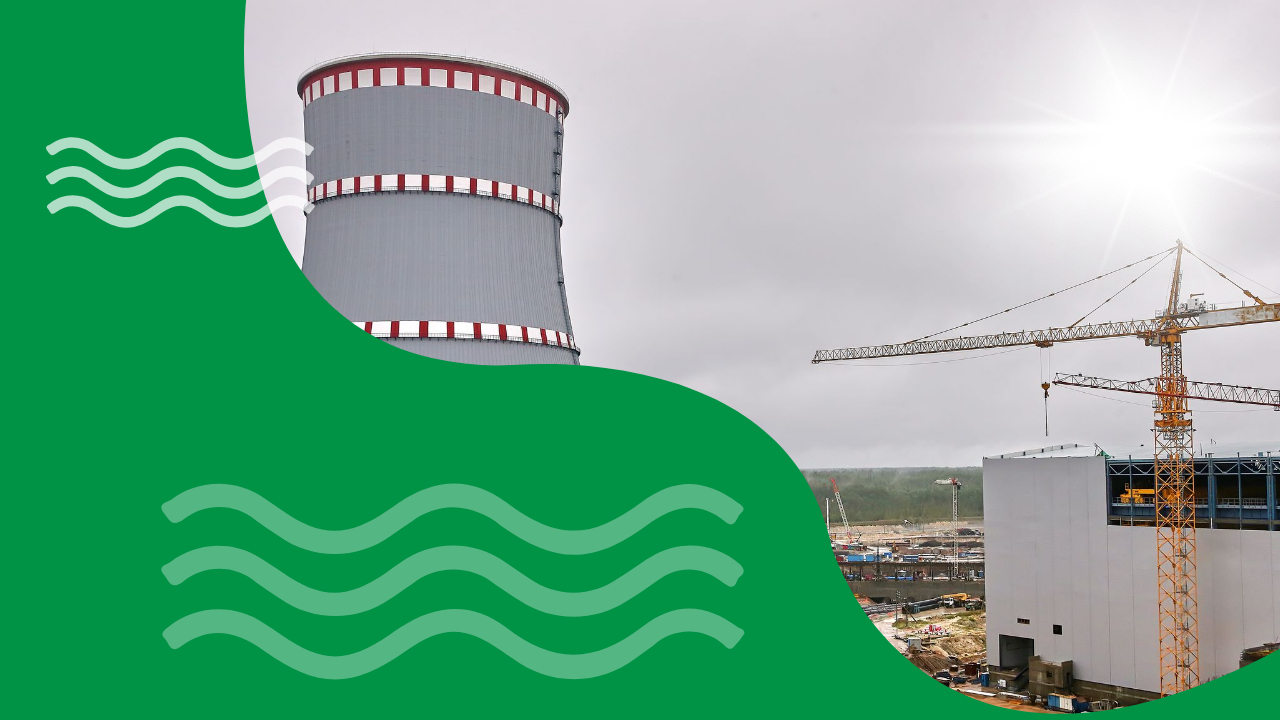
    During Finnish President Alexander Stubb’s official visit to Astana, Kazakhstan and Finland signed an agreement establishing cooperation between the nuclear energy regulators of both countries. The document outlines plans for experience exchange, joint research, and potential uranium fuel supply deals. The Finnish government will also consider the possibility of regular imports of nuclear fuel raw materials from Kazakhstan.

    According to Almassadam Satkaliyev, head of Kazakhstan’s Atomic Energy Agency, the agreement creates a foundation for more detailed discussions on future volumes and conditions of uranium supplies to Finnish nuclear power plants. He emphasized that Finland holds a leading position in the field of peaceful nuclear energy, boasting significant achievements in operating nuclear technologies and conducting scientific and technical research.

    Finland’s legislation is among the strictest in the world when it comes to regulating the extraction, management, and operation of nuclear facilities. Kazakhstan plans to adopt Finland’s best practices and conduct a joint audit of its own regulatory framework to align national standards with global benchmarks, Satkaliyev added.