Website: Europe.com

  • Sweden’s Parliament Lifts Uranium Mining Ban Amid Narrow Vote and Environmental Concerns

    Sweden’s Parliament Lifts Uranium Mining Ban Amid Narrow Vote and Environmental Concerns

    The Swedish Parliament (Riksdag) has narrowly voted to lift the national ban on uranium mining, reopening the door to domestic extraction of the nuclear fuel for the first time since 2018.

    The decision passed by just one vote, with support from the government coalition and the Sweden Democrats, while the opposition — including the Green Party and Social Democrats — strongly opposed the measure.

    Supporters of the move argue that uranium mining is essential for Sweden’s long-term energy stability as the country expands its nuclear power capacity. Critics, however, warn that the decision poses significant environmental and social risks, particularly for rural municipalities with uranium-rich deposits.

    “This is a step backwards for environmental protection and public safety,” said Amanda Lind, a Green Party representative, sharply criticising the government’s decision.


    Key Changes and Next Steps

    Under the new legislation, mines with small uranium reserves will no longer be subject to strict permit requirements or municipal veto rights, which had previously allowed local authorities to block mining projects.
    This effectively simplifies the approval process and allows uranium to be treated as a secondary raw material in broader mining operations.

    The legal changes will take effect on January 1, with further reforms planned for mid-2026 that could fully abolish municipal veto powers and reclassify uranium extraction from a “nuclear instrument” to a “nuclear activity,” reducing procedural delays for industry.


    Local Concerns

    The decision has sparked strong reactions in uranium-rich regions such as Falköping, Östersund, and Vilhelmina, where local leaders and residents fear potential impacts on water quality, farmland, livestock, and rural landscapes.

    “We risk losing public trust if local communities feel overruled,” said one municipal council member quoted in Swedish media.


    Nuclear Expansion Context

    Sweden currently operates six nuclear reactors and plans to build additional ones in the next decade to meet rising electricity demand and reduce dependence on fossil fuels.

    The previous uranium mining ban, introduced in 2018 by the Social Democratic government, aimed to limit environmental risks and reduce nuclear proliferation concerns.

    However, following Russia’s invasion of Ukraine in 2022, Sweden halted uranium imports from Russia, which previously supplied state-owned utility Vattenfall AB. The government now sees domestic uranium extraction as a way to cut import costs and secure a stable fuel supply for its expanding nuclear fleet.


    The Bigger Picture

    The debate highlights Sweden’s broader energy dilemma — how to balance green transition goals, energy independence, and public environmental concerns.

    While the repeal marks a significant policy shift, it also deepens divisions between advocates of energy security and defenders of environmental safeguards.
  • Turkey’s Miryildiz Mining to Launch Gold and Copper Production in Kazakhstan by 2026

    Turkey’s Miryildiz Mining to Launch Gold and Copper Production in Kazakhstan by 2026

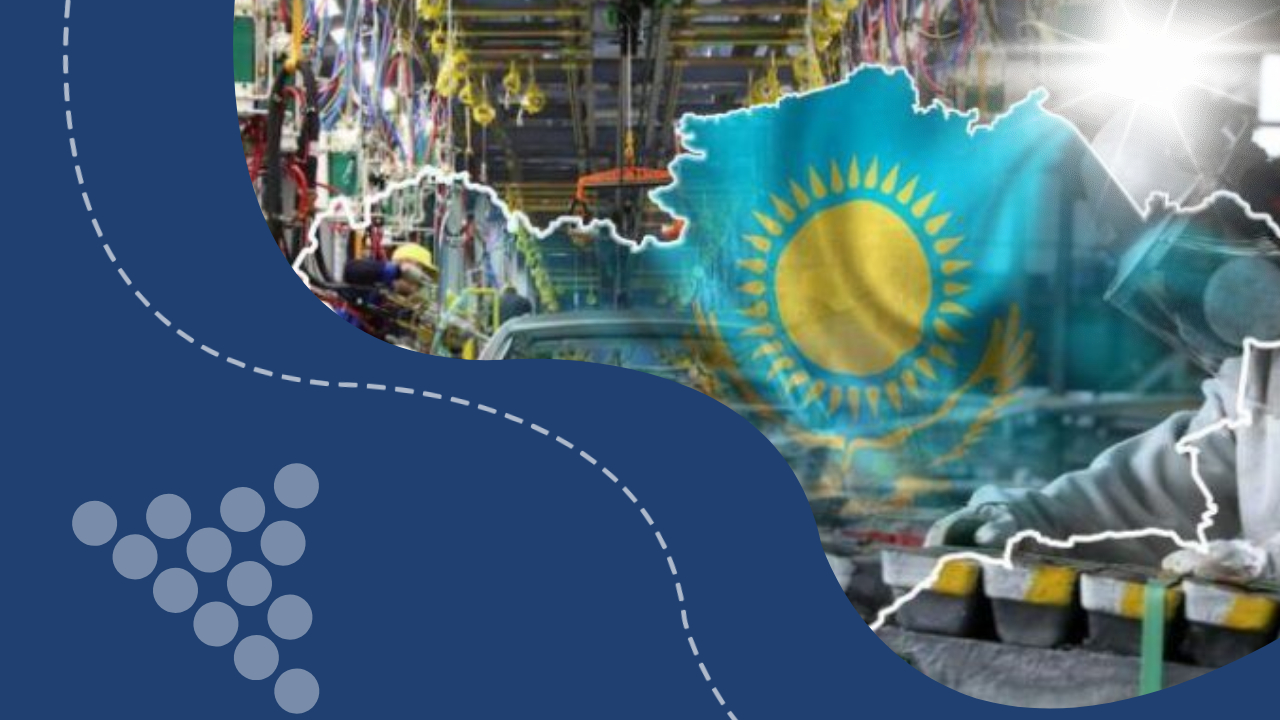
    Turkish mining company Miryildiz Mining plans to begin gold and copper production in Kazakhstan by late 2026, the company’s CEO Emrah Erdem announced at the Kazakhstan Global Investment Roundtable (KGIR).

    “We are engaged in gold and copper mining. Our plants in Turkey have been operating for nearly ten years. I hope that by the end of 2026, we will start gold production in Kazakhstan,” Erdem said.

    According to him, Miryildiz Mining is currently working in cooperation with the Development Bank of Kazakhstan (DBK), a subsidiary of the Baiterek Holding.

    The company operates in five countries, extracting gold, copper, chromium, and other metals, with Turkey remaining its primary market. It produces around 1 million tonnes of copper ore annually.

    “We have now set targets for copper mining in Kazakhstan,” Erdem said, adding that the company sees strong potential for copper extraction in East Kazakhstan, particularly in the Abai and Pavlodar regions.

    He also highlighted promising opportunities in the gold and rare earth metals sectors, noting Kazakhstan’s untapped mineral wealth.

    $482 Million Mining and Processing Project

    Earlier this year, Miryildiz Mining presented a $482 million project to construct a mining and processing complex (MPC) in the Zhanan-Boko-Zaisan gold ore zone to Abai Region Governor Berik Uali. The facility is expected to employ around 2,000 workers.

    The company has already completed geological exploration and purchased some of the necessary extraction and ore-processing equipment.

    Global Footprint

    Miryildiz Mining holds over 100 exploration and production licenses worldwide and is active in Central African Republic (CAR), Sierra Leone, and The Gambia, where it is also building a gold mining operation.

    In Kazakhstan, its subsidiary MIRYILDIZ KZ Ltd plans to conduct metal exploration at the Takyr site in the Zhetysu and Abai regions between 2025 and 2030.

    Market Context

    The company’s expansion comes amid record-high commodity prices — copper surpassed $11,000 per tonne, and gold exceeded $4,000 per ounce in 2025 — boosting investment in mining and geological exploration across the sector.

  • ‘Europe’s Lithium Paradox’: Documentary Highlights Europe’s Struggle Between Green Ambitions and Mining Reality

    ‘Europe’s Lithium Paradox’: Documentary Highlights Europe’s Struggle Between Green Ambitions and Mining Reality

    Europe is facing a “critical crossroads” in its green transition, warns Dr. Peter Tom Jones, director of the KU Leuven Institute for Sustainable Metals and Minerals, whose new documentary Europe’s Lithium Paradox explores the continent’s mounting dilemma over lithium extraction.

    The one-hour film focuses on two key European lithium projects — in Portugal and Serbia — both stalled amid fierce public opposition and political hesitation. As Europe pushes to electrify transport and expand renewable energy, it finds itself torn between the need for raw materials and growing citizen resistance to mining.

    “You can’t recycle your way out of a fossil fuel economy,” Jones says. “You have to mine first — we simply don’t have enough scrap in Europe, and we won’t until at least 2035. That leaves us with a ten-year gap.”

    Europe’s Feedstock Crisis

    Jones argues that Europe’s transition to clean energy is being undermined by a lack of “feedstock” — the raw materials required for batteries, solar panels, and electric vehicles. While recycling giants like Umicore have proven high-level battery recovery is possible, the continent’s reliance on imported lithium remains a major vulnerability.

    He estimates that lithium mined in Serbia alone could power at least one million electric vehicles, potentially creating a “new ecosystem” including a refinery, battery recycling hub, and full supply chain infrastructure.

    “With ten or more industrial-scale mining sites — compared to just four today, one of which is idle — Europe could achieve self-sufficiency in lithium,” he insists. “We need to act now to avoid sleepwalking into the abyss.”

    A “Minerals Cold War”

    In the film, Jones warns that the geopolitical race for critical minerals is intensifying.

    “China and the U.S. aren’t playing by the rules — they’re making their own,” he says. “Donald Trump is pushing a capitalist model with minimum price floors for lithium, while China is restricting exports of technology metals. Europe is a bystander in this minerals cold war.”

    He argues that Europe’s regulatory delays, public protests, and political indecision risk leaving it strategically dependent on foreign supply chains — with devastating consequences for its industrial competitiveness.

    Between Industry and Activism

    Europe’s Lithium Paradox aims to spark informed debate, but its reception has been polarized. In both Serbia and Portugal, local communities refused to speak on camera, accusing the filmmakers of promoting mining interests. Ironically, mining companies also distanced themselves from the project, with some reportedly banning employees from watching it for being “too critical.”

    Jones acknowledges the tension but maintains that the documentary is “grounded in science, not politics.”

    “We’re trying to balance innovation with real-world concerns. I’ve heard the phrase ‘you can’t fight feelings with facts’ — but we can at least try to change the narrative,” he says.

    The film is currently touring European universities, R&D institutes, and industry conferences, and is also available on Amazon Prime.

    “Europe must move beyond entrenched positions and forge a united front,” Jones concludes. “This is not about taking sides — it’s about survival.”

  • Putin Orders Roadmap for Russia’s Rare-Earth Extraction as Global Competition Intensifies

    Putin Orders Roadmap for Russia’s Rare-Earth Extraction as Global Competition Intensifies

    Russian President Vladimir Putin has instructed his cabinet to develop a national roadmap for rare-earth mineral extraction by December 1, as global competition for critical raw materials intensifies and countries seek to reduce dependence on China’s near-monopoly in the sector.

    The directive, published Tuesday on the Kremlin’s website, also calls for the expansion of transport and logistics infrastructure at Russia’s borders with China and North Korea, including multimodal hubs and new railway links.

    Rare-earth elements—vital for smartphones, electric vehicles, wind turbines, and advanced weapons systems—have become a major point of strategic rivalry between the world’s largest economies.

    In April, U.S. President Donald Trump and Ukrainian President Volodymyr Zelenskyy signed an agreement granting the United States preferential access to Ukraine’s mineral resources and supporting U.S. investment in reconstruction projects. Moscow has since said it is also open to cooperation with the U.S. on rare-earth projects, though political and diplomatic tensions stemming from Russia’s ongoing war in Ukraine have stalled progress.

    Earlier this year, Kirill Dmitriev, Putin’s investment envoy, said U.S. firms had shown interest in Russian rare-earth ventures, but talks remain at an exploratory stage.

    Meanwhile, China, which dominates the global rare-earth supply chain, has tightened export controls in retaliation against Western tariffs, pushing Washington and its allies to accelerate domestic and alternative sources of supply.

    Putin’s order stems from discussions at the Far Eastern Economic Forum in Vladivostok in September, where he emphasized the strategic importance of developing Russia’s Far East as a resource and transport hub connecting Asia and Europe.

    According to the U.S. Geological Survey (USGS), Russia’s known rare-earth reserves total about 3.8 million tonnes, though Moscow claims much higher figures. The Russian Natural Resources Ministry estimates 28.7 million tonnes of reserves across 15 different rare-earth metals as of January 2023. Even by Moscow’s count, however, Russia’s share remains relatively small compared to China’s dominant position.

    Putin also ordered the construction of new multimodal transport and logistics centers along the country’s borders with China and North Korea, including upgrades to two existing railway bridges and the completion of a new bridge to North Korea by 2026.

    Both China and North Korea have deepened economic cooperation with Russia amid Western sanctions, making regional integration and resource development key components of Moscow’s broader pivot to Asia strategy.

  • Vulcan Energy Secures Approval to Build Commercial Lithium Extraction Plant in Germany

    Vulcan Energy Secures Approval to Build Commercial Lithium Extraction Plant in Germany

    Vulcan Energy Resources, the German-Australian company pioneering geothermal lithium production in Europe, has received construction approval for its commercial Lithium Extraction Plant (LEP) in Landau, Germany, marking a key milestone toward establishing Europe’s first carbon-neutral lithium supply chain.

    The City of Landau granted the permit for the facility in the D12 industrial zone, complementing previously approved construction permits for the site’s ORC geothermal power plant and 110/20 kV substation. According to Vulcan, it now holds all necessary permits to construct its combined geothermal and lithium extraction plant (G-LEP) in Landau.

    In the project’s first phase, Vulcan plans to produce several thousand tonnes of lithium chloride, which will be transported to Frankfurt-Höchst for further conversion into battery-grade lithium hydroxide monohydrate (LHM). Once fully operational, annual production is expected to reach 24,000 tonnes of LHM — enough to supply approximately 500,000 electric vehicles per year.

    The company’s lithium extraction process uses geothermal brine from the Upper Rhine Valley, home to Europe’s largest combined geothermal and lithium resource. Vulcan’s technology captures geothermal heat for district heating and renewable electricity generation, while extracting lithium chloride from cooled brine before reinjecting it underground. The company notes that the entire operation will be “carbon neutral and fossil fuel-free over its life cycle.”

    Vulcan has already tested the process at pilot scale in Landau and Höchst. In April 2024, the company’s Lithium Extraction Optimisation Plant (LEOP) successfully produced the first lithium chloride from geothermal brine, later refined into battery-grade lithium hydroxide at the Central Lithium Electrolysis Optimisation Plant (CLEOP) in Höchst.

    The upcoming commercial-scale LEP will be built later this year, contingent on the completion of the €690 million financing package for both Landau and Höchst facilities. The German federal government and the states of Rhineland-Palatinate and Hesse have pledged €103.6 million in funding through the EU’s Temporary Crisis and Transition Framework (TCTF) under the “Resilience and Sustainability of the Battery Cell Manufacturing Ecosystem” program.

    In March 2025, the European Union designated Vulcan’s Landau facility as one of 47 strategic projects under the Critical Raw Materials Act (CRMA).

    To secure final financing, Vulcan is leveraging offtake agreements with several major customers. Its latest supply deal, signed with Glencore, covers 36,000–44,000 tonnes of LHM over eight years. The company has also revised earlier agreements with Umicore (23,000 tonnes over six years), LG Energy Solution (31,000 tonnes over six years), and Stellantis (128,000 tonnes over ten years).

    While construction will begin soon, deliveries are now expected later than initially planned. Once operational, Vulcan’s German facilities will play a central role in Europe’s battery supply chain, reducing dependence on imported lithium and advancing the EU’s green industrial strategy.

  • Critical Metals Secures Key Environmental Approvals for Tanbreez Rare Earth Project in Greenland

    Critical Metals Secures Key Environmental Approvals for Tanbreez Rare Earth Project in Greenland

    U.S.-based Critical Metals Corp. (Nasdaq: CRML) has received key environmental approvals for its Tanbreez rare earth project in southern Greenland, marking a major step toward the start of mining operations at one of the world’s largest rare earth deposits.

    The company announced on Tuesday that the Environment Agency for Mineral Resource Activities (EAMRA) has approved the geochemical test work and mine closure plan for the Hill area of the project. The reports, submitted in late September, were prepared by Danish engineering firm NIRAS, a leading environmental consultancy in the Nordic region.

    “The fast approval of these test reports, which can be credited to Greenland authorities as well as the professional work by NIRAS, is a key milestone for Critical Metals Corp towards commencing the mining process at Tanbreez,” said Tony Sage, CEO and Executive Chairman of Critical Metals.

    According to the company, only a few approvals remain — including the final parts of the mine and closure plan and plans for specific activities at the site.

    Following the announcement, Critical Metals’ shares rose nearly 3% to $11.26, giving the company a market capitalization of approximately $1.33 billion.

    A World-Class Rare Earth Deposit

    The Tanbreez project is among the largest rare earth deposits globally, with an estimated 45 million tonnes of resources spread across two main zones — Hill and Fjord. Roughly one-third of this total comprises heavy rare earth elements (HREEs), critical for clean energy technologies, advanced electronics, and defense applications. This makes Tanbreez the largest known heavy rare earth deposit worldwide.

    A preliminary economic assessment (PEA) released earlier this year estimated the project’s net present value (NPV) at $2.8–3.6 billion (depending on discount rates of 15% or 12.5%) and an internal rate of return (IRR) of 180%. The company plans an initial production phase of around 85,000 tonnes of rare earth oxides per year, scaling up to 425,000 tonnes annually following modular expansion.

    The orebody spans an area of 8 km by 5 km, but represents just 1% of the larger 4.7-billion-tonne host rock, suggesting strong potential for future expansion. Exploration work is ongoing at both deposit zones to support a forthcoming bankable feasibility study.

  • Greater Sudbury Hosts Hungarian Delegation to Strengthen Ties in Critical Minerals and Clean Technology

    Greater Sudbury Hosts Hungarian Delegation to Strengthen Ties in Critical Minerals and Clean Technology

    The City of Greater Sudbury welcomed a high-level delegation from the Consulate General of Hungary in Toronto last week at Tom Davies Square, marking what city officials described as an important step toward deepening international collaboration and innovation.

    Mayor Paul Lefebvre, joined by members of the city’s economic development team, met with János Jákó, Consul General of Hungary; Máté Árpád Igaz, Deputy Head of Mission; and Gábor Péter Markocsány, Consul and Diaspora Liaison Diplomat. The discussions centered on battery production, critical minerals supply chains, and partnerships between Canadian and Hungarian universities.

    Hungary is quickly emerging as a European hub for electric vehicle (EV) battery production, attracting major global investments. By 2030, the country is projected to hold the second-largest planned battery manufacturing capacity in the world — despite not mining critical minerals domestically. This dependency on imports creates new opportunities for cooperation with resource-rich regions such as Greater Sudbury, which is internationally recognized for its responsibly sourced minerals and clean technology innovation.

    Following the meeting, the Hungarian delegation toured several local organizations to learn more about Sudbury’s mining expertise, sustainability practices, and innovation ecosystem.

    “The visit laid the foundation for a growing partnership between Greater Sudbury and Hungary,” the city said in a statement, highlighting shared priorities of sustainability, innovation, and economic development. It also reaffirmed Sudbury’s position as a leader in clean technology, mining innovation, and international collaboration.

  • Montenegro Hires U.S. and Serbian Law Firms to Defend Against Tara Resources’ Mining Arbitration

    Montenegro Hires U.S. and Serbian Law Firms to Defend Against Tara Resources’ Mining Arbitration

    Montenegro has appointed U.S. law firm Hughes Hubbard & Reed and Serbian firm Nikčević Kapor to represent the state in an arbitration case filed by Swiss company Tara Resources over the termination of its mining concession at the former Brskovo mine, the country’s Ministry of Energy and Mining announced Wednesday.

    The ministry said the firms were selected after submitting the top bid in a public tender earlier this year, without revealing details about the other bidders.

    In July 2025, Tara Resources filed a request with the International Centre for Settlement of Investment Disputes (ICSID) in Washington D.C., following Montenegro’s unilateral termination of its concession contract for the Brskovo mining area in May 2024. The government said the company had failed to correct irregularities in its feasibility study, which violated national legislation, before the set deadline.

    The Brskovo mine, located near the northeastern town of Mojkovac, has a long history of exploration. Montenegro originally granted a 25-year lease to Australia’s Sultan Corporation in 2010, which reported a 9.2 million-tonne inferred resource the following year. Tara Resources, based in Switzerland, took over the project in 2018.

    The company claims its 2019 preliminary economic assessment and 2021 pre-feasibility study confirmed Brskovo’s strong economic potential, estimating construction costs at around €180 million for two open pits, a processing plant, and a waste facility. Once operational, the mine was projected to produce 45,000 tonnes of zinc, 13,000 tonnes of lead, 3,000 tonnes of copper, and about 1 million ounces of silver annually, creating 550 direct and 200 indirect jobs.

    However, the project has faced persistent environmental opposition from local residents and non-governmental organizations in Mojkovac, who fear the mine could threaten ecosystems and public health in the region.

    Montenegro’s government maintains that the termination was lawful and in line with national environmental and mining regulations. The arbitration proceedings in Washington could become one of the country’s most closely watched investment disputes, potentially setting a precedent for future resource development projects in the Balkans.

  • Serbia Launches Consultation on New Mining Law to Align with EU Standards

    Serbia Launches Consultation on New Mining Law to Align with EU Standards

    Serbia’s Ministry of Mining and Energy has launched a public consultation on a new law on mining and geological exploration aimed at modernizing the country’s resource management framework and aligning it with European Union standards on critical raw materials, sustainable development, and the circular economy.

    According to the ministry’s draft outline, the legislation will be harmonized with the EU Critical Raw Materials Act and the European Green Deal, supporting Serbia’s gradual integration into the EU’s framework for sustainable mining, climate neutrality, and secure mineral supply.

    The move follows the European Commission’s decision earlier this year to include Rio Tinto’s Jadar lithium and boron project in Serbia among the EU’s strategic projects for critical raw materials — the only lithium extraction project on the list.

    The proposed law seeks to establish a modern, transparent, and efficient system for managing Serbia’s mineral and geological resources, strengthening the state’s role as owner and steward of natural assets. It also emphasizes environmental and social responsibility, calling for clearer investor obligations regarding environmental protection, land reclamation, and site remediation.

    In line with EU reporting standards, Serbia intends to adopt the Pan-European Reserves and Resources Reporting Committee (PERC) framework, the UN Framework Classification for Resources (UNFC), and the Petroleum Resources Management System (PRMS). The law will also mandate the application of ESG (environmental, social, and governance) principles throughout all stages of exploration and mining.

    Other key elements include:

    • Improving legal certainty in exploration and mining rights, with stricter oversight and consistent application of sustainability standards.

    • Defining and protecting strategic mineral deposits, ensuring they are incorporated into Serbia’s spatial and development plans.

    • Digitalizing permitting procedures through a unified online system for electronic applications and public access to data on exploration and mining areas.

    The ministry said the reform aims to ensure a gradual alignment with the EU’s green and digital transition goals while fostering investor confidence and transparency.

    The public consultation will remain open until November 11, allowing citizens, organizations, and industry representatives to submit comments and proposals on the draft framework.

  • Bulgaria to Invest Over €1.38 Billion in Green Transition for Coal Regions

    Bulgaria to Invest Over €1.38 Billion in Green Transition for Coal Regions

    Bulgaria’s coal regions are set to receive BGN 1.58 billion (€808 million) through the European Union’s Just Transition Fund (JTF) to support projects in renewable energy, green hydrogen, and the redevelopment of former mining areas. Combined with an existing €598 million program, total investment in Bulgaria’s post-coal transformation will reach €1.38 billion, according to the Ministry of Regional Development and Public Works.

    The funds will target the coal-producing regions of Stara Zagora, Kyustendil, and Pernik, along with municipalities such as Nova Zagora, Yambol, Simeonovgrad, Harmanli, Topolovgrad, Dimitrovgrad, Haskovo, Elhovo, Sliven, and Tundzha. The JTF grants aim to help communities close coal mines and coal-fired power plants, rehabilitate degraded land, promote energy efficiency, and support a shift toward a climate-neutral economy while reducing energy poverty.

    Deputy Minister Yura Vitanova announced that three new grant procedures will be launched by the end of the year:

    • €153.4 million for energy efficiency and energy communities in public buildings,

    • €72.6 million to help small and medium-sized enterprises install solar panels and energy storage systems, and

    • €242.9 million for socio-economic transformation projects, including converting former mining areas into business and industrial zones.

    In addition, €134.5 million will support the development of green hydrogen infrastructure in Stara Zagora. The initiative includes a hydrogen production complex, charging stations, hydrogen vehicles and trailers, and supporting photovoltaic and energy storage systems.

    The current JTF program is already funding the renovation of residential buildings, industrial and logistics park development, and training and retraining programs for workers affected by the energy transition. It also supports production investments in large enterprises to diversify regional economies.

    “Bulgaria’s coal regions are poised to become hubs for clean energy and sustainable industry,” said Deputy Minister Vitanova. “These investments will not only reduce emissions but also create new opportunities for local businesses and communities.”