Website: Europe.com

  • European Energy Metals Files Finnish Lithium-Cesium-Tantalum Pegmatite Project Technical Report

    European Energy Metals Files Finnish Lithium-Cesium-Tantalum Pegmatite Project Technical Report

    [vc_section][vc_row][vc_column][distance desktop_type=”30″][lvs][distance desktop_type=”30″][vc_btn title=”Source – europeanenergymetals.com” color=”sky” i_type=”material” i_icon_material=”vc-material vc-material-perm_device_information” add_icon=”true” link=”url:https%3A%2F%2Feuropeanenergymetals.com%2Fnews%2Fnews-2023%2Feuropean-energy-metals-files-finnish-lithium-cesium-tantalum-pegmatite-project-technical-reportjuly-6-2023-04-02-02.html|target:_blank”][distance desktop_type=”30″][vc_column_text]Vancouver, British Columbia–(Newsfile Corp. – July 6, 2023) – European Energy Metals Corp. (TSXV: FIN) (FSE: W28) (“European Energy Metals” or the “Company“) is pleased to announce the receipt and subsequent SEDAR filing of an independent technical report entitled “Finland Pegmatite Project Central Ostrobothnia, Western Finland” by Warren D. Robb, P.Geo. (BC) with an effective date of May 30, 2023 (the “Technical Report“). European Energy Metals has the option to earn up to an 80% interest in the Finland Pegmatite Project (“FPP“) from Capella Minerals Ltd. (TSXV: CMIL) as detailed in the Company’s 2023-March-06 and 2023-March-20 news releases. The report can be found on SEDAR or the company’s website: europeanenergymetals.com,

    The FPP consists of five mineral reservations prospective for lithium-cesium-tantulum and cover an area of 2300 square kilometers. The report focused on the four northern reservations Nabba, Lappajarvi W, Lappajarvi E, and Kaatiala, located 350 kilometers north of Helsinki and road accessible from the city of Kokkola.

    “The Technical Report supports the Company’s decision to acquire the Finland Pegmatite Project and provides a good technical base for our geological crews as they design our 2023 Phase I exploration program,” stated European Energy Metals CEO Jeremy Poirier. “We believe our Finland Pegmatite Project portfolio has the potential to become a significant source of lithium and REE’s for Europe’s domestic critical metals industry,” he continued.

    The Geological Survey of Finland (“GTK“) has been conducting regional studies since the 1960’s, including: till geochemistry, airborne magnetics and radiometrics, and rock sampling. They combined their data with industry data from Kebiler Oy and other companies to complete a study for a predictive model for LCT pegmatites in Finland, identifying several “permissive tracts” with potential to host LCT pegmatite deposits. The Finnish Pegmatite Project lies within two of the tracts: the 255 km² Kaustinen tract, host to the Kebiler Oy LCT lithium project, and the 3,672 km² Järvi-Pohjanmaa tract.

    GTK identified anomalous areas in the Kaustinen tract and followed up with detailed geochemical till sampling between 2003 and 2023, sampling at 100 metre intervals along lines spaced approximately 1000 metres apart, with the lines oriented perpendicular to the ice flow direction at 240o. An anomaly was identified on the Nabba concession.
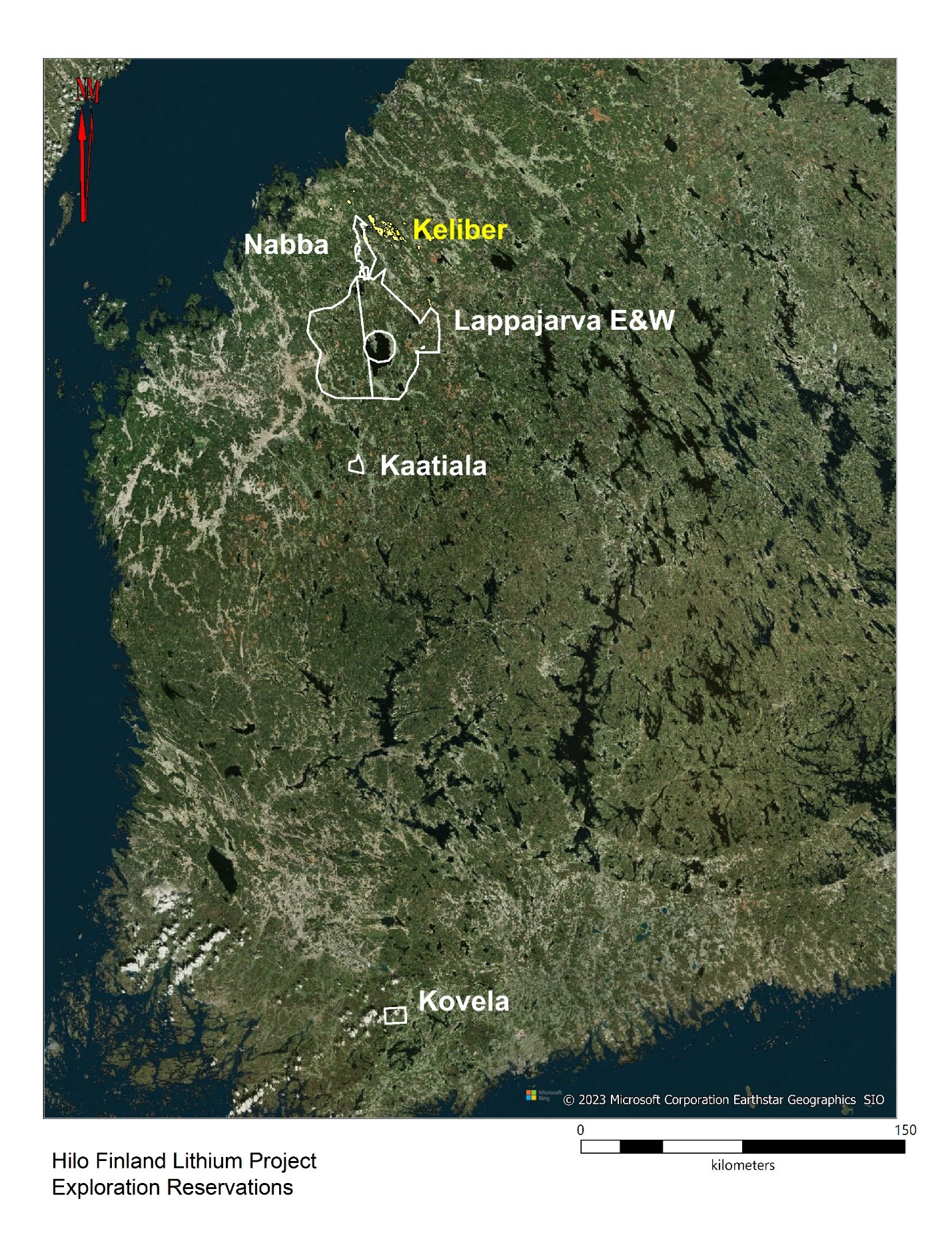
    Cannot view this image? Visit: https://images.newsfilecorp.com/files/9006/172476_4a3fbbc0a4b4a944_001.jpg

    Figure 1. Hilo Finland Lithium Project Exploration Reservations

    To view an enhanced version of this graphic, please visit:
    https://images.newsfilecorp.com/files/9006/172476_4a3fbbc0a4b4a944_001full.jpg

    GTK identifed and described pegmatite mineralization in boulder trains and in outcrop on the three southern reservations Lappajarvi W, Lappajarvi W, and Kaatiala, but did not analyze the rocks for lithium.

    Cannot view this image? Visit: https://images.newsfilecorp.com/files/9006/172476_4a3fbbc0a4b4a944_002.jpg

    Figure 2. Permissive Tracts for Lithium
    (3 is Järvi-Pohjanmaa tract; 5 is Kaustinen tract) Source: Quantitative assessment of undiscovered resources in lithium-caesium-tantalum pegmatite hosted deposits in Finland by R.Kalevi, E.Pasi, A.Timo, H.Tapio, K.Niilo, K.Janne, L.Panu and T.Tuomo dated 2018. Geological Survey of Finalnd Bulletin 406.

    To view an enhanced version of this graphic, please visit:
    https://images.newsfilecorp.com/files/9006/172476_4a3fbbc0a4b4a944_002full.jpg

    The four exploration reservations* all lie within the Pohjanmaa belt of rocks and are underlain by mica schists and mica gneisses, which are intercalated with metavolcanic rocks. The Pohjanmaa belt, which includes the Kaustinen and Järvi-Pohjanmaa tracts, hosts several rare element pegmatites in the north proximal to the Nabba reservation. Li pegmatites of the Kaustinen province belong to the albite spodumene type according to the classification of Černý & Ercit (2005). The Li pegmatites have intruded after the metamorphic peak conditions of the area and crosscut the metavolcanic and metasedimentary rocks at the northern edge of the belt.

    *Mineral Reservations in Finland are valid for two years and grant the holder the right to evaluate the reservation’s geology to identify and subsequently secure areas within the reservation deemed worthy of further exploration. The holder can then apply for an Exploration permit over the smaller worthy areas to explore further.

    The Technical Report recommends the Company design a ground follow up exploration program consisting of prospecting, geological mapping combined with rock sampling and infill till geochemical sampling to identify target areas with the exploration reservations for follow up exploration permit applications. The cost of the recommended exploration program is budgeted at $500,000.

    The data disclosed in this news release is related to historical base of till sampling results. European Energy has not undertaken any independent investigation of the sampling, nor has it independently analyzed the results of the historical exploration work in order to verify the results. European Energy considers these historical base of till results relevant as the Company is using this data as a guide to plan exploration programs.

    R. Tim Henneberry, P.Geo. (BC), a Director of European Energy Metals Corp., is the Qualified Person who has reviewed and approved the techgnical content disclosed in this release.

    About the Finland Pegmatite Project
    The Finland Pegmatite Project consists of four exploration concessions in central Finland and one exploration concession in southern Finland. These reservations cover a total area of 2,300 square kilometres and are focused on Lithium-Cesium-Tantalum or LCT pegmatite complexes located within the Jarvi-Pohjanmaa and Seinajoki lithium-permissive tracts as defined by the Geological Survey of Finland (GTK). Four of the reservations (Nabba, Lappajarvi W, Lappajarvi E and Kaatiala) lie immediately adjacent to, and to the south of, Keliber Oy’s spodumene mine development project in the Kaustinen district.

    Keliber Oy is a consortium, comprised of Sibanye-Stillwater (79%), Finnish Minerals Group (20%) and Finnish shareholders (1%). A Definitve Feasibility Study by Hatch dated June 14, 2018 states a JORC Code 2012 compliant Measured and Indicated Mineral Resource of 9.47 million tonnes at a grade of 1.16% Li2O.1

    European Energy Metals cautions investors the presence of lithium mineralization at Keliber Oy is not necessarily indicative of similar mineralzation at the Nabba concession.

    Under the terms of an Earn In Agreement with Capella Minerals Limited, European Energy may earn an 80% interest in the Finland Pegmatite Project by issuing 1,750,000 shares, paying Cdn$500,000.00 and incurring Cdn$2,500,000.00 dollars in exploration expenditures staged over a 4 year earn in period.

    1. Definitive Feasibility Study – Executive Summary June 14, 2018 by Hatch. http://mb.cision.com/Public/14755/2547948/b83a99f0255413fe.pdf

    About European Energy Metals Corp.
    European Energy Metals. is a junior mining company currently focussed on the Lithium-Cesium-Tantalum Finnish Pegmatite Project in central Finland. Governing bodies in Europe and Finland are legislating environmentally friendly and energy independent laws and policies. One of the key components is access to REE and specifically Lithium. The company is also focusing on its Champ Copper project located in Southeast British Columbia.

    FOR FURTHER INFORMATION PLEASE CONTACT:

    Jeremy Poirier, CEO
    Telephone: 604-722-9842
    Email: info@europeanenergymetals.com

    Neither the TSX Venture Exchange nor its Regulation Services Provider (as that term is defined in the policies of the TSX Venture Exchange) accepts responsibility for the adequacy or accuracy of this release.

    Cautionary Statements Regarding Forward-Looking Information

    This news release contains forward-looking information within the meaning of applicable securities legislation. Forward-looking information is typically identified by words such as: believe, expect, anticipate, intend, estimate, postulate and similar expressions, or are those, which, by their nature, refer to future events. Such statements include, without limitation, statements regarding the future results of operations, performance and achievements of the Company, including the future planned exploration programs for, and the exploration potential of, the Finland Pegmatite Project. Although the Company believes that such statements are reasonable, it can give no assurances that such expectations will prove to be correct. All such forward-looking information is based on certain assumptions and analyses made by the Company in light of their experience and perception of historical trends, current conditions and expected future developments, as well as other factors management believes are appropriate in the circumstances. This information, however, is subject to a variety of risks and uncertainties and other factors that could cause actual events or results to differ materially from those projected in the forward-looking information. Important factors that could cause actual results to differ from this forward-looking information include the costs of any anticipated work programs and the ability to fund such costs, required approvals in connection with any work programs and the ability to obtain such approvals, risks inherent in exploration as well as those described under the heading “Risks and Uncertainties” in the Company’s most recently filed MD&A. The Company does not intend, and expressly disclaims any obligation to, update or revise the forward-looking information contained in this news release, except as required by law. Readers are cautioned not to place undue reliance on forward-looking information.[/vc_column_text][distance desktop_type=”30″][/vc_column][/vc_row][/vc_section]

  • Concentration of critical minerals’ supply intensifies despite diversification efforts

    Concentration of critical minerals’ supply intensifies despite diversification efforts

    [vc_section][vc_row][vc_column][distance desktop_type=”30″][lvs][distance desktop_type=”30″][vc_btn title=”Source – www.mining.com” color=”sky” i_type=”material” i_icon_material=”vc-material vc-material-perm_device_information” add_icon=”true” link=”url:https%3A%2F%2Fwww.mining.com%2Fconcentration-of-critical-minerals-supply-intensifies-despite-diversification-efforts%2F%3Futm_source%3DDaily_Digest%26utm_medium%3Demail%26utm_campaign%3DMNG-DIGESTS%26utm_content%3Dconcentration-of-critical-minerals-supply-intensifies-despite-diversification-efforts|target:_blank”][distance desktop_type=”30″][vc_column_text]Concentration of supply intensified for some critical minerals in 2022, despite US and Europe’s efforts to diversify and reduce reliance on China.

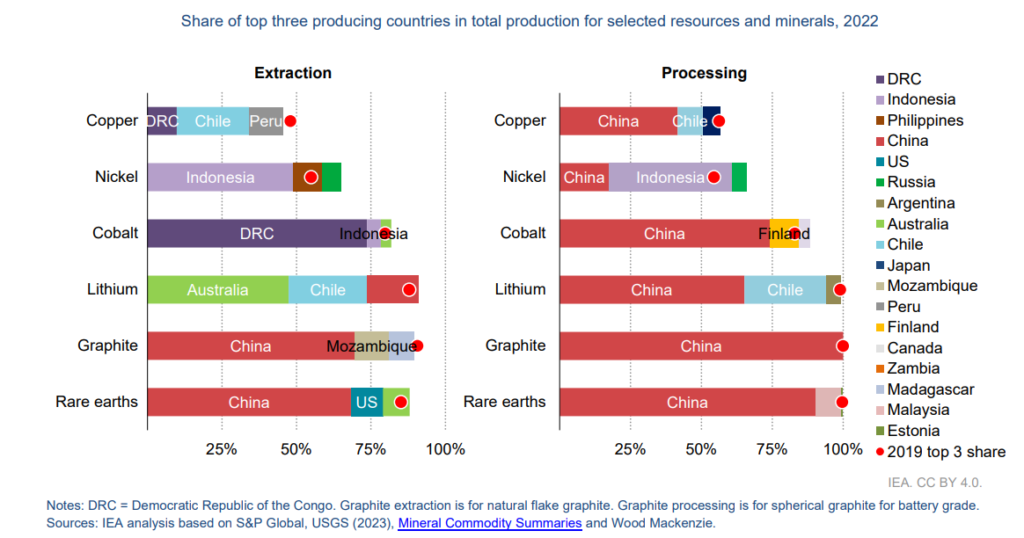
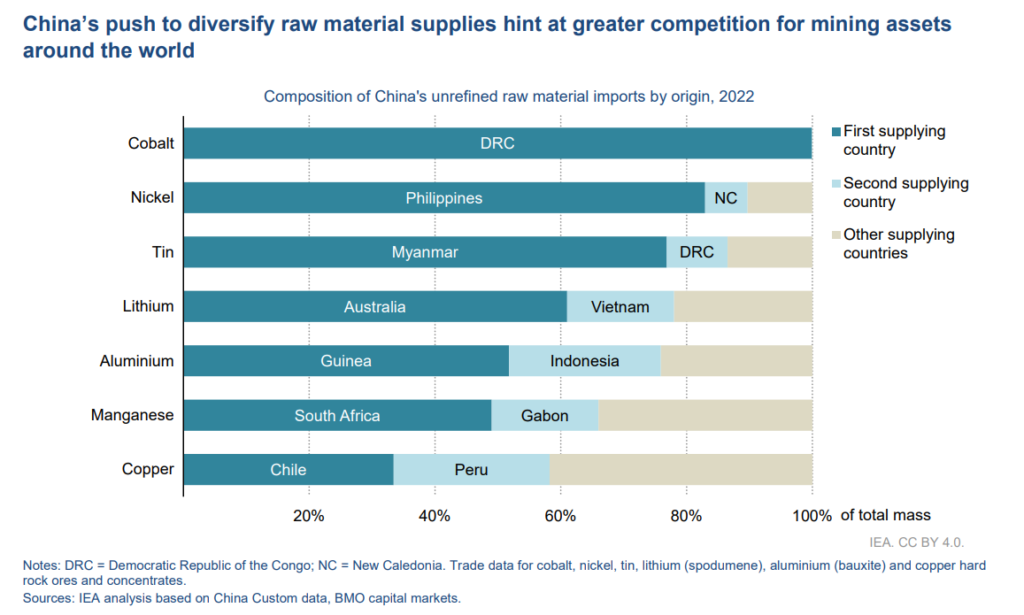
    According to the International Energy Agency, the share of the top three producers last year either remained unchanged or has increased further, especially for nickel and cobalt, compared with 2019.

    “Our analysis of project pipelines reveals a somewhat improved outlook for mining, but not for refining operations where today’s geographical concentration is greater,” said the agency in its Critical Minerals Market Review 2023.

    “Planned projects are mostly developed in incumbent regions, with China holding half of planned lithium chemical facilities and Indonesia representing nearly 90% of planned refined nickel plants,”

    Resource-holding nations are increasingly determined to secure higher positions along the value chain, while consuming countries, namely US and European countries, are actively exploring options to diversify their sources of refined metal supplies.

    However, China has been actively investing in many mining assets in Africa and Latin America, and its investment in overseas mining assets is likely to grow in the coming years.

    Between 2018 and the first half of 2021, Chinese companies invested $4.3 billion to acquire lithium assets, twice the amount invested by companies from the US, Australia and Canada combined.

    China is also investing in processing, refining and downstream facilities in other regions. Its investments in Indonesia’s nickel processing plants are well known, and automaker BYD recently announced a plan to build a $290 million lithium cathode plant in northern Chile.[/vc_column_text][distance desktop_type=”30″][/vc_column][/vc_row][/vc_section]
  • Lithium and the dream of Cornwall’s mining revival

    Lithium and the dream of Cornwall’s mining revival

    [vc_section][vc_row][vc_column][distance desktop_type=”30″][lvs][distance desktop_type=”30″][vc_btn title=”Source – theiet.org” color=”sky” i_type=”material” i_icon_material=”vc-material vc-material-perm_device_information” add_icon=”true” link=”url:https%3A%2F%2Feandt.theiet.org%2Fcontent%2Farticles%2F2023%2F07%2Flithium-and-the-dream-of-cornwall-s-mining-revival%2F|target:_blank”][distance desktop_type=”30″][vc_column_text]Cornwall rests on a trove of one of the world’s most desirable metals: lithium. There are hopes that its mining economy could be reborn as part of a nationwide green industrial revolution. That dream might just become a reality – but nothing can be taken for granted.

    Lithium, the lightest metal element, is a vital resource for the energy transition. It is used in batteries for EVs and grid-scale energy storage – a single Tesla Model S battery contains 12kg of lithium.

    Cornwall happens to be sitting on a massive lithium deposit, prompting former Prime Minister Boris Johnson to describe it as the “Klondike of lithium”. Would-be miners – most notably the companies British Lithium and Cornish Lithium, both based in the county – have descended on the Cornish landscape, poring over old geological maps to search for buried treasure. At present, there is no full-scale operation or any certainty of a full-scale operation. However, pilot projects have yielded encouraging results, and the companies hope that by 2030 they could be extracting thousands of tonnes of lithium every year.

    There is sincere hope that this will come to fruition. Cornwall’s mining heritage reaches back to the Bronze Age. Its landscape is so sculpted by abandoned mines that the Cornwall and West Devon Mining Landscape was recognised as a Unesco World Heritage Site in 2006. However, the decline of its mining industries through the 20th century has left it the second poorest area in Northern Europe, in no small part dependent on tourism and, until recently, EU funding. The dream is that the Cornish mining industry might be revived – this time, without harming its people and environment – and become an important part of that green industrial revolution the UK has been promised.

    The energy transition is driving demand for lithium to unprecedented heights. According to US-based alliance Li-Bridge, demand for lithium-ion batteries in the US alone is set to grow sixfold by 2030. “I think the world has realised that lithium is obviously an essential element, and demand is going to go up massively,” says Jeremy Wrathall, CEO of Cornish Lithium. “We’re talking about five million tonnes of [annual] demand by 2035.”

    At present, lithium production is dominated by a few countries. Australia is the leader (approaching 100,000 tonnes of annual production), followed by Chile, China, Argentina, Zimbabwe and Portugal. Not unusually for energy transition metal mining, lithium mining often comes at great environmental and human cost. Geothermal lithium extraction as performed in South America, for instance, involves laying out lithium-rich brine in colossal evaporation pools beneath the Atacama sun. In Chile’s lithium-rich Salar de Atacama salt flat, mining activities consume almost two-thirds of the area’s water, contributing to devastating water shortages. There is an increasing feeling that lithium mining must be carried out more responsibly if the world is to reap its benefits fully. This could be an opportunity for the UK to distinguish itself. It would have a long way to go to catch up with the big lithium producers in terms of volume, but it may be able to mine the world’s most sustainable lithium.

    Of course, there are other reasons why the UK government might be interested in domestic lithium production. The US and its allies are scrambling to establish supply chains for technologies of strategic importance – from solar panels to semiconductors – that circumvent China, which is the world leader in both raw critical minerals and lithium-ion battery production. Domestic lithium mining, along with domestic battery manufacturing, would be strongly in the UK’s geopolitical interests. Then-minister Nadhim Zahawi said in 2020: “The potential to become self-sufficient in lithium, which Cornish mining represents, will, I think, be incredibly important to the British economy.”

    Cornish mining: on the rebound?

    There are two potential avenues for lithium production: hard-rock mining and direct extraction from brines. The more traditional approach is hard-rock mining. This involves digging rocks, crushing and grinding them to separate the lithium micas (a group of pinkish minerals rich in the element), then subjecting them to various processes to extract the lithium.

    Both British Lithium and Cornish Lithium are experimenting with hard-rock mining around St Austell. The former is using its own patented technology for the extraction stage, and the latter is using technology from Australia-based Lepidico. Both companies seem confident. Notably, British Lithium has identified a suitable lithium resource in a former china clay mine which could support annual production of 20,000 tonnes of lithium – enough to meet a third of national demand around the end of the decade.

    Whether lithium extracted via hard-rock mining can be considered sustainable hinges mainly on the question of energy. All of that crushing and grinding is incredibly energy-intensive. British Lithium acknowledged in a 2021 interview that if it and Cornish Lithium ran operations concurrently, they would overload the grid. Hopefully, nothing of the sort will come to pass. Both companies are interested in establishing private power networks supplied by local renewable resources like solar and offshore wind (Imerys, which carries out related operations in Cornwall, already has its own private network).

    In 1864, a brine ‘rich in Lithia’ was discovered in a mine near Redruth. Cornwall sits on a 280-million-year-old granite sheet, through which water has trickled, absorbing and dissolving lithium in its path. This leaves lithium-rich springs beneath the Cornish landscape. With hard-rock mining, Wrathall says, the rock must be cracked to get the lithium solution out, but, with these brines “nature has already done it for you”.

    Extracting lithium from brine is a more experimental approach. Cornish Lithium, which is attempting it, prefers not to call it ‘mining’ at all. The company aims to take brine up to ground level, directly extract the lithium (concentrating the brine via reverse osmosis, followed by an extraction step), then put it back in the ground. This could be a remarkably undisruptive way to produce lithium. In terms of infrastructure, it would require little more than a shed-sized plant and two boreholes: one to collect the brine and one to return it. In 2020, the company confirmed it had found ‘globally significant’ levels of lithium in waters under Cornwall. It recently drilled its third borehole and hopes to have small-scale production (up to 300-500 tonnes a year) running by 2025.

    Cornish brines are much less lithium rich than South American brines (220-260mg/L vs 2,000mg/L), but have certain advantages that bode well for sustainability. Elsewhere in the world, these brines surface at very high temperatures and need to be kept under high temperature and pressure to prevent the dissolved solids from crystallising. Cornish brines surface at just 80°C, making them easier and more energy-efficient to process. While not hot enough for geothermal power generation, they are hot enough for district heating networks. Cornish Lithium is already supplying some heat to local clotted cream company Rodda’s and is discussing the possibility of providing heat for greenhouses.

    Professor Karen Hudson-Edwards of Camborne School of Mines, an expert in sustainable mining, acknowledges that further work could be needed to ensure this process is truly sustainable – such as understanding the impacts of changing the chemical composition of these brines – but concludes: “In terms of overall impact I think geothermal lithium mining is as sustainable as we can get. It’s not going to create a lot of waste, the footprint is small, and Cornish Lithium are very committed to sustainability, so that’s a big plus as well.

    “Mining has a bad reputation with many people, for [good] reasons. Really, it has not been a great performer in the past but I think the companies are waking up to the fact that people are demanding – well, insisting on – sustainability and good practice or they won’t fund the mining companies if they don’t do that. Things are changing quickly.”

    Thanks to its natural resources and the sincerity of the companies involved, there is plenty of potential for sustainable lithium mining in Cornwall. Some hope that this – along with renewables and perhaps even a battery factory (St Austell and Newquay MP Steve Double has pressed the government on the possibility) – could place Cornwall at the forefront of a green industrial revolution that is good for the economy, communities in deindustrialised areas, and the environment.

    “I absolutely, categorically do think [lithium extraction] could be part of a green revolution in Cornwall,” Wrathall says. Among other benefits, he emphasises that lithium production could offer a great incentive for ambitious young people to stay in their home county.

    This is a critical consideration. There is a strong feeling that Cornwall must benefit from this mining revival, rather than having its labour and resources exploited by others (this is complicated by big questions about land ownership, still dominated in the county by hereditary landowners like the Duchy of Cornwall). An important part of ensuring that Cornwall benefits from lithium mining is investing in skills and infrastructure to support the industry. “The metal might be in the ground; you might be able to extract it technologically and economically, but we’ve got skills gaps at the moment. [Local] people haven’t had the opportunity to study and get to a stage where they would be able to easily or naturally go into these jobs,” says Dr Eva Marquis, also of Camborne School of Mines.

    “Then you’ve got a social tension if you can’t get people in the county with the right skillset and you want to get these mines up and running in the next five to 10 years. If you don’t invest in the talent pipeline now, you’re […] going to have to bring people in, and that will probably skew the social divide even more. There would be some benefit to having more people down here but we’re already in a housing crisis, so there are lots of underlying challenges.”

    The amount of work required to make the most of Cornwall’s lithium deposits should not be underestimated. It will be a complex, costly endeavour and inherently risky – will markets be willing to pay a large enough green premium to make it economically feasible? The recent collapse of lithium-ion battery start-up Britishvolt, before it was bought out of administration by an Australian firm, should remind us to take nothing for granted.

    Experts agree that the challenge is bigger than the main two companies involved, and call for a clear, coordinated strategy to support this green industry and others. Wrathall says: “It doesn’t help that our government hasn’t got an industrial strategy. If we’re to retain the car industry in the UK, that would be helpful. The odds are against us at the moment, but I think Cornwall has got the potential to restore its legacy of innovation and technological leadership.”

    SETTLEMENTS

    What’s next for mining towns?

    Former mining settlements can, with serious cash and co-ordinated action, become home to sustainable new industries. Australia’s Latrobe Valley has been moving away from coal mining to renewable energy and emerging industries like hydrogen production in a transition supported with funding from the Victoria state government for infrastructure, job training programmes and partnerships between industry, government and community groups.

    In having the potential to revive its mining heritage, Cornwall is particularly lucky. A recent Nature Communications paper estimates that just 7 per cent of rural towns in coal-mining systems have the potential to mine energy transition metals like lithium, as these resources are not usually co-located.

    “These towns may be best positioned to prosper through rapid workforce re-deployment from a coal economy to an energy transition metals economy, although they would face significant challenges in adapting,” says the University of Göttingen’s Dr Kamila Svobodova, an author of the paper.

    “Favourable geography alone may not be enough to revive deindustrialised areas. Other factors, such as infrastructure and local knowledge and expertise, also play a crucial role in the success of these projects. For example, the development of local supply chains and the availability of skilled labour can help create a sustainable green economy in a region. A key challenge for successful industrial transition is boosting the ability of a region and its industries to break out of locked-in paths of development by pursuing innovation, new technological pathways and industrial renewal. This must be place-based and time-specific. Ensuring this transition is done in a socially acceptable and just way is fundamental to growth and well-being in the region.”[/vc_column_text][distance desktop_type=”30″][/vc_column][/vc_row][/vc_section]
  • UN debates deep sea mining as countries and companies now allowed to seek provisional licenses

    UN debates deep sea mining as countries and companies now allowed to seek provisional licenses

    [vc_section][vc_row][vc_column][distance desktop_type=”30″][lvs][distance desktop_type=”30″][vc_btn title=”Source – www.independent.co.uk” color=”sky” i_type=”material” i_icon_material=”vc-material vc-material-perm_device_information” add_icon=”true” link=”url:https%3A%2F%2Fwww.independent.co.uk%2Fnews%2Fap-san-juan-puerto-rico-earth-jamaica-b2372857.html|target:_blank”][distance desktop_type=”30″][vc_column_text]A U.N. agency tasked with regulating the deep sea is debating whether to open the Earth’s watery depths to countries and companies that as of Monday were allowed to start applying for provisional mining licenses.

    The International Seabed Authority, based in Jamaica, launched a two-week conference on the issue Monday, a day after it missed a deadline to approve a set of rules and regulations to govern deep sea mining in international waters.

    “We have a lot of work ahead of us,” said Juan José González, the authority’s council president.

    The authority has issued more than 30 exploration licenses but no provisional licenses — so far.

    The debate on whether to allow companies to extract precious metals from the deep sea that are used in electric car batteries and other green technology comes as more than a dozen countries call for a ban or moratorium given environmental concerns.

    Scientists have said that minerals in the deep sea take millions of years to form, and that mining could unleash noise, light and suffocating dust storms. However, companies have argued that deep sea mining is cheaper and has less of an impact than land mining.

    Most of the current exploration is focused in the Clarion-Clipperton Fracture Zone, which covers 1.7 million square miles (4.5 million square kilometers) between Hawaii and Mexico. It is occurring at depths ranging from 13,000 to 19,000 feet (4,000 to 6,000 meters).

    On Monday, Canada announced that it supported a moratorium because there is no regulatory framework in place nor a deep understanding of the environmental impacts of deep sea mining.

    “It is critical that the international community recognize its collective responsibility to safeguard the health and integrity of our shared global ocean for future generations,” the government said in a statement.

    The 36-member council of the International Seabed Authority is expected to debate the issue on Friday. But it’s unclear when or if it would actually vote on whether to allow mining in deep international waters given sharp divisions over the issue.

    “There’s really no appetite to vote,” said Duncan Currie, an international and environmental lawyer and legal adviser to the Deep Sea Conservation Coalition, a Netherlands-based alliance of environmental groups.

    Currie, who was at the conference, said in a phone interview that he envisioned three scenarios: the authority agrees on a legal and technical framework by the end of the year; the issue goes to Germany’s International Tribunal for Law of the Sea if there’s no consensus; or, a metals company submits a work plan to one of the authority’s commissions, which would then have to submit it to the council for a vote.

    [/vc_column_text][distance desktop_type=”30″][/vc_column][/vc_row][/vc_section]

  • Euro Sun Mining says community supports Rovina Valley ahead of new hearing date

    Euro Sun Mining says community supports Rovina Valley ahead of new hearing date

    [vc_section][vc_row][vc_column][distance desktop_type=”30″][lvs][distance desktop_type=”30″][vc_btn title=”Source – proactiveinvestors.com” color=”sky” i_type=”material” i_icon_material=”vc-material vc-material-perm_device_information” add_icon=”true” link=”url:https%3A%2F%2Fwww.proactiveinvestors.com%2Fcompanies%2Fnews%2F1020116%2Feuro-sun-mining-says-community-supports-rovina-valley-ahead-of-new-hearing-date-1020116.html%3Fregion%3Dca|target:_blank”][distance desktop_type=”30″][vc_column_text]Euro Sun Mining Inc (TSX:ESM, OTC:CPNFF) announced that a new court date has been set for the hearing regarding the suspension of its environmental license for the Rovina Valley project in Romania.

    The previous court dates were delayed, but the company remains optimistic for a positive outcome.

    According to Euro Sun, the Canada-listed resource company, the president of the County Council of Hunedoara has emphasized the strategic importance of the project in terms of job creation and the government’s role in ensuring its progress.

    “After attending meetings in the last two weeks with the representatives of the local authorities, we are assured of their support for the projects future as they fully understand the importance of the projects impact on the development of the area,” Euro Sun CEO Grant Sboros told investors.

    Rovina Valley is the second largest copper and gold deposit in Europe. Euro Sun aims to minimize environmental impact by avoiding cyanide use and wet tailings.

    “The recent delays obstructing the start of this exciting project for Romania have obviously been unfortunate and frustrating for everyone. We do, however, remain excited and resolute in delivering this exceptional project to benefit Romania and the entire region,” Sboros said.

    The CEO told shareholders that the project has the backing of community leaders and called it “a world-class example of how communities have come together to design and plan for a better future.”

    Rovina Valley will put Romania at the centre of Europe’s green energy transition, Sboros added.

    The new court date has been scheduled for September 29, 2023.[/vc_column_text][distance desktop_type=”30″][/vc_column][/vc_row][/vc_section]

  • From dependence on fossil fuels to dependence on critical raw materials

    From dependence on fossil fuels to dependence on critical raw materials

    [vc_section][vc_row][vc_column][distance desktop_type=”30″][lvs][distance desktop_type=”30″][vc_btn title=”Source – moderndiplomacy.eu” color=”sky” i_type=”material” i_icon_material=”vc-material vc-material-perm_device_information” add_icon=”true” link=”url:https%3A%2F%2Fmoderndiplomacy.eu%2F2023%2F07%2F10%2Ffrom-dependence-on-fossil-fuels-to-dependence-on-critical-raw-materials%2F|target:_blank”][distance desktop_type=”30″][vc_column_text]The conflict in Ukraine was a rude awakening for Europe. Europe became aware of its vulnerabilities in the energy sector. Dependence on Russian gas had a profound impact on the economies of European countries, with energy costs beginning to soar in 2021. This trend was amplified by the outbreak of war in Ukraine. Sanctions against Russia had an important economic and social impact, but Europe could find alternative sources of gas supply, in particular American LNG.

    However, another far more serious type of dependence is around the corner. Critical raw materials (CRMs) are not only essential to our daily lives but also to our national security and defense. They are critical owing to :

    – their economic importance in strategic sectors

    – their supply chain risks

    – great complexity to substitute them

    What’s more, their recycling rate is sometimes very low, especially for rare earths. Geographical constraints have to be taken into account too. Indeed, the oil and gas markets are determined by their plurality and diversity of players. For example, OPEC has 13 member countries, to which must be added 10 other OPEC+ member countries. However, the situation is completely different for critical raw materials. In fact, the CRM market is characterized by the small number of producing players, leading to quasi-monopolies or even monopolies for some of them. Thus, in the event of shortages or export restrictions, CRM supply could prove complex due to the small number of players involved.

    In its 2023 report, the European Commission states that China is the main supplier of 21 CRMs, in particular rare earths, gallium, natural graphite, germanium… It implies that there are sometimes no other supplier countries than China, even though these materials are essential to the energy transition and to sectors such as national defense. These CRMs take on a strategic character when they are destined for the defense, digital or renewable energy sectors. The geopolitical factor could pose a threat in the event of serious tensions or conflict with Beijing. It’s worth remembering that in September 2010, during a dispute with Japan in the China Sea, China suspended its exports of rare earths to the latter in order to put pressure and to obtain the release of a trawler captain. Europe, handicapped by its low CRM production, is not immune to Chinese retaliatory measures, and may be the collateral victim of the trade war between the United States and China. On July 3, 2023, China decided to impose restrictions on gallium and germanium exports from August onwards. This is clearly a retaliatory measure against Washington’s policy of blacklisting numerous Chinese companies in order to restrict semiconductor exports to China and prevent it from gaining access to American technologies. Europe will be impacted by China’s decision, as both minerals are considered critical by the European Union.

    Access to CRMs is already crucial in a context of energy transition, whereas their need is expected to increase sharply. For example, the need for natural graphite is set to increase 25-fold by 2040. Graphite is essential to the manufacture of lithium-ion batteries, as it is a vital component of the battery anode. The same applies, to varying degrees, to all CRMs. Will global production be able to increase sufficiently to meet the growing needs of the energy transition? Will Europe be able to catch up and avoid even greater dependence on renewable energies?

    The main threat in the CRM field is Chinese. Beijing recognized the importance of CRMs very early and built a long-term strategy around them. It has gradually built up an ecosystem around critical raw materials and rare earths, and now controls the entire CRM value chain.

    The criticality of CRMs is not only linked to whether or not countries have mining resources. However essential it may be to have these ressources, it is not enough to control the entire value chain for critical minerals. Mastery of the various mineral processing technologies is also essential. With the possible depletion of resources combined with a sharp rise in demand for CRMs, competition for access to mines and mastery of the various refining and processing stages will be crucial issues in the future. This is an additional problem for Europe. Not only does Europe have few mining and production sites, but it is also completely dominated by China when it comes to processing and refining.

    What’s more, long before Europe, China realized that it was essential to secure its CRM supplies, as it could not produce all the materials it needed. So, some twenty years ago, it began to implement a investment policy in foreign countries. This strategy was reinforced in 2015 with the introduction of the Made in China 2025 plan, which aimed to make China a manufacturing superpower in ten industrial sectors, including batteries for electric cars, thereby boosting Chinese international investment, particularly (but not only) in cobalt and lithium mines. Thus, the South African Institute of International Affairs estimates that China invested around $58 billion between 2005 and 2017 in the mining and energy sectors alone in Sub-Saharan Africa.

    China’s strategy revolves around acquisitions, taking stakes in mines or providing infrastructure in exchange for exploiting raw materials. This has enabled Beijing to secure its supply of minerals essential to new technologies, and give it an even more dominant position in the world market. To assert its dominance in CRMs, China uses state-owned or private companies close to the Chinese Communist Party. In addition, China has relocated its processing industries, which in just a few decades has enabled the country to go from being a simple rare earths producer to become the world’s leading supplier of permanent magnets.

    Cobalt and lithium are perfect examples of China’s strategy. Firstly, cobalt is indispensable in the manufacture of rechargeable batteries of all kinds. It improves the performance of batteries used in smartphones, connected objects and laptops, and plays an important role in electric vehicles. The Democratic Republic of Congo, the world’s leading cobalt producer, has been the target of Chinese investment in the country’s mining sector, and 15 of the country’s 19 cobalt-producing mines are now owned by Chinese companies. China’s strategy has proved successful, in particular with the purchase in 2016 of US group Freeport-Mc Moran’s shares in the Tenke Fungurume cobalt and copper mine by China Molybdenum Company (CMOC) for $2.65 billion. China also has a stranglehold on cobalt refining. It has doubled its refining capacity to 140,000 tons by 2022, compared with just 40,000 tons in the rest of the world. What is more, despite a number of disputes with the Congolese state, CMOC is set to begin cobalt production in the Kisanfu mine, which is expected to become the world’s largest cobalt mine, with an announced output of 30,000 tons a year.

    China’s dominance also extends to lithium. Beijing now refines 60% of the world’s lithium on its own soil, and controls 60% of global battery component manufacturing. Moreover, of the 200 mega-battery factories planned worldwide by 2030, some will be in Europe and the USA, but 148 will be in China. The paradox is that China produces only 16% of the world’s lithium, but refines two-thirds of the world’s production on its own territory, enabling it to produce 75% of the world’s lithium batteries. To do so, it uses its acquisitions or stakes in mines in Chile, Bolivia, Australia and, more recently, Argentina. Two Chinese companies, Tianqi and Ganfeng, control a third of lithium’s world production. Several African countries, in particular Zimbabwe and more recently Mali, have also been targeted by Beijing. This strengthening of China’s position in lithium will enable Beijing to become a hegemonic player in the production of batteries and electric cars, to the detriment of Europe, which is lagging far behind but has nonetheless woken up.

    European countries cannot compete on equal terms with China in the field of CRMs. China is not bound by European environmental standards, which hinder the opening of mines for the extraction and production of CRMS. It should be remembered that activities linked to rare earths and other critical materials, mainly the extraction, separation and production stages, have an extremely negative impact on the environment due to the pollution generated and the high consumption of water and energy. The problem of social acceptability is therefore extremely serious and needs to be taken into account. There are plans to open mines in Sweden, Portugal and France, but will they see the light of day, or will they be abandoned in the face of the emergence of increasingly violent environmental movements? In other countries, such as China, there is little debate about environmental standards. As a reminder, in the 80s, France refined 50% of the rare earths market at its Rhône Poulenc site in La Rochelle. But media and social pressure at the time led to the closure of the site, and China took over the refining activities. More recently, Rio Tinto’s Jadar project in Serbia was finally abandoned due to strong public opposition. For the time being, fears for the environment remain strongest, despite Europe’s urgent need to remedy its shortcomings in CRMs. Today, Europe is increasingly dependent on China and time is an additional obstacle for Europe. Even if mines were allowed to open in order to extract and produce critical minerals, it would take at least ten years from the discovery of a vein to the opening and the start of mining operations. What’s more, the closure of mines in Europe has resulted in a loss of skilled manpower that will take a long time to replenish.

    However, it would be wrong to say that Europe is unaware of its CRM dependency problems. In 2008, the European Commission set up the Raw Materials Initiative to assess European dependency and plan a strategy for diversifying supplies. Several reports were subsequently published by this institution, analyzing Europe’s CRM requirements between 2011 and 2023. In the meantime, the number of CRMs studied has risen from 14 in 2011 to 30 in 2020, due in part to renewed international tensions and the emphasis on energy transition. But the new centerpiece of the European strategy was unveiled on March 16, 2023 with the Critical Raw Materials Act, which aims to secure critical materials supply chains in order to preserve Europe’s strategic autonomy in a much-deteriorated international geopolitical context with the war in Ukraine and growing rivalry between China and the USA. According to the Critical Raw Materials Act, objectives to be achieved by 2030 are as follows:

    At least 10% of the EU’s annual consumption for extraction,
    At least 40% of the EU’s annual consumption for processing,
    At least 15% of the EU’s annual consumption for recycling,

    Not more than 65% of the Union’s annual consumption of each strategic raw material at any relevant stage of processing from a single third country.
    We can therefore observe a desire to build an industrial ecosystem around CRM with all segments of the value chain. The emphasis is on processing and refining activities rather than extraction. Nevertheless, environmental constraints remain, and the development of mining activity is proving delicate and complex to implement. What is more, the European effort on refining may not be enough to compete efficiently with China. Beijing has invested massively in refining-related research, and also exercises dominance in the field of patents. Thus, since 2014, China has been responsible for nearly 80% of patents for rare earth refining worldwide, and around 60% for titanium and manganese.

    Europe prefers to focus on recycling, but this is technologically complex and subject to the financial factor of profitability. What’s more, the recycling rate for rare earths is extremely low as it is estimated at 1% on average. Solutions have already been envisaged in the past. In 2012, Solvay developed a system for recycling the rare earths found in low-energy light bulbs. This was at a time when their price was very high due to the crisis between China and Japan. But in 2016, prices fell again, and the French company’s process was discontinued as it was insufficiently profitable.

    In the lithium battery sector, however, things are moving more quickly. Several recycling plants have been set up in Scandinavia, including Fortum in Finland and Stena Recycling in Sweden. Both plants claim to be able to recycle 95% of the materials found in batteries. In addition, a gigafactory project by Glencore and Canadian company Li-Cycle should see the light of day in Italy in a few years’ time.

    However, it should not be forgotten that recycling is not sufficient to replace the extraction and processing of CRMs. The first reason has to do with the sustainability of the products used in the energy transition. Electric batteries currently have a lifespan of around ten years, while wind turbines have a lifespan of around 30 years. As a result, it takes many years before they can be recycled. What’s more, the rate of growth in demand for CRMs is extremely high, and far outstrips the possibilities of recycling.

    Innovation could be one of the solutions to decreasing the need for CRMs and thus reducing dependence on Beijing. This requires the development of research projects to encourage innovation. One example is the French government, which, as part of its France 2030 plan, launched a research program in January 2023 to develop twelve projects with the Scientific Research National Center (CNRS) and the Atomic Energy Commission (CEA). One of the projects focuses on sodium-ion battery technology, which could greatly reduce our dependence on China for critical raw minerals. This new type of battery should start being produced in northern France by the Tiamat company as early as 2025. However, even though substitution can both reduce European dependence on China and the price of CRMs in certain areas such as electric vehicles, it is important to note that this is often at the expense of performance. For instance, sodium-ion and lithium-iron-phosphate (LFP) batteries have so far had a shorter range than lithium-ion batteries. Moreover, substitution is not possible in strategic industries. These include defense and national security, where lower performance can’t be afforded. Civil and military industries have different needs and different performance requirements. It will therefore be extremely difficult for European countries to shake off their dependence on China when it comes to national security. In the event of geopolitical tensions with China, Europe could be impacted by sharp price rises for some CRMs, or even a shortage if Beijing again decides to restrict or halt the export of some of them. But, European countries need CRMs to preserve their national security, whatever the cost may be.

    Despite all the measures recently announced with the Raw Critical Materials Act, Europe will have to find alternatives to recycling in order to secure its CRM supply chain. Similarly, more resources will have to be allocated to innovation. Thanks to an effective strategy pursued over the past twenty years, China has succeeded in mastering the entire value chain for many CRMs, even those for which it had little or no domestic supply. Europe has been warned and is faced with a difficult choice in which the strategic stakes are likely to come up against environmental standards. Opening mines, however polluting they may be, will be essential but not sufficient. Europe will have to be much more active in obtaining more equity stakes in mines situated in Africa, Asia and Latin America. Brussels practices friendshoring and has partnerships with countries with which it shares the same democratic values (Australia for lithium, for example). But that won’t be enough. Partnerships with other countries will have to be considered, even if human rights are not respected there. Plurality and diversity of partners will be essential for Europe. If we are to survive in an increasingly hostile environment, with an increasingly powerful and uncompromising China, we will have to make difficult choices to cope with possible shortages of CRMs, for which Beijing would have a hegemonic position. If we don’t or can’t, so we’re in for a rude awakening.[/vc_column_text][distance desktop_type=”30″][/vc_column][/vc_row][/vc_section]
  • Fushe-Kruja, authorities have decided to block the activity of “Delia Group” entity’s quarry

    Fushe-Kruja, authorities have decided to block the activity of “Delia Group” entity’s quarry

    [vc_section][vc_row][vc_column][distance desktop_type=”30″][lvs][distance desktop_type=”30″][vc_btn title=”Source – albaniandailynews.com” color=”sky” i_type=”material” i_icon_material=”vc-material vc-material-perm_device_information” add_icon=”true” link=”url:https%3A%2F%2Falbaniandailynews.com%2Fnews%2Fkruja-ex-mp-s-quarry-blocked-after-serious-conflict-|target:_blank”][distance desktop_type=”30″][vc_column_text]Few days after the macabre violence between two tribes in Borizana in Fushe-Kruja, authorities have decided to block the activity of “Delia Group” entity’s quarry.

    This decision was taken after the inspection made by the State Police in cooperation with AKBN and AKSEM.

    In addition, nine homes were inspected, which are suspected to have been damaged by the activity of this quarry.

    Two of the people who committed violence are Jelal and Peparim Rraja, brothers of MP Rrahman Rraja.

    They attacked cousins Bilbil and Jashar Maja, with sticks and guns, helped by other people.

    They were hit several times until one of them, Bilbil Maja, lost consciousness due to physical violence.

    This event brought about many other developments, as Prime Minister Edi Rama decided to dismiss the Minister of the Interior, Bledi Cuci, while Rrahman Rraja renounced the mandate of the deputy, calling on his son to surrender.

    So far, eight people have been arrested for the violence against Bilbin and Jashar Maja.

    “Structures of the Local Directorate of the Tirana Police, supported by the structures of the General Directorate of the State Police, in cooperation with the National Agency of Natural Resources and the National Authority for Safety and Emergencies in Mines, exercised control in the quarry entity “Delia Group”, with administrator citizen V. D., located about 300 meters above the village of Borizane, Thumane Administrative Unit, Kruje Municipality.

    After the inspection of the surface where the activity of the quarry is carried out, as well as its documentation, it was decided to block the subject until the preparation of the documentation and its assessment, by AKBN and AKSEM.

    In addition to the inspection of this quarry, 9 (nine) apartments were inspected, which are suspected to have been damaged by the activity of this quarry. During the inspection, specialists from the National Agency of Natural Resources also participated, who made the measurements to determine the distance between the quarries and the houses under inspection.

    The procedural acts compiled will be referred to the Prosecutor’s Office at the Court of First Instance of the General Jurisdiction in Tirana, as part of the previously referred materials, for the event dated 05.02.2023″, announced the police.[/vc_column_text][distance desktop_type=”30″][/vc_column][/vc_row][/vc_section]

  • Metinvest Joins Platform for Recovery of Ukrainian Metallurgy Using Green Technologies

    Metinvest Joins Platform for Recovery of Ukrainian Metallurgy Using Green Technologies

    [vc_section][vc_row][vc_column][distance desktop_type=”30″][lvs][distance desktop_type=”30″][vc_btn title=”Source – metinvestholding” color=”sky” i_type=”material” i_icon_material=”vc-material vc-material-perm_device_information” add_icon=”true” link=”url:https%3A%2F%2Fmetinvestholding.com%2Fen%2Fmedia%2Fnews%2Fmetnvest-dodnutjsya-do-platformi-z-vdnovlennya-ukransjko-metalurg-z-zastosuvannyam-zelenih-tehnologj|target:_blank”][distance desktop_type=”30″][vc_column_text]

    On 22 June, Metinvest joined the government’s platform for the green recovery of Ukraine’s steel sector. The memorandum of partnership was signed at the Ukraine Recovery Conference (URC) held in London. Alongside Metinvest CEO, Yuriy Ryzhenkov, the memorandum for the platform was signed by Yulia Svyrydenko, First Vice Prime Minister and Minister of Economy of Ukraine, representatives of Primetals (Austria), Fortescue FMG (Australia), Rothschild & Co (France), and potential consumers of the products.

    The coalition brings together equipment manufacturers, consumers, financial institutions, government and other stakeholders. The primary objective of the association is to revive the Ukrainian industry through an environmentally friendly, green transformation of steel production. This endeavor will support the national economy and population while also becoming a driver for supporting the EU’s decarbonisation programme.

    “Green steel is at the heart of the Group’s long-term strategy. Part of the strategy is transitioning to DRI-class pellets at Metinvest’s steel plants in Ukraine. We refer to this as our “green transit”. We are ready for this transition, ready to finance it to a large extent after Ukraine’s victory in the war. We are also happy to be partners in this field,” commented Yuriy Ryzhenkov on Metinvest’s joining the platform.Prior to signing the memorandum, the coalition members and market experts took part in a roundtable discussion titled “Green steel: Rebuilding Ukrainian Industry and Integrating into European Green Steel Value Chains”. Speakers included Rostyslav Shurma, Deputy Head of the Office of the President of Ukraine, Yuriy Ryzhenkov, CEO of Metinvest Group, Neil Johnson, Director of Industry at the UK Department of Business and Trade, Vijay Goyal, CEO of Arcelor Mittal CIS, Simon Thompson, Senior Advisor at Rothschild & Co, Fiona Sugden, Director of Fortescue Future Industries, Gianpiero Nacci, Director of Sustainable Business and Infrastructure, EBRD, and Julia Reynaud, Senior Director of Breakthrough Energy.

    “We stand at the threshold of great opportunities. Establishing a complete cycle of green steel production in Ukraine is entirely feasible. This will undoubtedly strengthen both Ukraine and the EU countries. We have previously emphasized that during the post-war reconstruction, Ukraine must be regarded as part of the European Union, as an integral part of its production chain. This is why Ukraine’s involvement in the green steel initiative holds tremendous potential. The production chain for such products necessitates the availability of iron ore, energy, and sales markets. Currently, we are fully self-sufficient in terms of iron ore. However, other processes must be implemented in collaboration with the Ukrainian government, businesses, and partners. For instance, the Ukrainian energy market is still in the process of developing and implementing an appropriate regulatory framework. Another crucial issue is market access, including capital markets. At present, most EU steel producers are striving to secure supplies of DRI pellets. This calls for alliances. It is time for ore suppliers and steel producers in the EU to unite,” added Yuriy Ryzhenkov.

    As part of its green transition strategy, the Group plans to focus on two main areas:

    • Enhancing the quality of iron ore products to DRI-class, with a gradual increase in production capacity.
    • Upgrading Zaporizhstal’s and Kametstal’s facilities to adopt a more environmentally friendly electric arc furnace method for steel production using DRI-class pellets (with the prospect of transitioning to hydrogen, including hydrogen produced using renewable energy). Additionally, they aim to expand the range of rolled products.

    According to the roundtable participants, the estimated cost of the medium-term green transition strategy until 2035 is approximately USD 35 billion. These investments will ensure the production of up to 15 million tonnes of green steel annually.

    [/vc_column_text][distance desktop_type=”30″][/vc_column][/vc_row][/vc_section]
  • A perspective on Europe’s rising lithium demand

    A perspective on Europe’s rising lithium demand

    [vc_section][vc_row][vc_column][distance desktop_type=”30″][lvs][distance desktop_type=”30″][vc_btn title=”Source – innovationnewsnetwork.com” color=”sky” i_type=”material” i_icon_material=”vc-material vc-material-perm_device_information” add_icon=”true” link=”url:https%3A%2F%2Fwww.innovationnewsnetwork.com%2Fa-perspective-on-europes-rising-lithium-demand%2F34480%2F|target:_blank”][distance desktop_type=”30″][vc_column_text]

    Michael Schmidt, Senior Analyst at the German Mineral Resources Agency, spoke to Innovation News Network about the steps that Europe must take to ensure that the demand for lithium is met.

    Demand for lithium in European battery applications is expected to increase by over 300% between 2023 and 2030. This rise is mainly driven by the demand for lithium-ion batteries in electric vehicles (EVs).

    Lithium-ion batteries are the dominant battery technology in the EV industry due to their safety, durability, and long-life cycle. Lithium cannot be substituted from the battery, meaning that in the near future, demand for the critical mineral will not decrease.

    As a result of this, Europe is expected to have the second-largest share of global lithium demand for the foreseeable future.

    This raises the question as to how the region will ensure that this demand is met.

    The landscape for rising lithium demand in Europe

    Currently, Europe accounts for under 1% of the global lithium supply, making the region highly import dependent.

    Despite this, demand projections estimate that the EU will need around 400,000 tonnes of lithium carbonate equivalent.

    To ensure that this demand is met, analysts have argued that the EU must get every lithium project up and running. At the moment, the region has 28 lithium mine projects under development – 19 in EU Member States and four in the UK.

    These projects are forecast to begin operations in the late 2020s and are set to be producing nearly 70kt lithium carbonate equivalent by 2030.

    Policy to implement domestic production

    The importance of securing a domestic supply of lithium was underscored in the Critical Raw Materials Act, announced in March 2023.

    The Act aims to provide a framework to strengthen its domestic critical mineral supply chains, targeting for the EU to meet 10% of its mined demand for critical minerals – including lithium.

    However, there is still a long way to go to ensure that these goals are met.

    To find out more about Europe’s rising lithium demand, Innovation News Network spoke to Michael Schmidt, Senior Analyst at the German Mineral Resources Agency (DERA).

    Is Europe on track to meet demand for lithium?

    If there is a demand for roughly 400,000 tonnes of lithium carbonate equivalent, Europe could be self-sufficient for 25-35% of resources in 2030. The rest would have to be managed by imports from other countries.

    Towards the 2040s there is potential to reduce the import dependence further as projects evolve in Europe.

    However, currently, an import dependence of around 50-65% is being forecasted for the region.

    Meeting the demand for lithium resources depends on what EV uptake will be, based on regulatory frameworks.

    How should European policymakers ensure that more projects are set up in the continent?

    Europe needs to find investors to finance potential lithium projects. To meet demand, Europe calls for €10-15bn.

    © shutterstock/Smile Fight

    Looking at the company structures of mining operators in Europe, they are mostly owned by Canadian or Australian explorers and investors.

    There is no real investor sentiment here in Europe. Somebody must pay for the project development, but who is it going to be? That is one of the biggest questions.

    What are the challenges facing European industry in meeting the rise in demand for lithium?

    Financing and social and public acceptance are the major challenges facing the European industry. Sustainability issues as well as regulation are also of concern.

    First, we need to look at the acceptance of mining in Europe. We need to implement the fact that mining is necessary and that it will have an environmental impact. It is a responsibility to minimise this footprint.

    We need to mine locally in Europe; the continent cannot solely rely on imports. This is the best way to guarantee a secure and stable supply of critical metals.

    Financing is another crucial challenge. Looking at Imery’s project fund for 34,000 tonnes of lithium, the financing required is a staggering €1bn.

    The demand in Europe, therefore, would call for €10-15bn of investment, and as previously stated, there is currently a lack of investor sentiment here in the region. This must change.

    These issues must be overcome to ensure that the rising demand for lithium in Europe is met, enabling the region to successfully transition to clean energy and reach its 2050 net zero goals.[/vc_column_text][distance desktop_type=”30″][/vc_column][/vc_row][/vc_section]
  • War of the future will be over critical raw materials

    War of the future will be over critical raw materials

    The ban on the sale of petrol and diesel cars by 2035, an issue at the heart of EU negotiations earlier this year, opened the floodgates for Chinese electric vehicles (EVs) – the production of which is “clearly subsidised”, on the EU market, claimed Senard.

    “For the past 25 years, China has been getting its hands on the world’s mines [and] on the processing of critical raw materials needed to make electric vehicles,” he said at the Rencontres économiques d’Aix-en-Provence on Saturday.

    The growth of a European EV market depends on greater access to critical raw materials, only a small quantity of which are currently mined or processed in the EU.

    To help bolster the bloc’s supply of raw materials, the EU has placed strict recycling requirements on batteries to keep imported raw materials in the European production loop. EU leaders are also forging “strategic partnerships” with neighbouring European countries with proven resource stores, such as Norway.

    However, these efforts are unlikely to pay off for years, with the bloc expected to remain reliant on third countries for the foreseeable future.

    China is by far the world’s leading producer of batteries, with a 56% global market share in 2022. It is also a leader in raw materials refining, including lithium, cobalt and graphite. Demand for lithium is due to increase by 30% between 2020 and 2030, according to statistics from the Jacques Delors Institute.

    Moreover, Chinese EVs “benefit from customs duties two and a half times lower than those imposed on us by China when we want to export a vehicle there”, the Renault Chairman added.

    Reciprocity “does not exist, and that needs to be corrected urgently,” he argued, claiming that access to the raw materials necessary for a just and effective green transition will be “the most important strategic challenge of the coming years”.

    “The war of the future will be the war over critical materials,” he said.

    In March, the European Commission presented a new Critical Raw Materials Act (CRMA), setting EU targets for producing, refining and recycling key raw materials needed for the green and digital transitions.

    “Excessive dependencies on single suppliers could disrupt entire supply chains, particularly as export restrictions and other trade-restrictive measures are increasingly used amid intensifying global competition,” the Commission text reads.

    “We have almost nothing in Europe,” Senard explained. While we are “starting to rebuild” a European mining sector, “this will take at least ten years”.

    Senard’s comments also come two weeks after China announced it would impose export controls on gallium and germanium, two critical raw materials needed to manufacture semiconductors and other electronic components, for national interest reasons.

    “Imagine this happening” in the world of EV production, Senard said, acknowledging that China’s abusive use of export controls on critical materials is a serious risk.

    The overall geopolitical situation Renault faces is “tough”, he asserted, speaking of several European vulnerabilities as it builds up EV production capacities, “but we are going to fight because we have no choice”.

    Europe produced 1.41 million electric vehicles in 2020 and aims to produce 13.24 million by 2030, making the continent the world’s leading producer.

    (Theo Bourgery-Gonse | EURACTIV.fr, Edited by Sean Goulding Carroll)