Website: Europe.com

  • Norwegian vanadium mining needs EU regulatory support to develop

    Norwegian vanadium mining needs EU regulatory support to develop

    [vc_section][vc_row][vc_column][distance desktop_type=”30″][lvs][distance desktop_type=”30″][vc_btn title=”Source – bestmag.co.uk” color=”sky” i_type=”material” i_icon_material=”vc-material vc-material-perm_device_information” add_icon=”true” link=”url:https%3A%2F%2Fwww.bestmag.co.uk%2Fnorwegian-vanadium-mining-needs-eu-regulatory-support-to-develop%2F|target:_blank”][distance desktop_type=”30″][vc_column_text]Speaking at the International Flow Battery Forum at the end of June, Jana Plananska of Norge Mining said Europe was dependent on China for vanadium, with 75% of imports coming into the EU from there. “There’s no native mining in Europe,” she said. “We need regulatory support of the EU’s critical minerals act, especially for planning and construction of production facilities, and an accelerated permitting process.”

    The company said in terms of global vanadium mine production, China accounts for 62%, Russia 20%, South Africa 11% and Brazil 7%, making it a “highly vulnerable” supply chain.

    Plananska said market demand is projected to grow rapidly: to 280,000 tons by 2030 from 112,000 tons in 2020. Demand will be driven by the flow battery sector, which is expected to represent up to 50% of vanadium demand by 2030.

    The company was founded in 2018 and has exploration rights for over 70 billion tons of phosphate rock in southern Norway, which the company says are the largest phosphate rock reserves in the world. Vanadium mining is due to start in 2028, she said. Norge Mining’s feasibility planning results are expected by 2025.

    The Norwegian government published a mineral strategy in June, based on five principles, including environmental sustainability, faster project implementation, use of private capital and international partnerships.[/vc_column_text][distance desktop_type=”30″][/vc_column][/vc_row][/vc_section]

  • European Energy Metals Commences Finnish Pegmatite Project Phase I Exploration

    European Energy Metals Commences Finnish Pegmatite Project Phase I Exploration

    [vc_section][vc_row][vc_column][distance desktop_type=”30″][lvs][distance desktop_type=”30″][vc_btn title=”Source – europeanenergymetals.com” color=”sky” i_type=”material” i_icon_material=”vc-material vc-material-perm_device_information” add_icon=”true” link=”url:https%3A%2F%2Feuropeanenergymetals.com%2Fnews%2Fnews-2023%2Feuropean-energy-metals-commences-finnish-pegmatite-project-phase-i-explorationjuly-13-2023-05-02-02.html|target:_blank”][distance desktop_type=”30″][vc_column_text]Phase I will consist of mapping and sampling of the documented pegmatite occurrences throughout the Finnish Pegmatite Project. Prospecting for new occurrences will also form part of the program. Resourceful Geoscience Solutions Inc., a Canadian consulting firm with in-country experience, will undertake the program, with assistance from Finnish company GeoPool OY.

    “We are very pleased to commence 2023 exploration, with Phase I focussed on evaluating Finnish Pegmatite Project to highlight high priority areas for subsequent permitting for Phase II drilling,” stated European Energy Metals CEO Jeremy Poirier. “European Energy’s objective remains H1 2024 drilling as we continue to work toward developing the Finland Pegmatite Project portfolio into one of Europe’s major sources of lithium and REE’s, critical metals to the green future,” he continued.

    The exploration crews plan to work north to south commencing with the Nabbia concession, through Lappajarvi East and West, to Katalia and finally wrapping up at the Kovelo concession. Samples will be sent to the ALS Minerals geochemical prep lab in Sodankylä, Finland. The samples will be analyzed with procedure ME-MS89L, utilizing a sodium peroxide fusion and ALS’s Super Trace ICP-MS methodology.

    Pursuant to an earn-in agreement with Capella Minerals Ltd., European Energy has the right to earn an 80% interest in the Finnish Pegmatite Project by issuing 1,750,000 shares, paying Cdn$500,000 and incurring Cdn$2,500,000 dollars in exploration expenditures staged over a 4 year earn in period. A detailed assessment of the historic and government exploration data compiled by the Finnish Geological Survey (“GTK“) identified a series of permissive tracts for LCT pegmatites. The concessions comprising the Finnish Pegmatite Project were identified as a result of this pegmatite research.

    About the Finland Pegmatite Project

    The Finland Pegmatite Project consists of four exploration concessions in central Finland and one exploration concession in southern Finland. These reservations cover a total area of 2,300 square kilometres and are focused on Lithium-Cesium-Tantalum or LCT pegmatite complexes located within the Jarvi-Pohjanmaa and Seinajoki lithium-permissive tracts as defined by the Geological Survey of Finland (GTK). Four of the reservations (Nabba, Lappajarvi West, Lappajarvi East and Kaatiala) lie immediately adjacent to, and to the south of, Keliber Oy’s spodumene mine development project in the Kaustinen district.

    Keliber Oy is a consortium, comprised of Sibanye-Stillwater (79%), Finnish Minerals Group (20%) and Finnish shareholders (1%). A Definitive Feasibility Study by Hatch dated June 14, 2018 states a JORC Code 2012 compliant Measured and Indicated Mineral Resource of 9.47 million tonnes at a grade of 1.16% Li2O.1

    European Energy cautions investors the presence of lithium mineralization at Keliber Oy is not necessarily indicative of similar mineralization at the Nabba concession.

    1. Definitive Feasibility Study – Executive Summary June 14, 2018 by Hatch. http://mb.cision.com/Public/14755/2547948/b83a99f0255413fe.pdf

    R. Tim Henneberry, P.Geo. (BC), a Director of European Energy Metals Corp., is the Qualified Person who has reviewed and approved the technical content disclosed in this release.

    About European Energy Metals Corp.

    European Energy Metals Corp. is a junior mining company currently focussed on the Lithium-Cesium-Tantalum Finnish Pegmatite Project in central Finland. Governing bodies in Europe and Finland are legislating environmentally friendly and energy independent laws and policies. One of the key components is access to REE and, specifically, lithium. The Company is also focusing on its Champ Copper Project located in Southeast British Columbia.[/vc_column_text][distance desktop_type=”30″][/vc_column][/vc_row][/vc_section]

  • Glencore Considers Coal Spin-off

    Glencore Considers Coal Spin-off

    [vc_section][vc_row][vc_column][distance desktop_type=”30″][lvs][distance desktop_type=”30″][vc_btn title=”Source – Financial Review” color=”sky” i_type=”material” i_icon_material=”vc-material vc-material-perm_device_information” add_icon=”true” link=”url:https%3A%2F%2Fwww.afr.com%2Fworld%2Feurope%2Fglencore-boss-pushes-on-with-coal-behemoth-20230711-p5dnet|target:_blank”][distance desktop_type=”30″][vc_column_text]Glencore’s CEO, Gary Nagle, is considering spinning off the company’s coal business, a move that would have been unthinkable when he took office two years ago. At the time, Glencore had just expanded its ownership of the Cerrejón thermal coal mine in Colombia, and coal prices were soaring due to geopolitical tensions. However, with growing concerns about climate change and shareholder pressure, Nagle sees the potential for a separate coal company. Glencore is currently in negotiations to acquire Teck Resources’ metallurgical coal business and merge it with its thermal coal business before spinning off the new entity on the New York Stock Exchange.

    Nagle, who began his career in the coal industry, is willing to defend the role of coal in the energy transition, arguing that both thermal coal and metallurgical coal have a place in the world. He acknowledges the need for steam coal to meet current energy demands and highlights the importance of metallurgical coal in steelmaking until alternative technologies become more widely available. However, Glencore’s emissions are significant, with the company emitting 380 million tonnes of carbon dioxide equivalent in 2022, comparable to the emissions of countries like the UK and Spain.

    The proposed spin-off plan has divided shareholders. Some, like Bluebell Capital, have called for Nagle’s resignation, claiming that the coal deal contradicts Glencore’s climate goals. Others support Nagle, believing he has the necessary experience to lead the spin-off successfully. Shareholders and analysts who view coal as a drag on Glencore’s valuation see the potential for increased value in the company’s base and transition metals businesses. Nagle has been expanding these areas, including investments in low-carbon alumina refining and growing the recycling business, which is expected to play a more significant role in the company’s future.

    Glencore, the world’s fourth-largest copper producer, aims to increase its copper production. The company has pursued various deals, including attempts to acquire Teck Resources’ entire business. While those attempts were unsuccessful, analysts predict that Nagle’s focus on metals and recycling, combined with the spin-off of coal, will drive further deals. With a strong balance sheet and favorable market conditions for base metals, Glencore is well-positioned to pursue growth opportunities.

    As Glencore navigates potential deals and discussions with Teck, the company’s future could take a vastly different shape. Nagle acknowledges the uncertainties and states that not everything is within their control. The long-term outlook for Glencore remains uncertain, but the company is actively adapting to changing market dynamics and seeking opportunities for growth while addressing climate concerns.[/vc_column_text][distance desktop_type=”30″][/vc_column][/vc_row][/vc_section][vc_row][vc_column][/vc_column][/vc_row]

  • Europe needs to embrace green mining for the sake of its energy transition goals

    Europe needs to embrace green mining for the sake of its energy transition goals

    [vc_section][vc_row][vc_column][distance desktop_type=”30″][lvs][distance desktop_type=”30″][vc_btn title=”Source – euronews.com” color=”sky” i_type=”material” i_icon_material=”vc-material vc-material-perm_device_information” add_icon=”true” link=”url:https%3A%2F%2Fwww.euronews.com%2F2023%2F07%2F13%2Feurope-needs-to-embrace-green-mining-for-the-sake-of-its-energy-transition-goals|target:_blank”][distance desktop_type=”30″][vc_column_text]

    In order to move to using 100% renewable energy, the world will need as much copper over the next two decades as we have taken from the Earth since the beginning of civilization.

    If that figure seems staggering, it is because the task of the green energy transition is a daunting task in itself.

    Copper wiring, for instance, will be needed for nearly every component of this shift, from the devices and cars powered by green energy sources to the renewable plants and solar panels themselves.

    Silver is needed for super-conductive wiring in wind turbines, and vast amounts of nickel and lithium will also be necessary to build the batteries to store electricity from renewable sources.

    Add to that the aluminium and iron that are key to building green energy infrastructure.

    Fortunately, these common metals are widely distributed and found in most countries, including most of Europe.

    Less fortunately, Europe has so far been extremely reluctant to mine these materials.

    Europe has to become resource-independent

    Last week we saw the announcement of an Anglo-French joint venture to mine lithium in the southwest of England, with the goal of meeting around two-thirds of the UK’s estimated battery demand.

    However, there still is very low acceptance in Europe of the mining industry.

    For many, mining is viewed as a developing world activity, one which is disruptive and polluting and is best done in Africa or South America. We currently import most of our metals.

    If Europe does not become a mining continent, it will become dependent on countries like China for resources, particularly when it comes to lithium.


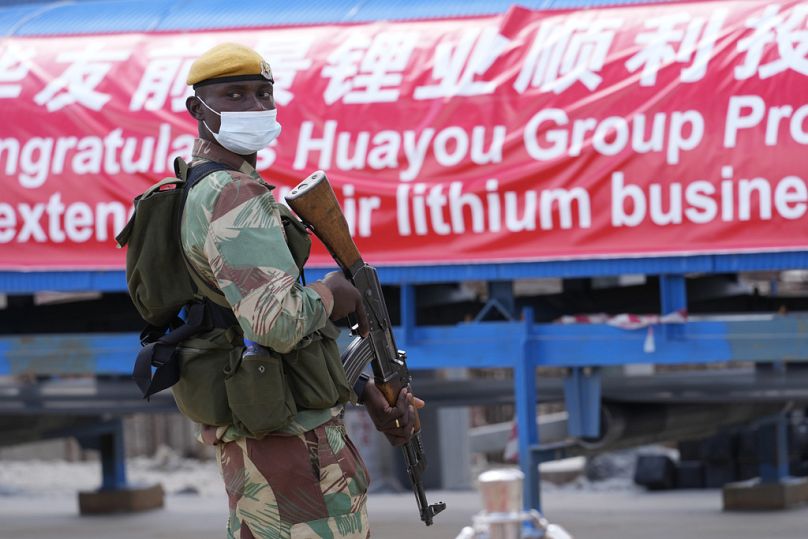
    Tsvangirayi Mukwazhi/AP
    An armed soldier stands on the grounds of Prospect Lithium Zimbabwe’s processing plant in Goromonzi, July 2023Tsvangirayi Mukwazhi/AP

    However, if Europe does not become a mining continent, it will become dependent on countries like China for resources, particularly when it comes to lithium.

    It is possible to import lithium from more politically friendly countries such as Argentina, Chile, and Mali. But being dependent on international supply chains for crucial resources is untenable.

    A period of enormous change is happening

    We do not need to import metals from the developing world, even lithium. There are major lithium resources in the Czech Republic, Serbia, Bosnia, and Spain.

    Nickel exists plentifully in Europe. There are several large iron mines in Scandinavia, and copper is intensively mined in Spain and Portugal.

    The Vareš silver mine in Bosnia is due to start production this year. But all European countries need to be promoting the extraction of these resources if they are to have a chance of achieving net zero.

    Yes, this means mining, but it doesn’t have to mean mining in the way that Europeans and residents of other continents have historically experienced it.


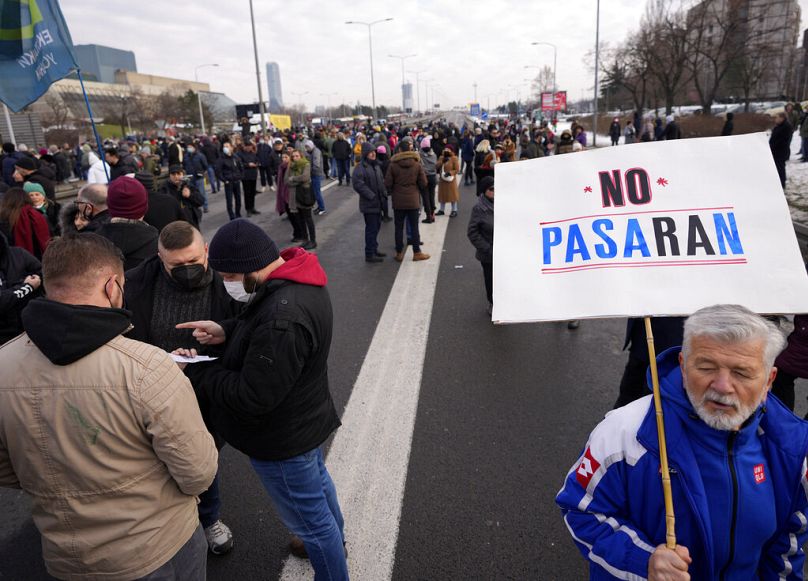
    Darko Vojinovic/Copyright 2022 The AP. All rights reserved.
    An environmental demonstrator holds a banner reading: “No Pasaran” as a highway is blocked, during a protest against a lithium mine in Belgrade, January 2022Darko Vojinovic/Copyright 2022 The AP. All rights reserved.

    Yes, this means mining, but it doesn’t have to mean mining in the way that Europeans and residents of other continents have historically experienced it; the slag piles and the “pits” of the increasingly obsolete coal mines.

    The mining industry has been going through a period of enormous change and shifting towards something called “non-disruptive mining”.

    Non-disruptive mining exists — and there’s proof it can be done easily

    Non-disruptive mining means mines that run on renewable energy and whose transport logistics and water use is green.

    It means restoring the nature that is disturbed by mining in a way that preserves and enhances local biodiversity and being careful about all the social and environmental impacts of a mine.

    Most importantly, it means that the waste products which used to end up in slag piles — called “tailings” in the industry — are properly processed to recover all of the plentiful amounts of ore which they contain.

    Sweden is Europe’s pioneer in non-disruptive mining. Its carbon-free iron mine in Kiruna is a sustainable mining flagship for the world, and the Grängesberg iron mine in central Sweden is also a notable sustainable mine.


    AP Photo/Malin Moberg
    Reindeer herder Niila Inga from the Laevas Sami community walks across the snow as the sun sets on Longastunturi mountain near Kiruna, Sweden, November 2019AP Photo/Malin Moberg

    Sweden is Europe’s pioneer in non-disruptive mining. Its carbon-free iron mine in Kiruna is a sustainable mining flagship for the world, and the Grängesberg iron mine in central Sweden is also a notable sustainable mine.

    Several of the companies that are expected to mine lithium in the UK have already committed to using a range of sustainable mining techniques ranging from running a plant on hydrogen or lithium-ion power, transporting ore via electric conveyors rather than trucks, and souring electricity from an off-shore wind farm to be built nearby.

    Mining can be the bedrock of Europe’s green energy transition

    All of Europe needs to follow Sweden and the UK’s example and build greener mines, particularly copper, nickel and lithium ones.

    In addition to these national projects, Europe as a whole should be investing in research into and proactive exploration of the major metal deposits in Europe and putting together large-scale green mining projects.

    To achieve this, the image of the mining industry needs to change. Mining needs to become seen for what it is, the bedrock of Europe’s green energy transition and energy independence.

    [/vc_column_text][distance desktop_type=”30″][/vc_column][/vc_row][/vc_section]

  • Australia wants more from the EU in exchange for its minerals

    Australia wants more from the EU in exchange for its minerals

    [vc_section][vc_row][vc_column][distance desktop_type=”30″][lvs][distance desktop_type=”30″][vc_btn title=”Source – euractiv.com” color=”sky” i_type=”material” i_icon_material=”vc-material vc-material-perm_device_information” add_icon=”true” link=”url:https%3A%2F%2Fwww.euractiv.com%2Fsection%2Feconomy-jobs%2Fnews%2Faustralia-wants-more-from-the-eu-in-exchange-for-its-minerals%2F|target:_blank”][distance desktop_type=”30″][vc_column_text]Negotiations for a free trade agreement (FTA) between the EU and Australia are stalling as Australia wants to leverage its wealth in critical raw materials to get more market access for its meat and sugar industry.

    On Tuesday (11 July), Australian Trade Minister Don Farrell broke off what many hoped to be the final round of negotiations for an FTA between Australia and the EU. Having travelled to Brussels on short notice, Farrell was left unimpressed by the EU’s market access offers for Australian beef, sheepmeat, and sugar producers.

    “We’ve made it very clear right from the start that we won’t simply accept any agreement,” he told journalists on Tuesday afternoon.

    An EU Commission spokesperson said the EU executive regrets that “it was not possible to conclude our talks with Australia this week,” arguing that the EU had “made every effort to arrive at a balanced agreement that meets our mutual strategic interests, while also protecting the interests of our stakeholders”.

    EURACTIV understands that the EU presented Australia with a new market access offer that the Australian trade minister could not accept without first consulting with his colleagues in Canberra.

    “We note there were several issues on which the Australian side required further internal consultations,” the Commission spokesperson said.

    Both parties agreed to keep negotiating in the hope of getting towards an agreement before the end of the year.

    Collaborate in critical raw materials

    While the EU just signed an FTA with New Zealand, Australia seems to be a tougher nut to crack. It is not only the Australian economy that is more than six times larger than New Zealand’s, Australia also has something that the EU desperately needs: critical raw materials.

    In its vast and sparsely inhabited territory, Australia finds most of the materials that will be crucial to transition the world economy towards a greener model.

    For example, Australia is the world leader in lithium extraction, producing more than the world number two (Chile) and three (China) combined, according to the United States Geological Survey.

    Although Australia has started to scale up its lithium refining capacities, most of the lithium still goes to China for processing. China currently accounts for about 60% of lithium processing capabilities.

    As both the EU and Australia have professed their intention to “de-risk” and diversify their supply chains away from China, the opportunity for collaboration seems clear.

    “If [the Europeans] want to do what we want to do, which is diversify our trading relationships, then Australia is the perfect country to do it with,” the Australian trade minister said on Tuesday.

    But the details are difficult.

    Double pricing: Industrial policy vs free trade

    For example, the EU would like to have access to Australian raw materials under the same conditions as Australian consumers. It wants Australia to commit to a policy that would prohibit so-called double pricing that disadvantages EU companies compared to Australian ones.

    One of these policies is the regional government of Western Australia’s policy of reserving 15% of liquified natural gas production from each LNG export project for the domestic market, which reduces prices for domestic gas consumers.

    The EU’s push for Australia to refrain from such policies is understandable from a European perspective, especially since the EU tries to build up its own raw materials processing supply chain in Europe.

    However, this push might undermine Australian efforts at being more than just a raw materials exporter.

    Australia has long struggled to establish businesses further down the value chain despite the availability of abundant energy. This is partly due to its wealth in natural resources.

    The highly profitable raw materials sector attracts talent with highly competitive wages, which raises labour costs for industries across the board. Add to that the fact that raw materials exports push up the value of the Australian dollar, and it gets even harder for any downstream manufacturers to be competitive in the global market.

    Double pricing could therefore be one of the few policy options for Australia to help establish some more sophisticated industries next to its mining giants.

    Agricultural market access

    While critical raw materials might be the most important aspect of the FTA from a strategic point of view, agriculture, as usual, is the most contentious one.

    Take the Australian dairy industry, for example. Seeing its biggest market is in China and other Asian countries, it has little to gain from an FTA with the EU. It does, however, have something to lose as the EU pushes for the respect of its geographical indications (GI) for several food products, specifically Feta, Parmesan, and Romano cheese.

    If Australia subscribed to these GIs, producers of Australian goat cheese, for example, could no longer call their product “Feta”, as the GI would restrict the use of this name to products made in Greece, an issue of great contention for the large group of Australians with Greek heritage.

    With the dairy industry having nothing to gain but much to lose, support from the Australian agricultural sector would have to be secured in another way, for example by significantly increasing the EU import quotas for Australian beef, sheepmeat, and sugar.

    “The agreement has to achieve meaningful agricultural access to European markets,” Don Farrell said. He is under pressure from the National Farmers’ Federation (NFF), whose chief executive Tony Mahar said in a statement that it was “better to walk away than to agree to a dud deal.”

    Australian farmers want to have a slice of the market of more than 440 million EU consumers, but this hurts the interests of EU farmers, especially in France and Ireland. As farmers have proven to be politically very influential in trade matters, it will be difficult for EU countries to agree to open their market for agricultural products.

    For the EU, it is thus also a question of whether the industries needing an assured supply of critical raw materials or the agricultural sector will see their interests better defended.

    Negotiations in August

    Both the EU and Australia still profess to be optimistic about the FTA negotiations, even though EU negotiators seem to be taken aback by the Australian trade minister’s brusque departure.

    “We rely on our Australian partners to work with us to get this over the line soon. Our door remains open,” an EU Commission spokesperson said.

    Don Farrell said that there was goodwill on both sides. “In August, we will meet again with the aim of trying to resolve an agreement as quickly as possible,” he said.[/vc_column_text][distance desktop_type=”30″][/vc_column][/vc_row][/vc_section]

  • Carbon tax loophole could flood Europe with emissions heavy metal

    Carbon tax loophole could flood Europe with emissions heavy metal

    [vc_section][vc_row][vc_column][distance desktop_type=”30″][lvs][distance desktop_type=”30″][vc_btn title=”Source – Financial Review” color=”sky” i_type=”material” i_icon_material=”vc-material vc-material-perm_device_information” add_icon=”true” link=”url:https%3A%2F%2Fwww.afr.com%2Fcompanies%2Fenergy%2Fcarbon-tax-loophole-could-flood-europe-with-emissions-heavy-metal-20230709-p5dmwh|target:_blank”][distance desktop_type=”30″][vc_column_text]

    Brussels/London | European aluminium producers are warning that a loophole in the EU’s carbon border tax will lead heavily polluting exporters such as China to circumvent the rules and flood the bloc with low cost, emissions heavy metal.

    Under the EU’s proposed carbon border tax – a levy on the amount of carbon dioxide emissions produced during the manufacture of goods imported into the bloc – offcuts of aluminium which are remelted can be sold as a zero carbon product even if the virgin material was produced with coal or other fossil fuel power.

    Aluminium companies including Norsk Hydro and Speira told the Financial Times that the so-called carbon border adjustment mechanism (CBAM) incentivised producers outside the EU to generate as much scrap as possible which would then be remelted and exported to Europe.

    “This loophole enables the widespread greenwashing of imported aluminium products and undermines the effectiveness of CBAM in preventing carbon leakage,” said Hilde Merete Aasheim, chief executive of Norway’s Norsk Hydro.

    Lightweight and durable, aluminium is vital for building aircraft and cars and is used in solar power components. However, it is the most energy-intensive metal known in the industry and is sometimes referred to as “solid electricity”.

    Aluminium production accounts for around 3 per cent of the world’s industrial emissions, according to the International Energy Agency.

    The adjustment mechanism will initially be introduced without charges during a trial phase that starts in October this year; producers will have to pay the levy from 2026.

    In the initial phase, it will cover seven different sectors including aluminium, iron, steel, fertiliser and hydrogen.

    The aim is to prevent products made with lower cost but dirtier production processes from undercutting companies within the EU that have to comply with the bloc’s stricter climate laws and pay for pollution under the EU’s emissions trading system.

    EU officials hope that it will promote more rapid decarbonisation in industrial sectors around the world.

    In the EU, smelters emit around 6.8 kilograms of carbon dioxide for every kilogram of aluminium, compared to a global average of 16.1 kilograms of carbon dioxide per kilogram, according to the trade body European Aluminium.

    But the loophole risks undercutting its purpose, say its critics. Ana Šerdoner, senior manager in industry and energy systems at the environmental NGO Bellona, said that some manufacturers “might use [this loophole] to reshuffle their exports a bit and make sure those scraps are remelted and sold to Europe as carbon neutral”.

    Europe’s aluminium producers’ claims come on top of concerns about a lack of rebates for exports containing imported aluminium that had been taxed, finished products such as cars or cans containing highly polluting aluminium being allowed in without paying for emissions generated in metal production and the loss of the sector’s free emission allowances.

    “The details and current design raise more concerns than opportunities,” said Volker Backs, head of public affairs at Speira, a large German aluminium rolling and recycling company, who warned of CBAM’s impact on Europe’s broader manufacturing competitiveness.

    Paul Voss, head of European Aluminium, said that if the measures were poorly designed the sector “will be undercut so badly there will be nothing left to decarbonise and it won’t help the planet”.

    Europe’s aluminium industry has already been ravaged by higher energy costs after Russia invaded Ukraine, leading to approximately half of the EU’s smelting capacity to shut.

    For some, opposition to CBAM is more fundamental. Nick Keramidas, executive director of EU Affairs at Greek aluminium producer Mytilineos Energy and Metals, said that the domestic producers facing soaring costs needed a level playing field.

    “CBAM threatens to cripple European production out of serving the European and global market. It would actually cause the problem it seeks to address by causing more carbon leakage,” he said.

    The CBAM has been heavily contested by countries outside the EU, which argue that it punishes producers in less developed nations that are economically reliant on exports to the bloc.

    The European Commission, which is consulting on the final details of CBAM until July 11, declined to comment.

    [/vc_column_text][distance desktop_type=”30″][/vc_column][/vc_row][/vc_section]

  • EU industry transition: regional action needed to reduce dependence on critical raw materials and boost net-zero technology manufacturing

    EU industry transition: regional action needed to reduce dependence on critical raw materials and boost net-zero technology manufacturing

    [vc_section][vc_row][vc_column][distance desktop_type=”30″][lvs][distance desktop_type=”30″][vc_btn title=”Source – cor.europa.eu” color=”sky” i_type=”material” i_icon_material=”vc-material vc-material-perm_device_information” add_icon=”true” link=”url:https%3A%2F%2Fcor.europa.eu%2Fen%2Fnews%2FPages%2Freduce-dependence-raw-materials-boost-net-zero-technology.aspx|target:_blank”][distance desktop_type=”30″][vc_column_text]Delivering an inclusive digital and green transition of Europe’s industry is crucial for EU’s cohesion and climate ambitions. The EU’s policy to reduce reliance on imports of critical raw materials and increasing the manufacturing of net-zero industry technologies has an enormous impact on regions and cities. Specific challenges of regional and local economies and communities need to be taken into account to strengthen Europe’s competitiveness and productivity and at the same time avoid growing territorial disparities. These are the main messages of two opinions on the Critical Raw Materials Package and on the Net-Zero Industry Act adopted during the plenary session of the European Committee of the Regions (CoR) on 5-6 July.

    The preparedness and resilience of local and regional authorities (LRAs) for the green and digital transition is a key factor for the sustainability of public services in the era of growing dependence on net-zero technologies and critical raw materials, making it necessary for the regional perspective to be included in the newly proposed Critical Raw Materials Package and the Net-Zero Industry Act. The future of Europe’s competitiveness strongly relies on the diversification of external supplies of critical raw materials and the development of technologies that make the sustainable transition possible and ensure a European net-zero economy. It is crucial to ensure new sources of critical raw materials and net-zero energy technologies through circular use of resources, sustainable products and innovation, better domestic sourcing of raw materials and the EU’s net-zero technology products manufacturing ecosystem.​

    In the opinion on critical raw materials, which was adopted by unanimity, CoR members welcomed the European Commission’s proposal but stressed that skills and expertise in the former and active mining regions are important for the mining, extraction, and processing of critical and strategic raw materials. CoR Members also underlined the necessity to involve local and regional authorities in all processes and secure a place for a CoR representative, as a voice of European LRAs, in the Critical Raw Materials Board, a coordinating body envisaged in the European Commission’s proposal. Members furthermore underlined the importance of decentralised strategic stockpiling and highlighted that the EU recycling industry has great potential as a means of reducing the EU’s dependence on raw materials from third countries. CoR Members therefore supported the assessment of a more ambitious target for the recycling capacity of at least 20% of the annual consumption of each strategic raw materials.

    The rapporteur of the opinion Isolde Ries (DE/PES), Mayor of West Saarbrücken District, said: “Electric cars, mobile phones, computers, wind power and solar systems: we need critical raw materials for a successful green and digital transition. The Covid-19 crisis and the Russian war of aggression against Ukraine have shown us how quickly and sustainably global supply chains can be disrupted. That’s why we have to become more independent from individual countries, expand our own resource capacities and significantly increase recycling rates. Industrial needs and environmental protection must go hand in hand.”

    CoR members further adopted the opinion on the Net-Zero Industry Act, which welcomes the proposal to improve the investment climate for net-zero technology in Europe and stresses that regions would benefit enormously from more investment certainty, better policy coordination and a reduced administrative burden. LRAs are often directly affected by the measures proposed in the Act. It is therefore necessary to take a more pragmatic and wider approach so that the scope of the Act covers not only innovative net-zero technologies, but also the corresponding supply and value chains across borders. As local and regional authorities carry out procurement procedures and promote training and reskilling on net-zero technologies, it is crucial to involve them in the Net-Zero Europe Platform, in One Stop Shops and European Net-Zero Industry Academies.

    Rapporteur Mark Speich (DE/EPP), State Secretary for Federal, European and International Affairs and Media, said on the margins of the plenary: “The NZIA aims to improve conditions for net-zero investments. It will streamline permit-granting processes. Since the law intervenes in many areas subject to regional competences, the sub-national level must be actively involved. Equally important is that the entire value chain and all suppliers are included. Net-zero will not be available without the steel or the chemical industry – just to mention a few. It must be ensured that net-zero investments are not contradicted by other pieces of EU legislation. EU legislation must be coherent!”

    Background:

    The European Commission published its proposal for a Net-Zero Industry Act (NZIA) on 16 March. The proposal is part of the Green Deal Industrial Plan, whose overall goal is to enhance the competitiveness of Europe’s net-zero industry and accelerate the transition towards climate neutrality. The NZIA aims to scale up clean-tech manufacturing in the EU with the ambition that the EU’s strategic net-zero tech manufacturing capacity should reach at least 40% of the Union’s annual deployment needs by 2030.  ’Net-zero’ refers to technologies and investments that contribute to reducing or neutralising carbon emissions in a scientifically proven manner, reaching thresholds set by the Paris Climate Agreement.

    The Critical Raw Materials Act, proposed by the Commission on the same day, leverages the strengths and opportunities of the Single Market and the EU’s external partnerships to diversify and enhance the resilience of EU critical raw-material supply chains. The Critical Raw Materials Act also improves the EU’s capacity to monitor and mitigate risks of disruptions and enhances circularity and sustainability.

    Regions and cities are paving the way towards a transition to climate neutrality in industry, by attracting investments in green technologies and supporting the development of new skills. Watch here the video on regions’ and cities’ stories of making the transition happen, including the example of the project ‘Revierwende’ of the Saarland region in Germany.[/vc_column_text][distance desktop_type=”30″][/vc_column][/vc_row][/vc_section]

  • Sweden’s Hexagon buys Canadian mine automation firm HARD-LINE

    Sweden’s Hexagon buys Canadian mine automation firm HARD-LINE

    [vc_section][vc_row][vc_column][distance desktop_type=”30″][lvs][distance desktop_type=”30″][vc_btn title=”Source – mining.com” color=”sky” i_type=”material” i_icon_material=”vc-material vc-material-perm_device_information” add_icon=”true” link=”url:https%3A%2F%2Fwww.mining.com%2Fswedens-hexagon-buys-canadian-mine-automation-firm-hard-line%2F|target:_blank”][distance desktop_type=”30″][vc_column_text]Sweden’s digital technology group Hexagon AB (STO: HEXA-B) announced on Wednesday the acquisition of Canadian mine automation and remote control solutions HARD-LINE for an undisclosed sum.

    The move, Hexagon said, will help the company strengthen its solution offering with remote control via electronic and hydraulic by-wire technologies, innovation necessary for achieving full autonomy in the mine.

    “The pressure to remove humans from dangerous situations where it’s unsafe to operate a manned vehicle is increasing, particularly as mines push deeper underground for minerals and metals,” Nick Hare, President of Hexagon’s Mining division, said in the statement.

    Founded in 1996 and headquartered in Sudbury, Canada, HARD-LINE has around 100 employees serving customers in both the underground and surface mining markets.

    The company will operate as part of Hexagon’s Mining division.[/vc_column_text][distance desktop_type=”30″][/vc_column][/vc_row][/vc_section]
  • Scotgold halts guidance, launches operational review

    Scotgold halts guidance, launches operational review

    [vc_section][vc_row][vc_column][distance desktop_type=”30″][lvs][distance desktop_type=”30″][vc_btn title=”Source – mining.com” color=”sky” i_type=”material” i_icon_material=”vc-material vc-material-perm_device_information” add_icon=”true” link=”url:https%3A%2F%2Fwww.mining.com%2Fscotgold-halts-guidance-launches-operational-review%2F|target:_blank”][distance desktop_type=”30″][vc_column_text]Shares in Scotgold Resources (LON: SQZ) fell more than 18% on Monday after the troubled miner withdrew its full-year guidance as it began a third-party review of its operation on “disappointing” production figures for the first half of 2023.

    The company behind the Cononish mine, which received initial approval for the mine in 2018, poured first gold in December 2020 and achieved commercial production in July last year, said the review will take 12 months.

    Scotgold said it will initially encompass an assessment of the mine design, schedule and production forecasts.

    “[It will also] inform 2023 production forecasts and will also incorporate a second stage of power and ventilation upgrades to improve mine accessibility and enable the mine to operate all development and production equipment simultaneously to improve mine development rates,” it said in the statement.

    The miner reiterated concerns over its ability to keep operations going at Scotland’s first commercial gold and silver mine. Despite efforts to optimize production, it has had to revise output targets downward several times in the past year.

    Scotgold has now decided to withdrawn 2023 guidance as both gold production and sales fell in the first half of the year due to a halt in production at its Cononish mine early this year.

    Sales of the precious metal dropped to £3.5 million ($4.5m) in the first half of the year from £6.3 million in the same period of 2022, as production declines to 2,314 ounces from 4,755 ounces a year prior.

    The fall in production was a result of halted development on the 430 West Ore Drive in late February due to declining gold grades, the company said.

    It also said it would update the market on production forecasts once the third-party review is complete and the findings have been analyzed.

    Scotgold’s update comes on the heels of the BBC News admission to have broadcasted “fake news” about a non-existent gold discovery made by the company, which caused the miner’s share price to subsequently soar.

    When news of this alleged find broke, investors rushed to buy Scotgold shares. This caused the stock to soar 54% – adding around £15 million to its valuation – only to fall rapidly in the following days as the company admitted that it has not even drill-tested the said gold vein.

    The company’s shares have fallen more than 75% year-to-date, leaving it with a market capitalization of £11.51 million (about $15m).[/vc_column_text][distance desktop_type=”30″][/vc_column][/vc_row][/vc_section]
  • Lessons from the UK, US, and Germany on transitioning power grids from coal to clean

    Lessons from the UK, US, and Germany on transitioning power grids from coal to clean

    [vc_section][vc_row][vc_column][distance desktop_type=”30″][lvs][distance desktop_type=”30″][vc_btn title=”Source – poweringpastcoal.org” color=”sky” i_type=”material” i_icon_material=”vc-material vc-material-perm_device_information” add_icon=”true” link=”url:https%3A%2F%2Fpoweringpastcoal.org%2Fnews%2Flessons-from-the-uk-us-and-germany-on-transitioning-power-grids-from-coal-to-clean%2F|target:_blank”][distance desktop_type=”30″][vc_column_text]

    As grids shift from relying on coal-fired generation to more diverse energy mixes, including an increasing proportion of renewable energy, important lessons can be learned on how to maintain flexibility and reliability. The Powering Past Coal Alliance’s recent webinar, “Transitioning Power Grids from Coal to Clean – Solutions from the UK and US,” brought together industry experts from National Grid, California System Operator (CAISO), Pembina Institute, and the German government to discuss how to integrate more renewables and diverse energy sources. The webinar also shed light on unique subnational contexts and common challenges faced by each jurisdiction before affirming that, with the right technical, policy, and planning solutions, these many obstacles can be overcome.

    Similar Challenges, Unique Jurisdictional Contexts

    The latest IPCC report makes it clear that utilities and governments worldwide must prioritise the phase out of coal-fired power plants by 2030 in OECD countries and by 2040 in the rest of the world. In California, the UK and Germany, grid operators have a common objective of maintaining grid flexibility and reliability as they reduce their reliance on large, centralized coal-fired generation, but the nature of the challenges changes depending on energy systems as well as geography and weather patterns. 

    Germany

    In Germany, coal consumption has halved in 30 years. The country’s coal phase-out date was set for 2038, however the government now aims towards an earlier coal phase-out by 2030.

    As well as a strengthened economic structure in its affected coal regions, Friederike Wenderoth emphasised a need for an integrated strategy across all sectors, citing increased interaction between different areas of the energy system and sectors. To tackle this, the German Ministry of Economic Affairs and Climate Protection is developing a cross-sectoral mission statement and a robust energy strategy for the transformation of the energy system.

    Elsewhere, the German government is also considering other high-priority challenges, including system stability in terms of voltage, frequency, and resonance stability, the organization of ancillary services, and market design. The transition towards a coal-free and climate-neutral electricity system requires a smart orchestration of the infrastructure, the market, and the technology.

    “Germany is a is a member of the PPCA and we support PPCA activities as it supports different jurisdictions in transitioning towards clean energy. Its mission is also to foster the dialogue on the technological economical political and social implications of this transition, and this fully corresponds to the mission of the German energy agency.”

    Friederike Wenderoth, Team Leader for Energy Infrastructure at the German Energy Agency (dena)

    National Grid

    In the UK, a series of market signals and interventions dating back to 2000 including electricity trading & transmission agreements, feed-in tariffs, and electricity market reforms were instrumental in driving the transition and boosting renewables capacity.

    In the northern hemisphere, the unpredictable weather makes it challenging to forecast energy generation accurately. Additionally, British utility companies face difficulties in distributing energy generated in Scotland to the southern regions where electricity demand tends to be higher.

    National Grid also highlighted the challenges they face with regards to frequency response, grid stability, voltage regulation, thermal constraints, restoration, and energy balancing. These issues are critical to ensuring the reliability and stability of the evolving grid. The integration of renewable energy sources, particularly offshore wind, and the adoption of a holistic network design have been essential strategies in leveraging clean energy capacity.

    Finally, the utility also showcased its success in reducing coal generation, from one-third of the generation mix to near-zero levels. The grid also achieved its first coal-free 24 hours in 2017 and ran for 68 consecutive days without coal generation in 2020 –achieved by several important steps across two decades.

     “The energy landscape is changing. So as a business we are very keen to share the lessons learned network operators and network owners’ perspectives during National Grid’s journey to decarbonize our power system. We believe that international collaboration is key in order to reach net zero.”

    Amir Alikhanzadeh, International Grid Decarbonisation Manager, National Grid 

    CAISO

    California Independent System Operator has made impressive strides into its energy transition. In May 2022, the operator achieved peak generation from renewables, surpassing 100% of electricity demand, with a surplus of 3% exported elsewhere. It has also made significant progress in battery capacity deployment, installing more capacity than anywhere else in the US and learning valuable lessons in leveraging batteries for grid reliability.

    But the California operator’s transition to a cleaner grid has faced several key challenges. First, it required implementing and sustaining legislation aimed at reducing the state’s carbon footprint, including setting renewable energy goals and achieving decarbonization targets. In 2002, the state implemented its Renewable Portfolio Standards (RPS), which set California’s renewable electricity procurement goals at 33% by 2020 and 50% by 2030 with the aim of reducing greenhouse gases to 40% below 1990 levels by 2030 and 80% below 1990 levels by 2050.

    Effectively integrating renewable energy sources such as solar and wind into the grid was then crucial to meet the state’s renewable portfolio standards while ensuring a reliable and stable energy supply. By incentivising utilities to produce more renewable energy, California’s three largest investor-owned utilities collectively served 36% of the electricity sales with renewable power by 2017. One year later, California introduced Senate Bill 100, which set the ambitious goal of achieving a decarbonized power system by 2045. This groundbreaking policy requires that 100 percent of electrical sales to end-use customers come from renewable energy and zero-carbon resources by 2045, paving the way for a sustainable and cleaner energy future.

    “To reach our ultimate goal of 100% renewables by 2045 requires continued investment in clean energy technologies and innovation solutions to ensure good reliability. With the right policies and actions in place, we can create a sustainable future for generations to come.”

    Shawn Grant, Operations Policy Manager, California Independent System Operator

    Policy and Planning for a Sustainable Transition

    The panellists emphasized the need for comprehensive policy and planning to enable the deployment of technical measures. As power grids transition from coal to clean, flexibility becomes a key feature. This flexibility allows for effective management and utilisation of clean energy technologies being deployed, where system planning, cross-sectoral strategies, and infrastructure planning were highlighted as crucial elements in ensuring a successful and sustainable transition.

    As a growing number of utilities and jurisdictions look to phase out coal and phase in renewables to within Paris-aligned timelines, discussing common challenges, solutions and lessons learned across different geographies becomes increasingly important. The discussions during the webinar underscored the importance of integrating technical solutions with supportive policies and comprehensive planning to facilitate a successful grid transition. Through knowledge sharing and collaborative efforts, we can expedite the global shift towards clean energy, forging a sustainable and resilient future for the energy sector.[/vc_column_text][distance desktop_type=”30″][/vc_column][/vc_row][/vc_section]