Website: Europe.com

  • The geopolitical dimension of the Jadar Lithium project in Serbia

    The geopolitical dimension of the Jadar Lithium project in Serbia

    On March 16, the European Commission published a proposal for a new Law on Critical Raw Materials. EU wants to compete with China and the USA in the production of green technologies, as well as to reduce the emission of harmful gases by 2050. Critical raw materials are primarily rare metals necessary for modern green technologies, and lithium is among them. EU members are obliged to carry out geological research and mapping of new deposits in order to reduce import dependence on China through the exploitation of critical raw materials. It is also planned to form a Committee for Critical Raw Materials, which will have the right to declare certain exploitation projects as strategic and reduce the maximum period for issuing permits for the operation of such mines to 24 months. Serbia is not mentioned in the new law, but cooperation with exporters such as Namibia, Chile and Canada is announced. As Serbia is home to one of the largest lithium deposits in Europe, it is not excluded that the Jadar project will also have a geopolitical dimension. Especially since Serbia opened negotiation chapter 15 on energy on December 14, 2021, in the midst of protests against amendments to the Law on Referendum and the Law on Expropriation, which, it was believed, served to speed up the implementation of the Jadar project. Meanwhile, BIRN obtained a report from the meeting between the representatives of the Rio Tinto company and the head of the EU Delegation in Serbia, Emanuel Gioffre, held on March 25, 2022, two months after the end of the project was allegedly put on hold. The company’s representatives then said that they support the local one, but that they are afraid of the results of the national referendum.

    A fairy tale of accelerated growth

    With its GDP per capita of 7,803 euros, Serbia is 2.6 times behind a medium-developed country such as Slovakia, and even 4.7 times behind the EU average. In other words, the GDP per inhabitant of Serbia would have to grow by 10 percent per year on average over the entire decade just for Serbia to reach today’s Slovakia. Or 13 percent per year to be similar to what it was then (or only slightly less if we take into account the Balasa-Samuelson effect that would act on the appreciation of the dinar and which would eventually help to equalize the GDP per capita faster), assuming that Slovakia in that period grows a modest 2.5 percent. It is immediately clear that this kind of growth is simply not possible – neither without the Jadar project, nor with ten such projects in the next ten years. The President of Serbia has repeatedly said that the exploitation of lithium would contribute to GDP growth of 3.5 to 4 percent. “We would have 3.5-4 percent higher growth on an annual basis,” he literally said. Growth higher by 3.5-4 percentage points per year means that, say in 2022, growth would be around 6.05 percent (actual growth of 2.3 percent plus 3.75 percentage points), and growth higher by 3.5-4 percent would mean that it would be 2.39 percent (2.3 percent times 1.0375). I reasonably assume that the president meant percentage points, not percentages, as he said, for two reasons. First, the difference in economic growth between 2.3 and 2.39 percent, although welcome and many times closer to the real effects, is far from the economic miracle needed for Serbia to catch up with the middle developed European countries. Second, politicians – even when they know the difference between a percentage and a percentage point – almost always use a percentage in both cases to be more “understandable”. And now let’s demystify the claim that the opening of one company, no matter how big it is, could accelerate economic growth by 3.5-4 percentage points and thus enable Serbia to catch up with the mentioned countries. Admittedly, not to catch up with them, because Serbia needs growth of 10 or more percent for 10 years in a row. And Serbia has never achieved such a growth rate. Not during one year, let alone continuously. In fact, such rates can only be achieved by extremely underdeveloped countries with a growing and young population, such as China (two decades ago) or African countries. In addition, history is dominated by examples that show that through the direct exploitation of mineral raw materials, few countries, and even fewer populations, developed (became happy), and that instead of economy, corruption mostly develops. This is also shown by the countries of South America, which are incomparably richer in ores.

    Having shown that even an increase in growth by 3.5-4 percentage points alone is insufficient to fulfill the fairy tale, we will now show to what extent it is impossible and improbable to achieve it through the Jadar project. First, the information that this project would increase growth by so much is not even in the study on economic effects, prepared by Rio Tinto. The study evaluates the economic effects significantly more modestly – the project would increase the GDP by 2.8 percent in the phase of full realization – that is how much it would participate in the formation of the GDP. Therefore, if the Jadar project were to be realized, and everything else in Serbia remained unchanged, the GDP per inhabitant would increase from 7,800 to 8,029 euros. The opening of the mine would help, therefore, to cross only one-eightieth of the way to the “then Slovakia”! At the same time, all these assumptions in the Rio Tinto study refer not only to direct, but also to indirect (development of domestic suppliers and subcontractors) and induced effects of the project (generation of GDP through spending of income generated in the company). Assumed indirect effects (not directly dependent on the project) actually make up most of the assumed effects – out of 5,120 new jobs, only 1,170 are predicted to be created in the mine, and the remaining almost 4,000 are related to indirect and induced effects. This is not necessarily too optimistic, but, nevertheless, a project of this size must require serious planning – which new investments would it attract, which domestic suppliers could it hire, do they need support to increase capacity, acquire new equipment, and the like – otherwise these effects would be completely absent.

    Let’s take a step back, to the claim that the opening of one company can make up for Serbia’s 30-year lag by accelerating growth. The statement that the opening of one company could accelerate growth by 3.5-4 percentage points indicates economic illiteracy or deception. Because it would have to be a company with the economic strength and size of EPS, three Ziđina or six Michelin factories. And every year for the next ten years. At the same time, the business assets of EPS, together with Kolubar, are 4.5 times larger than the planned investments in the Jadar project, while the number of employees in EPS is 30 times larger! Considering the similarity of the industry, a convenient comparison with the Jadar project is China’s Zijin, as it had comparable investments and has six times more direct employees. At the macro level, Ziđin generates about one percent of Serbia’s GDP, and in the past, a record year for them, it participated in exports with 4.5 percent, and very similar effects are expected from the Jadar project. It is indisputable that the revitalization of the Bor mine was of great importance for the local economic activity – 20 percent of the employees and more than half of the wages paid in the Bor area. In the case of the Jadar project, the effects would be similar, but still somewhat smaller, since the surroundings of Loznica have a different economic structure and there would be a shutdown of certain economic, primarily agricultural, activities. By no means should we leave out the effect on the environment either – despite Ziđin’s alleged efforts to reduce pollution, Bor is the “black point of the Balkans”. The problem of growing pollution coincides with the start of work and increased production. Would it be the same in the case of Jadar, is one of the main questions to which there seems to be no credible answer.

    The fiscal moment is also important. As a major investor, Rio Tinto would effectively be exempt from paying corporate tax up to the amount it invested in the project – paradoxical but true, just like Ziđin. To conclude, the effects of those two investments would be comparable, they have positive sides – although not close to hyperbolic claims, for the fulfillment of which a clear strategy and a more meaningful fiscal policy are needed. Both investments, unfortunately, have negative effects, primarily on the environment. This analysis is neither for nor against the Jadar project per se. The situation in which Rio Tinto finances economic and environmental impact studies certainly has a negative effect on the credibility of the facts. Telling fairy tales has an equally negative impact. Maybe it would really have more significant economic effects, but there is no one to plan them and convince us of that. It might not have an irreparably negative impact on the environment, but no one can guarantee that. This is also the key development problem of Serbia. At this moment, I am closer to the point of view that Serbia is not institutionally mature for something like this.

    Economist Nebojša Katic also wrote about the economic effects of the Jadar project more than a year and a half ago. “If Rio Tinto start with exploit and export of ore from Serbia, export revenues will increase Serbian GDP, but these revenues belong to Rio Tinto and, as a rule, do not stay in Serbia.” Serbia will have mineral rent from that, maybe Rio Tinto will pay some taxes, and some will even get a salary working for Rio Tinto. This is where the financial benefits for Serbia will end and they will be incomparably less than the statistical growth of GDP,” Katic wrote in the author’s text, with the remark that “economists really like indirect effects because they can estimate, magnify and manipulate them as much as they want, or as much as they are paid”. The words of Luka Erceg, a native of Canada, originally from Loznica, master of law and economics and director of a company in the USA that manages investments, have even greater specific weight. All the more so since until 2013 he ran a company for the production of lithium in the USA, about which he also spoke to the leading world media, the New York Times, Bloomberg and CNN, and in 2012 he spoke about strategic minerals in the US Congress. “The Jadar project will never be able to compete economically with lithium extraction projects from salt water, which are being developed around the world.” I would recommend that Serbia explores old oil and gas sources, because in many of them, economically profitable amounts of lithium have been found,” Erceg claims for NIN.

    “Extraction from salt water is more economical and can withstand falling prices.” If we insist on the Jadar project, it will be shut down in a few years, because lithium from salt water will lower the price. More and more such will arrive from the “lithium triangle”, which consists of Argentina, Bolivia and Chile. Furthermore, lithium for car batteries is not obtained from rocks, because it has too many impurities,” explains Erceg, noting that everyone forgets that lithium batteries last for ten years, and that they can be recycled afterwards. “That’s why eventually we won’t need to produce as much lithium as we do today, because even after recycling it will be able to be used as if it had just been taken out of the mine.” It would therefore make more sense for Serbia to encourage factories for the production and assembly of lithium batteries, which are large and heavy, so local production has advantages. Such a technologically advanced industry would also be stimulating for students of engineering, electrical engineering, chemistry… and that is why it is better to deal with it than ores. I would praise the government for developing technological industries and in general I would recommend it to focus on “knowledge industries,” because the lithium mine will not create many new jobs,” Erceg points out. “After all, it is not impossible to have a lithium mine like the ones that exist in Australia.” But look at the pictures of the disasters those mines have created. At the same time, what exists in Australia does not exist in Serbia. Australian mines work because ore is sent to China for processing. When the ore is processed there, there are also battery manufacturers nearby. Where will Jadar send his ore or his lithium?” The already fantastic story of Serbian officials about lithium billions could hold water as much as possible while the demand and prices of that metal on the world market were breaking records month after month. Meanwhile, the situation has changed dramatically. On April 28, global media reported that the price of lithium carbonate had fallen to an 18-month low, from a record high of $86,170 to around $52,000 per metric ton. In March of this year, somehow just at the time when Vučić brought back to the public the story of the greatest missed opportunity, the price fell by 64.22 percent compared to March 2022. And at the same time, world agencies do not cite the key reason for such a price drop only a weak demand, but an abundant supply.

    At that time, experts estimated that the drop in lithium prices would be reflected in the drop in prices of electric cars, if their sales would not increase. And then, when the sale of electric cars increases, one could also expect a recovery in lithium prices… But that was obviously a long shot. Meanwhile, the decline continued on the first working day of this week, on September 4, a ton of lithium carbonate cost $27,861 on the world market, and just a month before that it was $37,612 or 35 percent more. The dramatic decline is even better evidenced by the fact that the price of lithium a little less than two years ago was almost three times higher than it is now. This time, lower demand contributed to the decline, not much higher than the lowest at the beginning of the pandemic, in April 2020. Despite this, Serbian officials have not changed their story, as if they are still basing their calculations on record lithium prices. It was as if time and everything else had stopped. Everything except an effort to revive the fairy tale about the economic effects that Serbia would have if the Government decided to change its position and still enable lithium mining. However, Minister Momirović was right when he said that “we will only see how this story unfolds in the coming period, but we cannot ignore the perspectives it opens up.”
  • RWE tears down operational wind turbines in grab for more coal

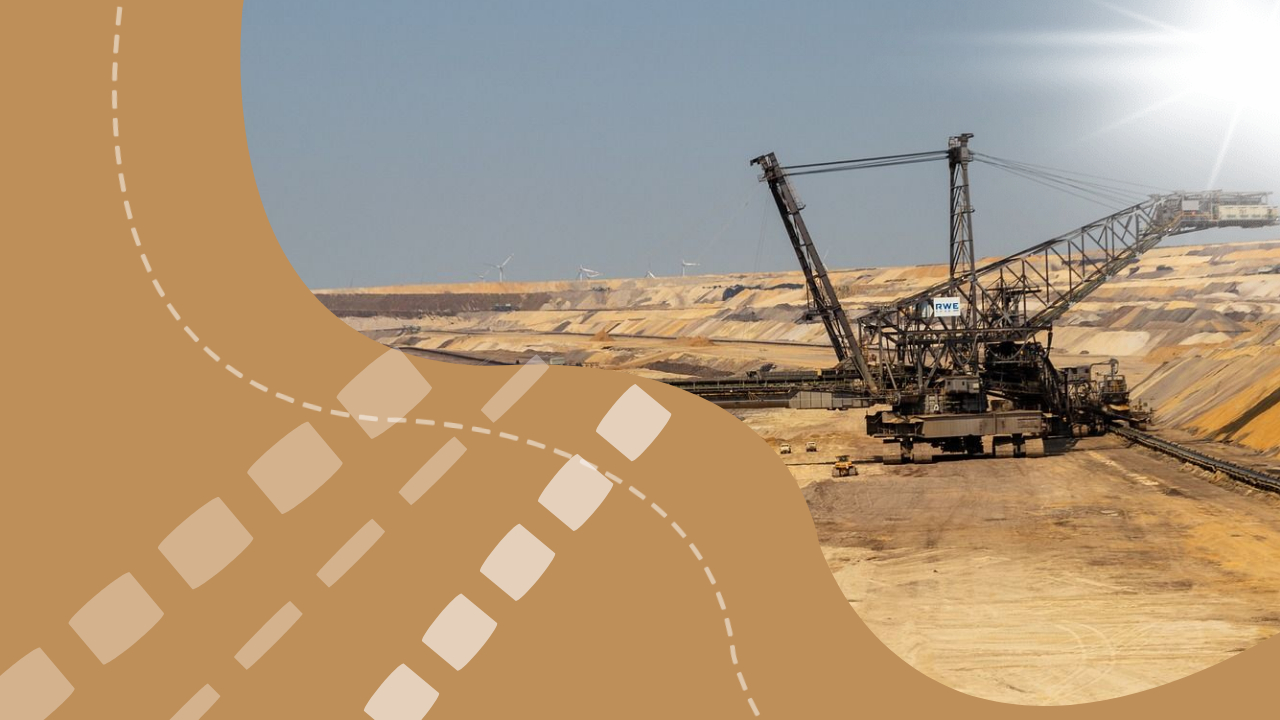
    RWE tears down operational wind turbines in grab for more coal

    The demolitions are part of a deal brokered with Vice Chancellor Robert Habeck and Economics Minister for North Rhine Westphalia, Mona Neubaur, that is supposed to see RWE wind down its coal operations by 2030. RWE is Europe’s second largest CO2 emitter from coal power stations, and has razed over 100 villages in the Rhineland region to make way for its coal operations. Germany’s government is still aiming to exit coal by 2030.

    “The current climate emergency requires urgent and concerted efforts to accelerate the deployment of every single wind turbine, solar panel and heat pump that we can muster. Anything that diverts from this critical endeavour, especially the dismantling of renewable energy sources to extract more fossil fuels, must be unequivocally prohibited,” said Fabian Hübner, senior campaigner in Germany at Beyond Fossil Fuels.

  • SevGOK starts producing 68% iron ore concentrate

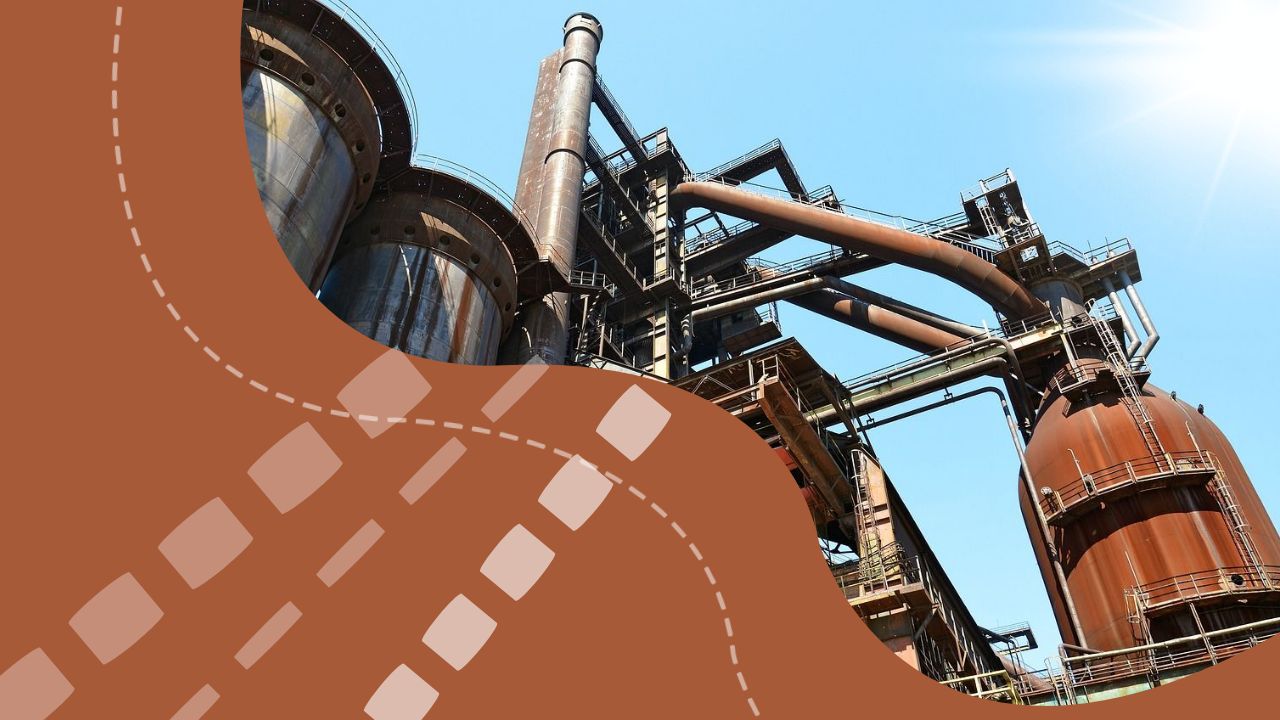
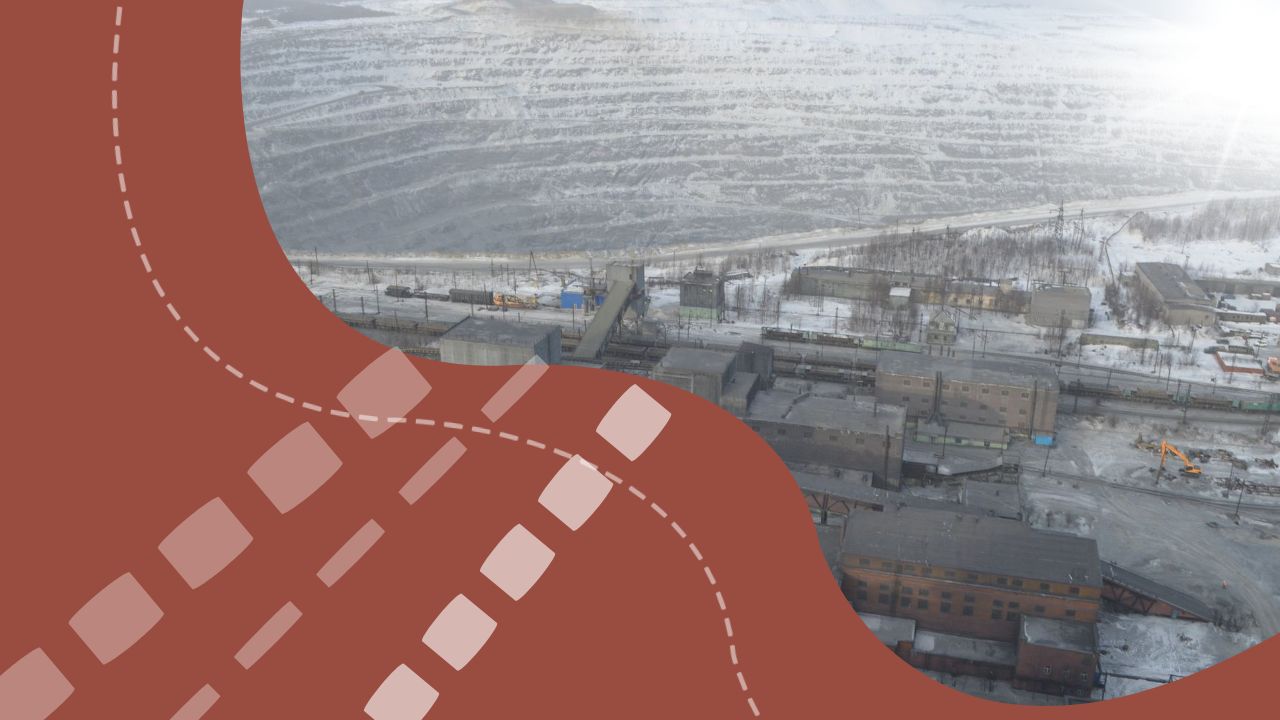
    SevGOK starts producing 68% iron ore concentrate

    Thanks to the project, the enterprise improved pellets quality and obtained an opportunity to enter new iron ore raw materials sales markets.

    Both stages of the factory technological sections can process ore from the Pershotravnevoye and Gannivske deposits with a three-stage crushing scheme. The design capacity of the factory is 30.5 million tons of ore per year with the ability to produce concentrate with the iron content of 65.8%.

    To produce 68% concentrate the company had to merge sections at the first stage and assemble new routes to transport products between them.

  • Help us to enable positive transformation for Ukrainian Refugees in Poland

    Help us to enable positive transformation for Ukrainian Refugees in Poland

    The MINEX Europe Forum is dedicated to more than just sharing knowledge and industry meetings. It’s about making a tangible, positive impact on the communities it touches.

    Over 1.5 million Ukrainian war refugees currently are living in Poland.

    As we plan the 7th MINEX Europe Forum scheduled for 17-19 October 2023 in Wroclaw, we’re committed to fostering change through the empowerment of 150 Ukrainian refugees living in Lower Silesia. Displaced from their homes due to conflict and uncertainty, these individuals seek solace and hope in Poland. Unfortunately, returning to their homeland remains uncertain as the war in Ukraine rages on. Among these refugees are women, the elderly, youth, and children, all striving to adapt to their new lives. The role of charitable missions in providing support cannot be overstated.

    The global response to the Ukrainian crisis has been heartening. Since the start of the invasion in February 2022, unprecedented levels of global support have been extended to Ukraine and its people. Despite this, many charitable organisations are facing “attention fatigue”, and there’s a noticeable reduction in humanitarian aid.

    Recognising this, the MINEX Europe Forum has partnered with the Foundation Ukraine non-profit organisation to address this concern directly. Our mission is ambitious yet concrete: to raise €25,000 to facilitate the comprehensive adaptation and integration of Ukrainian refugees and migrants in Lower Silesia. Advantix Ltd, the Founding Organiser of MINEX Europe Forum, has pledged €5,000 towards this endeavour. We now call upon you, our community, to contribute and make a lasting impact.

    Join us in this journey of transformation, and let’s create a brighter future for Ukrainians in Lower Silesia. Your contribution, regardless of its size, carries immense weight in this endeavour.

    Donate before 1 October.

    Help us to raise 20,000 Euro. Donate as little or as much as you can.
    We would be grateful if you could share this fundraising call with your colleagues and social media.

    Read more about our join campaign[/vc_column_text][/vc_column][/vc_row]

  • Court suspends case against Poland’s Turów coal mine

    Court suspends case against Poland’s Turów coal mine

    The decision, which allows the mine to continue operating for the time being, was welcomed by the Polish government. However, the environmental groups that brought the case have expressed disappointment that the proceedings will drag on further.

    It marks the latest twist in a long-running legal battle over the mine, which has also drawn in Poland’s neighbours, the Czech Republic and Germany, whose borders are close to Turów.

    The provincial administrative court in Warsaw had yesterday been due to rule on the environmental decision that granted Turów, an open pit brown coal mine that feeds a nearby power station, a concession to operate until 2044.

    Instead, the court suspended the case because parallel proceedings before the General Directorate for Environmental Protection (GDOŚ) regarding an application from the mine’s owner – state-owned energy firm PGE – to amend the environmental decision have not been concluded.

    The judge noted that PGE recently withdrew its bid to amend the environmental decision, which led GDOŚ to discontinue proceedings. However, she stressed that, until the discontinuation becomes final and binding, the administrative court cannot rule on the legality of the permit.

    This development was welcomed by government figures, who argue that the mine and power plant in Turów are essential for Poland’s energy security.

    “The fight for Turow continues,” wrote climate minister Anna Moskwa. State assets minister Jacek Sasin called it “a key decision for Poland’s energy security”, adding that “the functioning of the mine is not threatened and the mining concession is valid until 2044”.

    Even before the ruling was issued, Moskwa had insisted that the mine would remain open whatever happened. “Obviously, regardless of this ruling and decision – because we have different experiences – Turow will not be closed. We will defend energy security,” she told Polskie Radio.

    A lawyer from one of the environmental groups that has challenged the legality of the environmental decision, Agnieszka Stupkiewicz of Frank Bold, admitted that the court had no choice but to suspend proceedings.

    However, she criticised the “scandalous” behaviour GDOŚ, saying that the agency had not kept parties in the case nor the administrative court informed of PGE’s decision to withdraw its bid to amend the environmental decision.

    Her group and other climate organisations from Poland, the Czech Republic and Germany brought their case against the environmental decision last year, arguing that there were a number of shortcomings in how it was reached, including a failure to take account of the mine’s impact on the climate.

    In July, the provincial administrative court in Warsaw ordered the environmental permit to be provisionally suspended ahead of a final ruling, finding that there is a risk of significant environmental damage.

    That decision was, however, later overturned by the Supreme Administrative Court. It meant that the mine was allowed to continue functioning until a final ruling on the environmental decision is issued by the Warsaw court.

    Meanwhile, yesterday’s decision by the court to suspend proceedings was welcomed PGE’s CEO, Wojciech Dąbrowski, who said that “Turów mine and power plant will remain one of Poland’s most important sources of energy for at least 20 years”.

    “From the very beginning, we have not recognised the legitimacy of any allegations made against the environmental decision on the Turów mine,” he added.

    His comments come just a day after PGE presented a new strategy to become carbon neutral by 2040, including abandoning the use of coal by 2030. That will be achieved in part by a government plan to transfer energy firm’s coal assets to a single, separate entity.


  • Huge theft rocks Europe’s largest copper producer

    Huge theft rocks Europe’s largest copper producer

    “During a scheduled review of metal inventories, Aurubis has identified considerable discrepancies in target inventory,” the German company said Thursday in a statement. Aurubis claimed that “criminal activity” was behind the shortfall.

    Aurubis produces about 1.1 million tonnes (1.2 million tons) of copper “cathodes,” or square sheets, per year at plants in Europe and the United States. The company accounts for around 30% of Europe’s production of such copper and 3% to 5% of global output, a spokesperson told CNN.

    Copper is widely used in construction, including in electrical wires and water pipes. It is also a vital metal for energy transition as it is used in wind turbines, solar panels and electric cars.

    The financial hit from the theft at Aurubis “might be in the low, three-digit-million-euro range,” the company said, warning that as a result it will not achieve the profit it has forecast for this fiscal year.

    Shares of Aurubis plunged Friday, trading 12% lower by mid-afternoon in Europe.

    The company has involved the State Office of Criminal Investigation in Hamburg, Germany, where Aurubis is based, the copper producer said. A spokesperson for the public prosecutor’s office in Hamburg told CNN on Friday that it had not yet received any information from local police or the criminal investigation office about the reported theft.

    Aurubis has also opened investigations by internal and external experts to understand what happened and how its security could be improved.

    This is not the first time the company has disclosed suspected theft. In June, Aurubis said it had identified “past criminal activities.” The public prosecutor’s office and police are investigating an “organized theft ring” targeting “intermediate products” that contain precious metals and which are the result of the company’s production processes.

  • Apollo Minerals agrees to acquire Serbian copper project

    Apollo Minerals agrees to acquire Serbian copper project

    Australian exploration company Apollo Minerals has agreed to acquire Serbian private company Edelweiss Mineral Exploration, which owns the Belgrade Copper Project in Serbia.

    The conditional binding term sheet has been signed by Apollo and its subsidiary Apollo Serbia (UK) with Ropa Investments.

    As per the binding agreement, Apollo will issue 30 million Apollo Minerals fully paid ordinary shares and ten million unlisted options that can be exercised at A$0.05 ($0.03) within three years from issue.

    Apollo Minerals will also issue ten million Apollo unlisted options, which can be exercised at A$0.075 and are valid for three years from issue. It will also issue 20 million deferred shares, subject to shareholder approval.

    Furthermore, Edelweiss will grant a 2% net smelter royalty on future production over the licences and licence applications.

    Subject to completion of due diligence and receipt of all necessary regulatory, ministerial, or third-party approvals, the transaction is due to be completed within two months.

    Apollo Minerals managing director Neil Inwood said: “Apollo Minerals is thrilled to secure an excellent portfolio of European copper exploration grounds within Serbia’s renowned Carpatho-Balkanian metallogenic province.

    “Serbia is currently Europe’s second-largest copper producer and I am convinced there are world-class sedimentary-hosted copper discoveries to be made in the region.”

    Covering a total area of 202km², the Belgrade project comprises four licences that are highly prospective for copper-silver (Cu-Ag) mineralisation.

    Apollo said that the Belgrade project would complement its Krousssou zinc-lead project in Gabon and provide an opportunity to deliver further exploration discovery and diversify commodity exposure.

    As part of the Edelweiss acquisition, Apollo has acquired the Lisa licence application, which is considered prospective for gold and antimony mineralisation.

  • Metinvest will invest in development of logistics center in Poland to increase sales of Ukrainian steel products

    Metinvest will invest in development of logistics center in Poland to increase sales of Ukrainian steel products

    According to him, Zaporizhstal and Kamet Steel are currently operating at 65-70% and 75% of their capacity, respectively. About 25% of products are sold on the domestic market, the rest goes mainly to the EU. At the same time, steel is sold mainly in neighboring countries, such as Poland, Slovakia, the Czech Republic, Romania, and Bulgaria.

    The company also sells metal products to Italy, Germany or France.

    “Steel mills can hardly complain about the low level of sales, but iron ore enterprises were less fortunate. Here, in addition to domestic consumption, China was also a buyer. However, in the current situation, exports there are practically impossible, since the Black Sea ports are blocked, therefore, the border countries of the EU also remain buyers here. Iron ore enterprises now use about 35-40% of their capacity. We tried to send raw materials to China through Romanian and Polish ports. However, unfortunately, the economy of this logistics simply does not work in the current market,” the top manager said.

    He noted that at the same time, the coal production of the company in Ukraine operates at 100% capacity. The mined coal is supplied to the group’s coking enterprises in Ukraine, and is also sold on the local market. The rest is sold abroad, mainly in Slovakia and Poland.

    “In 2022, our steel production decreased by 69% compared to last year. This affected a number of financial indicators. For example, our profit in 2022 is 54% less than last year,” the CEO said.

    He also stated that Metinvest’s strategy has not changed – the company wanted to connect Ukraine and Ukrainian iron ore with the European steel production chain. Therefore, the group continues to look for opportunities to acquire assets that would allow it to use the Ukrainian raw material base, produce products in the EU and supply them to European consumers.

  • Adriatic Metals’ Shining Silver Story with Paul Cronin

    Adriatic Metals’ Shining Silver Story with Paul Cronin

    [vc_row][vc_column][vc_column_text]Paul Cronin is the Managing Director and CEO of Adriatic Metals listed on the ASX, OTC and LTE exchanges. Adriatic Metals is developing world class precious and base metal mining projects in the Balkans. Paul is a co-founder and along with the team has taken Adriatic Metals from explorer to producing in a 5 year period along with a healthy share price increase of 1700%. Paul discussed his professional history and why he fell in love with Bosnia. Paul is big on company culture, and this is evident through the initiatives Adriatic Metals has established and the success it is having. Paul highlighted the projects at the company, the benefits they will have on the community and what comes next. Here is Paul Cronin.

    [/vc_column_text][vc_empty_space][vc_video link=”https://youtu.be/VSMVbQp4lW8″][vc_empty_space][/vc_column][/vc_row]

  • Pokrovskugol to Purchase Mining Machine, Expand Production

    Pokrovskugol to Purchase Mining Machine, Expand Production

    The mining machine, a KDK500 manufactured by the Corum Group plant, is capable of cutting up to 24 tons of coal per minute. It is expected to begin operating at the beginning of next year and will be used to work out the first southern longwall of block 11 at the Pokrovskoye mine.

    In addition to the new mining machine, Metinvest Pokrovskugol has also purchased new face and bottom conveyors from T Machinery. These conveyors will soon be installed in the sixth longwall of the southern panel of block 11. By the end of the year, the number of Chinese-made SANYI EBZ-260 tunneling machines at the Pokrovskoye mine will also increase.

    The company expects the return of one of its JOY combines, which is currently being restored at the manufacturing plant in Poland.

    Metinvest Pokrovskugol has already used more than 16,000 cubic meters of concrete and 2,000 tons of rolled metal in preparing block 11 for operation. The company has also laid 34,000 square meters of roads. When construction is complete, two thousand miners will work on the block every day. The final commissioning of block 11 is planned for 2025.

    This year, the Pokrovskoye mine has already produced almost 3.5 million tons of coal.

    Yuri Ryzhenkov, General Director of Metinvest, noted during his visit to the enterprise that the results shown by the teams of Metinvest Pokrovskugol are worthy of respect.

    “It is very important that our employees and soldiers defend the country with arms in their hands. But no less important are those who hold the economic front, enable the country to function, build up strength. Today, almost every one of our defenders contains a particle of Pokrovsky coal, because the steel that is on body armor, mobile shelters and much more was made from it,” Ryzhenkov said.

    Metinvest created Metinvest Pokrovskugol to manage operational and administrative changes at the enterprises of the Pokrovskaya Coal Group (PUG). The company includes, in particular, the Pokrovskoye mine administration and the Svyato-Varvarinsky concentrating plant.

    Svyato-Varvarinskaya concentrator is a premium-class coal concentrate producer in Ukraine. The production capacity of the enterprise is about 8 million tons of ordinary coking coal per year with the possibility of enriching five different classes of coal.

    Sh / y Pokrovskoe (formerly Krasnoarmeyskaya-Zapadnaya No. 1) is the largest producer of coking coal in Ukraine.

    The main shareholders of Metinvest BV are the SCM Group (71.24%) and the Smart Holding Group (23.76%), which jointly manage the company.

    Metinvest Holding LLC is the management company of the Metinvest group.