Website: Europe.com

  • DIAMO’s Post-Uranium Mining Remediation Plant, Czech Republic

    DIAMO’s Post-Uranium Mining Remediation Plant, Czech Republic

    Date: 24 October 2024

    Location: Stráž pod Ralskem, Czech Republic

    Photos: https://2024.minexeurope.com/forum-24-october/


    The Czech Republic is home to about 14 historic uranium mining sites. Once a major player in uranium production, yielding over 2,500 tonnes annually, the industry saw a steep decline after the fall of the Communist regime in 1990 and the start of the nuclear disarmament which dramatically reduced the need for uranium mining.

    From 1946 to 2022, a total of 130,500 tonnes of uranium was extracted. By 1994, annual production had fallen to 600 tonnes, and by 2016, it was just 138 tonnes. After the closure of the Rožná mine, production dwindled to a few tonnes per year from the previous in-situ leaching operations at Hamr-Stráž pod Ralskem in northern Bohemia. DIAMO was subsequently established to oversee extensive cleanup and remediation efforts.

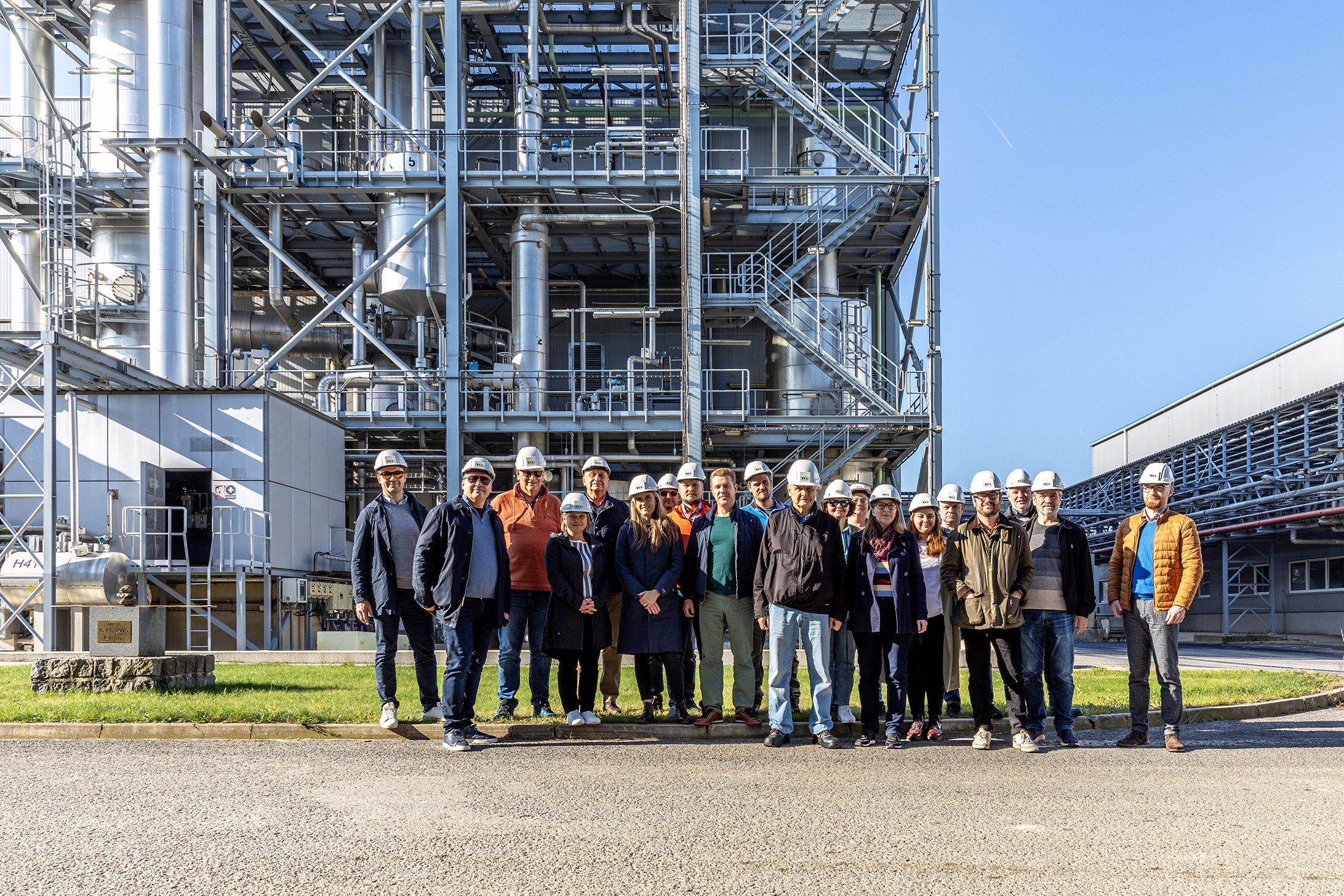
    As part of ongoing commitment to promoting sustainable development and environmental stewardship in the European mining sector, the participants of the MINEX Europe Forum had the chance to visit the DIAMO’s post-mining reconciliation at Stráž pod Ralskem former mine site located approximately 100 kilometres away from Prague. Attendees observed a significant groundwater remediation project, valued at 2 billion euros, which has been initiated following 32 years of uranium and coal mining in the region. The project is slated for completion by 2042.

    Even though mining has ceased, significant uranium reserves—approximately 160,000 tonnes—remain in sandstone deposits near Stráž pod Ralskem. However, these reserves lie beneath a major drinking water aquifer, complicating extraction efforts. DIAMO employs in-situ leaching technology to extract uranium from contaminated sites, producing a uranium-rich concentrate known as “yellow cake,” which is sold back to the state, helping to offset cleanup costs.

    The visit began with an overview of the history of uranium mining in the Czech Republic, followed by an introduction to DIAMO’s mining history and remediation efforts in Stráž pod Ralskem.

    Participants first reflected at the Hamr I underground mine memorial site, honoring the challenges and achievements of past miners. They then examined the hydraulic barrier in Stráž, an innovative technological solution that facilitates the simultaneous use of different mining methods. The guide’s explanation highlighted how engineering can help minimize environmental impact while enhancing efficiency.

    The tour continued to the leaching fields, where attendees learned about the in-situ leaching method. Observing a remediation well in operation demonstrated the ongoing efforts to responsibly extract uranium while restoring the land.

    At the chemical station, participants engaged with the science of uranium extraction, learning about ammonium diuranate, or yellowcake, and the processes involved in uranium sorption. This practical demonstration underscored the complexities of mining operations and the significance of chemical management in the industry.

    The tour concluded at the NDS10 remediation technology site, where participants witnessed how residual technological solutions are neutralized and filtered, alongside a view of the tailings dump. The technologies in place are essential for ensuring that the land can be reclaimed and safely utilized for future generations.

    The Czech Republic’s experience in uranium mining and remediation serves as a case study for the global mining industry, emphasizing the importance of balancing economic activities with environmental protection and sustainable development. The ongoing efforts by DIAMO and regulatory bodies to manage and mitigate the environmental impacts of past mining activities are crucial for ensuring that the land can be safely reclaimed and used for future generations.
     

  • UK Chancellor Launches Export Credit Financing to Boost Access to Critical Minerals for British Industries

    UK Chancellor Launches Export Credit Financing to Boost Access to Critical Minerals for British Industries

    The Chancellor has unveiled a significant initiative to support British industries by offering export credit financingaimed at securing a stable, long-term supply of critical minerals. This program, led by UK Export Finance (UKEF), aims to bolster UK industrial growth and drive the country towards achieving net zero by increasing access to these essential materials.

    The global demand for critical minerals—key components in emerging technology and sustainable industries—is on the rise, making their steady supply crucial for the UK’s largest exporting sectors, including automotive, defence, and aerospace. By enabling contracts that enhance UK access to critical minerals like lithium, graphite, and cobalt, UKEF aims to reduce supply-chain risks and reinforce economic resilience.

    As part of the initiative, credit guarantees will be provided to overseas suppliers of raw and processed minerals needed by UK exporters. These guarantees will allow overseas companies to access debt financing for projects that serve the UK’s mineral requirements. Furthermore, UKEF is expected to collaborate with other Export Credit Agencies (ECAs)and public financial institutions to fund projects in countries with abundant mineral deposits, including Australia, which is rich in lithium.

    Jonathan Reynolds, Secretary of State for Business and Trade, emphasized the critical nature of this financing in securing resources for UK manufacturers and building international partnerships. “With intense global competition for minerals like lithium and cobalt, this offer will position UK firms competitively, supporting industrial growth and advancing our commitment to net zero,” Reynolds stated.

    The announcement has been well-received by industry leaders. Kirsty Benham, CEO of the Critical Minerals Association (UK), hailed it as a testament to the UK Government’s recognition of critical minerals’ strategic importance. Sean Sargent, CEO of Green Lithium, added that the new financing initiative would strengthen international supply chains and support UK industrial development, especially at facilities like the planned Green Lithium refinery in Teesside.

    The UK government’s involvement in the Minerals Security Partnership (MSP)—an initiative led by the United Statesto secure critical minerals supply—is also reflected in this announcement. Recently, UKEF joined the MSP’s finance network, collaborating with global financial bodies to mitigate risks and expand financing opportunities for mineral projects. In a parallel effort, UKEF provided a guarantee for machinery exports to a major copper production facility in Central Asia, showcasing its broader commitment to strengthening UK capabilities in the critical minerals sector.

  • Solus Advanced Materials Expands Copper Foil Production for EV Batteries in Europe and North America

    Solus Advanced Materials Expands Copper Foil Production for EV Batteries in Europe and North America

    South Korean company Solus Advanced Materials has launched mass production at its second plant in Hungary, currently Europe’s only production site for copper foil used in EV batteries. This new facility has an annual capacity of 23,000 tons, bringing the company’s European total to 38,000 tons. Solus plans to build a third Hungarian plant to reach 100,000 tons annually. In North America, it’s on track to open its first Canadian plant in 2026, initially producing 25,000 tons and aiming for 63,000 tons long-term, highlighting a growing commitment to meeting global EV battery demand.

  • Mundoro Advances Exploration on Trstenik Project with BHP, Targets Five Prospective Sites for Drilling

    Mundoro Advances Exploration on Trstenik Project with BHP, Targets Five Prospective Sites for Drilling

    Mundoro Capital Inc., partnering with BHP Exploration, has made strides in its exploration of the Trstenik project in Serbia’s Timok Magmatic Complex, identifying five potential porphyry copper sites. Each site shows promising geophysical and geochemical indicators for copper, molybdenum, and gold deposits. Drill permits for all targets are anticipated in Q4 2024. Among the key areas are the SouthWest Zone, with significant copper mineralization close to the Majdanpek deposit, and the North-Central Zone, where a magnetic anomaly suggests a potential sulfide-rich porphyry. Mundoro and BHP’s integrated approach emphasizes the potential mineral wealth of the Timok region.

  • EU Faces Challenges in Critical Raw Material Strategy Amid Global Race for Supply Chain Resilience

    EU Faces Challenges in Critical Raw Material Strategy Amid Global Race for Supply Chain Resilience

    While the Brussels Effect has driven strict regulatory standards for Critical and Strategic Raw Materials (CSRM), Europe may risk falling behind other global players in building a resilient supply base. An analysis by the French Institute of International Relations (Ifri), a Paris-based think tank, evaluates European de-risking policies in the context of international concerns over reliance on a few key suppliers, particularly China.

    China’s export controls on materials like germanium, gallium, and rare earths underscore the risk of critical dependencies as a geopolitical tool. In response, OECD countries are emphasizing national security, strategic autonomy, and the governance of CRM supplies. The EU and the United States have taken steps to diversify their supply chains. The EU’s Critical Raw Materials Act (CRMA), part of the Green Deal, emphasizes sustainability and autonomy, while the US focuses on national security through investments like the Development Finance Corporation (DFC). Japan began addressing CRM dependencies as early as 2010.

    To counterbalance China’s Belt and Road Initiative, the EU and US have increased CRM partnerships since 2021. However, Ifri’s analysis stresses the need for these partnerships to yield immediate, tangible results. Countries in the Middle East are also integrating into CRM value chains, while resource-rich developing nations seek to retain more local value through processing and manufacturing.

    Despite progress, the EU faces financial constraints and public opposition, threatening its strategic CRM goals. According to Ifri, without external financing, Europe risks lagging behind global players such as the US, Japan, and the Middle East in developing a secure CRM base. The race for lithium, nickel, and rare earth elements (REEs), crucial for green energy goals, is reshaping geopolitics and intensifying international competition.

    To meet its target of extracting 10% of annual CRM demand by 2030, the EU must expand its mining and refiningcapabilities. The bloc requires at least ten new mines, 15 processing plants, and 15 recycling facilities by 2030, according to EIT RawMaterials. Public opposition, however, remains a significant obstacle. Sustainable mining expert Peter Tom Jones calls for public education to support modern, eco-friendly mining practices that prioritize environmental, social, and governance (ESG) standards. Nordic countries are seen as a model, with Jones stressing the importance of local CRM mining to reduce reliance on less sustainable sources abroad.

    Jones envisions a future where mining is safe, climate-neutral, and engages local communities as stakeholders. He describes a modern mine worker as one who operates high-tech machinery remotely, symbolizing the shift toward automated, climate-conscious mining that reduces traditional environmental impacts.

  • Corruption Arrests Spark Internal Investigation at Serbia Zijin Mining

    Corruption Arrests Spark Internal Investigation at Serbia Zijin Mining

    Two employees of Serbia Zijin Mining, along with a businessman from Bor, have been arrested on corruption charges, prompting a major internal investigation within the company. The Ministry of Internal Affairs executed the arrests after suspicions of bribery in business dealings surfaced.

    Key Takeaways

    • Two Serbia Zijin Mining employees detained for accepting bribes.
    • A Bor businessman also arrested on suspicion of giving bribes.
    • Serbia Zijin Mining launches an internal investigation, reaffirming its stance against corruption.

    Details of the Arrests
    The Criminal Police Administration, operating under the Special Department for Suppression of Corruption at the Higher Public Prosecutor’s Office in Niš, led the arrests. Those detained include:

    1. M. N. (22) – Employee of Serbia Zijin Mining
    2. L. Đ. (28) – Employee of Serbia Zijin Mining
    3. M. J. (36) – Responsible individual at ASPIT Bor

    Authorities suspect that M. N. and L. Đ. accepted bribes from M. J. in exchange for sensitive procurement information, allowing ASPIT to submit competitive bids.

    Company Response
    Reacting to the arrests, Serbia Zijin Mining strongly condemned corruption, recognizing it as a significant threat to both the company and society. The company reaffirmed its commitment to ethical standards and a zero-tolerance policy on corruption.

    • Internal Investigation: Serbia Zijin Mining has initiated an investigation to examine all allegations and strengthen security and control measures within its operations.
    • Collaboration with Authorities: The company assured full cooperation with law enforcement to uphold transparency and accountability.

    Commitment to Ethical Standards
    Serbia Zijin Mining emphasized its ongoing efforts in anti-corruption training for employees, suppliers, and clients, aiming to eliminate bribery and foster a fair market based on merit.

    • Transparency and Integrity: The company is committed to maintaining high standards of transparency, responsibility, and integrity.
    • Community Development: Serbia Zijin Mining remains dedicated to supporting the communities in which it operates, reinforcing its dedication to lawful practices.

    Conclusion
    The recent arrests at Serbia Zijin Mining underscore the persistent issue of corruption in the business sector. The company’s proactive measures and dedication to ethical standards may serve as a model for others. As investigations continue, the company remains focused on restoring trust and ensuring compliance with legal and ethical norms.

  • Mining Sector Expansion Could Boost Employment in Kosovo, Says Chamber of Business President

    Mining Sector Expansion Could Boost Employment in Kosovo, Says Chamber of Business President

    Allowing more development in Kosovo’s mining sector could significantly expand job opportunities, according to Skënder Krasniqi, the President of the Chamber of Business of Kosovo. Speaking on RTK’s morning show, Krasniqi emphasized the need for better coordination among Kosovo’s institutions to support business operations and create a more favorable environment for the mining industry.

    “Businesses face numerous challenges, including high land rent and overlapping responsibilities among regulatory bodies,” Krasniqi stated. He noted that companies in the mining sector are demanding concrete action from the Ministry of Agriculture, Forestry, and Rural Development (MAFRD), especially to address labor law violations.

    Krasniqi expressed frustration over what he described as institutional negligence. “Many promises were made by the institutions; they assured us that by May 2, the issues would be resolved by law, yet no progress has been made,” he remarked.

    Highlighting the scale of the problem, Krasniqi said hundreds of businesses in Kosovo’s mining sector continue to face challenges. He identified specific issues, such as the five-hectare land limit and the five-year lease restriction, which are notably more restrictive than those in neighboring countries. Krasniqi urged that lease durations be extended to support the sector’s growth and stability.

  • Mining Faces an Uncertain Future Against AI, Experts Warn

    Mining Faces an Uncertain Future Against AI, Experts Warn

    The mining industry lags significantly behind in adopting artificial intelligence (AI), creating vulnerabilities as AI advancements rapidly transform industries globally. According to experts, while AI-driven efficiencies could enhance exploration, processing, and predictive maintenance, few mining companies are leveraging these technologies to their full potential. This gap presents an existential threat, as data-driven decision-making and automation in mining could reduce costs, enhance safety, and improve productivity. Without integrating AI, the mining sector risks falling behind in innovation and competitiveness, impacting future profitability and sustainability.

  • Northvolt Advances in Securing Over $300 Million Financing Package

    Northvolt Advances in Securing Over $300 Million Financing Package

    Swedish battery maker Northvolt is making considerable progress in securing a new financing package, the company confirmed on Monday. In recent weeks, Northvolt has been in discussions with investors and lenders to acquire short-term funding, according to three sources familiar with the matter. These efforts aim to stabilize the company’s finances. As of now, the company has already begun gathering signatures for a funding deal that could exceed $300 million and might be finalized before the end of the month, a source directly involved in the discussions stated. This package is expected to provide sufficient funds for Northvolt until next year. The person speaking on the matter requested anonymity due to lack of authorization to discuss the topic publicly.
    “We have made significant progress towards securing a financial solution for Northvolt, and we are engaging in constructive dialogues with key stakeholders, including customers, suppliers, shareholders, and lenders,” a Northvolt spokesperson told Reuters. “We are now working intensely to conclude these financing discussions in a timely manner.”
    Northvolt, once seen as Europe’s leading hope for a home-grown electric vehicle battery supplier, has been facing financial challenges due to production issues, lower demand, and competition from China. The company has been forced to cut jobs and downsize operations to stay afloat.

  • Cornish Lithium to Launch £15m Demonstration Plant, Aims to Boost UK’s Clean Energy Transition

    Cornish Lithium to Launch £15m Demonstration Plant, Aims to Boost UK’s Clean Energy Transition

    A new lithium production demonstration plant is set to open in Cornwall, marking a significant step in the UK’s shift towards clean energy. Cornish Lithium announced that the £15m facility near St Austell will begin producing lithium hydroxide—a key component in electric vehicle (EV) batteries—from granite sourced from an old China clay pit. This initiative aims to reduce the UK’s reliance on importing carbon-intensive materials from countries like China.

    The unveiling ceremony will take place at the Trelavour Hard Rock project this Friday. The company plans to produce 10,000 tonnes of sustainable domestic lithium annually by 2027. According to CEO Jeremy Wrathall, lithium is essential for manufacturing EVs, grid-scale electricity storage, and rechargeable electronics. Currently, the UK imports 100% of its lithium, but by 2030, the demand is expected to reach 110,000 tonnes of lithium carbonate equivalent.

    Wrathall emphasized that Cornwall holds one of the largest lithium resources in Europe, with the potential to meet more than half of the UK’s EV industry needs. He noted that this resource is an untapped advantage, which could make UK industries more competitive and less vulnerable to global supply chain issues.

    The £15m demonstration plant was funded through the National Wealth Fund, alongside The Energy and Minerals Group, TechMet, and the UK Government’s Automotive Transformation Fund. Wrathall added that this project could benefit an area with a 4,000-year mining heritage and help tackle social deprivation. Business and Trade Secretary Jonathan Reynolds praised the project for supporting high-skilled jobs in the South West and bolstering the UK’s critical minerals supply chains.