Website: Eurasia.com

  • Czech Village Pushes Back Against EU Lithium Mining Plans Amid Fears of History Repeating Itself

    Czech Village Pushes Back Against EU Lithium Mining Plans Amid Fears of History Repeating Itself

    Residents of Cinovec, a remote Czech village near the German border, are mounting growing resistance to a planned lithium mine that the European Union views as a cornerstone of its critical raw materials strategy. The community of roughly 100 people — shaped for generations by the legacy of coal mining — fears that Europe’s renewed appetite for extraction will once again put local health, land and livelihoods at risk.

    Mining was once the foundation of the former Czechoslovakia’s industrial economy, particularly in the Ústí region, where up to 80 coal sites operated between the 1940s and 1960s. But decades of pollution, health hazards and economic decline led to the closure of the final mine in 1993. For residents like Josef Fasmann, childhood memories of coal dust turning a snowman black remain symbolic of what the region endured.

    Three decades later, mining companies have returned — this time pursuing lithium, a metal central to the EU’s strategy for electric vehicles, renewable technologies and defence applications. Geomet, a public-private venture backed in part by Brussels, is overseeing a $1.94-billion lithium project in Cinovec, believed to sit atop one of Europe’s largest untapped deposits. The Czech Geological Survey estimates that the site could hold around 3% of global lithium reserves, making it critical to the EU’s ambition to reduce dependence on imported refined lithium, which today stands at nearly 100%.

    Lithium demand is expected to triple by 2040, according to the International Lithium Association, and the EU’s Critical Raw Materials Act aims to fast-track domestic extraction. Yet residents fear that the environmental and social costs — once familiar from the coal era — are being overlooked. Community groups warn that while the EU promotes the project as essential for energy security and defence, the risks of pollution, industrial damage and disruption to local life remain largely unaddressed.

    The tension encapsulates a broader dilemma for Europe: balancing strategic resource security with public acceptance in regions still scarred by the legacy of extractive industries. As the bloc pushes for mining to power its green transition, Cinovec is emerging as a key test of whether communities will accept a return to the model they thought they had left behind.

  • Boliden CEO Says EU Is a Decade Late on Rare Earths as Brussels Fast-Tracks €3 Billion Plan

    Boliden CEO Says EU Is a Decade Late on Rare Earths as Brussels Fast-Tracks €3 Billion Plan

    The head of Swedish mining group Boliden has warned that the European Union should have acted ten years ago to secure its access to rare earths, calling the bloc’s new €3-billion initiative a welcome but insufficient step given China’s dominance of the sector.

    The remarks follow the European Commission’s announcement that it will fast-track funding into 25 key mineral projects, part of a broader push to reduce dependence on Beijing, which processes more than 90% of the world’s rare earths. China has tightened export restrictions this year, further underscoring Europe’s vulnerability.

    Speaking to Reuters, Boliden CEO Mikael Staffas said Europe’s lack of self-sufficiency in critical raw materials has become a structural weakness and warned that progress will remain slow without sustained, decisive action.

    “The Critical Raw Materials Act was a small step,” he said. “The EU will need many more small steps if they want greater independence.” Staffas described the Commission’s latest effort as a sign of political intent, but stressed that “a lot more needs to be done.”

    Europe’s largest copper producer, Aurubis, echoed a similar sentiment this week, saying the CRMA has so far delivered little visible impact despite expectations of long-term benefits.

    Boliden Sees Little Benefit in New Rare Earths Push
    Although Boliden produces minerals on the EU’s priority list — including copper and nickel — none of its current projects fall within the rare-earth-heavy focus of the new initiative.

    “Everyone is talking about rare earths being super critical, and we do not have any projects there,” Staffas said. He added that even the full €3-billion package would amount to only two years of Boliden’s standard investment levels. The company forecast SEK 15 billion ($1.6 billion) in capital spending for 2026.

    Boliden’s Somincor mine extension in Portugal remains listed under the original CRMA strategic project roster, but none of its developments qualify under the new rare earths programme.

    Staffas’s comments underline a core challenge for the EU: while the bloc aims to diversify supply chains quickly, rare earth extraction and processing remain highly concentrated in China, and Europe’s existing mining pipeline is only partially aligned with the areas Brussels is prioritising.

  • Rio Tinto Scales Back Lithium Expansion, Prioritises Capital Discipline and Existing Projects

    Rio Tinto Scales Back Lithium Expansion, Prioritises Capital Discipline and Existing Projects

    Rio Tinto has pared back its ambitions for rapid lithium growth, telling investors at its capital markets day in London that it will limit investment to projects already under development, with any further expansion contingent on market conditions and strict returns criteria.

    CEO Simon Trott confirmed that the company will complete its current slate of lithium projects — including the Rincon brine operation in Argentina and a single spodumene mine in Canada — to reach approximately 200,000 tonnes per year of lithium capacity by 2028. This figure is below the miner’s earlier guidance of 225,000 t/y, marking a recalibration of expectations amid a volatile market.

    Trott emphasised that Rio Tinto remains bullish on long-term lithium demand, particularly from grid-scale energy storage, but said capital discipline would take precedence over aggressive growth. The company is prioritising delivery of its major ongoing developments, including the Oyu Tolgoi underground expansion in Mongolia and the Simandou iron-ore megaproject in Guinea. Group capital expenditure is expected to fall below $10 billion from 2028.

    Rio Tinto has already halted spending at the Jadar lithium project in Serbia, which has been placed into care and maintenance after regulatory setbacks. The company is also reassessing its next steps in Canada, where the Whabouchi and Galaxy deposits are under review. Energy chief Jérôme Pécresse said both projects will remain active at minimal cost while Rio evaluates which — if either — will proceed. “It’s a reasonable decision to open one mine, not two, but too early to say which one,” he said.

    Trott reiterated that any new lithium investment would move forward only when market fundamentals justify it and when projects meet Rio Tinto’s financial thresholds. The miner has allocated roughly $3 billion per year for growth across the portfolio but will not deploy capital that cannot “move the needle” in terms of shareholder value.

    “We have a clear path to 200,000 tonnes by 2028 and that will be a fantastic business for us,” Trott said. “On other projects, we’ll continue to assess them based on the market fundamentals as they come up to sanction.”

    He added that Rio Tinto still possesses “the best undeveloped lithium assets in the business,” but emphasised that growth for its own sake is off the table. Maintaining a strong balance sheet is the priority, with cost savings from asset reviews and infrastructure optimisation expected to bolster shareholder returns.

  • Kazakhstan Moves to Tighten State Control Over Uranium Reserves With New Subsoil Code Amendments

    Kazakhstan Moves to Tighten State Control Over Uranium Reserves With New Subsoil Code Amendments

    Kazakhstan’s Senate has approved, in two readings, a package of amendments to the Subsoil and Subsoil Use Code aimed at significantly strengthening state control over the country’s strategic uranium reserves. The reform marks one of the most substantial regulatory shifts in Kazakhstan’s uranium sector in recent years, reinforcing the dominant role of national company Kazatomprom and tightening restrictions on foreign participation.

    Under the proposed amendments, if geological exploration confirms uranium mineralisation or deposits, subsoil users will be required either to return the explored area to the state or to transfer priority purchase rights for uranium to the national company. Lawmakers say the measure is designed to eliminate risks associated with “parallel activities” by different subsoil users operating on overlapping or adjoining territories.

    Deputy Shakarim Buktugutov, cited by Kapital.kz, explained that the changes will limit the issuance of exploration licences in areas where uranium deposits or mineralisation have already been identified. Third parties will no longer be able to obtain licences to explore solid minerals in territories where uranium mining is already under way or where uranium occurrences have been officially confirmed.

    A company that discovers uranium deposits will only be able to extend its licence if it relinquishes the area containing uranium mineralisation. The rule will not apply to operations where uranium is produced as a by-product or to existing projects operated by Kazatomprom.

    The amendments also introduce stricter limits on foreign ownership. According to Deputy Chair of the Atomic Energy Agency Aset Makhambetov, foreign companies’ stakes in new uranium ventures will be capped at 25%.

    Current law requires that the national company hold more than 50% in joint uranium projects, but the new amendments will raise Kazatomprom’s minimum mandatory stake to 75%, consolidating state control over future uranium production and strategic resource development.

  • Safran Taps UK Researchers to Lead Europe’s Push for Rare-Earth Alternatives Amid Fears of China’s Market Dominance

    Safran Taps UK Researchers to Lead Europe’s Push for Rare-Earth Alternatives Amid Fears of China’s Market Dominance

    French aerospace giant Safran, the world’s largest jet engine manufacturer, has chosen its Pitstone facility in Buckinghamshire to spearhead Europe’s search for alternatives to Chinese-controlled rare earths — critical materials essential for magnets used in electric motors, aircraft systems and green technologies.

    The decision comes as Western governments and companies intensify efforts to reduce dependence on China, which controls roughly 90% of global rare-earth supply and has increasingly used export controls as geopolitical leverage. Beijing’s tightening restrictions — temporarily suspended under a one-year truce brokered between Donald Trump and Xi Jinping — have heightened fears that China could disrupt supply chains for future Airbus and Boeing aircraft, while strengthening its domestic aerospace challenger, Comac.

    Safran chief executive Olivier Andriès said the Pitstone site was selected after developing the world’s first electric motor certified for aviation. The UK team will now focus on identifying substitutes for rare earths such as samarium, a key component of samarium-cobalt magnets used in high-temperature aerospace environments.

    “Electrical motors need magnets and magnets need rare earths, and most of these are coming from China,” Andriès said. “The target we’ve given the team is to find alternative sources of these materials — or even imagine rare-earth-free magnets. We don’t yet know the answer.”

    Andriès emphasised that rare-earth access has become an urgent strategic concern as the aerospace industry advances hybrid propulsion systems for next-generation airliners. Safran already relies on export licences from China to obtain the materials it needs and has built emergency stockpiles, but Andriès warned this is only a temporary buffer.

    “The supply chain has been weaponised — it’s an instrument of power,” he said. “The key point is to find alternative sources in the short term and, in the long term, find ways to deliver the same capabilities without using rare earths.”

    As part of its strategy, Safran will designate the UK as its first research and technology centre outside France, reinforcing the country’s role in the company’s global operations. Safran employs 5,500 people across 14 UK sites, producing components ranging from landing gear and helicopter engines to flight controls and engine casings. Pitstone will also host a new electric-motor assembly line.

    The renewed focus follows a surge in geopolitical competition for critical minerals. In October, the US signed an $8.5bn mining and processing agreement with Australia to expand Western rare-earth capabilities amid fears that China could cut off exports once the temporary truce expires.

    Andriès warned that while China has not yet deployed its dominance as a coercive tool, the risk remains significant: “Today, if China is willing to, they can interrupt the supply of most of the rare earths needed for automotive or aerospace applications.”

  • EU Unveils Multi-Billion-Euro Plan to Curb Dependence on China for Rare Earths Amid Rising Geopolitical Tensions

    EU Unveils Multi-Billion-Euro Plan to Curb Dependence on China for Rare Earths Amid Rising Geopolitical Tensions

    The European Union on Wednesday announced a sweeping multi-billion-euro initiative to reduce the bloc’s reliance on China for rare earths and other critical materials, as Beijing’s dominance and recent export restrictions continue to threaten European industry. China — the world’s largest producer of rare earths — unsettled global markets in October when it imposed new limits on rare earth exports used in electric vehicles, electronics, and defence technologies. Although Beijing later suspended the curbs for one year, the episode underscored the EU’s vulnerability.

    EU industry chief Stéphane Séjourné said the new measures respond to a “new global geopolitical reality,” describing China’s grip on the market as a raw-materials “racket.” The European Commission plans to mobilise nearly €3 billion to support strategic mining, refining and recycling projects across Europe and in partner countries, aiming to diversify supply and strengthen domestic production capacity.

    A key feature of the plan is the creation of a European Centre for Critical Raw Materials, modelled on Japan’s state-run metals agency. The centre will act as the EU’s supply hub, tasked with monitoring material needs, coordinating joint purchasing for member states, and managing stockpiles and emergency deliveries to industry.

    Brussels is also moving to restrict exports of permanent-magnet scrap and waste — materials that contain rare earths — beginning next year, in an effort to boost recycling and retain valuable feedstock within the EU. Targeted curbs on aluminium waste exports are also planned, with copper potentially to follow.

    The policy push comes just two years after the bloc adopted the Critical Raw Materials Act, but officials say the geopolitical landscape has changed rapidly. The EU now finds itself squeezed between China’s tightening resource controls and an increasingly assertive United States under President Donald Trump, which is aggressively pursuing bilateral deals to secure its own critical mineral supplies.

    A new survey from the EU Chamber of Commerce in China found 60% of member companies expect supply disruptions due to Chinese restrictions, while 13% warn they may have to slow or halt production altogether.

    The Commission also updated its economic security strategy, acknowledging that supply chains are being weaponised globally. EU trade chief Maroš Šefčovič said the bloc must respond to a world in which “strategic choke points are turning economic dependency into political pressure.”

    The revised doctrine calls for more assertive use of existing tools — including foreign investment screening, export controls and supplier diversification — and for developing new measures where needed.

    “Europe will continue to champion open trade and global investment, but our openness must be backed by security,” Šefčovič said, emphasising a stronger EU capacity for economic intelligence and coordinated action across member states.

  • Vulcan Energy Secures $2.56bn to Build Europe’s Largest Lithium Project, Clearing Way for Construction

    Vulcan Energy Secures $2.56bn to Build Europe’s Largest Lithium Project, Clearing Way for Construction

    Vulcan Energy has secured a $2.56 billion financing package to build what is set to become Europe’s largest lithium production project, marking a major step forward for the region’s electric-vehicle supply chain. The funding will enable construction of the Lionheart lithium project in Germany to begin immediately, after multiple years of delays linked to fluctuating lithium prices and weakened investor appetite.

    The Australia-listed company — backed by mining magnate Gina Rinehart — plans to produce around 24,000 tonnes of lithium hydroxide annually during the project’s first decade, enough to supply battery material for approximately 500,000 electric vehicles per year. The financing package is one of the largest ever assembled for a European critical minerals project and includes support from the European Investment Bank, German and EU government agencies, five export credit agencies, and seven commercial banks.

    As part of the package, Vulcan will raise up to €603 million in equity at a fixed price of €2.24 per share. The company has already secured long-term supply agreements with Stellantis, Umicore, and Glencore, with roughly 90% of the first decade of production already contracted, many of them either at fixed prices or under price-floor and price-ceiling structures.

    Executive chair Francis Wedin confirmed that the board has taken a final investment decision, telling Reuters: “It’s fully funded and we will be putting shovels in the ground on Friday.”

    Vulcan previously targeted first production in 2023, later shifting the date to 2025. The revised timeline now points to 2028. Earlier this year, the company ended its long-standing supply agreement with Renault to “free up” volumes for other buyers, while Stellantis remains both a major customer and one of Vulcan’s largest shareholders.

    Lithium prices have dropped sharply since their peak above $70,000 per tonne in 2023, with lithium carbonate trading just below $10,000 per tonne at the end of October, according to Benchmark Mineral Intelligence — a decline that has challenged new project financing across the sector. Vulcan’s ability to secure such a substantial funding package is therefore considered a significant milestone for European battery-material independence.

  • Central Asia Emerges as a Strategic Critical Minerals Hub, but Investment, Governance and Long Timelines Remain Major Hurdles

    Central Asia Emerges as a Strategic Critical Minerals Hub, but Investment, Governance and Long Timelines Remain Major Hurdles

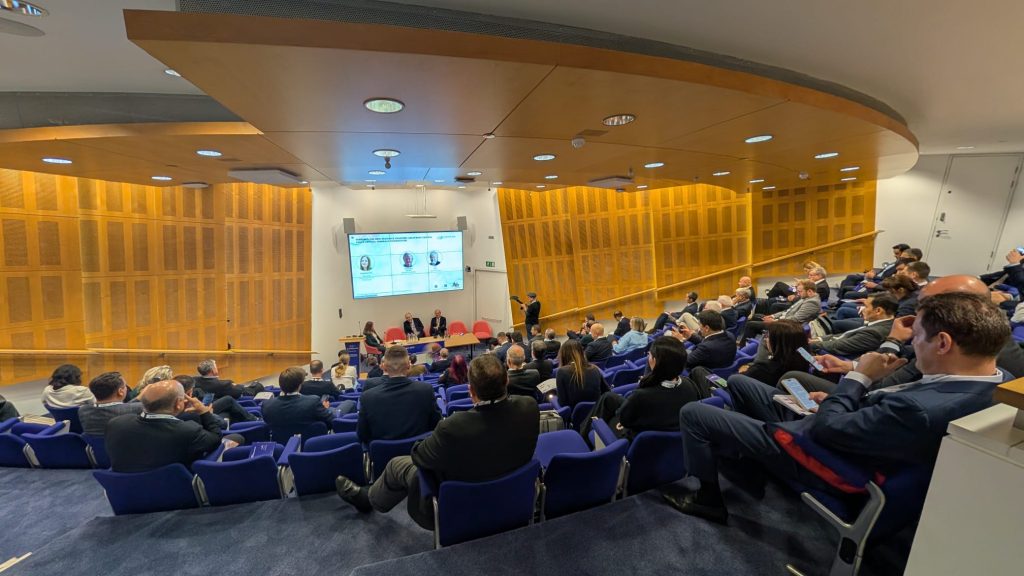
    The opening session of MINEX EURASIA 2025 — “The New Resource Frontier: Unlocking Central Asia’s Critical Minerals Powerhouse” — delivered a clear message: Central Asia has moved from a region of geological promise to a globally contested arena for critical minerals, but a substantial gap remains between ambition and execution. Speakers highlighted that while the region holds world-class deposits of lithium, tungsten, rare earth elements and other strategic minerals, underinvestment, governance challenges and slow project development continue to restrain advancement.

    The session began with a review of the region’s natural endowment. Kazakhstan — the world’s ninth-largest country — dominates regional exploration budgets, yet overall exploration spending across Central Asia remains modest compared with mature mining jurisdictions. Western participation is strikingly low, and despite a handful of standout projects, experts argued that far more risk capital is needed to convert geological maps into operating mines.

    A major theme was the mismatch between political urgency and the slow pace of mine development. Globally, the average time from discovery to commercial production now exceeds 16 years, and Central Asia is no exception. Speakers cautioned that “good geology” alone does not guarantee quick results. Long permitting timelines, regulatory uncertainty, environmental and social assessments and technical complexity remain significant barriers — all of which underscore the need for stable rules and predictable permitting systems to attract investors.

    Governance emerged as a decisive factor in Central Asia’s critical minerals trajectory. Kazakhstan was cited as a regional leader in implementing international-aligned mining reforms, including adoption of the KAZRC reporting code, a national register of qualified persons and a modernised mineral cadastre. Environmental and subsoil reforms are gradually shifting the sector away from legacy “pay-to-pollute” models toward best-available technologies and lower-impact mining. Uzbekistan, meanwhile, is rapidly implementing its own modern mining code and has expanded joint geological initiatives with Kazakhstan, signalling growing regional alignment.

    However, Kazakhstan and Uzbekistan are pursuing distinct strategies. Kazakhstan initially expected private investors to lead in critical minerals but found they instead focused on established copper and gold assets. As a result, the Development Bank of Kazakhstan has launched a multi-year, billion-dollar programme to directly support rare earth and critical mineral projects. Uzbekistan, in contrast, has adopted a state-anchored industrial model through its Technological Metals Company (TMK), which is developing more than 100 projects across 25 minerals. Its plans include large-scale tungsten development, lithium and graphite exploration and integrated upstream–midstream–downstream industrialisation.

    Both countries are shifting from exporting raw concentrates to capturing domestic value. Kazakhstan aims to seed new industries in semiconductors, batteries, permanent magnets and heat-resistant alloys, building on existing capacity such as the Ulba Metallurgical Plant. Uzbekistan’s TMK strategy links mining projects with processing plants, technology parks and industrial clusters — many in partnership with Chinese engineering and mining groups, whose turnkey project delivery capability remains unmatched.

    The geopolitical landscape is increasingly crowded. China remains the dominant external player thanks to long-term planning, Belt and Road infrastructure, strong engineering capacity and patient capital. U.S. engagement is growing, primarily through offtake-driven agreements intended to secure supply for defence and energy industries. The EU is active but constrained by scale and speed of investment, while South Korea, Japan, Türkiye and the UK are carving out niches as specialised technology and standards partners.

    Presentations from the OECD stressed that unlocking Central Asia’s mineral wealth must go hand-in-hand with governance reforms, responsible business conduct and fair taxation frameworks. A multi-year regional programme is now under way to address environmental risks, reduce illicit financial flows and build due diligence systems, with final recommendations expected in 2026.

    The UK outlined its ambition to become a key partner in Central Asia’s critical minerals sector through new bilateral agreements, export credit tools and technical support for responsible mining. Case studies demonstrated British expertise across the full lifecycle — from exploration to mine rehabilitation.

    The session concluded with cautious optimism. Central Asia has firmly entered the global critical minerals spotlight, supported by geological potential, ongoing reforms and geopolitical attention from major economies. But speakers emphasised that turning opportunity into reality will require sustained investment, credible governance, transparent partnerships and a long-term view that balances foreign capital with local development and environmental protection.
  • Savannah Resources Welcomes EU Decision Upholding Barroso Lithium Mine as Strategic Project

    Savannah Resources Welcomes EU Decision Upholding Barroso Lithium Mine as Strategic Project

    London-listed Savannah Resources has hailed the European Commission’s latest decision reaffirming the Barroso lithium mine in northern Portugal as a strategic project for Europe, despite ongoing opposition from environmental groups and local communities.

    The company, which holds the concession for the mine in Covas do Barroso, said the Commission’s rejection of a complaint filed by Associação Unidos em Defesa de Covas do Barroso (UDCB), MiningWatch Portugal and ClientEarth “reinforces the European Commission’s confidence” in the project. The NGOs had asked Brussels to remove the mine from the list of strategic initiatives under the Critical Raw Materials Regulation (CRMA), arguing the project presented significant environmental and safety risks.

    In its response, the Commission dismissed the applicants’ arguments as unfounded — a position Savannah highlighted as consistent with several rulings by Portuguese courts in the company’s favour. Savannah described the Barroso operation as “one of the strategic projects for Europe,” stressing its potential role in regional reindustrialisation, the decarbonisation of EU transport, and reducing the bloc’s dependence on external energy and material suppliers.

    The company also claimed that opposition groups do not represent the communities living closest to the project, alleging that only one organisation involved has a local presence and accusing the broader movement of being driven by “increasingly radical” activists. Local groups strongly reject this characterisation, noting that community resistance to the mine has been sustained for nearly eight years.

    Critics argue the Commission’s decision ignores mounting evidence that Barroso’s mine design carries serious environmental and tailings safety risks. They warn that rural areas and fragile ecosystems are being sacrificed “for short-term profits” and accuse the EU of prioritising strategic supply over local well-being and environmental protection.

    The Barroso project received a favourable Environmental Impact Statement (EIS) in 2023. Savannah plans to begin construction in 2026 and start production in 2028, with the mine positioned as a key contributor to Europe’s lithium supply chain under the CRMA.

  • EU Criticised for Backing Portugal’s Barroso Lithium Mine Despite “Grave Environmental and Safety Risks”

    EU Criticised for Backing Portugal’s Barroso Lithium Mine Despite “Grave Environmental and Safety Risks”

    Environmental lawyers and community groups have sharply condemned the European Commission for refusing to remove the controversial Barroso lithium mine in northern Portugal from its list of strategic projects under the Critical Raw Materials Act (CRMA). The mine, located in Boticas, has become a flashpoint in national and international debates over the social and environmental costs of Europe’s push for domestic critical minerals.

    The Commission on Thursday rejected a joint request by Associação Unidos em Defesa de Covas do Barroso (UDCB), MiningWatch Portugal and ClientEarth to revoke the mine’s strategic designation. Critics argue that the label sidesteps mounting evidence that the project poses severe environmental, safety and social risks — and provides political cover for fast-tracking a project that local communities have opposed for nearly eight years.

    According to NGOs, the Commission largely dismissed concerns related to water scarcity, biodiversity loss and tailings safety, insisting these fall under Portuguese national responsibility. In a statement, the Commission stressed that its role under the CRMA “does not include verifying full compliance with EU environmental law,” prompting accusations that the Act is being used to override normal scrutiny through a “legal presumption” that the mine serves the public interest.

    ClientEarth lawyer Ilze Tralmaka warned that the CRMA should not be used to accelerate projects “that science shows are unsafe, environmentally destructive and unnecessary,” stressing that the green transition “cannot come at the cost of community safety.” She added that independent evidence suggests lithium demand should be reduced wherever possible, with a stronger emphasis on recycling to limit new mining.

    NGOs cite expert studies showing that Barroso’s waste storage and water management systems could fail during heavy rainfall, potentially contaminating farmland, local water sources and even affecting the Douro Valley’s world-famous Port wine region downstream. Another analysis highlighted major flaws in the project’s air-quality assessment.

    MiningWatch Portugal’s Nik Völker said the Commission’s decision “shows that the EU is willing to trade rural lives and irreplaceable landscapes for a political headline,” adding that calling the mine “strategic” does not make it safe or sustainable. “The Mina do Barroso offers minimal benefits and enormous risks: a textbook example of how not to do a green transition,” he said.

    Local opposition to the mine has been exceptionally strong, with farmers and residents warning the project threatens their land, water and livelihoods. Their activism has gained global attention, including a Cannes-premiered documentary about the community’s efforts to resist the development.

    Aida Fernandes of UDCB said the mine’s approval prioritises Europe’s interests at the expense of the people who live in Covas do Barroso. “Our springs, our soil and our farms are what keeps this community alive. Once they are gone, they are gone forever,” she said. “Europe cannot build a green future by destroying the places that are already living sustainably.”

    NGOs caution that while securing critical mineral supplies is a legitimate objective, the CRMA and the strategic project label are being misused to gain access to financing and expedited permitting for projects with major unanswered environmental and social questions.