Website: Eurasia.com

  • EU Launches RESourceEU Action Plan to Cut Critical Mineral Dependencies and Fast-Track Strategic Projects

    EU Launches RESourceEU Action Plan to Cut Critical Mineral Dependencies and Fast-Track Strategic Projects

    The European Commission has adopted its RESourceEU Action Plan, a sweeping package of policy, regulatory and financing measures aimed at reducing the bloc’s reliance on external suppliers of critical raw materials while strengthening Europe’s competitiveness across key industrial sectors. The plan builds on the recently enacted Critical Raw Materials Act (CRMA) and responds to escalating geopolitical tensions, supply risks and the growing need for stable access to materials essential for electric vehicles, aerospace, defence, industrial machinery, AI chips and data centres.

    A central feature of RESourceEU is the acceleration of strategic projects through streamlined permitting, regulatory reform and new derisking instruments. The Commission indicated that these measures could halve Europe’s most significant supply dependencies by 2029. Up to €3 billion will be mobilised over the next 12 months to support projects capable of delivering new supply in the near term. Early beneficiaries include Vulcan Energy’s lithium-extraction project in Germany and Greenland Resources’ Malmbjerg molybdenum project, which EU officials say could supply all European defence-sector molybdenum needs while meeting a quarter of total EU demand.

    Beginning in early 2026, Brussels will establish a European Critical Raw Materials Centre, responsible for providing market intelligence, coordinating financing across public and private partners, managing portfolios of strategic projects, and supporting joint purchasing and stockpiling to protect the EU market from supply shocks and political interference. A complementary Raw Materials Platform will aggregate industrial demand, help secure offtake agreements and facilitate collective procurement. A pilot EU-wide stockpiling mechanism is expected to be operational the same year.

    The Commission will also push to expand the bloc’s recycling capabilities. From early 2026, export restrictions will apply to permanent-magnet scrap and waste, with similar measures for aluminium—and potentially copper—now under review. Amendments to the CRMA will introduce additional labelling requirements and incentives for using recycled pre-consumer magnet waste.

    RESourceEU also includes measures to reduce Europe’s dependence on fertilisers derived from critical minerals, with an EU fertiliser and nutrient-recycling strategy due by mid-2026.

    Internationally, the EU plans to intensify cooperation with its 15 existing strategic raw-material partners, the newest being South Africa. Negotiations with Brazil will begin shortly, while dedicated investment frameworks are being advanced with Ukraine, the Western Balkans and the Southern Neighbourhood. Through the Global Gateway initiative, the EU will co-invest in mining and processing projects across emerging markets, supported by broader coordination through the G7 Critical Minerals Production Alliance and the G20 Critical Minerals Framework.

    European Commission President Ursula von der Leyen first outlined RESourceEU at the 2024 Berlin Global Dialogue, describing the initiative as essential to safeguarding the EU’s industrial base amid the “weaponisation” of critical raw materials by dominant suppliers.

    Industry leaders have welcomed the plan, noting its long-awaited focus on early-stage financing, faster permitting and supply-chain diversification. Rock Tech Lithium CEO Mirco Wojnarowicz said the initiative sends “a clear signal from Brussels: Europe wants control over its raw-materials supply back – and now,” calling the Commission’s recognition of lithium’s strategic importance crucial for the bloc’s energy and digital future. He added that RESourceEU provides strong momentum for the company’s Guben lithium converter in Brandenburg, set to become Europe’s first commercial lithium-hydroxide refinery with a planned output of 24,000 t/y.

  • Ukraine’s Lithium Ambitions: Opportunities and Challenges as Kyiv Seeks a Role in the Global Battery Metals Market

    Ukraine’s Lithium Ambitions: Opportunities and Challenges as Kyiv Seeks a Role in the Global Battery Metals Market

    Ukraine is positioning itself to enter the global lithium industry as the country prepares to close applications on December 12 for its first-ever lithium Production Sharing Agreement, covering the “Dobra” hard-rock deposit. The tender comes as Kyiv seeks to revive its mining and processing base, re-launch geological exploration and build a broader critical minerals sector that could anchor Ukraine more firmly within Western supply chains.

    The discussion follows earlier analysis of Ukraine’s role in the titanium value chain, where the country has long-standing expertise, an established presence in chloride-process feedstock and a historically strong resource base. Supporters argue that many of these strengths can be leveraged as Ukraine moves toward lithium — a metal undergoing rapid transformation and increasing geopolitical scrutiny.

    Over the past five years, lithium has shifted from a niche commodity to a key industrial material, underpinning electric vehicles, energy storage, digital infrastructure and AI-related growth. The sector has already weathered a full boom–bust cycle, marked by a dramatic 2022 price spike followed by a steep crash in 2023–2024. Market volatility, combined with the bankruptcy of battery producer Northvolt, production curtailments in Australia, the rise of South American brines and China’s entrenched dominance in refining, has reshaped the landscape for emerging producers.

    Despite turbulence, analysts expect demand to expand sharply. Forecasts from the IEA, Benchmark Mineral Intelligence and others project global lithium demand in 2035 at 3.5–4 million tonnes of LCE — three to four times current levels — driven largely by electric vehicles, grid-scale energy storage and the rapid growth of AI data centres. Evolving battery chemistries, including the rise of LFP, sodium-ion and eventual solid-state technologies, are not expected to displace lithium, only alter consumption patterns.

    On paper, the supply pipeline appears abundant, but industry experts warn that cost pressures, permitting delays and technology risks significantly constrain real-world output. Many high-cost projects failed as prices retreated to $10,000–$15,000 per tonne, underscoring the importance of cost-competitive Tier-1 and Tier-2 operations. These categories, which encompass top South American brines and efficient hard-rock mines, remain profitable even in downturns. Higher-cost Tier-3 and Tier-4 projects, including complex clays and power-intensive operations, cycle in and out of production, contributing to recurring price shocks.

    This tight supply environment supports long-term price expectations of $15,000–$20,000 per tonne, reinforcing the need for new jurisdictions to create competitive conditions for investment. For Ukraine, this means stable permitting, predictable policy and investment frameworks that allow the development of mid-tier, cost-competitive projects.

    Any discussion of future lithium supply also centers on China, which refines around two-thirds of global lithium chemicals and manufactures more than 70% of battery cells. Analysts expect China’s geographically domestic market share to shrink as new refining plants come online in Australia, Asia, the U.S. and the EU, but Chinese-controlled capacity abroad will remain substantial. Beijing is also expected to continue using state-backed tools to protect national champions during downturns, creating a competitive landscape that new producers must navigate.

    Experts highlight seven factors that determine success for emerging lithium producers: strong cost position, clear routes to market, fast permitting, robust governance and ESG frameworks, integration into geopolitical alliances, R&D capacity and development of human capital. Failure to meet these benchmarks has already sidelined many new entrants, given lithium’s cyclicality and the technological risks of unconventional extraction.

    For Ukraine, the “Dobra” PSA and other spodumene prospects offer pathways to enter European supply chains, especially with by-products such as rare metals bolstering project economics. As the world enters what many call the “New Age of Electricity,” Ukraine’s geological resources — whether lithium, graphite, copper, nickel or strategic metals such as titanium and zirconium — could elevate the country from a raw-material holder to a strategic partner.

    Analysts argue that the global race will favour countries able to combine strong geology with fast permitting, disciplined policy execution and deep integration into Western supply chains. For Ukraine, the choice is clear: remain a price-taking exporter exposed to market cycles or build the governance, investment environment and industrial partnerships needed to become a reliable supplier in a world increasingly defined by critical minerals competition.

  • Europe Scrambles for Rare Earth Alternatives as China Tightens Grip and Global Geopolitics Shift

    Europe Scrambles for Rare Earth Alternatives as China Tightens Grip and Global Geopolitics Shift

    Rare earth elements, once rarely discussed outside technical circles, have become central to geopolitical tensions as China continues to dominate both extraction and refining, as well as the manufacturing of rare earth magnets. Beijing’s decision on 8 October to intensify export controls—issued in response to tightened U.S. restrictions on AI chips—sent shockwaves across global industries that rely on these materials for electric vehicles, turbines, aircraft, semiconductors and advanced weaponry.

    Although the United States has some leverage in the rare earth space, given China’s dependence on imports of high-value American compounds, Washington ultimately agreed to Beijing’s terms during the first Trump–Xi bilateral meeting in Busan on 30 October. The deal secured a one-year truce under which China will continue supplying rare earths. In return, the U.S. will reduce tariffs on Chinese imports and lift export controls on AI chips.

    Europe, by contrast, finds itself with almost no bargaining power. As a heavy net importer with minimal domestic supply of valuable rare-earth compounds, the EU remains acutely vulnerable. Major employers such as Airbus, Vestas, Volkswagen and Europe’s EV manufacturers could face severe disruptions. The same applies to the continent’s re-emerging defence industry. Although Brussels secured the same one-year truce as Washington, European officials acknowledge that the underlying vulnerability remains unchanged.

    Meanwhile, the U.S. has aggressively accelerated efforts to diversify supply. The Trump administration is finalizing agreements with Australia, Malaysia, Vietnam, Brazil and Ukraine, while signing long-term contracts with Solvay’s La Rochelle plant in France — the world’s only refinery capable of producing all 17 rare earths at industrial scale.

    The EU’s progress has been far slower. The 2024 Critical Raw Materials Act set clear targets for 2030 — 10% domestic extraction, 40% domestic processing and 15% recycling — but these goals are widely considered unrealistic without significant investment. Funding remains scarce, and fast-track permitting systems for mining projects have yet to be established. Partnership agreements with Canada, Namibia and Chile exist only on paper, while domestic initiatives such as Sweden’s Norra Kärr, Portugal’s Mina do Barroso and German recycling efforts face regulatory delays and environmental hurdles.

    Japan’s experience offers a cautionary precedent. After China abruptly halted supplies in 2010, Tokyo invested heavily in diversification, striking deals with Australia, Vietnam and Kazakhstan, enhancing recycling and building strategic reserves. Despite this, Japan still imports 62% of its rare earths from China.

    Analysts warn that the EU cannot afford to let the one-year truce lapse without making rapid progress in reducing dependence on Beijing. One promising path lies in deeper cooperation with Japan, which is actively seeking partners to expand the scale of its emerging rare earth production and magnet manufacturing ecosystem. The EU could help by providing stable demand, even at prices higher than Chinese supply, in exchange for access to Japanese technologies and industrial know-how.

    Experts argue that only through joint development of production chains, shared R&D, and coordinated demand can Europe hope to build a viable rare earth ecosystem. Leveraging corporate capabilities on both sides may be essential for Europe to achieve supply resilience in one of the world’s most strategically important material sectors.

  • European Metals Shares Surge After Czech Government Awards €360M Grant for Cinovec Lithium Project

    European Metals Shares Surge After Czech Government Awards €360M Grant for Cinovec Lithium Project

    European Metals Holdings (ASX, AIM: EMH) saw its shares soar on Friday after securing a Czech government grant of up to €360 million ($417 million) for the Cinovec lithium project, one of Europe’s most strategically important critical minerals developments. The funding package is among the largest government commitments ever made to a mining project within the European Union.

    Executive chair Keith Coughlan said the award reinforces Cinovec’s central role in Europe’s efforts to build a domestic electric vehicle (EV) supply chain. Recently designated a strategic asset under the EU’s Critical Raw Materials Act, Cinovec will now benefit from accelerated permitting and enhanced access to financing. The Czech government has also formally classified the site as a strategic deposit, further streamlining regulatory processes.

    Located roughly 100 km northwest of Prague, Cinovec is home to the largest lithium resource in Europe and one of the world’s largest undeveloped tin deposits, according to the company. It previously received a $36 million grant from the EU’s Just Transition Fund as part of regional economic support initiatives.

    Cinovec’s location near major German automotive hubs — home to factories operated by Mercedes-Benz, BMW, Volkswagen and Porsche — has strengthened its strategic appeal. Automakers across Europe are under growing regulatory pressure to expand electric vehicle production, increasing demand for locally sourced lithium for battery manufacturing.

    Following the announcement, European Metals’ stock surged 58% in Sydney to A¢38 and climbed 70% in London by mid-afternoon trading, raising the company’s market capitalization to £46.13 million ($61 million).

  • Kyrgyzstan Unveils Critical Minerals Strategy at MINEX Eurasia Conference in London

    Kyrgyzstan Unveils Critical Minerals Strategy at MINEX Eurasia Conference in London

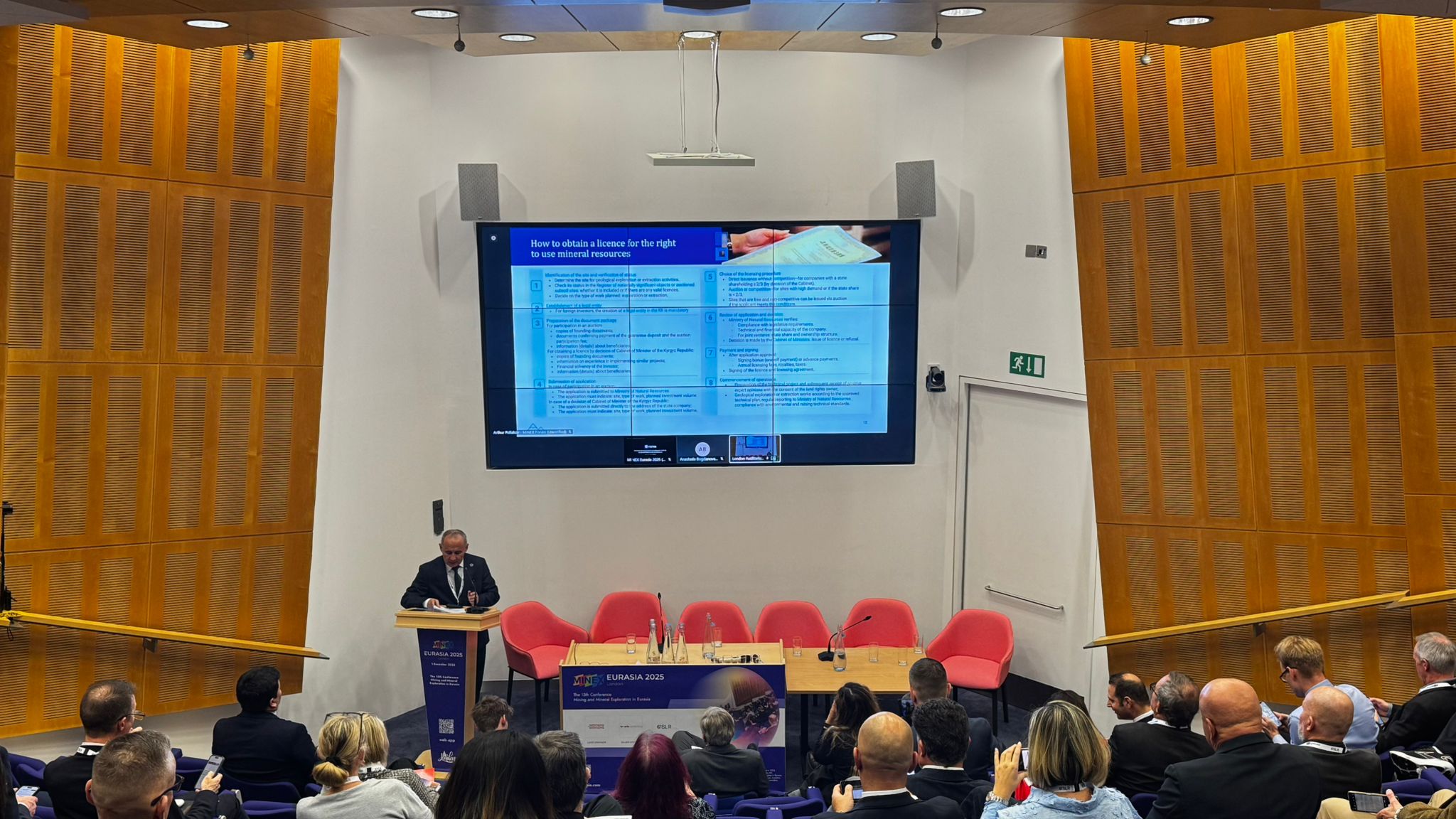
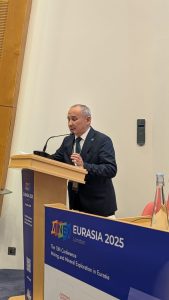
    London, 1 December 2025 – The MINEX Eurasia conference in London hosted a keynote address by H.E. Meder Mashiev, Minister of Natural Resources, Ecology, and Technical Supervision of Kyrgyzstan, outlining the country’s strategic vision for its critical minerals sector.

    Kyrgyzstan’s Strategic Minerals Vision

    The Minister outlined Kyrgyzstan’s methodical approach to prioritising and developing its critical minerals sector, identifying 21 key minerals based on global demand, local deposits, and resource concentrations. Kyrgyzstan’s analysis resulted in the selection of 4 priority projects, 5 promising deposits, and 16 prospective areas for further study and development. These assets, spread across antimony, beryllium, rare earths, molybdenum, bismuth, zinc, silver, and others, offer significant commercial and strategic potential for investors and end-users in energy, electronics, and high-value manufacturing.

    Investment and Development Framework

    State companies, notably Kyrgyzgeology, are driving exploration and project development, supported by government incentives and openness to international partnership. Strategic sites are being actively promoted for joint ventures or direct investment. Major domestic and international firms manage several large sites, while more than 100 mining enterprises operate in the country—spanning gold, copper, and polymetallic ores.

    Tax and Licensing Regime

    The session detailed Kyrgyzstan’s tax policy, which includes a mix of one-time bonuses for mining rights, royalties, profit tax, and VAT. The overall effective tax burden stands between 25–30%, complemented by social and environmental levies such as waste disposal, emissions, and water usage fees. Procedures for subsoil use licensing are harmonized with those in neighbouring countries, with initiatives being considered to simplify the processes and make it more transparent.

    ESG, Transparency, and Sustainable Mining

    Kyrgyzstan’s evolving strategy strongly emphasizes environmental, social, and governance (ESG) standards, aiming to foster responsible mineral development, minimize ecological impact, ensure transparency, and maximize benefits for local communities. The new strategy promotes the deployment of advanced technologies, environmental sustainability, and transparent investment processes, aligning with best practices to attract reliable, long-term partners.

    Opportunities for International Partnership

    Kyrgyzstan welcomes active collaboration with global investors and mining enterprises, seeking to leverage modern mining technologies, improve environmental outcomes, and maximize economic benefits. The country’s critical mineral strategy is closely linked to green growth targets and broader Eurasian supply chain integration.

  • EU Prepares New RESourceEU Strategy to Secure Critical Raw Materials and Reduce Dependence on China

    EU Prepares New RESourceEU Strategy to Secure Critical Raw Materials and Reduce Dependence on China

    The European Union is preparing to unveil a new economic security package next week, with a central component focused on safeguarding access to critical raw materials needed for clean technology and advanced industries. The initiative, known as RESourceEU, will form the bloc’s latest strategy to diversify supplies of essential inputs such as lithium, copper and nickel, and to reduce reliance on third-country suppliers — particularly China, which continues to dominate global clean-tech value chains and has tightened export controls on key materials.

    Modelled after the EU’s REPowerEU energy programme, RESourceEU is being developed against a backdrop of geopolitical uncertainty and shifting global competition. The European Commission plans to use the strategy to forge new partnerships with resource-rich countries including Australia, Kazakhstan, Uzbekistan and others, strengthening supply chains through long-term cooperation agreements.

    Recycling is set to play a central role. Brussels aims to significantly expand the EU’s capacity to recover critical materials from products reaching end-of-life, reducing the need for primary extraction. This dovetails with the Critical Raw Materials Act, which sets ambitious 2030 benchmarks: 10% of EU consumption of strategic minerals must come from domestic extraction, 40% from domestic processing and 25% from recycling. While many industry observers question whether these targets are achievable in time, they have nonetheless prompted European manufacturers to rethink business models and strengthen sourcing resilience.

    Additional EU initiatives are feeding into the strategy — from state aid tools supporting cross-border projects, to satellite-based exploration programmes designed to identify new raw material deposits. Financial support for battery manufacturing across Europe is also helping build internal value chains.

    Beyond Europe’s borders, the EU’s Global Gateway programme is funding major infrastructure and resource projects, particularly in Africa, with the intention of boosting local development while also ensuring stable supply routes for the EU. However, critics warn that the approach risks echoing historical patterns of extraction that disproportionately benefited Europe. EU officials insist the new strategy will prioritise equitable partnerships and avoid repeating colonial-era dynamics.

    RESourceEU is expected to outline a broad framework combining supply diversification, strategic investment, recycling expansion and international cooperation — all aimed at ensuring that Europe remains competitive and secure in an increasingly contested global market for critical raw materials.

  • ACG Metals Weighs Potential Takeover Bid for Anglo Asian Mining

    ACG Metals Weighs Potential Takeover Bid for Anglo Asian Mining

    Copper-focused consolidator ACG Metals has confirmed it is in the early stages of assessing a possible offer for the full issued and to-be-issued share capital of London-listed Anglo Asian Mining. The Azerbaijani-focused producer, which operates gold, copper and silver assets, has not agreed to or endorsed the announcement.

    According to UK takeover rules, ACG now has until 17:00 on December 24 to either announce a firm intention to make an offer or formally withdraw its interest. The company emphasized that discussions remain preliminary, and there is no certainty that an offer will be made.

    Anglo Asian Mining, which operates the Gedabek and Gilar projects among others, has faced operational constraints in recent years but remains one of Azerbaijan’s key mining companies. Any potential bid would mark a significant move for ACG Metals as it continues to expand its portfolio within the copper sector.

  • Uzbekistan Positions Itself as a Global Critical Minerals Hub Through New “Mine-Metal-Market” Model

    Uzbekistan Positions Itself as a Global Critical Minerals Hub Through New “Mine-Metal-Market” Model

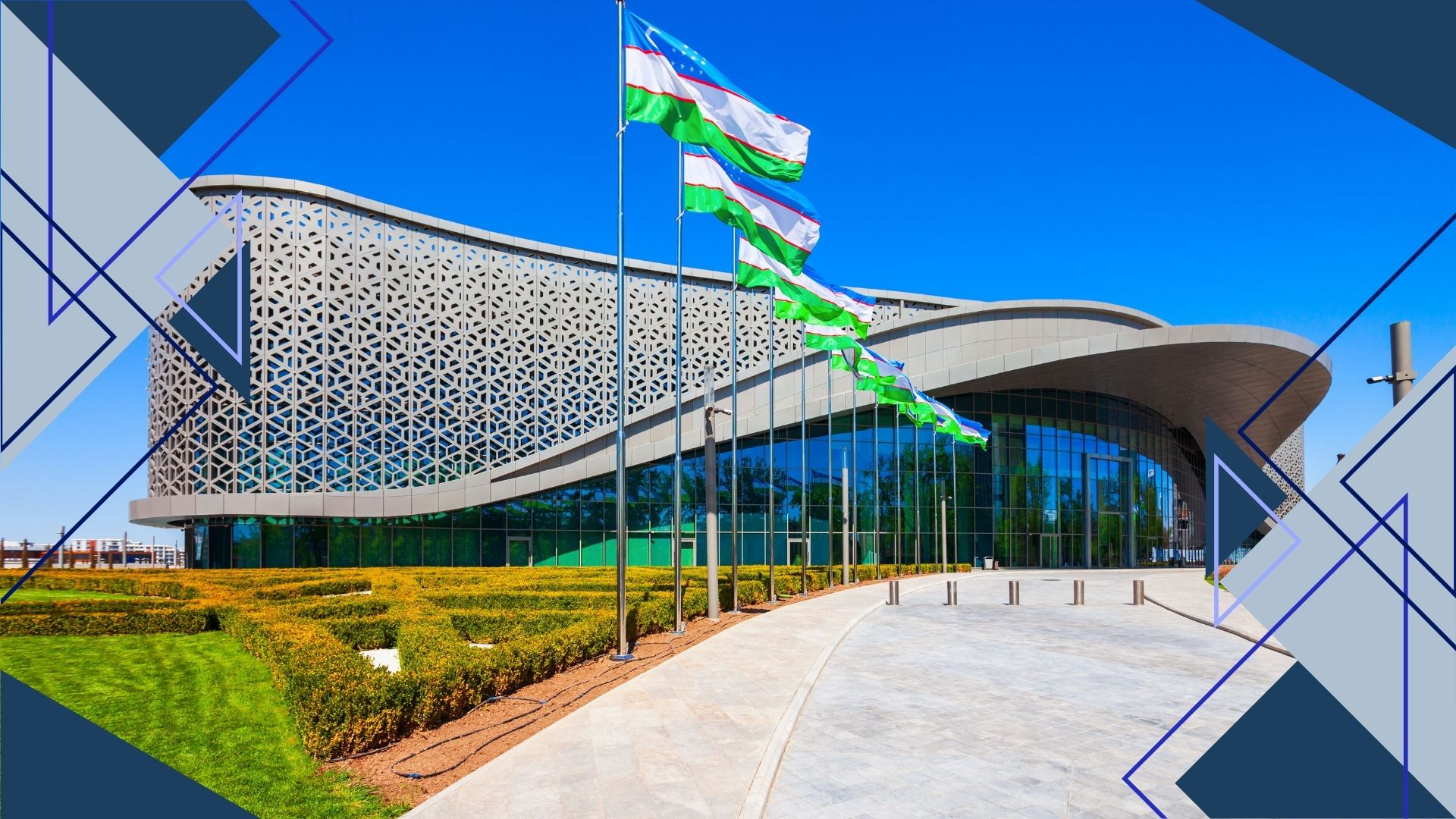
    Uzbekistan is rapidly emerging as a major industrial force in Central Asia, leveraging its rich geological endowment and newly modernized mineral sector to join the global critical minerals value chain. With the country ranked third worldwide in gold reserves and eighth in copper, but with only one-third of its territory fully explored, officials say the potential for new discoveries remains vast.

    Under President Shavkat Mirziyoyev, Uzbekistan has overhauled its geological and industrial policies, launching modern exploration programs and implementing advanced digital tools such as 3D modeling, JORC-compliant reporting and an updated subsoil management system aligned with international standards. A new law on the use of subsoil resources, which came into force in February 2025, is reshaping the regulatory environment to prioritize sustainability, investor protection and the development of high value-added industries.

    At the center of this transformation is the Uzbekistan Technological Metals Complex (TMK), established in 2024 and tasked with demonstrating the country’s capabilities in critical raw materials and strengthening its role in global markets. TMK operates across the entire value chain — from mining to refined metals to finished industrial products — forming a fully integrated “mine-metal-market” ecosystem that includes exploration, processing, R&D and manufacturing.

    The company is currently advancing more than 100 projects across over 25 strategic raw materials, including tungsten, molybdenum, lithium, cobalt and graphite. As Uzbekistan expands its critical minerals ambitions, TMK has become a focal point of international cooperation, with the country signing strategic agreements with the United States, the European Union, Germany, the United Kingdom, Korea and several Central Asian neighbors. TMK itself now works with more than 50 global companies and has joined nine leading international industry associations, positioning it as an emerging player in shaping global standards and accessing cutting-edge technologies.

    Innovation and education have become key pillars of TMK’s strategy. The company has forged partnerships with top-tier institutions such as MIT in the United States and KU Leuven in Belgium to promote joint research, industrial PhD programs and technology transfer. In 2025, TMK launched the Higher School of Technological Metals — Uzbekistan’s first specialized educational institution meeting international standards for the critical minerals sector — developed in cooperation with the University of Pisa and the China University of Geosciences.

    TMK has also implemented globally recognized compliance and ESG practices, including ISO certifications in anti-corruption, compliance management and environmental management. Its initiatives are showcased at nearly 20 major international forums and exhibitions each year, including the Future Minerals Forum, PDAC and MINEX Europe, as the company seeks to expand engagement with global investors and industry leaders.

    As demand for critical minerals accelerates worldwide, Uzbekistan is positioning itself as a new strategic center anchored by a modern regulatory framework, substantial geological potential and a diversified value chain. Through TMK’s integrated approach and global cooperation network, the country aims to become a stable and reliable partner in the international critical minerals market.

  • Ukraine’s Lithium Push: Opportunities and Risks as Kyiv Seeks a Place in the Global Battery Metals Race

    Ukraine’s Lithium Push: Opportunities and Risks as Kyiv Seeks a Place in the Global Battery Metals Race

    Ukraine is moving to position itself as a future player in the global lithium industry, as the government races to revive its mining and processing sectors and build a broader critical minerals base. The country will close applications on 12 December for its first-ever lithium Production Sharing Agreement (PSA) tender, the “Dobra” hard-rock project, a test case for how Ukraine could integrate into Western battery supply chains.

    The tender comes as Kyiv seeks to leverage its geological legacy, long-standing mining expertise and high-quality resource base at a time when governments and companies worldwide are scrambling to secure critical raw materials. Ukraine already has a track record in other strategic metals, including titanium, and until 2021 produced titanium sponge. Supporters of Ukraine’s critical minerals strategy argue that these strengths, combined with proximity to European industrial hubs, make the country a natural diversification option for Western supply chains.

    The renewed focus on lithium follows a turbulent five years for the sector. Once a niche material, lithium has become a cornerstone of modern industry, particularly for electric vehicles (EVs), energy storage systems and digital infrastructure. Over that period, global markets have experienced a full boom–bust cycle, with a spectacular price spike in 2022 followed by a sharp correction in 2023–2024. At the same time, the bankruptcy of prominent battery maker Northvolt, production curtailments at Australian mines, the rise of South American brines and the entrenched dominance of Chinese refiners have exposed the vulnerabilities of geographically concentrated supply chains.

    Despite the price volatility, analysts broadly agree that demand growth is structural. Forecasts from organisations such as the IEA and leading market consultancies suggest that global lithium demand could reach 3.5–4 million tonnes of lithium carbonate equivalent (LCE) by 2035—roughly three to four times today’s levels. The main drivers remain EVs and stationary energy storage, with additional momentum from the rapid build-out of AI data centres and high-tech grid infrastructure.

    Technological developments are reshaping the landscape but are not expected to displace lithium. Lithium iron phosphate (LFP) chemistries have eaten into the market share of nickel-rich cathodes, sodium-ion batteries are emerging in low-cost applications and solid-state technologies could capture a slice of premium EVs by the mid-2030s. Yet these innovations mainly affect how much lithium is used per kilowatt-hour and in which segments, rather than removing the metal from the picture.

    On the supply side, the global project pipeline appears abundant on paper. If every announced brine, hard-rock, clay and direct lithium extraction (DLE) project were to proceed as planned, nameplate capacity could cover projected demand. In reality, sector observers highlight significant constraints, with many projects vulnerable to cost inflation, permitting delays and unproven technologies.

    Historically, lithium projects have tended to stumble for three main reasons: high operating and capital costs, slow and unpredictable permitting processes, and the technical challenges of scaling complex flowsheets such as DLE or clay leaching from pilot to commercial levels. The latest downturn, which saw prices fall from $70,000–80,000 per tonne in 2022 to around $10,000–15,000, quickly exposed high-cost operators and heavily leveraged projects. This has reinforced the view that, although global volumes may look sufficient over a decade-long horizon, availability in any given year can be tight, supporting long-term price expectations in the $15,000–20,000 per tonne LCE range.

    This dynamic is reflected in a sharply tiered cost curve. At the low end, Tier-1 producers—top-tier South American brines, the most efficient hard-rock operations and select DLE projects—can operate at $5,000–7,000 per tonne LCE and remain profitable even in deep downturns. Tier-2 operators, typically competitive hard-rock, some clay and maturing DLE projects, sit in the $7,000–10,000 range and can generate strong returns at mid-cycle prices if projects are well structured and debt is manageable. Tier-3 and Tier-4 projects, often involving complex clays, high-cost lepidolite or power-intensive flowsheets, form the marginal and speculative end of the market, entering only during price spikes and shutting down when conditions normalise.

    Price overshoots occur when demand growth or disruptions force the market to rely on these more expensive sources of supply, pushing prices far above long-term averages. For new entrants such as Ukraine, the central strategic question is where their projects will sit on this cost curve. Policymakers and investors are increasingly focused on creating conditions that allow new projects to land in Tier-1 or Tier-2, rather than relying on high-cost, short-lived capacity.

    Any assessment of Ukraine’s ambitions must also account for China’s entrenched position in the midstream. Chinese companies currently refine around two-thirds of the world’s lithium chemicals and produce more than 70% of battery cells, with domestic champions such as CATL and BYD dominating global markets. By 2035, some refining capacity will likely shift to Australia, East Asia, the US, Europe and the Gulf, but Chinese-owned or Chinese-financed plants are expected to remain deeply embedded across the value chain. Analysts note that Beijing has historically tolerated low margins and selective losses in parts of the chain when doing so secures long-term offtake or strengthens national champions.

    For new suppliers, this means they are competing not with a single “Chinese price” but with a spectrum of Chinese cost positions—from ultra-competitive assets to weaker Tier-4 operations—and with a system that can adapt quickly in downturns. Western governments have responded by pushing for “friendshoring” and diversification, expanding financing tools and promoting critical minerals partnerships. In that context, Ukraine is increasingly seen as a potential strategic partner, particularly for Europe.

    Experts argue that success for new lithium-producing countries hinges on several factors: a strong cost position, reliable routes to market and logistics, fast and predictable permitting, credible governance and ESG standards, integration into wider industrial and geopolitical blocs, access to R&D and technology alliances, and sustained investment in human capital. At the same time, they warn that many aspiring entrants will fall short due to capital constraints, policy volatility and over-reliance on unproven technologies.

    For Ukraine, the “Dobra” PSA and other prospective spodumene deposits could provide a foothold in the European market, particularly if lithium production can be coupled with by-product recovery of other rare and strategic metals. With titanium, zirconium, hafnium, germanium and gallium also part of its broader resource base, Ukraine hopes to evolve from a raw material holder into a strategic partner embedded in Western critical minerals supply chains.

    Analysts note that the coming decade, often described as a “New Age of Electricity”, will be driven by lithium, graphite, copper, nickel and uranium, alongside strategic metals such as titanium. Whether Ukraine can translate its geology into durable strategic capability will depend on its ability to deliver competitive Tier-2 projects, streamline permitting, maintain stable policy and deepen integration with Western alliances and investment frameworks. Otherwise, the country risks remaining a price-taking exporter, exposed to the cyclical swings that have defined the lithium market to date.
  • UK Unveils 10-Year Critical Minerals Strategy to Boost Domestic Supply and Cut Reliance on China

    UK Unveils 10-Year Critical Minerals Strategy to Boost Domestic Supply and Cut Reliance on China

    The United Kingdom has released a new 10-year Critical Minerals Strategy aimed at lifting the share of critical minerals sourced from domestic mining and recycling to 30% by 2035, up from roughly 6% today. The plan introduces legally binding targets requiring 10% of demand to be met through UK production, 20% through recycling and limiting reliance on any single foreign supplier to no more than 60% per mineral. The initiative aligns Britain with U.S., Canadian and EU efforts to reduce dependence on China-dominated supply chains.

    Prime Minister Keir Starmer said critical minerals underpin modern life and national security, arguing that cutting exposure to a small number of overseas suppliers would help shield the economy from future disruptions. Backed by up to £50 million in new funding, the strategy also aims to secure at least 50,000 tonnes of domestic lithium production by 2035 amid forecasts that demand for copper will nearly double and lithium demand will surge more than 1,100% as EVs, wind energy projects and AI data centres expand.

    The strategy draws on the British Geological Survey’s 2024 assessment, which expanded the UK’s list of critical minerals from 18 to 34, adding nickel, iron, aluminium, germanium and chromium while removing palladium. The update brings the UK’s list in line with Canada and the EU, though still shorter than the U.S. roster of 50 minerals.

    Several domestic hubs are central to delivering the plan: Cornwall’s major lithium resources, tungsten deposits in Devon, the Clydach nickel refinery in Wales and Less Common Metals’ alloy facility at Ellesmere Port, one of the West’s few producers of rare earth alloys used in wind turbines and F-35 fighter jets. Industry groups say these projects will create high-quality jobs and strengthen supply chain resilience. Cornish Lithium, which recently raised £31 million for its Trelavour and Cross Lanes projects, called government support “essential” for producing battery-grade lithium at scale.

    Tin and tungsten projects are also set to benefit. Cornish Metals welcomed the critical mineral designation for tin, supported by a £28.6-million National Wealth Fund investment in the South Crofty mine, expected to create over 300 direct jobs. Tungsten West’s Hemerdon project in Devon, one of the world’s largest tungsten deposits, is shaping up as an early test of the strategy, with plans to enter production in late 2026.

    Beyond mining, the UK is leaning heavily on midstream processing and recycling. Ionic Technologies in Belfast and Hypromag in Birmingham are developing rare earth magnet recycling solutions with significantly lower environmental impact than primary extraction.

    Internationally, the strategy is more targeted but smaller in scale compared with U.S. and Canadian approaches. While the UK’s funding remains limited—£50 million in new support on top of earlier commitments—the government aims to de-risk strategic projects and strengthen midstream capacity. Industry leaders say clarity of vision is as important as financial backing.

    The plan also responds to China’s dominance of global critical mineral supply chains, especially in rare earths, where Beijing controls about 70% of mining and 90% of refining. The UK is considering stockpiling key materials and coordinating with NATO partners. It also promises faster permitting via priority processing lanes and lower power costs for industry under the upcoming British Industrial Competitiveness Scheme.

    While the UK’s critical minerals sector currently contributes £1.8 billion to the economy and supports more than 50,000 jobs, experts warn that domestic mining, processing and recycling must scale rapidly to prevent supply bottlenecks. Questions also remain over minerals excluded from the UK’s critical list, such as copper, despite its central role in electrification.

    Communities in mining regions will weigh the economic benefits against environmental and cultural concerns, but industry leaders argue that Britain’s renewed focus on critical minerals marks a shift from its traditional role as a global financing hub to an active player across the value chain.