Website: Eurasia.com

  • 70% of Central Asia’s Critical Minerals Go to China. Türkiye Is Positioning to Challenge That.

    70% of Central Asia’s Critical Minerals Go to China. Türkiye Is Positioning to Challenge That.

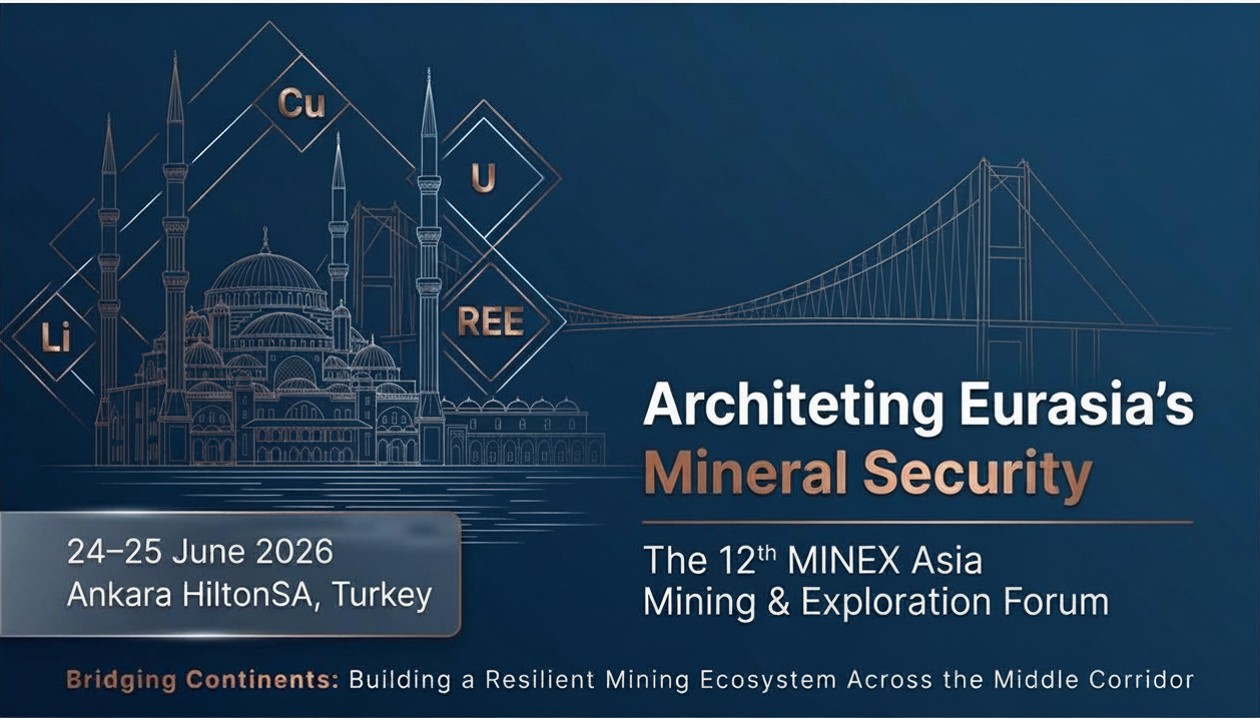
    China runs five times more mining projects in Central Asia than all European companies combined. But a shift is under way. Türkiye is investing billions, building rare earth processing capacity, and forging a new industrial corridor from the Caspian to the Mediterranean. In this episode, we explore why Ankara is emerging as the pivot point in the global race for critical metals — and what it means for Kazakhstan, Europe, and the West.

    Let us begin with a single figure. Seventy per cent. That is the share of Central Asia’s critical mineral output that currently goes to China. Twenty-five active Chinese projects in the region — five times the number of all European projects combined. Meanwhile, Kazakhstan is capable of producing half of the thirty-four materials the European Union classifies as critical: lithium, cobalt, copper, tungsten, rare earth elements. The Senate of Kazakhstan has valued the country’s subsoil potential at forty-six trillion dollars. Let that figure sink in.

    The question is — who will become the partner in transforming this wealth from ore into finished products? Who will help build the full value chain, from geological exploration to processing? And who will offer not merely capital, but technology, market access, and industrial expertise?

    It is precisely to address these questions that we are holding the twelfth International Mining and Exploration Forum, MINEX Asia, which will take place on the twenty-fourth and twenty-fifth of June at the Hilton Ankara.

    The choice of Türkiye as the venue is no coincidence. The forum operates in a nomadic format, moving from country to country and retracing the routes of the Great Silk Road. This year, we are undertaking what is, in many ways, a unique endeavour — to offer an in-depth assessment of the strengthening ties amongst Turkic nations and the transition towards a new quality of partnership, uniting the mineral-rich countries of Central Asia with Türkiye’s industrial might and the financial capital of the West and the Middle East.

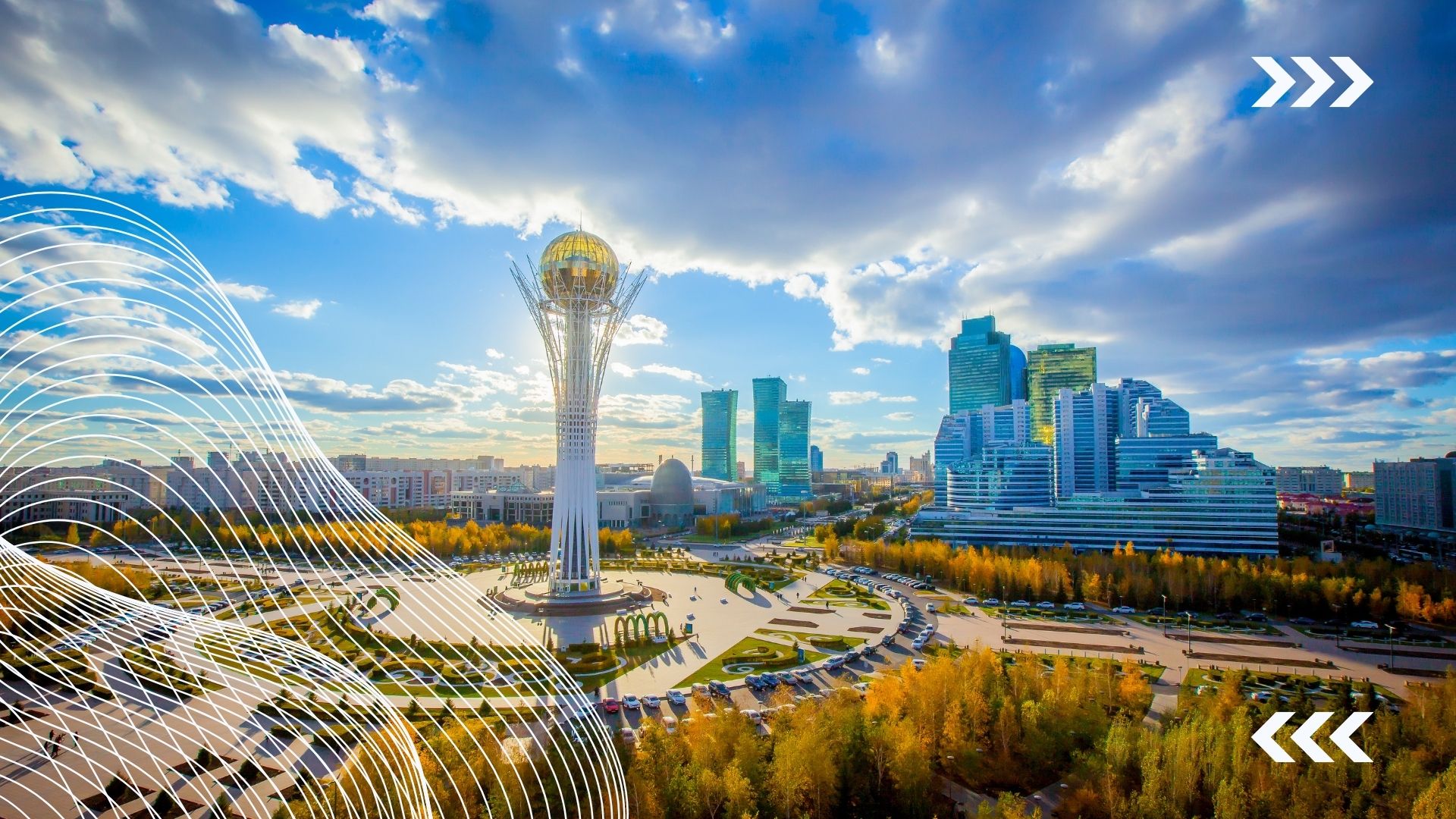
    Just a week ago, on the thirteenth and fourteenth of May, President Erdoğan paid a state visit to Astana. Thirteen agreements were signed in the fields of investment, energy, and infrastructure, including the historic Declaration on Eternal Friendship and Partnership. The implementation of these projects is expected to attract over 920 million dollars in investment and create more than 3,100 jobs in Kazakhstan.

    President Tokayev placed particular emphasis on the mining sector as one of the priority areas of cooperation. He highlighted the considerable experience of Turkish companies and urged them to take a more active role in Kazakh projects. This was not a formulaic diplomatic remark. It was a concrete political signal. And we are already seeing tangible results: Miryıldız is building a mining and processing plant in the Abai region, Çelikler Holding is developing coal chemistry, and Aksa Energy is delivering an energy project in Kyzylorda. To date, approximately one hundred investment projects worth four billion dollars have been carried out in Kazakhstan with Turkish participation, and a further fifty projects of comparable value are currently under way. The total volume of investment cooperation has reached an impressive eight billion dollars.

    To lend further momentum to this process, President Tokayev proposed the establishment of a joint fund for mining projects. Moreover, Kazakhstan’s new Tax Code now directly incentivises deep processing of raw materials through a favourable royalty regime.

    The intensification of engagement with Turkish business is taking place across virtually all Central Asian countries. A Turkish-Uzbek business forum was recently held in Tashkent, where ambitious plans to raise bilateral trade to five billion dollars were presented. Uzbekistan is launching a critical minerals development programme worth two and a half billion dollars. Last September, a Kyrgyz-Turkish business forum set a new benchmark for economic cooperation. Kyrgyzstan has identified twenty-two critical minerals for strategic development, and Turkish investment in the country already exceeds one and a half billion dollars.

    We are witnessing a systemic shift. The Turkic states are moving from the political rhetoric of brotherhood towards pragmatic economic partnership. And the mining industry sits at the very heart of this process.

    Now, a word on Türkiye. It has long ceased to be merely a transit country along the Middle Corridor. Türkiye’s mineral resource potential is valued at three and a half trillion dollars. The Beylikova project is one of the world’s largest, rare-earth deposits. Türkiye has announced the creation of a mining exchange in 2026 and is preparing a large-scale national programme for the processing of critical metals. The country is purposefully transitioning from raw material exports to high-technology processing — from boron to rare earth magnets and battery precursors.


    What precisely will be discussed at the forum?

    Day one focuses on strategy and capital. We shall begin with Türkiye’s mining strategy and its shift towards a model of industrial autonomy. Next — the Middle Corridor: how the Trans-Caspian route can become not simply a logistical bypass, but an integrated industrial belt linking extraction, processing, and end markets. A dedicated session will address the most pressing question — who is financing the future of mining in our region? China, the West, the Middle East — each is playing its own hand, and the countries of the region must build a balanced, multi-vector strategy. Day one will conclude with presentations of projects being delivered by Turkish companies in Central Asia and the Caspian region.

    In the evening, we shall host a reception at the residence of the British Embassy, in partnership with the Department for Business and Trade, attended by senior dignitaries.

    Day two centres on technology and sustainable development. How can Kazakhstan and the countries of Central Asia integrate into European supply chains in light of the CBAM mechanism and digital product passport requirements? How should tailings storage facilities be managed to international standards? How is artificial intelligence already transforming geological exploration — from the processing of Soviet-era archival data to unmanned geophysics?

    Who is expected to attend the forum?

    Amongst the key organisational partners on the Turkish side are the Supreme Mining Council of the Union of Chambers and Commodity Exchanges of Türkiye (TOBB), the Gold Producers’ Association, and the Turkish Mining Association, which accounts for approximately seventy-five per cent of all mineral extraction in the country. The forum also anticipates the participation of senior officials from the Türkiye Wealth Fund, as well as leading companies such as Dama Engineering, Argetest, KSE Mining, Kayen Maden, Positive Group Makine Muhendislik, DMT Türkiye, ExxonMobil and many others.

    Now — the most important point. What specifically does this forum offer Kazakh companies?

    Firstly, Central Asian countries, like Kazakhstan, produces nineteen of the thirty-four critical minerals for EU countries. Yet the bulk of output is still exported in unprocessed form. The forum provides a platform to find a processing partner, and Türkiye — with its industrial infrastructure and the logistical reach of the Middle Corridor — is a natural candidate.

    Secondly, investment. The forum includes a dedicated session where your projects — copper, gold, lithium, rare earths — can be presented directly to investors. Not through intermediaries, not via correspondence, but face to face with the decision-makers.

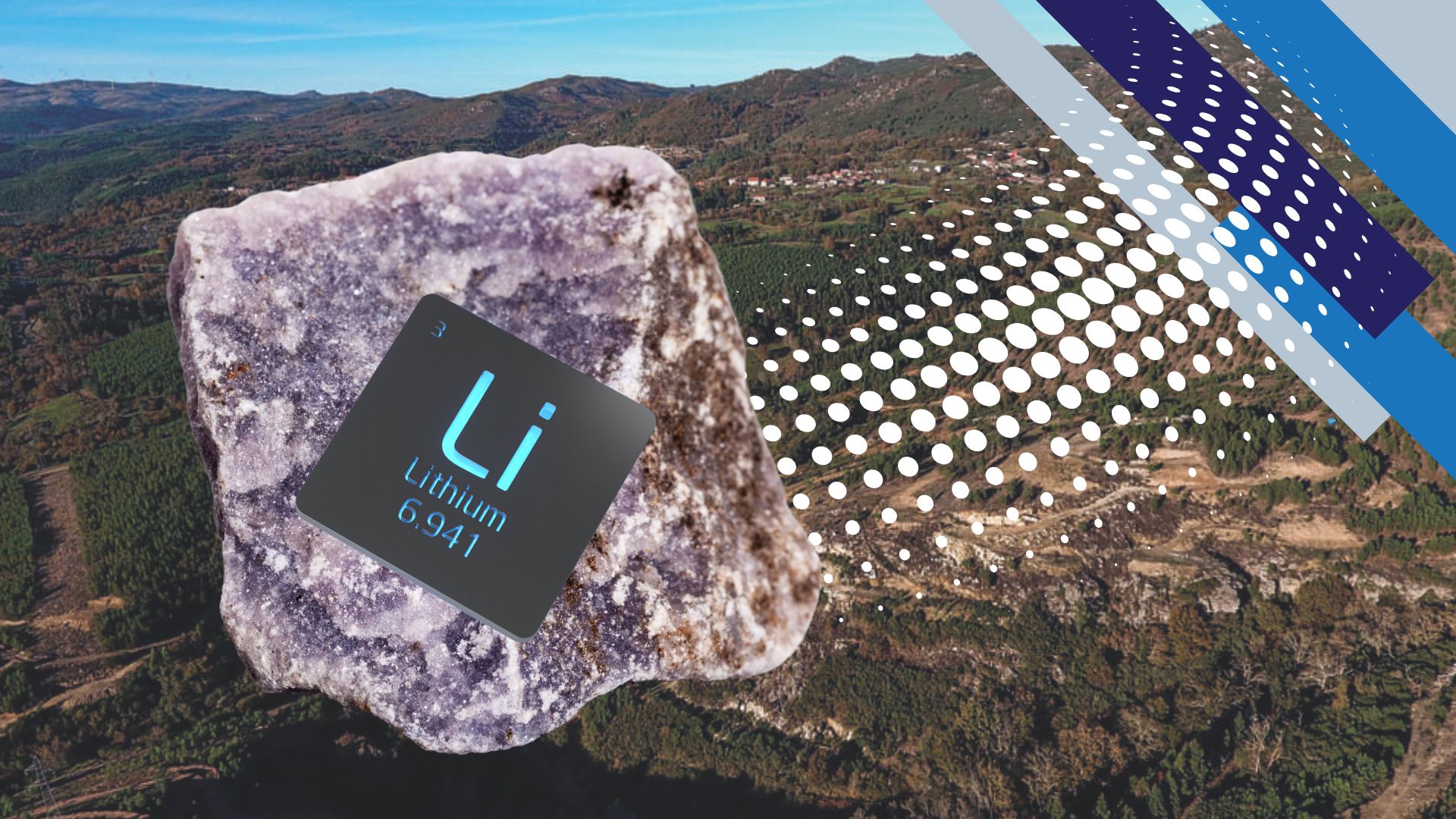
    Thirdly, the Korean Institute KIGAM last year discovered a lithium deposit in East Kazakhstan valued at nearly sixteen billion dollars. A comprehensive plan for the development of rare and rare earth metals through to 2028 is already under way. However, competing with China in processing is no easy task — and it is precisely for this reason that partnership with Turkish companies, which are themselves building processing capacity, opens a new route for landlocked Central Asian countries to Western markets.

    And fourthly, networking. The forum offers a digital matchmaking system, bilateral meetings, an informal reception at the British Embassy in Ankara, and a gala dinner. These are the kinds of networking in-person opportunities simply cannot be forged over email.

    Colleagues, let us take a broad view. Europe is seeking an alternative to its dependence on China for critical minerals. The United States has launched the C5+1 dialogue on critical minerals. Türkiye is building processing hubs. And Kazakhstan and the countries of Central Asia are sitting on a resource base that the world is quite literally searching for.

    That is precisely why MINEX Asia in Ankara is not just another conference. It is the place where resources meet capital, and strategies meet concrete partners. Registration is open at 2026.minexasia.com.

    Come not to listen — come to do business. We look forward to welcoming you to the forum on the twenty-fourth and twenty-fifth of June.
  • Greenland’s Kvanefjeld Dispute Exposes Western Critical Minerals Strategy’s Blind Spot: Regulatory Credibility

    Greenland’s Kvanefjeld Dispute Exposes Western Critical Minerals Strategy’s Blind Spot: Regulatory Credibility

    The long-running dispute over Greenland’s Kvanefjeld rare earth project has delivered a lesson that Western governments are only beginning to absorb: a strategically important deposit is worthless to a supply chain if investors cannot trust that the regulatory framework governing it will remain stable long enough to justify spending the capital required to develop it.

    Kvanefjeld’s rare earth potential has never been in question. What has undermined the project is a cycle of legal uncertainty that has made it progressively harder to finance — regardless of its geological merits. Greenland’s particular stance on uranium-linked deposits, governed by the territory’s 2021 uranium law, means that projects where uranium extraction exceeds the legal threshold face a distinct political and regulatory hurdle that is difficult to price or plan around.

    The analysis emerging from the case identifies what may be Western critical minerals strategy’s most overlooked dimension. Governments and multilateral agencies have focused heavily on three questions: where deposits are located, how much processing capacity can be built outside China, and how much strategic stockpile buffer allied nations should maintain. Kvanefjeld points to a fourth question that is becoming equally decisive: whether investors believe the regulatory path will hold.

    This matters because of how project finance actually works. Capital does not assess deposit size or metallurgy in isolation — it assesses whether the legal and regulatory position will remain intact by the time funds must be committed and spent. When that credibility weakens, financing terms deteriorate. Lenders demand higher risk premiums, offtake partners hesitate to commit and equity investors apply steeper valuation discounts. A project can simultaneously be declared a strategic national priority and become effectively unfinanceable if markets believe the rules could shift before construction begins. In project finance, a clear rejection is often easier to price than prolonged uncertainty.

    Greenland itself is not uniformly hostile to mining. Its 2025 to 2029 Mineral Resources Strategy, a raw materials partnership with the European Union signed in 2023, and ongoing advances at the Malmbjerg molybdenum, Amitsoq graphite and Tanbreez rare earth projects all demonstrate that development continues under specific conditions. The territory is selectively open, not closed — but the conditions under which that openness applies are not always legible to outside investors before they commit significant due diligence capital.

    The broader implication for Western critical minerals policy is structural. Public funding, industrial partnerships and diplomatic agreements — including the EU-Greenland framework — can only do so much if investors remain unconvinced that regulatory processes are stable, transparent and predictable through a project’s full lifecycle. Faster permitting addresses one dimension of the problem; it does not resolve the deeper question of whether approvals, once granted, are politically durable. Governments that wish to attract long-term capital into critical minerals projects need to define the rules clearly and early — including being explicit about which deposit types or co-products are politically unacceptable, tied to measurable thresholds rather than shifting political sentiment.

    Kvanefjeld is, in this sense, less a story about one project in one territory than a warning about a systemic vulnerability in how Western governments are approaching the execution of their critical minerals ambitions.

  • Kazakhstan Sees $10-12 Billion Opportunity in Copper and Aluminium Processing as 97% of Copper Currently Exported Without Deep Refining

    Kazakhstan Sees $10-12 Billion Opportunity in Copper and Aluminium Processing as 97% of Copper Currently Exported Without Deep Refining

    Kazakhstan could attract between $10 billion and $12 billion in investment for copper and aluminium processing projects, a deputy minister of the national economy has told the country’s Senate, highlighting a structural weakness in which the overwhelming majority of the country’s copper leaves the country in raw or minimally processed form.

    Deputy Minister Arman Kasenov told senators that copper ranks second only to gold in terms of importance and value-added potential within Kazakhstan’s metallurgical sector — yet up to 97% of the metal extracted is currently exported either without processing or after only primary treatment. He said investment in the copper segment alone could exceed $5 to $6 billion, with priority directions including the production of ultra-thin copper foil, a material in high demand for battery and electric vehicle manufacturing.

    Kasenov said Kazakhstan has the conditions to establish at least one large modern copper smelting plant, either through domestic companies or in partnership with credible international players. The statement aligns with the government’s broader push to move from a raw material export model toward domestic value-added industrial production.

    On aluminium, the deputy minister highlighted a similar processing gap. Kazakhstan currently produces alumina from bauxite, but only one third of that alumina is converted into primary aluminium at ERG’s Pavlodar plant, which is already operating at full capacity. The remaining two thirds of Kazakhstani alumina is exported. Expanding domestic alumina-to-aluminium conversion would open opportunities for the production of aluminium wire, cable, rolled products and other downstream goods. Kasenov estimated the investment required for such expansion at more than $5 to $6 billion — a figure consistent with the scale of the East Hope Group’s proposed $12.6 billion full-cycle aluminium project in Kostanai Region currently under discussion with the government.

  • Turkish Mining Industry Hits Back at Opposition Party Over Cyanide Claims and Smuggling Allegations

    Turkish Mining Industry Hits Back at Opposition Party Over Cyanide Claims and Smuggling Allegations

    Turkey’s mining sector has mounted a sharp defence of its operations and economic contribution after a senior opposition Republican People’s Party lawmaker made a series of allegations against the industry, accusing it of paying insufficient royalties to the state, smuggling gold by helicopter and using cyanide in ways that Europe has supposedly abandoned.

    The Mining Platform, an umbrella body of 18 non-governmental organisations, and the Turkish Miners Association jointly issued statements on Saturday rejecting the claims made by Gökhan Günaydın, deputy parliamentary group chair of the CHP, as factually incorrect and politically damaging to an industry employing approximately 150,000 people.

    On royalties, the Mining Platform said the sector paid more than 32 billion Turkish lira ($700 million) to the public treasury in state royalties last year alone. “A false perception is being created that mining enterprises pay very low shares to the state,” the statement said, adding that approximately 30 lira out of every 100 lira earned by a mining enterprise flows directly to the state through various taxes and levies.

    The Miners Association directly challenged the gold smuggling allegation, calling it incompatible with current production and inspection processes. It noted that mining activities operate under the supervision of more than 30 public institutions, and that every gram of gold produced must first be refined to 99.5% purity at accredited domestic refineries before being offered for sale on Borsa Istanbul, where the Central Bank of Turkey holds the right of first purchase.

    On the cyanide claim, the association said the assertion that EU countries have abandoned the method was simply untrue. It pointed out that 85% of gold produced worldwide uses the cyanide process and that modern gold facilities operating in Finland, Sweden and Norway employ it — countries the CHP implicitly held up as models.

    Both organisations framed the broader stakes as economic sovereignty. “We are sending more than $60 billion in total resources abroad because we are not adequately utilising the mines within our own territory,” the Mining Platform said.

  • Cornish Metals Secures £52 Million Credit Facility From National Wealth Fund and Vision Blue to Advance South Crofty Tin Mine Restart

    Cornish Metals Secures £52 Million Credit Facility From National Wealth Fund and Vision Blue to Advance South Crofty Tin Mine Restart

    Cornish Metals has secured £52 million in credit facilities from its two largest shareholders — the UK government’s National Wealth Fund and Vision Blue Resources — to advance the restart of the historic South Crofty tin mine near Pool in Cornwall, as the AIM-listed company pushes toward a final investment decision.

    The funding will be directed toward underground mine development and shaft refurbishment, surface facilities and infrastructure, and general operating and corporate purposes. Up to £16 million will also be used to credit the company’s escrow account.

    Chief executive Don Turvey said the facility provided the financial runway needed to progress through to the final investment decision while maintaining the high level of site activity required to continue de-risking the project. “It also signals the National Wealth Fund’s and Vision Blue’s continued support for Cornish Metals and our goal to restart tin mining in Cornwall, providing a sustainable supply of this critical mineral to the West,” he said. Turvey added that the company has been engaging with investment parties interested in financing South Crofty’s development as part of the broader project financing process.

    South Crofty, which Cornish Metals acquired in 2016, operated for more than 400 years before closing in 1998 due to falling metal prices and insufficient investment. The company says the mine could be producing tin again by 2028. The restart has attracted growing attention as tin prices have surged on demand from artificial intelligence infrastructure and electronics manufacturing, with the metal approaching $54,000 per tonne.

  • CoreX Holding Winds Down Four Kazakhstan Joint Ventures With Qazgeology as Voskhod Chrome Mine Approaches Contract End

    CoreX Holding Winds Down Four Kazakhstan Joint Ventures With Qazgeology as Voskhod Chrome Mine Approaches Contract End

    Turkish-Dutch conglomerate CoreX Holding, formerly known in Kazakhstan as Yildirim Holding, is closing four joint ventures with Qazgeology — a subsidiary of the state mining holding Tau-Ken Samruk — that had been carrying out exploration activities across several regions and mineral types, a senior company official has confirmed.

    Speaking on the sidelines of the 4th Mining Congress in Astana, CoreX Holding’s deputy director general for administrative management in Kazakhstan, Anvar Boranbayev, said the company had operated five joint ventures with Qazgeology under exploration licences. Four of these are now being wound down.

    The company’s production contract at the Voskhod chromite mine near Khromtau in Aktobe Region — operated through its Voskhod-Oriel enterprise — runs until 2029, by which point the deposit’s reserves and output have been declining in recent years. CoreX is conducting geological exploration in the Khromtau district in an effort to replenish its mineral resource base before the contract expires.

    The company also holds an evaluated licence area called Udar on the Kempirsa plateau near the settlement of Badamsha in Aktobe Region, operated through its Sunrise Mining subsidiary. Boranbayev said a production permit application has been submitted to the Ministry of Industry and is awaiting approval, with the company expecting to proceed once public and environmental review requirements for its mining plan have been satisfied. If reserves of approximately 500,000 tonnes of refined chrome are exploited at a rational rate, production at Udar could last four to five years.

    CoreX, as the former Yildirim group, has previously faced questions over chrome raw material supplies to Russia — including to its own Tikhvin ferroalloy plant and the Novotroitsk chromium compounds plant — in the context of sanctions. In Kazakhstan, the company supplies the Aktobe Chromium Compounds Plant. A separate project, the Qazaq Soda calcined soda plant in Zhambyl Region, has experienced delays due to permitting documentation requirements but is now advancing with adjusted implementation plans.

  • AIFC Brings Hong Kong Stock Exchange to Astana as Kazakhstan Junior Miners Eye Dual Listing Route to International Capital

    AIFC Brings Hong Kong Stock Exchange to Astana as Kazakhstan Junior Miners Eye Dual Listing Route to International Capital

    The Astana International Financial Centre has convened a roundtable between representatives of the Astana International Exchange and Hong Kong Stock Exchange to explore practical pathways for Kazakhstani junior mining and fintech companies to access international capital markets — a step the AIFC frames as essential to unlocking investment in the country’s vast but underfinanced early-stage exploration pipeline.

    The event brought together exchange leadership, investment banks and exploration companies including Kusto Altyn and Copper, Pallas Resources, KazakhNickel, Atlant Minerals, Altyn Samruk and Qazgeology, alongside members of the AIFC’s Mining Sector Expert Council. The discussion centred on the financing mechanisms and listing requirements of both HKEX and AIX, with particular attention to what Hong Kong can offer companies seeking access to Asian institutional capital.

    AIFC chief product officer Zhanbolat Kakishev said junior companies worldwide play a key role in new mineral discoveries but face the greatest financing challenges at early stages. “The launch of Junior Mining Platform was one of AIFC’s steps toward building a financing ecosystem for such projects,” he said, adding that the roundtable was designed to develop practical mechanisms for preparing junior companies for international investment and eventual capital market listings.

    A concrete example of the dual listing model was presented to participants: the 2025 simultaneous listing of Jiaxin International Resources Investment Limited — a tungsten producer operating in Almaty Region — on both AIX and HKEX. The offering became the first CNY-denominated IPO in Central Asia and the first Belt and Road segment IPO on AIX. Combined investor demand across global markets exceeded the target volume by more than 220 times, reaching over $34 billion — a figure participants cited as evidence of substantial international appetite for Kazakhstani mining assets.

    Johnson Choi of HKEX outlined the key stages of the listing process and highlighted barriers companies typically encounter, including corporate governance standards, disclosure requirements and transparency obligations. Qazgeology CEO Bakyt Chirchikbayev said the platform and roundtable had provided the most comprehensive information his organisation had received on international capital market requirements. “Such initiatives help companies objectively assess their readiness for listing,” he said.

    The roundtable also discussed institutional investor interest in rare earth projects from Hong Kong-based funds, the legal mechanics of dual listings, yuan-denominated bond issuance and the role of investment banks in the listing process. The broader context includes growing yuan-denominated capital market activity through AIX: Samruk-Kazyna completed Kazakhstan’s first panda bond placement of three billion yuan on AIX in April 2026, followed by Caspian Solar’s 625 million yuan green bond in May.

  • Kazakhstan Government Backs East Hope Group’s $12.6 Billion Green Aluminium Project as Two Alumina Plants Planned for Kostanai Region

    Kazakhstan Government Backs East Hope Group’s $12.6 Billion Green Aluminium Project as Two Alumina Plants Planned for Kostanai Region

    The Kazakhstani government has confirmed its support for a major investment project by China’s East Hope Group, with First Deputy Prime Minister Nurlybek Nalibayev meeting the Chinese conglomerate’s director general Chen Lei to advance plans for a full-cycle green aluminium production complex in Kostanai Region.

    The project, with a planned investment of approximately $12.6 billion, envisions an environmentally clean aluminium production chain encompassing bauxite mining and processing, an electrolysis plant and a wind power station to supply the operation with renewable electricity. East Hope Group is currently conducting geological exploration across a number of licence blocks in Kostanai and Aktobe regions in preparation for the project’s development phases.

    The government’s endorsement follows earlier reports from late March indicating that Chinese investors are planning to construct two alumina plants in Kostanai Region with combined investments exceeding 1.1 trillion tenge. According to the regional administration, the first facility — with annual capacity of one million tonnes of alumina — is expected to begin operations in 2028, followed by a second plant capable of producing up to two million tonnes of alumina per year from 2029.

    The scale of the proposed investment would make it one of the largest single foreign direct investment projects in Kazakhstan’s industrial history, and would establish the country as a significant player in global aluminium supply chains by creating fully integrated domestic capacity from raw material extraction through to primary metal production.

  • Uzbekistan’s AMMC Commissions Kovuldi Gold Processing Plant With 200,000 Tonne Annual Capacity

    Uzbekistan’s AMMC Commissions Kovuldi Gold Processing Plant With 200,000 Tonne Annual Capacity

    Uzbekistan’s Almalyk Mining and Metallurgical Combine has commissioned a new gold processing plant at the Kovuldi deposit, marking the latest expansion of production capacity at one of Central Asia’s largest integrated mining operations.

    The Kovuldi gold processing plant was officially opened on 15 May 2026 in a ceremony attended by AMMC management, ministry officials, foreign partners, representatives of the Almalyk city administration, labour veterans and members of the public. A ribbon-cutting ceremony formally marked the launch of the facility.

    The plant will process ore extracted from the Kovuldi and Quyi Kenzhasoy deposits, with an annual processing capacity of up to 200,000 tonnes of ore. A second phase of the project is also planned, which will further expand throughput capacity. The commissioning of the facility has created 151 new jobs. Speakers at the opening ceremony said the plant would contribute to strengthening Uzbekistan’s gold reserves through the efficient use of local raw material resources and a systematic increase in gold production volumes.

    AMMC is a state-owned enterprise and one of Uzbekistan’s most significant industrial assets, producing copper, gold, silver, zinc and other metals from deposits in the Almalyk district of Tashkent Region.

  • AMG Critical Materials to Acquire Full Control of Zinnwald Lithium in $56 Million Deal, Consolidating One of Europe’s Major Lithium Reserves

    AMG Critical Materials to Acquire Full Control of Zinnwald Lithium in $56 Million Deal, Consolidating One of Europe’s Major Lithium Reserves

    AMG Critical Materials has agreed to acquire the approximately 71% of Zinnwald Lithium it does not already own for approximately $56 million, funded equally in cash and new AMG shares, in a move the Dutch critical materials company describes as a major strategic step in consolidating Europe’s critical minerals industry.

    AMG has held a stake in Zinnwald Lithium and a board representative since 2023. The full acquisition brings under single ownership the Zinnwald Lithium project in Germany — a multi-product deposit containing lithium, potassium and tin, and one of the most significant hard-rock lithium resources in Europe. The transaction is expected to close in the third quarter of this year. In the interim, Zinnwald Lithium will continue limited test work and studies to maintain permitting and project status under an existing cash management plan.

    AMG chairman and CEO Dr Heinz Schimmelbusch said the company’s near-term focus post-completion would be on advancing technical development studies, with a staged approach favouring a smaller-scale initial scope over a single large-scale build. “This approach will enable AMG to leverage its world-class mining and processing capabilities,” he said.

    AMG Lithium CEO Dr Stefan Scherer outlined an 18 to 24 month programme to define and advance a sustainable and profitable project scope, combining AMG’s existing mining experience with newly developed processing technology aimed at improving the project’s environmental footprint and operating cost position. Community and stakeholder engagement is also planned as the project advances.